
DR. WANILADA RUNGRASSAMEE
National Center For Genetic Engineering And Biotechnology, Thailand
Biotechnology in Health, Food & Agriculture
Dr. Wanilada Rungrassamee is the Director of the Biosensing and Bioprospecting Technology Research Group at the National Center for Genetic Engineering and Biotechnology (BIOTEC), Thailand. An expert in molecular biology and microbiology with a Ph.D. from the University of Massachusetts, Amherst, her research focuses on leveraging host-microbe interactions for biotechnological applications. Dr. Rungrassamee’s research has significantly advanced marine aquaculture, particularly in the cultivation of the black tiger shrimp (Penaeus monodon). For this research, she was honored with the 2024 Excellent Research Award by Her Royal Highness Princess Maha Chakri Sirindhorn. Her group employs advanced multi-omics approaches to create a systems-level model of the shrimp’s intestinal microbiome and its response to pathogens like Vibrio harveyi. This critical analysis has enabled the development of novel interventions, including the application of bacterial lipopolysaccharide (LPS) to improve shrimp survival and a patented functional feed additive designed to support a sustainable aquaculture industry. Her scientific contributions have received international recognition, including her selection as one of 30 high-impact researchers from ASEAN for the ASEAN BCG Researcher Development Program (2021-2024). Dr. Rungrassamee’s leadership in the scientific community is further demonstrated by her editorial board roles for prominent journals such as Aquaculture, Microbiology Spectrum, and Reviews in Fisheries Science & Aquaculture, and through competitive research funding from international bodies including the European Commission (Horizon 2020) and the International Foundation for Science. Guided by the principle that fundamental scientific discovery is the bedrock of innovation, Dr. Rungrassamee is extending her research from aquaculture to the microbiome in companion animals and humans. This initiative supported by the Thai gut microbiome database project, aims to pioneer precision functional foods by translating a deep understanding of host-microbe interactions into evidence-based, next-generation health and wellness solutions.

ASSOC. PROF. DR. RUEY LENG LOO
Murdoch University
Biotechnology in Health, Food & Agriculture
Associate Professor Ruey Leng Loo is a Research Fellow at the Australian National Phenome Centre and the Centre for Computational and Systems Medicine at Murdoch University. Her research focuses on applying metabolomics to unravel the complex molecular interactions between diet, metabolism, and health. By integrating nutritional science with systems biology, she leverages advanced analytical platforms, including nuclear magnetic resonance (NMR) spectroscopy and mass spectrometry (MS), to identify biomarkers and metabolic pathways influenced by dietary components. Dr Loo has led and contributed to multidisciplinary research programs that span clinical, nutritional, and computational domains. She has secured over AUD $5 million in national and international funding, including prestigious awards such as the UK Medical Research Council New Investigator Award and the Western Australia Premier’s Science Fellowship. Her work is deeply collaborative, involving partnerships with clinicians, industry stakeholders, and the public to translate metabolomic insights into real-world applications in precision nutrition, disease prevention, and food quality assurance. Her current research aims to bridge the gap between bench and bedside by developing data-driven strategies that inform personalised dietary recommendations and improve population health outcomes.
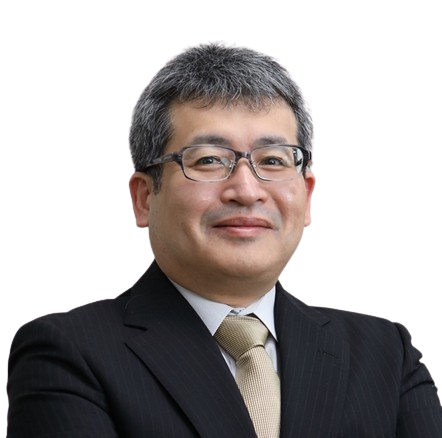
PROF. DR. MASAYOSHI ARAI
The University of Osaka
Natural Product Chemistry
Prof. Dr. Masayoshi Arai received a Ph.D. degree from Kitasato University (Tokyo, Japan) in 1999, and his career as a researcher began at the Kitasato Institute. At the Kitasato Institute, he worked with Dr. Satoshi Omura, who was awarded the Nobel Prize in Physiology or Medicine in 2015 and studied bioactive natural products from terrestrial microorganisms. In 2004, he moved to Albert Einstein College of Medicine (NY, USA) as a Postdoctoral Fellow in Dr. William R. Jacobs Jr.’s Lab, and studied the target molecule of isoniazid, an anti-tuberculosis drug. In 2007, he was appointed as a faculty member at The University of Osaka and was promoted to his current position in 2020. After moving to The University of Osaka, he began collecting marine organisms through scuba diving and initiated the exploration of bioactive natural products from marine medicinal resources, particularly those effective against infectious diseases and cancer. His research interests also include the target identification of isolated bioactive compounds using the techniques of chemical biology.

PROF. DR. NANCY DEWI YULIANA
IPB University, Indonesia
Natural Product Omics
Prof. Dr. Nancy Dewi Yuliana was born in Tasikmalaya, a small city in West Java Province, Indonesia. She is a full professor in the Division of Food Chemistry, Department of Food Science and Technology, IPB University, Bogor, Indonesia. She obtained her MSc (2007) and PhD (2011) in Pharmacognosy from Leiden University, the Netherlands. She conducted post-doctoral research in National Food Research Institute, Tsukuba, Japan (2014-2015). Her research of interest is in the field of food metabolomics, especially metabolomics application for food quality control, which includes food bioactive exploration and halal food authentication. She is one of the pioneers of metabolomics research in Indonesia. One of her research projects entitled metabolomics of Indonesian spices have been awarded as one of the most prospective studies in 2021 by Indonesian Business Innovation Center. She has published many papers in national and international journals, books/book chapters, and patents, for which she received an award for her distinguished academic achievement by Indonesian Food Technologist Association (2022). Prof. Dr. Nancy Dewi Yuliana was mentioned as one among the 90 most inspiring women for their contribution to the Global Islamic Economy Worldwide by Standards and Metrology Institute for Islamic Countries) – Organization of Islamic Cooperation (SMIIC– OIC). She was also recently received an award from Brawijaya University Indonesia for her excellent contribution in halal food research and certification in Indonesia, for category of food science academia (2024). Prof. Dr. Nancy Dewi Yuliana lives in Bogor, Indonesia with her two daughters.

DR. NOR AZLAN NOR MUHAMMAD
Institute of Systems Biology, UKM
Bioinformatics & Computational Biology
Dr. Nor Azlan Nor Muhammad has emerged as a prominent bioinformatics researcher at INBIOSIS, UKM, with significant contributions spanning computational biology, omics data analysis, and agricultural pest genomics. His academic foundation, built through biomedical engineering and bioinformatics studies at the University of Melbourne, has enabled him to establish expertise in analyzing biological big data, particularly through Next Generation Sequencing applications in genomics, transcriptomics, and metagenomics projects. His research portfolio demonstrates remarkable versatility, ranging from bacterial Type IX Secretion Systems to comprehensive genomic studies of economically important agricultural pests. Among his notable achievements is taking part in the development of PCOSBase, a manually curated database containing 8,185 PCOS-related proteins with comprehensive annotations, alongside contributions to SuCComBase and the ongoing development of MplanaBase for Metisa plana omics data. His work on agricultural pest genomics has proven particularly impactful, focusing on critical insect pests including bagworm (Metisa plana), red palm weevil (Rhynchophorus ferrugineus), and cocoa pod borer (Conopomorpha cramerella). Through comprehensive transcriptome analysis of Metisa plana across four developmental stages, he has provided crucial insights into chitin biosynthesis genes and pest development pathways, knowledge that has significant implications for pest management strategies. Currently serving as project leader for developing reference genomes and protein structure databases for high-throughput insecticide target screening using machine learning-based bioinformatics tools, Dr. Nor Azlan continues to bridge computational biology with practical agricultural applications.

ASSOC. PROF. DR. MOHD DASUKI SUL’AIN
Universiti Sains Malaysia
Natural Product Fragrances & Flavors
MOHD DASUKI SUL’AIN graduated in Bachelor of Applied Science USM, Malaysia (1997), Master of Science Biology (Molecular Biology) USM (2002) and PhD (Pharmacology/Toxicology) – School of Medical Sciences, USM (2008). He was appointed as Associate Professor in May 2021. This year is the 17 years of service with USM. His expertise in in Pharmacology / Toxicology. He published more than 40 Scopus & Non-ISI research journals, over 46 proceedings and over 20 abstracts. Over 5 book chapters, 4 KRIS grants, 1 SULAM Grant, 5 USM grants (incentive, short term, RUI), 2 national external grants (FRGS) and 1 industry grant. He taught over 55 courses including diploma, degree and advanced degree at PPSK and PPSP. Actively involved in innovation competition and won 2 Innovation awards (International) (ICQCC 2012 & MTE 2023), 5 Gold medal Innovation awards (MPI UMT 2024,2025 & UMK 2024), Best Poster Award (national) MYSOT 2018 and 2 best orals at 10th MYSYBIOS 2019 & ISEPCOH 2023 as well as Highest Income Generating Award-USAINS at PPSK 2024. He also was received the Certificate of Excellence Community Appreciation, USM 2015 and invited by the National Pharmaceutical Bureau, KKM to comment on advice on the use and toxicity of artemisinin, 2015 and Certificate of Excellence in Service 2024 ( APC 2024). He had been appointed as Internal examiner for 1 PhD thesis, 1 MSc (international) 6 MSc students, 5 mixed mode and, external examiners UKM and UTM Examiner (Biology) KKP matriculation (2013 to 2022), STPM Examiner and many more. From the record he also successfully graduated more than 20 advanced degrees (PhD, MSc (research) and mixed mode) from over 30 first degree students and over 15 industrial training students. Moreover, he also involved as reviewer for over 20 local and international journals, Quality coordinator from 2013 to 2018, PTJ quality representative, university entrepreneurship fellow (2018-present) and chairman of the Health Science Staff Association (PKSK) (2019-2023). Other than that, he also obtained 2 BJIM grants and one product development grant (DIA). He also obtains 10 intellectual properties (IP) (trade secret & copyright) and 2 cosmetic products under USAINS (NZIGO & D’prezzGO). He also actively involved as a member of the Malaysian Society of Toxicology (MYSOT), Member of the Malaysian Society of Physiology and Pharmacology (MSPP), Member of the Malaysia Natural Products Society (MNPS) and Asian Society of Natural product (ASNP).

ASSOC. PROF. DR. LAM KOK WAI
Faculty of Pharmacy, UKM
Medicinal Chemistry & Drug Discovery
Dr. Lam Kok Wai is an Associate Professor at the Faculty of Pharmacy, Universiti Kebangsaan Malaysia, specializing in medicinal chemistry and computational drug design. His research focuses on developing novel therapeutics for triple-negative breast cancer (TNBC) and addressing inflammation. Dr. Lam has published extensively in leading medicinal chemistry journals and has been invited to present lectures at international conferences and workshops. Furthermore, he has filed several patents related to drug discoveries targeting TNBC and neuroinflammation associated with substance use disorders.