
Woven into History: Exploring the Rich Tapestry Legacy in Scotland
To truly understand how textiles intertwined with the lives of the wealthy and elite in the United Kingdom, the UK side of the research team embarked on a journey to two remarkable Scottish sites. Tapestries—those intricate and imposing woven works of art—offered not just decoration but also a window into the past. Their history is as layered and detailed as the textile itself.
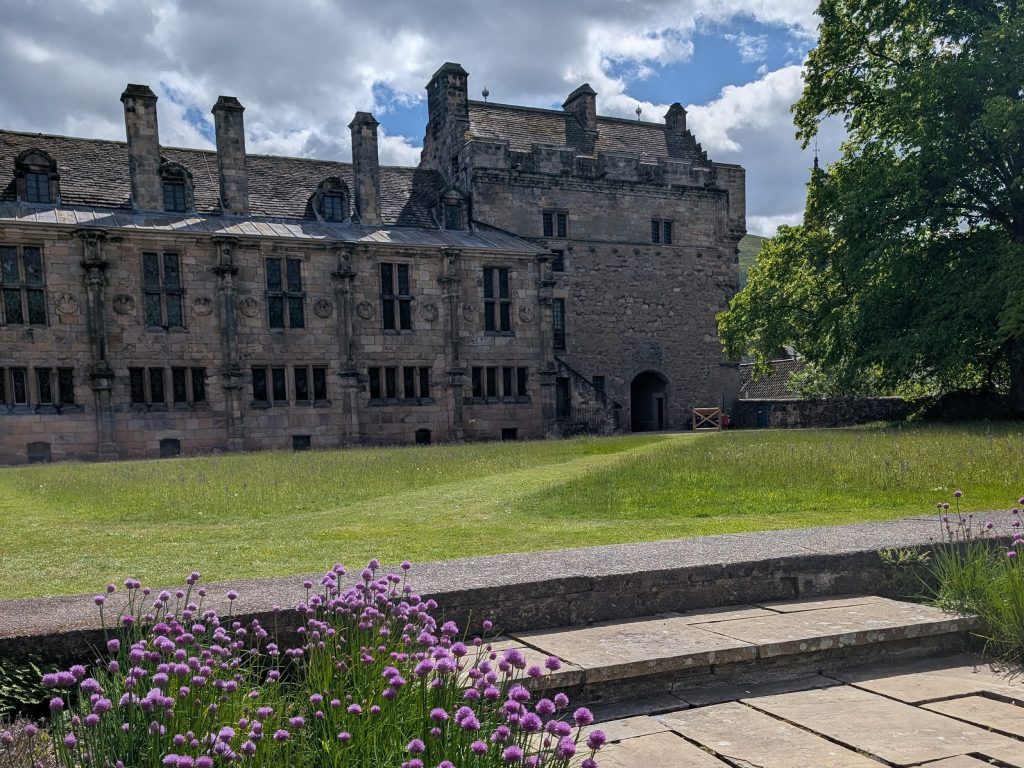
Falkland Palace in Scotland. Photo by Author
Mingyu and Francesca visited two historic houses as part of their research, first an exploration of Falkland Palace in the historic village of Falkland, Fife. Set against the backdrop of the East Lomond Hill, the grand stone house is full of history. Whilst part of the house is still inhabited today, the part open to the public provides a window into how those 500 years ago would have lived. There are tapestries hung from the wall as well as decorating the heavy wood furniture. This thick and heavy woven textile not only portrayed stories but also had a practical function – insulating rooms against the cold Scottish winters. The associated wealth required to acquire a large hand crafted art piece equally demonstrated the taste and success of the inhabitants. The trade and purchases of textiles such as these is similar to prized paintings and sculptures today. As trends and tastes change, similarly the popularity of tapestries ebbed and flowed, at Falkland Palace some of these tapestries were acquired as recently as in 1906, in a reprise to the history of the house.
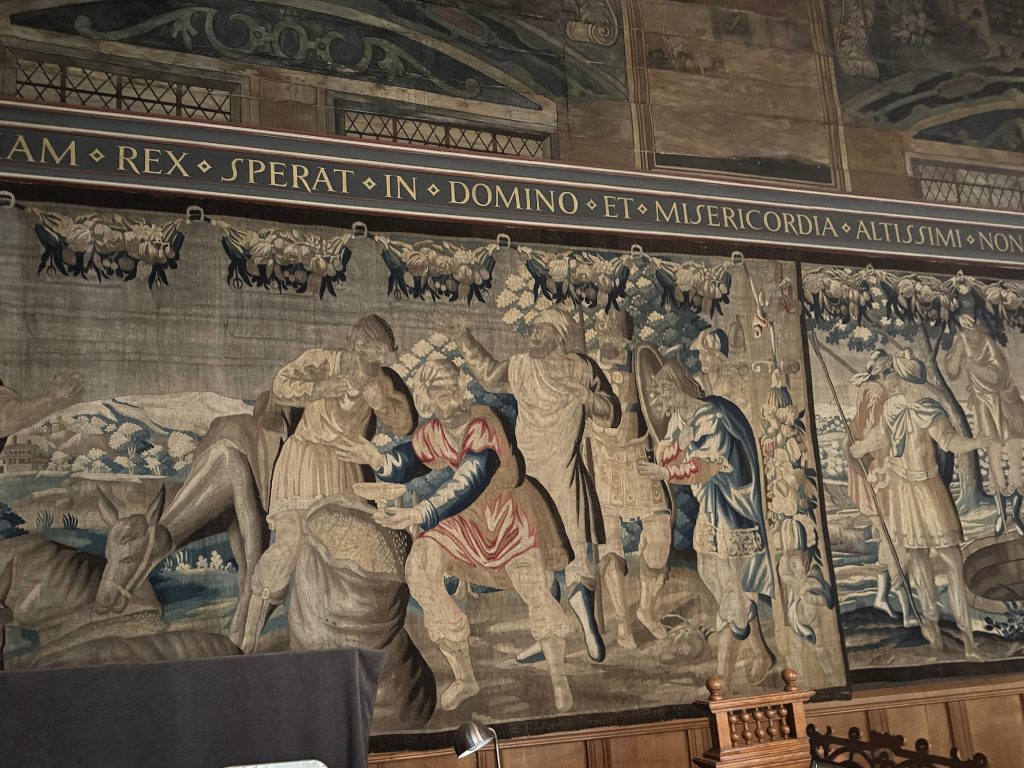
Tapestry hangs from the wall. Photo by Author
The second site visit took the team to the Palace of Holyroodhouse, the office residence of the British monarch in Scotland. Stepped in royal history since the 16th century, this majestic building stands at the end of Edinburgh’s Royal Mile, alongside the iconic silhouette of Arthur’s Seat. Once home to Mary, Queen of Scots, and a witness to centuries of political intrigue and royal ceremony, Holyroodhouse is a testament to Scotland’s complex political past.
Inside, the palace walls are furnished with an extraordinary collection of tapestries, some of which span entire walls and welcome visitors in the stairwell. These woven masterpieces depict scenes from mythology, scripture, and daily life—stories and legends translated into thread. These pieces are hundreds of years old and will have greeted international leaders across the centuries. Today many pieces can be found throughout the house, often crafted in the Netherlands, these pieces will have been purchased and displayed potentially in other Royal residents before finding a home here. The journey the tapestries will have taken from being commissioned to hanging on the wall in Scotland, demonstrates the role trade and international relations have in the creation and evolution of textiles. Much like the evolution of the textile focused on in Malaysia with the design of the Kelingkan, the creation of tapestries also saw a combination of materials and skills from across the world, with more affluence pieces using gold and silk thread.
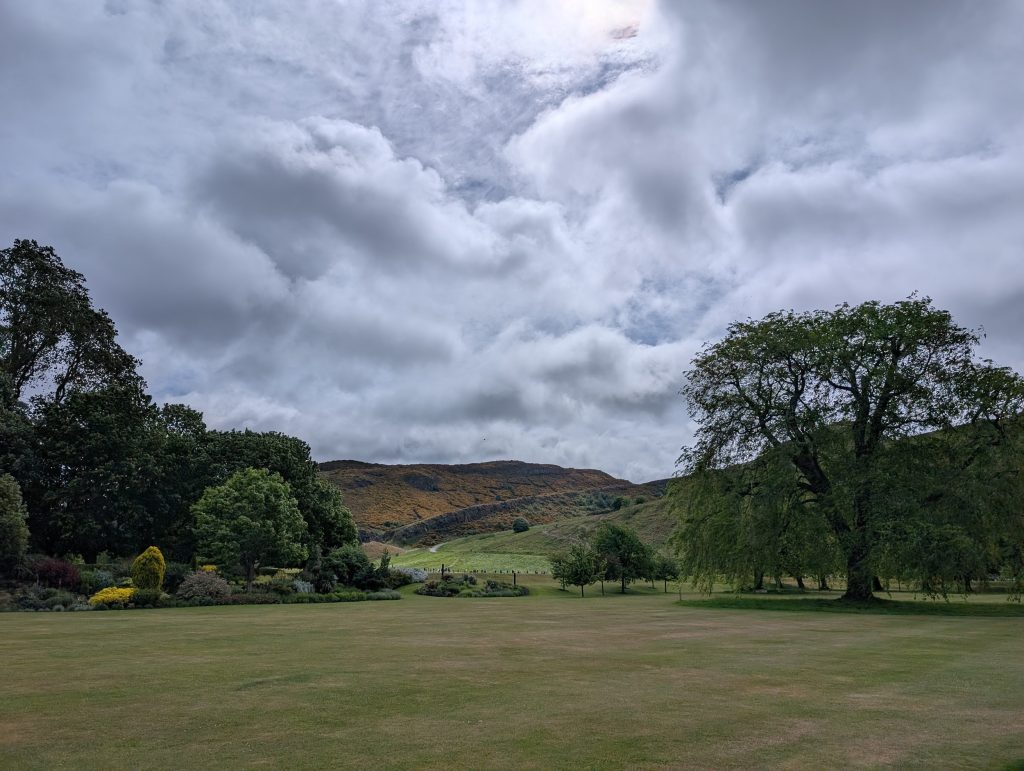
The view from the Palace of Holyroodhouse. Photo by Author
Of particular interest in these tapestries is the heavy use of foliage and landscapes, as present behind the centre characters. Some feature nature similar to that found in the local area and it leaves us to wonder what the Kings and Queens of the past felt when they looked upon these beautiful pieces. Tapestries, with their blend of function and flair, offer more than beauty. And in the quiet corners of Falkland’s historic home or the regal splendor of Holyroodhouse, the legacy of these textiles are woven into the stories from across countries and centuries.