Perjuangan Orang Aceh: Naratif, Hubungan Etnik dan Konflik
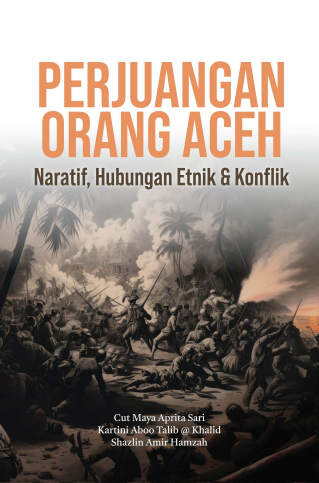
PERJUANGAN ORANG ACEH: NARATIF, HUBUNGAN ETNIK DAN KONFLIK
ISBN 978-629-486-172-5
MYR50.00
Book Details
Author/Editor: Cut Maya Aprita Sari, Kartini Aboo Talib@Khalid & Shazlin Amir Hamzah
Pages: 284
Year of Publication: 2024
Description:
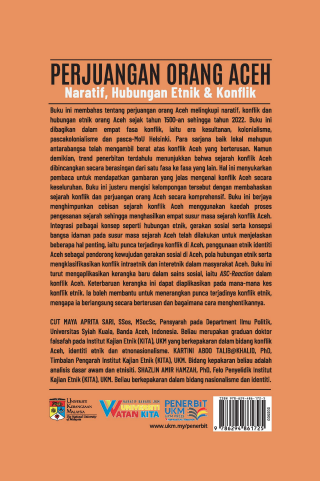
Buku ini membahas tentang perjuangan orang Aceh melingkupi naratif, konflik dan hubungan etnik orang Aceh sejak tahun 1500-an sehingga tahun 2022. Buku ini dibagikan dalam empat fasa konflik, iaitu era kesultanan, kolonialisme, pascakolonialisme dan pasca-MoU Helsinki. Para sarjana baik lokal mahupun antarabangsa telah mengambil berat atas konflik Aceh yang berterusan. Namun demikian, trend penerbitan terdahulu menunjukkan bahwa sejarah konflik Aceh dibincangkan secara berasingan dari satu fasa ke fasa yang lain. Hal ini menyukarkan pembaca untuk mendapatkan gambaran yang jelas mengenai konflik Aceh secara keseluruhan. Buku ini justeru mengisi kelompongan tersebut dengan membahaskan sejarah konflik dan perjuangan orang Aceh secara komprehensif. Buku ini berjaya menghimpunkan cebisan sejarah konflik Aceh menggunakan kaedah proses pengesanan sejarah sehingga menghasilkan empat susur masa sejarah konflik Aceh. Integrasi pelbagai konsep seperti hubungan etnik, gerakan sosial serta konsepsi bangsa idaman pada susur masa sejarah Aceh telah dilakukan untuk menjelaskan beberapa hal penting, iaitu punca terjadinya konflik di Aceh, penggunaan etnik identiti Aceh sebagai pendorong kewujudan gerakan sosial di Aceh, pola hubungan etnik serta mengklasifikasikan konflik intra dan inter-etnik dalam masyarakat Aceh. Buku ini turut mengaplikasikan kerangka baru dalam sains sosial, iaitu ASC-Reaction dalam konflik Aceh. Keterbaruan kerangka ini dapat diaplikasikan pada mana-mana kes konflik etnik. Ia boleh membantu untuk menerangkan punca terjadinya konflik etnik, mengapa ia berlangsung secara berterusan dan bagaimana cara menghentikannya.
This book discusses the struggles of the Acehnese people, encompassing narratives, conflicts, and ethnic relations from the 1500s to 2022. It systematically divides Aceh’s history into four major conflict phases: the sultanate era, colonialism, post-colonialism, and post-Helsinki MoU. Scholars, both local and international, have paid significant attention to the prolonged conflict in Aceh. However, previous publications have shown that the history of the Aceh conflict is discussed separately from one phase to another, making it difficult for readers to fully grasp the continuity and interconnectedness of the Aceh conflict as a whole. This book fills that gap by comprehensively discussing the history of conflicts and the struggles of the Acehnese people. It successfully pieces together fragments of Aceh’s conflict history using a historical tracing process, resulting in four timelines of Aceh’s conflict history. The integration of various concepts such as ethnic relations, social movements, and the conception of an ideal nation within the historical timelines of Aceh has been carried out to explain several essential aspects: the causes of conflicts in Aceh, the use of Acehnese ethnic identity as a driver of social movements in Aceh, patterns of ethnic relations, and the classification of intra- and inter-ethnic conflicts in Acehnese society. This book also applies a new framework in social sciences, namely ASC-Reaction, to the Aceh conflict. The novelty of this framework lies in its broader applicability—it can be used to explain the causes of ethnic conflicts, their persistence, and potential resolutions in various global contexts.
BISAC Subject Code(s): HIS048000, HIS027130
Category: History