

End poverty in all its forms everywhere
SDG 1 Indicator
1.4 – Community anti-poverty programmes
1.4.1 – Local Start-up Assistance
Universiti Kebangsaan Malaysia (UKM) implements a range of community-based programs to empower local entrepreneurs and promote sustainable livelihoods. These initiatives focus on providing practical knowledge, training and resources to encourage the development of financially and socially sustainable start-ups. The following programs illustrate UKM’s ongoing efforts to support local start-up initiatives and community entrepreneurship.
Table shows that the local start – up assistance to support community
| No. | Programs |
|---|---|
| 1. | Chili Cultivation Using the Fertigation System |
| 2. | Urban Farming and Sustainable Living Workshop |
| 3. | Hydroponic Farming Workshop |
| 4. | Nadi Lestari 1.0 Project |
| 5. | Bi$$iswa@Bazar Ramadan UKM Program |
1. Chili Cultivation Using the Fertigation System
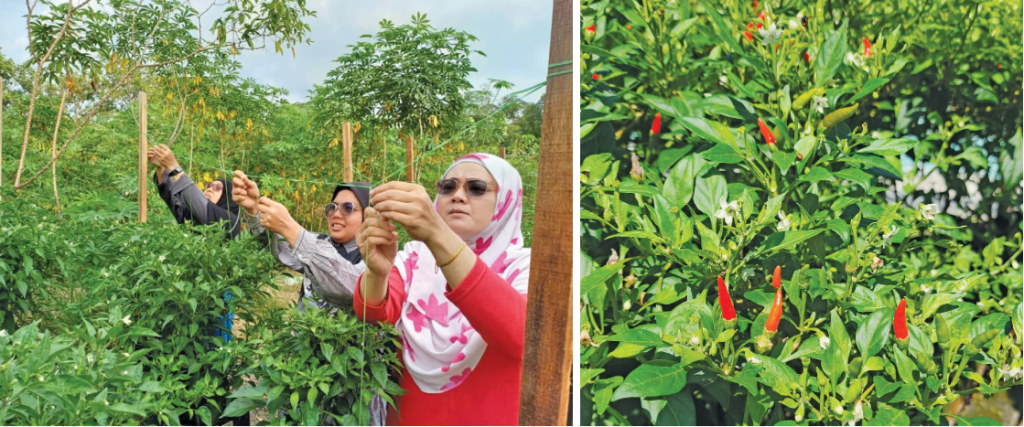
On 16 May 2024, Universiti Kebangsaan Malaysia (UKM), through the Faculty of Science and Technology (FST) and The All-Party Parliamentary Group Malaysia (APPGM), launched the Chili Cultivation Using Fertigation System Program, an initiative focusing on single mothers and housewives. The program aims to empower women to play a greater role in enhancing their families’ economic well-being by equipping them with practical agricultural skills and entrepreneurial knowledge. This initiative also seeks to promote self-reliance, generate sustainable income opportunities and foster a supportive environment that encourages personal growth and community development.
A total of 10 participants were selected from among single mothers and housewives in Bandar Baru Bangi, based on criteria such as household income, type of residence, and family size. The Bara chili plant was chosen due to its high demand, competitive pricing, and suitability for personal use. This initiative helps single mothers and housewives enhance their knowledge and skills in agriculture, crop management, pest control, online and offline marketing, as well as their ability to operate both individually and as a group for free.
As an organizer, Taman Botani Bangi and the Faculty of Science and Technology, UKM, this program allows them to strengthen the relationship between public higher education institutions (IPTA) and the community by facilitating knowledge transfer for a better quality of life while adding value to the participants involved. By equipping participants with practical farming skills, the program enables them to generate additional income while reducing daily household expenses. As part of a community service effort, this project specifically targets low-income single mothers and homemakers earning RM5,000 or below in the Bangi and Kajang areas. The program has proven highly beneficial, as Chili Bara is in high demand locally. Participants not only save on grocery expenses but also gain an opportunity to increase their earnings through sustainable home-based chili farming.
Source: www.hmetro.com.my/WM/2024/05/1090841/tanam-cili-sistem-fertigasi
2. Urban Farming and Sustainable Living Workshop
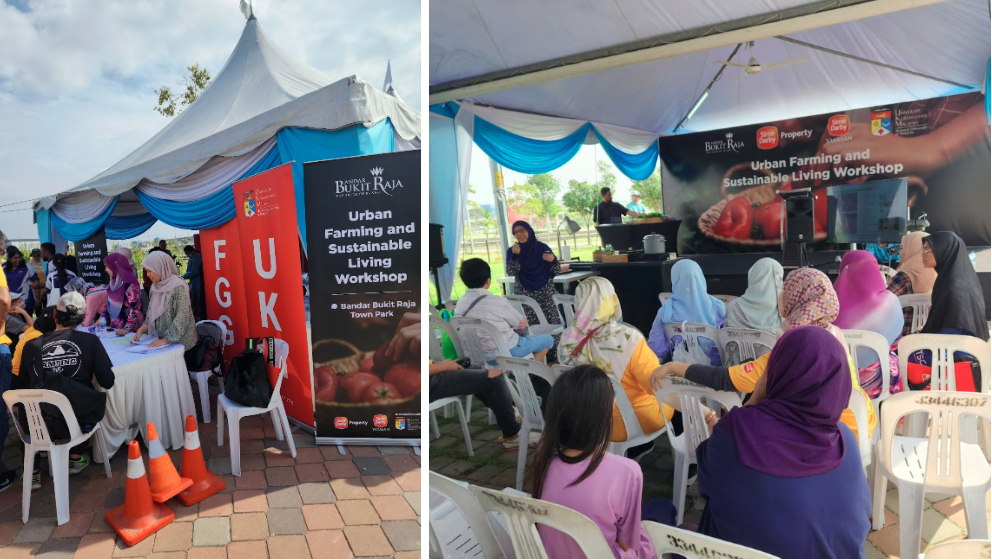
The Urban Farming and Sustainable Living Workshop Series 1, held on 3 February 2024 at Town Park, Bandar Bukit Raja Klang, was organized by UKM’s Faculty of Dentistry in collaboration with the Faculty of Health Sciences, UKM-YSD Chair for Sustainability, Sime Darby Property, Yayasan Sime Darby and the local community. The program engaged 70 participants, providing free hands-on training in sustainable agriculture, nutrition and urban farming practices. Through expert knowledge transfer and interactive demonstrations, the workshop not only educated participants on food security and healthy diets but also encouraged the adoption of sustainable farming in urban areas. This initiative had a tangible impact by equipping the community with practical skills to enhance food self-sufficiency and deepen their understanding of the link between nutrition, health, and sustainability, while simultaneously empowering participants to develop financially and socially sustainable community-based businesses. It directly supports SDG1 by enhancing community resilience to food insecurity through university–industry–community collaboration.
Source : www.instagram.com/p/C237DeGvRvM/
3. Hydroponic Farming Workshop
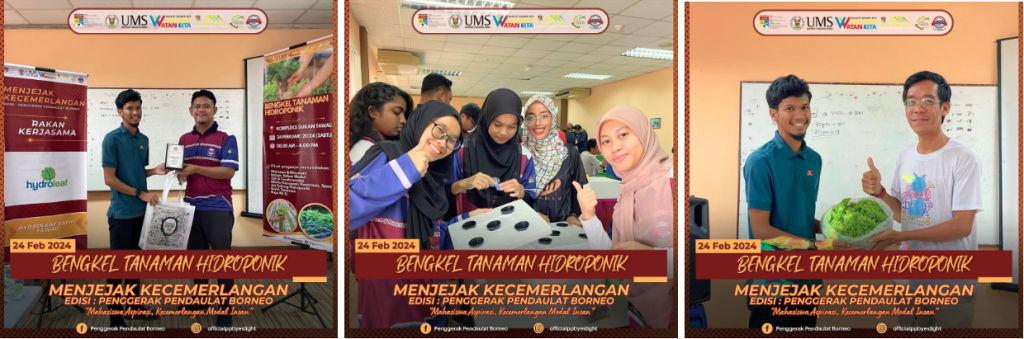
The Hydroponic Farming Workshop, organized by Dato’ Onn Residential College on 24 February 2024 at Tawau Sports Complex, was conducted in collaboration with Hydroleaf Technology and was offered as a free program. With the participation of 30 individuals, the workshop introduced modern soil-less farming techniques that promote sustainable and resource-efficient agriculture. Participants gained hands-on knowledge in hydroponic cultivation, empowering them with practical skills to grow fresh, chemical-free produce while fostering environmental awareness and self-sufficiency. The program had a direct impact by equipping students and the community with sustainable farming practices that contribute to healthier lifestyles, potential entrepreneurship in urban agriculture, and enhanced food security. This initiative aligns with SDG 1 (No Poverty) by empowering participants to develop financially and socially sustainable businesses, thereby enhancing their economic resilience and improving livelihoods.
Source : www.instagram.com/p/C3xc5tLyIWM/
4. Nadi Lestari 1.0 Project
On 8th to 9th November 2024, the Urban Farming and Sustainable Living Workshop, held at Kampung Raga, Yan, Kedah by the Faculty of Engineering and Built Environment (FKAB), Universiti Kebangsaan Malaysia (UKM), in collaboration with E-Idaman Sdn. Bhd., created a significant positive impact on the local community. The program enhanced community awareness and skills in sustainable living, recycling, composting and modern urban farming techniques. It directly improved the livelihood and economic resilience of residents by introducing income-generating green practices and reducing waste management costs. For students and staff, the program provided hands-on experience in applying sustainability concepts, strengthening their engagement with real-world environmental solutions. Overall, the initiative empowered the Kampung Raga community to adopt sustainable practices, fostered local economic development, and served as a replicable model for community-based environmental transformation—aligning strongly with SDG 1 (No Poverty).
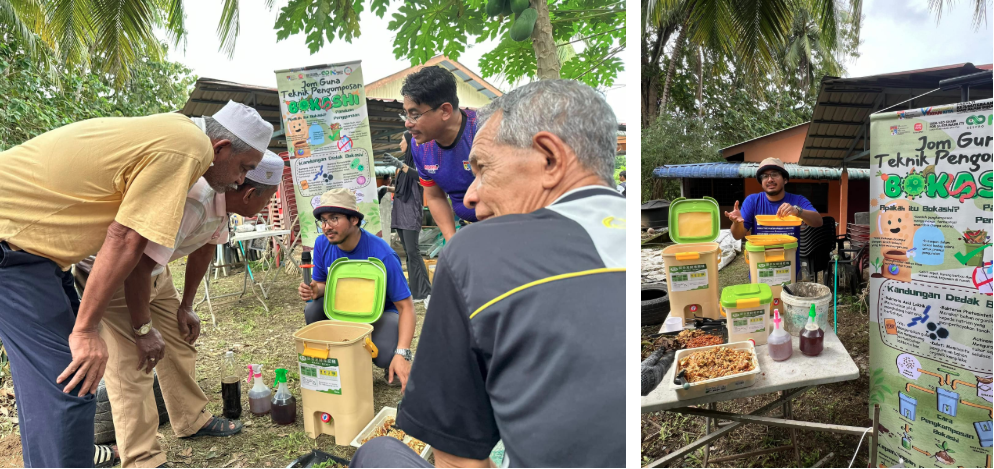
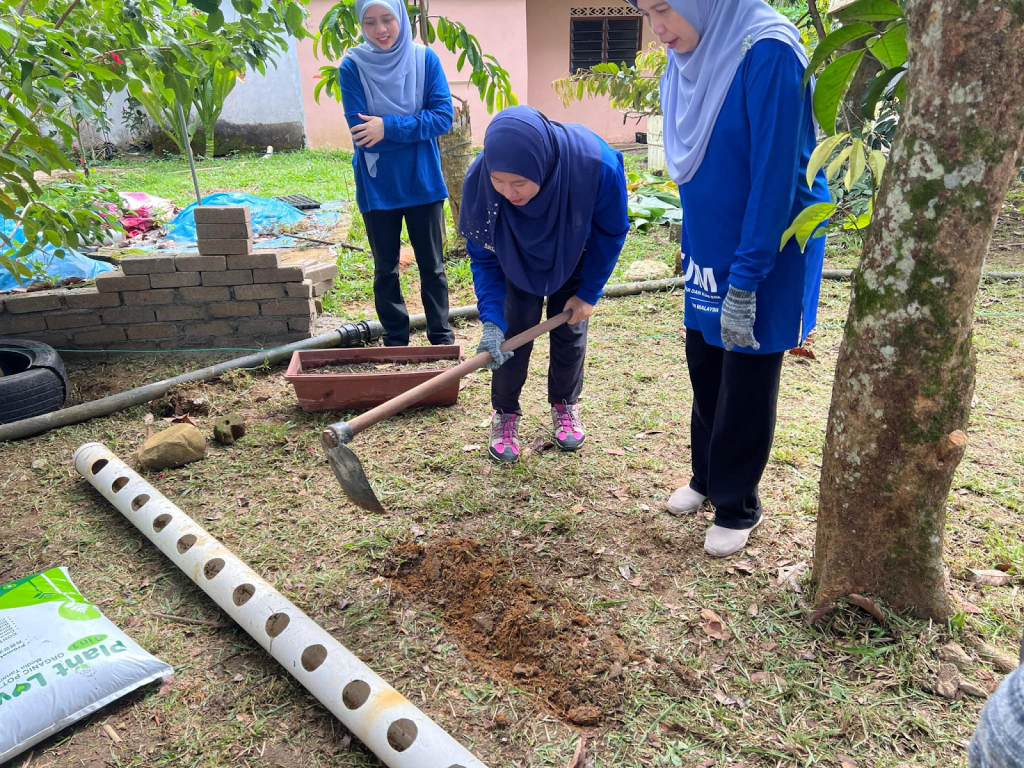
Source: www.facebook.com/share/p/1VQm3vxsaG/
5. Bi$$iswa@Bazar Ramadan UKM Program
Another program implemented by UKM to support the community is providing business spaces for the local community. In March to April 2024, UKM provided free access for the community to conduct business in designated spaces during the month of Ramadan. A total of 44 business lots were allocated for the community to operate their enterprises. Throughout the sales period, the estimated daily revenue generated by participating vendors ranged from RM2,000 to RM2,500.
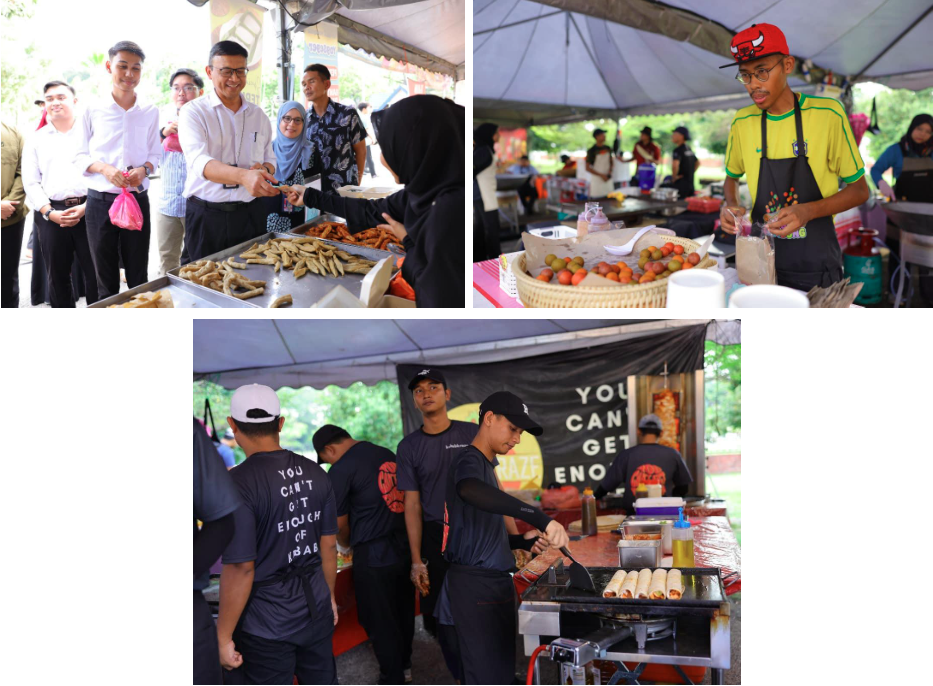
Source: www.facebook.com/share/14NknX7UXWR/
UKM plays a vital role in empowering local communities to establish financially and socially sustainable businesses through a series of inclusive education and entrepreneurship initiatives. Programs such as the Chili Cultivation Using the Fertigation System equip single mothers and housewives with practical agricultural and marketing skills, helping them generate income and achieve self-reliance. The Urban Farming and Sustainable Living Workshop and Hydroponic Farming Workshop further promote modern, sustainable agricultural practices that enhance food security, environmental awareness, and small-scale business potential among urban residents. Meanwhile, the Bi$$iswa@Bazar Ramadan UKM Program provides free business spaces, enabling local entrepreneurs to generate daily income between RM2,000–RM2,500. Collectively, these initiatives foster community entrepreneurship, build economic resilience, and strengthen social well-being, advancing UKM’s mission to support inclusive local development and contribute to SDG 1 (No Poverty).