

Protect, restore and promote sustainable use of terrestrial ecosystems, sustainably manage forests, combat desertification, and halt and reverse land degradation and halt biodiversity loss
SDG 15 Indicator
15.2 – Supporting Land Ecosystems Through Education
15.2.4 – Educational Programmes on Ecosystems
Universiti Kebangsaan Malaysia (UKM) demonstrates a strong and continuous commitment to ecosystem education, biodiversity conservation, and environmental stewardship, reinforcing its leadership in advancing Sustainable Development Goal (SDG) 15: Life on Land. Through a range of educational programs and community engagement initiatives, UKM bridges academic research with real-world conservation practices, empowering students, local communities and indigenous groups to protect Malaysia’s unique ecosystems.
Key initiatives such as the Field Study at the National Elephant Conservation Centre and Tasik Chini Research Centre, the Wildlife Conservation Intervention Program in Tasek Bera, and the Beach Cleaning Programs in Langkawi highlight UKM’s integrated approach to ecosystem learning. These programs combine scientific knowledge, field experience, and community participation to foster environmental awareness and hands-on learning about wild flora, fauna and natural habitats.
UKM educational Programmes on Ecosystems
| No | UKM educational Programmes on Ecosystems |
| 1 | Field study at the National Elephant Conservation Centre in Kuala Gandah, Lanchang, and the Tasik Chini Research Centre (PPTC) |
| 2 | Wildlife Conservation Intervention Program – Empowering the Semelai Community as Guardians of Nature in Tasek Bera. |
| 3 | Beach Cleaning Program by Langkawi Research Center (PPL), ALAF-UKM with TNC HEPI, UKM Bikers and Kg Kilim Cooperative, Langkawi. |
| 4 | Beach Cleaning Program at Pulau Pasir Panjang Beach Langkawi Research Center (PPL)-UUM |
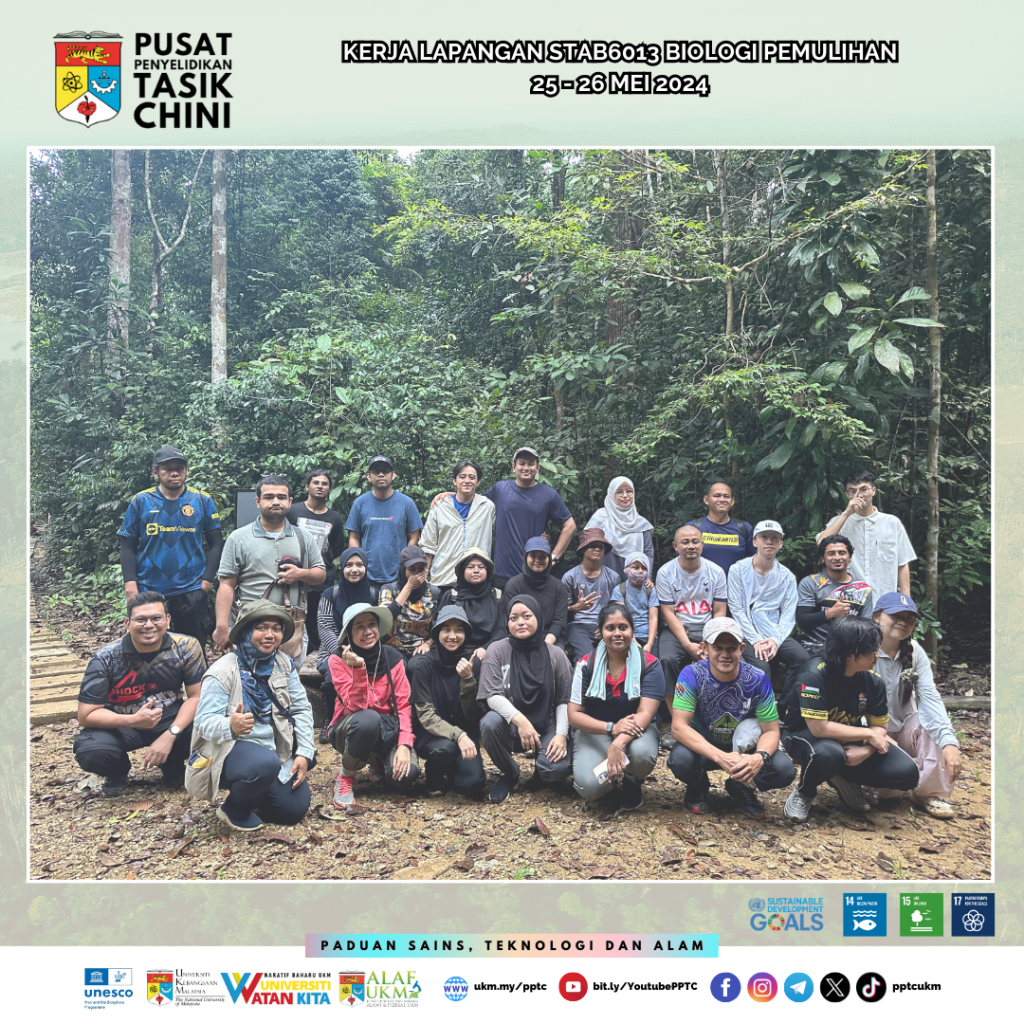
1. Field study at the National Elephant Conservation Centre in Kuala Gandah, Lanchang, and the Tasik Chini Research Centre (PPTC)
Universiti Kebangsaan Malaysia (UKM) actively integrates ecosystem education and biodiversity conservation into its academic and community engagement programs, exemplifying its commitment to SDG 15: Life on Land. On 25–26 May 2024, students from the STAB6013 Conservation Biology course under the Faculty of Science and Technology (FST-UKM) conducted a field study at the National Elephant Conservation Centre in Kuala Gandah, Lanchang, and the Tasik Chini Research Centre (PPTC), Pahang. This hands-on educational activity provided participants with real-world exposure to wildlife conservation practices, habitat management, and ecosystem sustainability efforts. Through such immersive learning experiences, UKM not only strengthens academic understanding of conservation biology but also fosters greater appreciation and awareness among students and local communities on the importance of protecting wild flora and fauna and maintaining the balance of natural ecosystems.
Source: www.ukm.my/pptc/
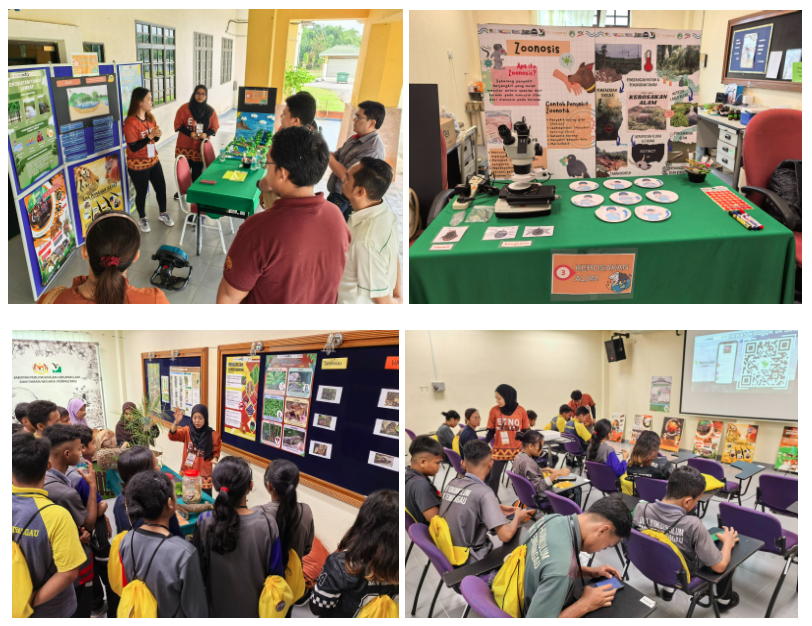
2. Wildlife Conservation Intervention Program – Empowering the Semelai Community as Guardians of Nature in Tasek Bera
The Wildlife Conservation Intervention Program in Tasek Bera is a strategic initiative aimed at enhancing conservation awareness and empowering the Semelai Indigenous community as guardians of their natural environment. The program is a collaboration between the Department of Wildlife and National Parks (PERHILITAN) and FGV Holdings Berhad (FGV). This program targets high school students, Semelai youth (aged 17 and above), and community, equipping them with essential knowledge and practical skills in ecosystem conservation through a structured learning module.
This program focuses on biodiversity conservation, sustainable ecosystem management, and community engagement. Participants will be trained in wildlife monitoring techniques, utilizing tools such as iNaturalist app that allow them to participate in scientific data collection and research projects. Additionally, the initiative also addresses the importance of reducing harmful environmental activities and encourages sustainable practices within the community.
Source: www.facebook.com/share/14ubAUjY1wo/
3. Beach Cleaning Program by Langkawi Research Center (PPL), ALAF-UKM with TNC HEPI, UKM Bikers and Kg Kilim Cooperative, Langkawi
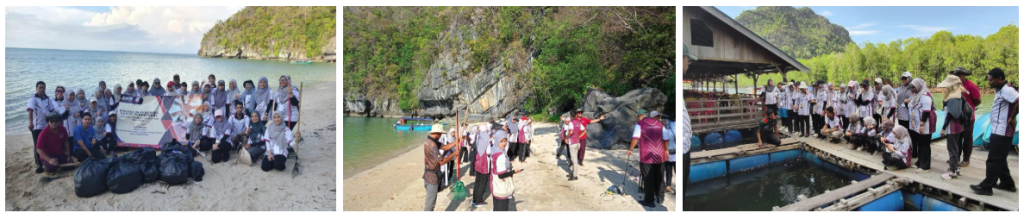
On 27 January 2024, UKM Natural and Physical Laboratory Management Centre (ALAF-UKM) carried out the Beach Cleanup activity together with the UKM Bikers and the Kg. Kilim Cooperative. The program was enlivened by the presence of the Deputy Vice-Chancellor for Research & Innovation Affairs, Professor Dato’ Dr. Wan Kamal Mujani and the Director of CRIM, Prof. Ts. Dr. Muhammad Rahimi Yusop. Plastic wastes, various types of discarded items and other pollutants along the coast of Pulau Pasir Panjang were collected and properly disposed. Continuous beach clean-ups by actively involving local communities can make beaches cleaner and safer, protect marine ecosystems and ensure the sustainability of nature for future generations. This also fulfills the intention of Sustainable Development Goal (SDG) 14, which is to improve the sustainability of life in the water through beach clean-ups.
Source: www.facebook.com/share/p/187WEAw8ye
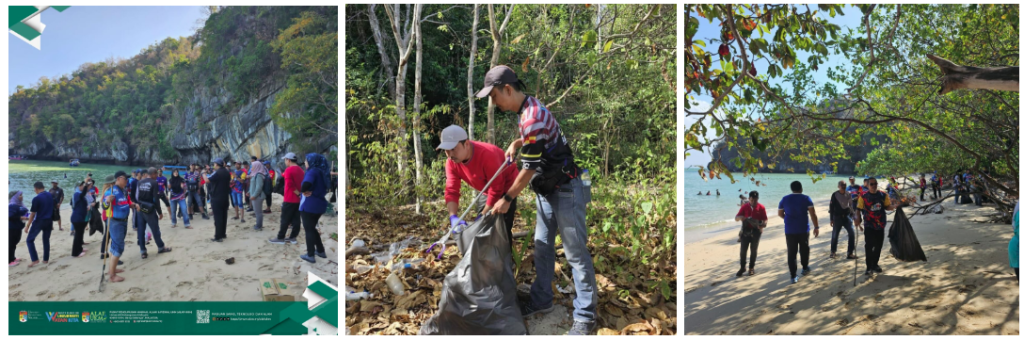
4. Beach Cleaning Program at Pulau Pasir Panjang Beach Langkawi Research Center (PPL)-UUM
The Pasir Panjang Island Beach Cleaning Program was held on 19 September 2024. Involving 35 students and staff of Langkawi Research Center (PPL) UKM and students from Inasis Bank Muamalat, Universiti Utara Malaysia (UUM). Apart from beach cleaning, activities also involve exploration to various sites including the Kilim Geopark, Eagle Watching, Fish Cage and Kilim Pinnacle before. This program exposed participants with the natural resources and biodiversity of Langkawi Island, and the importance of their conservation for future generations. The program had improved the quality of nearby marine coastal waters. Removal of marine litter and debris washed ashore prevents them from reentering the sea and polluting the environment.Source: www.facebook.com/
Through these impactful programs, UKM not only enriches the academic understanding of ecosystem dynamics but also cultivates a culture of conservation and environmental responsibility across generations. The university’s efforts have led to measurable outcomes, from empowering the Semelai Indigenous community as environmental stewards, to reducing marine litter in Langkawi’s coastal zones, and enhancing biodiversity monitoring through field-based conservation education.
By integrating ecosystem education into both teaching and community outreach, UKM strengthens Malaysia’s capacity for sustainable environmental management. These initiatives exemplify UKM’s role as a national driver for ecological literacy and sustainable land stewardship, nurturing informed citizens who are ready to safeguard the planet’s biodiversity for future generations.