


Ensure availability and sustainable management of water and sanitation for all
SDG 6 Indicator
6.3 – Water usage and care
6.3.1 – Wastewater Treatment A Process in Place to Treat Wastewate
Universiti Kebangsaan Malaysia (UKM) adopts a comprehensive tertiary sewage treatment system across 27 Sewage Treatment Plants (SWTP), employing extended aeration and oxidation reservoir methods that integrate physical, biological and chemical processes. This ensures that all effluent complies with Department of Environment (DOE) standards before discharge, safeguarding nearby rivers and ecosystems. Importantly, the treated effluent is reused sustainably for landscape irrigation and road cleaning within the campus, reducing freshwater consumption and supporting environmental conservation. Continuous monitoring, laboratory testing, and preventive maintenance highlight UKM’s commitment to sustainable wastewater management in alignment with national regulations and the Sustainable Development Goals (SDG 6: Clean Water and Sanitation).
Summary of the Wastewater Treatment Processes at UKM
| No | Wastewater Treatment Processes at UKM |
|---|---|
| 1 | Background of wastewater treatment at UKM |
| 2 | Effluence Water Quality Sampling |
| 3 | The Sewerage Treatment Plant: Extended Aeration Class License |
| 4 | Detail On The Treatment Process Of The Sewerage Treatment Plant: Extended Aeration (EA) System at UKM |
| 5 | UKM Integrated Water Control Management & Monitoring System (PUMA-UKM) |
| 6 | Pump Station Monitoring Application (PUMA-UKM) Dashboard |
| 7 | Maintenance Program For Sewage Treatment Plant at UKM |
Detail of the wastewater treatment can be found below:
1. Background of wastewater treatment at UKM
Sewage disposal at Universiti Kebangsaan Malaysia (UKM) is managed by the Mechanical Unit within the Infrastructure Development Department (JPP), staffed by a team of three mechanical engineers and ten skilled personnel (www.ukm.my/jpp/staff-department/mekanikal).
UKM operates 27 Sewage Treatment Plant (SWTP) stations, all equipped with mechanical pump systems and maintained rigorously under JPP’s oversight. These SWTP stations are essential for effective campus-wide waste management, and their maintenance is entrusted to contractors certified in Three-Phase Electrical Wiring (PW3), ensuring high standards of operational reliability and safety. This structured management aligns with UKM’s commitment to sustainable and efficient waste treatment practices.


UKM Central Sewage Wastewater Treatment Plant (SWTP), an oxidation reservoir system responsible for treating sewage wastewater. The facility operates through a natural treatment process facilitated by two constructed catchment ponds, which collect and manage sewage water efficiently. This setup promotes eco-friendly waste treatment by allowing natural oxidation and sedimentation, ensuring environmentally responsible wastewater processing on campus.
Most of the SWTP stations within the Universiti Kebangsaan Malaysia (UKM) were built under the original Act and Law which aims to control and prevent the pollution of rivers and any waters in Malaysia. The following are the Acts and Laws that serve as guidelines for the construction of LRK in UKM:
- AKTA KUALITI ALAM SEKELILING 1974 (www.kasa.gov.my/resources/alamsekitar/akta/Akta_Kualiti_Alam_Sekeliling_1974_ACT_127.pdf )
- PERATURAN-PERATURAN KUALITI ALAM SEKELILING (KUMBAHAN) 2009
(www.environment.com.my/wp-content/uploads/2016/05/Sewage.pdf)
These treatment processes involve physical, chemical, and biological treatment methods to separate the waste materials from the sewage solid waste and then produce wastewater that is free from pollution and does not pose a threat to Malaysian waters and the life around it.
The SWTP stations operated by a mechanical pump system within UKM. All these SWTP stations are regulated for maintenance and development by UKM’s Infrastructure Development Department (JPP). Regular maintenance with a frequency of once a month by a panel company appointed by UKM through an open tender method. Among the scope of maintenance work involved are as follows:
- Cleaning the entire LRK Station area.
- Control panel inspection and testing.
- Inspection and testing of the complete pump system and accessories (‘submersible’/’aerator’/’air blower’/’scum skimmer’).
- Filter inspection and cleaning (‘strainer’/’bar filter’).
- Inspection of the entire pipeline of the LRK station.
- Inspection and cleaning of chambers (input/transit) or tanks (‘aeration/’clarifier’/’load chamber’), ‘pump sump’ and ‘Filter Dryer Bed’.
Regular maintenance with a frequency of once a month involves works such as ‘housekeeping’ of the SWTP station, inspections of the control panel, inspections of the pump system complete with accessories (‘submersible’/ ‘aerator’/ ‘air blower’/ ‘scum skimmer’ ), inspection-cleaning of filters (‘strainer’/’bar filter’/ gravel/ river stone), inspection of SWTP station pipelines and inspection-cleaning of chambers or tanks (input chamber/ transit chamber/ treatment tank (‘aeration/ ‘clarifier’/ ‘load chamber’)/ ‘pump sump’/ ‘Filter Dryer Bed’ is done by a panel contractor appointed by the UKM Tender Committee.

The SWTP station of the Oxidation Catchment Pool system, Extended Aeration, Hi Kleen Tank and Imhoff Tank Pump at UKM will produce effluent (treated wastewater produced through the treatment process) at the end of the treatment process at the station.
The quality of effluent discharged from this SWTP must be properly regulated to ensure that the river’s ecosystem and surrounding biodiversity are not affected. This is because the river serves as the main source of clean water for domestic use in several nearby districts. The river water undergoes various treatment processes at the Water Treatment Plant (LRA), which is fully managed by Syarikat Bekalan Air Selangor (SYABAS).
The frequency of testing the level of compliance and safety of the influent release is done periodically, which is once every 6 months. This effluent sample will be taken from each LRK station involved and then taken directly to a laboratory recognized by the Malaysian Standards Department through the Malaysian Laboratory Accreditation Scheme (SAMM). The purpose of this effluent sample being brought to the laboratory is to carry out a data reading analysis test to assess whether the quality of the effluent produced passes by reaching Standard A or Standard B.
The following data range of 11 parameters that represent the mandatory conditions to be complied with by each effluent sample to determine whether this effluent passes by achieving the quality of Standard A or Standard B because of laboratory analysis tests as follows:

www.environment.com.my/wp-content/uploads/2016/05/Sewage.pdf
The effluent will be released into the nearest waters through drains or streams. It can only be released into the nearest waters after it is found that it meets the requirements based on the guidelines set by the Local Authorities (PBT) such as the PBT of the Department of Environment (JAS) and the National Water Services Commission (SPAN).
2. Effluence Water Quality Sampling
UKM will undergo water quality or sewerage water sampling to ensure and monitor wastewater quality and ensure compliance with environmental regulations before entering water bodies. The figure below shows the results of water quality on wastewater treatment in UKM Bangi.
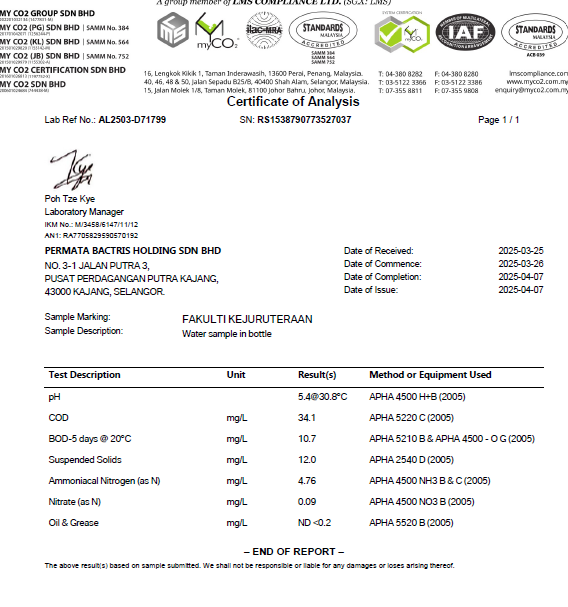
Based on the Water Quality Analysis Report in Figure 3.12.15, the effluent sample from the Faculty of Engineering UKM effluent meets all Department of Environment, Malaysia (DOE) Standard B requirements. pH (5.8) falls within the permissible range (5.5–9.0), while COD, BOD, suspended solids, ammoniacal nitrogen, nitrate, and oil & grease are significantly lower than the regulatory limits. This indicates that the effluent is safe for discharge into the environment and does not pose any immediate risk of pollution. UKM aims continuous monitoring to maintain compliance and to ensure long-term environmental safety.
Table: Summary of the test results that effluent is considered safe for discharge into the environment
| Parameter | Result | DOE Standard B Limit* | Remarks |
| pH | 5.8 @ 31.6°C | 5.5 – 9.0 | Within limit |
| Chemical Oxygen Demand (COD) | 7.0 mg/L | ≤ 100 mg/L | Safe |
| Biochemical Oxygen Demand (BOD₅ @ 20°C) | 2.2 mg/L | ≤ 50 mg/L | Safe |
| Suspended Solids (SS) | ND < 1.0 mg/L | ≤ 100 mg/L | Very safe |
| Ammoniacal Nitrogen (as N) | 2.94 mg/L | ≤ 5 mg/L | Safe |
| Nitrate (as N) | 0.23 mg/L | ≤ 10 mg/L (drinking water reference) | Very safe |
| Oil & Grease | ND < 0.2 mg/L | ≤ 10 mg/L | Very safe |
3. The Sewerage Treatment Plant: Extended Aeration Class License
The SWTP Extended Aeration Class License below serves as an official authorization for the operation of sewage treatment plants (STPs) that use the extended aeration system. This license is issued by the National Water Services Commission (SPAN) which is the national regulatory body for the water supply and sewerage industry in Malaysia. This ensures that wastewater is properly treated before being released into the environment, thereby maintaining compliance with regulatory standards on effluent quality. Its function is crucial in safeguarding rivers, ecosystems, and biodiversity from pollution while promoting sustainable wastewater management. By enforcing proper maintenance and monitoring of the sewage treatment system, the license helps protect public health and ensures a clean and safe water supply for surrounding communities.


4. Detail On The Treatment Process Of The Sewerage Treatment Plant: Extended Aeration (EA) System at UKM
The SWTP ‘Extended Aeration (EA)’ system is a sewage treatment station designed to treat wastewater generated inside UKM. This system uses biological treatment to break down and eliminate organic sewage waste, producing odorless and colorless effluent through aerobic bacteria present in the treatment tanks/pools (Clarifier Tank/Pool and Aeration Tank/Pool). The Extended Aeration (EA) system includes additional oxygen piping to support these bacteria via the operation of aerator/air blower pumps connected from the diffuser aerator piping to the aeration tank. This oxygen supply helps the bacteria survive and multiply, ensuring the continuity of the biological treatment process within the SWPT treatment tanks.
The flow chart below is the summary of the sewage treatment plant station at UKM.
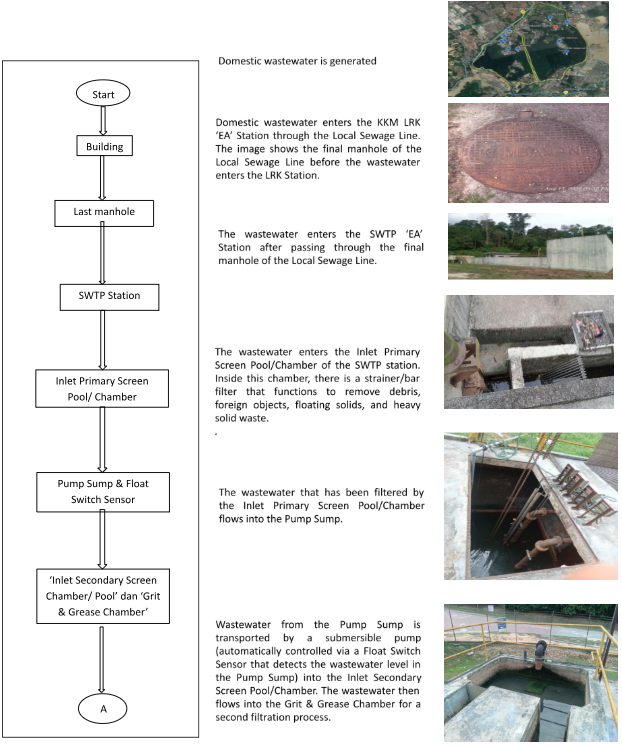

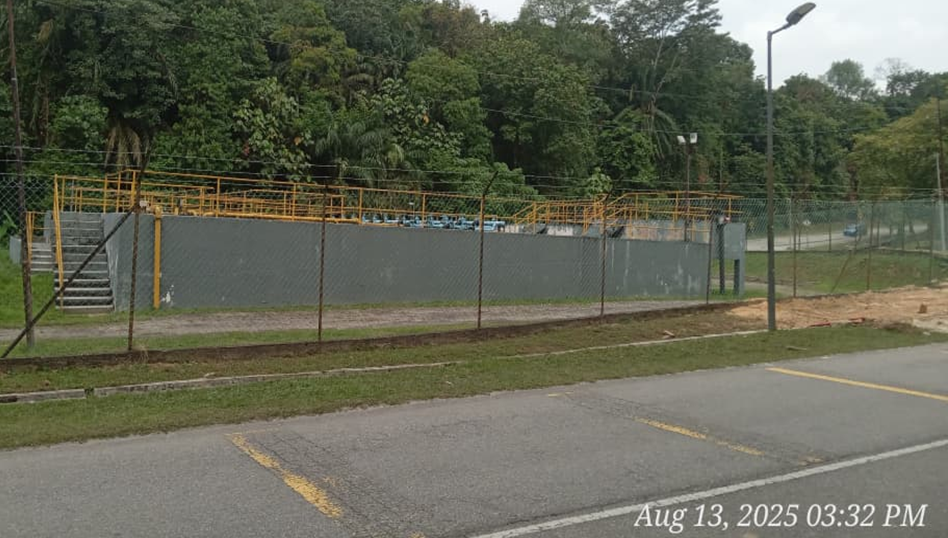
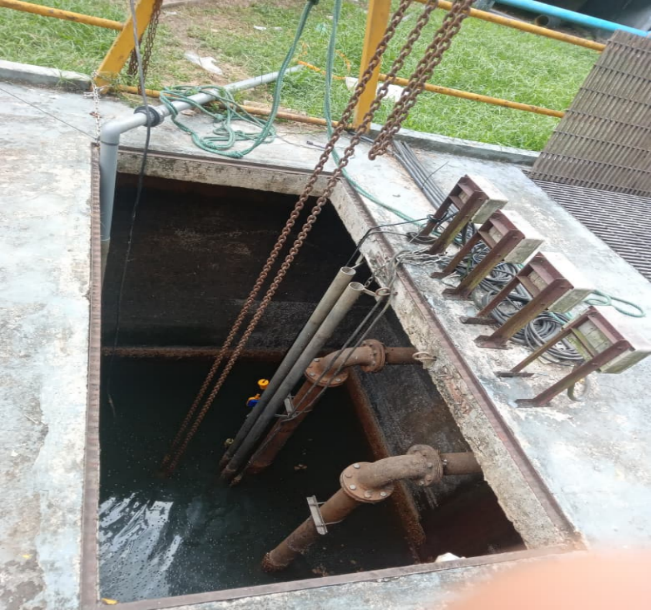
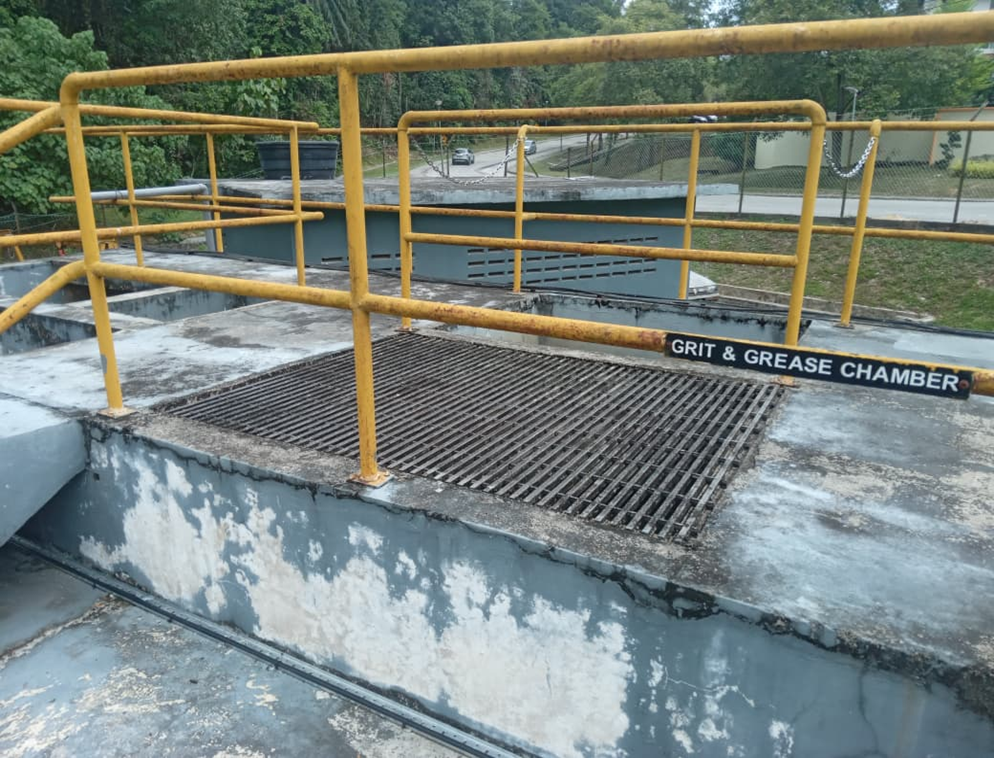


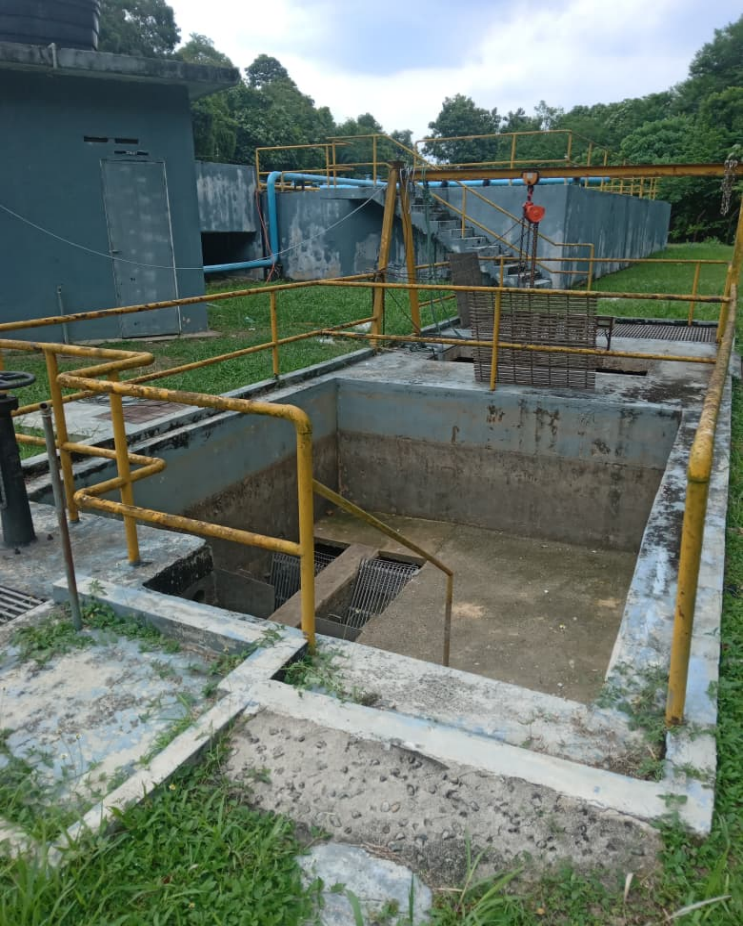
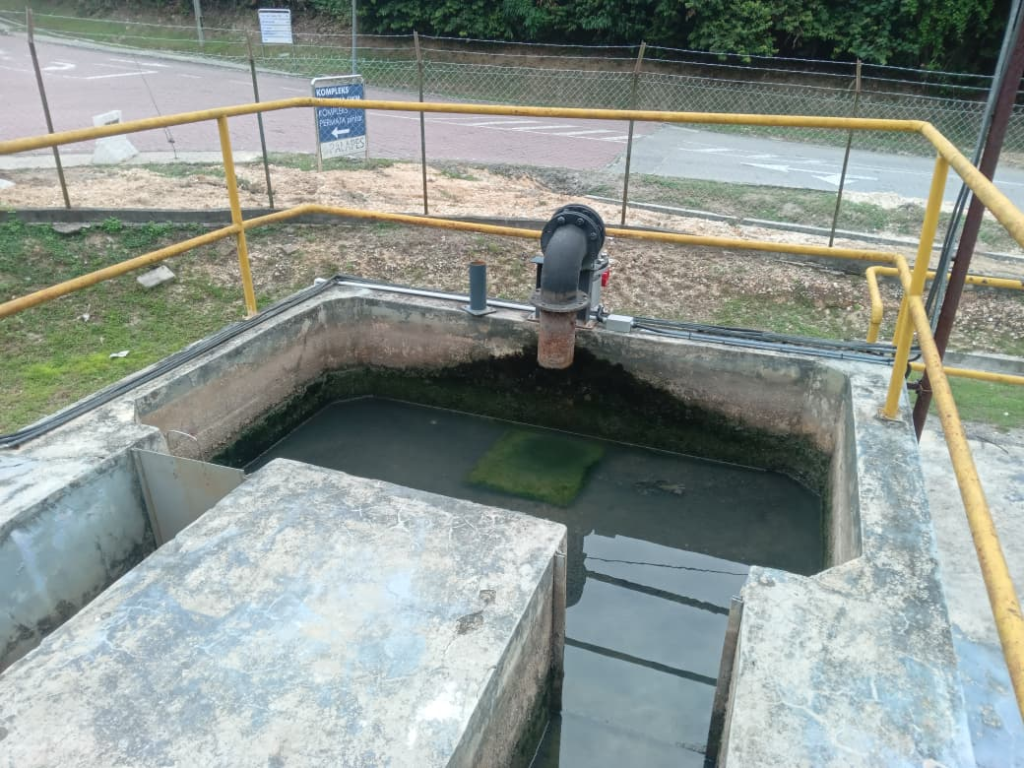
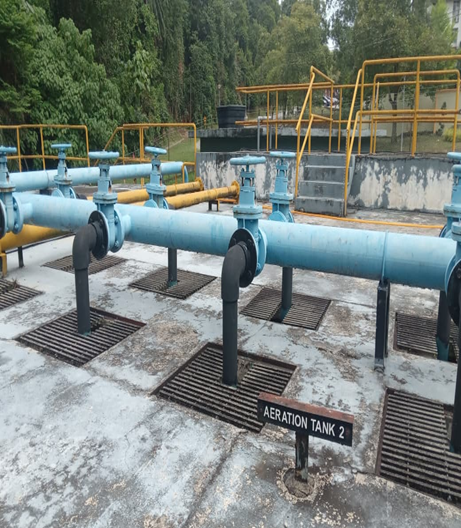


Figure 3.7.8 : Example of the Sewage Treatment that uses at UKM
5. UKM Integrated Water Control Management & Monitoring System (PUMA-UKM)
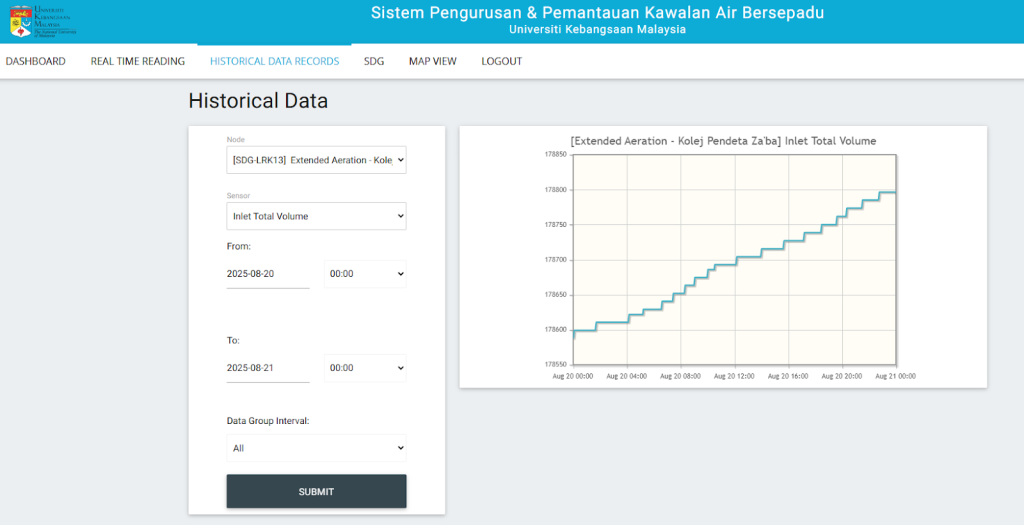
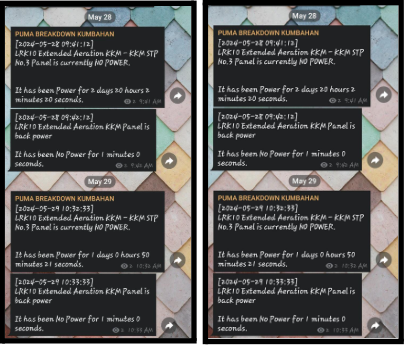
This system was developed by the Infrastructure Development Department (JPP), UKM to monitor the operation of sewage pumps, water pumps, and water levels in UKM’s main water tanks. It utilizes a robotic communication device – the Remote Terminal Unit (RTU) – developed by JPP UKM as an enhancement to the previous manual monitoring operations conducted by JPP and the appointed contractor. The monitoring system is also known as the Pump Station Monitoring Application (PuMA). Data generated by the RTU can be monitored online via Telegram and the website https://ukmpumphouse.caiser.my. The system is maintained regularly by the appointed contractor, with maintenance rounds carried out once a month.
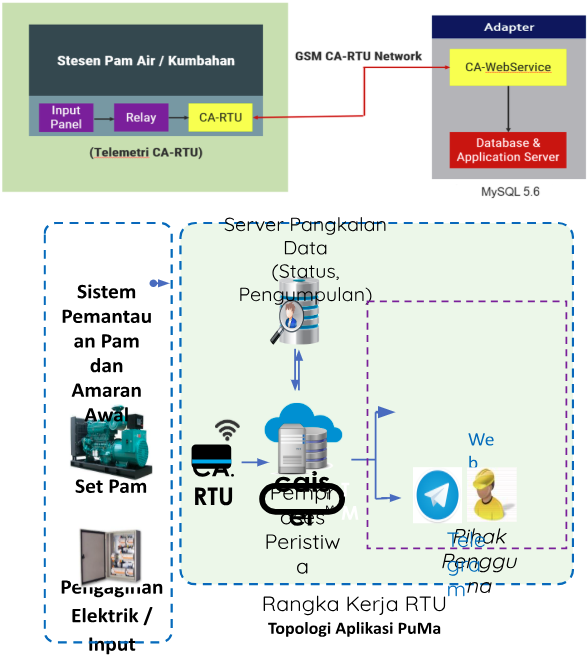
The input panels located at the pump sites are connected to the input and output nodes of the CA-RTU data logger via relays, where the CA-RTU functions as the control unit to transmit data to the server database. The data is transmitted to the CA-RTM (Run Time Module) processor and CA-Cloud via GSM/GPRS communication channels. This data is automatically stored in the server database. Subsequently, alert notifications are sent to the technical team for further action via the Telegram messaging application. The technical team can also monitor real-time readings and historical data through the PuMa-UKM web portal.
6. Pump Station Monitoring Application (PUMA-UKM) Dashboard
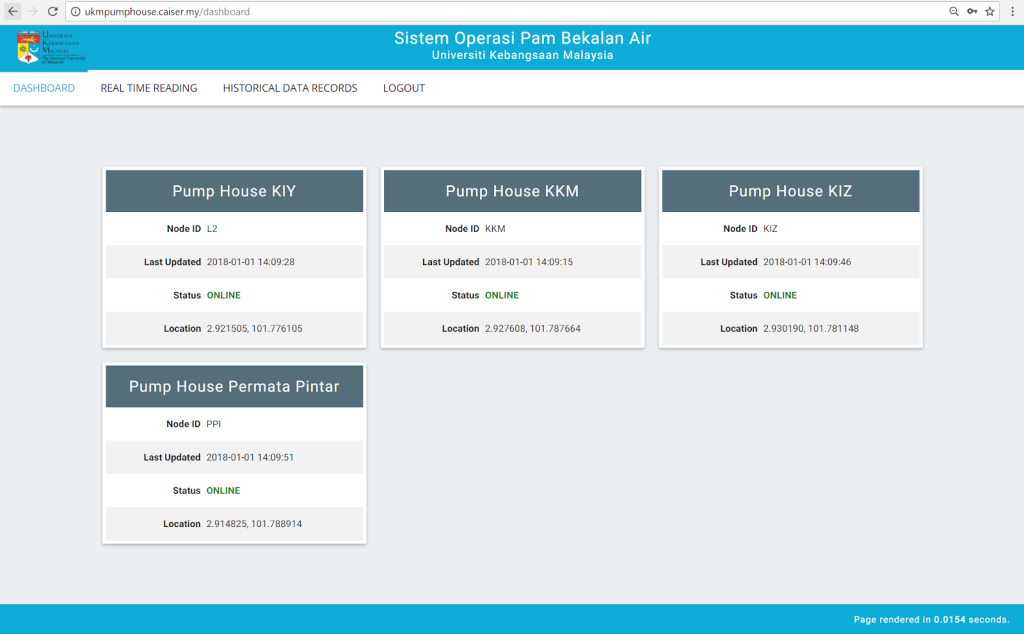
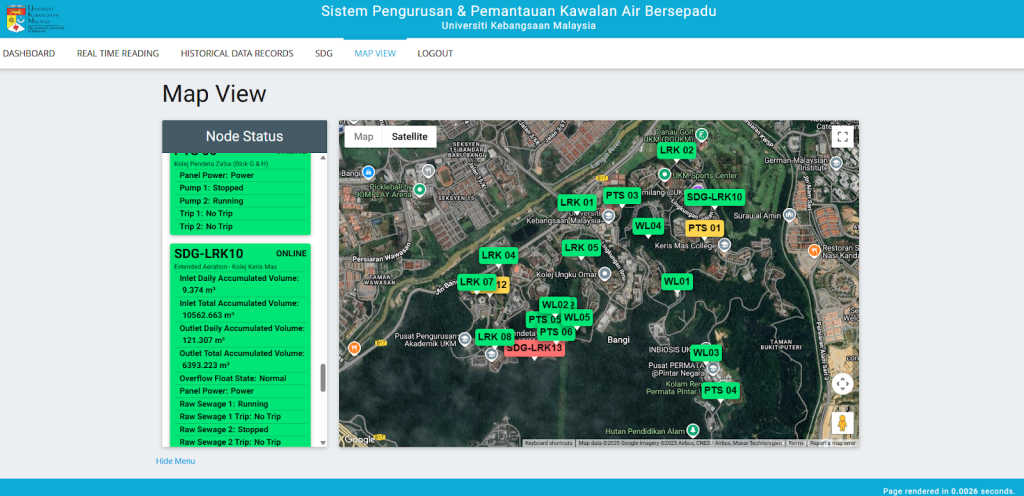
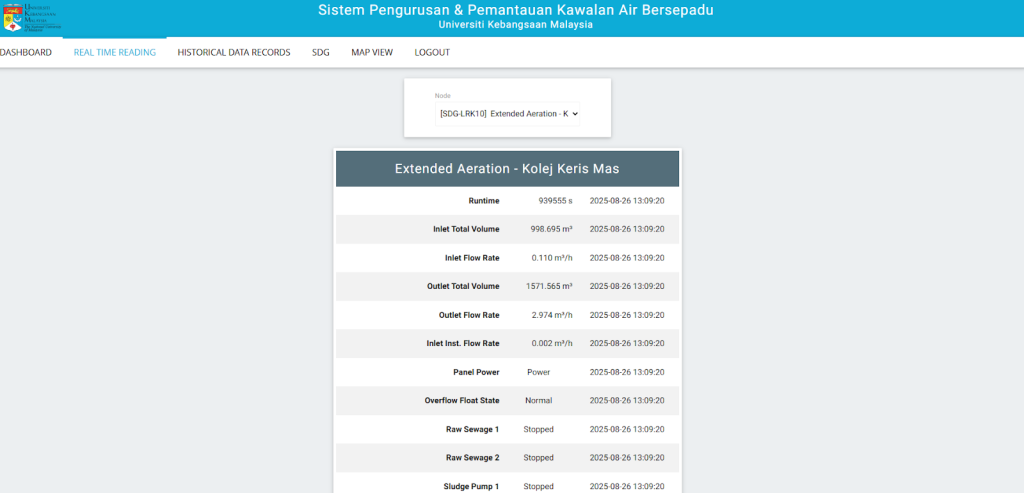
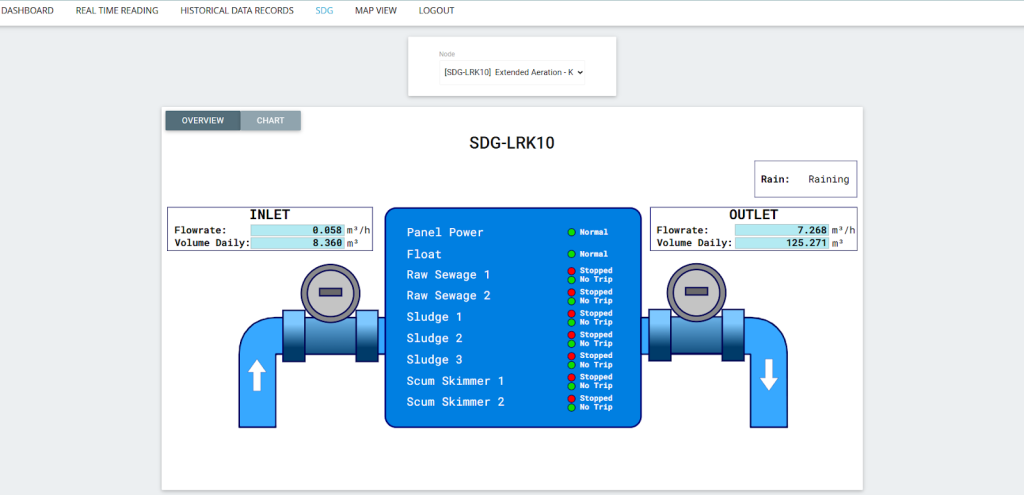
The Pump Station Monitoring Application (PUMA-UKM) Dashboard is a smart digital platform developed to monitor, manage, and analyze pump station operations in real time. Designed to enhance efficiency and reliability, this dashboard provides comprehensive data visualization on water flow, pump performance, energy consumption, and system status across the UKM campus. By integrating Internet of Things (IoT) sensors and automated reporting features, PUMA-UKM enables proactive maintenance, rapid fault detection, and data-driven decision-making. This initiative reflects UKM’s commitment to sustainability, operational excellence, and innovative technology in campus infrastructure management.



7. Maintenance Program For Sewage Treatment Plant at UKM
There are two types of maintenance programs (non-comprehensive) and improvements at both SWTP stations which are monitored by the Infrastructure Development Department (JPP), UKM. The primary maintenance involves the operation and upkeep of the SWTP System, while the secondary maintenance covers the operation of the Internet of Things (IoT) System. All maintenance activities are carried out periodically as Preventive Maintenance, with a monthly frequency, by two appointed contractor companies selected by UKM.
The following is a summary of the scope of LRK System maintenance conducted at both stations:
I. Sewage Treatment Plant Maintenance
- Cleaning and washing (“housekeeping”) of the entire SWTP Station area.
- Inspection and testing of control panels and electrical wiring.
- Inspection and testing of the pump system operation, including accessories (submersible pumps, aerators, air blowers, scum skimmers).
- Inspection and cleaning of filters (strainers/bar filters).
- Comprehensive inspection of all piping systems within the SWTP station.
- Inspection and cleaning of chambers, basins, tanks, or reservoirs, including Inlet Primary/Secondary Screen Chamber, aeration, clarifier, pump sump, grit & grease, effluent discharge channel, and Filter Dryer Bed.
- Desludging of approximately 50 kg of sludge from the SWTP.
- Preparation of detailed maintenance reports (periodic, breakdowns, and repairs) including dated, color photographs documenting conditions before, during, and after maintenance.
- Effluent Analysis.
- Corrective Maintenance – Preparation of quotation documents for repair or replacement works, complete with color photographs and reports on damaged components, equipment, or monitoring systems.
II. IoT System Maintenance
- Conduct daily monitoring of IoT operations via the website https://ukmpumphouse.caiser.my and Telegram (company staff are required to download the Telegram app to receive notifications related to the monitoring system).
- Perform periodic inspections, equipment testing, and calibration between the IoT system and all devices sending notifications to the website and Telegram.
- Prepare detailed maintenance reports (periodic, breakdowns, and repairs) including dated, color photographs documenting conditions before, during, and after maintenance.
- Provide housekeeping services (cleaning and washing) for IoT devices and equipment such as enclosure boxes, RTUs, sensors, and related hardware and software components essential for IoT operation.
- Corrective Maintenance – Prepare quotation documents for repair or replacement works, complete with color photographs and reports on damaged components, equipment, or the monitoring system.
The sewage treatment maintenance activities highlight the scheduled inspections, servicing, and corrective measures undertaken to ensure the sewage treatment system operates efficiently, complies with environmental standards, and supports the university’s sustainability goals. The report also outlines challenges encountered and recommendations for improving future maintenance practices.

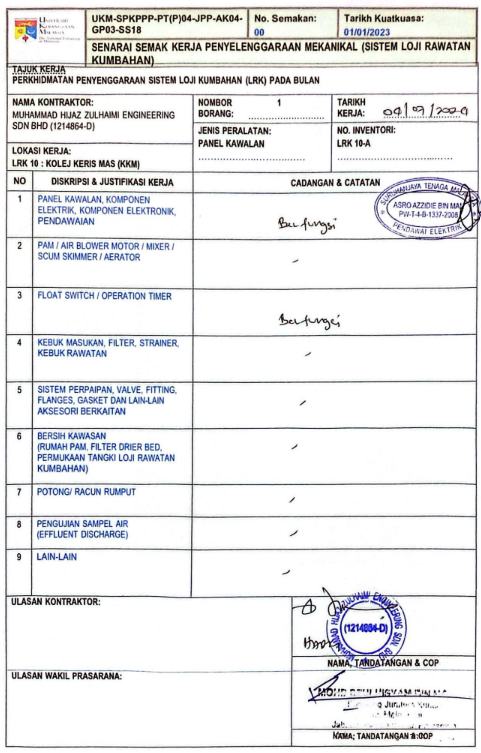
The flow chart below is the summary of the maintenance sewage treatment plant station at UKM.
