

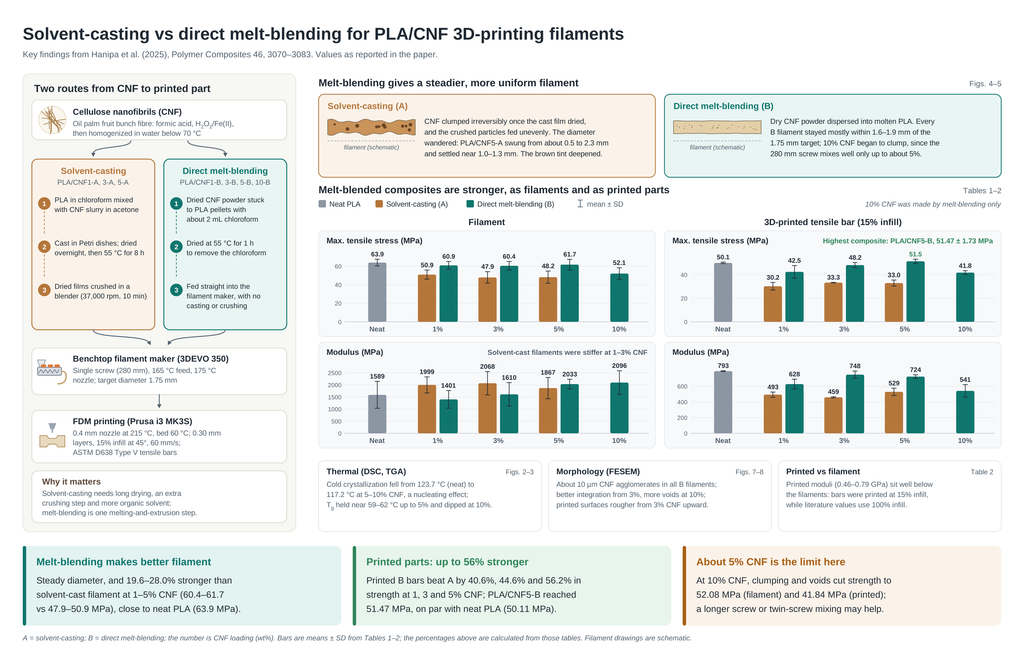
Recent research by Dr. Muhammad Alif Fitri, compared two different methods for mixing microscopic natural cellulose fibers (CNF) into a standard 3D printing plastic (PLA). The study revealed that a simpler technique called “direct melt-blending,” which mixes dry cellulose powder directly into melted plastic, is far superior to a longer, chemical-heavy process known as “solvent-casting”. The solvent method resulted in uneven, clumpy printing threads with highly unpredictable thicknesses, whereas the direct melting method created smooth, consistent threads that hit their target size. Consequently, the threads made via direct melting were significantly stronger, and the final 3D-printed parts created from them were up to 56% stronger than those made with the solvent method. The researchers identified that a precise mixture containing 5% cellulose produced the best overall results, achieving a final printed strength of 51.47 MPa, which is practically on par with pure plastic. However, the study also found a limit to this enhancement; increasing the cellulose content to 10% caused the material to clump and form microscopic voids, ultimately weakening both the printing threads and the final printed objects.
Please read our article here:
Comparative study of blending techniques in polylactic acid/cellulose nanofibrils green composites for benchtop 3D printing filaments. Polymer Composites. 2025;46(4):3070‐3083.
Authors: Hanipa, M.A.F., Zaidi, S.A.S., Sajab, M.S., Abdul, P.M. and Jamil, K., 2025.