

UMBI Research Spotlight No.7/2026
Targeting Molecular Drivers of Diabesotension for Personalized Therapy
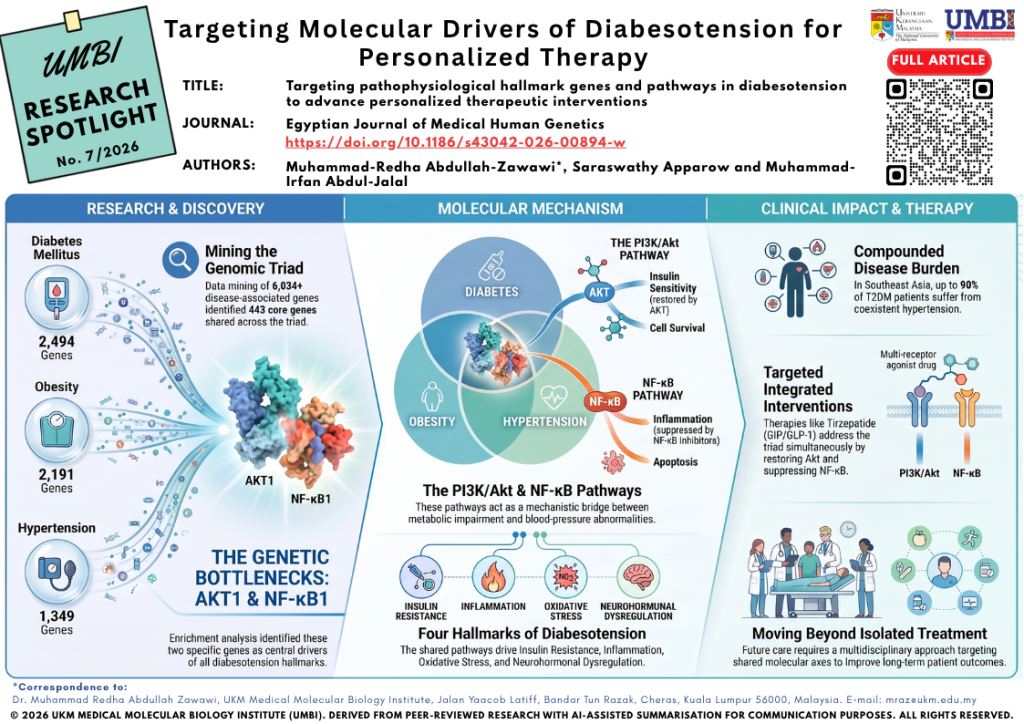
UMBI researcher Dr. Muhammad-Redha Abdullah-Zawawi and his team have published a commentary exploring the molecular links between type 2 diabetes, obesity, and hypertension, collectively referred to as diabesotension.
Using a data-mining approach, the researchers identified 6,034 disease-associated genes across diabetes, obesity, and hypertension, with 443 genes shared across all three conditions. Through functional enrichment analysis of these shared genes, AKT1 and NF-κB1 emerged as two key genes associated with four major pathophysiological hallmarks of diabesotension: insulin resistance, inflammation, neurohormonal dysregulation, and oxidative stress.
The study further highlights the interconnected PI3K/Akt and NF-κB signalling pathways, which may provide an important molecular link between metabolic dysfunction, inflammation, and vascular abnormalities in diabesotension. The authors also discuss the potential of integrated therapeutic approaches, including emerging treatments such as tirzepatide, that may address multiple components of this disease triad.
This work highlights UMBI’s contribution to data-driven molecular research, using bioinformatics and pathway analysis to better understand complex metabolic conditions and identify potential avenues for personalised therapeutic strategies.
Read the full article:
Abdullah-Zawawi MR, Apparow S, Abdul Jalal MI (2026).
https://doi.org/10.1186/s43042-026-00894-w
#UMBI #UKM #UMBIResearchSpotlight #Diabesotension #Diabetes #Obesity #Hypertension #MetabolicHealth #MolecularMedicine #PrecisionMedicine #TranslationalResearch #PI3KAkt #NFKB #BiomedicalResearch
—–
SDG 3 | SDG 4 | SDG17 – Health/Wellbeing, Education, Quality of life, Knowledge sharing