By Institute of Climate Change
BANGI, 27 August 2025 – A stakeholder workshop and regional meeting hosted by the Earth Observation Centre, Institute of Climate Change, Universiti Kebangsaan Malaysia (UKM) brought together experts to explore the growing impact of Urban Heat Islands (UHI) in Southeast Asia’s megacities.
The workshop, “Assessing UHI in Southeast Asia Megacities: An Integrated Study of Land Use, Climate Change and Heatwave Occurrences,” was officiated by Deputy Director General (Operations) of the Malaysia Meteorological Department, Mr. Ambun Dindang.
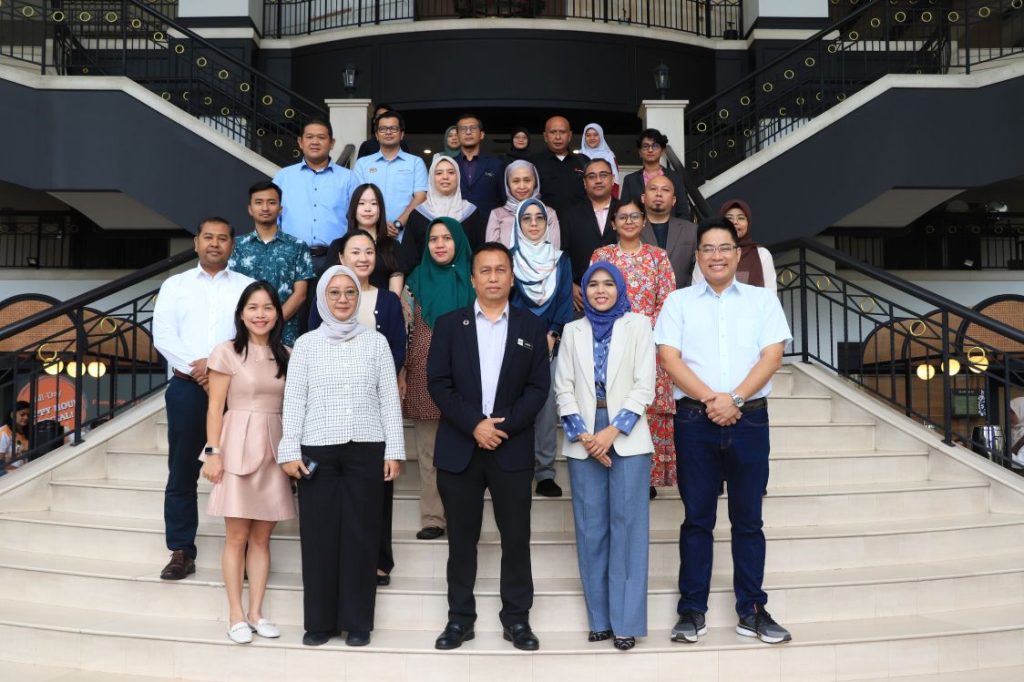
The event gathered representatives from government agencies, non-governmental organisations, academia, community groups, and international experts from Vietnam, Japan, and Indonesia.
The main objective was to develop integrated assessment frameworks and strengthening stakeholder engagement for UHI mitigation and resilience, with Kuala Lumpur serving as the pilot study site.
In his officiating remarks, Mr. Ambun emphasised the urgency of addressing UHI in Southeast Asia’s fast-growing cities:
“UHI are not merely an academic concept; they are a lived reality for millions of urban dwellers, especially in the dense, rapidly growing megacities of Southeast Asia.
In our region, rapid urbanisation, changing land use, and the intensifying impacts of climate variability have created localised hotspots that can exacerbate heatwaves, strain public health systems, and undermine urban resilience,” he said.
The project, led by Ts. Gs. Dr. Wan Shafrina Wan Mohd Jaafar is funded by the Asia Pacific Network for Global Change Research.
According to Ts. Gs. Dr. Wan Shafrina, the rising trend of urban heat and the increasing frequency of heatwaves are expected to intensify further in the coming decades.
The project’s findings emphasised the importance of high-resolution land use classification in differentiating UHI impacts across various urban environments in Kuala Lumpur.
In addition to the presentation of research findings, international experts from Vietnam, Japan, and Indonesia shared their respective countries’ experiences in addressing UHI and heatwave issues.
Local stakeholders also presented their ongoing efforts and initiatives, followed by Question and Answer session that encouraged meaningful dialogue and knowledge exchange.
Several suggestions were put forward to mitigate UHI, including the selection of sustainable and reflective building materials to reduce heat absorption, expansion of green spaces and urban forests to improve cooling and liveability, and public awareness and education programs to encourage behavioural change and community participation.
The workshop emphasised that each sector has an essential role to play in addressing this challenge, spanning urban planning, green and environmental management, public health, energy and infrastructure, climate and disaster preparedness, community engagement, media and communication, and advocacy.
It concluded with a consensus that UHI and heatwave challenges cannot be solved by a single entity, but require collaborative, cross-sectoral action to build climate-resilient cities in Malaysia and across Southeast Asia.