Fakulti Kejuruteraan dan Alam Bina

Faculty of Engineering and Built Environment
The National University of Malaysia
Bachelor Degree Programme
Bachelor of Civil Engineering with Honours
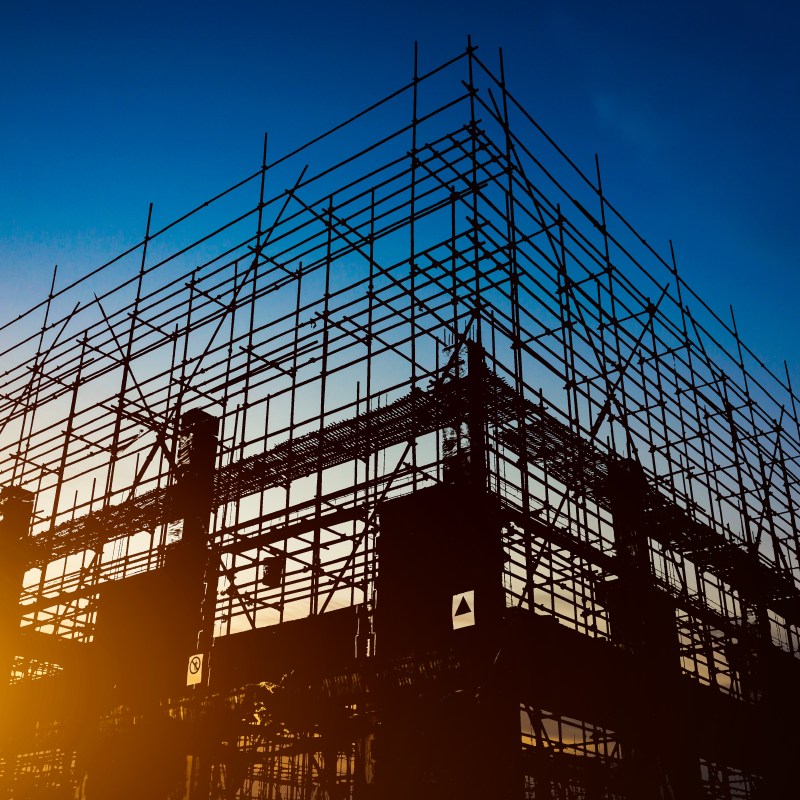
In UKM, the Civil Engineering Programme has been planned and designed to meet the abovementioned demands. Various civil engineering specialities are coordinated by different groups, such as structural engineering, construction materials engineering, construction and project management, geotechnical and geoenvironmental engineering, environmental and water resources engineering, and transportation engineering. The teaching staff of the programme have the required academic and professional qualifications suitable for civil engineering courses.
The laboratories are also facilitated with the latest laboratory equipment for coursework and research. With a total amount of equipment of over RM20 million, the civil engineering lab can conduct laboratory work for teaching and research to the highest level of quality.

Bachelor of Electric and Electronic Engineering with Honours
The Department of Electrical, Electronic and Systems Engineering (JKEES) was among the first department founded in the Faculty of Engineering and Built Environment. Initially known as the Unit of Electronic under the Department of Physics in the Faculty of Science on 1st May 1978, it became a full department known as the Department of Electronic in the Faculty of Physics and Applied Science. With joint efforts from the staff of the Department of Electronic and the Department of Chemical Technology, the Faculty of Engineering and Built Environment was established on 1st November 1984. Upon the establishment of the Faculty of Engineering and Built Environment, the name of the department was changed to the Department of Electrical, Electronic and Systems Engineering. After nearly 33 years thereafter, through a new restructuring process at the Faculty of Engineering and Architecture in 2018, the department’s name was transformed as the Electrical and Electronic Engineering Program. The department name changed to Department of Electrical, Electronic and Systems Engineering again in 2020.

Bachelor of Chemical Engineering with Honours
Chemical Engineering is a branch of engineering discipline that uses principles of science, engineering, economics as well as process safety to conceive ideas on the related chemical process, design and develop process to catalyze the transformation of raw materials into useful material and high value products in numerous areas including materials, chemicals, food, fuel and few others. The basic principles applied in teaching and learning of the programme include the knowledge in chemistry, physics, biology and mathematics. Students will be further equipped with the core engineering courses such as thermodynamics, material and energy balance, mass and heat transfer, chemical process kinetics and reactor design, separation process, dynamics and control, plant and process design, which focus on both chemical and biochemical processes. The programme is further empowered with process safety, environmental engineering and sustainability courses to enhance the student’s knowledge and to educate as well as to give awareness to students on chemical engineer’s role and responsibility in performing the task and fulfilling the need of the society, industries and also the standard implemented by the authority in achieving sustainable development. Awareness on Sustainable Development Goal (SDG) is introduced in the program through certain courses with the aim to sustain the world together. In order to keep pace with the industrial revolution (IR) 4.0, the programme also has several core courses that strengthen the element of IR4.0 including programming and simulation, artificial intelligence (AI), internet of thing (IoT) and several other elements, among students. Finally, the programme also provides professional exposure to the students through professional development courses such as Ethics and Professionalism, Engineering Ethics and Technological Advancement.

Bachelor of Mechanical Engineering with Honours
The department offers an undergraduate degree program, which is the Mechanical Engineering Programme. Students for the Mechanical Engineering Programme need to complete courses in the field of mechanical engineering starting from semester one to eight. Each departmental core course contains relevant practical sessions and course assessments that include elements of examinations and practical work. In the last semester of study, emphasis is placed on areas including project management, economics and production planning. Students are required to take several courses in these fields. This is in line with the department’s aim to produce engineers with in-depth knowledge of economics and the intricacy of management. The department requires students to carry out a research project through Scientific Projects I and II in the last two semesters with the guidance of department lecturers. It is a pre-requisite for students to graduate. Students are also given some freedom to focus on elective courses in the fields of thermo-fluids, energy, material processing, applied mechanics and manufacturing for mechanical engineering. Students are required to choose fifteen (15) elective units for the Mechanical Engineering Program from the elective courses offered. These elective courses reflect the current needs in those specialized fields and also follow current industrial demands, which shall be updated periodically.

Bachelor of Science in Architecture with Honours
The Department of Architecture and Built Environment was established in 2002. The undergraduate program offer is Bachelor of Science in Architecture with Honours (LAM Part I). Bachelor of Science in Architecture with Honours (LAM Part I) is a semi- professional degree. It comprises courses such as design studio, history and theory of architecture, environmental science, building structures, building services, architectural communication, building technology and materials. The program is oriented towards the design studio course, which is the core of the programme.