INCFUSE 2026
INCFUSE 2026

Plenary Speaker 1
Prof. Emeritus Dato’ Ir. Dr. Wan Ramli Wan Daud, Universiti Kebangsaan Malaysia
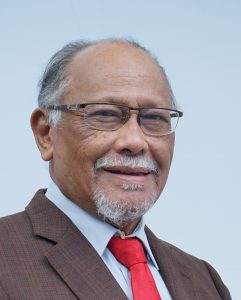
Prof. Dato’ Ir. Dr. Wan Ramli Wan Daud is Emeritus Professor (2024-) at Department of Chemical & Process Engineering (DCPE), Faculty of Engineering & Built Environment (FEBE), Universiti Kebangsaan Malaysi (UKM).
Career: He began his career at UKM as a Tutor (1979-1984), lecturer at Department of Chemical Technology, Faculty of Applied Physical Sciences (1984-1986) and then at DCPE, Faculty of Engineering (FE) (1984-1989), and Associate Professor at DCPE, FEBE, UKM (1989-1995). He was Head of DCPE (1985-1988), Deputy Dean, FE, UKM (1990–1993), then FEBE, UKM (1995–1998) He was elevated to full Professor of Chemical Engineering at DCPE, FEBE, UKM (1996-2021), Principal Research Fellow at the Fuel Cell Institute (Selfuel), UKM (2007-2021), Founding Director of Sel Fuel, UKM (2007-2014), UKM-Petronas Professor of Sustainable Hydrogen Energy UKM (2019- 2021), Principal Research Fellow, University of Malaya (2022-2024),
Education: BEng (First Class Hons.) in chemical engineering from University of Monash, Victoria, Australia (1978) and PhD in chemical engineering from University of Cambridge, United Kingdom (1984).
Professional Affiliations: Fellow of the Academy of Sciences Malaysia (2012-), Fellow of The World Academy of Sciences (2022-), Fellow of The Institution of Chemical Engineers (2007-), Founding President of the Malaysian Association of Hydrogen Energy (MAHE) (2018-2024), Professional Engineer with Practicing Certificate (PEPC) (1997-) and Chartered Chemical Engineer (CEng) (2007-). He advocates hydrogen economy and led development of the Roadmap of Hydrogen Energy and Fuel Cells Malaysia 2006 and Malaysia’s Hydrogen Economy and Technology Roadmap HETR 2023.
National Awards: Won prestigious Merdeka Award 2016, the top Malaysia’s science award.
International Awards: World’s Most Influential Scientific Minds. World’s, top 1% scientists and Highly Cited Researcher 2015-2021 and World’s top 2% Scientist 2019-2025. Won Award for Excellence in Research in Drying of Agricultural Products and the Outstanding Contribution to the Development of Drying Technology 2011, Outstanding Contribution to the Drying Community Award 2009, IChemE Highly Commended Shell Energy Award 2008 and ASEAN Energy Award 2007.
Main Research Areas: green hydrogen energy from water splitting in photoelectrochemical cell (PEC), proton exchange membrane water electrolysis (PEMWE) and microbial electrolysis cell (MEC); proton exchange membrane fuel cells (PEMFC), solid oxide fuel cells (SOFC), microbial fuel cells (MFC) and direct methanol fuel cells (DMFC); solar, spray, drum, steam, microwave and fluidized bed drying; and history and philosophy of Malay & Islamic technology.
Intellectual Property: Granted 30 patents and 1 Trademark.
Publications: Published 432 articles in international journals, 402 articles in proceedings of international conferences and 235 articles in proceedings of national conferences. Up to 7 October 2025, he is cited in WOS 17,098 times with H-index 66; SCOPUS 19,628 times with H-index 72, and Google Scholar 26,332 times with H-index 81.
International Keynotes: Invited to present 62 international plenary keynote and 10 invited papers on hydrogen energy, fuel cells and drying technology in China, Iceland, India, Indonesia, Iran, Japan, Malaysia, Netherlands, Philippines, Russia, Singapore, Taiwan and Thailand. National Keynotes: Invited to present 30 national plenary keynote papers.
Plenary Speaker 2
Prof. Nie Zhifeng, Kunming University
 Short Biography: Nie Zhifeng, Ph.D., is Vice Dean of the School of Chemistry and Chemical Engineering at Kunming University, Director of the Yunnan Key Laboratory of Metal-Organic Molecular Materials and Devices, and a Master’s Supervisor. He has been recognized as an Outstanding Professional and Technical Talent with Distinguished Contributions in Yunnan Province, Deputy Chief Technology Officer of Science and Technology of Yunnan Province, Young Top-Notch Talent under the Yunnan “Xingdian Talent Support Program”, Young Scholar under the Kunming “Spring City Plan”, and Academic and Technical Leader among Middle-Aged and Young Professionals in Kunming. He serves as an expert thesis reviewer for the Degree Evaluation Committee of the Ministry of Education, a peer reviewer for the National Natural Science Foundation of China (NSFC), and a science and technology project evaluator for Yunnan Province. He has led two NSFC projects, fifteen provincial- and ministerial-level research initiatives (including key basic research programs of Yunnan Province), and three enterprise-commissioned technical projects. He has published over 50 SCI-indexed papers in journals such as Chemical Engineering Journal, Separation and Purification Technology, Desalination, Applied Surface Science, Surfaces and Interfaces, International Journal of Heat and Mass Transfer, and Applied Thermal Engineering, and holds 15 authorized Chinese invention patents. His honors include the Second Prize of the Yunnan Provincial Natural Science Award, and the First and Third Prizes of the China Nonferrous Metals Industry Science and Technology Award.
Presentation title: Research Progress of Electrospun Nanofibers in Sustainable Utilization of Rare and Precious Metal Resources
Synopsis of talk: Rare and precious metals are essential for advanced technologies yet face supply risks, driving demand for efficient recovery from secondary resources. Electrospun nanofibers, with high specific surface area and tunable chemistry, serve as promising adsorbent platforms. Herein, we summarize recent progress: IL-PVC nanofibers enabled visible-light-enhanced Au(III) adsorption and in-situ photoreduction to Au nanoparticles, exhibiting capacity 1.6 times that in dark and high selectivity. Magnetic core-shell ion-imprinted polymers were constructed for Re(VII) capture, combining specific cavity recognition, electrostatic attraction, and hydrophobicity for excellent selectivity and reusability. Future work will develop Ga(III)imprinted nanofibers with phosphonic/sulfonic acid dual monomers for Al/Fe separation via coordination geometry discrimination, and acid-resistant confined-space nanofibers for Pt species enrichment and reduction. These advances highlight the potential of electrospun materials for sustainable metal recycling
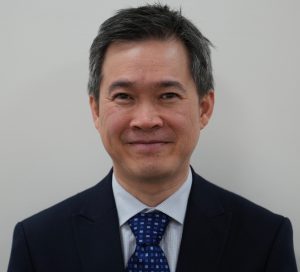
Prof. Jerry Heng | Imperial College London.
BioCrystallisation: Challenges and Opportunities in Protein and Peptide Purification
The purification of high molecular weight new modalities such as proteins and peptides, for their use in biopharmaceutical drug therapeutics, can still account for a significant proportion of the drug development cost. However, advances in the optimisation of crystallisation conditions have seen significant increase in the scalability of peptide/protein crystallisation. Crystallisation provides an attractive isolation step for pharmaceutical products due to its unique ability to purify and control other properties such as particle size distribution, morphology, and polymorphism. In addition, crystallisation offers pharmacokinetic advantages such as better release control and higher bioavailability, and lower impurity loading. This talk will focus on my group’s recent efforts to control nucleation and crystallisation of complex macromolecules such as proteins (including a model monoclonal antibody, Anti-CD20) and homo-peptides; using 3D-nanotemplates for a range of model proteins (eg thaumatin, con A, catalase, etc) and the use of soft templates (eg amino acids) for insulin and the crystallisation behaviour of simple short-chain peptides. For peptides, the effects of chain length and thermodynamic properties (eg solubility) is determined to establish a rational design of the crystallisation conditions using glycine homopeptides as a model. The talk will also present results from our solubility studies for simple peptides in single and binary solvent mixtures, the effect of sequence and protection groups on solubility of peptides, and finally discussing their crystallisation behaviour in the absence and presence of templates. This talk will provide some insights into the challenges and opportunities in crystallisation as a purification unit process for proteins and peptides.
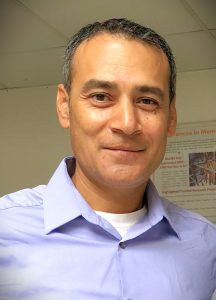 Prof. Samir Kumar Khanal | The Hong Kong University of Science and Technology.
Micro/nanobubbles are tiny bubbles that have wide ranging applications in environmental remediation and agriculture. Due to their several unique properties, such as their high gas solubility, high electrostatic interaction, and their potential formation of reactive oxygen species, micro/nanobubbles can provide opportunities in various environmental remediation applications and different microbial-mediated processes where poorly soluble gases are difficult to supply using conventional technology. The perpetual generation of reactive oxygen species could also offer new avenues in pathogen and biofilm control. With rising population growth and soaring food demand, there is growing demand to enhance food production. Due to the limitations of conventional aeration methods to increase the oxygen solubility threshold, applying an innovative Micro/nanobubbles technology could bring dissolved oxygen levels beyond normal saturation, thus bringing improvements in plant yields. This presentation will showcase some of his efforts in applying nanobubble technology in controlled environment agriculture systems, including aquaponic systems using air and oxygen nanobubbles to enhance plant yields and nutrient solubilization, as well as the use of carbon dioxide nanobubbles to improve macroalgae biomass production.
 Prof. Dr. Devi Nandita Choesin | Insitut Teknologi Bandung.
Blue Carbon Engineering: Optimizing Wetland Design for Maximum Sequestration
Mitigation of climate change requires innovative solutions, and coastal wetland ecosystems offer a powerful defense. Mangroves, seagrass meadows and salt marshes capture and store carbon at rates that exceed other natural ecosystems. The carbon sequestered by the world’s coastal and ocean systems is now referred to as “blue carbon”. However, relying on natural processes in blue carbon ecosystems may no longer be adequate, especially considering the continuing threats and degradation of marine ecosystems around the world. Therefore, these ecosystems must be actively engineered to boost their sequestration potential. Blue carbon engineering is the use of technology and design to restore coastal/marine ecosystems so they can optimally trap carbon dioxide and store organic carbon. This presentation highlights the current developments in blue carbon science, then explores how ecological engineering can optimize constructed wetland design, particularly by managing the critical factors of hydrologic control, soil management, and plant/biota selection. Various examples will show action research that bridges the gap between pure science and applied engineering. Besides sharing design frameworks and emerging high-tech solutions, this paper also emphasizes the importance of the concepts of ecosystem, ecosystem health and ecosystem services. When coastal wetlands are destroyed, stored carbon escapes back into the atmosphere as unwanted greenhouse gas. By engineering these spaces to remain healthy, we protect these systems and turn engineering tools into practical climate solutions.
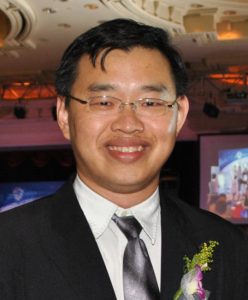 Prof. Ir. Dr. Dominic Foo, University of Nottingham Malaysia.
Process Integration Techniques For Decarbonisation
In the last decade, achieving carbon neutrality has become a major focus for various countries and economic sectors globally. Various techniques and planning tools have been proposed in order to achieve the carbon neutrality target by the mid of this century. Carbon capture, utilisation and storage, as well as negative emission technologies are among those that have received good attention in recent years, apart from the conventional renewable energy. For effective deployment of these technologies, various planning tools were proposed. Among them, process integration techniques have received good attention and have been utilised in various countries and sectors for decarbonisation efforts. Past works were reported for the use of these techniques at various scales, ranging from product carbon footprint reduction, plant-level CO2 emissions reduction, to regional or nation-wide greenhouse emission avoidance; which is now known as carbon management network in short. This talk will present various insight-based techniques developed in the past decade in addressing CO2 reduction problems.
 Associate Prof. Ir. Dr. Shuhaida Harun, Universiti Kebangsaan Malaysia.
The Biomass Boom: Turning Organic Waste into Green Gold
As global industries face the dual pressures of carbon mitigation and resource scarcity, traditional linear waste management models are being replaced by advanced engineering paradigms. This keynote address explores how modern biorefining technologies are converting organic waste liabilities into localized, high- value biobased capitals. The presentation unlocks the power of green gold by transforming an abundant natural resource into a valuable asset, driven by the bold principles of a sustainable circular economy and cleaner production. Furthermore, the address outlines relevant policy frameworks and commercialized technological pathways required to scale flexible high-performance green biofuels, and bio-based chemicals and materials. Key engineering challenges are also highlighted, including feedstock structural variability, high-moisture transport energy penalties, and rigorous chemical pretreatment requirements. The session provides actionable insights into bridging the gap between laboratory-scale biorefining breakthroughs and viable, market-competitive industrial deployment.