


Shaping Future Educators, Researchers and Leaders in Engineering Education
This Master of Science in Engineering Education is a multidisciplinary postgraduate programme that integrates education, engineering, technology, and research. The programme is designed to equip graduates with the knowledge and skills needed to drive innovation in engineering, STEM, and TVET education while addressing the challenges of 21st-century teaching and learning.
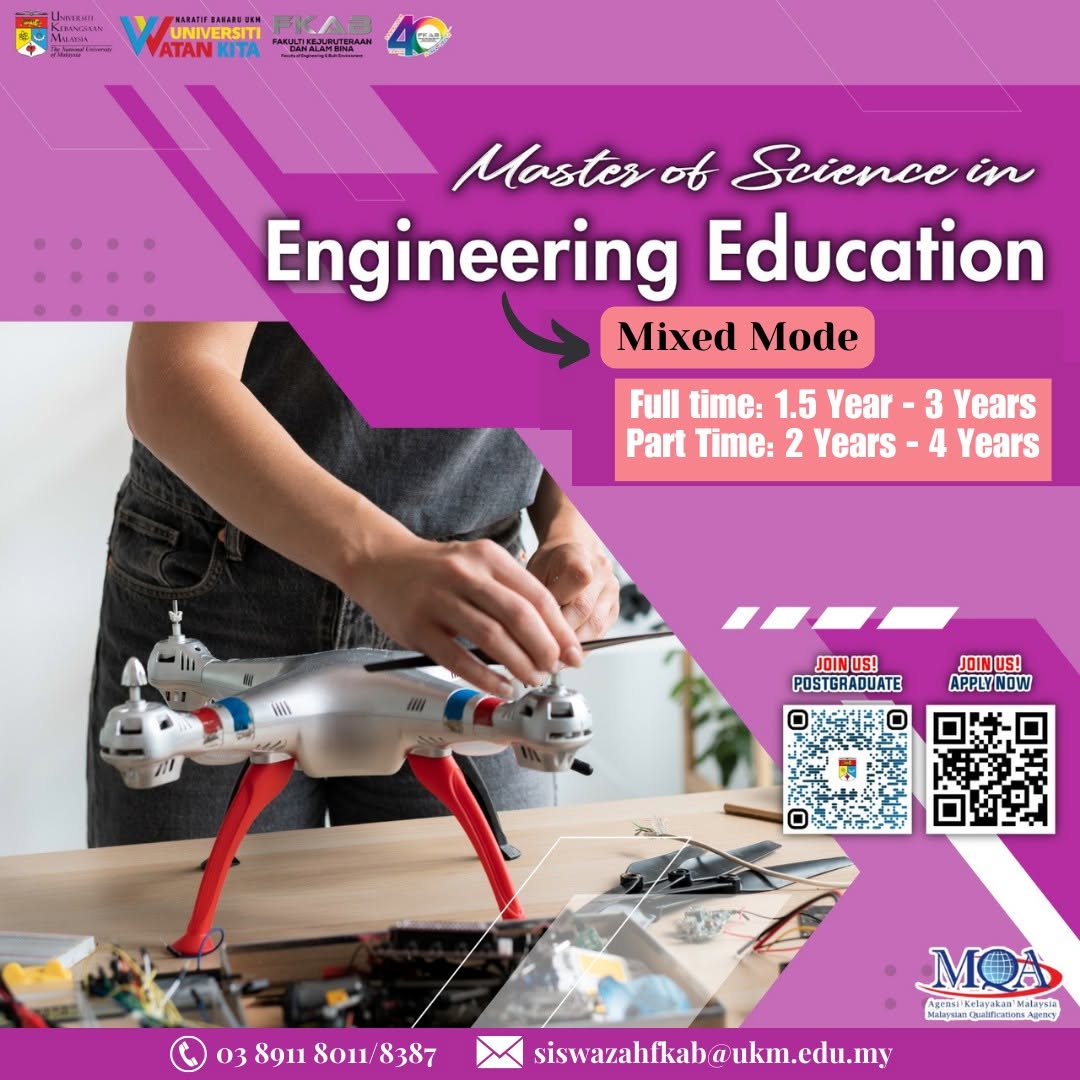
Programme Information
What Will You Learn?
- Engineering pedagogy and didactics
- Educational research methodologies
- Learning analytics and data analysis
- Integrated STEM education
- Artificial Intelligence (AI) in education
- Immersive and interactive learning technologies
- Competency assessment and talent development
Why Choose This Programme?
- Unique integration of engineering, education, and research
- Focus on STEM, TVET, Artificial Intelligence (AI), and educational technology
- Opportunities to conduct impactful research in education and industry
- Supervision by experienced academics and researchers
- Development of leadership and professional competencies for educational and training environments
Learning Credit Hours
- Faculty core courses: 3 credits
- Programme core courses: 12 credits
- Elective courses: 6 credits
- Dissertation: 24 credits
FAQ - General
Students may enrol either as full-time or part-time candidates.
The programme is suitable for graduates from engineering, education, STEM, technology, and related disciplines. Professionals with relevant industry experience are also encouraged to apply.
This is a Mixed Mode programme that combines coursework with a substantial research component.
The programme can be completed within:
- Minimum: 1.5 years
- Maximum: 4 years
Yes. The programme is open to engineers and industry professionals who wish to develop expertise in education, training, and talent development.
FAQ - Design
You will develop competencies in educational research, curriculum design, learning technologies, data analysis, competency assessment, and innovative teaching practices.
Yes. Students are encouraged to engage in scholarly research, present at conferences, and publish in academic journals under the guidance of experienced supervisors.
Students may conduct research in engineering education, STEM education, educational technology, learning innovation, competency assessment, digital learning, and related areas.
Graduates may work in higher education institutions, training centres, government agencies, research organisations, and industries involved in workforce development and professional training.
Yes. The flexible part-time study mode is designed to accommodate working professionals.