Kursus-kursus Program Pengayaan Cuti Sekolah 2025
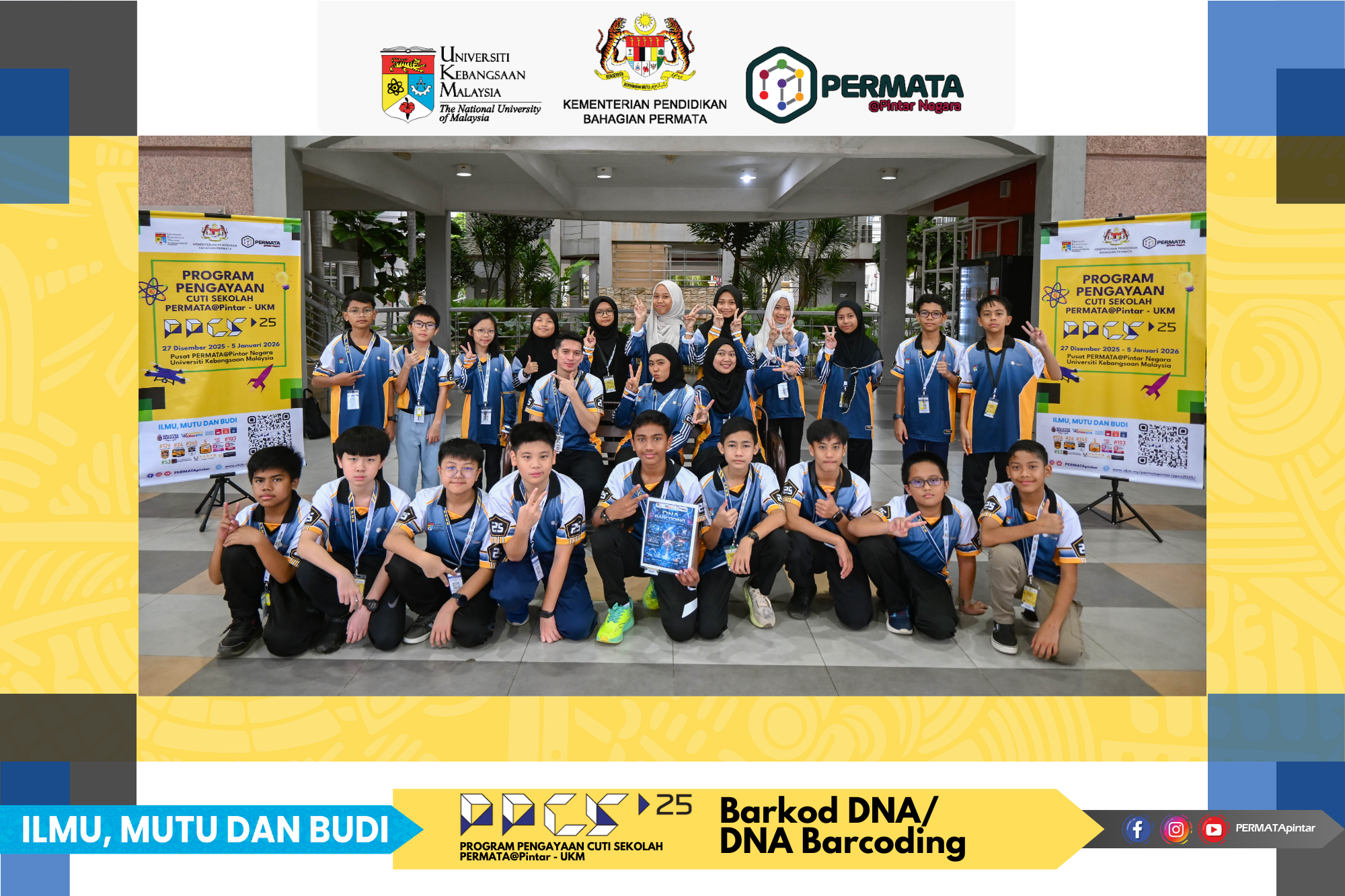
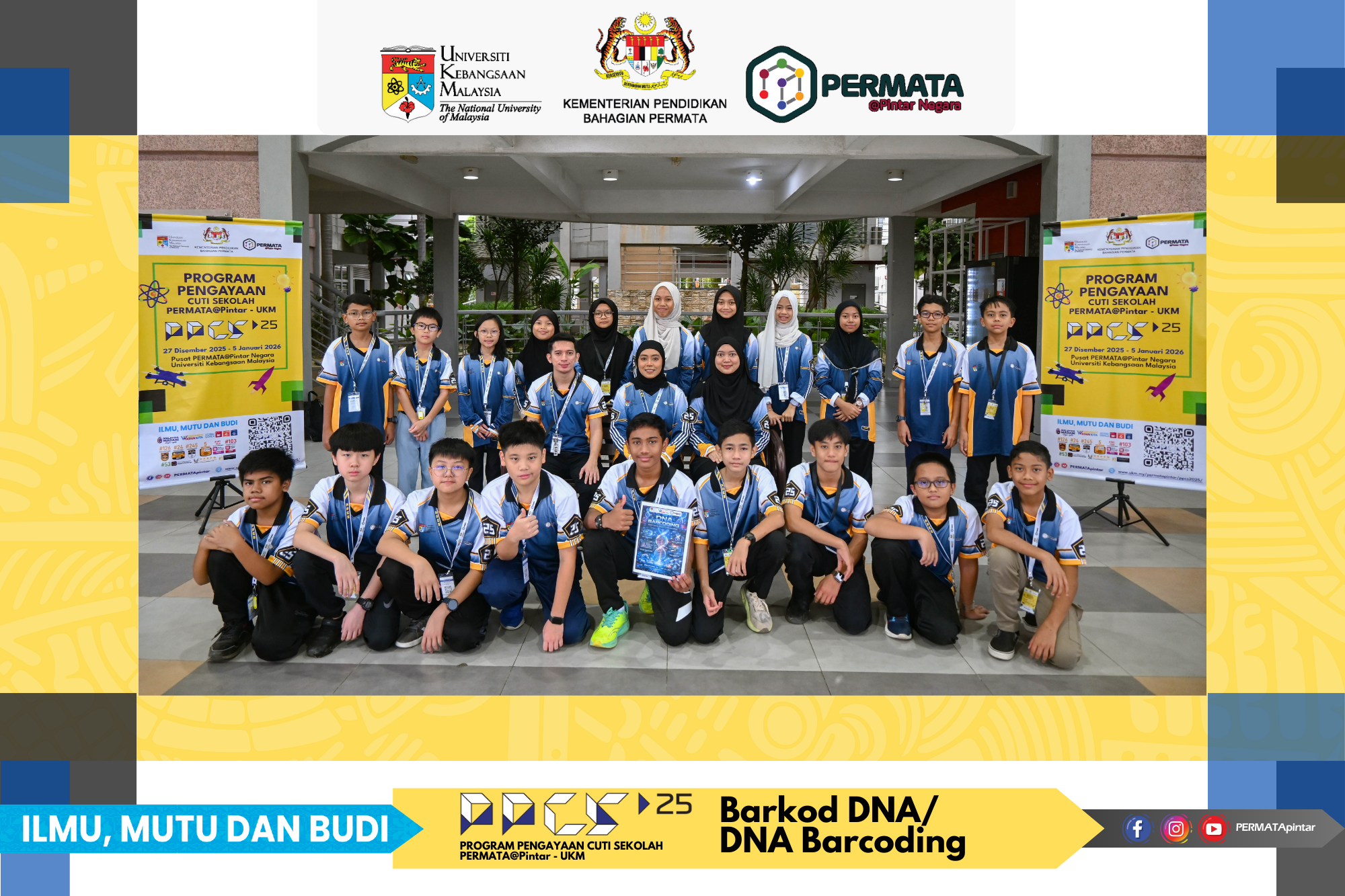
Barkod DNA/
DNA Barcoding
DNA Barcoding
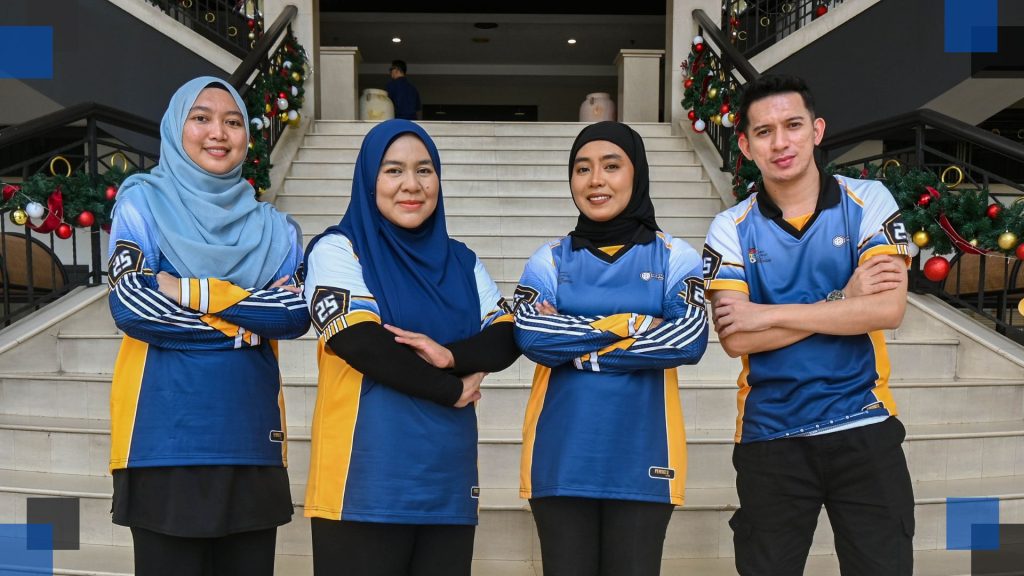
KETUA MODUL: NURULNISA BINTI NOR AZMAN
PENGAJAR: NUR HIDAYAH BINTI HAMDAN
PEMBANTU PENGAJAR: NAZATUL ADHWA BINTI MOHD ROZI
PEMBANTU PELAJAR: MUHAMMAD BADRUL HISHAM BIN GHAZALI
This course was designed to provide students to exposed to DNA Barcoding tool, to identify the species of insects. Students were allowed to catch their insect of interest from the school compound as a sample of their research. Students got chance to extract the insect’s DNA, multiply the DNA through polymerase chain reaction (PCR) technique and detection of their DNA through gel electrophoresis.
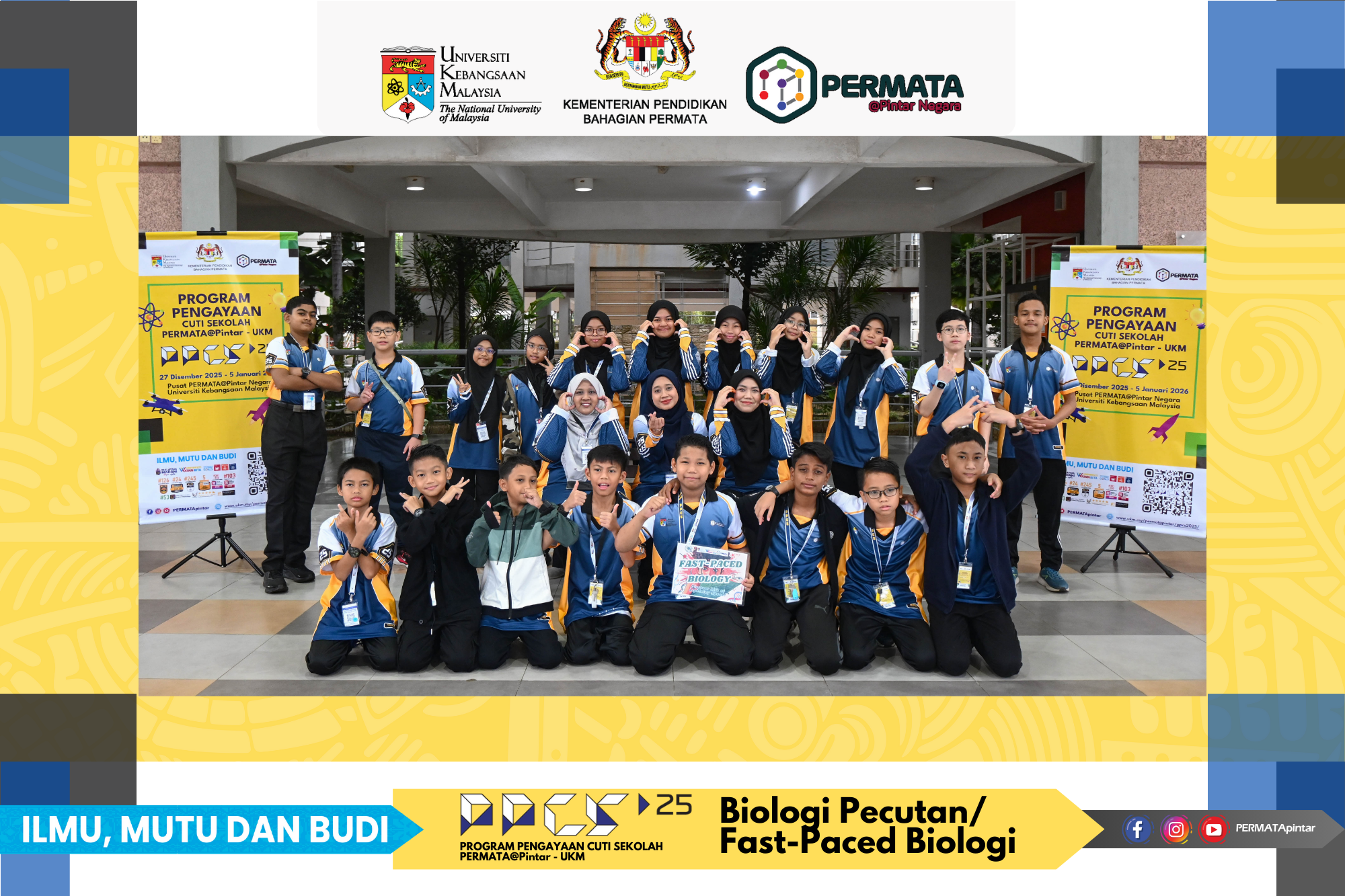
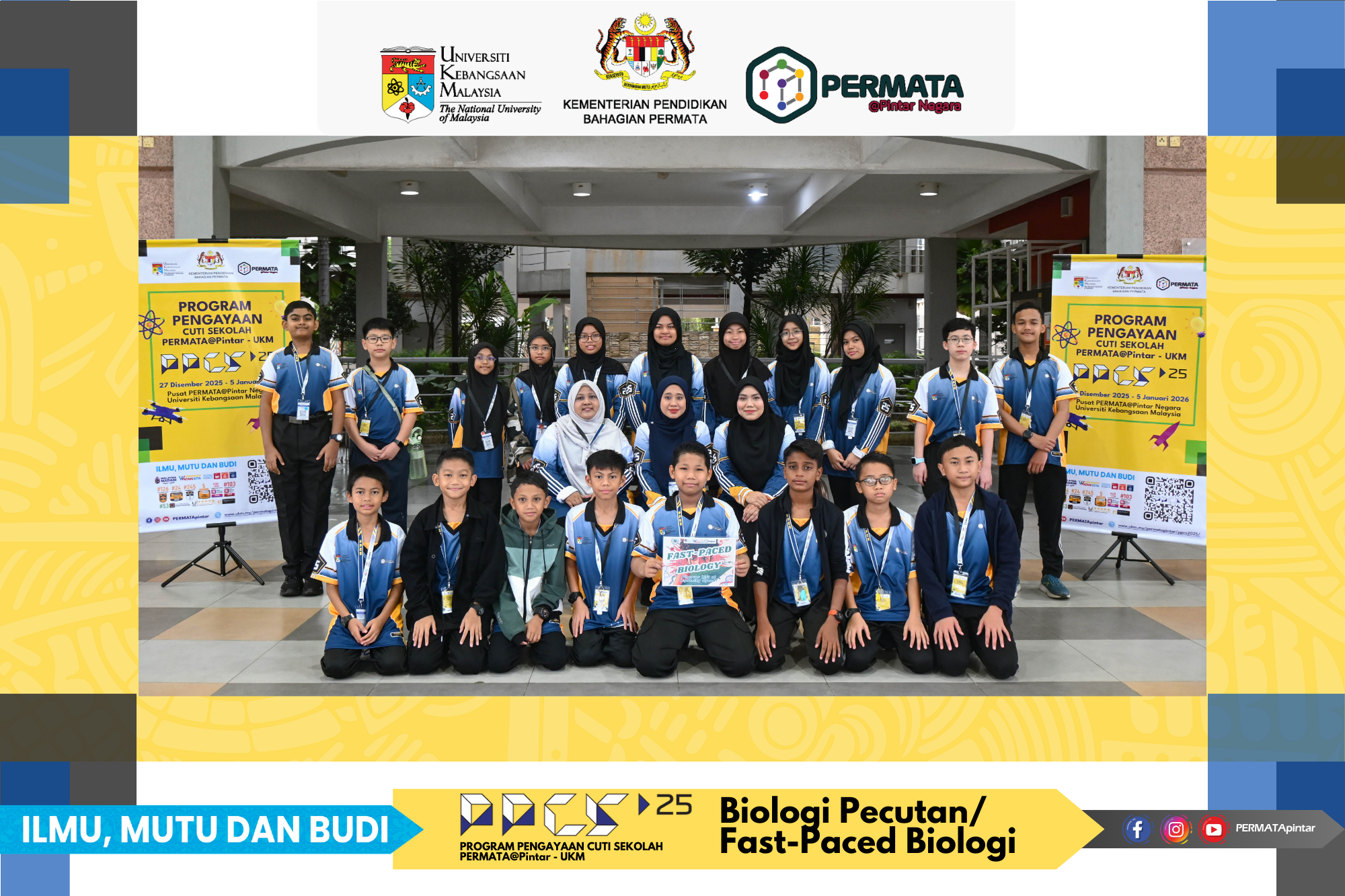
Biologi Pecutan/
Fast-Paced Biologi
Fast-Paced Biologi
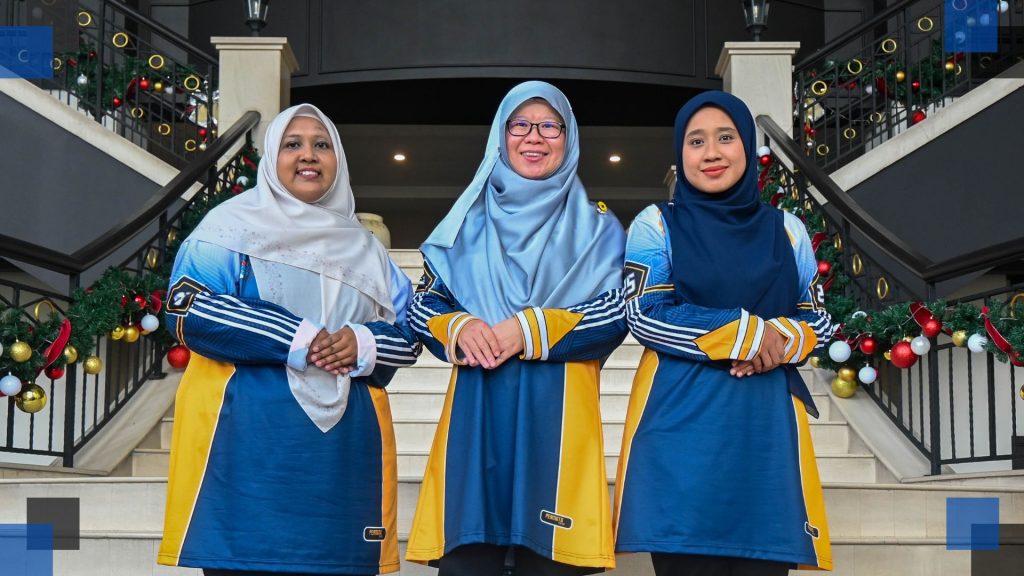
KETUA MODUL: ONG SY ING
PENGAJAR: DR. NORAIKIM BINTI MOHD HANAFIAH
PEMBANTU PENGAJAR: NURHAFIZAH AZWA BINTI ABDUL SATAR
PEMBANTU PELAJAR: NUR AMIELIA NABILA BINTI SUMUN
This course provides an early exposure and fundamental knowledge about biology. The 6-days module in this course are well planned, constructed and created to boost students’ interest in biology. Students will learn about the basics and importance of biology in life. This will help to direct students to have a clear learning journey in this course. Students will then be introduced with the building blocks of life: cells and how the cell enables living organisms to survive. After that, students will learn about biochemistry of life, where they will study the chemical compositions found in organisms. In the fourth day, students will be exposed with the transport system in cell. They will discover how the cell takes in nutrients and removes wastes. Next, students will learn how cell powers up their energy requirement by cellular respiration. Finally, they will uncover the secret of life by exploring the barcodes of life in every organism. In this compact 6 days learning process, students will experience different approaches of learning through students-centered based learning. They will experience discovery learning, game-based learning, and problem-based learning and off course hands-on by experiment in every lesson. This course also promotes the spirit of teamwork and mutualism among students throughout the learning process. It is also tailored to encourage and train students’ communication and social skills. Students will also have a chance to visit in a field trip during the course.
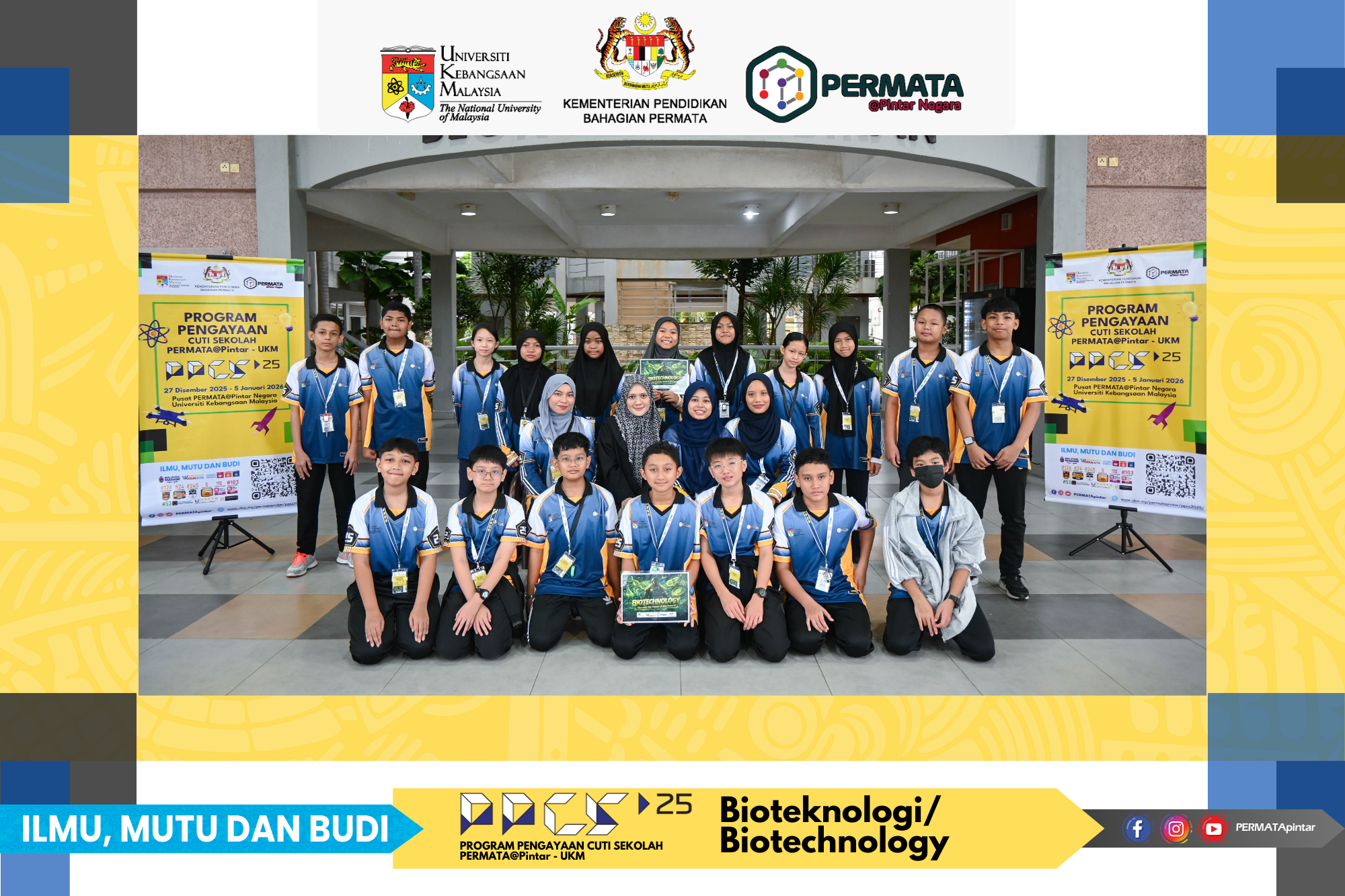
Bioteknologi/
Biotechnology
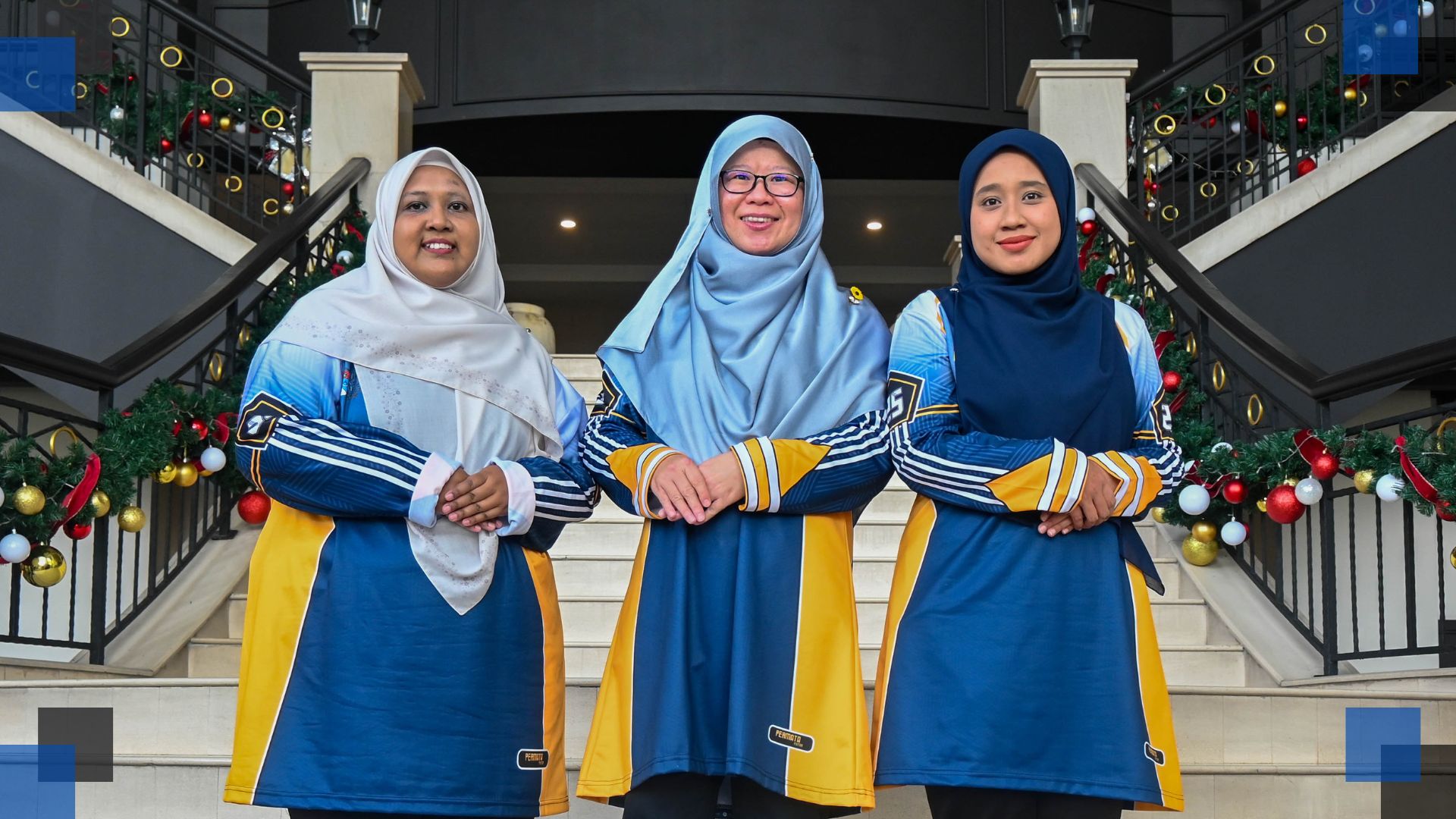
KETUA MODUL: FAIRUZ ADLIDNA BINTI BADROL HISSAM
PENGAJAR: NUR AFIQAH BINTI NOR AZMAN
PEMBANTU PENGAJAR: FATINI NADIAH BINTI MOHAMMAD ZAMZAMI
PEMBANTU PELAJAR: NURUL ZHARIF AMANI BINTI AZUKI
This course provides an early exposure and fundamental knowledge about biotechnology. The 10-day modules in this course are well-planned constructed and created to boost students’ interest in biology and biotechnology. Students will be introduced about the concept of cell structure and cell organisation during the first day of class, so that they will be able to follow the learning journey by understanding about one of the most important components in living things – cells. They will then be introduced about the process of cell division that consists of mitosis and meiosis. Students will also lean about the structure of DNA, RNA, as well as the process of DNA replication and protein synthesis. Besides that, they will be taught about the different branches of biotechnology that based on the Biotechnology rainbow code; green biotechnology, white biotechnology, red biotechnology, blue biotechnology, yellow biotechnology, grey biotechnology, and et cetera. In addition, students will also learn about genetic engineering and recombinant DNA technology, where they will be familiarised about plasmid, Restriction Enzyme (RE) and Polymerase Chain Reaction (PCR) and gel electrophoresis. Students will also be introduced about the use of bioinformatics in Biotechnology. Throughout this 10-day learning journey, students will able to experience new learning processes and pedagogy, such as pre- and post-test, think-pair-share, group discussion, individual and group presentation, daily hands-on activities, movie review, laboratory works, report writing, final presentation as well as field trip!
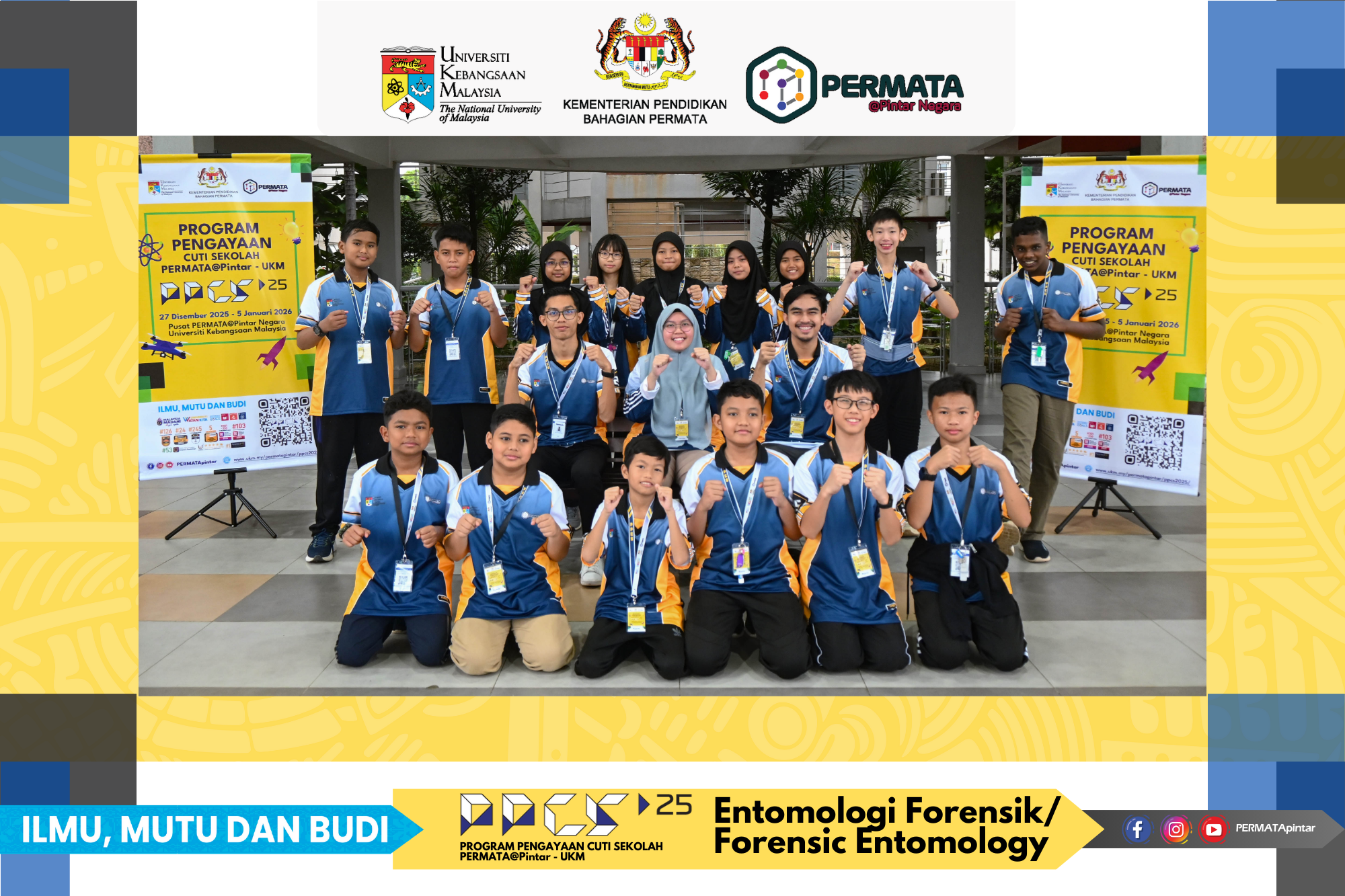
Entomologi Forensik/
Forensic Entomology
KETUA MODUL: DR. IKHWAN BIN ZAKARIA
PENGAJAR: NUR AZLINA BINTI MOHD SHARIF
PEMBANTU PENGAJAR: AHMAD SYAFIQ BIN AHMAD RASTON
PEMBANTU PELAJAR: MUHAMMAD FARHAN IRFAN BIN MOHD HAFIZ
This course provides an early exposure and fundamental knowledge about forensic entomology. The 10-day modules in this course are well planned constructed and created to introduce and escalate the students’ interest in entomology and forensic. Students will be exposed to the basic of entomology for the first class, so they could have a grasp on the types of important insects around us. Next they will be introduced to the basic forensic knowledge through history and up to current development. Afterwards they will learn the basics of crime scene investigation techniques which involves entomological specimens. They will learn various techniques related to the study of important insect’s species life cycle, developmental stages that includes hands on activities. The students will be learning a lot about building traps, rearing incubators, and how to process the immature stage of insects especially flies. Other than that, they will also learn about decomposition process using animal tissues model. By learning all this basic techniques, the students can have a basic idea how to estimates the post-mortem intervals or the time since death, which is pivotal in crime scene investigations. Throughout this 10-day learning journey, students will able to experience new learning processes and pedagogy, such as pre- and post-test, think-pair-share, group discussion, individual and group presentation, daily hands-on activities, movie review, laboratory works, report writing, final presentation as well as field trip.
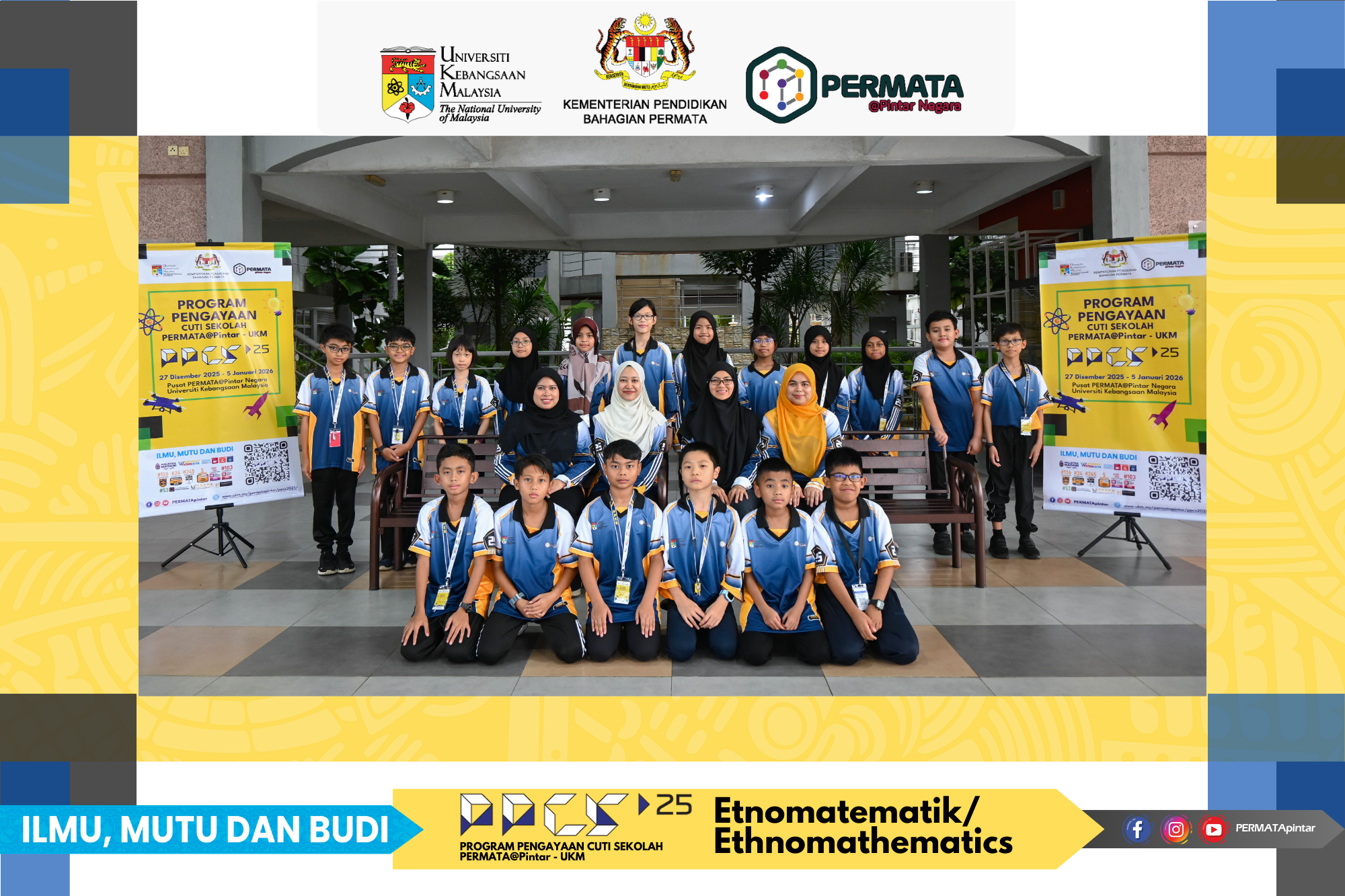
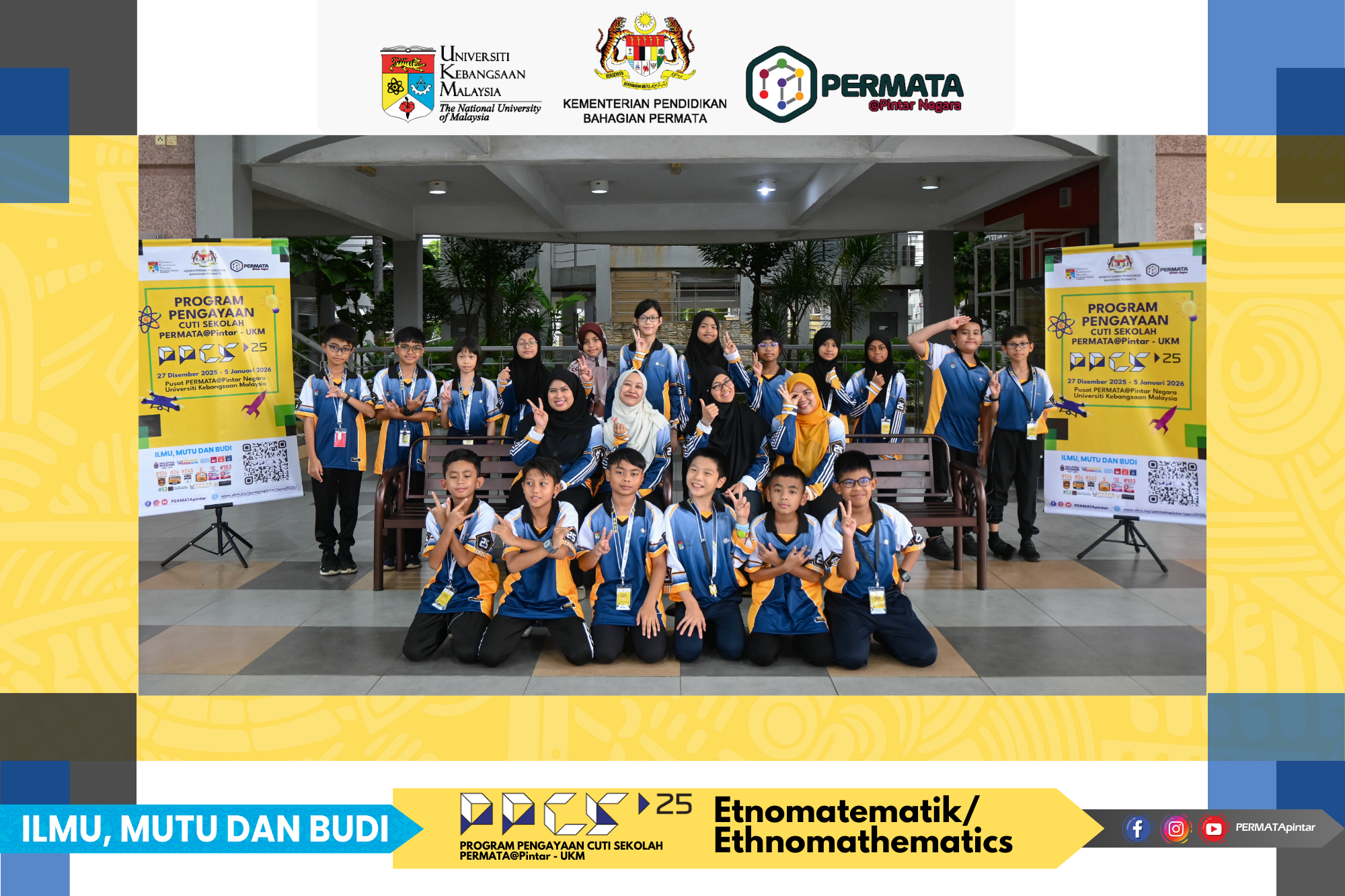
Etnomatematik/
Ethnomathematics
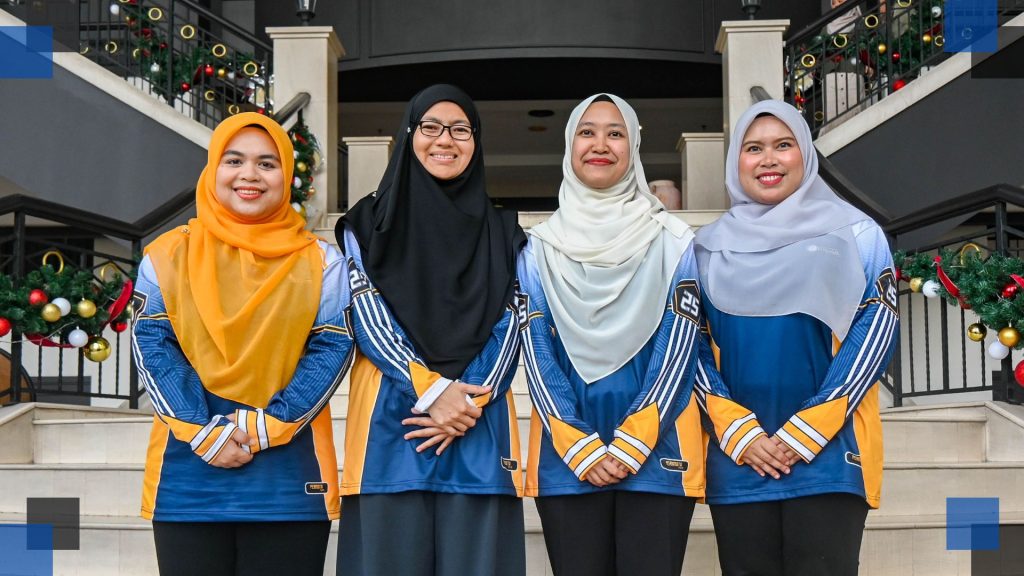
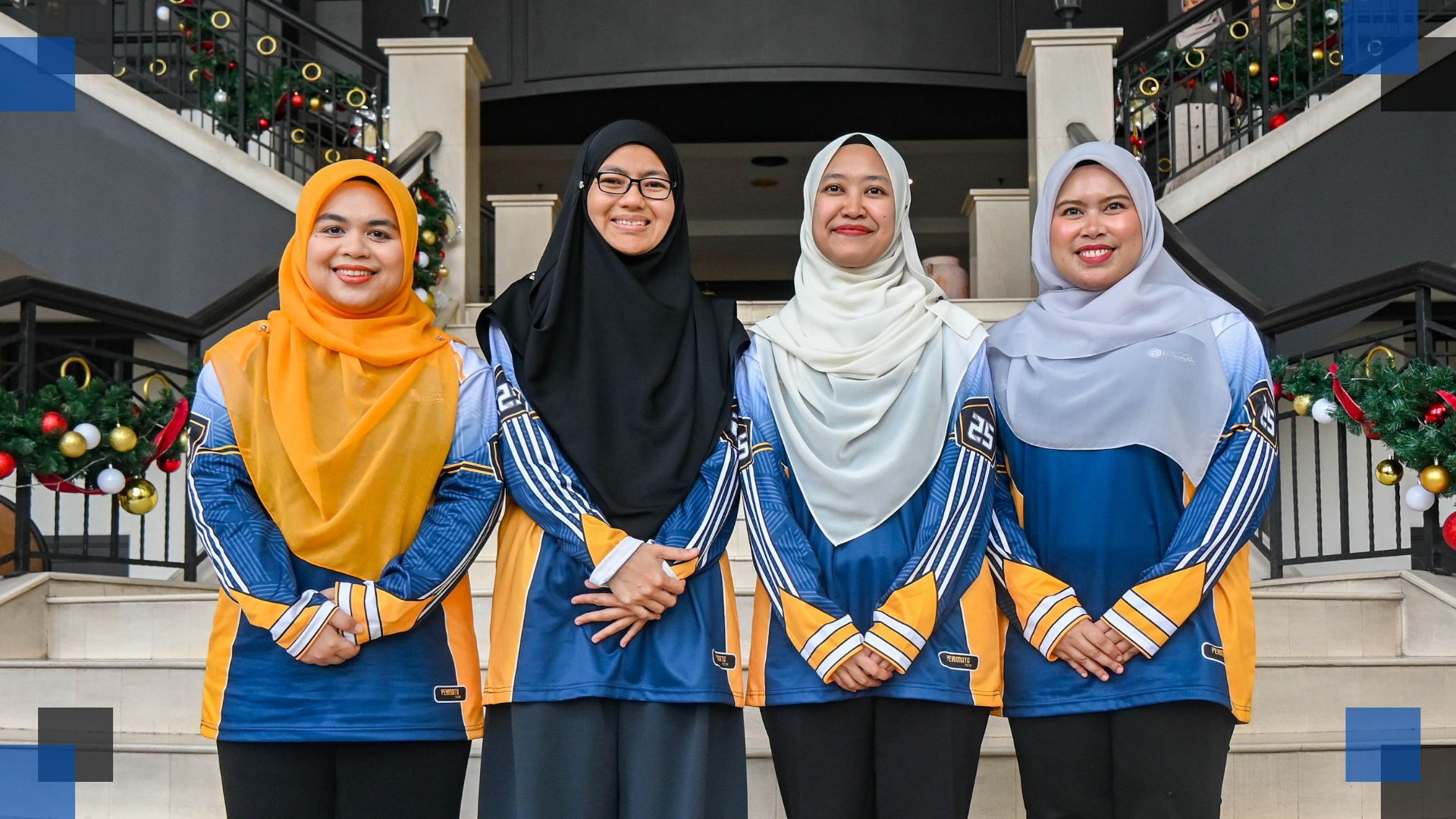
KETUA MODUL: NUR AQILAH BINTI MOHAMMED FAUZI
PENGAJAR: NOR FARAH WAHIDAH BINTI NOR KHALID
PEMBANTU PENGAJAR: SITI WAFIAH HANIN BINTI MOHD ZULKIFLI
PEMBANTU PELAJAR: NURIN FARHANA BINTI OMAR
Ethnomathematics refers to mathematics that emerges from the culture and value systems of an ethnic group. This course is designed to introduce students to the interconnections between mathematics and culture through the study of traditional Malay arts and games. Employing a student-centered learning approach, students will actively construct and investigate mathematical concepts embedded in Malay cultural practices through a series of structured activities conducted over six days of instruction. The Malay art forms examined for their mathematical elements include songket embroidery, mat weaving, batik, and the Zapin dance. Traditional games such as gasing (spinning top), congkak, and wau are also explored for their inherent mathematical features. To promote cultural awareness and inclusivity, selected art forms from other cultures, such as Itajime Shibori and Kirigami from Japanese culture, are incorporated into the course. This course also explores trigonometric concepts through the use of sine quadrants and sundials. To enhance the cultural learning experience, traditional food such as Cek Mek Molek, Kuih Badak, and a variety of agar-agar will be included as part of the course activities. It is anticipated that this course will provide students with meaningful learning experiences that foster an appreciation of mathematics as a cultural practice, thereby increasing student engagement and interest in the study of mathematics.
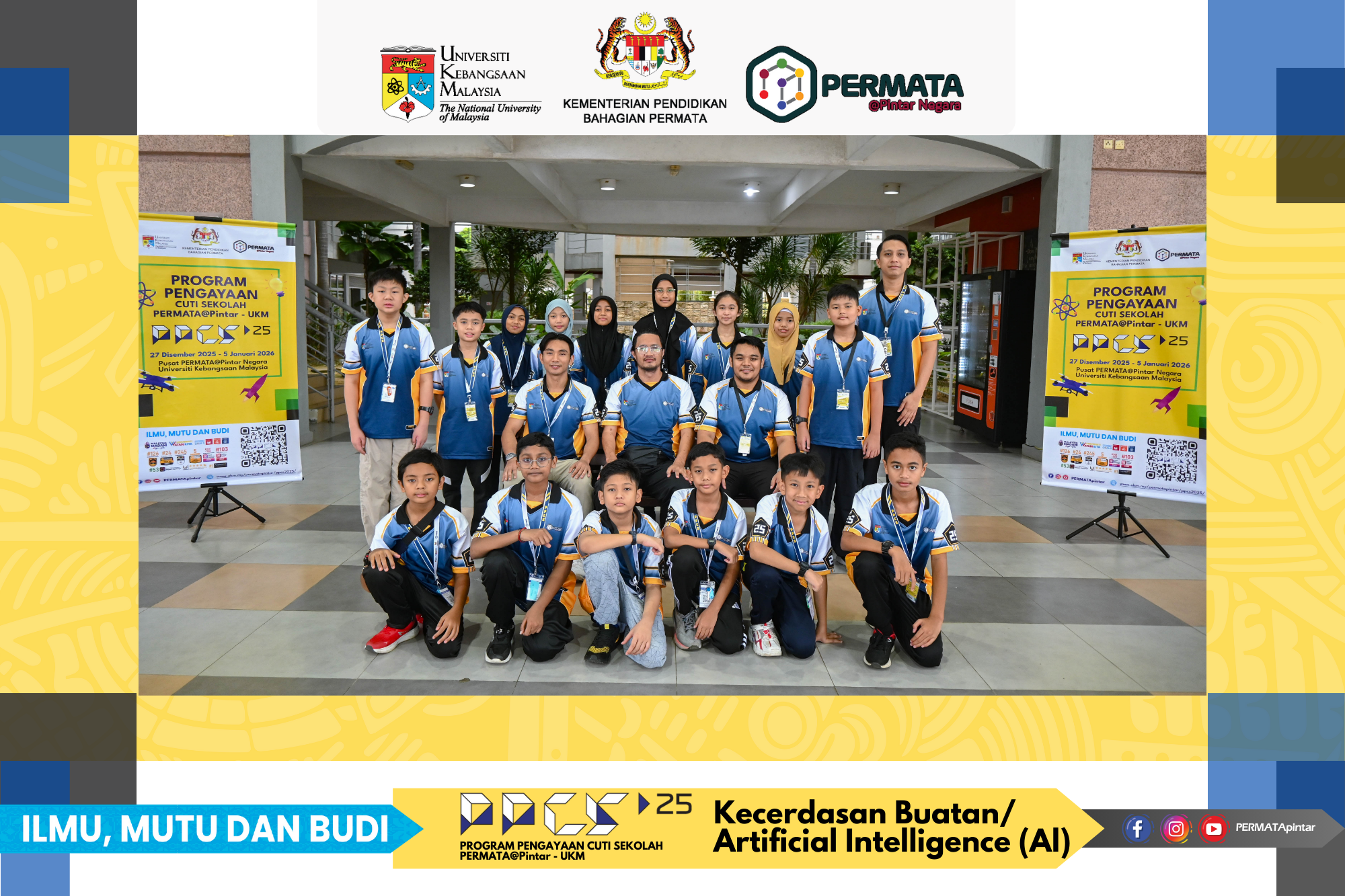
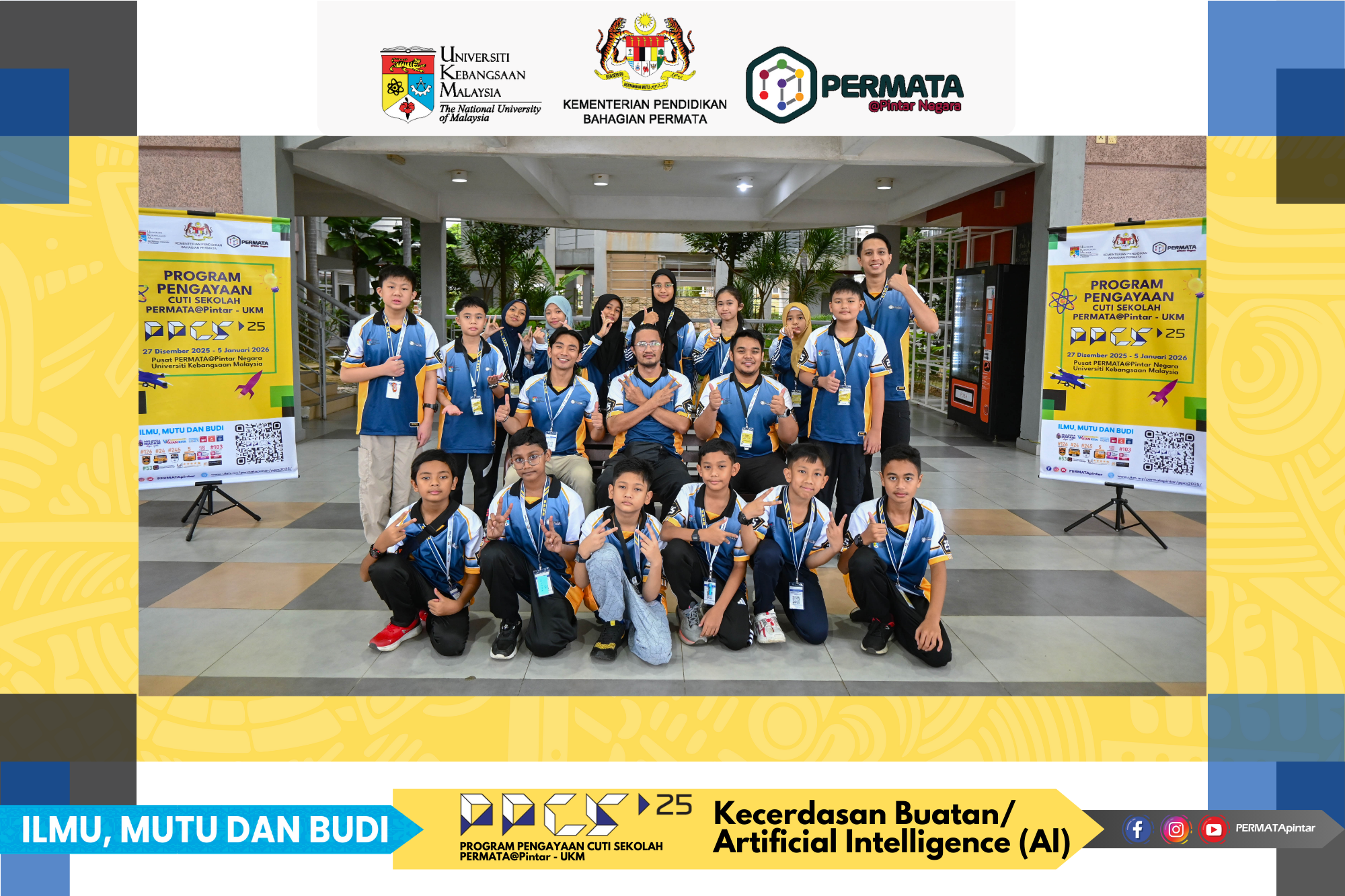
Kecerdasan Buatan/
Artificial Intelligence (Al)

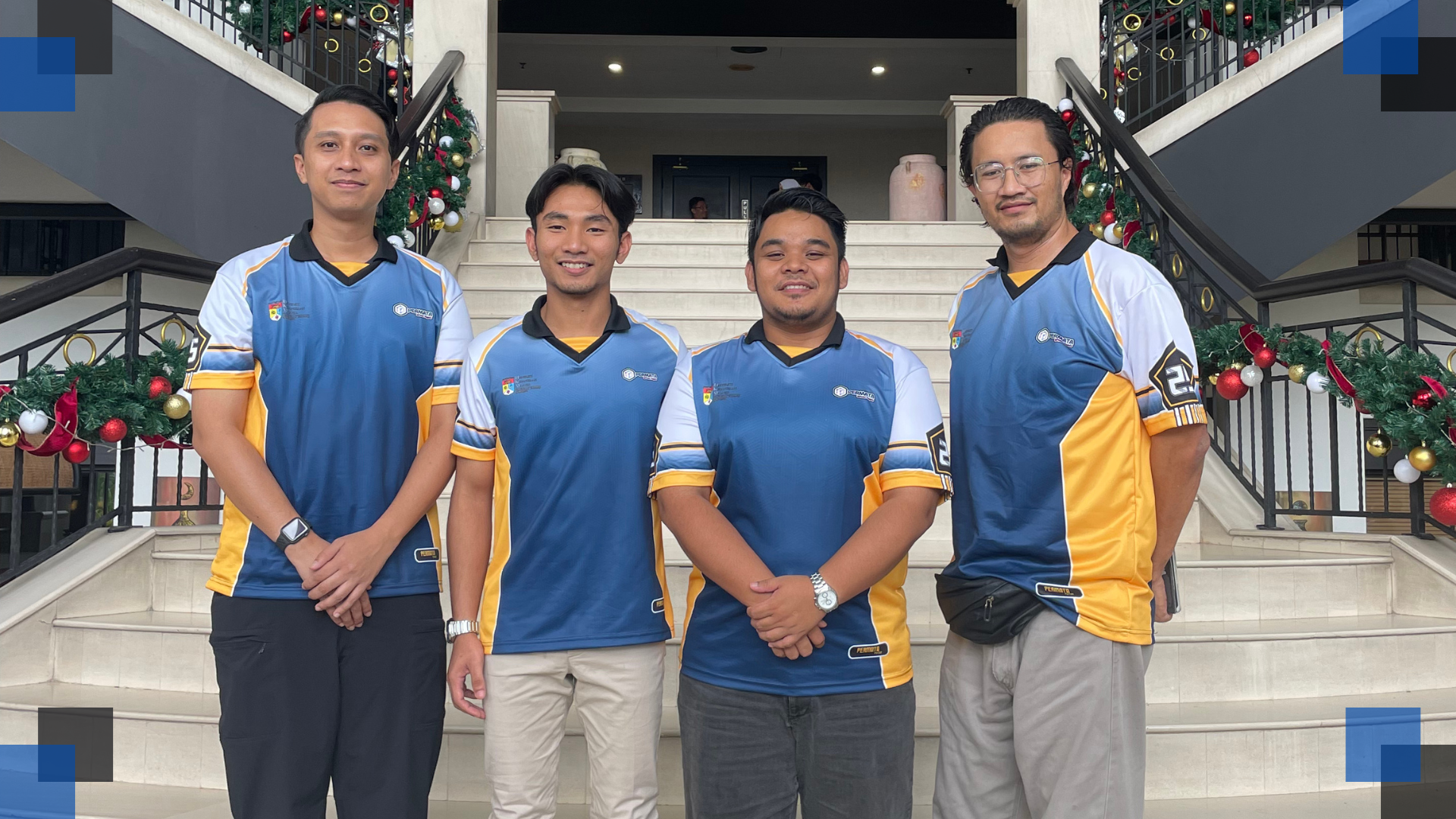
KETUA MODUL: IZWAN BIN AZMI
PENGAJAR: DARWISY AQIL BIN A. RAZAK
PEMBANTU PENGAJAR: MOHAMAD SOLEHUDDIN BIN MOHAMAD SIDEK
PEMBANTU PELAJAR: AZHAR BIN HUSIN
The course “Artificial Intelligence” is an intensive 14-day program designed to empower young learners with advanced AI knowledge and practical skills. Beginning with foundational concepts, students delve into the intricacies of artificial intelligence, exploring image segmentation techniques like semantic, phenoptic, and instance segmentation. They master Conversational AI through hands-on experience with ChatGPT, understanding its ethical dimensions. The course progresses to Reinforcement Learning, teaching students to create intelligent systems capable of decision-making. They navigate Midjourney, a cutting-edge framework, and explore Stable Diffusion models, fostering a deep understanding of AI’s dynamic applications. Through engaging debates, students critically evaluate AI’s ethical implications, honing their ability to argue and defend their perspectives. In a collaborative environment, students not only develop essential technicaln skills but also nurture creativity and teamwork. With a focus on practical applications and ethical considerations, this course equips students with the expertise to create innovative AI solutions while fostering responsible AI development practices. By the course’s end, students emerge as adept AI enthusiasts, capable of explaining complex concepts, debating ethical dilemmas, evaluating AI technologies, constructing persuasive arguments, and independently developing AI applications. This immersive experience lays a strong foundation for their future endeavours in the ever-evolving field of artificial intelligence.
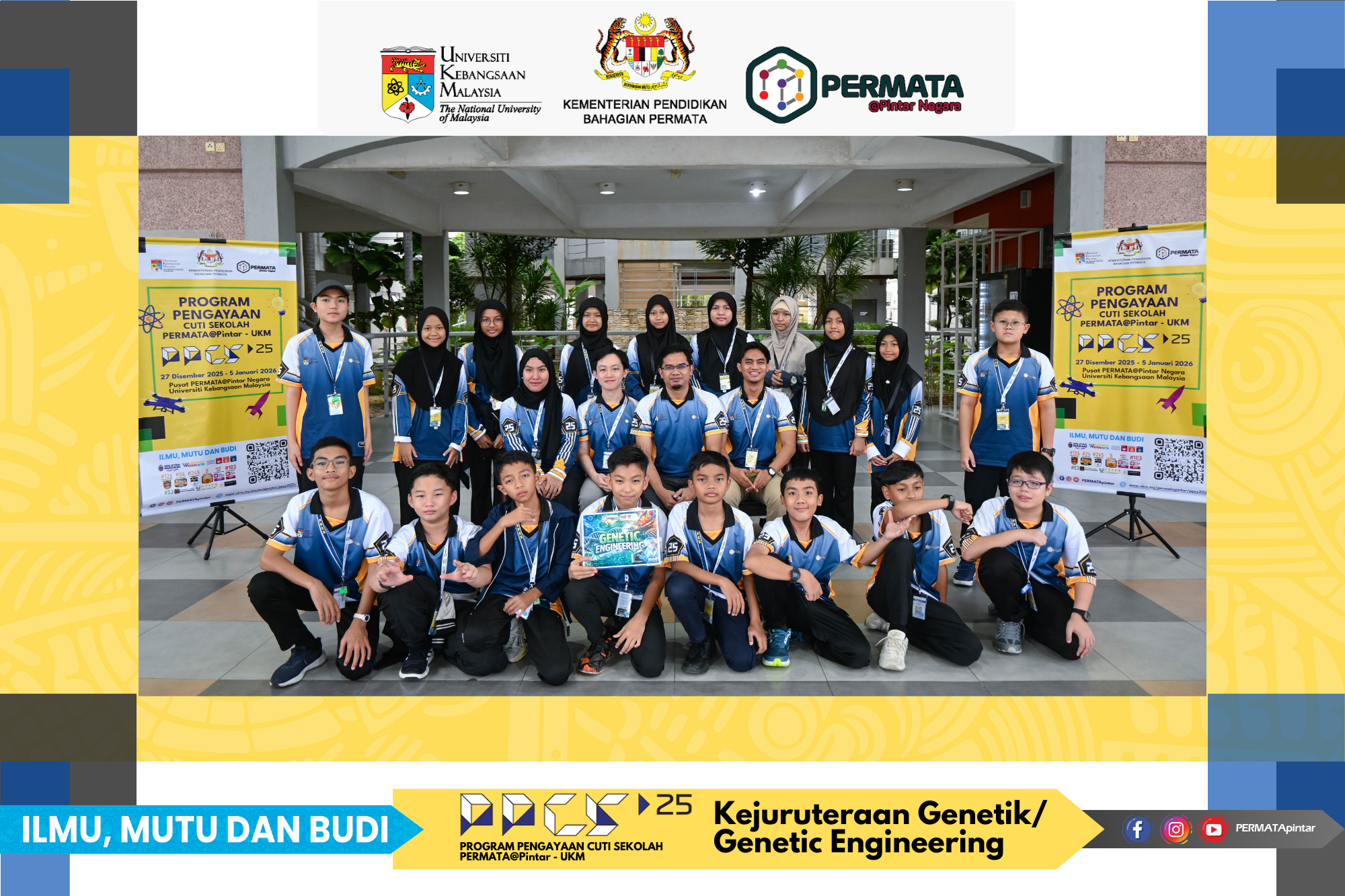
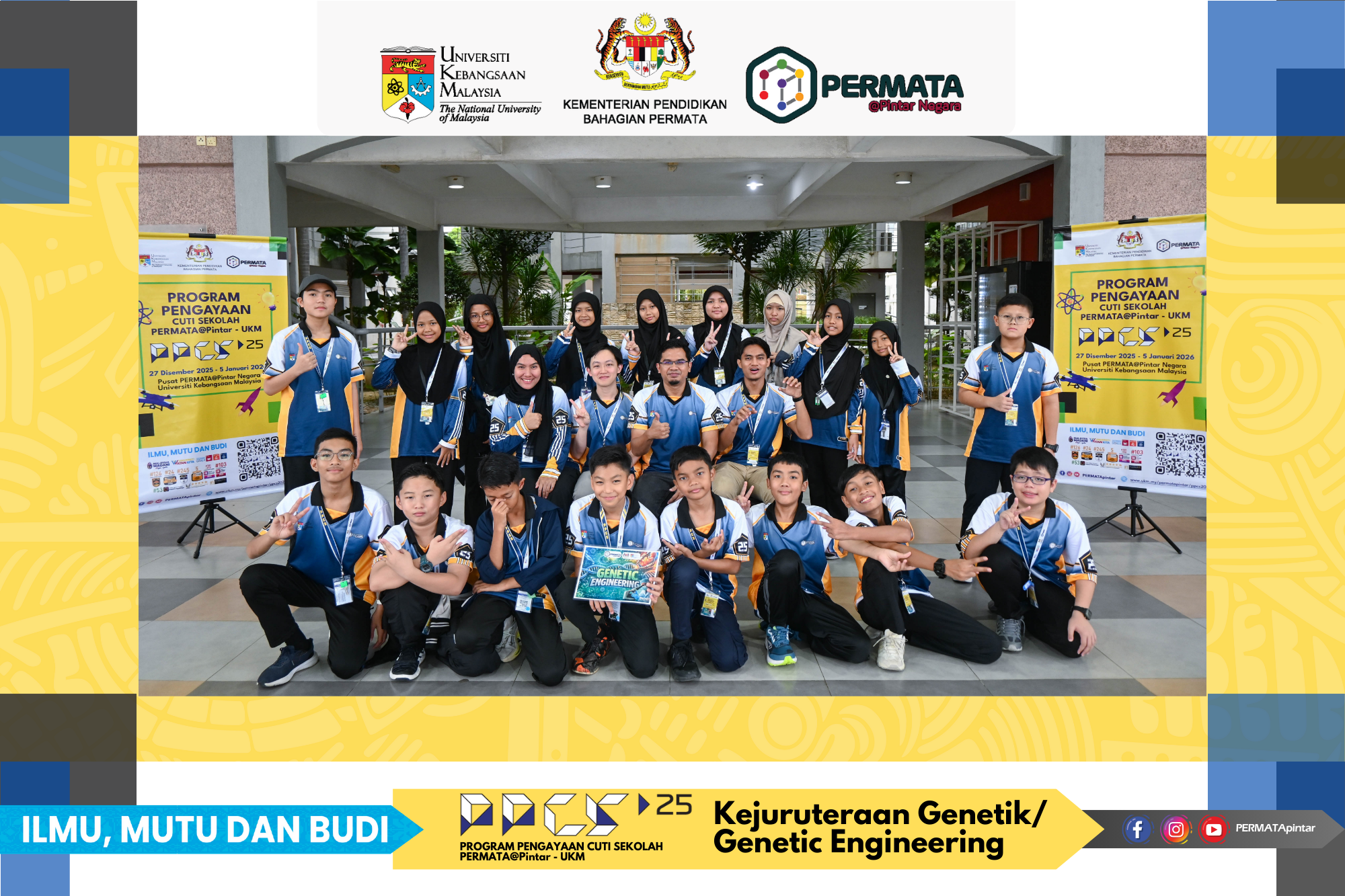
Kejuruteraan Genetik/
Genetic Engineering
KETUA MODUL: DR. AHMAD BAZLI BIN RAMZI
PENGAJAR: JEREMY JASON CHIN CHWAN CHUONG
PEMBANTU PENGAJAR: JENINGSIH
PEMBANTU PELAJAR: NABIL AIMAN BIN AZMAN
This course provides an early exposure and fundamental knowledge about genetic. This interactive and hands-on course are developed to introduce and disseminate knowledge on genetic engineering and biotechnology using interactive and hands-on teaching modules. The main of this course is to raise the awareness and interests of school students in Science, Technology, Engineering and Mathematics (STEM) fields through the implementation an inquiry-based teaching platform for addressing the worrying trend of declining interests in STEM. This course will implement MySchoolGEM (Genetic Engineering Module) comprising of three modules DNA, Microbes and GMO modules that integrate project- and ICT-based teaching concepts for stimulating students’ interest and understanding in the basics of genetic engineering and biotechnology. Throughout this 10-day learning journey, students will involve in conceptual teaching and learning, ICT-interactive simulations, daily hands-on activities, fun quizzes, role play performances as well as field trip.
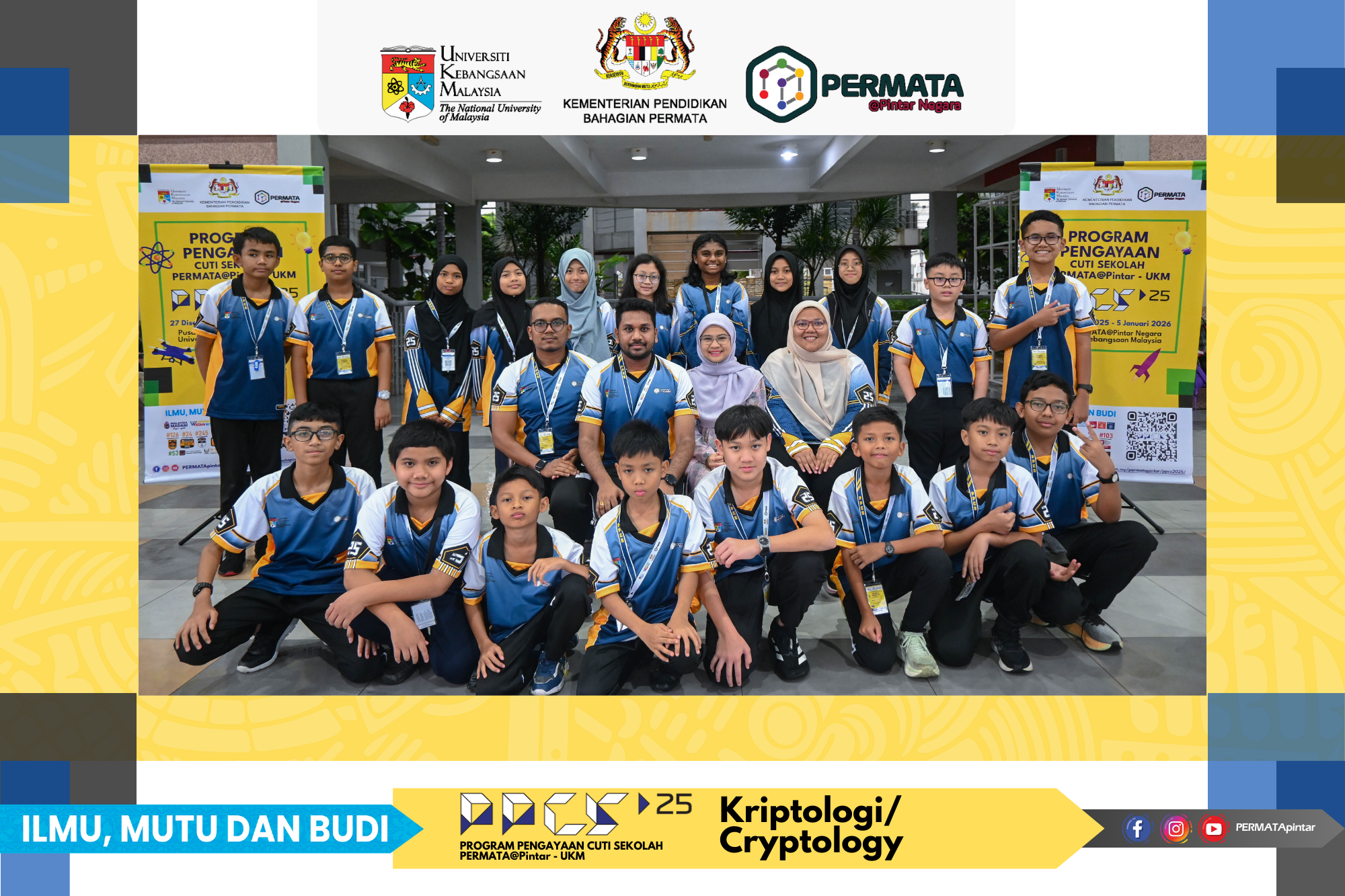
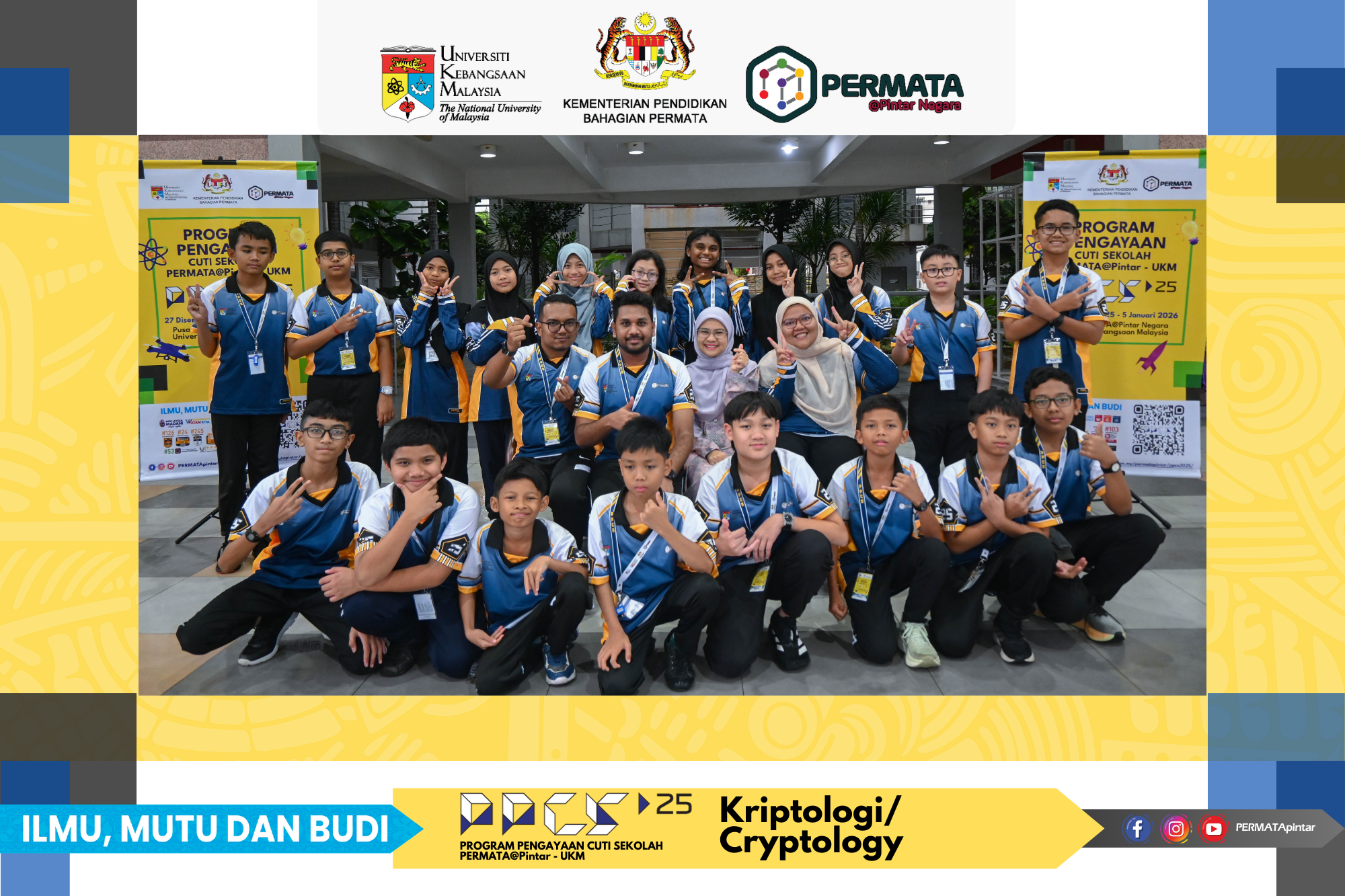
Kriptologi/ Cryptology
KETUA MODUL: DR. NORMAHIRAH BINTI NEK ABD RAHMAN
PENGAJAR: ISAAC SHARVINDRAN A/L SEIGAR
PEMBANTU PENGAJAR: MOHAMAD SYAFIQ BIN MARHISHAM
PEMBANTU PELAJAR: NUR MADIHAH BINTI RUSLI
This course provides an early exposure and fundamental knowledge about cryptology. The 10-day modules in this course are well planned constructed and created to boost students’ interest in mathematics. Students will be introduced about the concept of cryptography and cryptanalysis during the first day of class, so that they will be able to follow the learning journey by understanding about one of the most important components in life – mathematics. They will then be explored many early techniques for creating secret writing such as cipher wheel, the Caeser Shift, monoalphabetic substitution and the Vigenére cipher. Besides that, they will be taught about modern techniques including RSA public key cryptosystem. In addition, students will also explore how data transmitted by computer can be secured with digital encryption. Students will also be introduced about the vulnerabilities of each encryption system which lead to attack and decrypt using techniques such as frequency analysis. Then, students can apply what they learn to encrypt and decrypt their own secret writing. Throughout this 10-day learning journey, students will able to experience new learning processes and pedagogy, such as pre- and post-test, think-pair-share, group discussion, individual and group presentation, daily hands-on activities, movie review, report writing, final presentation as well as field trip!
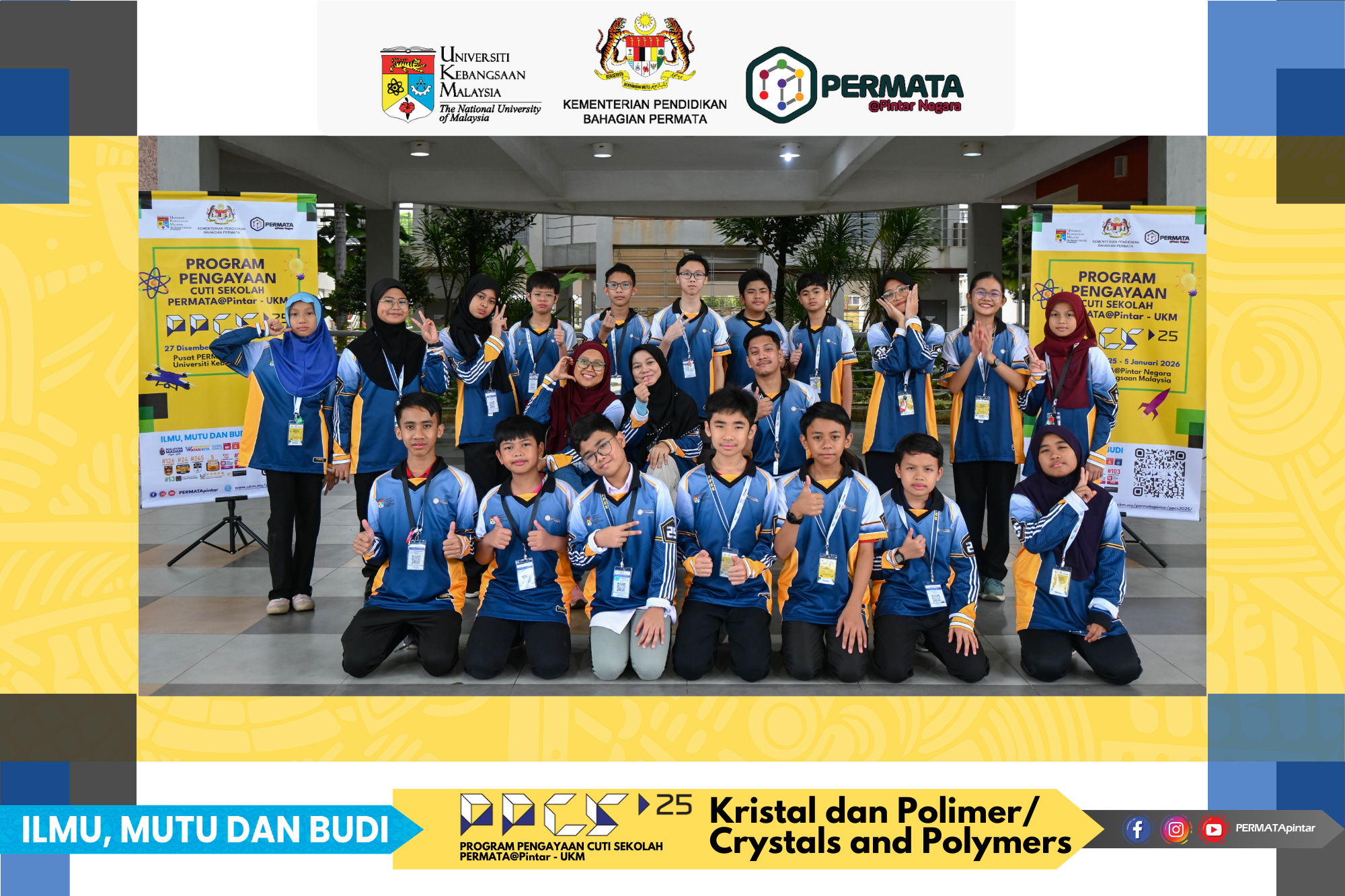
Kristal dan Polimer/
Crystals and Polymers
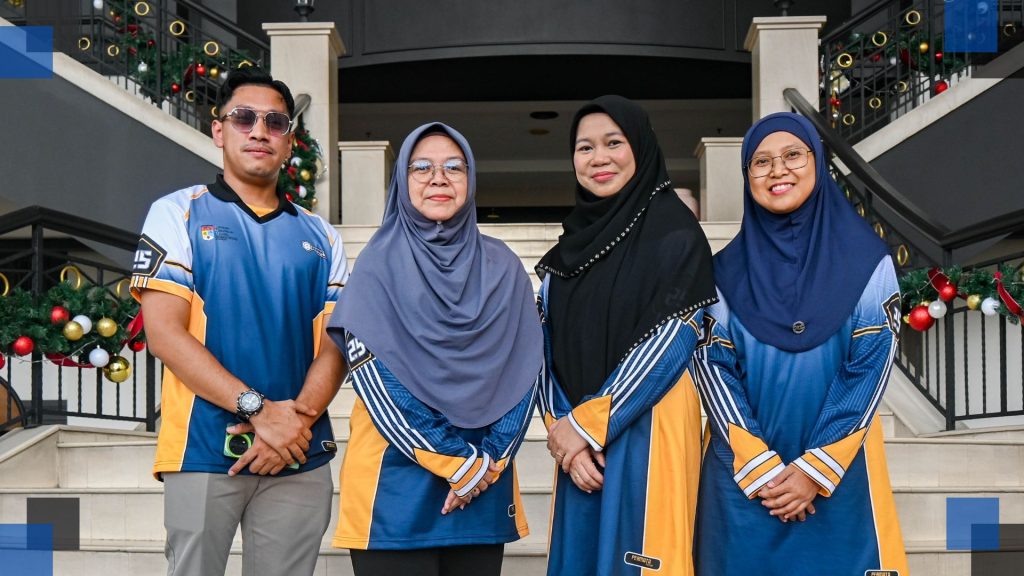
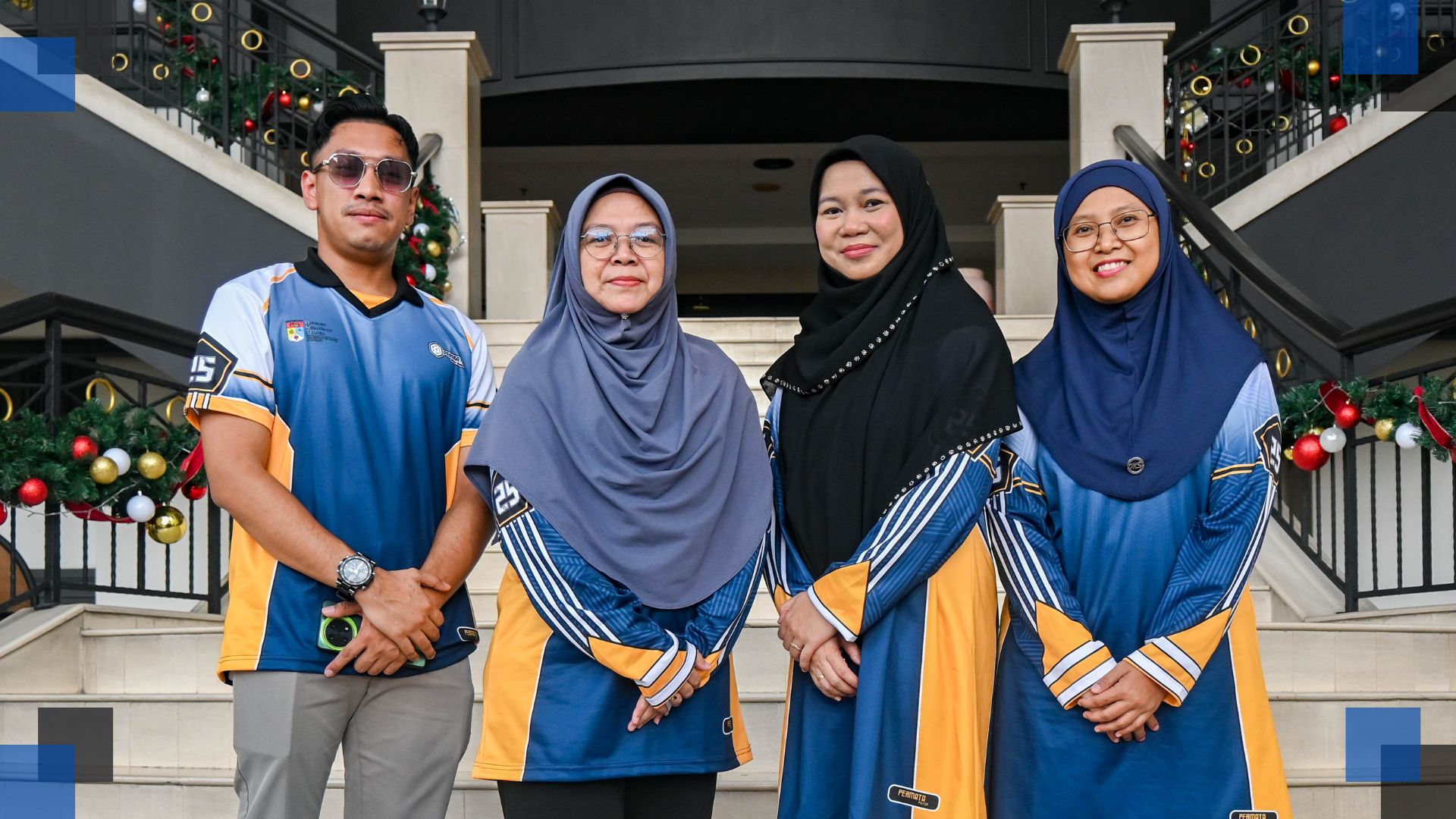
KETUA MODUL: PM CHM. DR. KHAIRIAH HAJI BADRI
PENGAJAR: DR. NORIAH ABDUL RAHMAN
PEMBANTU PENGAJAR: LYDIA RAHAYU BINTI MAHMOD
PEMBANTU PELAJAR: MOHAMAD AMIERUL EIMAN BIN MOHD NOOR
In this course, students experience exploration of crystals, polymers and biopolymers. First, mathematical chemistry-measurement, graphing and tabulating data and its relationship with the physical and chemical properties will be introduced. The periodic table is then introduced focusing on the metal, non-metal and metalloid groups. Some brief histories such as Democritus, Dalton, Thompson, the Rutherford’s Theory and Bohr’s model are mentioned. These leads to the topics of ionic and covalent bonds and their importance in growing crystals, followed by some laboratory tests such as color identification, luster, hardness, density, conductivity, magnetism and cleavage.The topics on polymers are divided into two sections; introduction to simple organic chemistry covering the number of carbon atoms, type of bonding, functional group and isomers and saturated, unsaturated and substituted hydrocarbons to form the natural existing biopolymers- proteins, carbohydrates, fats and oils (lipid). These are justified by several laboratory experiments. The students will present their findings in the form of poster presentation and/ or PowerPoint presentation.
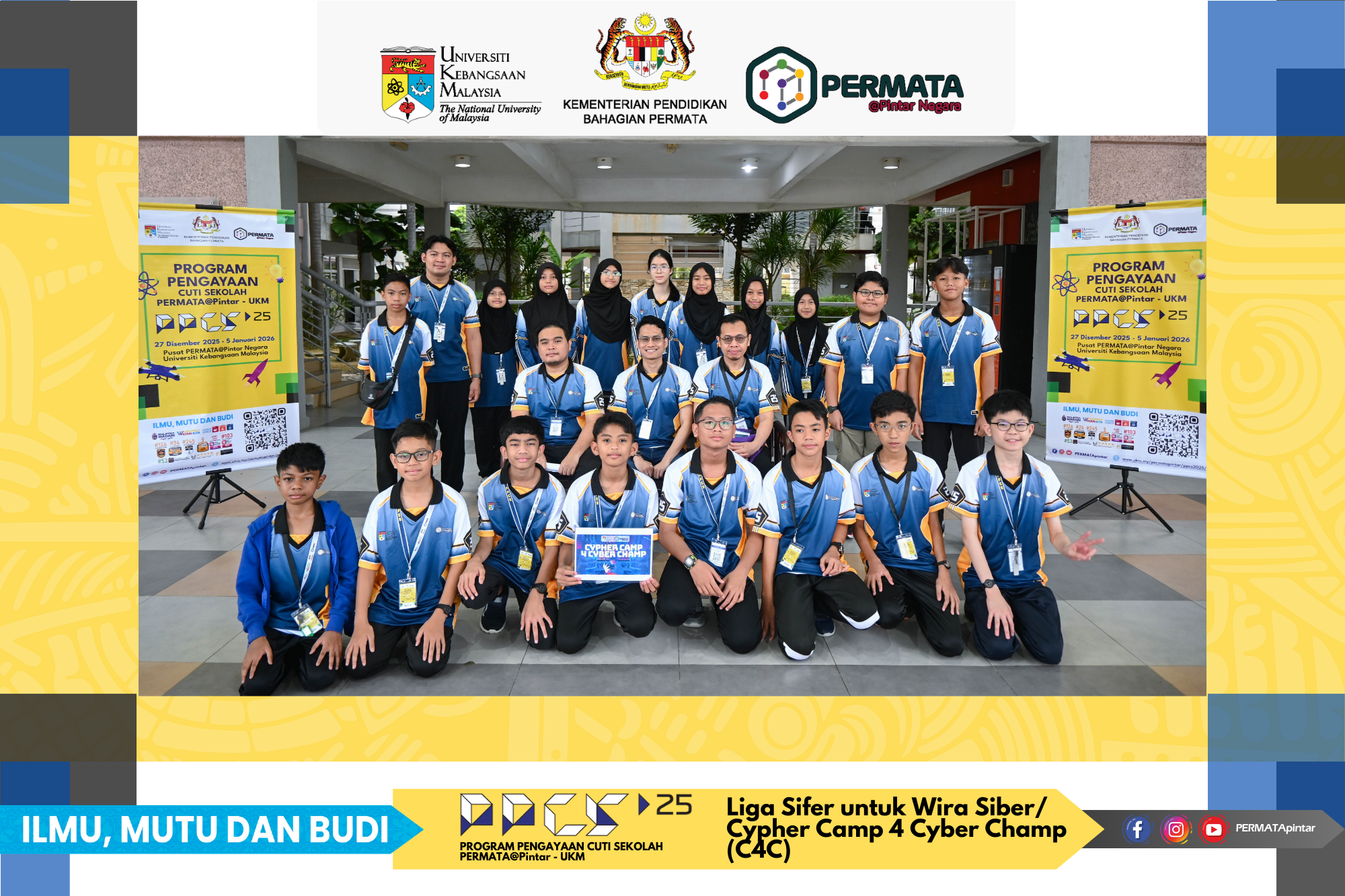
Liga Sifer untuk Wira Siber/
Cypher Camp 4 Cyber Champ
(C4C)
KETUA MODUL: EDDIE SHAHRIL BIN ISMAIL
PENGAJAR: MUHAMMAD IMRAN BIN SAPINI
PEMBANTU PENGAJAR: AZIM BIN AHMAD FUZI
PEMBANTU PELAJAR: ALIFF HAIKAL BIN MASRUDIN
This module aims to introduce primary school students to the exciting and fun elements in cryptology field as well as the mathematical elements behind it. The contents include activities using the Morse code, Caesar cipher, Hill cipher, Playfair cipher, Vigenere cipher, ADFGVX cipher, block cipher and hash function. Advanced mathematical concepts such as the set of integers, divisibility, matrices, modular arithmetic, binary numbers and functions which enrich the students’ mathematical knowledge are also introduced along with related activities. Fun activities in creating and breaking codes games will give exhilarating experience to the students throughout this camp.
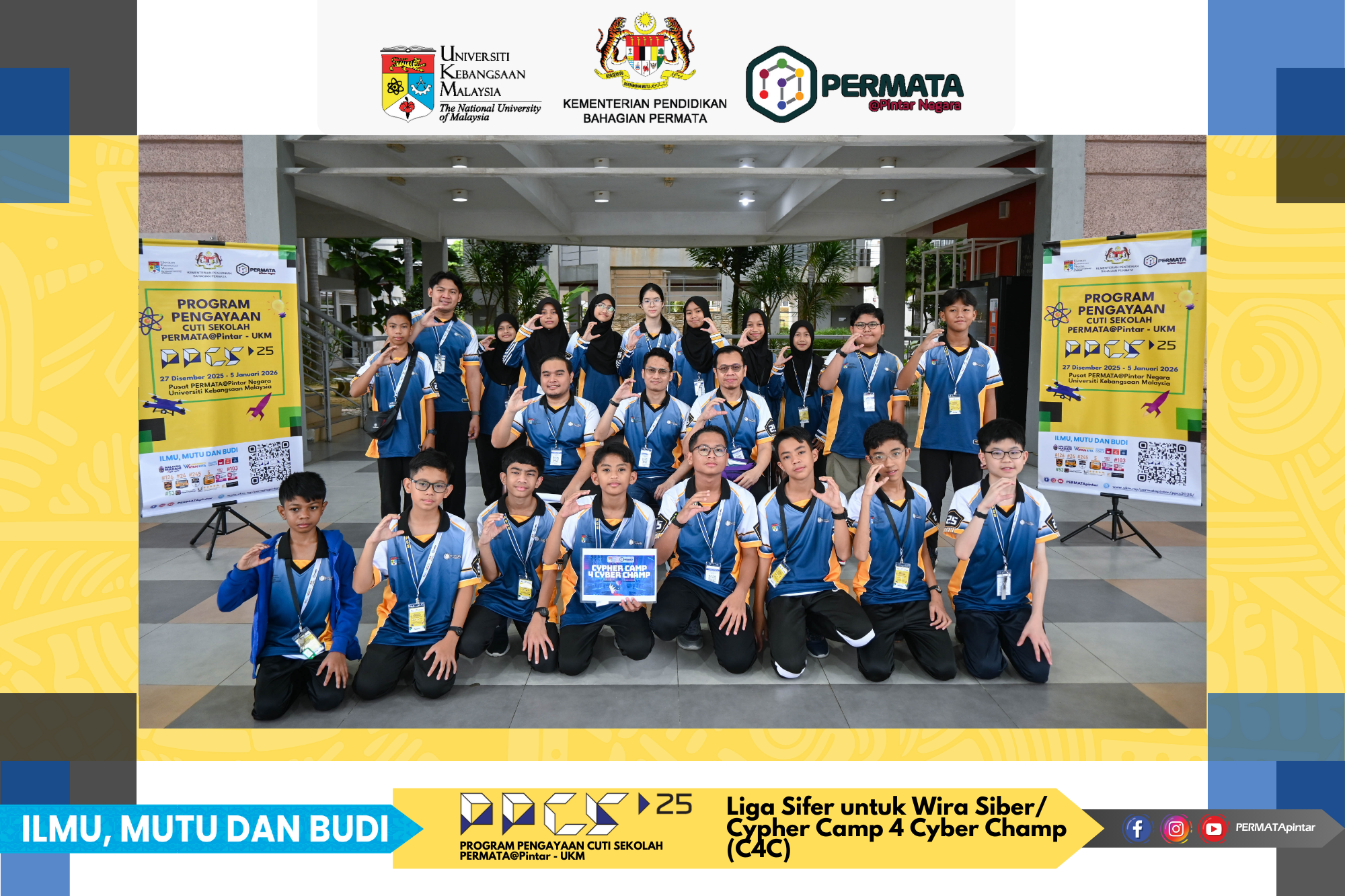
Pemangkinan/
Catalysis

KETUA MODUL: DR. SITI ZUBAIDAH HASAN
PENGAJAR: JAFREENA ADIRA
PEMBANTU PENGAJAR: MUNIRAH BINTI AHMAD KAMIL
PEMBANTU PELAJAR: NUR IZZATI BINTI OMAR
This course gives students an early exposure and fundamental knowledge about catalytic technology. The 10-day modules in this course werethoughtfully designed, built, and scheduled to increase students’ interest in chemistry and catalytic technology. Students will be introduced about the concept of chemistry during the first and second day of class, so that they will be able to follow the learning journey by understanding about one of the most important components in catalytic technology. Along the day, they will be introduced to the catalytic technology by demonstration of an exciting experiment. Since chemistry involved with hazardous chemicals, they will be introduced to the laboratory safety so that they will be careful when running experiments. Then they will be introduced to the factors that speed up the rate of the reaction since it is the main reason why catalyst is used. As the module is about technology, it is important to highlight the application of catalyst as one of a green chemistry element. For the next sessions, students will be exposed to the application of the catalysts in industry. Due to the time constraints and the danger of an experiment to the students, only a few applications will be discussed in this module. They will be guided how to perform laboratory works and do a few exciting activities. Throughout this 10-day learning journey, students will be able to experience new learning processes and pedagogy, such as pre- and post-test, think-pair-share, group discussion, individual and group presentation, daily hands-on activities, movie review, laboratory works, report writing, final presentation as well as field trip!

Pemikiran Matematik/
Mathematical Thinking
KETUA MODUL: MOHD FADZIL BIN KAMARUDIN
PENGAJAR: SITI RAHIMAH BINTI ABDUL HAMID
PEMBANTU PENGAJAR: NUR RAIHAN BINTI ABDOL MAULUD
PEMBANTU PELAJAR: MUHAMMAD IQRAM BIN MUSTAPA
The goal of the course is to help students develop a valuable mental ability – a powerful way of thinking in making any decision related to mathematical knowledge in solving daily life problems. Mathematical thinking is not the same as doing mathematics or not as mathematics is typically presented in our school system. Mathematics taught in schools focuses more on highly stereotyped problems. Professional mathematicians think a certain way to solve real problems, problems that can arise from the everyday world, or from science, or from within mathematics itself. The key to success in school mathematics is to learn to think inside the box. In contrast, a key feature of mathematical thinking is thinking outside the box. Today, this is a valuable ability that student need in their real life. At the end, this course will help student to develop such kind of crucial way of thinking in solving real life problems.
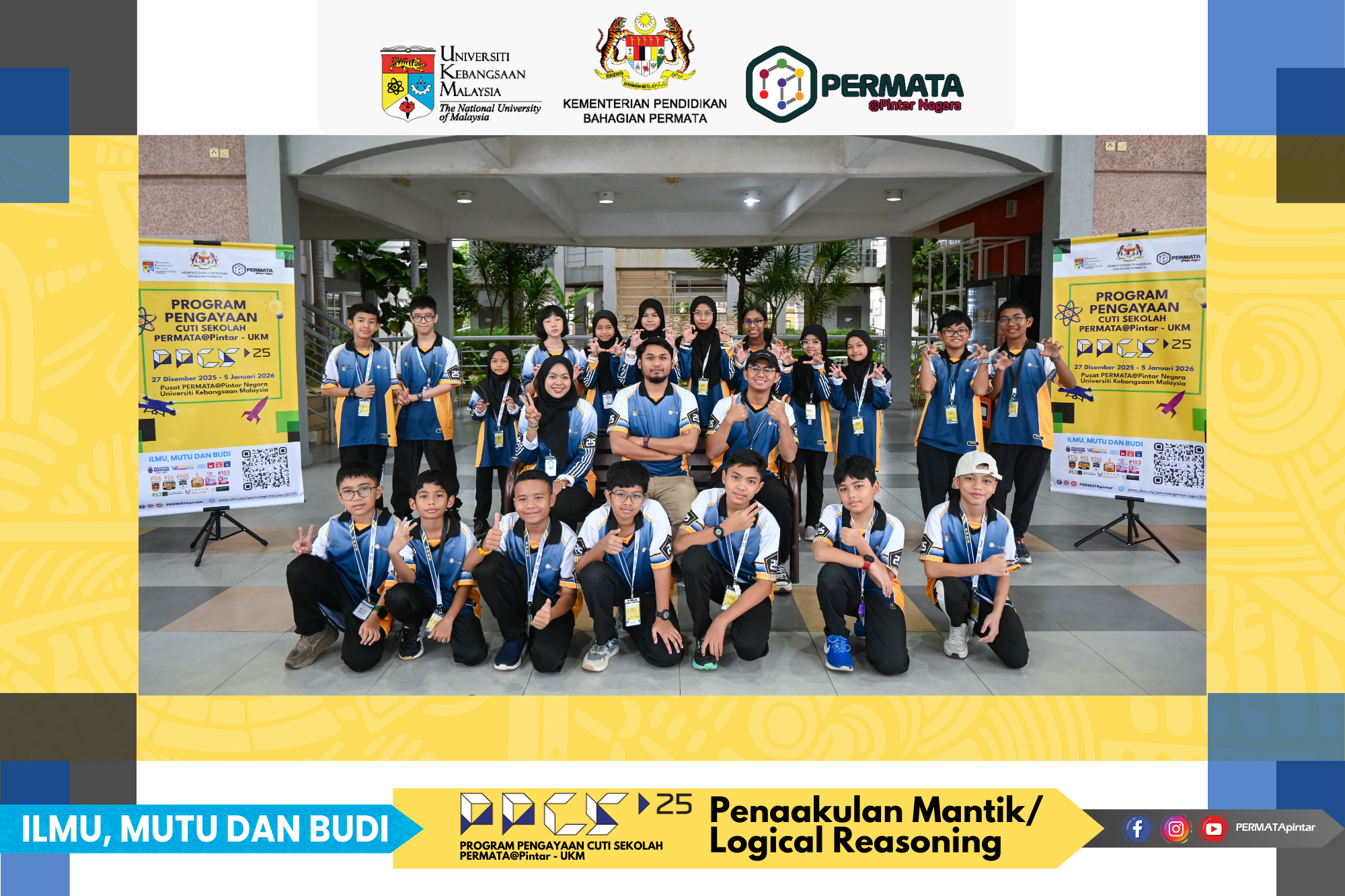
Penaakulan Mantik/
Logical Reasoning
KETUA MODUL: NUR SHAMIM BINTI HAMZAH
PENGAJAR: MUHAMMAD NURISMADEE BIN ABDUL MANAN
PEMBANTU PENGAJAR: MOHAMAD HAFIZ BIN ABDUL HALIM KAMIL
PEMBANTU PELAJAR: NUR ADRIANA SYFIQAH BT MUHAMAD RIDZWAN
This course provides an early exposure and fundamental knowledge about mathematical reasoning. Mathematical Reasoning does not only develop the capacity of logical thinking but also increases the capacity of critical thinking that is fundamental in understanding mathematics in depth and meaningfully. The 10-day modules in this course are well planned constructed and created to boost students’ interest in mathematics and logical reasoning. Students will be introduced and applying the three major methods of reasoning which is deductive, inductive, and abductive reasoning. All the reasoning methods will be explored by students by using patterns of a number sequence, two-dimensional and-three dimensional geometrical constructions and real-life situations. This course will develop self-awareness among pupils that reasoning is an important basis for understanding mathematics more effectively and meaningfully. Pupils will realize development of mathematical reasoning is closely related to their intellectual development and communication. This course required pupils to do mathematics and be actively involved in discussing mathematical ideas. The elements of reasoning in this course prevent pupils from considering mathematics as just a set of procedures or algorithms that should be followed to obtain a solution without understanding the actual mathematical concepts in depth. Reasoning not only changes the paradigm of pupils’ conscious procedural knowledge but also gives thought and intellectual empowerment when pupils are guided and trained to make and validate conjectures, provide logical explanations, analyze, evaluate and justify the mathematical activities. Such training would enhance pupils’ confidence and courage, in line with the aim of developing powerful mathematical thinkers.
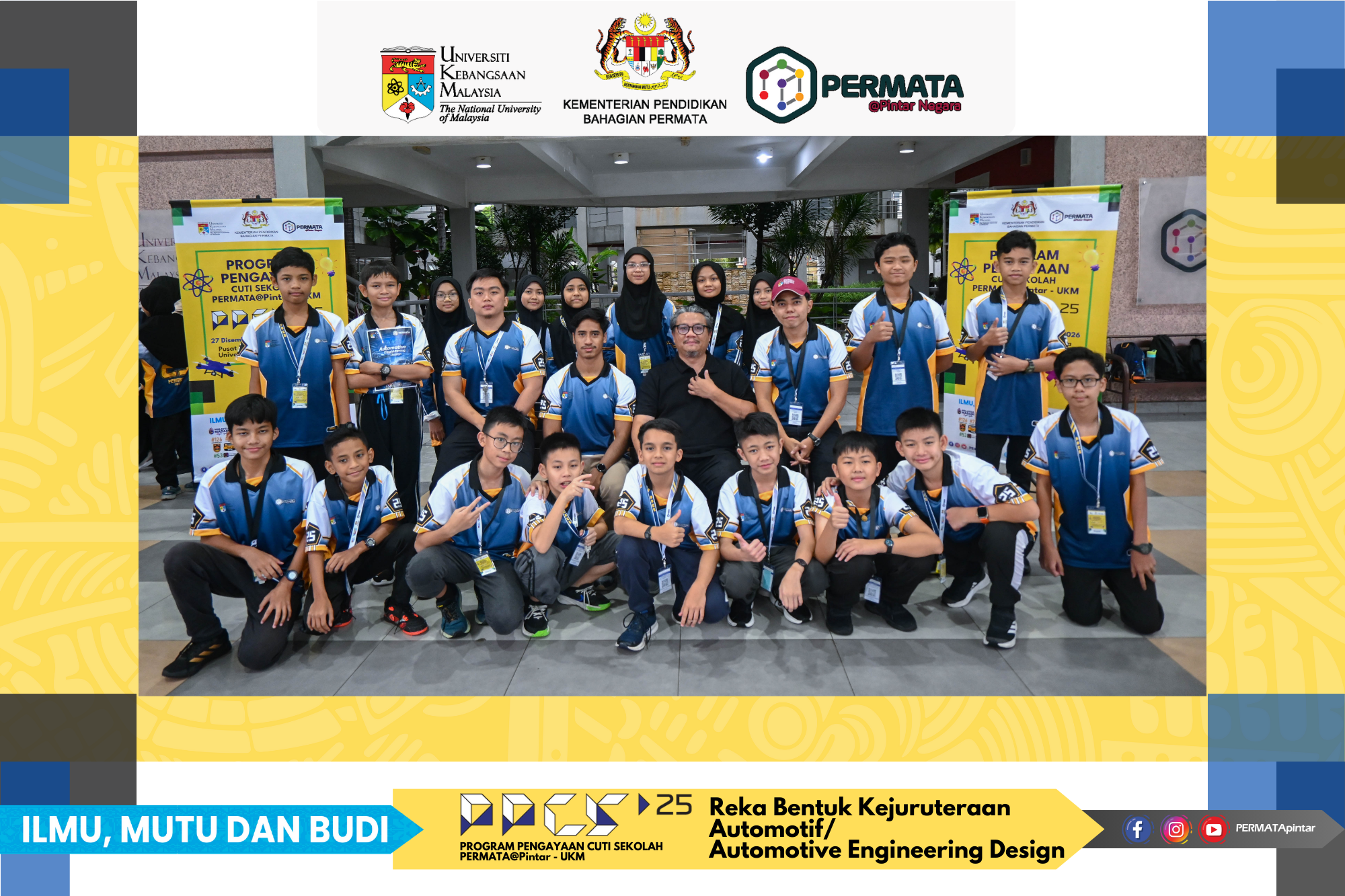
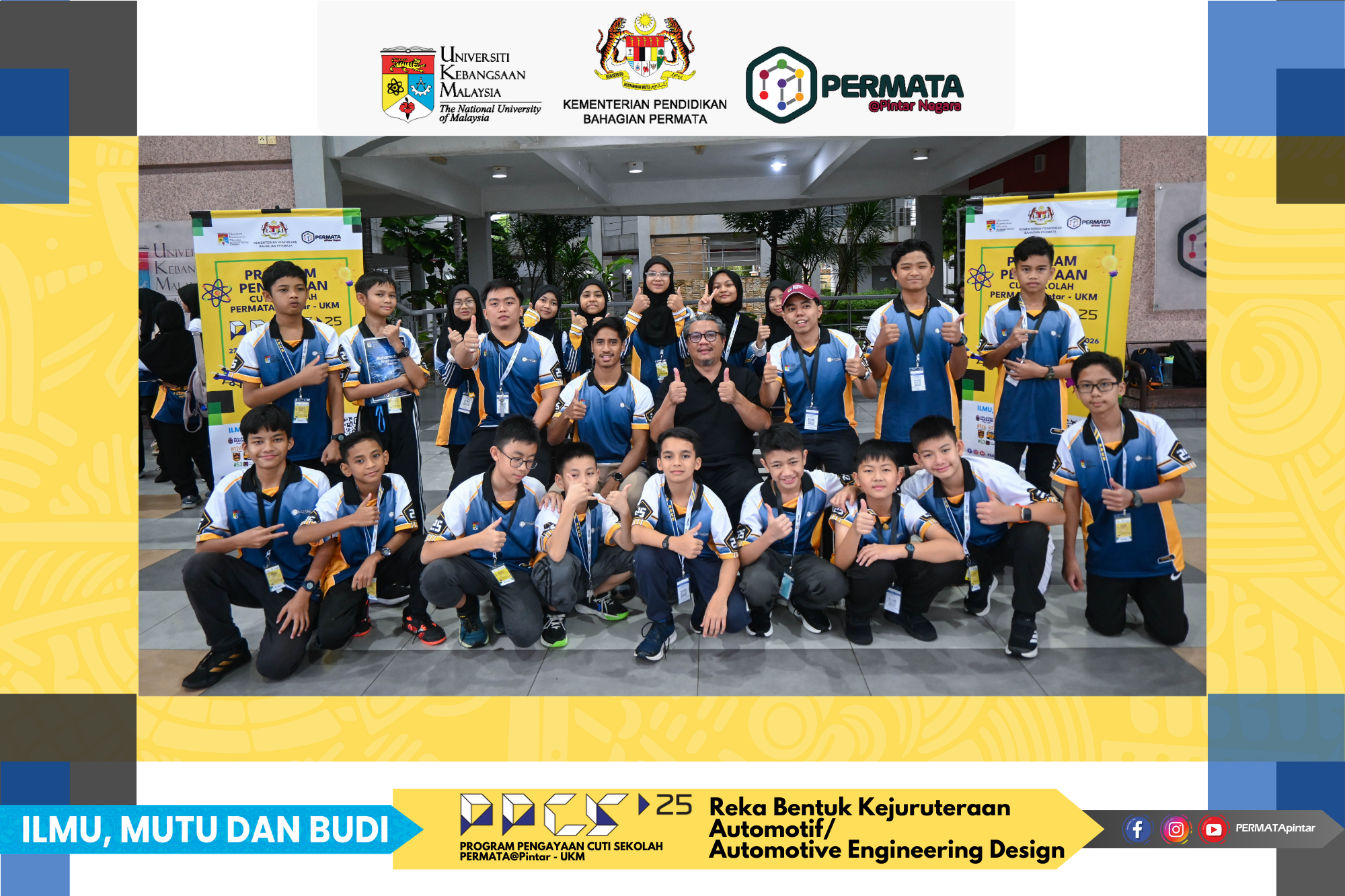
Reka Bentuk Kejuruteraan Automotif/
Automotive Engineering Design
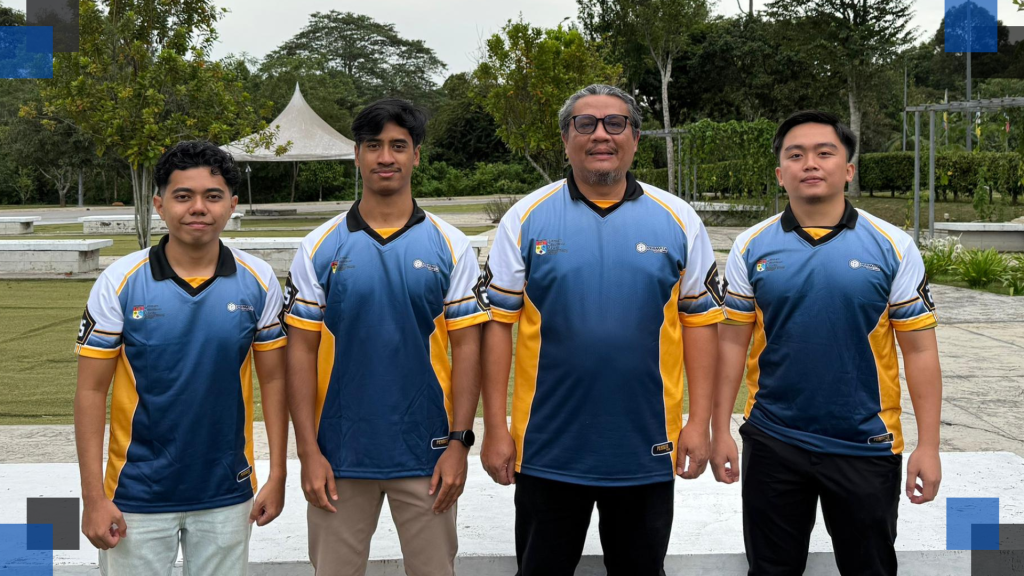
KETUA MODUL: DR. MOHD RADZI ABU MANSOR
PENGAJAR: MUHAMMAD HAZIQ BIN ZULL AZRI
PEMBANTU PENGAJAR: MUHAMMAD HAIKAL AIMAN BIN MOHAMAD HAMBALI
PEMBANTU PELAJAR: SHAHIDAN BIN SARIMAN
Kursus ini memberi pendedahan awal dan pengetahuan asas mengenai Kejuruteraan Automotif. Sepanjang kelas pelajar akan didedahkan dengan pengetahuan yang berkaitan dengan kejuruteraan automotif dengan mempelajari modul Autodesk Inventor, modul Autodesk Inventor, Autodesk Flow Design, QuickCAM, Air Trace Visualization System, mesin CNC, F1 Race Track dan pencetak 3D. Sepanjang perjalanan pembelajaran selama 10 hari ini, pelajar akan dapat mengalami proses dan pembelajaran baru, seperti ujian pra dan pasca, perkongsian, perbincangan dalam kumpulan, persembahan individu dan kumpulan, kerja makmal, penulisan laporan, persembahan akhir dan juga lawatan lapangan.
This course provides an early exposure and fundamental knowledge about Automotive Engineering.Throughout the class students will be exposed to knowledge related to automotive engineering with learning Autodesk Inventor module, Autodesk Inventor module, Autodesk Flow Design, QuickCAM, Air Trace Visualization System, CNC machine, F1 Race Track and 3D printer. Throughout this 10-day learning journey, students will able to experience new learning processes and pedagogy, such as pre- and post-test, think-pair-share, group discussion, individual and group presentation, daily hands-on activities, movie review, laboratory works, report writing, final presentation as well as field trip.
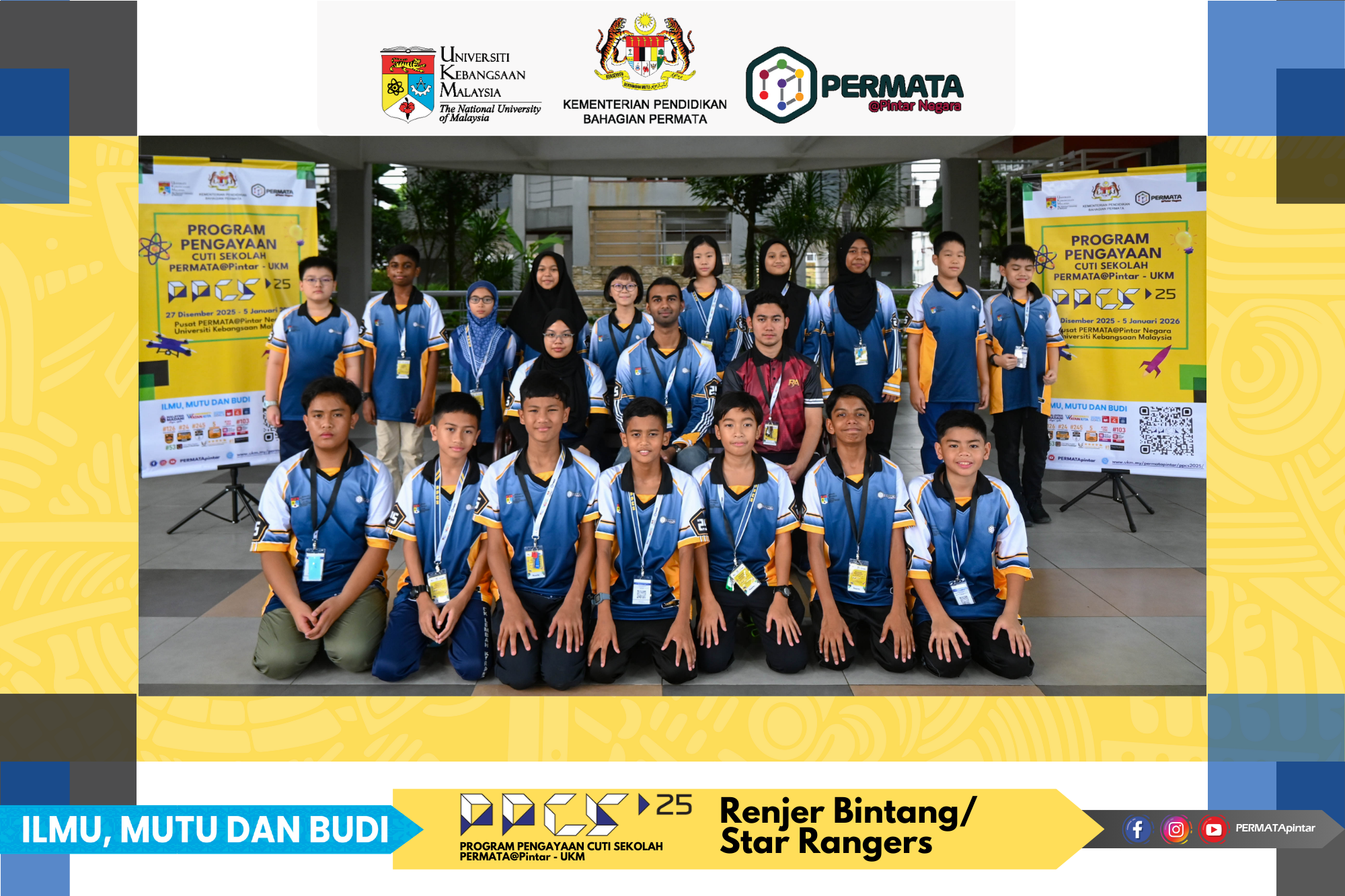
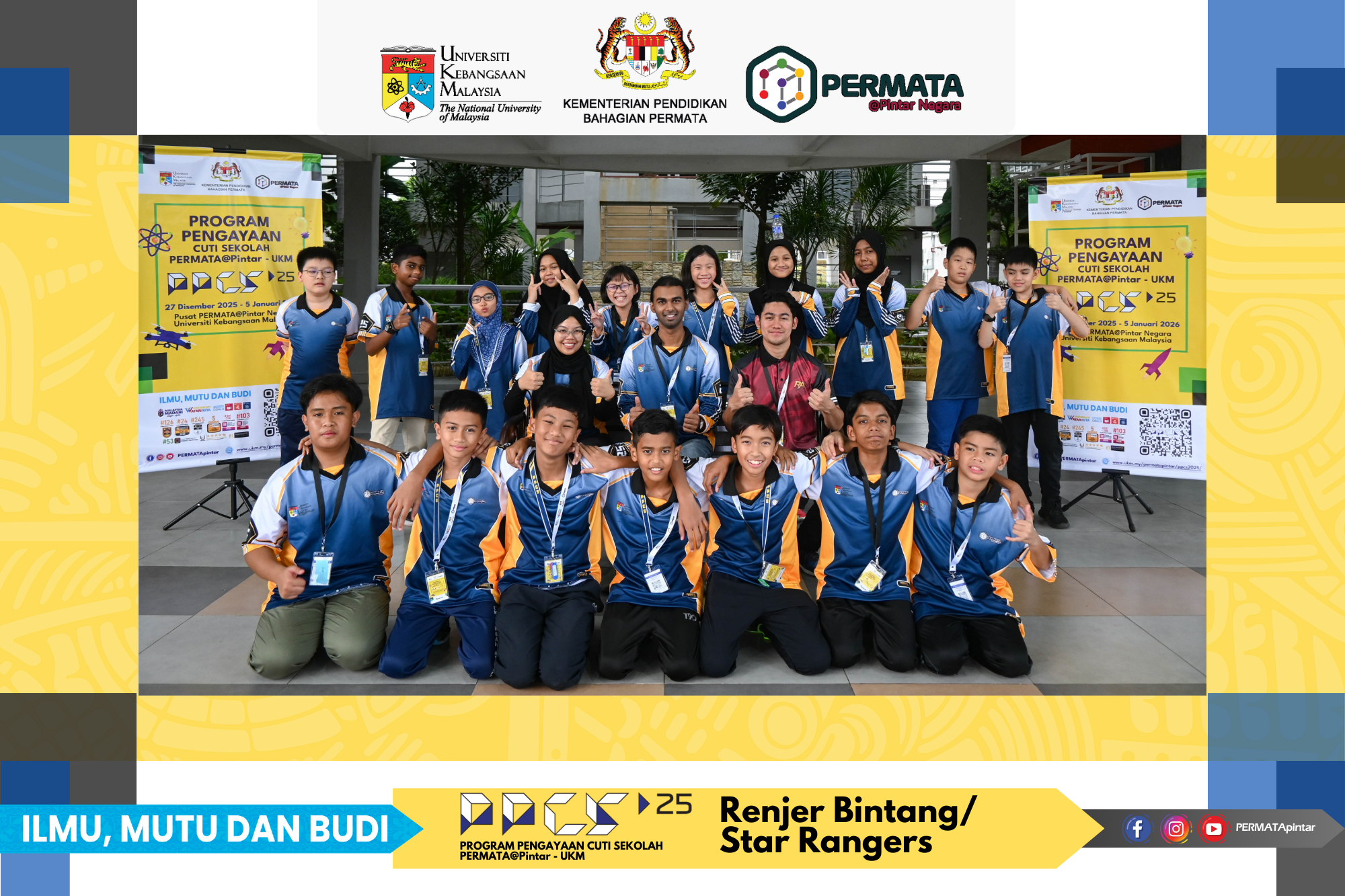
Renjer Bintang/
Star Rangers
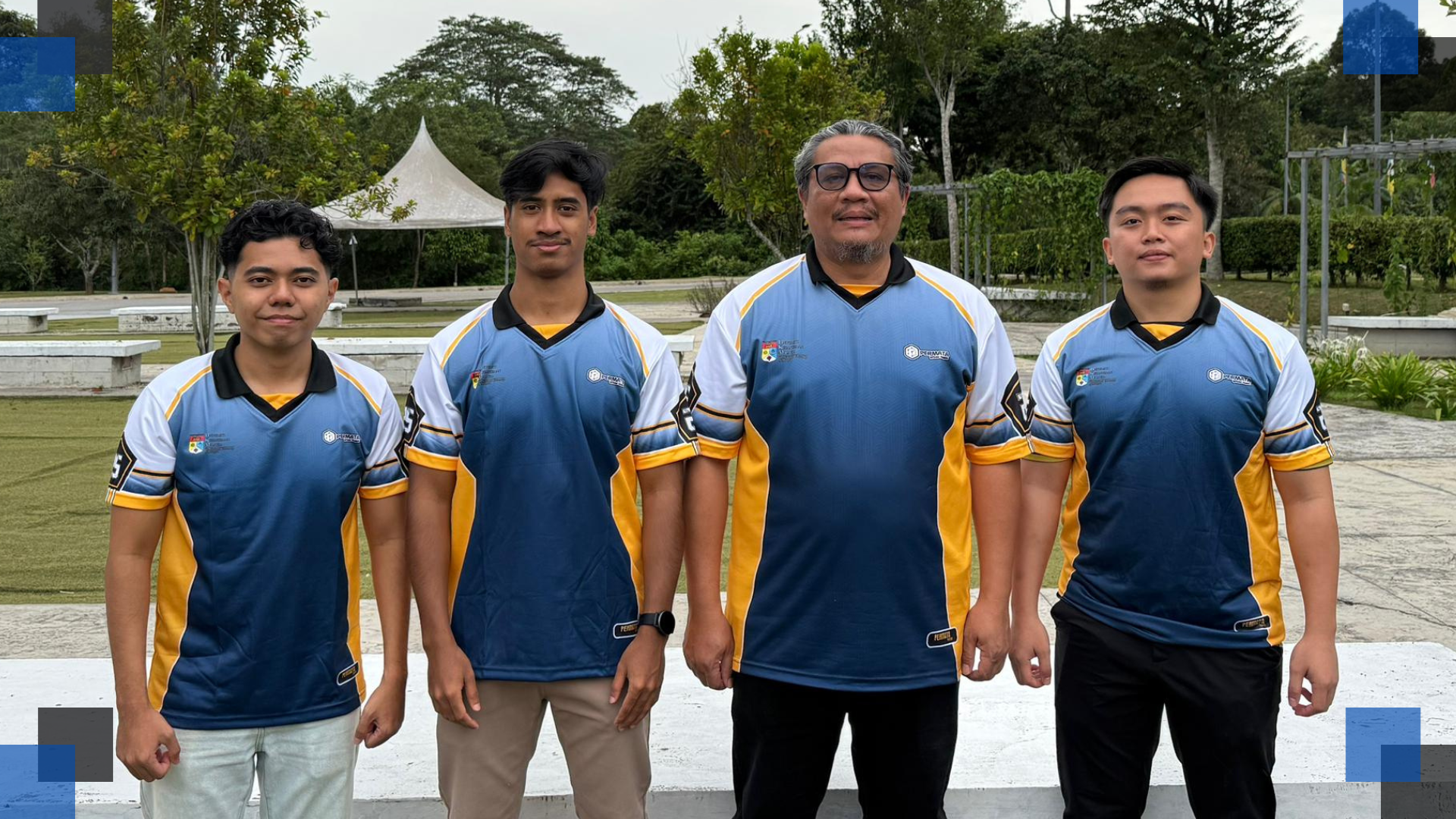
KETUA MODUL: MOHAMMAD AFIQ DZUAN BIN MOHD AZHAR
PENGAJAR: THENAMUTHAN A/L SEGARAN
PEMBANTU PENGAJAR: ZAFIRAH HUSNA BINTI MOHD ZIN
PEMBANTU PELAJAR: TBC
This course was designed to provide students with the opportunities to discover and understand the subject matter through both theoretical and practical/observational approaches. Throughout the course, student will be expose to the fundamental knowledge regarding stars (what is a stars? How to observe the stars?), the properties of stars and how to determine/measurement them, and lastly the evolutionary path of stars. Students also able to experience working as an astrophysicist – they will be given an astronomical project/research of studying certain real stars. They have to utilize the lesson that they have learned to process real astronomical data taken from the database of astronomical observatories or space telescopes. At the end of the course, student not only learn in-depth about stars, they also able to experience how astrophysicist works, first hand.
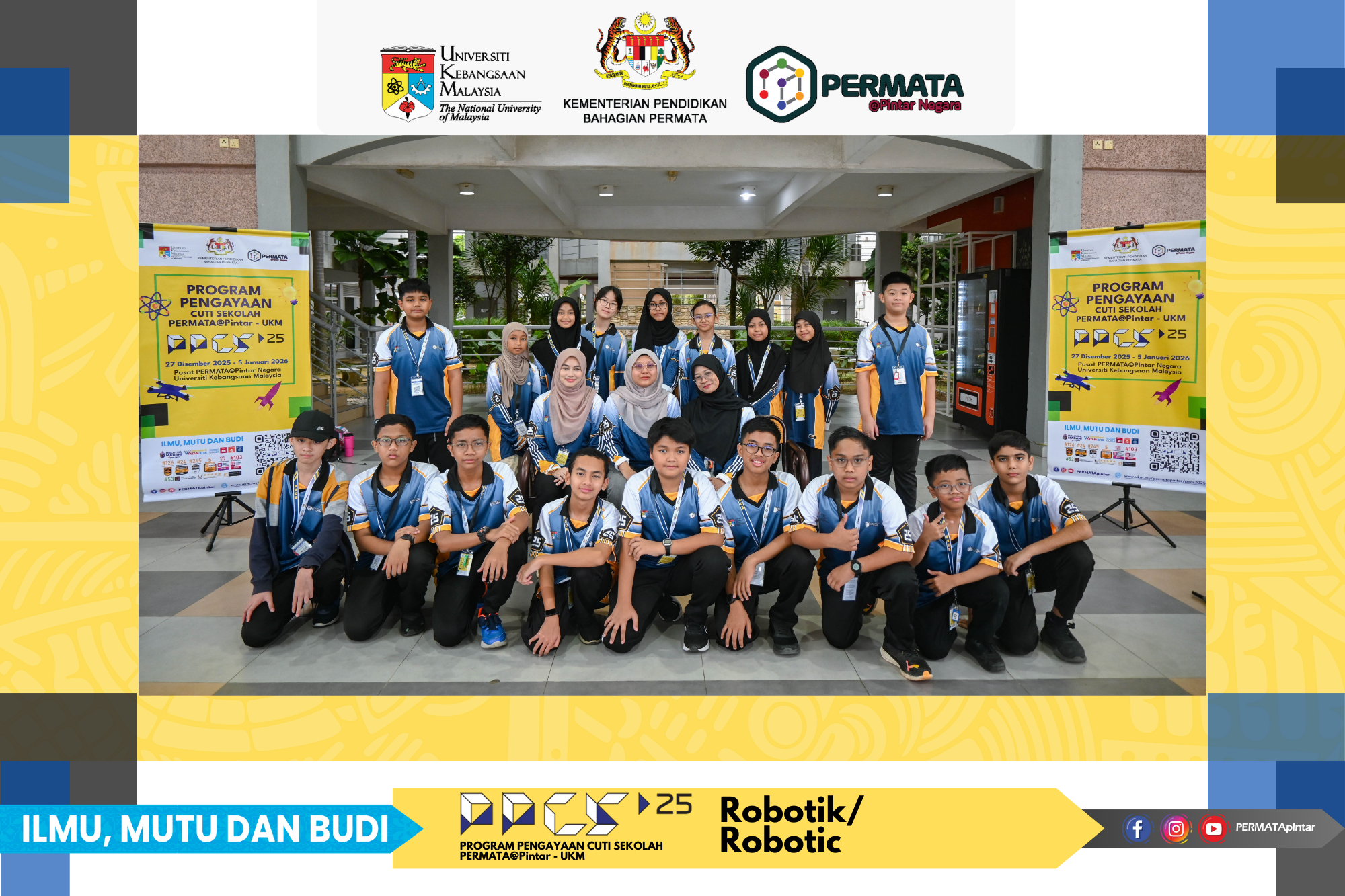
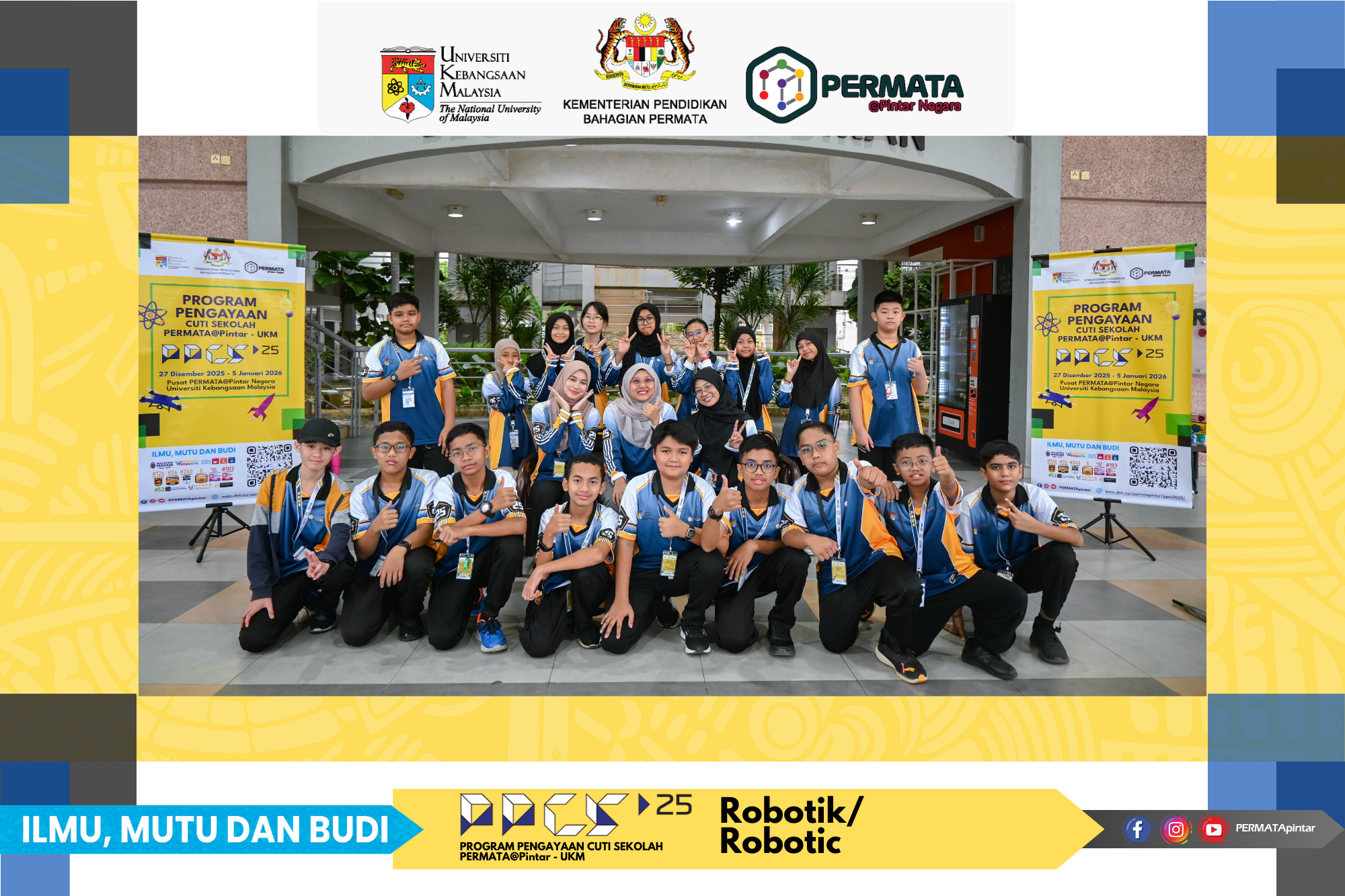
Robotik/
Robotic
KETUA MODUL: HAFIFAH BINTI AB HAMID
PENGAJAR: TBC
PEMBANTU PENGAJAR: NUR FADILAH NATASHA BINTI DOL RAMLI
PEMBANTU PELAJAR: SYAFIY BINTI A.AZMAN
This course introduces robotics. This 10-day course is designed to provide students with basic knowledge in the field of robotics as well as increase students interest in related fields. This course contains both theoretical and practical sections. In theory, students will be exposed to the types of robots, robot components, rules and ethics in robotics, careers in the field of robotics, and the challenges and solutions of future issues related to the field of robotics. To increase student interest, a practical section is planned to provide early consolidation to students to build robots and program robots. Students will be exposed to the basics of electronics, electronic components, building simple circuits, and programming electronic circuits. Students will also build simple robots and program them. To strengthen students understanding, students are required to perform special tasks that have been determined to test and analyze robots and programs that have been built.
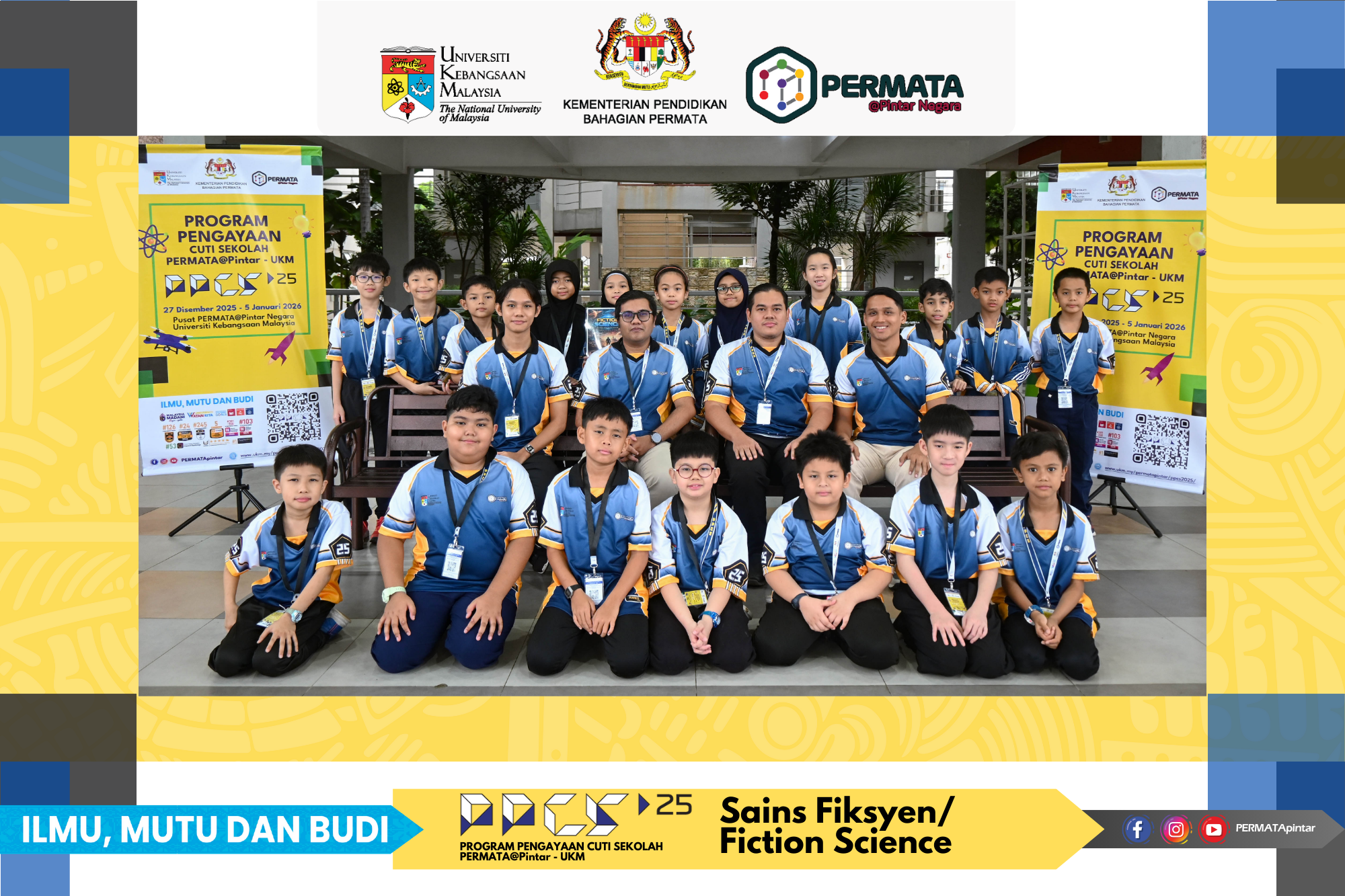
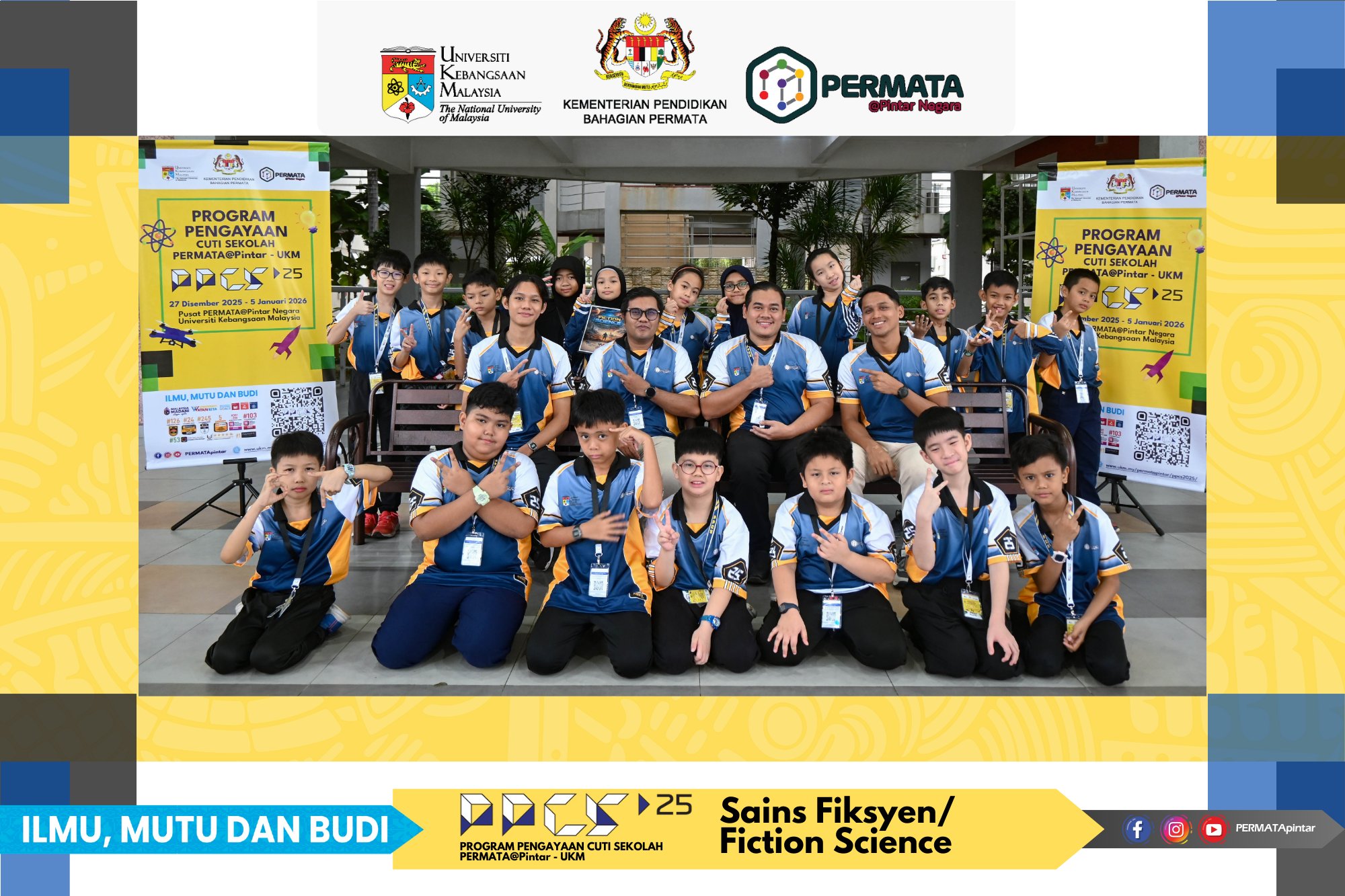
Sains Fiksyen/
Fiction Science
KETUA MODUL: MIOR MUHAMMAD SAIFUL NIZAN BIN MOHD SAALI
PENGAJAR: MUHAMMAD AKMAL HADI BIN MD SHUKRI
PEMBANTU PENGAJAR: TBC
PEMBANTU PELAJAR: AHMAD NABIL SYAWAL BIN MOHD ZULKIFELI
This course aims to provide knowledge and skills to students regarding the aspects of fiction and its relationship with science in human life. Among the aspects discussed are an introduction to science fiction, theories on human existence, the universe, natural phenomena from a scientific perspective, the rhetoric and reality of world destruction, phenomena such as global warming on Mars and the Moon, humans and the future, future technology, natural phenomena in Malaysia, and experiential learning visits. It also aims to expose students to effective communication to appreciate and generate thoughts about the science in fiction and science itself, fostering critical thinking skills. Students are expected to master the ability to justify issues through writing while mastering the proper procedures to articulate critical and substantial ideas.
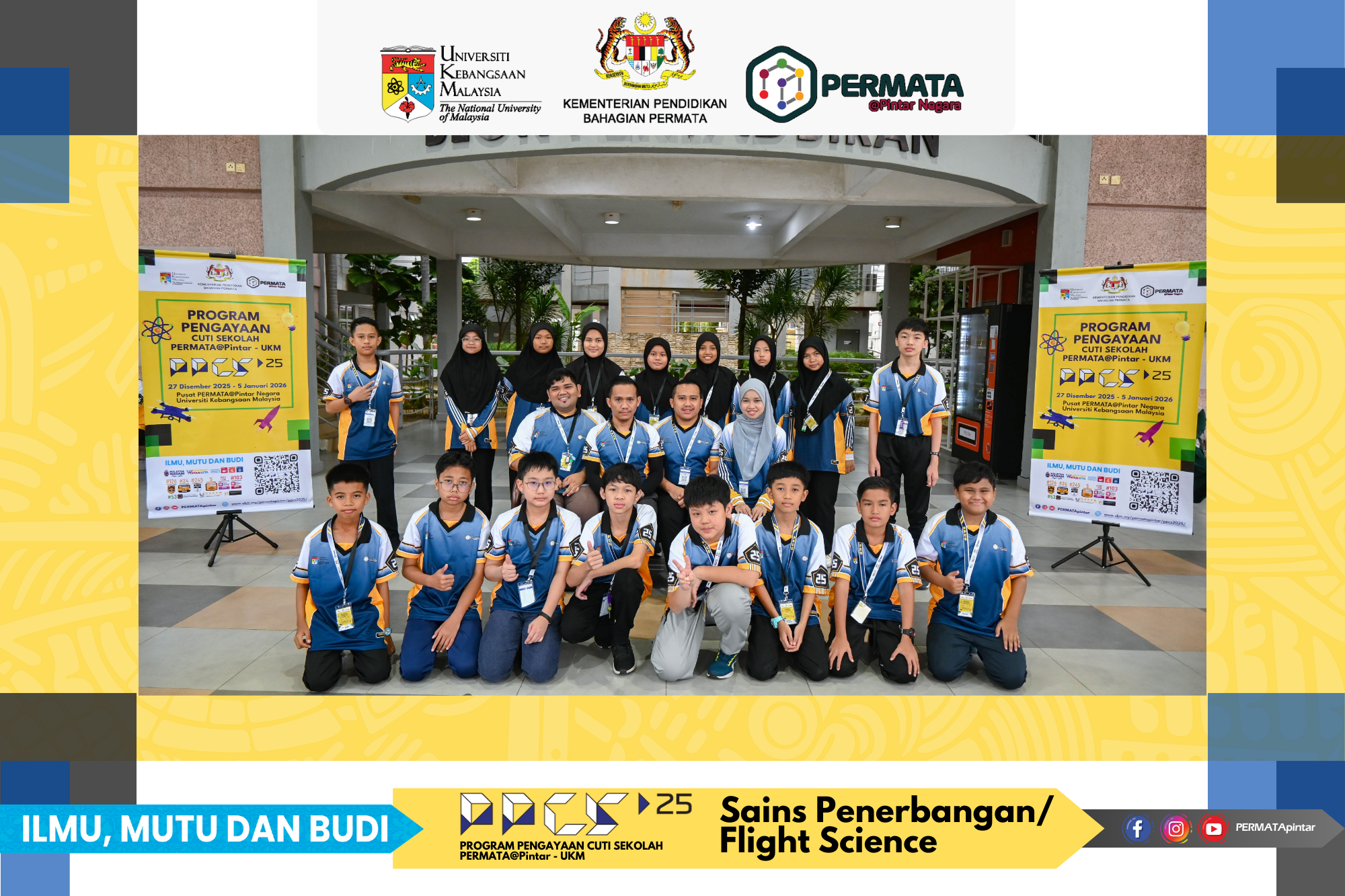
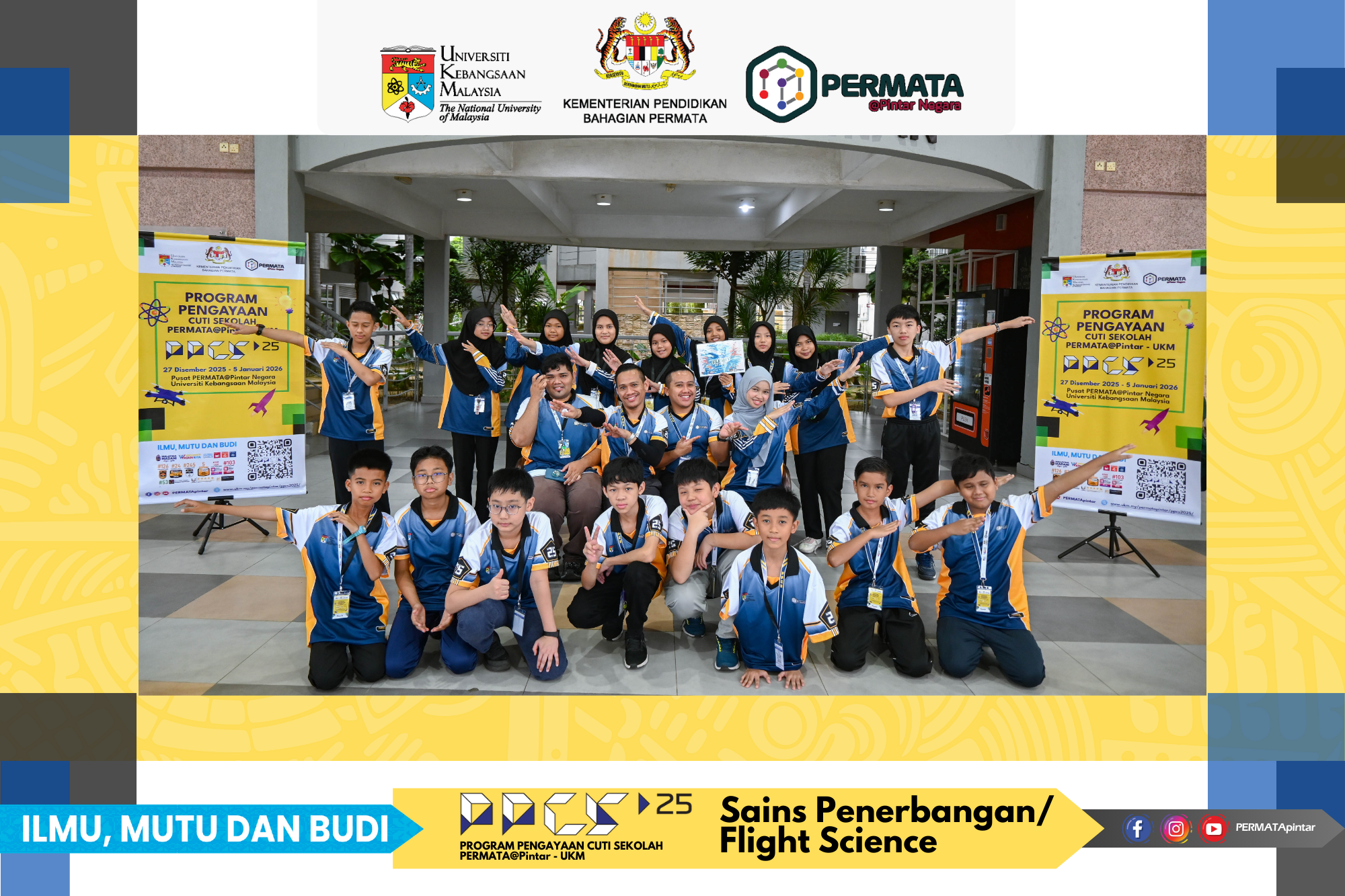
Sains Penerbangan/
Flight Science
KETUA MODUL: DR. MUHAMAD FIKRI BIN ZAINI
PENGAJAR: MUHAMAD FIRDAUS BIN ZAINI
PEMBANTU PENGAJAR: MUHAMMAD IKRAM BIN CHE’ADNAN
PEMBANTU PELAJAR: AMIRA SYAHIRA BINTI ROZAIMEY
This course provides an early exposure and fundamental knowledge about flight science. The 10-day modules in this course are well planned constructed and created to boost students’ interest in physics and engineering. Students will be introduced about the plane’s performance during the first day of class so that they will be able to follow the learning journey by understanding the factors that will effect on a flight performance. They will be introduced to the forces act on a plane to understand the motion of a plane during flight that has scalar and vector quantities. Next, student will learn Newton’s Law of Motion to understand the motion of a flight in the air. Then, students will conduct experiment based on Bernoulli’s Principle to test out lift in a flight. The students will then have introduced and experiment other types of flight such as Aerodynamics Flight-which is airplane, Buoyant Flight, Ballistic Flight and Mechanical Flight. Throughout this 10-day learning journey, students will able to experience new learning processes and pedagogy, such as pre- and post-test, think-pair-share, group discussion, individual and group presentation, daily hands-on activities, movie review, laboratory works, report writing, final presentation as well as field trip!
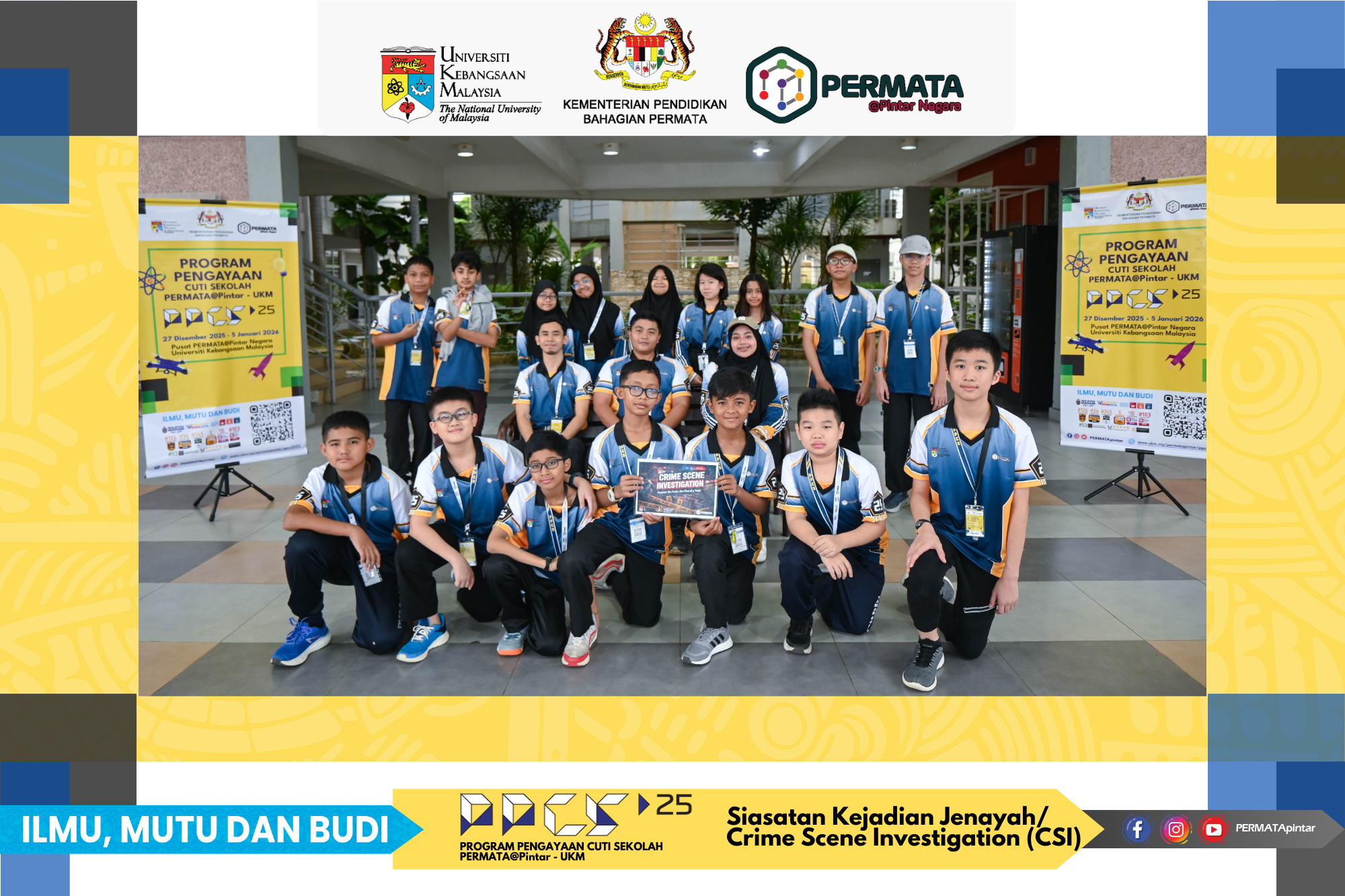
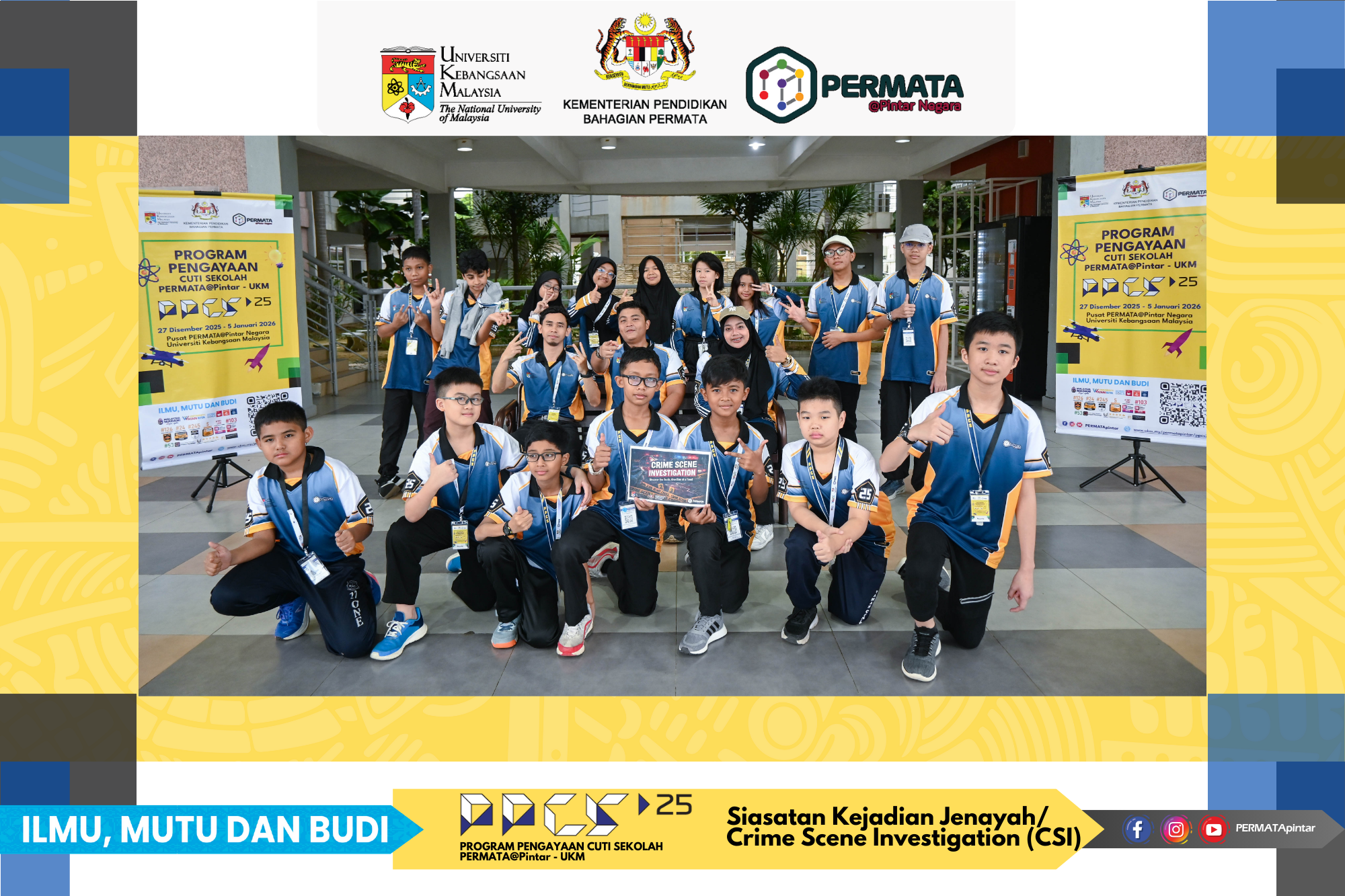
Siasatan Kejadian Jenayah/
Crime Scene Investigation (CSI)
KETUA MODUL: NURSAKINAH BINTI MAT HAZIR
PENGAJAR: MUHAMMAD FIRDAUS BIN IDRUS
PEMBANTU PENGAJAR: AHMAD IMANNUDIN BIN KAHARUDIN
PEMBANTU PELAJAR: SITI NURASYIELA BINTI AZMAN
This course provides an early exposure and fundamental knowledge about forensic science, especially in crime scene investigations. The 10-day module in this course was constructed and created to boost students’ interest in scientific methods for analyzing the chronology of criminal cases based on evidence found at the scene. Students will be introduced about the big picture of crime scene investigations on the first day of class. Students will also be introduced on how to analyse evidence in crime scene investigations including fingerprint analysis, footwear and tire print analysis, hair and trace evidence analysis, questioned document and handwriting analysis, DNA and blood pattern analysis, and fire investigations. Throughout the program, students will have to solve a criminal case in groups based on the evidence obtained throughout the class and will present the findings on the last day. Throughout this 10-day learning journey, students will be able to experience new learning processes and pedagogy, such as pre- and post-test, think-pair-share, group discussion, individual and group presentation, daily hands-on activities, movie review, laboratory works, report writing, final presentation as well as field trip.
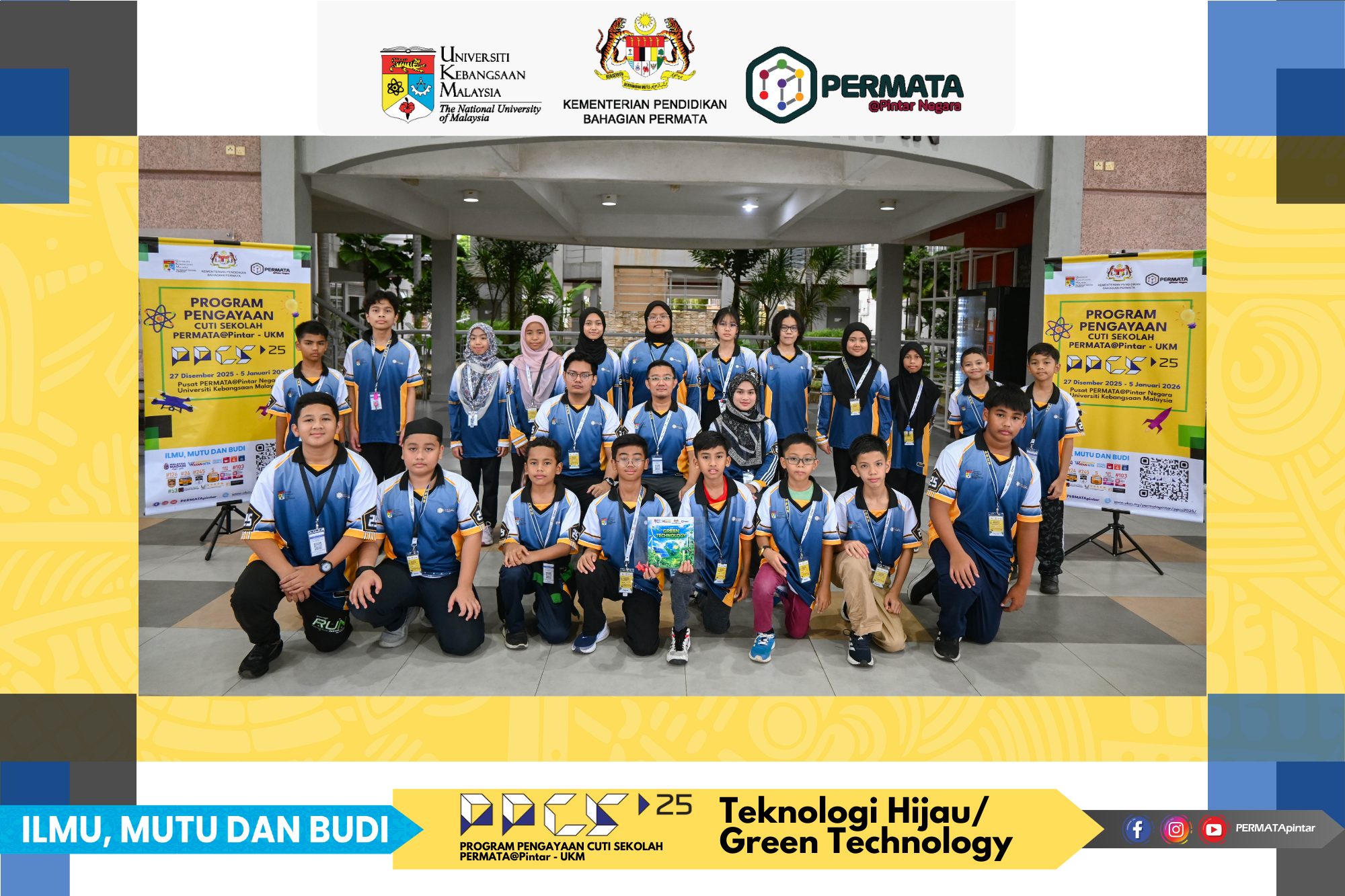
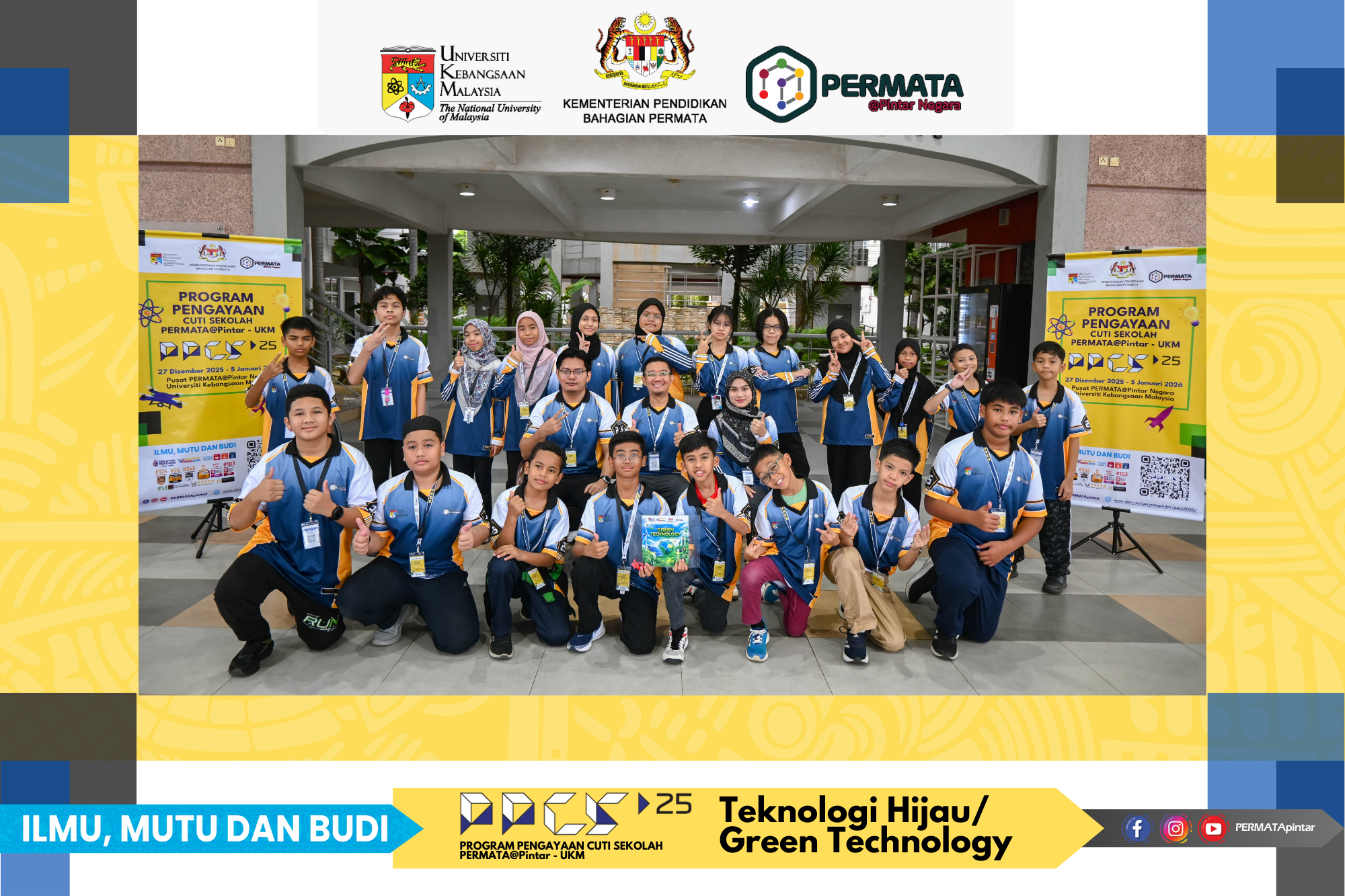
Teknologi Hijau/
Green Technology
KETUA MODUL: PM DR. SUHAILA SEPEAI
PENGAJAR: MOHD ZIKRI BIN RAZALI
PEMBANTU PENGAJAR: MUHAMMAD WAFIY BIN MAD SUKOR
PEMBANTU PELAJAR: NUR MUNA NADIRAH BINTI MOHAMMAD ZUBIR
The content in this course is divided into three parts namely; 1) Green Energy, 2) Green Technology and 3) Green Design. In the Green Energy Part, students are exposed to world issues and the effects of human activities on the earth such as global warming and pollution that lead to the introduction of green energy. Students are introduced to the types of green energy and the potential use of green energy as an alternative energy source for fossil fuels. Second part, which is Green Technology, exposes students to the technologies from each type of green energy learned. Students are also exposed to education kits related to green energy technology to strengthen students’ understanding of the green technology mechanism in practice. Students also design their own experiments using materials around them for experiments related to green technology. Apart from that, students are also given the opportunity to get acquainted with experts in the field of green energy technology in Malaysia in the field of solar energy, wind energy, architecture and biomass specially invited to provide information and make activities with students. For the Green Design Part, students will design a sustainable green city model. Students will learn that the five key elements that need to be emphasized in their sustainability in the green city are energy resources, food, environment, transportation and waste management. Students use waste materials in building the green city model.