
Authors retain copyright of their work. Articles published in IJIT are distributed under the Creative Commons Attribution 4.0 International License
(CC BY 4.0)
visitors since 01 June 2012
IJIT | International Journal of Islamic Thought


e-ISSN 2289-6023 | ISSN 2232-1314
The INTERNATIONAL JOURNAL OF ISLAMIC THOUGHT (IJIT) is an internationally refereed online journal (e-ISSN 2289-6023) and printed journal (ISSN 2232-1314). IJIT is jointly published by the Department of Theology and Philosophy; the Faculty of Islamic Studies, National University of Malaysia (Universiti Kebangsaan Malaysia), and; Wisdom Academia Venture. The credibility and achievements of IJIT have qualified it to be indexed by Scopus and the Web of Science (ESCI). The international perspective of IJIT reflected by its international authors, international editors, international reviewers, international member of advisory board, and international access. IJIT is an Open Access Journal that provides immediate and free access to its published content. Users are permitted to read, download, copy, distribute, print, search, or link to the full texts of articles, crawl them for indexing purposes, transmit them as data to software, or use them for any other lawful purpose without financial, legal, or technical barriers, in accordance with the principles of open access publishing. IJIT supports Bethesda Statement on Open Access Publishing. Founded in 2012, IJIT published in June and December annually. It is open to authors around the world regardless of the nationality. All published articles are assigned DOI (https://doi.org/10.24035) provided by Crossref. IJIT is a member of COPE (Committee on Publication Ethics), a leading organization that provides guidelines, resources and support for editors, publishers and researchers to ensure integrity in academic writing and publishing. The International Journal of Islamic Thought (IJIT) has been honoured with the Malaysia Scopus Research Star Award 2024 by the Ministry of Higher Education (MOHE), Malaysia, in recognition of its outstanding global reputation, scholarly excellence, and impactful research achievements.
Ahmad Munawar Ismail & Mohd Farhan Firas
Religious Extremism through the Lens of Kristevan Abjection
Page: 1-17 • DOI: https://doi.org/10.24035/ijit.29.2026.348
Received: 15.12.2025 • Revised: 10.02.2026 • Accepted: 20.03.2026 • Published: 15.06.2026
Ahmad Munawar Ismail & Mohd Farhan Firas. 2026. Religious extremism through the Lens of Kristevan abjection. International Journal of Islamic Thought. Vol. 29 (June): 1-17.
Abstract: This study analyzes the phenomenon of religious extremism through the concept of abjection as articulated by Julia Kristeva. The theory of abjection elucidates the psychosocial mechanisms by which radical groups construct identity through the rejection and demonization of the Other as a polluting threat that must be eradicated. It offers a critical framework for understanding how religious violence functions not merely as a political strategy but as a symbolic ritual aimed at affirming the purity of collective identity. Using a qualitative approach based on theory-guided textual content analysis and comparative discourse analysis, this study examines extremist narratives such as those propagated by IS, Buddhist nationalist movements in Myanmar, and Hindu extremism that deploy abject metaphors (e.g., “filth,” “germs,” or “contaminants”) to legitimize acts of dehumanization and violence. The findings indicate that abjection operates across three primary dimensions: (1) identity formation through the construction of a “us versus them” dichotomy; (2) the sacralization of violence as a form of jouissance (destructive enjoyment) and (3) the failure of traditional cathartic mechanisms, resulting in the transformation of abjection into uncontrolled terror. The study concludes that conventional deradicalization approaches often fall short by overlooking the psycho-abjective roots of religious violence. As an alternative, Kristeva’s framework suggests a more holistic counter-extremism strategy, one that includes abjection literacy education, intergroup dialogue, and the reinforcement of an inclusive symbolic order.
Keywords: abjection, collective identity, Julia Kristeva, religious extremism, violence
Qatar in the Ottoman and British Strategies in the Arabian Gulf (1305–1331 AH/1888–1913 CE): A Historical Study in the Light of Ottoman Documents
Page: 18-28 • DOI: https://doi.org/10.24035/ijit.29.2026.349
Received: 01.11.2025 • Revised: 16.01.2026 • Accepted: 15.02.2026 • Published: 15.06.2026
Asmahan Mostafa Tawfik Khalil, Wael Mohamed Mahmoud Alrefae & Hibah Mohammed Hamad Alsubaie. 2026. Qatar in the Ottoman and British strategies in the Arabian Gulf (1305–1331 AH/1888–1913 CE): A historical study in the light of Ottoman Documents. International Journal of Islamic Thought. Vol. 29 (June): 18-28.
Abstract: This study examines the features of Ottoman and British strategies in the Arabian Gulf during the period (1305–1331 AH/1888–1913 CE), through their direct rivalry over the Qatar Peninsula. The Ottoman state—acting as the Islamic Caliphate—viewed Qatar as part of Muslim lands in al-Ahsa and sought to consolidate its sovereignty through administrative tools (appointment of qaimmaqam and the registration of villages in the salnames), legal measures (memoranda and diplomatic protests), and military action (dispatching ships and troops to protect the coasts). By contrast, Britain embodied the face of Western colonialism, linking its influence in Qatar to securing navigation to India and working to undermine Ottoman sovereignty through Bahrain and Abu Dhabi, using settlement projects in al-Zubarah and al-`Udayd as pretexts for intervention and the consolidation of dominance. The importance of this study lies in showing how Qatar became an arena of confrontation between the Islamic Caliphate, representing the unity of Muslims, and European colonialism, which exploited the Gulf’s position and resources. The Ottoman documents further demonstrate that the 1913 Convention was not merely a political settlement but a decisive turning point that, for the first time, recognized Qatar as a distinct entity under the rule of the Al-Thani family—marking the beginning of the consolidation of its political identity within the broader context of rivalry between Islam, represented by the Ottomans, and Western colonialism, represented by Britain.
Keywords: British imperial strategy, Ottoman archives (BOA), Ottoman sovereignty, Qatar, 1913 London Agreement
Azad Aref Raouf Qazaz
The Createdness of the Quran: A Theological Framework in Dirar’s Doctrine
Page: 29-40 • DOI: https://doi.org/10.24035/ijit.29.2026.350
Received: 15.12.2025 • Revised: 26.01.2026 • Accepted: 23.03.2026 • Published: 15.06.2026
Azad Aref Raouf Qazaz. 2026. The createdness of the Quran: A theological framework in Dirar’s doctrine. International Journal of Islamic Thought. Vol. 29 (June): 29-40.
Abstract: This article examines the theological conception of the Quran’s createdness in the thought of Dirar b. `Amr (d. ca. 193/809). As one of the earliest Muslim theologians, Dirar held that the Quran is created and classified it not as a body (jism), but as an accident (`arad)—a non-substantial entity—formed by God upon the Preserved Tablet (al-Lawh al-Mahfuz). He formulated a distinctive doctrine of acquisition (iktisab), asserting that individuals acquire the Quran through reading, writing, and memorization, by means of an ability to act (al-istita`a). According to Dirar, God continuously recreates the Quran within the temporal world, distinguishing between a primordial Quran inscribed on the Lawh al-Mahfuz and a created Quran manifested in human activity. In his view, only `Uthman’s recension reflects the primordial Quran. This study investigates a neglected dimension of Dirar’s theology by analyzing his classification of the Quran as a created `arad and his conception of its temporal actualization through two agents: God as Creator (Khaliq) and the human as acquirer (muktasib).
Keywords: ‘arad, al-lawh al-mahfuz, createdness of the Quran, dirar, iktisab, jism, ‘Uthman’s recension
Fatma Ebru Sarıca & Nıhat Tosun
Islamic Family Law in Practice: Religious Guidance Services in Turkiye
Page: 41-56 • DOI: https://doi.org/10.24035/ijit.29.2026.351
Received: 18.11.2025 • Revised: 13.01.2026 • Accepted: 17.02.2026 • Published: 15.06.2026
Fatma Ebru Sarıca & Nıhat Tosun. 2026. Islamic family law in practice: Religious guidance services in Turkiye. International Journal of Islamic Thought. Vol. 29 (June): 41-56.
Abstract: This study explores how Muslims in Turkiye navigate the moral and religious complexities of marriage and divorce when Islamic legal norms diverge from state civil law. Drawing on applications submitted to Family and Religious Guidance Bureaus between 2019 and 2024, this research employs a mixed-methods design combining application record analysis with in-depth interviews with Diyanet personnel. The findings reveal that a substantial proportion of applicants seek guidance specifically because Islamic legal institutions such as talaq, mahr, and iddah lack direct equivalents in civil law, creating situations of normative uncertainty. Applicants caught between these two legal systems often experience genuine moral distress, particularly when their religious status diverges from their civil legal status. Thematic analysis identified four strategic approaches that personnel employ to help applicants navigate this legal pluralism, including informing and enlightenment, conciliatory bridge-building, religious-legal balance seeking, and institutional boundary determination. The study demonstrates that guidance bureaus function as crucial intermediary spaces where citizens reconcile their religious obligations with civil legal requirements. These findings contribute to understanding how religious guidance institutions mediate the tensions inherent in legal pluralism, though approaches tailored to the diverse needs of different demographic groups require further development.
Keywords: Islamic family law, legal pluralism, moral negotiation, religious guidance, Turkiye
Gazali Gazali, Yelfi Dewi S, Rina Rehayati & Rahmad Tri Hadi
Digitalization of the Teachings of the Naqsyabandhi Haqqani Tariqah in Indonesian Urban Society
Page: 57-74 • DOI: https://doi.org/10.24035/ijit.29.2026.352
Received: 24.11.2025 • Revised: 28.01.2026 • Accepted: 13.03.2026 • Published: 15.06.2026
Gazali Gazali, Yelfi Dewi S, Rina Rehayati & Rahmad Tri Hadi. 2026. Digitalization of the teachings of the Naqsyabandhi Haqqani Tariqah in Indonesian urban society. International Journal of Islamic Thought. Vol. 29 (June): 57-74.
Abstract: This article aims to explore how the teachings of the Naqshbandi Haqqani Sufi Tariqah are being digitalized and disseminated within Indonesian urban society. It highlights the transformation of Sufi practices in digital spaces and the role of information technology in bridging spiritual teachings with modern urban life. The study employs a qualitative approach using digital ethnography. Data were collected through participant observation on digital platforms (YouTube, WhatsApp, and other social media), in-depth interviews with disciples and tariqah administrators, and content analysis of digital materials produced by the Naqshbandi Haqqani community. The main focus is on how digital da’wah is conducted and how the tariqah’s messages are received and interpreted by an urban, digitally connected audience. The findings show that digitalization has opened new spaces for the expansion of the tariqah in major Indonesian cities. Spiritual teachings, dzikr (remembrance), and sermons are now instantly accessible, blurring the boundaries between sacred and profane spaces. Digital media not only serves as a means of dissemination but also shapes new ways of experiencing spirituality in the modern era. Moreover, the use of symbols, visual language, and the distinctive aesthetics of the tariqah strengthens the community’s digital identity. In conclusion, digitalization is not merely a tool for dissemination but has become an integral part of the reformation of Sufi identity in contemporary urban society.
Keywords: Digitalization, Naqsyabandhi Haqqani Tariqah, tariqah teachings, urban society
Islamic Symbols in Salam! Greetings to Persia by Hồ Anh Thái
Page: 75-86 • DOI: https://doi.org/10.24035/ijit.29.2026.353
Received: 30.11.2025 • Revised: 02.01.2026 • Accepted: 17.02.2026 • Published: 15.06.2026
Hoàng Thị Thùy Dương & Lê Thị Hiền. 2026. Islamic symbols in Salam! Greetings to Persia by Hồ Anh Thái. International Journal of Islamic Thought. Vol. 29 (June): 75-86.
Abstract: Islamic symbols are a profound source of spiritual and artistic inspiration in world literature. Salam! Greetings to Persia by Hồ Anh Thái records the author’s journey to Iran, exploring layers of cultural, historical, and religious meaning. This study investigates how Islamic symbols function in the work through three dimensions – spiritual, ritual, and material – employing symbolic and myth criticism as interpretive frameworks. The analysis identifies recurring images such as light, prayer, and journey as narrative codes that express the author’s engagement with Persian culture. Findings show that these symbols not only embody Islamic spiritual and cultural values but are also reinterpreted through a modern Vietnamese sensibility, reflecting intercultural dialogue. This study contributes to understanding how Vietnamese literature interacts with Islamic civilization and broadens the comparative scope of contemporary travel writing. By decoding these symbolic layers, the research highlights Hồ Anh Thái’s creative approach to cross-cultural representation.
Keywords: Hồ Anh Thái, Islamic symbols, Iran, Persia, Vietnam
Ibrahim Majdi Mohamad Kamil
Strengthening Usuluddin in Responding to Postmodernism and Post-Normal Challenges
Page: 87-96 • DOI: https://doi.org/10.24035/ijit.29.2026.354
Received: 29.12.2025 • Revised: 15.02.2026 • Accepted: 30.04.2026 • Published: 15.06.2026
Ibrahim Majdi Mohamad Kamil. 2026. Strengthening usuluddin in responding to Postmodernism and Post-normal challenges.International Journal of Islamic Thought. Vol. 29 (June): 87-96.
Abstract: This article examines the reinforcement of Usuluddin in addressing epistemological challenges posed by postmodernism and the post-normal era. Postmodernism, marked by skepticism toward meta-narratives and the relativization of truth, undermines the unity of meaning and the hierarchical structure of knowledge central to Islamic thought. Meanwhile, the post-normal condition introduces radical uncertainty, conflicting values, and non-linear change, demanding adaptive yet principled responses. Using a qualitative approach through philosophical and documentary analysis, this study engages classical sources (kalam, tawhid traditions) and contemporary thinkers (Lyotard, Foucault, Sardar, al-Attas, Nasr). Existing studies on Usuluddin often remain doctrinal and may not integrate responses to post-normal complexity and technological ethics. This article addresses this gap by proposing a structured approach to rearticulate Usuluddin as a dynamic epistemic system. The findings indicate that strengthening Usuluddin requires more than preserving tradition,it contributes by outlining a threefold strategy which are purifying tawhidic epistemology, expanding the Islamic worldview to contemporary domains such as artificial intelligence, digital media, and ecology, and restructuring methodology and knowledge governance. This normative framework enables Muslim societies to navigate uncertainty and fragmentation while maintaining fidelity to revelation and ethical principles.
Keywords: Epistemology, Islamic worldview, postmodernism, post-normal era, Usuluddin
Iznan Tarip
Exploring Contemporary Muallaf (Dis)Empowerment within Brunei’s Islamic Governance: An Islamic Critical Realist Perspective
Page: 97-109 • DOI: https://doi.org/10.24035/ijit.29.2026.355
Received: 21.01.2026 • Revised: 15.03.2026 • Accepted: 30.04.2026 • Published: 15.06.2026
Azad Aref Raouf Qazaz. 2026. Exploring contemporary Muallaf (dis)empowerment within Brunei’s Islamic governance: An Islamic critical realist perspective. International Journal of Islamic Thought. Vol. 29 (June): 97-109.
Abstract: Muslim muallaf (rivert) is a unique identity, distinct from a convert or revert. Muallaf can experience life as a Muslim minority in a Muslim majority. Unfortunately, muallaf may face disempowerment, even in an Islamic governance system that provides zakat funding to them. To address this issue, the author examines the nature of the contemporary muallaf identity and how it can be empowered in an Islamic governance system. The case study methodology is chosen, underpinned by Islamic critical realist philosophy. The case of muallaf (dis)empowerment in Brunei Darussalam is presented to elicit the underlying governance mechanisms, which were constructed from secondary data, including official documents and news articles, and primary data collected from a focus group with 10 diverse muallaf residing in Brunei. Then, thematic analysis was conducted, and the governance mechanisms were categorized into two: empowerment and disempowerment. From the study, it is found that both mechanisms impact muallaf simultaneously. Additionally, the muallaf identity is not suppressed or diffused in the Muslim majority community but is lying dormant due to the lack of engagement. To empower a muallaf community-of-practice, Islamic governance needs to not only distribute zakat and provide support, but also to provide platforms for them to contribute back to the wider society. The significance of the research is the call for maximizing muallaf’s potential in developing Islamic governance beyond zakat management.
Keywords: Brunei, empowerment, Islamic governance, muallaf, Muslim minority
Meis Al-Kaisi
Page: 110-126 • DOI: https://doi.org/10.24035/ijit.29.2026.356
Received: 10.11.2025 • Revised: 26.01.2026 • Accepted: 05.02.2026 • Published: 15.06.2026
Meis Al-Kaisi. 2026. Digital Dervishes in the classroom: Teaching Sufism through digital pedagogy in higher education. International Journal of Islamic Thought. Vol. 29 (June): 110-126.
Abstract: This study examines how digital pedagogy transforms Sufism education in higher education through redesigning a 300-level undergraduate course. It addresses two research questions: Firstly, how can digital tools facilitate deeper understanding of Sufism as historical and contemporary phenomenon? Secondly, how does digital media reshape student engagement with Sufi texts, practices, and communities? The study employed a qualitative case study design, analyzing data from 25 undergraduate students enrolled in a redesigned Sufism course at American University of Sharjah during Spring 2025. Data sources included student multimedia projects, digital ethnographies, and virtual museum exhibits. Findings revealed that digital storytelling, online fieldwork, and collaborative media projects significantly enhanced student engagement, interpretive depth, and intercultural awareness. Students demonstrated improved ability to analyze religious experience beyond textual boundaries and critically assess Sufi social media presence. Digital pedagogy establishes a replicable model for exploring Sufism as a lived, networked phenomenon, enhancing inclusivity and digital literacy while reshaping the epistemological contours of how Sufism is studied and experienced.
Keywords: Digital pedagogy, digital religion, networked religion, social media and spirituality, Sufism online, virtual communities.
Mohamed Bendari
The Impact of Islamic and Social Traditions on Women’s Work Rules in the Balance of International Standards
Page: 127-136 • DOI: https://doi.org/10.24035/ijit.29.2026.357
Received: 03.12.2025 • Revised: 02.01.2026 • Accepted: 29.03.2026 • Published: 15.06.2026
Mohamed Bendari. 2026. The impact of Islamic and social traditions on women’s work rules in the balance of international standards. International Journal of Islamic Thought. Vol. 29 (June): 127-136.
Abstract: The regulations governing women’s work in some Islamic countries, such as the Gulf Cooperation Council (GCC) countries, were influenced by Islam and social traditions. For instance, a Muslim female worker whose husband passed away was granted a mourning leave, while a non-Muslim female worker was denied this leave. Additionally, social customs influenced the regulations, prohibiting women from working at night while allowing men to do so. Despite previous studies on women’s work, none have examined the influence of Islam and social customs, nor the extent to which it aligns with human rights and international labour standards, creating a research gap that the study aims to fill. The subject was studied using analytical and comparative methods, in which the texts of the laws were analysed and compared with international labour standards and human rights. The article concluded that labour laws include discrimination against women based on religion at times and based on gender at other times. Therefore, the article recommends the necessity of reviewing and amending women’s work regulations to achieve the principle of equality.
Keywords: Discrimination against women, discrimination based on gender, discrimination based on religion, women’s mourning leave, women’s night work.
Mohd Izhar Ariff Mohd Kashim, Nur Asmadayana Hasim, Kipli Yassin & Badli Shah Alauddin
Food Hygiene in Islamic Jurisprudence: Analyzing Halal and Haram Classification through Shariah Principles
Page: 137-146 • DOI: https://doi.org/10.24035/ijit.29.2026.358
Received: 15.10.2025 • Revised: 13.01.2026 • Accepted: 01.03.2026 • Published: 15.06.2026
Mohd Izhar Ariff Mohd Kashim, Nur Asmadayana Hasim, Kipli Yassin& Badli Shah Alauddin. 2026. Food hygiene in Islamic jurisprudence: Analyzing halal and haram classification through shariah principles. International Journal of Islamic Thought. Vol. 29 (June): 137-146.
Abstract: The Quran and Sunnah emphasise the preservation of bodily health as a foundation for fulfilling both worldly and religious responsibilities. Central to this objective is the consumption of food that is clean and lawful (halal), which serves to protect individuals from harm and disease. However, in practice, the cleanliness and purity of food and its sources are often uncertain. Contemporary halal discourse frequently interprets cleanliness and purity in narrowly legal terms, with limited consideration of broader issues related to food hygiene and safety. This narrow approach exposes a critical gap between Islamic legal rulings and public health perspectives. This study addresses the gap by critically examining Islamic rulings on food cleanliness in determining halal and haram classifications. Employing a qualitative descriptive methodology, the study draws on classical Islamic jurisprudence, contemporary scholarly writings, peer-reviewed academic literature, and credible online sources. Insights are informed by authoritative references from both Shariah jurists and scientific experts. The findings reveal that Islamic rulings on food provide a comprehensive ethical and legal framework that prioritises cleanliness, safety, and the prevention of harm. This framework conceptualises halal as an integrative principle that aligns spiritual accountability with modern concerns in food hygiene and public health. The study contributes to Islamic scholarship by promoting a holistic understanding of halal that bridges Islamic jurisprudence with contemporary food safety and public health discourse.
Keywords: Food, halal, hygiene, scientific, shariah
Mohd Syahmir Alias & Mohammad Zulfakhairi Mokthar
Abstracting Intention in Islamic Research: Insights from al-Ghazali’s Epistemological-Ethical Framework
Page: 147-162 • DOI: https://doi.org/10.24035/ijit.29.2026.359
Received: 29.09.2025 • Revised: 11.12.2025 • Accepted: 04.04.2026 • Published: 15.06.2026
Mohd Syahmir Alias & Mohammad Zulfakhairi Mokthar. 2026. Abstracting intention in Islamic research: Insights from al-Ghazali’s epistemological-ethical framework. International Journal of Islamic Thought. Vol. 29 (June): 147-162.
Abstract: Within hadith literature, a sound narration warns that the corrupt intention (niyyah) of a Muslim scholar may lead to condemnation in the Hereafter. This ethical concern highlights the central role of intention in Islamic intellectual life and provides the backdrop for examining its meaning in the pursuit of knowledge. Al-Ghazali, an eminent figure in Islamic thought, conceives intention not merely as a moral imperative but also as an epistemic condition shaping the orientation and ultimate purpose of knowledge. Although his conception of intention has been widely discussed in theological and practical contexts, its potential as a foundation for research remains largely overlooked. Consequently, the epistemological and ethical dimensions that could guide Islamic research are often underdeveloped, with discourse tending to emphasize paradigmatic alternatives rather than the spiritual and intellectual orientation that gives research its integrity. In response, this article examines al-Ghazali’s perspective on intention and its implications for the practice of Islamic research. Two objectives guide the study: first, to delineate al-Ghazali’s account of intention; and second, to assess its implications for research as an ethical practice. Using qualitative thematic analysis of al-Ghazali’s key texts, the study finds that intention consists of knowledge (‘ilm) and will (iradah), both of which must be harmonized to achieve sincerity (ikhlaṣ). The findings highlight research as a spiritually grounded activity in which etiquette (adab) and passion (‘ishq) yield enduring benefit (barakah), reaffirming the epistemic and ethical unity of the Islamic scholarly tradition.
Keywords: Adab, al-Ghazali, epistemology, ethics, intention
Mohd Zuhaili Kamal Basir, Fariza Md. Sham, Nur A’thiroh Masyaa’il Tan Abdullah @ Tan Ai Pao & Isdawati Ismail
Development of a Conceptual Framework for Had Ta’lif of Muslim Converts (Mualaf) in Sarawak, Malaysia
Page: 163-181 • DOI: https://doi.org/10.24035/ijit.29.2026.360
Received: 02.11.2025 • Revised: 30.12.2025 • Accepted: 28.01.2026 • Published: 15.06.2026
Mohd Zuhaili Kamal Basir, Fariza Md. Sham, Nur A’thiroh Masyaa’il Tan Abdullah @ Tan Ai Pao & Isdawati Ismail. 2026. Development of a conceptual framework for had ta’lif of Muslim Converts (Mualaf) in Sarawak, Malaysia. International Journal of Islamic Thought. Vol. 29 (June): 163-181.
Abstract: This study proposes a conceptual framework to define the limits of ta’lif for Muslim converts (muallaf) in Sarawak, grounded in local socio-cultural conditions and community realities. The absence of a clearly defined duration for muallaf status has resulted in inconsistencies in zakat distribution, welfare assessment, and religious guidance. To address this gap, the framework is structured around two core constructs: Had Kifayah (Sufficiency Threshold) and Had Ta’alum (Learning Threshold). A sequential mixed-methods design was employed. The qualitative phase involved thematic synthesis of document analysis to develop the initial framework, followed by a quantitative assessment of content validity using the Item-Level Content Validity Index (I-CVI.The validated framework demonstrates satisfactory content validity and integrates Had Kifayah (basic needs, cost of living, social support) and Had Ta’alum (Islamic education, teaching aids, programme effectiveness, instructor competency). The framework is theoretically grounded in Maslow’s Hierarchy of Needs, Mezirow’s Transformative Learning Theory, and Maqasid Shariah, offering a context-sensitive foundation for zakat governance and policy development.
Keywords: Conceptual framework, mualaf, ta’lif, Muslim converts, Sarawak
Muhamad Faisal Ashaari, Nor Azlina Ibrahim, Mohamad Zulkifli Abdul Ghani & Kamarudin Salleh
Validating a Contextual Dakwah Framework for Multi-Ethnic Societies: A Fuzzy Delphi Study in Sarawak
Page: 182-195 • DOI: https://doi.org/10.24035/ijit.29.2026.361
Received: 15.10.2025 • Revised: 14.12.2025 • Accepted: 29.01.2026 • Published: 15.06.2026
Muhamad Faisal Ashaari, Nor Azlina Ibrahim, Mohamad Zulkifli Abdul Ghani & Kamarudin Salleh 2026. Validating a contextual dakwah framework for multi-ethnic societies: A fuzzy delphi study in Sarawak. International Journal of Islamic Thought. Vol. 29 (June): 182-195.
Abstract: Dakwah (Islamic Preaching) in multi-ethnic societies presents distinct challenges due to cultural, linguistic, and religious diversity. Sarawak, a Malaysian state with over forty ethnic groups and a minority Muslim population, requires dakwah approaches that are locally embedded, culturally sensitive, and of intercommunal dynamics. Scholarship on Islamic dakwah in plural contexts often falls within two paradigms: one advocating inclusive coexistence, and another stressing doctrinal exclusivity rooted in Islam as the sole absolute truth. Within Malaysia’s policy framework that leans towards the latter, it is vital to identify dakwah elements most relevant to multi-ethnic contexts such as Sarawak. This study employs the Fuzzy Delphi Method (FDM) to synthesise and validate elements of a contextual dakwah model. Sixteen experts—religious officers, dakwah activists, and academicians—participated in a consensus process. The analysis confirmed five validated elements: integration of indigenous customs, promotion of social harmony, community participation, embodiment of Islamic values through ethical action (dakwah bil ḥal), and use of local languages. All components met FDM thresholds with consensus above 75%. Findings highlight the need for a dialogic and inclusive dakwah model that strengthens trust and interethnic relationships. This study advances Islamic communication theory by providing an empirically validated model of dakwah tailored for plural societies.
Keywords: Contextual dakwah, Fuzzy Delphi method, Islamic communication, multi-ethnic society, Sarawak
Muhammad Roflee Weahama, Zakariya Hama & Maroning Salaming
Shariah Governance Framework of Islamic Banking in Thailand: Implementation and Challenges
Page: 196-207 • DOI: https://doi.org/10.24035/ijit.29.2026.362
Received: 15.11.2025 • Revised: 29.01.2026 • Accepted: 10.02.2026 • Published: 15.06.2026
Muhammad Roflee Weahama, Zakariya Hama & Maroning Salaming. 2026. Shariah governance framework of Islamic banking in Thailand: Implementation and challenges. International Journal of Islamic Thought. Vol. 29 (June): 196-207.
Abstract: The Shariah Governance Framework is essential for ensuring Islamic banking’s compliance with Shariah principles and maintaining ethical integrity. In Thailand, Islamic banking is developing as a niche sector serving the Muslim minority and fostering inclusive financial growth. This study investigates the implementation and challenges of the Shariah Governance Framework within Thai Islamic financial institutions. Using a qualitative descriptive approach, the study analyzes legal documents, institutional reports, and interviews with Shariah advisor, Shariah department officer, and senior executives of Islamic Financial Institution. Findings reveal that the current institutional-level governance model is inadequate and highlight the urgent need for a dual-tier system: a centralized national Shariah advisory body and strengthened internal Shariah governance structures. The research also examines the Bank of Thailand’s Notification on Shariah Governance for Full-Fledged and Islamic Window Banking, which mandates Shariah advisory appointments and governance structures but lacks detailed standards on independence, Shariah internal review, Shariah risk management, Shariah audit, and capacity building and capacity building, with political will and regulatory leadership identified as critical prerequisites for reinforcing the governance framework. It offers practical recommendations to strengthen Shariah compliance, governance integrity, and capacity development within Thailand’s Islamic banking sector.
Keywords: Islamic banking, Islamic windows, shariah governance framework, Thailand
Mustafa Aydın & İbrahim Yıldız
Methodological Convergences and the Problem of Distinction in the Riwayah and Dirayah Tafsir Traditions: The Case of Prophet Moses and al-Khidr
Page: 208-222 • DOI: https://doi.org/10.24035/ijit.29.2026.363
Received: 29.10.2025 • Revised: 26.01.2026 • Accepted: 23.02.2026 • Published: 15.06.2026
Mustafa Aydın & İbrahim Yıldız. 2026. Methodological convergences and the problem of distinction in the riwayah and dirayah tafsir traditions: The case of Prophet Moses and al-Khidr. International Journal of Islamic Thought. Vol. 29 (June): 208-222.
Abstract: This study comparatively examines the ways in which the narrative of Prophet Moses and the “righteous servant” in Surat al-Kahf, verses 60–82, is interpreted in riwayah and dirayah tafsirs. The study aims to answer the question, “Can the riwayah and dirayah tafsir methods be distinctly separated from each other?” Although numerous studies have been conducted on this subject, no work has been found that addresses this question through the analysis of a specific narrative. In the study, the tafsirs of al-Tabari and Ibn Abi Hatim, representing the riwayah method, and those of al-Razi and al-Andalusi, representing the dirayah method, were examined through the sampling method. These four exegetes represent the differing aspects of the riwayah and dirayah methods, while also reflecting the points at which these methods intertwine. The study employs the methods of literature review and textual analysis. The findings indicate that the riwayah and dirayah methods are not strictly separated; rather, they complement each other. It has been concluded that a profound tafsir cannot be achieved without integrating reason and transmission. This situation highlights the importance of methodological flexibility and a holistic approach that should be observed in contemporary tafsir studies.
Keywords: dirayah, Khidr, Prophet Moses, riwayah, surat al-Kahf, tafsir
A Biopsychosocial Analysis of Mujahadah (Spiritual Striving) in Rural Family Transformation: Insights from Expert Interviews
Page: 223-241 • DOI: https://doi.org/10.24035/ijit.29.2026.364
Received: 11.09.2025 • Revised: 20.12.2025 • Accepted: 13.03.2026 • Published: 15.06.2026
Nur Shahidah Pa’ad, Nur Izyanti Afiqah En Abdul Rahim, Muhammad Safwan Harun & Zaizul Ab. Rahman. 2026. A biopsychosocial analysis of mujahadah (spiritual striving) in rural family transformation: Insights from expert interviews. International Journal of Islamic Thought. Vol. 29 (June): 223-241.
Abstract: Rural poverty in Malaysia is not merely defined by material deprivation but is deeply entangled with psychosocial and spiritual challenges that hinder long-term family transformation. This study explores the role of mujahadah (spiritual striving) as a catalyst within the biopsychosocial framework, grounded in tazkiyah al-nafs (spiritual purification) and the principles of maqasid al-shariah (objective shariah). Using a qualitative exploratory design, in-depth interviews were conducted with nine domain experts in Islamic family management, rural poverty, Islamic economic, Islamic psychospirituality, rural community development, and family holistic wellbeing. Thematic analysis of expert insights yielded three key themes: mentality issues and the need for mujahadah; mujahadah as a continuous inner process, and; mujahadah as a source of family resilience. Findings suggest that spiritual striving enhances biopsychosocial well-being and supports holistic transformation in low-income families by fostering internal motivation, emotional regulation, and long-term resilience. It also aligns with the five essential goals of the shariah (al-kulliyat al-khams), reflecting the integration of spiritual and psychosocial development. This approach offers culturally relevant insights for improving rural family well-being and aligns with broader global development goals focused on poverty reduction, social inclusion, and sustainable human development.
Keywords: Biopsychosocial, families resilience, maqasid al-shariah, mujahadah, rural poverty
Intention to Adopt Mobile Halal Verification Applications on the Authenticity of the Halal Certification
Page: 242-254 • DOI: https://doi.org/10.24035/ijit.29.2026.365
Received: 18.12.2025 • Revised: 23.01.2026 • Accepted: 23.04.2026 • Published: 15.06.2026
Pick-Soon Ling, Fatin Iman Yusof, Hanini Ilyana Che Hashim & Kelvin Yong Ming Lee. 2026. Intention to adopt mobile halal verification applications on the authenticity of the halal certification. International Journal of Islamic Thought. Vol. 29 (June): 242-254.
Abstract: The authenticity of the Halal certification labelled on the products has become one of the hot issues due to the unauthorised or uncertified Halal certification. Muslim consumers are required to verify the Halal certification to certify the authenticity of the certification. Severe mobile Halal verification applications (apps) have been introduced to facilitate the verification process, and this signifies the importance of these verification apps. Although numerous mobile technologies have been extensively investigated. However, the study on the adoption of the mobile Halal verification apps is still limited. Therefore, this study intends to bridge this research gap by identifying the factors that affect the adoption of mobile Halal verification apps. This study proposed an extended mobile technology acceptance model (MTAM) by including Halal awareness, Halal knowledge and attitudes. This study collected responses from 198 Muslim consumers through purposive sampling and further validated the proposed framework through the partial least squares-structural equation modelling (PLS-SEM). The results found that only attitudes and mobile usefulness have a significant effect on the adoption intention, with attitudes having the most influential effect. Besides, the four proposed predictors also displayed a significant indirect role on adoption intention through attitudes, with the mobile usefulness having the strongest indirect effect.
Keywords: Halal awareness, halal knowledge, intention to use; mobile halal verification applications, mobile technology acceptance model
The Methodology of the Holy Quran in Establishing Gender Identity and Preventing Sexual Deviation – An Objective Exegetical Study of the Story of the People of Lot, as a Model
Page: 255-269 • DOI: https://doi.org/10.24035/ijit.29.2026.366
Received: 14.10.2025 • Revised: 19.12.2025 • Accepted: 13.03.2026 • Published: 15.06.2026
Raimah Ali Altalhi, Abdallah Mohammed Mahmoud & Omar Yousef Hammad. 2026. The methodology of the Holy Quran in establishing gender identity and preventing sexual deviation – An objective exegetical study of the story of the People of Lut, as a model. 2026. International Journal of Islamic Thought. Vol. 29 (June): 255-269.
Abstract: This study aims to examine the Quranic methodology in defining and preserving gender identity and preventing sexual deviation, with a focus on the story of Prophet Lut (peace be upon him) as a model. It seeks to explore how the Quran establishes the natural gender order and provides moral and legal frameworks to counter contemporary deviations such as homosexuality and gender fluidity. A thematic and objective exegetical approach was adopted, analysing key Quranic verses alongside classical tafsir sources, including Al-Tabari, Al-Qurtubi, and Ibn Kathir. The study also incorporates modern interpretations to link traditional exegesis with current societal issues related to gender and sexuality. The analysis reveals that the Qur’an promotes a divinely ordained binary gender structure (male and female) and condemns all forms of sexual deviance that contradict natural human instincts. It demonstrates that the Quranic discourse integrates moral, psychological, and societal reform, emphasizing education, modesty, and faith-based deterrence as tools to prevent sexual immorality. This study contributes to contemporary discussions on gender and sexuality by offering a Quranic framework that integrates classical scholarship with modern realities. It highlights the enduring relevance of divine guidance in preserving human dignity and moral order in an age of growing gender confusion and ethical relativism.
Keywords: Gender identity, homosexuality, LGBTQ+, People of Lot, Quranic approach
Algorithmic Predestination and Divine Knowledge (`Ilm Allah): Causality, Human Agency, and the Closed System of Code
Page: 270-285 • DOI: https://doi.org/10.24035/ijit.29.2026.367
Received: 21.12.2025 • Revised: 19.02.2026 • Accepted: 13.04.2026 • Published: 15.06.2026
Zainab Amin, Salma Anjum & Nazia Bibi. 2026. Algorithmic predestination and Divine knowledge (`ilm Allah): causality, human agency, and the closed system of code. International Journal of Islamic Thought. Vol. 29 (June): 270-285.
Abstract: This article examines the growing influence of predictive algorithms on human cognition and behavior as a contemporary theological problem that has yet to be systematically addressed within classical Islamic intellectual frameworks. While existing scholarship on algorithmic governance largely remains confined to ethical, sociological, or secular philosophical analyses, it rarely engages Islamic theological debates on divine causality, knowledge, and human agency. Addressing this gap, the study retrieves and re-examines foundational discussions between the Ash`ari doctrine of divine determinism—articulated through the theory of kasb (acquisition)—and the Mu`tazili rationalist defense of inherent human free will (ikhtiyar), situating them within the context of algorithmic causality. The article argues that predictive algorithms, as human-made, immanent, and data-driven systems, function as a powerful yet theologically flawed analogue for deterministic worldviews. By juxtaposing the ontology of algorithmic causation with the classical attributes (sifat) of God—particularly His eternal (qadim), non-causal, and all-encompassing Knowledge (`ilm)—the analysis demonstrates the categorical inadequacy of algorithmic determinism to account for divine action. The study’s central contribution lies in conceptualizing algorithmic prediction as a form of “false qadar,” which does not illuminate divine predestination but instead exposes its radical transcendence.
Keywords: Algorithm, causality, digital religion, ‘ilm al-kalam, qadar
Ahmad Sunawari Long
In Memoriam of Syed Muhammad Naquib al-Attas (1931–2026)
Page: 286-289 • DOI: https://doi.org/10.24035/ijit.29.2026.368
Received: 15.04.2026 • Revised: 10.05.2026 • Accepted: 31.05.2026 • Published: 15.06.2026
To Cite
Abstract: Begin.
Keywords: begin
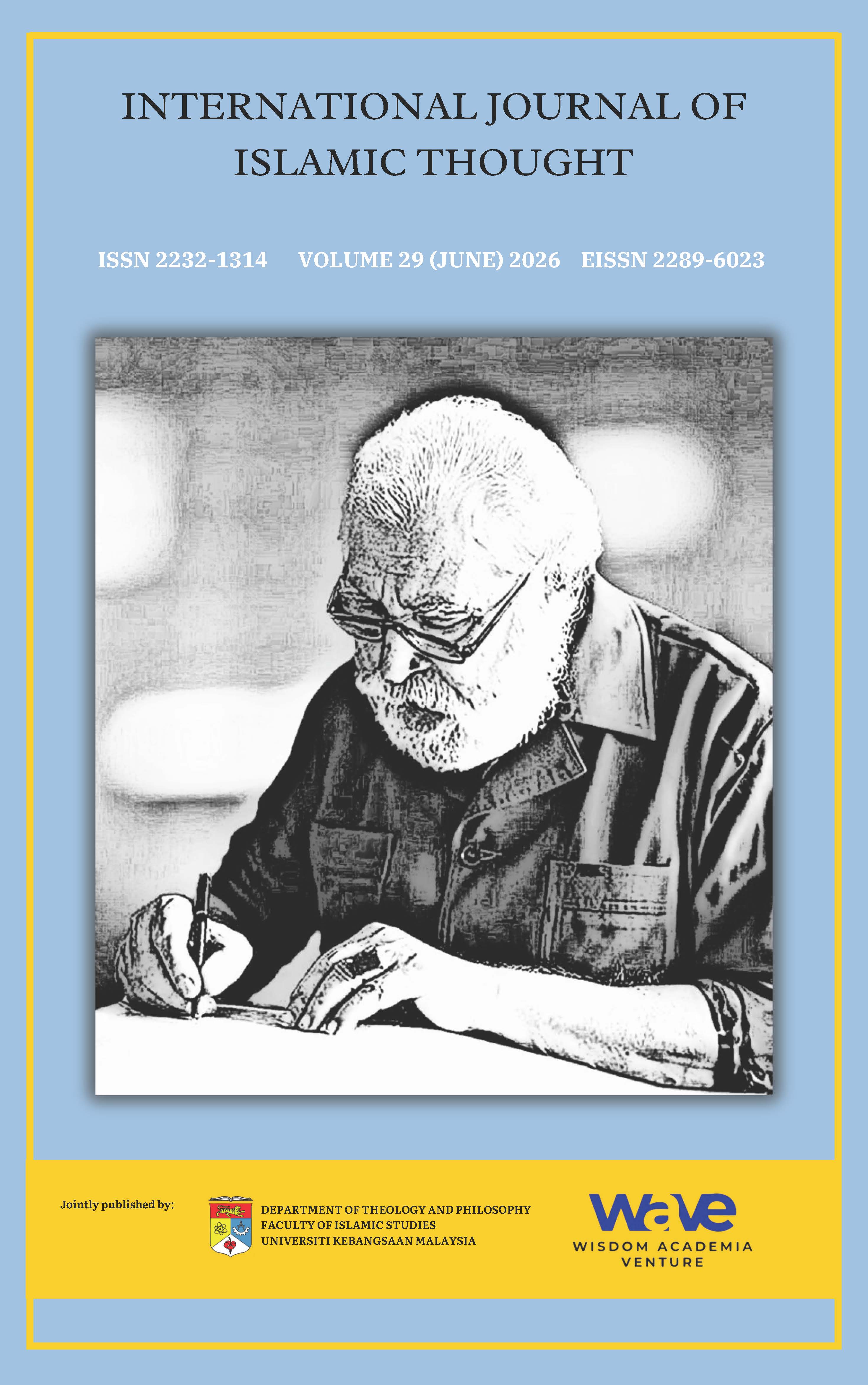
PROFESSOR DR. AHMAD SUNAWARI LONG
ijit@ukm.edu.my

COMMITTEE ON PUBLICATION ETHICS
An international scholarly journal on Islamic thought and contemporary Muslim issues.
Indexed in Scopus and Web of Science–ESCI.
Fully open access with global readership.
Published twice a year (June and December).
All submissions undergo double-blind peer review.
Accepts English manuscripts only.
Requires IMRaD writing structure.
Uses APA citation and formatting style.
Committed to COPE’s ethical publishing standards.
Published by the National University of Malaysia (UKM) in partnership with Wisdom Academia Venture.








Authors retain copyright of their work. Articles published in IJIT are distributed under the Creative Commons Attribution 4.0 International License
(CC BY 4.0)
visitors since 01 June 2012
Published by
DEPARTMENT OF THEOLOGY AND PHILOSOPHY
Faculty of Islamic Studies
Universiti Kebangsaan Malaysia
(the National University of Malaysia)
43600 Bangi, Selangor
MALAYSIA
and
WISDOM ACADEMIA VENTURE
Kuala Lumpur