By Dr. Umawathy Techanamurthy
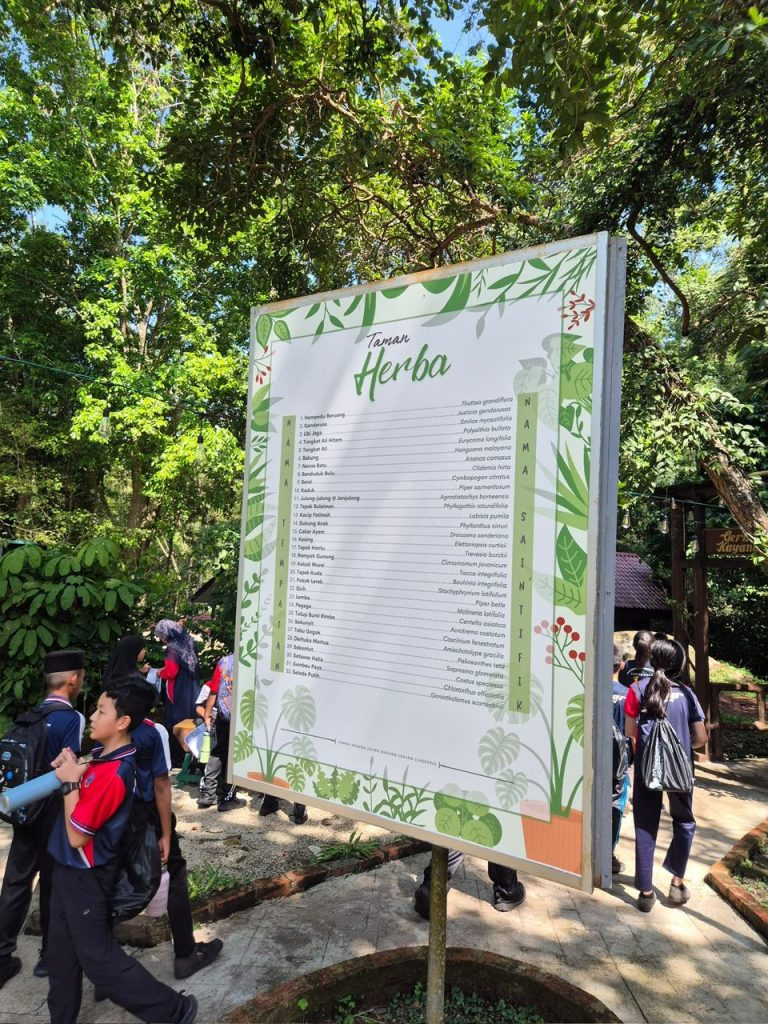
TANGKAK, JOHOR — Universiti Kebangsaan Malaysia (UKM) in collaboration with Kolej Komuniti Selayang (KKSY) and Universiti Tun Hussein Onn Malaysia (UTHM) has developed an AI-integrated Web-based Augmented Reality (WebAR) learning system at the Taman Herba herb garden in Taman Negara Johor Gunung Ledang to enhance how students learn about Malaysia’s botanical heritage.
Funded under the Geran Taman Negara Johor 2025, the project involved 167 year four to six pupils from six primary schools, namely, SK Puteri Ledang, SJK (C) Lian Hua, and SJKT Ladang Tangkah, SK Sagil Kampong and SK Paya Mas.
The system works through a simple entry point: a QR code printed on or placed beside each herb’s signboard. Scanning it on a smartphone or tablet launches a browser-based WebAR environment that requires no app installation.
From there, students can navigate a 360-degree virtual tour of the entire herb garden, captured using Matterport 3D scanning technology, or explore individual plant profiles embedded with videos, e-book content, and an AI chatbot.
The AI chatbot is the system’s most distinctive feature. It draws on content verified by a botanist, a naturegogy expert, and traditional herb knowledge practitioners.
Students can type questions in natural language and receive responses that include the plant’s scientific and local names, its medicinal properties, cultivation tips, and crucially indigenous knowledge from Orang Asli communities that has rarely appeared in any formal educational resource.
Project botanist from UKM’s Faculty of Science and Technology, Dr. Shamsul Khamis, said the initiative was developed to make valuable botanical knowledge more accessible through digital technology.
“The herb garden has always held this knowledge. We wanted technology to make it accessible and ensure it reaches the next generation before it disappears,” he said.
FILLING A GAP IN THE NATIONAL CURRICULUM
The project was developed following an analysis of the national primary school Science syllabus. Year 6 Topic 5, Preservation and Conservation for the Balance of Nature, introduces students to endangered plants and conservation strategies. However, the curriculum does not specifically cover Malaysian herbal plants. Teachers have also consistently reported challenges in finding locally relevant examples to support classroom learning.
The WebAR e-book developed for the project maps directly onto the Year 6 KSSR curriculum across multiple subjects, namely, Science, Mathematics, and Languages such as English, Bahasa Malaysia, Tamil and Mandarin, and includes inquiry activities, a herb garden treasure hunt and DIY herbal product recipes.
Teachers who participated in the evaluation described the materials as immediately usable in the classroom.
SK Puteri Ledang Headmistress, Norlizah Mohd Noor said: “We have been looking for something like this for years. The students were engaged the entire time. They were asking questions we had never heard them ask about plants before.”
Following the successful evaluation, the research team plans to integrate the Matterport virtual tour and WebAR e-book with the official Taman Negara Johor website and install QR-coded signboards throughout the herb garden.
Over the next six to twelve months, the team also plans to introduce an EduTourism programme for schools in Johor, combining WebAR learning, herb identification, DIY herbal product-making and reflective learning. The researchers hope the initiative will serve as a model for herb gardens, botanical parks and nature education sites across Malaysia by transforming traditional visits into interactive, inquiry-driven learning experiences.