
Prof. Naoki Shinohara
Research Institute for Sustainable Humanosphere (RISH), Kyoto University, Japan
Presentation Title:
Recent Progress of Space-Based Solar Power and Related Wireless Power
Transfer Technology
The Space Based Solar Power (SBSP) is a satellite with huge solar cells and a wireless power transfer (WPT) system as one of the hopeful future space technologies and a CO2-free stable power station for the humanosphere (human + earch(sphare). Recently, there are some ongoing R&D project for the SBSP in the world. In Japan, we have a continuous national R&D SBSP project mainly focused on the WPT from 2009. In the next, we will launch a WPT satellite in a 450km orbit to transmit the electricity from the satellite to the Earth by microwaves with accurate beam control. In this talk, I introduce the recent progress of the Space Based Solar Power and Related Wireless Power Transfer Technology.
Naoki Shinohara received the B.E. degree in electronic engineering, the M.E. and Ph.D (Eng.) degrees in electrical engineering from Kyoto University, Japan, in 1991, 1993 and 1996, respectively. He was a research associate at Kyoto University since 1996. Since 2010, he has been a professor at Kyoto University. He has been engaged in research on Solar Power Station/Satellite and Microwave Power Transmission systems. He is a Fellow of IEEE and URSI, IEEE MTT-S elected AdCom member (2022-2027), IEEE MTT-S Technical Committee 25 (Wireless Power Transfer and Conversion) former chair and member, IEEE MTT-S Standard Committee chair, IEEE MTT-S MGA (Member Geographic Activities) Region 10 regional coordinator, IEEE WPT Initiative member, IEEE Wireless Power Transfer Conference & Expo founder and Steering committee member, URSI commission D (Electronics and Photonics) former chair, the first chair and technical committee member on IEICE Wireless Power Transfer in Japan, Japan Society of Electromagnetic Wave Energy Applications former president and adviser, Space Solar Power Systems Society president, and was IEEE MTT-S Distinguish Microwave Lecturer (2016-18). He was the recipient of the 2023 IEEE Journal of Microwaves Best Paper Award, the 2022 Award of Minister of Education, Culture, Sports, Science and Technology in Japan, and the 2023 IEICE Achievement Award in Japan. His supervised students were the recipient of 100 awards from 2011 to 2024. He has been the author of over 140 reviewed journal papers, over 110 keynotes and invited speakers in international conferences, and over 100 other invited speakers including 55 DMLs. He has collaborated with over 150 companies for the WPT and microwave applications in 30 years. He is the co-inventor of 35 patents and 20 submitting patents. He has worked to harmonize the academia and industry of the WPT. He has organised the Wireless Power Transfer Consortium for Practical Applications (WiPoT), and Wireless Power Management Consortium (WPMc) in Japan as a chair from 2013 with over 40 companies to establish the WPT market and to encourage the WPT business. His books are “Wireless Power Transfer via Radiowaves” (ISTE Ltd. and John Wiley & Sons, Inc., 2014), “Recent Wireless Power Transfer Technologies Via Radio Waves (ed.)”, (River Publishers, 2018), “Far-Field Wireless Power Transfer and Energy Harvesting”, (Artech House, 2022), “Theory and Technology of Wireless Power Transfer: Inductive, Radio, Optical, and Supersonic Power Transfer” (CRC Press, 2024), and “Wireless Power Transfer: Theory, Technology, and Applications (2nd Edition) (ed.)” (IET, 2018 and 2014), and some English, Japanese, and Chinese translated textbooks of WPT.

Prof. Haoyu Lu
School of Space and Environment, Beihang University, China
Presentation Title:
Numerical Simulation of Interaction between the Solar Wind and Mars
The Martian space environment is crucial for understanding the evolution and habitability of terrestrial planets. To investigate the global magnetic field structure, plasma distribution, and transport characteristics resulting from the interaction between the solar wind and Mars, we have developed a global, multi-scale, multi-layer, and self-consistent numerical model. This model incorporates four ionospheric species, accounts for chemical reactions among the species, and includes small-scale ion kinetic effects. Using this model, we study the physical properties of Mars’ induced magnetosphere and ionosphere, as well as the plasma distribution and ion transport characteristics under solar wind interaction. Furthermore, we explore how variations in solar wind dynamic pressure influence these physical properties and the ion escape mechanisms at Mars.
Dr. Haoyu LYU is a Professor at the School of Space and Environment at Beihang University, China, and a Visiting Professor at Lancaster University, UK. His research interests focus on the structure and dynamics of planetary magnetospheres, plasma interactions with planetary bodies, and the magnetic properties of planetary bodies within the solar system. Over the course of his career, Dr. LYU has authored and co-authored 50 peer-reviewed journal papers.
His work explores the intricate interactions between solar winds and planetary atmospheres, with particular emphasis on the magnetospheres of Mars, Venus, and other celestial bodies. His research has contributed significantly to the understanding of planetary magnetic fields and their role in space weather phenomena.
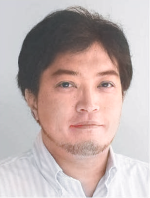
Dr. Takuya Tsugawa
Director, Space Environment Laboratory,
National Institute of Information and Communications Technology (NICT), Japan
Presentation Title:
Operations and Research on Space Weather Forecast in Japan
Explosive phenomena on the solar surface, such as solar flares, can disturb the space environment around Earth. Depending on the scale of these disturbances, they may affect critical infrastructure such as telecommunications and broadcasting, space system operations, aircraft navigation, satellite positioning system, and power systems. These variations in the space environment are referred to as space weather. To minimize the impact of space weather, the National Institute of Information and Communications Technology (NICT) has been conducting space weather forecasts in Japan since 1988, providing information via its website and email on the current state of space weather, 24-hour forecasts, and space weather events such as solar flares. NICT is also engaged in research and development to enhance real-time monitoring and forecasting technologies and to provide information aligned with user needs.
On the international stage, NICT has been a member of the International Space Environment Service (ISES) since its establishment in 1996, and has served as its Chair since 2023. Since 2019, NICT has also been operating as one of the ICAO Global Space Weather Centres, providing 24/7 space weather information for aviation users. Additionally, NICT contributes to international conferences such as those organized by the Asia-Oceania Space Weather Alliance (AOSWA).
In terms of research and development, NICT is advancing research and development of space weather monitoring systems using ground-based observation networks and satellite data, and forecasting systems using numerical simulation, data assimilation and AI models. Recent efforts include the development of high-energy particle sensors to be installed on Himawari-10, Japan’s next geostationary meteorological satellite scheduled for operation in 2029. In relation to ionospheric research in Southeast Asia and Japan, NICT has developed an Equatorial Plasma Bubble (EPB) Alert System using observation data from the SEALION project.
To better meet user needs, NICT launched a new space weather event alert in June 2025, based on criteria that consider social impact. At the same time, NICT published the Space Weather Information Utilization Guidelines, which provide users with guidance on how to respond to space weather phenomena.
This presentation introduces the latest efforts in space weather forecast operations and researches in Japan.
Dr. Takuya Tsugawa is the Director of the Space Environment Laboratory at the Radio Propagation Research Center, National Institute of Information and Communications Technology (NICT), Japan. He earned his Ph.D. from Kyoto University in 2004 and held JSPS Research Fellow positions at Nagoya University in 2004 and Massachusetts Institute of Technology (MIT) in 2006. He joined NICT in 2007 as a Senior Researcher and has been in his current position since 2021. His work focuses on research, development, and operational activities in space weather forecasting. Dr. Tsugawa is a member of the Japan Geoscience Union (JpGU) and the Society of Geomagnetism and Earth, Planetary and Space Science (SGEPSS).

Ts. Dr. Ahmad Khalid Md Khairi
Chief Technology & Innovation Officer,
Group Technology & Innovation, Uzma Berhad, Malaysia
Presentation Title:
Smart Monitoring of Solar Infrastructure via AI Deep Learning and Geospatial Visualization using LEO Satellite UzmaSAT-1
The growth of solar energy in Malaysia under NETR (National Energy Transition Roadmap) has heightened the need for efficient and automated progress tracking of large scale solar plant development. Project Solaris – smart monitoring progress report presents a deep learning-based solution that utilizes LEO satellite imagery from UzmaSAT-1 and Convolutional Neural Networks (CNNs) to identify and monitor solar panel installations. The system integrates machine learning operations (MLOps) for automated model deployment and PowerBI for intuitive visualization on a web-geo platform. By processing high-resolution images, the platform calculates key metrics such as completion rates and panel counts, offering real-time insights to stakeholders. Among tested models, InceptionV3 achieved the highest performance with a validation accuracy of 94% and F1 score of 0.95. This approach significantly reduces manual reporting efforts, enhances data accuracy, and supports faster, more informed decision-making in solar plant project management.
Ahmad Khalid Md Khairi began his career as an electronic engineer in Penang after graduating with a bachelor’s degree in electrical engineering from the University of Pennsylvania in 1995. He then worked at several multinational companies such as Motorola, Hewlett-Packard, Agilent, and Broadcom while continuing his higher education in management at the master’s and doctoral levels at Universiti Utara Malaysia.
Later, he joined an agency under the Ministry of Science and Innovation (MOSTI), MIMOS Berhad, as a senior manager of technology ventures and commercialization in 2010, and subsequently joined the publicly listed company Uzma Berhad in 2018 as the Chief Executive Officer of the Renewable Energy Division before becoming the Chief Technology and Innovation Officer. Under his tenure as CEO of the Renewable Energy Division, Uzma managed to secure its first Large Scale Solar project and other solar rooftop projects with a capacity of over 100MWdc. Currently, his role focuses on aligning technology and innovation with business strategy, ensuring that both areas contribute to the company’s transformation from an oil and gas services entity to an energy, digitalization and space technology company

Prof. Kefei Zhang
School of Environment Science and Spatial Informatics, China University of Mining and Technology
Presentation Title:
Geospatial for Space Mining – Quest the Frontier of Deep Space Economy from a Chinese Perspective
Space resources exploitation and utilization (SREU) is a new territory of global competition that has attracted significant international interest and investment over the past decade. The US Space Act in 2015 was a tipping point that spurred the development of promising space technologies and accelerated their infusion into commercial applications. The primary purpose of extra-terrestrial mining (aka space mining) is to search for minerals, elements and water from asteroids and minor planets that are close to the Earth.
This presentation will first provide an overview of our 10-year effort in space mining, including its background/rationale, the disciplines involved, major research conducted, notable achievements, as well as challenges and opportunities from scientific, technological, and engineering perspectives, alongside the development roadmap etc. The Research Centre of Space Mining, as a dedicated catalyst for SREU, was officially established in 2018 by CUMT to lead relevant activities in China, which is regarded as the world’s first of its kind. The aims/objectives along with its mission statements will be outlined.
It is our opinion that the integration of mining and geospatial technologies is a “must” in the early stages of space endeavor of resources exploration and utilization. The current status of space mining from a geodetic perspective and the potential targets of space resources exploration are presented. Based on the current level of scientific and technological development and the potential value of known space resources, we argue that mining the near-Earth asteroids as the first step is inevitable and will be one of the major trends in space resources exploration and an important part of the space economy. The priorities of space mining are identified, which includes but not limited to space resources exploitation, the design and manufacture of space intelligent robots, development of a comprehensive geometrical and physical situational awareness capability for the targeted celestial bodies of interest, prospecting and mining of space resources, and the safety and in-situ utilization of space resources.
Finally, we will present a visionary roadmap of SREU from a Chinese perspective aimed at fostering interaction, exchange and discussion among international experts who share the same interest and passion.
Kefei Zhang, is a Distinguished Professor and Director of the Institute of Resources and Environment at China University of Mining and Technology, Chair Professor of Shandong University of Science and Technology and Honorary Professor of RMIT University in Australia. He is a Fellow of the International Association of Geodesy and the Chinese Society for Geodesy Photogrammetry and Cartography, and served as 2008 President of the International Association of Chinese Professionals in Global Navigation Satellite Systems.
He has authored over 550 articles, holds 50 patents and received 50+ prestigious awards/recognitions alongside 60+ large competitive research grants in Europe, Australia and China. He has supervised over 120 HDR students and post-doctoral researchers in the past 30 years. As a frequent presenter, he has delivered 150+ invited/keynote speeches in a variety of international events.
His research spans GPS/GNSS; atmospheric modelling; weather and climate change; space resources exploitation and utilisation; people mobility and object tracking; platform technologies for holographic sensing and situational awareness.
Characterised with inter-/intra-disciplinary integration, scientific and technological originality and world-frontier topical approaches, his work is committed to addressing critical challenges of great national and global significance and providing innovative solutions with significant scientific, technological, and societal benefits.