
Authors retain copyright of their work. Articles published in IJIT are distributed under the Creative Commons Attribution 4.0 International License
(CC BY 4.0)
visitors since 01 June 2012
IJIT | International Journal of Islamic Thought


e-ISSN 2289-6023 | ISSN 2232-1314
Volume 28, (December) 2025
Ahmad Fakhrurrazi Mohammed Zabidi, Rozainah Abdul Wahab & Wan Qashishah Akmal Wan Razali
Religious Extremism through the Lens of Kristevan Abjection
Page: 1-10 • DOI: https://doi.org/10.24035/ijit.28.2025.330
Abstract: Contemporary medicine often overlooks the spiritual dimension of health and the critical role of preventive care, which are fundamental aspects of Ibn Sina’s teachings. This paper explores the striking parallels between Ibn Sina’s integrative medical principles and the biopsychosocial-spiritual (BPS-S) model, demonstrating how his insights remain relevant in addressing contemporary health challenges. The emergence of the BPS-S model as a holistic healthcare framework has paved the way for reintegrating Ibn Sina’s legacy into contemporary medicine. By incorporating spiritual well-being into mainstream healthcare, this approach offers a more balanced and patient-centered paradigm. Furthermore, the findings support the adoption of “Ibn Sina’s Biopsychosocial-Spiritual Balance” as a guiding framework for healthcare, particularly in Malaysia, where holistic healing traditions remain influential. His philosophy aligns with this model by advocating for a multidimensional perspective on health, recognizing the interplay between biological, psychological, social, and spiritual factors in disease prevention and treatment. This model can enhance medical education and improve well-being by integrating Ibn Sina’s wisdom with modern advancements, redefining the future of healthcare.
Keywords: Biopsychosocial-spiritual, Ibn Sina’s medicine, integrative healthcare, modern medicine.
Arip Purkon, Khodijah Hulliyah & Mara Sutan Rambe
Integration of Artificial Intelligence in Contemporary Ijtihad Process in Digital Era: Opportunities and Challenges from Maslahat Perspective
Page: 11-23 • DOI: https://doi.org/10.24035/ijit.28.2025.331
Abstract: Ijtihad is a dynamic mechanism in Islamic law that provides solutions to contemporary problems not explicitly explained in The Quran and Hadith. Artificial intelligence (AI) ‘s rapid advancement presents opportunities and challenges for contemporary ijtihad. This study aimed to explore the integration of AI in the ijtihad process through the maslahat mursalah approach. This study used a qualitative approach through literature study. Data sources were carefully selected to ensure the validity and relevance of the findings. In analyzing data, this study used qualitative content analysis techniques. The findings show that integrating AI in contemporary ijtihad offered great opportunities to support ulama in meeting the community’s needs in the digital era. AI provided opportunities to increase efficiency, accessibility, and consistency in the ijtihad process. However, the application of this technology also posed challenges, such as the validity of data sources, contextual limitations, and conflict potential with the ulama authority. The study concluded that the successful implementation of AI required collaboration between ulama and technology experts, technology education in sharia studies, and strict ethical supervision. With a maslahat-based approach, AI can be an instrument that strengthens Islamic law while realizing sustainable benefits. The significance of this research lies in its contribution to bridging the gap between technological innovation and Islamic law, i.e., supporting the development of sharia-compliant AI applications to enhance the adaptability of Islamic law in the digital era.
Keywords: Artificial intelligence, ijtihad, Islamic law, maqasid shariah, maslahat.
Chung Lê Khang
Applying the Delphi and AHP Methods to Develop Evaluation Criteria for Halal Tourism Destinations in Vietnam
Page: 24-36 • DOI: https://doi.org/10.24035/ijit.28.2025.332
Abstract: In the context of Halal tourism emerging as a strategic global segment characterized by rapid growth and heightened demands for cultural and religious identity, the development of Muslim-friendly destinations has become increasingly imperative for many countries, including Vietnam. However, Vietnam currently lacks an ofAicial set of criteria to assess the Halal compatibility of destinations, posing challenges for destination management, marketing, and service quality improvement. This study proposes a framework of evaluation criteria for Halal tourism destinations in Vietnam, constructed through a mixed-method approach that integrates the three-round Delphi technique and the Analytic Hierarchy Process. The research results identify six main groups of criteria and 31 sub-criteria, each assigned speciAic weights to reAlect their relative importance in the destination selection behavior of Muslim travelers. The proposed framework aligns with Vietnam’s current institutional, cultural, and infrastructural conditions and contributes to guiding destination governance towards inclusiveness, multiculturalism, and sustainable competitiveness in the international tourism market.
Keywords: AHP analysis, Delphi method, destination evaluation, halal tourism, Muslim-friendly criteria, Vietnam.
Hasse Jubba, Ade Yamin & Irwan Abdullah
Between Islam and Custom: The Role of Pigs in Dani Muslim Weddings
Page: 37-51 • DOI: https://doi.org/10.24035/ijit.28.2025.333
Abstract: In diverse Indonesia, the use of pigs as dowry in Dani Muslim marriages is a culturally significant practice; it serves as a powerful medium of confluence between Islam and local custom. Although pork consumption is considered haram in Islam, Dani Muslims still raise pigs and use them in various rituals. This article specifically discusses the cultural reasons for using pigs as dowry in Dani Muslim marriages. The data used for analyses were collected through ethnographic methods, including observations, interviews, and literature study. The study findings show that Dani Muslims use pigs as matrimonial dowry on account of three underlying reasons. First, a cultural reason in which pigs are considered an inseparable part of Dani culture and regarded to have close cultural ties with human beings, where they are even viewed as a sacred animal. Second, a political reason wherein pigs serve as power of identity that can be employed as a tool of intertribal diplomacy and conflict resolution. Third, an economic reason in which pigs hold a significant function for maintaining the tribe’s daily life sustenance and as a tool of transactions, particularly for paying dowries. This article emphasizes that the use of pigs as dowry is a middle ground in the attempt at combining two practices: religious and customary. The resilience of Dani Muslims in preserving their custom of using pigs proved dilemmatic when they face conditions imposed by their professed religion, i.e., pigs are prohibited by Islam.
Keywords: Local Tradition, Muslim Wedding, Pigs in Islam, Religion and Culture.
Husna Amin, Mursyid Djawas, Abidin Nurdin & Rahmatul Akbar
Environmental Paradigm Transformation through Integrative Interpretation: Perspective of Quranic Ecological Hermeneutics
Page: 52-63 • DOI: https://doi.org/10.24035/ijit.28.2025.334
Abstract: This article explores the potential of Quranic hermeneutics as a transformative framework in addressing the contemporary ecological crisis. Through an in-depth analysis of Qur’anic verses related to the environment, this study reveals the Qurannot only as a normative text, but also as a comprehensive guide for sustainable environmental management. The study uses an integrative hermeneutics method, which combines textual, contextual, and empirical approaches, with a focus on its relevance in Indonesia as a case study. The findings show that Qur’anic hermeneutics is able to build ethical, ecological, and spiritual paradigms that are relevant to addressing global environmental challenges, while offering practical steps towards socio-ecological transformation.
Keywords: Environmental crisis, Islamic ecotheology, Quranic hermeneutics, socio ecological transformation, sustainable development.
Md. Thowhidul Islam, K.M. Iftekharul Islam & Anowara Akter
Iranian Theological Influence on Iraqi Politics: A Realist Interpretation
Page: 64-76 • DOI: https://doi.org/10.24035/ijit.28.2025.335
Abstract: This study examines the intricate nexus between Iranian religious instrumentalization and Iraqi political dynamics in the post-2003 era. Employing a realist theoretical framework, the analysis investigates how Iran systematically exploits sectarian affiliations and ideological convergences to pursue its geopolitical objectives and project regional hegemony. The research delineates the mechanisms through which Iran exercises religious soft power and examines the consolidation of Shi’a political ascendancy in post-Ba’athist Iraq. Through systematic analysis of Iranian patronage networks and proxy organizations, this investigation evaluates the modalities of Iranian religious influence penetration within Iraqi political structures. While acknowledging the instrumental utility of religious discourse in contemporary statecraft, the study critically assesses the limitations inherent in realist analytical frameworks, particularly their tendency to marginalize grassroots mobilization and cross-cultural dynamics. The findings contribute to scholarly understanding of the multifaceted interplay between religious identity, political authority, and state behavior in the contemporary Middle Eastern context, as conceptualized through the lens of structural realism. This research offers empirical insights into the evolving patterns of transnational religious influence and its implications for regional security architecture.
Keywords: Iraqi politics, Iranian foreign policy, Middle East security, Shi’a networks, theological influence.
Mohd Rosmizi Abd Rahman, Mohamed Mihlar Abdul Muthaliff, Roslizawati Mohd Ramly & Abdul Rahim Zumrah
Saint Augustine and al-Ghazali on Achieving Balance in the Observance of Good Works: Analyzing Their Inner Conditions
Page: 77-89 • DOI: https://doi.org/10.24035/ijit.28.2025.336
Abstract: This study examines and compares the spiritual insights of Saint Augustine and Imam al-Ghazali in achieving balance between the physical and spiritual aspects of good works. They both analyse not only the normal outer conditions of good works, but also their inner aspects and revealing fundamental inner conditions that should be observed. Both Imam al-Ghazali and Saint Augustine maintain that good works consist of outer and inner dimensions or physical and spiritual realm. To realize the objective of any good work, therefore, these both aspects need to be observed simultaneously. This study is theoretical in nature, and it involves bibliographic research, employing descriptive and comparative analysis methods. This study found that despite coming from different religions, both of these great thinkers share a lot of common insights on the detailed items of inner conditions of good works and on the need to balance both dimensions. They believe that to achieve balance and real objective, believers should observe both physical and spiritual conditions of good works. Their insights are relevant and applicable to all individuals and societies, regardless of religion.
Keywords: Faith, good work, inner condition, love, sincerity.
Müfit Selim Saruhan
Intersections of Religion and Ethics: A Philosophical Analysis within Islamic Thought
Page: 90-103 • DOI: https://doi.org/10.24035/ijit.28.2025.337
Abstract: This paper provides an in-depth exploration of the complex and multifaceted relationship between ethics and religion, offering a nuanced analysis of the various philosophical and theological views regarding their intersection and independence. It examines how religious doctrines, such as divine commandments, shape moral values like good and evil, justice, and virtue, while also considering perspectives that argue for the possibility of grounding moral principles outside of religious frameworks. The paper contrasts different schools of thought from both Western and Islamic traditions, including Kantian ethics, which emphasizes duty and the necessity of belief in God to uphold moral principles, as well as ethical theories that assert the sufficiency of reason, human nature, and social agreements for moral guidance. The Islamic view, represented by theological schools such as the Mu’tazila, Ash’ari, and Maturidi, presents a wide range of positions, from the belief in moral values existing independently of God’s will to the assertion that morality is inherently tied to divine command. These perspectives are juxtaposed with Western philosophical traditions, including the moral autonomy argued by thinkers like Hobbes, Kant, and Hume, who contend that moral obligations can arise from human reason, societal contracts, or natural laws. Additionally, the paper delves into the role of religious belief in motivating ethical actions, examining arguments that suggest faith can inspire moral behavior by grounding it in a higher divine authority, while also considering critiques that question the necessity of religious belief for moral action. Through these discussions, the paper provides a comprehensive examination of the ethical frameworks proposed by both religious and non-religious traditions, highlighting their interplay and potential for mutual reinforcement or divergence.
Keywords: Ethics, Islamic philosophy, morality, religion, value.
Muhamad Husni Hasbulah & Mohd Sollehudin Shuib
Systematic Literature Reviews on Application of Cash Waqf in Islamic Finance
Page: 104-120 • DOI: https://doi.org/10.24035/ijit.28.2025.338
Abstract: This study aims to analyze the use of cash waqf in the current Islamic financial system. Various programs and projects currently utilized cash waqf as one of the instruments in developing the socio-economic of the community. Therefore, this study will examine the discussions in the literature to explore trends in cash waqf and its use in the current Islamic financial system. This systematic literature review focuses on journals that have been assessed and reviewed by experts in terms of quality and uses the data obtained from the SCOPUS and ECONBIZ from 2011 to 2024. The results of the study found that the use of cash waqf involves several aspects of the Islamic financial system. Among them are the use of cash waqf in financial products, financial institution operations and financial institution management. The use of cash waqf in financial products shows the integration of cash waqf with current financial products such as financial products based on financing, investment, and protection (takaful). In addition, there are also scholarly recommendations that endorse the use of cash waqf in the operational and management framework of financial institutions such as in the proposals for the establishment of cash-based waqf banks and proposals for modifications to the current framework for Islamic banking operations and management based on cash waqf. This study provides an overview of research trends in the use of cash waqf, especially in Islamic finance. The results is able to provide practical input for waqf institutions and Islamic financial institutions in encouraging innovation in socially oriented financial products.
Keywords: Cash waqf, Islamic finance social finance, systematic literature review, waqf-based financial innovation.
Muhammathu Mubarak Shiyana & Seyed Mohamed Mohamed Mazahir
The Concept of Love in Marriage: Integrating Sternberg’s Theory with Quranic Teachings
Page: 121-133 • DOI: https://doi.org/10.24035/ijit.28.2025.339
Abstract: Love is a universal phenomenon; its expression and significance can differ markedly across individuals. Thus, it is important to understand the real form of love. This qualitative study examines the connection between Sternberg’s triangular theory of love and the Quranic framework for love by utilizing primary and secondary data sourced from various Islamic texts and psychological theories. The data have been analyzed through content analysis and comparative methods. According to the Triangular Theory of Love, love is described as a blend of three essential components: commitment, intimacy, and passion. It also distinguishes eight different types of love based on their basic components. Similarly, the Quranic teachings emphasize the importance of love in the building of a healthy and long-lasting marriage, and they describe affection between intimate partners as a manifestation of God’s blessing. In particular, Sternberg observes that consummate love is the most extensive form of love, as it encompasses all three components and is frequently observed in healthy marital relationships. Islam promotes the pursuit of love through marriage, which it regards as the optimal framework for cultivating affection between intimate partners. Thus, love within marriage provides long-lasting spiritual and psychological benefits. The findings of the study provide new insights to understand love from both Quranic and psychological perspectives.
Keywords: Al-Quran, intimate partner relationships, love, triangular theory.
Murat Nassimov & Botagoz Paridinova
The Role of Islamic Thought in the Formation and Development of Political Worldview
Page: 134-143 • DOI: https://doi.org/10.24035/ijit.28.2025.340
Abstract: This article examines the influence of Islamic thought on the development of political worldviews. The article recounts the evolution of classical principles from the fundamental works of Al-Farabi and Ibn Khaldun, whose writings gave early frameworks for moral leadership and empirical political analysis, to current research facing contemporary governance issues. Drawing on primary texts and extensive scholarly literature, the study first contextualizes the historical deliberations on governance, space, and authority in the Islamic tradition. It then explores how these foundational principles have been inherited and reinterpreted to orient current socio-political dynamics, and finally, it offers a comparative analysis with Western political thought in the era of globalization. The findings underscore that an understanding of classical Islamic political philosophy enriches contemporary debates on statecraft and facilitates a critical reassessment of dominant Western narratives. The study advocates for an integrated framework that bridges traditional insights with modern imperatives, thereby enhancing cross-cultural understanding and contributing to the discourse on global political reform.
Keywords: Al-Farabi, globalization, governance, Ibn Khaldun, Islamic political thought.
Ramezan Mahdavi Azadboni
The Consistency between Postmodern Epistemological Assumptions with Islamic Teachings
Page: 144-150 • DOI: https://doi.org/10.24035/ijit.28.2025.341
Abstract: There is no doubt that the post-modern era is one of the periods in the history of thought in the Western world. The constituent elements of this era are diverse and one of the main components of this period is the approach taken towards knowledge. Since the adoption of any point of view about knowledge can have a direct impact on our view of religious knowledge, the following concern for religious epistemologists is significant: what is the position of religious beliefs in the post-modern era. The aim of the current research is to analyze and evaluate the above-mentioned issue. To do this, the author attempts to state briefly the epistemological assumptions of the postmortem era, and then trying to display that there is no conflict between the aforementioned assumptions and the fundamental religious teachings, emphasizing the teachings of Islam. In this regard, the author tries to present documents among Islamic teachings in order to derive this result, that is, to negate the incompatibility between the epistemological assumptions of the post-modern era and Islam.
Keywords: Islamic teachings, knowledge, postmodern, reason.
Raudha Md Ramli, Abdul Ghafar Ismail, Mohd Syahmir Alias & Nur Aida Athirah Sulaiman
Ibn Khaldun’s Thoughts on Sustainable Development
Page: 0151-171 • DOI: https://doi.org/10.24035/ijit.28.2024.342
Abstract: The pursuit of sustainable development—balancing economic prosperity with social equity and environmental stewardship—has emerged as an imperative global paradigm in the 21st century. While often framed as a modern response to contemporary challenges, the intellectual foundations of sustainable development can be discerned in the works of earlier scholars across diverse civilisations. This paper examines the profound yet underexplored contributions of Ibn Khaldun. His magnum opus, Muqaddimah, presents a sophisticated analysis of civilisational dynamics that resonates remarkably with the current sustainability discourse. Through critical textual analysis, this study demonstrates how Ibn Khaldun’s concept of `umran (civilisation/prosperity) anticipated the three pillars of sustainable development: his theories of economic development (ma`ash), social cohesion (`asabiyyah), and environmental balance (bi’ah) offer a comprehensive framework for understanding societal flourishing and decline. The paper argues that Ibn Khaldun’s cyclical theory of civilisational development, rooted in his observations of North African and Mediterranean societies, provides valuable insights into the conditions necessary for long-term sustainability—particularly his emphasis on just governance, intergenerational equity and the delicate equilibrium between urban development and ecological limits. This research enriches our historical understanding of sustainability concepts by bridging classical Islamic scholarship with contemporary sustainable development goals.
Keywords: Economic development, Ibn Khaldun, Muqaddimah, sustainable development.
Riad Salim Awad
Doctrinal Pluralism and Its Impact on Shaping the Identity of the Islamic Judicial System (132–923 AH/ 750–1517 AD)
Page: 172-182 • DOI: https://doi.org/10.24035/ijit.28.2025.343
Abstract: This study explores the historical evolution of sectarian influence on the Islamic judiciary in Egypt and the Levant during the Fatimid, Zengid, Ayyubid, and Mamluk periods. It highlights how political and religious authorities systematically manipulated the judiciary to align with ruling sectarian ideologies. Under the Fatimids, judges were required to conform strictly to the state’s Ismaili doctrine, overriding their original schools of thought. Similarly, Sunni dynasties such as the Ayyubids, Zengids, and Mamluks centralized judicial authority under their preferred Sunni schools while offering limited space to other sects to maintain social harmony. A key strategy involved appointing judges from families loyal to the dominant sect, leading to hereditary control of legal institutions and reinforcing sectarian dominance. The study uses descriptive, analytical, and comparative methods to examine the structure and functioning of judicial systems under each regime, shedding light on how sectarianism shaped legal appointments, procedures, and public trust. It aims to raise awareness of the historical misuse of religious authority for political gain and to promote principles of sectarian pluralism and intellectual diversity. By tracing the repercussions of sectarianism on judicial integrity, the study calls for policies that uphold justice and equality across sectarian lines in contemporary society.
Keywords: Equality, Islamic judiciary, Islamic jurisprudence, separation of powers, Shafi’i.
Sabiruddin Juli, Ahmad Wira, Adawiyah Ismail & Muhammad Yunus
Indonesian Women in the Media from Da`wah (Islamic Missionary) Perspectives
Page: 183-192 • DOI: https://doi.org/10.24035/ijit.28.2025.344
Abstract: This article is about women in the media in Indonesia in general and Muslim women in particular from Islamic dakwah perspectives. Generally, the media images of women have strengthened their position as inferior beings. The media in general have portrayed the images of women as the objects in the world dominated by men in their advertisements, the soap opera, as well as the coverages by some journalists. The negative and inferior status and position of women in the media should be improved based on Islamic da`wah perspectives. Since Allah has created men and women to live on this world planet in peaceful conditions as demanded by Him. This article explores Islamic da`wah perspectives for Muslim women and non-Muslim women in Indonesian media. For Muslim women, they are to be portrayed and presented in the media by referring to some verses of the Holy Quran and based on the status and position of Muslim women in the Muslim early historical period.
Keywords: Indonesian women, Islamic dakwah, media, Muslim women.
Walid Reda Ali, Dina Helmy Shalaby & Hoda Soliman Mohamed
Islamic Perspectives on Trans-species Zoochosis: Reflections in Bear Boy Autobiography
Page: 193-202 • DOI: https://doi.org/10.24035/ijit.28.2025.345
Abstract: The Quran and Hadith consider the purpose of the creation of nonhuman animals to guarantee humanity the enjoyment of life on earth, they are described as full individuals with full rights, enjoying a sense of similarity to humans and sometimes having abilities that exceed and surpass humans` capabilities. The current paper discusses the Islamic origin of trans- species zoochosis in Bear Boy, an autobiography by Justin Barker. This paper also aims to illustrate how Islam has influenced modern science and psychology. In particular, it aims to establish a link between Islam and trans-species psychology, a psychological theory innovated by the American psychologist and ecologist Gay Bradshaw. In addition, this paper elucidates that trans- species psychology retells and confirms what Islam has mentioned long time ago. Plainly, this paper states that there is a psychological similarity between humans and animals. Trans- species psychology has proven that animals, like humans, can suffer from trauma, stress and zoochosis. Clearly, Justin Barker was influenced by Islam which copes with trans-species psychology zoochosis. Barker portrays zoochosis as a psychological disorder that inflicts animals and humans. His vision of human animal similarity is already treated in surah al An`am of the Holy al-Quran.
Keywords: Bear Boy, Islamic perspectives, psychology, trans-species zoochoises.
Ye Xinyu & Pabiyah Hajimaming
Trauma among Palestinian Women: Coping with Shuhada’ in Their Struggle for Resistance in Kanafani’s Work
Page: 203-211 • DOI: https://doi.org/10.24035/ijit.28.2025.346
Abstract: The study examines the impact of trauma on Palestinian women following the Nakba disaster, employing Kanafani’s literary work Umm Saad to clarify the many psychological, social, and cultural challenges faced by Palestinian female refugees. The study illustrates how the protagonist’s tenacity in the arduous setting of a refugee camp exhibits remarkable endurance in the face of adversity, displacement, and degradation of dignity. Employing Alexander’s cultural trauma theory, this analysis of the character Umm Saad explores Palestinian mothers’ responses to martyrdom shuhada’, emphasising the interplay of religious, cultural, and social imperatives that impose unique constraints on maternal mourning, while simultaneously reinforcing their role as symbols of national resilience. Kanafani’s oeuvre functions as both a literary homage to and a critique of the enduring cultural pain of the Nakba, illustrating Palestinian women’s narratives as manifestations of political resistance that underscore the importance of motherhood in Palestinian identity. The Eindings highlight the importance of recognising these Palestinian women’s resilience and reinterpreting cultural and political myths of sacriEice, emphasising the signiEicant maternal strength amid systemic oppression and exile.
Keywords: Culture trauma, Kanafani, Nakba, resistance literature, Shuhada’
Ahmad Sunawari Long
In Memoriam of Professor Khurshid Ahmad
Page: 212-213 • DOI: https://doi.org/10.24035/ijit.28.2025.347
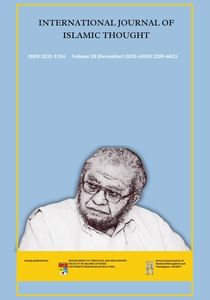
PROFESSOR DR. AHMAD SUNAWARI LONG
ijit@ukm.edu.my

COMMITTEE ON PUBLICATION ETHICS
An international scholarly journal on Islamic thought and contemporary Muslim issues.
Indexed in Scopus and Web of Science–ESCI.
Fully open access with global readership.
Published twice a year (June and December).
All submissions undergo double-blind peer review.
Accepts English manuscripts only.
Requires IMRaD writing structure.
Uses APA citation and formatting style.
Committed to COPE’s ethical publishing standards.
Published by the National University of Malaysia (UKM) in partnership with Wisdom Academia Venture.








Authors retain copyright of their work. Articles published in IJIT are distributed under the Creative Commons Attribution 4.0 International License
(CC BY 4.0)
visitors since 01 June 2012
Published by
DEPARTMENT OF THEOLOGY AND PHILOSOPHY
Faculty of Islamic Studies
Universiti Kebangsaan Malaysia
(the National University of Malaysia)
43600 Bangi, Selangor
MALAYSIA
and
WISDOM ACADEMIA VENTURE
Kuala Lumpur