
HISTORY
Discover the journey that has shaped UKM into one of Malaysia's leading universities and a beacon of knowledge, innovation, and national pride.
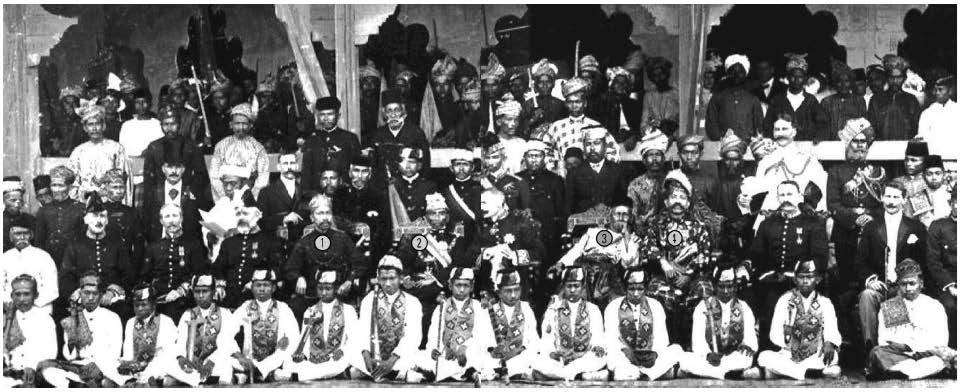
There is a history that does not begin with a foundation stone, but with voice, thought and determination. The idea of the need for higher education for the Malays originated as early as 1903 at the 2nd Meeting of the Rulers of the Federated Malay States (Durbar). His Royal Highness the Yang DiPertuan Besar of Negeri Sembilan, Tuanku Muhammad Shah, raised the issue of education and the future of the Malays.
The emergence of this idea was the beginning of a great ambition that would later draw a new map of national education.
Several decades later, the discourse was continued and nurtured by scholars as follows:
i. Za’ba wrote about this idea in the Lembaga Melayu newspaper in 1917.
ii.In 1923 Abdul Kadir Adabi submitted a memorandum to His Royal Highness the Sultan of Kelantan. This action sparked a debate about the Malay language as the medium of instruction in institutions of higher learning.
However, the ambition was stopped by obstacles and pressures that constrained the development of this idea.
After independence, the idea took on a new life. This time with more structure and courage.
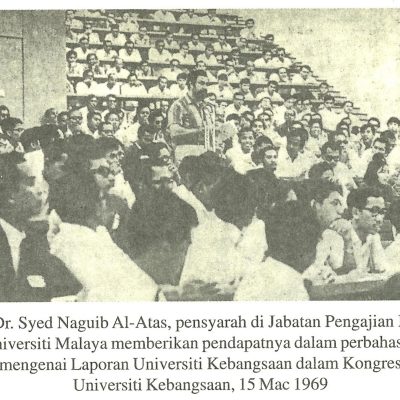
Between 1957 and 1967, the fighting spirit to establish a national university grew stronger, in line with the demand for independence that yearned to see the country’s identity translated into the education system.
Various cultural and political forums were mobilized to gather the support of the government and the people to create an institution that would uphold the Malay language as the language of knowledge across fields of study and knowledge.
This is where a collective awareness was born that the national university was not just a campus, but a civilisation project. A place of knowledge rooted in language, culture, and responsibility to society. The idea finally moved from discourse to action.
In 1968, Malay intellectuals formed a sponsoring committee to plan the establishment of a national university.
If 1903–1967 was the era of “endeavour”, then 1968–1970 was the era of “establishment”. On 25 August 1968, a meeting was held at the Language and Library Hall which led to the formation of the Establishment of National University Sponsoring Committee (JPPUK). This step is to move ideas from discourse to a more formal, structured and directed establishment plan.
Ultimately, Universiti Kebangsaan Malaysia (UKM) was established on 18 May 1970 and began its first operations in Lembah Pantai, Kuala Lumpur.
UKM did not start with large numbers, but it began with great determination. The first group of students consisted of 192 undergraduates and two postgraduates, enrolled in three pioneer faculties: the Faculty of Science, the Faculty of Arts, and the Faculty of Islamic Studies. These initial campuses were temporary in nature but reflected the resilience of the growing organisation.
UKM’s campus at Jalan Pantai Baru—previously the campus of the Federal Teachers College—housed three pioneer faculties at the date of establishment, and the university also rented six blocks of flats for office space as well as seminar and tutorial rooms.
After its establishment in 1970, UKM entered a crucial phase of empowering UKM. The focus was on strengthening the academic structure, expanding campus infrastructure, and shaping UKM’s identity as a knowledge institution based on language, culture and national interests.
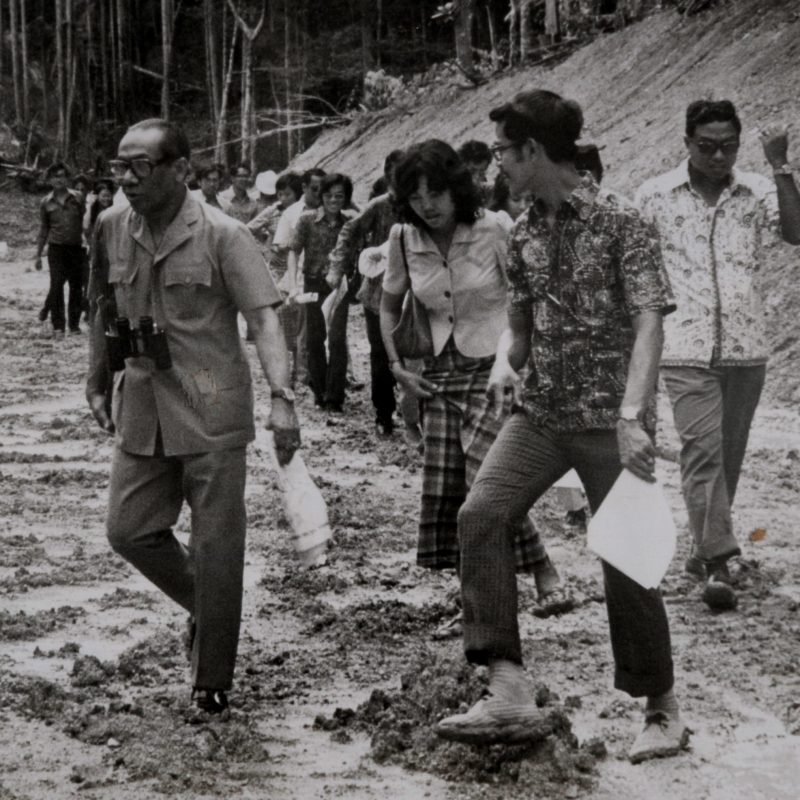
In 1974, UKM established the Sabah Campus in Kebun Kawang, Papar, as part of its efforts to expand access to higher education and strengthen the role of the university at the national level. The campus later underwent several relocations, including to Bukit Padang in 1980 and to Menggatal, Tuaran in 1990, before being officially closed in 1996 following the establishment of Universiti Malaysia Sabah.
In the Peninsula, the development of the Bangi Main Campus became the main landmark of this empowerment phase. The campus began operating in 1977 with an area of 1,096.29 hectares, thus providing a more structured space for UKM’s development. At the same time, UKM also strengthened its presence in Kuala Lumpur through the campus in Jalan Raja Muda Abdul Aziz and the Cheras campus, especially for the medical field.
After going through the institutional foundation building phase, UKM has moved to a more mature stage, namely the elevating phase towards excellence. During this period, the university not only streamlined the academic and administrative structures that had been built, but also began to stand out as an institution that was able to compete through its research strength, management quality, and increasingly solid governance capabilities.
UKM continued to build institutional strength through recognition and research strategies until UKM was selected as one of the research universities in Malaysia in 2006. Subsequently, it mobilized a research strategy based on the Malaysian / Global Prime Challenge which included seven thrust areas.
In governance, UKM also received the Prime Minister’s Quality Award 2006, obtained Self-Accreditation status in 2010, and was granted Autonomous University status in January 2012 as a sign of the institution’s maturity in managing academic quality, standards and trust.
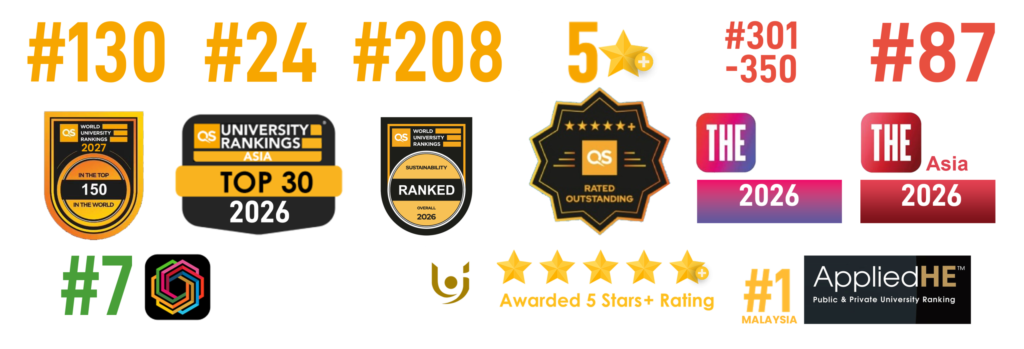
UKM as a National University is increasingly prominent in the international higher education landscape. UKM continues to move forward by creating history and making the country proud on the global stage when it jumped to 126th position in the QS World University Rankings (QS WUR) 2026. This is UKM’s best achievement since its first participation in this international ranking in 2005. For the first time, UKM has managed to place itself in the top 10 percent of the world’s best universities, thus affirming its role as a leading institution in the global higher education landscape.
The increase in position in the world ranking places UKM as the second best university in Malaysia, placing UKM as one of the main leaders in the country’s higher education. It reflects the results of a comprehensive and continuous transformation in strengthening the quality of teaching, research, innovation, and internationalisation since 1970. Notably, this excellence is further exemplified by the recognition of 69 UKM researchers listed among the 2025 World’s Top 2% Scientists by Elsevier and Stanford University. Hopefully, UKM will maintain this momentum in the future by implementing the UKM TEKAD 57 Strategic Plan 2026-2030.
UKM Development Timeline
1970
1973
1974
1977
1980
1982
1990
1994
1997
2006
2010
2014
2020
2021
2022
2024
2025

Please use latest browser for the best view.
Copyright © 2026 Official Portal of Universiti Kebangsaan Malaysia. All rights reserved.