
Authors retain copyright of their work. Articles published in IJIT are distributed under the Creative Commons Attribution 4.0 International License
(CC BY 4.0)
visitors since 01 June 2012
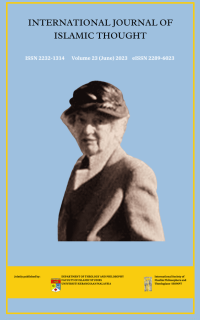
IJIT | International Journal of Islamic Thought


e-ISSN 2289-6023 | ISSN 2232-1314
Volume 23, (June) 2023
Adil Hussain Bhat
Analysing the Islamist and New-Islamist Discourse on Minorities in an Islamic State
Page: 1-10 • DOI: https://doi.org/10.24035/ijit.23.2023.250
Abstract: The call by the Islamist scholars for an Islamic state governed by the sharia law has given rise to the criticism that Islamic state would involve the discrimination of religious minorities and their reversion to inferior or second-class status. In this paper, the Islamic discourse on non-Muslims living in an Islamic state is examined under two trends: Islamist and the New Islamist trend. This paper is an attempt to highlight and understand the Islamic discourse on the citizenship of non-Muslim minorities. It will also contribute to how this discourse has changed over time. More importantly, it will put forth the efforts made by New-Islamist scholars who associate themselves with wasatiyyah movement to reconcile the Islamist and modern concept of citizenship. Notwithstanding, the objectives of this paper is threefold: to discuss the relationship between Muslim majority and non-Muslim minority in a proposed Islamic state; to identify the basic rights such as freedom of religion and other rights, that are available to non-Muslims residents of an Islamic state; and to assess how far the new-Islamist scholars have been successful in reconciling the traditional Islamist discourse with the modern nation-state notion of citizenship.
Keywords: citizenship, dhimmis, Islamists, Islamic state, new-Islamists, wasatiyyah
Aemy Elyani Mat Zain, Jaffary Awang, Haslina Ibrahim & Ahmad Faizuddin Ramli
Revert Daie: Lived Experiences of Indian Preachers in Malaysia
Page: 11-18 • DOI: https://doi.org/10.24035/ijit.23.2023.251
Abstract: Preachers are people who deliver Islamic message or speech to the communities around them. This is because the agenda of preaching has been inherent in a Muslim and preaching is also one of the duties of the previous prophets. In Malaysia, the participation of non-Malay preachers such as Indian and Chinese preachers in delivering preaching is constantly growing from time to time. Furthermore, the involvement of Indian Muslims in the arena of preaching still receives less attention in academic studies, although it is undeniable that they also play a role in developing da’wah in Malaysia. It can be seen, most academic studies focus more on aspects of converts such as the welfare of converts, the management of converts to the Indian community and others. Therefore, the objective of this study is to explore the true story of four Indian preachers in the context of their experiences before embracing Islam and their involvement in preaching. The methodology of this study is qualitative and involves the collection of data in the field. The results of the study found that their strength as Indian Muslim preachers was influenced by three elements, (i) their life and experience before embracing Islam, (ii) their exposure in the diversity of knowledge and, (iii) the external support that makes them have their own approach and principles in delivering da’wah.
Keywords: Da’wa, Indian preacher, lived experience, Malaysia, Revert
Azrie Azeh, Marzudi Md Yunus & Mohammad Tawfik Yaakob
Malay Muslim Youths of Suburban Areas: Their Tendency in Electing Political Leaders
Page: 19-26 • DOI: https://doi.org/10.24035/ijit.23.2023.252
Abstract: Islamic culture and political thought play an important role in Malaysia, a country whose official religion is Islam. The main objective of this study was to examine the level of Islamic political views among the Malay Muslim youths living in Malaysian suburban areas in electing political leaders. A quantitative method, using questionnaires as the research instrument, was employed in this study, which involved a total of 455 respondents, aged between 15 and 39 years old, from various backgrounds. The location of this study was in the Marang district, Terengganu. The study showed that most of the respondents (85.3%) agreed that it is very important for Islamic political values or characteristics to be practiced by political leaders. The findings also revealed that the Malay Muslim youths want a government that empowers the Islamic religion and safeguards the sovereignty of Islam and the nation.
Keywords: Islam, Malay Muslim, political leaders, suburban, youth
Firuz-Akhtar Lubis & Nur Asyiqin Zohkarnain
The Othering Concept towards the Church in the Amrika Allati Ra’aytu Travelogue by Sayyid Qutb
Page: 27-38 • DOI: https://doi.org/10.24035/ijit.23.2023.253
Abstract: Sayyid Qutb was a great thinker in Islamic religious matters. His writings and ideology were often used as reference by the Muslim community in the 20th century. Each piece of his writings contains implicit meanings that require in-depth understanding. However, his travelogue entitled Amrika Allati Ra’aytu or its English translation The America I Have Seen in the Scale of Human Values has received less attention than his other works. This travelogue is unique in that it mainly narrates the primitive side of the church institution in the United States (U.S), unlike his other works that are more neutral. This study, therefore, analysed this primitive perspective based on a selected theory known as othering theory. This qualitative research used the documentation and content analysis methods. The result of this study shows that while this travelogue mostly presents primitive connotation towards the church institution; based on the othering concept, it is an action of Sayyid Qutb as a nationalist who defended the Muslim community in Egypt at that time from being continuously colonised by Western ideologies. This study is hoped to provide a new perspective in religious studies, particularly from the aspect of religious criticism.
Keywords: American society, church, othering, Sayyid Qutb, travelogue
Indriaty Ismail
The Development of Islamic Feminism in Malaysia
Page: 39-49 • DOI: https://doi.org/10.24035/ijit.23.2023.254
Abstract: This paper is produced with the aim of examining the traces of feminist thinking that is rooted in Malaysia. Feminism is a movement that fights for women’s human rights from discrimination by all parties whether men, communities, or authorities until they achieve the desired emancipation and justice. Its historical background is traced among women as early as its growth after independence in 1957 until its latest development in the 2020s. The methodology used in the production of this writing is entirely armchair research. Data were mostly obtained from individual workbooks, seminar papers, research results, newspaper clippings and online data. The study found that the development of feminism in Malaysia can be categorized according to its growth period, namely after independence in the 1960s, 1970-1980s and finally, the 1990s until present. In each category of those years, feminism presented ideologies and demands in accordance with the developments of its time. This has shaped the uniqueness of Malaysian-style feminism born out of local needs and demands and should continue to evolve in a way that does not conflict with the Malaysian Islamic views and culture.
Keywords: discrimination, emancipation, feminism, ideology, justice
Jeconiah Louis Dreisbach & Sharon Mendoza-Dreisbach
Prospects for the Expansion of Language Policies in the Bangsamoro Education Code
Page: 50-55 • DOI: https://doi.org/10.24035/ijit.23.2023.255
Abstract: In 2019, the Bangsamoro Parliament passed a legislation concerning the establishment of an education system that specifically caters to the learners of the Bangsamoro Autonomous Region of Muslim Mindanao. It defines where the Arabic language will be used for in ‘Madaris’ (Islamic educational institutions), who are qualified Arabic teachers, the general curriculum structure of the Bangsamoro public school system, and a mention of the non-Muslim Indigenous Peoples’ language and culture in their education system. Considering the Islamic orientation of the Bangsamoro education system within the overall Philippine education framework, the Bangsamoro Education Code primarily focuses on the Arabic, English, and Filipino languages as the primary linguistic requirements for educators, administrators, and mediums of instruction in the schools. The mother tongue of the learners is also an option as a medium of instruction in their educational linguistic landscape. However, existing studies found that Bangsamoro students struggle with the Arabic and English languages. Moreover, non-Muslim Indigenous Peoples are severely marginalized as there are no existing studies that could include them in the discourses. Grounded in applied linguistic and policy studies, this review article mentioned legislation in triangulation with existing linguistic studies on the region and developed prospective ways improve and expand the Bangsamoro Education Code.
Keywords: applied linguistics, Bangsamoro, language policy, Philippines, Public policy
Khalil Ahmad
Restoring Communal Harmony in India: A Critical Analysis of Wahiduddin Khan’s Ideas
Page: 56-64 • DOI: https://doi.org/10.24035/ijit.23.2023.256
Abstract: Since India’s independence and partition from Pakistan, the relationship between Hindus and Muslims has been marked by continuous conflict and mutual distrust. The effects of the British divide and rule strategy that pitted Muslims and Hindus against one another became a hallmark of the relationship between the two communities in the postcolonial period. Such divisions were greatly exacerbated with the coming to power of those who believed in Hindutva or ethnic absolutism. Islamophobia became normalized. Many Muslim scholars have come forward to address this quandary, foremost among which was the late Wahiduddin Khan (1925-2021). This paper investigates Khan’s thoughts about communal harmony in post-independent India. I argue that Khan called for a reformation of Muslim minds, urging them to move beyond an isolationist mentality and find possibilities to develop their society within the status quo. Nevertheless, fraternity, correlation, and communitarianism are to be practiced obtaining religious harmony. Further, Khan’s understanding of the treaty of Ḥudaibiyyah as a panacea to reconcile religious harmony seems insufficient.
Keywords: Hindutva, Hudaibiyyah, Islamophobia, religious harmony, Wahiduddin Khan
Mami Hajaroh, Siti Irene Astuti Dwiningrum & Rukiyati
Development of the Theoretical Construction Model of Muslim Religious Character with Confirmatory Factor Analysis to Develop a Measurement Scale
Page: 65-78 • DOI: https://doi.org/10.24035/ijit.23.2023.257
Abstract: Religious character is a positively measured moral value based on a permanent educational process, to help create an ethical framework and act as a socialization agent. This helps in building positive values such as love, empathy, respect, and harmony. Therefore, this study aims to determine a theoretical religious character construction model, for the development of a measurement scale. A quantitative approach was used by empirically testing the hypothetical factors of this theoretical character. A total of 320 respondents were also utilized as the population, with data measurement using the Aiken’s-V formula, Confirmatory Factor Analysis (CFA), and Structural Equation Modelling (SEM). The results showed that (1) The theoretical construction model for religious character was determined by 6 indicators, namely intellect, belief, commitment, ritual, experience, and consequence, which were subsequently identified as moral knowledge, feelings, and actions, (2) The theoretical construction of this variable was declared fit due to meeting the eligibility criteria for the goodness-of-fit model on the AFI (absolute fit indices), IFI (incremental fit indices), PFI (parsimony fit indices), and critical-N. This construction had a reliability of 0.95, confirming that the model was fit for utilization, based on the compilation of a scale to measure students’ religious character. These analytical results also helped in developing a religious character learning model.
Keywords: Islam, meta-analysis, religiosity, religiosity measurement scale
Mohd Zamro Muda, Nurnazirah Rosdi & Noor Lizza Mohamed Said
Analisis Perundangan dan Kes Hibah Amanah di Malaysia
Legal Analysis and Trust Hibah Cases in Malaysia
Page: 79-90 • DOI: https://doi.org/10.24035/ijit.23.2023.258
Abstract: The tendency of the Muslim community in property planning to use hibah products is increasing. This situation caused Islamic banking and financial institutions as well as companies and estate planning agencies to take the opportunity by introducing various hibah products, among them trust hibah. The trust hibah is a combination of the principles of hibah and trust. If observed in more detail, the trust hibah is formed through two contracts, namely the hibah contract and the trust contract. Since the trust hibah is a combination of the principles of hibah and trust, it has given rise to legal controversy because the issue of hibah is under the State jurisdiction and the issue of trust is under the Federal jurisdiction. Jurisdiction conflicts in trust hibah matters will continue and certainly confusion regarding the exclusive jurisdiction of the Syariah Court in cases related to Muslim property will continue to exist. Thus, this article aims to identify the jurisdiction of the Federal and State in relation to the trust hibah and to examine the cases of trust hibah that have been decided by the Civil Court and Shariah Court. This study is a qualitative study which utilises documents analysis approach in its data collection process. The study found that there are various forms of judgment in the trial of cases related to the trust hibah. Therefore, the parties involved, especially the legislative body, need to resolve this matter by creating a legal enactment or a guideline that is monitored by an authoritative body. This study has an impact on agencies that are directly involved with wealth planning, legal practitioners, the judiciary and further to the community who are competent to choose a trust hibah contract as their wealth planning instrument.
Keywords: courts, hibah, law, trust, trust hibah
Riza Afita Surya & Daya Negri Wijaya
Females Roles and Their Social World in Al-Andalus
Page: 91-98 • DOI: https://doi.org/10.24035/ijit.23.2023.259
Abstract: This work discusses the social world of Muslim women in medieval Spain. The 8th-12th centuries Islamic society in Spain and its conflict of interest could be fully understood if it is studied in different layers. Previous scholars have already exploited Muslim women studies, but they rarely revisit the medieval Muslim women. This work, therefore, sticks on women world during the period of Al-Andalus (the Islamic Spain). Muslim women in Al-Andalus were commonly portrayed as oppressed and marginalized based on the Western perspective. However, many legal sources indicate the intention of limiting women, but other shows different point of view. Women in Al-Andalus actively participated in many aspects of life, such as political, literate, social, arts, religious and intellectual, and military affairs. Compared to other Muslim women in the Middle East, they had a freedom to conduct what they wanted to do. Its peculiarity had been created due to the Islamic-Christian assimilation in the Islamic Spain.
Keywords: Muslim, women history, al-Andalus
Shafizan Mohamed
Media and Muslim Societies during the Time of Islamic Revivalism (1800s-1950s)
Page: 99-108 • DOI: https://doi.org/10.24035/ijit.23.2023.260
Abstract: The decline of Islamic empires, most notably the Ottoman Empire, in the late 1800s and early 1900s proved to be a watershed moment in the development of modern Muslim societies. Western civilizations with their secular, modern, and exploitative ideas encroached on Muslim lands, beliefs, and way of life. Muslims who found themselves at a crossroads between the eventual collapse of their own political structure and the disputable, yet attractive prospects of Western modernism faced a revivalism that drove them to re-examine their place in a Westernizing and modernising world. The availability of publishing technology, as well as exposure to new ideas, aided in the dynamic changes occurring in Muslim societies during this time period. This article examines how Muslim societies responded to these developments in the past, and how the media played a critical role in their attempt to endure Western colonial threats while maintaining their Islamic beliefs.
Keywords: Muslim societies, media, Islam, modernism, revivalism
Shuo Zhao; Al-Nahdi, Yousef Ali Ahmed Saleh; Fuzhen Si & Tehmina Firdous
University Students Adaptation to the Chinese Culture: A Case Study of Middle East and North Africa (MENA) University Students in China
Page: 109-125 • DOI: https://doi.org/10.24035/ijit.23.2023.261
Abstract: This study explores the adaptation of Arab students to Chinese culture, using MENA students as examples. MENA students are from the Middle East and North Africa (Arabic is their mother tongue and is commonly referred to as “Arabs”). The purpose of their visit is to pursue their studies in China and to adopt the Chinese lifestyle. We examine how they integrated Chinese culture into their culture and vice versa to better understand their adaptation to the Chinese cross-culture. Their perception of Chinese society and lifestyle differs from their own. We conducted a survey comprising forty-one closed questions and one open-ended question to examine fifty-five MENA students studying in mainland China. Regardless of their backgrounds, the results suggest that their adaptation to Chinese culture appears to include adhering to Chinese etiquette, becoming close to the way of life, examining the development of Technology, and attempting to share Chinese development perspectives with their own cultures. In contrast to their own culture, they display a high degree of adaptability to the conditions and rules of Chinese society with 89% of total participants. Aside from displaying cultural diversity, they also highlight language proficiency challenges, impressions of the culture, and wonders of the host country.
Keywords: adaptation, Arabs, China, culture, university
Siddig Ahmad & Wan Suhaimi Wan Abdullah
Falsafah Maqasid al-Quran Imam al-Ghazali dan Faham Ilmu
al-Ghazali’s Philosophy of Maqasid al-Quran and the Nature of Knowledge
Page: 126-135 • DOI: https://doi.org/10.24035/ijit.23.2023.262
Abstract: One of the internal problems faced by Muslims today is confusion and mistakes in understanding the meaning, hierarchy, and scope of the limitations of knowledge. As a result, there is a collapse of manners, which refers to the loss of physical discipline, mind and soul that demands identification and recognition of the right place for a person in his relationship with himself and his society. Islam does not concede to the dichotomy of al-dunya and al-akhirah aspect. The worldview of Islam encompasses both al-dunya and al-akhirah in which the al-akhirah aspect has ultimate and final significance. The al-dunya aspect is seen as a preparation for the al-akhirah aspect. Everything in Islam is ultimately focused on the al-akhirah aspect without thereby implying any attitude of neglect or being unmindful of the al-dunya aspect. Knowledge that reveals the mysteries of Existence and reveals the true relationship between man and his God that is closely related to the main purpose of human creation is the main basis and foundation for other knowledge. This is because other knowledge itself, without the guidance of this main basic knowledge, will not be able to guide people correctly in their lives and will only confuse and ensnare people into an endless search. This article will cover the main basis of knowledge based on the understanding of knowledge derived from the philosophy of maqasid al-Qur’an presented by Imam al-Ghazali through his book Jawahir al-Qur’an.
Keywords: maqasid al-Qur’an, objectives of the Qur’an, the nature of knowledge, worldly benefits, hereafter benefits
Turkan Mammadova
The Role of Muhammad Iqbal and Ali Bey Huseynzade in the Formation of National Identity Among Indian and Azerbaijani Muslims
Page: 136-143 • DOI: https://doi.org/10.24035/ijit.23.2023.263
Abstract: This article discusses the common peculiarities of two eastern thinkers Ali bey Huseynzade (1864-1940) and Muhammad Iqbal (1877-1936). The main aim of the article is the investigation of the role of Ali Bey Huseynzade and Muhammad Iqbal in the formation of national identity among Indian and Azerbaijani muslims. The article argues that the political thoughts, speeches, and literary works of both thinkers served to form their nations and establish the independent national states. The first part of the article dedicated to achieving the formation of national identity through an Islamic revival. Both thinkers consider that it is possible to create conditions for a bright future for Muslims by restoring the former power of Islam. The second part devoted to the views of thinkers on the formation of a strong society through the application of Western science. The struggle to end colonial dependence and to benefit from scientific achievements of Europe at the same time were their main missions. Their contribution to the establishment of national independent states has been strongly studied in the third part of the article. As a result of the influence of Ali Bey and Iqbal, two independent states were formed in the East. Islamic values played an important role in the establishment of both states. In conclusion, the article once again emphasizes the contributions of both Eastern thinkers.
Keywords: Muhammad Iqbal, Ali bey Huseynzade, Muslims, self-consciousness, national identity, independent state
Tuti Ningseh Mohd Dom, Haslinda Ramli, Shahida Mohd Said & Ahmad Munawar Ismail
Is Siwak (Chewing Stick) an Effective Oral Hygiene Practice in Modern Society?
Page: 144-154 • DOI: https://doi.org/10.24035/ijit.23.2023.264
Abstract: Islamic religion emphasised siwak (chewing stick) use as tooth and mouth cleaning tool, but the practice that modelled towards the Prophet’s Muhammad, peace be upon him (PBUH) behaviour is unclear. A study was conducted via individual semi-structured interviews, aimed to explore and map various aspects of the siwak practice from the perspective of contemporary Muslim scholars. These experts concurred that current siwak users vary in their observance towards the purpose, handling and timing of the siwak routine. It is a concern that deviations from the Prophet’s actual practices may limit the advantages of siwak, cause adverse effects on oral tissues and falsely portray siwak as an inferior option among modern communities. Findings from this study are derived from a triangulation of literatures and modern-day scholars’ interpretation which may be used as a basis for developing future guidelines on effective and safe siwak practice that is well-fitted to contemporary modern lifestyle.
Keywords: siwak practice; prophet’s practice; religious belief; Muslim scholars; oral hygiene
PROFESSOR DR. AHMAD SUNAWARI LONG
ijit@ukm.edu.my
COMMITTEE ON PUBLICATION ETHICS
An international scholarly journal on Islamic thought and contemporary Muslim issues.
Indexed in Scopus and Web of Science–ESCI.
Fully open access with global readership.
Published twice a year (June and December).
All submissions undergo double-blind peer review.
Accepts English manuscripts only.
Requires IMRaD writing structure.
Uses APA citation and formatting style.
Committed to COPE’s ethical publishing standards.
Published by the National University of Malaysia (UKM) in partnership with Wisdom Academia Venture.








Authors retain copyright of their work. Articles published in IJIT are distributed under the Creative Commons Attribution 4.0 International License
(CC BY 4.0)
visitors since 01 June 2012
Published by
DEPARTMENT OF THEOLOGY AND PHILOSOPHY
Faculty of Islamic Studies
Universiti Kebangsaan Malaysia
(the National University of Malaysia)
43600 Bangi, Selangor
MALAYSIA
and
WISDOM ACADEMIA VENTURE
Kuala Lumpur