
Authors retain copyright of their work. Articles published in IJIT are distributed under the Creative Commons Attribution 4.0 International License
(CC BY 4.0)
visitors since 01 June 2012
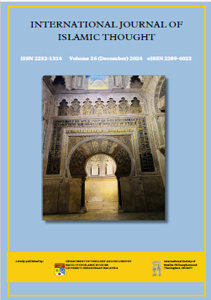
IJIT | International Journal of Islamic Thought


e-ISSN 2289-6023 | ISSN 2232-1314
Volume 26, (December) 2024
Ahmad Munawar Ismail & Mohd Farhan Firas
Environmental Degradation and Radical Solution from Islamic Perspective
Page: 1-12 • DOI: https://doi.org/10.24035/ijit.26.2024.297
Abstract: Global warming, driven by increased greenhouse gases, primarily from human activities, poses significant challenges to weather patterns, ecosystems, and human well-being, necessitating urgent action to mitigate its impact. Proposed solutions include transitioning to sustainable energy, promoting clean technologies, raising awareness, and conserving forests. Enhanced global cooperation, climate policies, and sustainable lifestyles are crucial in this endeavor. Employing content and document analysis, this article examines the Islamic approach to tackling global warming. Islamic teachings emphasize human responsibility as stewards of the Earth, advocating for environmental preservation and conservation. This includes utilizing sustainable energy sources and preventing wastefulness. Islamic principles align with environmentalist perspectives, emphasizing sustainable urban planning, energy efficiency, and innovative research to reduce emissions and restore ecological balance. These measures mitigate global warming, reducing reliance on fossil fuels, enhancing air quality, and supporting human health. Climate awareness fosters global cooperation and collective responsibility for future generations. Integrating Islamic values into environmental efforts contributes to a holistic approach to addressing climate change, promoting harmony between humans and nature while ensuring the sustainability of our planet for generations to come.
Keywords: Environment, global warming, greenhouse gases, Islam, sustainable energy
Aizat Khairi, Andika Ab. Wahab, Mohd Na’eim Ajis & Mohd Ramlan Mohd Arshad
Islamic Governance in Action: Malaysia’s Approach to Rohingya Refugee Islamic-Based Assistance
Page: 13-23 • DOI: https://doi.org/10.24035/ijit.26.2024.298
Abstract: This study examines Malaysia’s Islamic governance mechanisms in addressing the challenges confronted by Rohingya refugees, focusing on the roles of Jabatan Agama Islam Selangor (JAIS) and Jabatan Kemajuan Islam Malaysia (JAKIM). Employing a qualitative approach with a case study design, the research explores Malaysia’s intricate response to the Rohingya refugee crisis, specifically in Kuala Lumpur and Selangor. The purposive sampling method involves engaging JAKIM and JAIS officers, offering valuable insights into Islamic governance structures. The research methodology includes content analysis of official documents, policies, and interactions with key stakeholders, aiming to illuminate the holistic approach of Islamic governance in addressing religious, legal, educational, and welfare aspects of Rohingya refugee assistance. Key findings unveil the roles played by JAIS and JAKIM in empowering Rohingya refugees, particularly in education and religious affairs.. Through content analysis, the research provides a comprehensive understanding of the challenges, successes, and gaps in Malaysia’s Islamic governance response to the Rohingya refugee crisis. The research advocates for collaborative efforts and policy enhancements to ensure a more inclusive and compassionate environment for refugees within the Islamic context.
Keywords: Islamic governance, Malaysia, Jabatan Agama Islam
Asmahan Mostafa Tawfik Khalil Ahmed & Hassan Ahmed Hassan Abozeed
Sublime Porte Sponsorship of Javanese Muslim Students in Ottoman Lands (1895-1913 AD): The Ottoman Archive Documents as a Source
Page: 24-33 • DOI: https://doi.org/10.24035/ijit.26.2024.299
Abstract: This article examines the sublime Porte of Javanese Muslims in Ottoman lands during 1849-1915 AD with the Ottoman Empire, during 1849-1916 AD, which focusing on a side of the Ottoman Javanese relationship that was neglected in Western history So, the study is extrapolating this relationship in an episode of conflict between them on the one side, and the Western countries on the other side, depending on the documents of the Ottoman archives in Istanbul, and analyzing them using the historical research approach, and it contributes to recognizing the Javanese Muslims, and the troubles they tolerated to preserve their Islam and gain their independence, and educating their children. The results of this qualitative study indicate that: despite the weakness it was, and its many problems, which hindered it from carrying out its duty, which was hoped for as a caliphate for the Muslims, in confront of the colonial attacks on the lands of Java, it made great efforts to help the students of Javanese Muslims, and this study recommends increasing International studies and conferences on the history of Javanese Muslims throughout the ages, based on Ottoman and local sources, to confront the fallacies issued by Western sources.
Keywords: Javanese Muslim students, the Ottoman Empire, the Sublime Porte, the Sultanate Schools
David Leong & Abu Saleh
The Informational Universe of Allah: An Islamic Perspective on Quantum Information Theory
Page: 34-54 • DOI: https://doi.org/10.24035/ijit.26.2024.300
Abstract: This scholarly inquiry initiates a nuanced exploration into the Islamic conceptualization of Allah as ‘Al-`Alim (the All-Knowing) and ‘Al-Khabir’ (the All-Aware), postulating a reconciliation wherein Allah is identified as the quintessential Intelligence and truth. Allah’s attributes of divine omniscience and ubiquitous awareness underscore a divine understanding enveloping all of existence, positioning Him as the epitome of All- Information. This paper delves into the intersection of Islamic theological constructs and modern information theory, proposing a novel interpretation that aligns Allah’s divine omniscience with the theory’s principles. Information theory posits that the foundation of all information is inherently probabilistic, mirroring the probabilistic outcomes observed in quantum mechanics. This seemingly contradicts ‘Al-Qadar’, an All-Knowing Allah’s predetermined will or predestination o. However, we can bridge this gap by considering Allah as the embodiment of all information. This paper facilitates a richer understanding of Allah’s predetermined will in Islam and builds bridges with the randomness and unpredictable nature witnessed in the quantum world. This research aims to augment Allah as the Infinite Information through an interdisciplinary lens, bridging quantum indeterminacy and Islamic Omnipotence. This quantum-religious interface reconciles quantum information theory with Islamic theological constructs.
Keywords: Allah, All-Aware, All-Knowing, information, Islam, quantum mechanics
Faisal, Amri, Risman & Aisyah
Islamic Compromise in the Marriage of the Papuan Muslim Marind Tribe
Page: 55-65 • DOI: https://doi.org/10.24035/ijit.26.2024.301
Abstract: This study was prompted by the traditional practice observed among the Marind tribe of Papua, speci;ically the custom of exchanging dowry during marriages, notably the “Wati Plant.” Due to the plant’s components inducing unconsciousness, the research aims to comprehend the nature of the Wati Plant and explore the rituals conducted by the Muslim community within the Marind Tribe during marriage traditions. Employing a field research approach with an anthropological-theological perspective, the data collection involved interviews, observations, and documentation, subsequently analyzed using pertinent theories. The findings revealed that the Wati Plant has been part of the Marind tribe’s heritage, initially considered a remedy for post-work fatigue by ancestral generations. This tradition persisted across generations. The study also unveiled the coexistence of Islamic and customary elements in Muslim Marind Tribe marriages, forming a harmonious compromise. This integration stems from a deep understanding of Islamic teachings and a commitment to honoring the Marind Tribe’s ancestral customs.
Keywords: Customs, compromise, Islam, Marind tribe, Wati plant
Farah Yasser, Altaf Hussain Saqib & Zunera Khalid
Maqasid al-Shariah: Enhancing Well-being through Product Development Process in Islamic Banks of Pakistan
Page: 66-75 • DOI: https://doi.org/10.24035/ijit.26.2024.302
Abstract: The significance of Maqasid in developing innovative and new products and services by Islamic financial institutions is undeniable and beyond question, as it not only guides the objectives and goals of Islamic laws but also helps establish a guiding framework for the well-being of the consumers. Therefore, this study is an effort to assess the extent to which Islamic financial institutions within Pakistan integrate Maqasid into their product and service development. The data is gathered in two phases, and a mixedmethod approach is used to achieve the objectives of the current study. The first phase is qualitative, where the main themes are built through content analysis using NVivo. Based on the themes built in the first phase, a questionnaire is established in the second quantitative phase. Data is collected from banking executives and Shariah advisors who are directly involved in the product development process. The findings show that Maqasid al-Shariah is acknowledged in Pakistan’s Islamic banks’ purpose and vision statements. It also concludes that in all three phases of product development, i.e., from idea generation to product conversion and product commercialization, most Islamic banks have considered Maqasid al-Shariah. This study is helpful for customers of Islamic banks, bankers, and society as the products developed after considering Maqasid al-Shariah provide justice, equity, and well-being in society.
Keywords: Islamic banks, masalah, maqasid al-shariah, Pakistan, product development process
Imangaliyev Almas, Dukenbayeva Zadash & Muhammad Hilmi Jalil
Materials on History of Al-Farabi’s Manuscripts at Al-Biruni Institute of Oriental Studies, Academy of Sciences of Uzbekistan: History and Prospects of Research
Page: 76-82 • DOI: https://doi.org/10.24035/ijit.26.2024.303
Abstract: Today, al-Biruni Institute of Oriental Studies, Academy of Sciences of Uzbekistan has more than 26000 volumes of manuscript collection, collected since the 10th century AD until now. Among the important manuscript collections found in this institute are manuscripts related to al-Biruni. This article aims to present and show the above catalogs of al-Farabi’s manuscripts in different directions of science. This catalog consisted of 14 volumes of Sobranie Vostochnyh rukopisi Akademii nauk Respubliki Uzbekistan (English translation: Collection of Oriental Manuscripts of the Academy of Sciences of the Republic of Uzbekistan). This article discusses the list and description of the manuscript of al-Farabi, which is in the above catalog. This paper found that al-Farabi’s manuscripts at this institute are a significant example of the interaction, unity, and integration between religion and science.
Keywords: Al-Farabi, catalog, Institute of Oriental studies, manuscripts
Kausar Ali, Huang Minxing & Hashmat Ullah Khan
Disintegration of the Muslim Ummah and the Emergence of the Islamic Resurgent Movements in the Sub-continent: A Comparative Study of Ideologies of the Tablighi Jamaat and Jamaat-i-Islami
Page: 83-94 • DOI: https://doi.org/10.24035/ijit.26.2024.304
Abstract: Removing the causes of disintegration and paving the way for the reintegration of the Ummah (global community of Muslims) is one of the main agendas of the revivalist movements. Islamic revivalist movements (henceforth as IRMs) are urging ordinary Muslims to adopt a more conservative outlook in their daily lives. Among these IRMs, the Tablighi Jamaat (TJ) founded by Maulana Muhammad Ilyas and the Jamaat-i-Islami (JI) established by Maulana Maududi have attracted the attention of millions of Muslims. While scholars have extensively studied the origin, ideologies, and Islamization of these Muslim evangelical movements. There is a lack of scholarly literature on the comparative study of both Islamic movements on the question of what factors led to the decay and downfall of the Muslim community. Drawing from various primary and secondary sources, this paper seeks to explore the perspectives of both these revivalist movements on the disintegration of the Muslim Ummah. Both of these Islamic revivalist movements widely believe that Muslims deviated from the true path of Islam, and as a result, God punished them by depriving them of their socio-political glory. The ultimate objective of both the revivalist movements is the same but they have many differences when it comes to implementing their reformation schemes.
Keywords: Islamism, Jamaat-i-Islami, Muslim disintegration, preaching, Tablighi Jamaat
Mohd Khairul Naim Che Nordin
Examining the Impact of Relativism on Religious Beliefs in Postmodern Thought: An Islamic Perspective
Page: 95-106 • DOI: https://doi.org/10.24035/ijit.26.2024.305
Abstract: Postmodernism is characterized by a celebration of diversity, difference in viewpoints and a rejection of universal truths. It often critiques the authority of institutions and traditional power structures and emphasizes the subjective nature of human experience. In terms of methodology, postmodernists use deconstruction and analysis of language and discourse to critique and challenge dominant narratives and beliefs. This paper explores the challenges that relativism, as viewed through the lens of postmodernism, poses to the concept of absolute religion. The areas of belief, epistemology, values, and laws are specifically examined. Acceptance of relativism carries significant implications for religion, such as the loss of religion’s exclusive status and the promotion of pluralism – a key goal of postmodernism. A comprehensive literature review is conducted, drawing on the works of philosophers and scholars who have explored the topics of postmodernism and relativism, and their impact on religion. This study seeks to identify the challenges posed by relativism and offer a brief counterargument. The findings suggest that while relativism may recognize the existence of diverse truths and encourage believers to maintain their own beliefs, it ultimately creates problems when it assumes that the fact of truth itself is different and makes the plurality of truth absolute. This leads to skepticism about religion and the view that religion is only individual belief about truth.
Keywords: Absolute, Islam, modernism, postmodernism, relativism, religion
Muhsin Hariyanto & Zuly Qodir
Digital Society, Muhammadiyah, and Islamism in Indonesian After Election 2024
Page: 107-115 • DOI: https://doi.org/10.24035/ijit.26.2024.306
Abstract: This article aims to analyses the use of electronic means such as the internet, Twitter, Facebook and Instagram with Islamic themes as a form of Islamism used in the 2014, 2019 and 2024 political campaigns to win the presidential and vice-presidential election battle in Indonesia. This article discusses the literature that shows how the networks and participation of Muslim citizens involved in the presidential election as a form of citizen participation (civil society) so that it appears the political articulation of Muslims using Islamic themes. The analysis in this article shows that the participation of Muslim citizens indirectly shows the existence of the power of Islamism in social media discursive with other Muslim citizens, as well as non-Muslim citizens who also participated in the 2014-2019-2024 election political battle. All of that shows that netizens have an ‘emotional closeness’ to the presidential-vice presidential candidate pair by using religious sentiments and networks between netizens who participate in politics as a form of netizens’ political participation in the Digital Society era. The article uses the method of searching and describing data from social media databases.
Keywords: Citizen participation, digital era, emotional network, Islamism, social media
Nurul Ilyana Muhd Adnan, Mohd ‘Adli Zahri, Mohamad Shaharudin Samsurijan & Zahri Hamat
Integrating Traditional Wisdom and Modern Strategies: Prophet Yusuf’s Legacy and SDG 2
Page: 116-135 • DOI: https://doi.org/10.24035/ijit.26.2024.307
Abstract: This study aims to explore the enduring relevance of Prophet Yusuf’s ancient strategies for resource management and equitable distribution within the context of modern efforts to ensure food security and promote sustainable agricultural practices. This study utilizes a qualitative content analysis methodology, analyzing primary sources, such as religious texts recounting the story of Prophet Yusuf, alongside secondary sources, including academic articles, policy documents, and reports on sustainable agriculture and food security. The findings reveal that Prophet Yusuf’s strategies – specifically his anticipatory planning and equitable resource distribution – hold significant relevance for modern agricultural practices and policymaking. The analysis demonstrates that integrating these ancient strategies with modern technologies and sustainable agricultural practices can significantly contribute to achieving SDG 2. This study advocates blending traditional insights with modern science to improve food security and agriculture, urging policymakers to focus on foresight and equity, and encouraging farmers to adopt Yusuf-inspired sustainable practices, all aimed at fulfilling SDG 2’s vision of a hunger-free future.
Keywords: Agricultural sustainability, food security, Prophet Yusuf, strategic resource management, SDG 2
Sevdenur Alhattab & Khairil Husaini Jamil
Exploring the Impact of Scientific Advancements on Hadith Commentaries
Page: 136-145 • DOI: https://doi.org/10.24035/ijit.26.2024.308
Abstract: This article examines the complex relationship between scientific advances and the interpretation/commentary of hadith, or the sayings and actions of Prophet Muhammad in Islam. The historical context of hadith commentaries is investigated, with a focus on the evolution of interpretive traditions from simple explanations to comprehensive works. The research ultimately focuses on the paradigm shift in hadith commentary influenced by early modern reformist orientations that sought to reconcile Islamic teachings with contemporary scientific knowledge. A case study examines the emergence of scientific interpretation by analysing a hadith from Sahih Muslim in light of modern scientific understanding. The article discusses the difficulties and controversies surrounding the integration of scientific data into hadith commentaries, emphasizing the dynamic nature of science as well as the distinct epistemological origins of hadith and science. It concludes by proposing a dynamic approach to the study of hadith and its commentaries, allowing for the re-evaluation of approaches in light of evolving scientific knowledge.
Keywords: Contemporary hadith interpretation, hadith, hadith commentaries, modern science, scientific advance
Thanakit Jaisuda
Unveiling the Intricate Tapestry: Malay (Melayu) Wood Carving Patterns of Southern Thailand as Reflections of Muslim Cultural Identity
Page: 146-156 • DOI: https://doi.org/10.24035/ijit.26.2024.309
Abstract: The art of Malay wood carving is considered an exquisite craftsmanship and is considered a cultural heritage that represents the uniqueness of Muslims in southern Thailand. These meticulously crafted carvings are used to decorate various spaces in architecture, religious buildings, furniture, and other decorations This work of art is considered to be a profound expression of Islamic ideas, beliefs and values in the region. Expert craftsmen have passed this woodcarving craft form down from generation to generation. Each piece is decorated with symbolic meaning and cultural significance as well as responding to everyday use. This research aims to study the design of patterns found in these wood carvings. and interpret the meaning of beauty and symbolism The corner focuses on understanding aesthetics and artwork that is connected to and understands the value of the cultural identity and beliefs of Muslim communities in Pattani, Yala, and Narathiwat provinces. It can be said that Malay wood carving is influenced by Islam. The culture of the people in the area to create products that are consistent with their traditions, way of life and reflect the abundance of local resources. Malay carvings in southern Thailand feature distinctive elements inspired by nature, such as geometric shapes. Vegetation pattern and Arabic calligraphy from the Quran and various animal patterns The design is according to Islamic principles. The design has elements based on religious beliefs. Use words that convey humility. The composition of the pattern consists of the main motifs from which it is often inspired. Or imitate local plants with stems, flowers, leaves, and additional intricate patterns. The arrangement follows the principles of symmetry, repetition, focus and harmony. Malay wood carvings are a long-standing artistic heritage of the region. and reflects the harmonious coexistence of faith, culture and artistic expression.
Keywords: Cultural symbolism, Islamic art, Malay motif, Malay wood carving, Southern Thailand
Tijani Boulaouali
The Historical, Theological and Spiritual Commonality between the Monotheistic Religions: A Comparative Approach between the Biblical Abraham and the Quranic Ibrahim
Page: 157-168 • DOI: https://doi.org/10.24035/ijit.26.2024.310
Abstract: This article deals with the Prophet Abraham as a historical, theological and spiritual commonality between the monotheistic religions: Judaism, Christianity and Islam. Although many centuries have passed from the historical context in which Abraham lived according to both the Quranic and biblical narratives, Abraham is still considered a factor of rapprochement among all followers of monotheism, whether Jews, Christians, and Muslims, in times of prosperity and crises, and moments of peace and wars as well. This article is divided into three chapters. Firstly, the fundamental term “Abraham/Ibrahim” is examined etymologically and semantically. Secondly, the figure of Abraham is discussed theologically both in the biblical and Quranic narratives. Finally, the shared aspects of Abraham between the three monotheistic traditions are analyzed, focusing on its historical, theological, and spiritual commonalities. In this article, we have adopted a comparative approach between the biblical Abraham and the Quranic Ibrahim, based on several biblical texts, especially in the Old Testament and Quranic verses. Finally, the main conclusion of this work is that Abraham, as a historical figure from whom all monotheists descend, is no longer related to the past only. He extends throughout history to the present and then to the future, as a symbol of religious, spiritual, and moral unity.
Keywords: Abraham, Bible, Christianity, Ibrahim, Islam, Judaism, Quran
Wael Mahmoud Fakhry
Women’s Legal Protection During War in Islam and International Humanitarian Law
Page: 169-179 • DOI: https://doi.org/10.24035/ijit.26.2024.311
Abstract: The goal of this study was to outline serious abuses committed against women during the war and demonstrate how the legal system handles these kinds of crimes re7lects both the regulations’ inapplicability and incapacity to protect women. We attempted to review a few of those regulations, but since humanmade regulations cannot be compared to those created by God, the study concluded that Islamic laws protecting women ought to be implemented during times of armed con7lict due to their ef7icacy. Regarding the protection of women during con7lict or war, every Muslim is required to abide by the laws of the Quran and Hadith. Eventually, this could apply to the entire world.
Keywords: International humanitarian law, Islam, rights, war, women
Yusdani, Januariansyah Arfaizar & Srawut Aree
Javanese Muslims in the Metropolitan Bangkok: Fiqh At-Ta’ayusy Perspective
Page: 180-190 • DOI: https://doi.org/10.24035/ijit.26.2024.312
Abstract: The article describes the success of the minority life of the Javanese-Indonesian Muslim community in Sathorn Bangkok, Thailand. The main problem that is the focus of the discussion in this paper is how are the dynamics, challenges, struggles, and lives of the Javanese Muslim community in the fields of religion, politics, culture, and economy still survive today. This study of the life of the Muslim community of Javanese descent is using qualitative field research methods with the interview, observation, and documentation data collection techniques. The framework and approach used in this paper are to integrate and combine the sociology of knowledge, Islam, and Javanese culture. While the analysis used in this study is fiqh at-ta’ayusy (coexistence) an analytical method using the perspective of respecting equality, mutual respect, living in peace, and living side by side as fellow Thai citizens. This coexistence and equality cover the fields of religious life, education, culture, economy, politics, and culture. The results of the study in this paper indicate that the success of the Javanese Muslim minority diaspora community in religious, political, cultural, and economic aspects in Kampung Jawa in Bangkok Thailand is due to their ability to adapt, live peacefully, in harmony with the Thai community, especially in Sathorn. The success of the struggle and the life of the Muslim community is inspired by Islamic values such as inclusiveness, and respect for others, and Javanese cultural values as their heritage values, such as being polite, tolerant, and adaptive.
Keywords: Bangkok, fiqh al-ta`ayusy, Javanese Muslim, Muhammadiyyah
PROFESSOR DR. AHMAD SUNAWARI LONG
ijit@ukm.edu.my

COMMITTEE ON PUBLICATION ETHICS
An international scholarly journal on Islamic thought and contemporary Muslim issues.
Indexed in Scopus and Web of Science–ESCI.
Fully open access with global readership.
Published twice a year (June and December).
All submissions undergo double-blind peer review.
Accepts English manuscripts only.
Requires IMRaD writing structure.
Uses APA citation and formatting style.
Committed to COPE’s ethical publishing standards.
Published by the National University of Malaysia (UKM) in partnership with Wisdom Academia Venture.








Authors retain copyright of their work. Articles published in IJIT are distributed under the Creative Commons Attribution 4.0 International License
(CC BY 4.0)
visitors since 01 June 2012
Published by
DEPARTMENT OF THEOLOGY AND PHILOSOPHY
Faculty of Islamic Studies
Universiti Kebangsaan Malaysia
(the National University of Malaysia)
43600 Bangi, Selangor
MALAYSIA
and
WISDOM ACADEMIA VENTURE
Kuala Lumpur