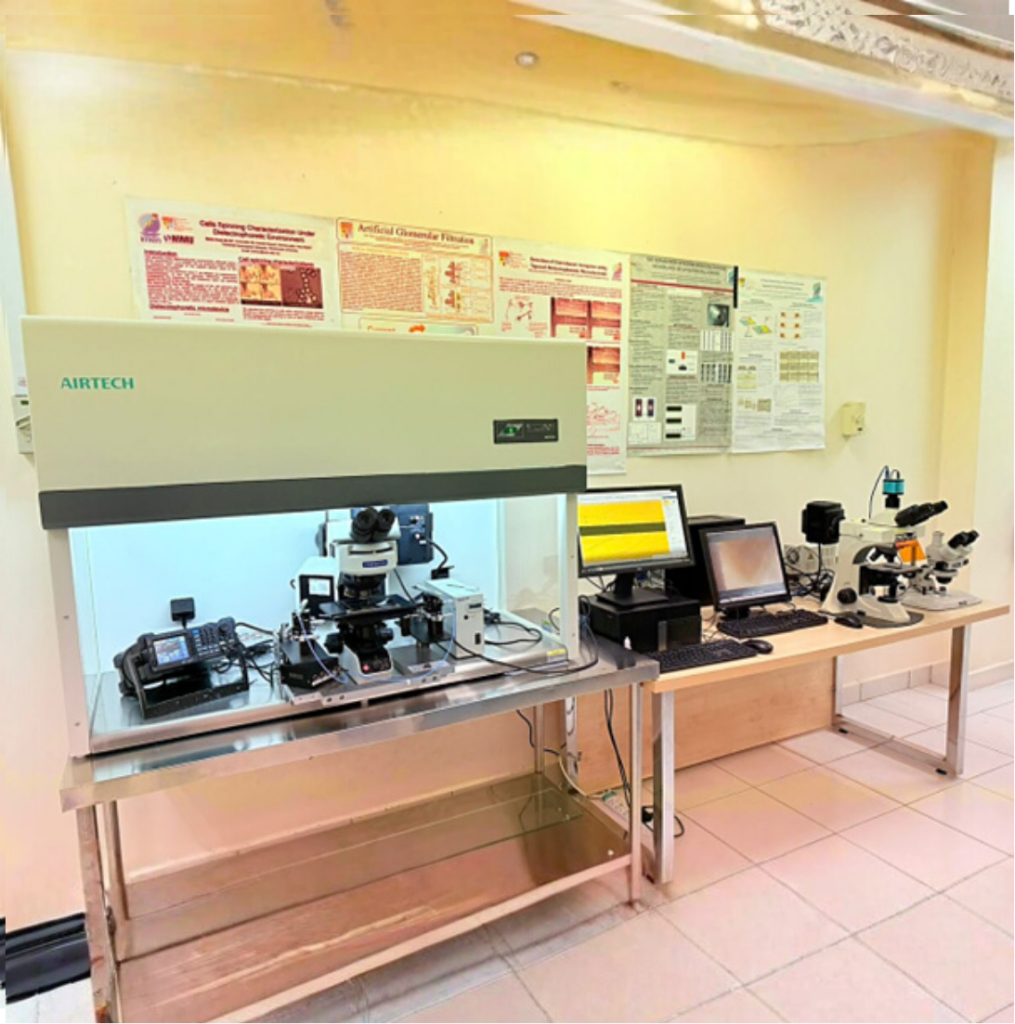
MICROFLUIDICS LAB.

  • Microfluidics is the science of controlling and manipulating fluids at the microscale, where ultra-small volumes flow through channels integrated with miniaturized devices. This technology offers fast analysis, reduced reagent use, and highly precise results — leading to lower development costs and improved performance.

    At the Microfluidics Research Laboratory, IMEN-UKM, our research focuses on designing and fabricating advanced microscale devices. We explore innovative solutions for biomedical and engineering applications, with ongoing projects including:

    • Biocell separation for diagnostics and therapeutic research.
    • Micro- and nanofiltration (Lab-on-Chip) for rapid sample processing.
    • Micropumps and micromixers for efficient fluid handling.
    • Microneedles for microdosing and targeted drug delivery.
    • Dielectrophoretic cell detection and manipulation.
    • Photocatalytic fluid purification for cleaner, more efficient systems.

    Through these efforts, we aim to push the boundaries of microfluidics technology, creating practical and impactful solutions for healthcare, biotechnology, and beyond.

Head of Laboratory

Prof. Dato'. Dr. Burhanuddin Yeop Majlis

burhan@ukm.edu.my

PIC Laboratory

Anezah Marsan

anezahmarsan@ukm.edu.my

PIC Laboratory

Mohd Faizal Aziz

faizal_imen@ukm.edu.my

EQUIPMENT / FACILITIES

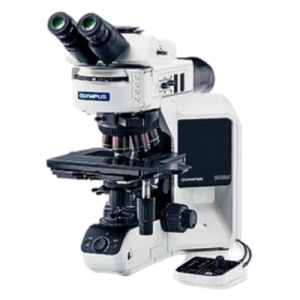
OLYMPUS BX53M MICROSCOPE

A modular and versatile optical microscope designed for advanced material science, industrial inspection, and research applications.

How It Works / Principle

  • Utilizes a high-quality optical system where light is directed through or reflected from the sample, magnified by objective lenses, and viewed through eyepieces or captured by a digital camera for imaging and analysis.

Key Features / Advantages

  • High-resolution optics with excellent contrast and clarity.
  • Flexible illumination options (reflected and transmitted light).
  • Suitable for brightfield, darkfield, differential interference contrast (DIC), and polarization imaging.

Applications

  • Metallurgical and materials characterization.
  • Semiconductor and microelectronics inspection.
  • Surface defect and failure analysis.
  • Quality control in industrial processes.
  • Research and education in material and life sciences.

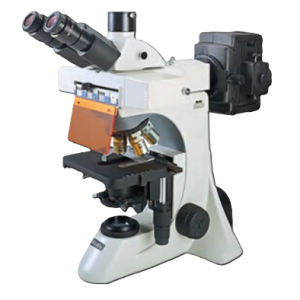
A professional-grade upright biological microscope designed for advanced laboratory and research applications, offering high optical performance and ergonomic usability.

How It Works / Principle

  • Uses a transmitted light optical system where illumination passes through the specimen on a glass slide. The light is then magnified by objective and eyepiece lenses, allowing detailed observation of biological structures.

Key Features / Advantages

  • Infinity-corrected optical system for superior image quality.
  • Wide range of objectives and contrast techniques (brightfield, phase contrast, polarization).
  • Expandable with digital cameras for image capture and analysis.

Applications

  • Clinical and diagnostic laboratory work.
  • Biological and biomedical research.
  • Microorganism and cell structure observation.

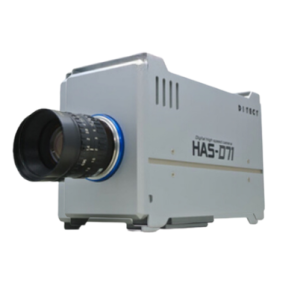
A compact, high-sensitivity digital high-speed camera capable of capturing ultra-fast phenomena with frame rates up to 120,000 frames per second.

How It Works / Principle

  • It uses a fast CMOS sensor (1/1.8″ format) and a global shutter design to capture successive frames with minimal motion blur. Light entering through a C-mount lens is converted to electronic signals, buffered in onboard memory, and transferred via a high-speed USB 3.0 interface.

Key Features / Advantages

  • Up to 8,000 fps at full VGA (640×480) resolution, and up to 120,000 fps at reduced line-mode (e.g. 640×12).
  • High-sensitivity sensor suited for low-light conditions.
  • Minimum exposure time of ~1 µs (or a few microseconds).
  • Available in monochrome (12-bit) or color (36-bit) modes.

Applications

  • Observation of fast transient events in engineering (e.g., combustion, droplet formation, shock, cavitation).
  • Production / industrial monitoring: nozzle spray, wire bonding, machine motion, high-speed mechanical parts.
  • Fluid dynamics and particle imaging velocimetry (PIV / stereo PIV).
  • Micro-scale rapid phenomena via coupling with microscopes (e.g., microfluidics, bubbles, fast material behavior).
  • Research in materials, dynamics, biomechanics, failure/fracture testing, and high-speed image analysis in R&D fields.

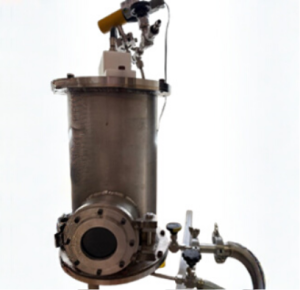
A radio-frequency (RF) plasma system is a device that generates and sustains a low-temperature ionized gas (plasma) using high-frequency alternating electromagnetic fields.

How It Works / Principle

  • An RF generator produces an alternating electric field, which accelerates free electrons in the gas.
  • These energetic electrons collide with neutral gas atoms or molecules, ionizing them and thereby creating more free electrons and ions (electron avalanche).

Key Features / Advantages

  • Non-thermal operation: can maintain electrons at high energy while keeping bulk gas relatively cool (so delicate substrates are less thermally damaged).
  • Good control over plasma parameters (electron density, ion energy, plasma uniformity) via tuning RF power, frequency, gas pressure, and electrode geometry

Applications

  • Thin film deposition/sputtering / plasma-enhanced chemical vapor deposition (PECVD)
  • Plasma etching and surface patterning in semiconductor fabrication.
  • Surface modification and treatment (e.g., cleaning, activation, functionalization of polymers, biomaterials).
  • Synthesis or treatment of powders and nanoparticles (e.g., spheroidization, doping).
  • Sterilization, waste treatment, plasma chemical processes (e.g., decomposition, gas conversion).
  • Fundamental plasma physics research and diagnostics.

A precision spin coating system for thin film deposition on wafers or substrates up to 150 mm, offering modular design and automation compatibility.

How It Works / Principle

  • A liquid (e.g., resist, polymer solution) is dispensed at or near the center of a substrate (via syringe or dispenser)
  • The substrate is rotated at a controlled speed; centrifugal force spreads the liquid outward into a uniform coating.
  • The rotation speed, acceleration, and time regulate film thickness and uniformity.
  • Excess liquid is flung off and collected (or drained) to avoid contamination.
  • The vacuum chuck holds the substrate in place during spinning, and the system often includes safeguards and vacuum lines to ensure stability and cleanliness.

Key Features / Advantages

  • Supports substrates up to 150 mm diameter or 100 × 100 mm square samples.
  • Liquid filter trap to protect vacuum lines and internal components from contamination by stray fluids
  • Broad speed range (1 to 30,000 RPM) with high acceleration and deceleration control.
  • Options for clockwise/counter-clockwise rotation and “puddle mode” (stationary dispensing before spinning).
  • Automatic lid and safety interlocks (lid lock, vacuum sensor).

Applications

  • Spin coating of photoresists in photolithography processes.
  • Deposition of thin polymer films, coatings, and functional layers in electronics or MEMS.
  • Fabrication of thin-film devices (e.g., organic electronics, photovoltaics).
  • Surface cleaning, rinse/dry, development, etching, and patterning steps in microfabrication.
  • Research and prototyping in labs needing precise, reproducible thin-film coating.

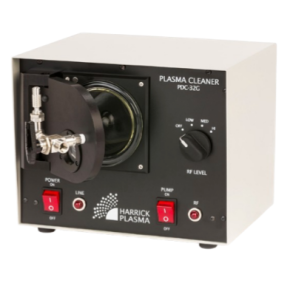
A benchtop inductively coupled RF plasma cleaner for surface cleaning, activation, and modification of small samples under vacuum.

How It Works / Principle

  • The instrument houses a Pyrex chamber in which a low-pressure gas (e.g., air, O₂, N₂) is introduced and evacuated by a vacuum pump.
  • An RF generator (up to ~18 W) drives an inductive coil or electrode, creating an alternating electromagnetic field that accelerates electrons.
  • Electrons collide with the neutral gas molecules, ionizing them and producing reactive species (ions, radicals) which interact with and clean or functionalize the substrate surface.

Key Features / Advantages

  • Three adjustable RF power levels (Low, Medium, High) up to ≈ 18 W.
  • Pyrex chamber of ~3″ diameter × 6.5″ length, with a hinged door and viewing window for observation.
  • Integrated vacuum pump switch, metering valve (1/8″ NPT) for gas flow adjustment, and 3-way valve for isolating or venting the chamber.

Applications

  • Surface cleaning and removal of organic contaminants (e.g., before imaging or deposition).
  • Surface activation (e.g., increasing surface energy) to improve adhesion or bonding (e.g., glass, polymers).
  • Preparation for microfabrication: e.g., cleaning, wettability control, plasma etching (mild).
  • Treatment of biomaterials, polymers, MEMS components, optics, and sensors.
  • Sample prep for microscopy or surface characterization (e.g., SEM, AFM) by removing residues and improving cleanliness.

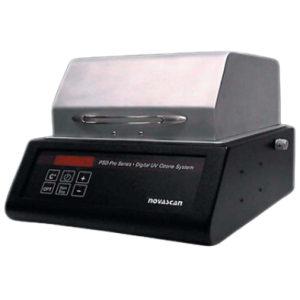
A benchtop UV-ozone cleaning and surface activation system that uses deep ultraviolet light to remove organic contaminants and modify surface chemistry.

How It Works / Principle

  • The system uses a mercury vapor UV lamp that emits two key wavelengths (≈ 185 nm and 254 nm).
  • The 185 nm wavelength photolyzes molecular oxygen (O₂) to form ozone (O₃) radicals; the 254 nm line excites organic molecules, making them more reactive toward oxidation by ozone and radicals.
  • The UV and ozone react with organic contaminants on the sample surface, converting them into volatile products (e.g., CO₂, H₂O) that leave the surface.
  • The sample is placed at an optimized distance (adjustable stage) to balance UV intensity and ozone concentration; sometimes a controlled gas flow (e.g., O₂) is used to enhance ozone generation.

Key Features / Advantages

  • Programmable digital controller (preset times, interrupt/pause functions) for precise process control.
  • Adjustable sample stage height for optimizing UV-to-surface spacing and treating taller samples.
  • Capability to operate in ambient air or with supplemental oxygen to increase ozone yield.
  • Uniform UV grid lamp design with close spacing and reflectors for more even illumination across samples.

Applications

  • Cleaning and stripping organic contaminants from substrates (glass, silicon, oxides, polymers) before deposition or measurement.
  • Surface activation (increasing wettability, improving adhesion, or bonding) for microfluidics, coatings, or bonding processes.
  • Preparation of samples for microscopy (SEM, AFM, TEM) or surface analysis (XPS, contact angle) by ensuring atomically clean surfaces.
  • Photoresist residue removal/ashing in microfabrication workflows.
  • Treatment of microfluidic device surfaces (PDMS, glass) to improve bonding and hydrophilicity.
  • Oxidation of surfaces, sterilization, organic functionalization, or cleaning of sensors, optics, masks, and MEMS devices.

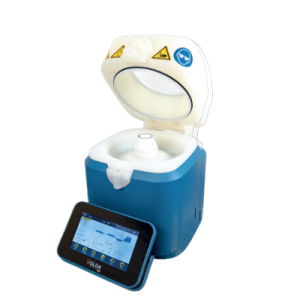
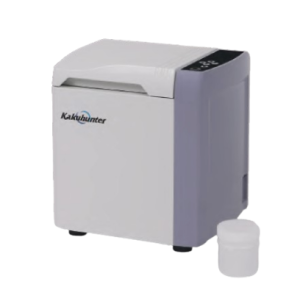
A high-performance planetary mixer designed for uniform mixing, dispersion, and degassing of various materials, including viscous pastes, powders, and liquids.

How It Works / Principle

  • Operates using a dual rotational system where the mixing container revolves on its own axis while simultaneously orbiting around a central axis.
  • This planetary motion ensures rapid and homogeneous mixing without the need for stirring blades.
  • Built-in centrifugal force enables simultaneous mixing and degassing, eliminating air bubbles during processing.

Key Features / Advantages

  • High-speed, efficient mixing and degassing in a single process.
  • No mixing blades → prevents contamination and reduces cleaning requirements.
  • Adjustable rotation/revolution speeds for optimized processing of different material types.
  • Capable of handling small to medium batch sizes with consistent results.
  • Compact, user-friendly design with programmable settings for reproducibility.

Applications

  • Preparation of nanomaterials, conductive pastes, and inks.
  • Homogenization of adhesives, resins, and sealants.
  • Mixing and degassing of pharmaceuticals, cosmetics, and biomedical materials.