ORGANIC AND PRINTED ELECTRONICS (OPEL) LAB.

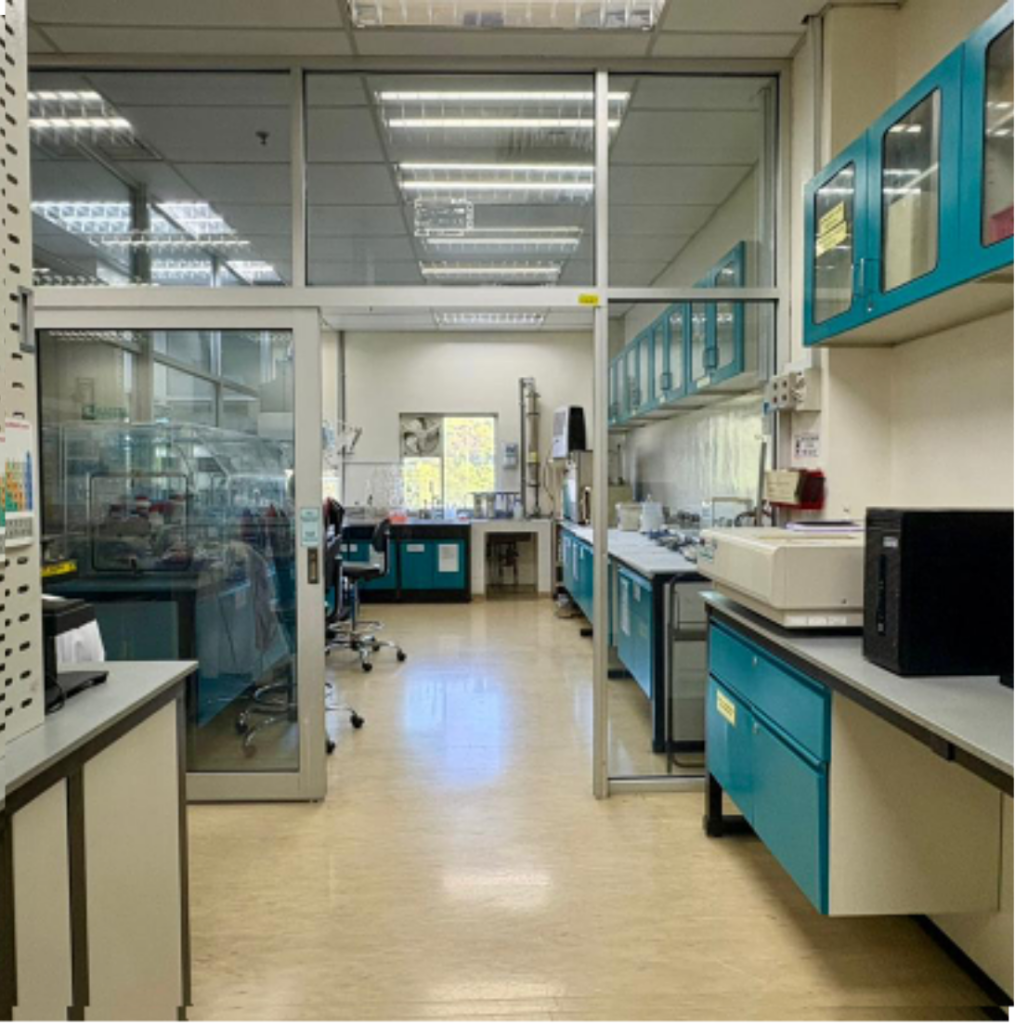
  • At the Organic and Printed Electronics Laboratory (OPEL), IMEN-UKM, we conduct cutting-edge research on the fundamental studies and characterization of optical and electrical properties. With expertise in the synthesis of metallic, organic, quantum dot, and two-dimensional nanomaterials (including perovskites), we are dedicated to developing innovative hybrid organic optoelectronic devices. Our pioneering work in plasmonic architectures and novel device design is driving breakthroughs in organic biosensing and power generation, shaping the future of next-generation optoelectronics.

Head of Laboratory

Prof. Dato'. Dr. Burhanuddin Yeop Majlis

burhan@ukm.edu.my

PIC Laboratory

Anezah Marsan

anezahmarsan@ukm.edu.my

PIC Laboratory

Mohd Faizal Aziz

faizal_imen@ukm.edu.my

EQUIPMENT / FACILITIES

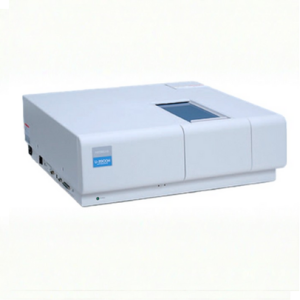
HITACHI U-3900H UV-VIS SPECTROMETER

A high-performance double-beam UV-Vis spectrophotometer for precise optical characterization across the 190–1100 nm range.

How It Works / Principle

  • Operates on the principle of light absorption and transmission, where a monochromatic beam passes through a sample and a reference.
  • Measures absorbance and transmittance to study electronic transitions of molecules and materials.
  • The double-beam system compensates for light source fluctuations and improves baseline stability.

Key Features / Advantages

  • High resolution and photometric accuracy.
  • Double-beam design for stable, reproducible measurements.
  • Measure absorbance, transmittance, or reflectance for both thin film and liquid samples.
  • Reliable baseline correction and low stray light.

Applications

    • Optical characterization of organic, inorganic, and hybrid nanomaterials.
    • Thin-film absorbance and transmittance studies.
    • Analysis of solution-phase samples (e.g., perovskites, polymers).
    • Fundamental studies in photophysics, photochemistry, and material science.

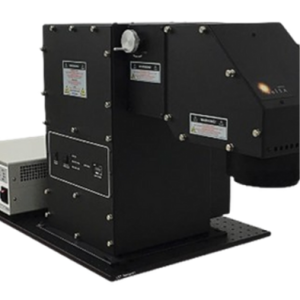
A Class AAA solar simulator that provides a stable, uniform light source replicating the solar spectrum for photovoltaic and material testing.

How It Works / Principle

  • Uses a xenon arc lamp with optical filtering to closely match the AM1.5G solar spectrum.
  • Delivers uniform and stable illumination, enabling reliable simulation of natural sunlight in a controlled laboratory environment.
  • Allows accurate evaluation of photovoltaic devices, photodetectors, and light-driven processes under standard testing conditions.

Key Features / Advantages

  • Class AAA rating: meets IEC, JIS, and ASTM standards for spectral match, uniformity, and temporal stability.
  • Adjustable output intensity for flexible testing conditions.
  • Illumination area of 51 mm x 51 mm with high spatial uniformity.
  • Reliable long-term performance with stable lamp output.

Applications

  • Characterization and performance testing of solar cells and photovoltaic materials.
  • Optical and electrical studies of perovskite and organic solar devices.
  • Photocatalysis and light-driven chemical reaction studies.
  • Research in optoelectronics, photodetectors, and energy harvesting technologies.

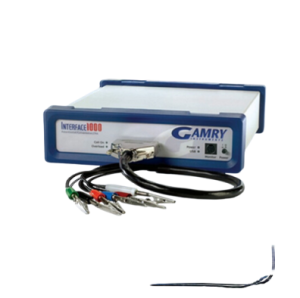
A high-performance potentiostat/galvanostat designed for advanced electrochemical research, capable of precise control and measurement of electrochemical systems.

How It Works / Principle

  • Operates by controlling the potential (voltage) applied to an electrochemical cell and measuring the resulting current (or vice versa). This allows the study of electron transfer processes, reaction kinetics, and electrochemical mechanisms.

Key Features / Advantages

  • Wide potential and current ranges for versatile experiments.
  • High-speed data acquisition for accurate transient measurements.
  • Low noise and high stability for sensitive electrochemical signals.
  • Compatibility with various electrochemical techniques (EIS, CV, etc.)

Applications

  • Corrosion studies and inhibitor evaluation.
  • Battery, fuel cell, and supercapacitor testing.
  • Electrocatalysis and energy conversion research.
  • Sensor development and biosensing.
  • Fundamental electrochemical mechanism studies.

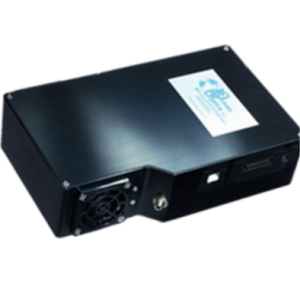
A high-sensitivity scientific-grade spectrometer designed for low-light levels across a broad spectral range. This Raman spectrometer has a QE65000 detector for 785 nm.

How It Works / Principle

  • The spectrometer collects incoming light through an optical fiber, disperses it with a diffraction grating, and converts light intensity into digital spectral data.

Key Features / Advantages

  • High quantum efficiency (up to ~90%) for superior sensitivity.
  • Broad spectral range (200–1100 nm) covering UV–Vis–NIR regions.
  • Low noise performance for precise low-light detection.
  • High dynamic range enabling both weak and strong signal measurements.
  • Fiber-optic modularity for flexible sample collection setups.

Applications

  • Raman spectroscopy.
  • Chemical and biological sensing.
  • Environmental monitoring and material characterization.