
Authors retain copyright of their work. Articles published in IJIT are distributed under the Creative Commons Attribution 4.0 International License
(CC BY 4.0)
visitors since 01 June 2012
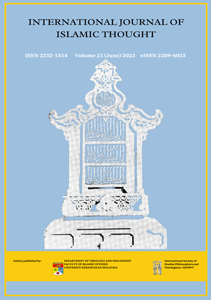
IJIT | International Journal of Islamic Thought


e-ISSN 2289-6023 | ISSN 2232-1314
Volume 21, (June) 2022
Abur Hamdi Usman, Mohd. Farid Ravi Abdullah, Muhd. Najib Abdul Kadir & Azwar Iskandar
The Concept of an Ideal Society: A Review of Fazlur Rahman’s Perspective
Page: 1-12 • DOI: https://doi.org/10.24035/ijit.21.2022.220
Abstract: The teachings of Islam are closely related to the concept of community. Islamic history and politics influence community structure and organisation based on Quranic tenets. Due to extremism of some Muslim leaders who are still caught in their own orthodoxy, Muslims have been lagging behind the rest of the world in terms of political, economic and social progress. This study examines the philosophy and ideas of Islamic thinker Fazlur Rahman, a modernist scholar and philosopher of Islam. Known as a prominent liberal reformer of Islam, he devoted himself to educational reform and reviving independent reasoning (ijtihad) among Muslims in order to shape an ideal Muslim society. Fazlur Rahman was a unique scholar in that he attempted to combine Islamic and Western elements without compromising the tenets of the Quran and Sunnah in achieving a modern ideal society. He was a liberal in that he believed the Quran was compatible and relevant for all times and human civilisation.
Keywords: Ideal Society, Fazlur Rahman, Independent Reasoning, Western Elements, Liberal Reformer
Ahmad Sunawari Long, Mohd Hatib Ismail & Zula’azmi Yaakob
Fethullah Gülen: Interfaith Dialogue as a Way to the Global Peace
Page: 13-23 • DOI: https://doi.org/10.24035/ijit.21.2022.221
Abstract: Fethullah Gülen is an authoritative mainstream Turkish Muslim scholar, thinker, and educational activist who supports interfaith and intercultural dialogue. He is opposed to violence and to turning religion into a political ideology. In Turkey, he has been credited for bringing about positive atmospheres between the Muslim population and the various religious minorities such as the Christian and Jewish communities. Outside Turkey, his ideas on interfaith dialogue have inspired many to establish organizations engaging in dialogue with the same objectives of mutual understanding, empathetic acceptance, peaceful coexistence, and cooperation. He has outlined four main foundations in his dialogue, namely, love, compassion, tolerance, and forgiveness, as a form of a religious order which is known as the universal values. He has introduced two types of practical dialogue, which are the dialogue through mass media and the dialogue through educational institutions, which aim to create a better understanding between the Muslims and non-Muslims among the Golden Generations. Over the years, Gülen is a champion of interfaith dialogue who has been committed to bringing global peace beyond the boundary of religion, race, and region.
Keywords: Gulen, interfaith dialogue, global peace, education, Hizmet
Asmilyia Mohd Mokhtar, Ahmad Yunus Mohd Noor & Dahlila Putri Dahnil
Problem Solving for Learning Disabilities in Malaysian Muslim Blind Community
Page: 24-34 • DOI: https://doi.org/10.24035/ijit.21.2022.222
Abstract: Issues which are consist in learning disability context for the blind comprises several aspects such as; teachers did not teach the Quran by using the Quran in braille, have not mastered in Quran Braille code, have not basic learning on the Quran and alphabetical character. This article attempts to find out the issues and challenges of learning disabilities experienced by Muslim Blind Community in Malaysia. The study also aims to solve problems on learning disabilities among Muslim blind community in Malaysia by using braille approach. This study undertakes an analysis of people with learning disabilities based on issues and challenges as the main sources of reference by adopting the document analysis method. Therefore, this study used a qualitative method with a protocol of observation and analysis of several sources to get data and information. The outcome of this article suggests that the Malaysia government needs to make improvements in order to enhance the quality of education for people with learning disabilities and create a special education program for them. This paper clarifies that the methods and point solutions to the problems faced by this kind of people is considered as a new issue and supposed to be handled by government and private sector.
Keywords: Problem Solving, Learning Disabilities, Muslim, Blind, Quran
Birol Topuz
Quranic Verses Shaping Djem and False Perception of Alevism in the Society
Page: 35-45 • DOI: https://doi.org/10.24035/ijit.21.2022.223
Abstract: It is seen that the Alevi-Sunni relations are mostly shaped by the stereotyped perceptions of the two groups about each other. In particular, the fact that Alevism is a closed society due to the pressure they have experienced throughout history has prevented them from being perceived correctly. As such, it is seen that there are many misconceptions about Alevis and their rituals that do not match the reality but are accepted as correct by the society. Due to the lack of communication that could not be developed through this “unknown” in the historical process, Alevi-Sunni relations have always been open to manipulations. As a matter of fact, it is seen that Alevis’ relations with Islam, the Djem ceremonies that form the basis of Alevism, and the content of Djem ceremonies have always remained a mystery to Sunnis. Unfortunately, this misperception also reflected negatively on the communication between the two groups. As it is known, if stereotypes arise when there is incorrect information about the target group, the best way to correct them is to create common contact environments that will bring individuals to the right information. Here in this article, the unknown Djem ritual and especially the Qur’anic verses that they refer to during the Djem ceremonies are discussed.
Keywords: Alevis, Sunnis, Djem, Verses of Quran in Djem
Edi Susilo, Ahmad Zahro, Budi Santoso & Sultana Mh Faradz
Gender Decision Dilemma of Disorders of Sex Development (Khunsa) in Islamic Law with Medical Approach
Page: 46-53 • DOI: https://doi.org/10.24035/ijit.21.2022.224
Abstract: Disorder of Sex Development defined as congenital conditions in which the development of chromosomal, gonadal, or anatomic sex is atypical. In Islam, gender decision of khunsa is difficult since it still relies on the traditional approach of observing how people urinate and observing the physical features that emerge, whereas gender identity must be determined early because it affects every day worship activities. The goal of this research is to use a medical method to examine the renewal of khunsa gender determination in Islam. The descriptive qualitative analysis method is used in this study. The findings of this study suggest that in Islam, determining khunsa gender through a medical approach is warranty. In Islam, the importance of gender identity is particularly significant in issues of worship, such as congregational prayers, inheritance, aurat limitations, and marriage. Understanding and adjustment of medical diagnosis issues, community culture, and religious law need to be synchronized to improve the quality of life for people with gender ambiguity that do not deviate from religious principles and can be accepted in society without discrimination. To the best of our knowledge this is the first study of combine Islamic law and modern medicine
Keywords: Gender decision, Khunsa, Islamic Law, Medical, Indonesia
Inayah Rohmaniyah, Samia Kotele, Mustaqim Pabbajah & Hasna Safarina Rasyidah
Female Ulama’s Authority: Deconstructing Masculine Domination in Islamic Norms and Practices
Page: 54-61 • DOI: https://doi.org/10.24035/ijit.21.2022.225
Abstract: The network of Indonesian Women’s Ulema under KUPI has emerged to become a new reform in a religious landscape tinted with masculine domination. This paper aims to explain the KUPI’s conceptual hermeneutical framework in producing religious interpretations and the implication of the approach on constructing inclusive gender norms and practices. This qualitative research is based on the results of interviews and literature studies as the primary data. This study demonstrates that the collective agency and power of KUPI network and its authoritative claim allowed the emergence of an inclusive production of religious interpretations and norm. As a result, it creates room for women’s voice and contribution within the social and religious normative frame. The significance of this study shows that the authority of female as ulama and the hermeneutical approach in the one hand, and in the other hand inclusive gender paradigm is allowing the KUPI network to initiate a reform in both social and religion domains. This research recommends further studies to uncover the challenges and dynamics of the network in creating a new direction of Islam in Indonesia and Muslim World.
Keywords: Female ulama, authority, collective agency, hermeneutics, religious
reform
Mai Mohammed H Alharbi
Kingdom Vision 2030 and the Women’s Empowerment in Saudi Arabia: An Empirical Investigation
Page: 62-73 • DOI: https://doi.org/10.24035/ijit.21.2022.226
Abstract: Empowerment of women is the mirror of a society’s civilization and development. It is vital and necessity for the success of the society’s comprehensive development. This study aims to explore the role played by the “Kingdom’s vision 2030” in empowering Saudi women. The study applied a questionnaire consisting of five axes that express the awareness of empowering Saudi women according to the “Vision 2030”. A total of 152 responses were received in two months. The study used both the descriptive and analytical approaches to analyse the collected data. The results showed that there are statistically significant differences in the awareness of empowering Saudi women in the view of Vision 2030 based on the respondents ages, nature of their profession and level of education. The study recommended that more opportunity for women in terms of education and property ownership can encourage women to put more efforts towards the development of the Kingdom.
Keywords: Empowerment of women, the Kingdom’s Vision 2030
Mohamed Sheikh Alio
Kenyan NFD Muslim Communities: The Painful Past and Pending Justice
Page: 74-82 • DOI: https://doi.org/10.24035/ijit.21.2022.227
Abstract: The political history of Muslim minorities in the world is one of the emerging areas in the Muslim world’s contemporary issues that need to be addressed. This research examines the political history of Muslim communities in Kenya’s former Northern Frontier District (NFD), which was part of Somali Jubaland but annexed to Kenya Colony by British authorities in 1925, and the challenges they confronted during British colony (1895-1963); in terms of isolation measures, political marginalization and disregarding the 1962 referendum which expressed their will to unite with Somalia. Furthermore, the study discloses the harder difficulties that encountered NFD natives after Kenya independence in 1963; which appeared through the Shifta War (1963-1967), human rights violations, chronic marginalization and pending justice over historical grievances. The research will contribute to discovering the political and social history of Muslim communities in NFD and its impact on the current situation of former NFD’s residents in Kenya towards gaining a long-lasting stability in Kenya.
Keywords: Britain, Kenya, NFD Muslim Communities, Somalia, Pending Justice
Mohamed Yacoub
Reiterating Anti-Muslim Rhetoric: Interview Practices of Fox News’ Hannity
Page: 83-92 • DOI: https://doi.org/10.24035/ijit.21.2022.228
Abstract: Analyzing interviews with Muslim guests on Fox News’ Hannity reveals biased practices that trigger anti-Muslim sentiment and rhetoric. Muslim guests are asked leading questions, cornered (asked off topic questions and forced to respond), accused with hedge-less statements, faced with the technique of “polls say,” and labelled as “you” versus “us.” The result of such anti-Muslim sentiment is audience who have not been given the chance to listen, but a chance to hate. This paper, thus, calls for transformation in action so that we pushback against this sentiment and rhetoric.
Keywords: Muslim, Hannity, Hedging, Fox News, United States
Mohd Al Adib Samuri, Muhammad Al-Ghazalli Abdol Malek, Muhammad Nazir Alias & Peter Hopkins
Hadith of Aisha’s Marriage to Prophet Muhammad: An Islamic Discourse on Child Marriage
Page: 93-105 • DOI: https://doi.org/10.24035/ijit.21.2022.229
Abstract: Child marriage is a global issue that concerns the violation of children’s rights. All signatory countries to the International Convention on the Rights of the Child (UNCRC), including Malaysia, are obliged to raise the marriageable age to 18 years old as a legal measure to curb child marriage. However, the proposed law reform received strong rejection and criticism from religious groups in various Muslim countries. Religious traditionalist groups saw child marriage as permissible in Islamic law following the authority of the hadith of Aisha’s marriage to Prophet Muhammad at the age of six. This article aims to analyse the abovementioned hadith by highlighting the discussion between the conflicting groups of Muslim scholars in the context of child marriage. This study employed content analysis to the Islamic legal texts and hadith commentaries in classical and contemporary works. This study found that the controversial hadith in question is a sound authority and cannot be dismissed as a legal basis for several matters in Islamic family law, including the permissibility of a father to marry off his young child. However, the hadith should not be considered as an authority to condone child marriage in today’s context. As a way forward, child rights’ advocates may pose other arguments within the Islamic law framework such as maslaha and Siyasah Shar’iyya to curb child marriage in Malaysia.
Keywords: Child marriage; Child rights; Islamic Family Law; Legal marriageable age; Siyasah al-Syar’iyya
Nur Asmadayana Hasim, Latifah Amin, Zurina Mahadi & Nor Ashikin Mohamed Yusof
Islamic Ethical Principles to Protect Environment Affected by Modern Biotechnology
Page: 106-117 • DOI: https://doi.org/10.24035/ijit.21.2022.230
Abstract: The Malaysian government strongly promotes research and development in modern biotechnology since it has the potential to bring economic benefits to the nation. Modern biotechnology has been associated with several ethical issues related to the environment. This leads to the need for having appropriate laws and guidelines for governance purposes. There is a legal vacuum in the existing Biosafety Act 2007. This Act focuses on scientific risk assessment concerning modern biotechnology and does not contain any provision in terms of the social and ethical aspects of modern biotechnology. The objective of this article is to identify and select the core ethical principles that are both acceptable, and capable of protecting the environment. By using a qualitative approach, a series of focus group discussions (FGD) were conducted consisting of four groups of stakeholders in biotechnology. The discussions were recorded, transcribed and analyzed thematically. The research findings show that the stakeholders strongly agree on the importance of three ethical principles for protecting the environment. They fully support the adoption of these ethical principles as the guiding principles for developing Malaysian Ethical Guidelines for Modern Biotechnology in the future. This research links Islamic and Western-based ethical principles in relation to the environment and its protection.
Keywords: Modern biotechnology; environment; ethical principles; Islamic perspectives; precautionary principle; animal welfare
Putri Haryati Ibrahim, Ahmad Sarkawi, A., & Mohamed Afla, M.R
Islamic Perspectives of Integrating Muslim Cemeteries Planning with Recreational Areas in Urban Setting
Page: 118-127 • DOI: https://doi.org/10.24035/ijit.21.2022.231
Abstract: The provision of Muslim cemeteries is a requirement stemming from the Quranic teaching that Muslims are buried upon death. Simultaneously, the provision of recreational areas is equally important for a healthy living environment and be part of the ten percent calculation of open spaces required by planning guideline. Due to the scarcity of land particularly in the urban area, one of the ways is to integrate these two types of land uses. This study seeks to examine the Islamic perspective of integrating Muslim cemeteries planning with recreational areas. Using content analysis, Islamic injunctions of the Quran and Hadith were examined together with their exegesis by Muslim scholars. In principle, it is permissible to integrate Muslim cemeteries with the recreational areas provided that their sanctity is preserved. There are limitations of recreational activities that could be done there and only the area with severe land scarcity is allowed to do so. Consequently, a specific planning guidelines for a hybrid cemetery is required as the current GP-010A and GP-005A are standing alone in guiding the cemeteries and open spaces planning respectively. This shariah permissibility based on Maslahah mursalah helps to address the requirement of recreational areas and Muslim cemeteries in an urban setting.
Keywords: Islam, Muslim cemetery, recreational area, urban planning
Zeenath Kausar
Women’s Empowerment in UN Documents Neither a Safe Haven Nor a Pandora’s Box: Need for A Holistic Perspective
Page: 128-136 • DOI: https://doi.org/10.24035/ijit.21.2022.232
Abstract: This article is a critique on the UN – promoted concept of women’s empowerment which is presented in the international instrument of women’s rights, called Platform for Action, (1995) and which is reviewed since then for every five years. It is asserted in the article that though women’s empowerment in the general sense of women’s development and advancement is essential; but this UN-based concept of women’s empowerment is constructed on a specific perspective, called ‘gender perspective’ which is problematic. Critical analysis of ‘gender perspective’ shows that heterosexual marriage, family and reproduction through marital union are all perceived as social construction and they are perceived as obstacles in the way of women’s empowerment. It is therefore contended in the article that this concept of women’s empowerment represents Western ethnocentrism because it ignores certain gender differences and their resultant gender roles and also overlooks the need for institutional agencies like religion and family which are necessary for legitimizing ‘power.’ It is asserted that all cultures should be given the right to re-conceptualize and pursue women’s empowerment following their own perspectives based on their respective civilizations.
Keywords: Gender Perspective, Platform for Action, Patriarchal Perspective, Sexual and reproductive health rights, Religion, Family
Fajri Matahati Muhammadin & Nidlol Masyhud
Article Review: ‘Peringkat Pemikiran Imam Al-Ash’ari dalam Akidah’ by Muhammad Rashidi Wahab & Syed Hadzrullathfi Syed Omar
Page: 137-139 • DOI: https://doi.org/10.24035/ijit.21.2022.233
PROFESSOR DR. AHMAD SUNAWARI LONG
ijit@ukm.edu.my
COMMITTEE ON PUBLICATION ETHICS
An international scholarly journal on Islamic thought and contemporary Muslim issues.
Indexed in Scopus and Web of Science–ESCI.
Fully open access with global readership.
Published twice a year (June and December).
All submissions undergo double-blind peer review.
Accepts English manuscripts only.
Requires IMRaD writing structure.
Uses APA citation and formatting style.
Committed to COPE’s ethical publishing standards.
Published by the National University of Malaysia (UKM) in partnership with Wisdom Academia Venture.








Authors retain copyright of their work. Articles published in IJIT are distributed under the Creative Commons Attribution 4.0 International License
(CC BY 4.0)
visitors since 01 June 2012
Published by
DEPARTMENT OF THEOLOGY AND PHILOSOPHY
Faculty of Islamic Studies
Universiti Kebangsaan Malaysia
(the National University of Malaysia)
43600 Bangi, Selangor
MALAYSIA
and
WISDOM ACADEMIA VENTURE
Kuala Lumpur