
EVENTS & MEDIA COVERAGE-old
2013
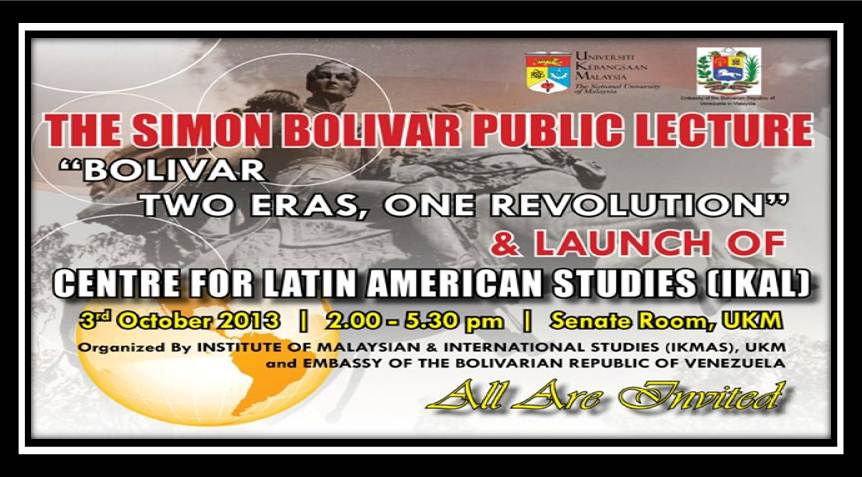
The Simon Bolivar Public Lecture “Bolivar Two Eras, One Resolution” and launching of Centre for Latin American Studies
Simon Bolivar is a recognized leader in Latin America. He was the liberator of Venezuela, established his beliefs in America.

Simon Bolivar, Leader in America Latin
The Simon Bolivar Public Lecture “Bolivar Two Eras, One Resolution” along with the launching of the Centre for Latin American Studies (iKAL) was the first event held by iKAL. This event was organised by the Institute of Malaysian & International Studies (IKMAS), UKM and Embassy of The Bolivarian Republic of Venezuela on the 3rd October 2013 at the Senate Room, UKM.
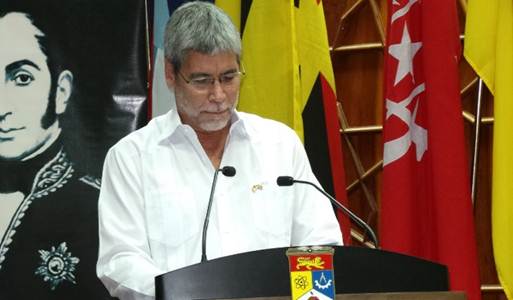
H.E. Manuel Antonio Guzmán Hernández, Speaker

The award was given to invited guests

Among the events that took place at the Chancellory Building, UKM
2014
THE SIMON BOLIVAR PUBLIC LECTURE SERIES II
“Simon Bolivar and Latin America
This program is the second series of “the Simon Bolivar Public Lecture. The lecture was presented by Professor Luis Britto Garcia “Simon Bolivar and Latin American Integration” entitled “SIMON BOLIVAR THE PUBLIC LECTURE SERIES II” Simon Bolivar and the Latin American Integration “and” ALBA (Bolivarian Alliance for the Peoples of Our America) Tourism Photographic Exhibition “)
Biodata
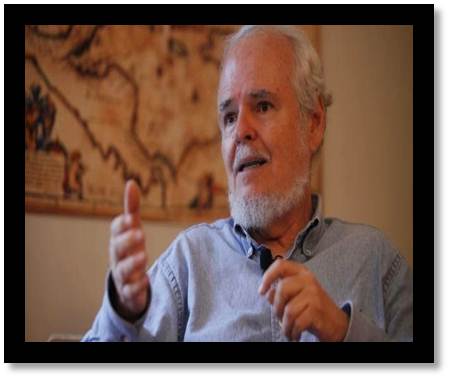 Professor Luis Britto Garcia is a narrator, an essayist, a playwright, an artist, as well as a Doctor of Law and an academician who has won numerous awards in the field of Literature. With his vast experience and as a member of the State Council, he has vast knowledge to share on literature and integration. His position as a Professor in the Faculty of Economics and Social Sciences, Central University of Venezuela since 1988 brings interesting insights about integration from the Venezuelan perspective. He was conferred the National Prize for Literature of Venezuela in 2001 and in 2010 he was awarded the ALBA (Bolivarian Alliance for the Peoples of Our America) Cultural Award in Letters; both for his extensive work which provides noteworthy know-how on South-South BOLÍVAR AND LATIN AMERICAN INTEGRATION ABSTRACT LUIS BRITTO GARCIA In Latin America, the ideas and attempts of integration have developed extensively since the struggle against the Spanish and Portuguese colonization. The beginning of the process of the integration of Latin America was possible through the vision of the famous South American leader Simón Bolivar. He was the Venezuelan liberator, established his belief in a truly united America in his messages to the Congresses of Angostura (1819), which is considered to be the first attempts at continental integration.
For more than 200 years, Latin America has experimented with different ideas regarding regional integration and today the idea is very much alive with the creation of the Alianza Bolivariana para los Pueblos de Nuestra América (ALBA), Unión de Naciones Suramericanas (UNASUR) and Comunidad de Estados Latinoamericanos y Caribeños (CELAC), among others, which are the new forms of alliances created over the last decade, arguing that Latin America integration is still a plausible dream of unity and solidarity. The lecture will explore the historical journey on what has been done in Latin American integration from the early days of Simon Bolivar until today.
For more than 200 years, Latin America has experimented with different ideas regarding regional integration and today the idea is very much alive with the creation of the Alianza Bolivariana para los Pueblos de Nuestra América (ALBA), Unión de Naciones Suramericanas (UNASUR) and Comunidad de Estados Latinoamericanos y Caribeños (CELAC), among others, which are the new forms of alliances created over the last decade, arguing that Latin America integration is still a plausible dream of unity and solidarity. The lecture will explore the historical journey on what has been done in Latin American integration from the early days of Simon Bolivar until today.
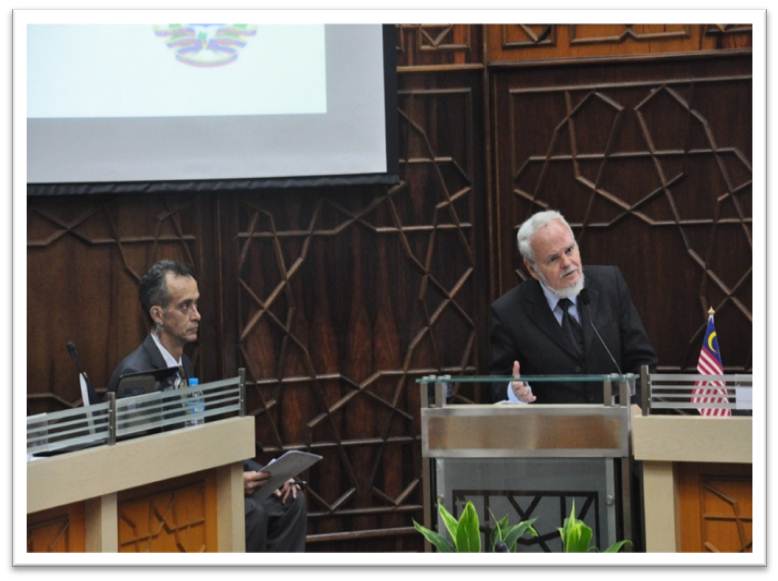
Professor Luis Britto Garcia, while delivering a speech
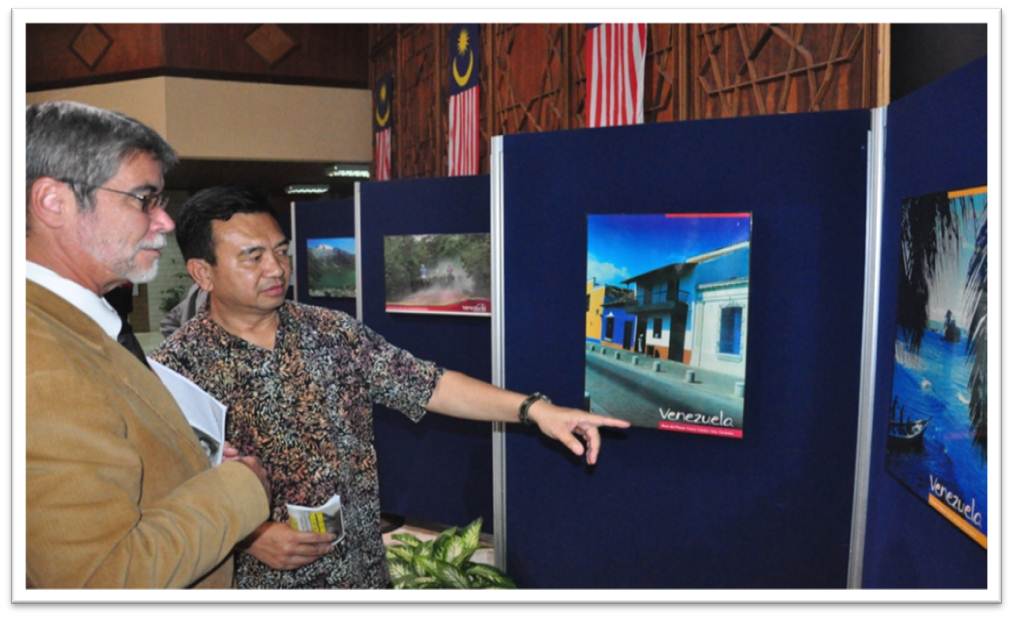
Among the areas of knowledge that is available in the Chancellory building, UKM

The awards was given to the speakers

Guests are invited to eat after the expiry
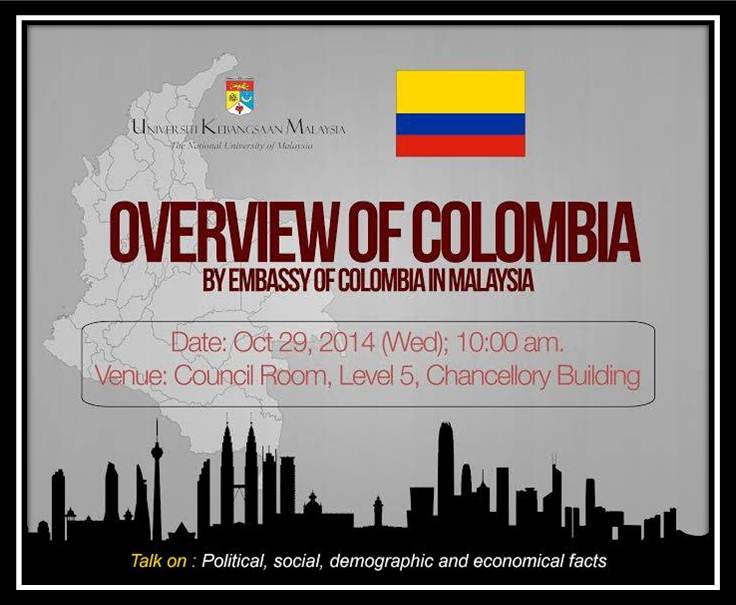
OVERVIEW OF COLOMBIA
Talk on:
Political, social, demographic and economical facts about Colombia
Date: 29 October 2014 (Wednesday)
Time: 10 a.m. to 11.30 a.m.
Venue: Council Room, Level 5, Chancellory Building, UKM
2015
IKMAS High Level Public Lecture: in commemoration of the 40th anniversary of bilateral relation between Cuba and Malaysia
To commemorate the 40th anniversary of bilateral relations between Cuba and Malaysia. iKAL in collaboration with the IKMAS has organized a program attended by special guests which is the ex-premier Tun Mahathir Mohamad and also his wife, Tun Dr Siti Hasmah Mohamad Ali.
The program was held on February 9, 2015 which took place at the Senate Room, 5th floor building Chancellory, UKM from 9:30 am to 11.30 a.m.

Tun Mahathir Mohamad giving a speech

Tun Mahathir Mohamad with UKM Permata Pintar students

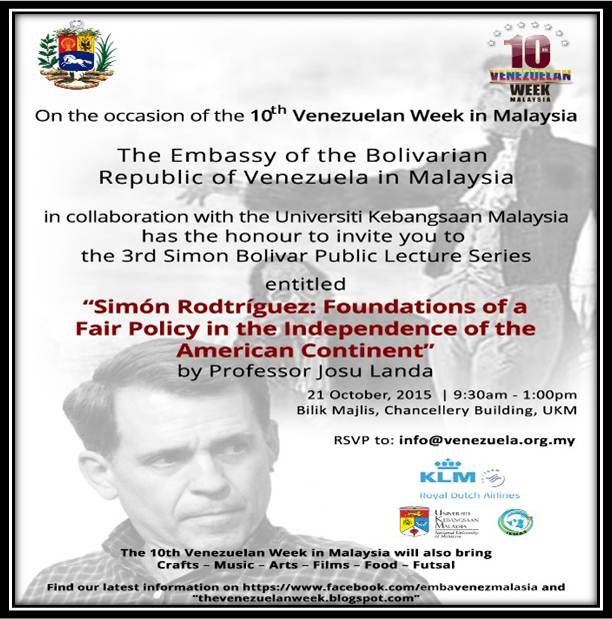
THE 3RD SIMON BOLIVAR PUBLIC LECTURE SERIES
On October 21, 2015, “The 3rd Simon Bolivar Public Lecture Series” presented by Professor Josu Landa from the National University of Mexico, Mexico. The event started from 9.30 am until 1.00 pm at the UKM Council Room, 5th Chancellory building, UKM).

Professor Josu Landa (The National University of Mexico, Mexico)

Embassy of the Bolivarian Republic of Venezuela in Malaysia, Head of the Center of Latin American Studies (IKAL) And IKMAS Director, UKM
He delivered a lecture that focused on Simon Rodriguez: Foundations of a Fair Policy in the Independence of the American Continent.
The main purpose of this program is to acquire knowledge and information about the fundamental principles of justice in the freedom of the Americas. The event had promoted sharing of information by Prof. Josu Landa to students and also to the campus citizens. The program ends with the Embassy of food and refreshments form both Bolivarian Republic of Venezuela and Malaysia.
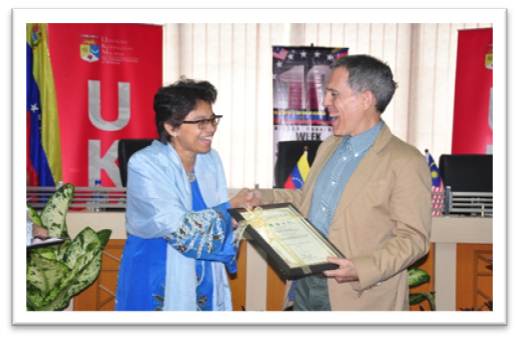
A token of appreciation from Prof. Dr Rashila Ramli to Prof Josu Landa

Honorable Guests
Collaboration IDFR & IKMAS (iKAL)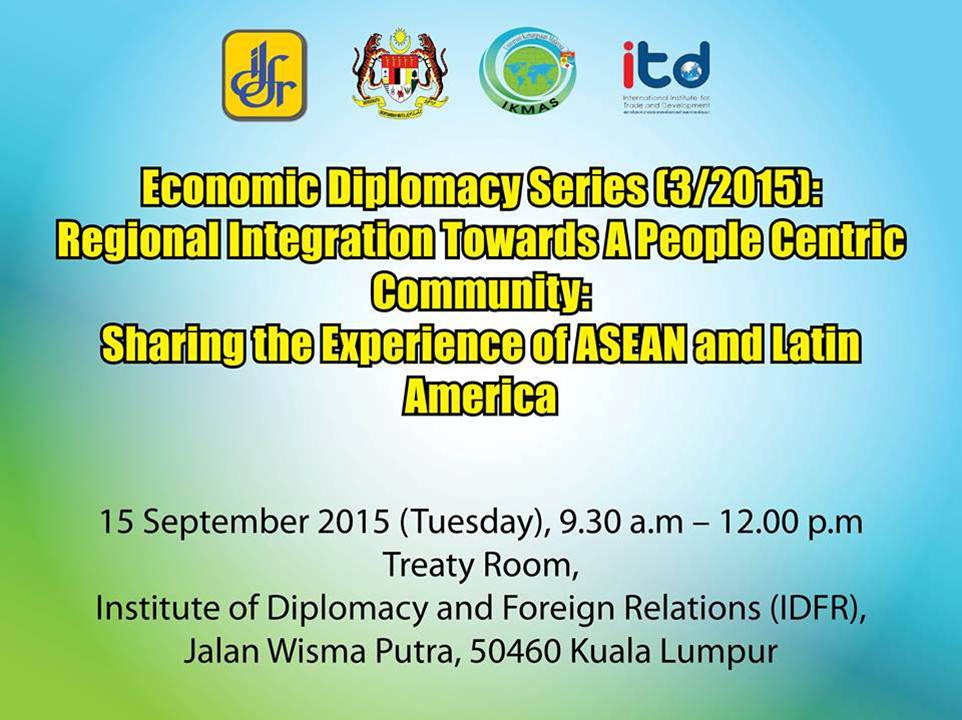
LASA
BACKGROUND
LASA 1
Was held in 2008 (UKM). The seminar brought together Latin American scholars from Mexico and around South East Asia where IKON ( formerly the Institute of Occidental Studies) signed 3 Letters of Intent (LOI) with partners.

LASA 2
In November 2010, (UKM) brought scholars and policy makers from Mexico, Argentina and Venezuela supported by the Grupo Latino Mericana y Carribeano
(GRULAC).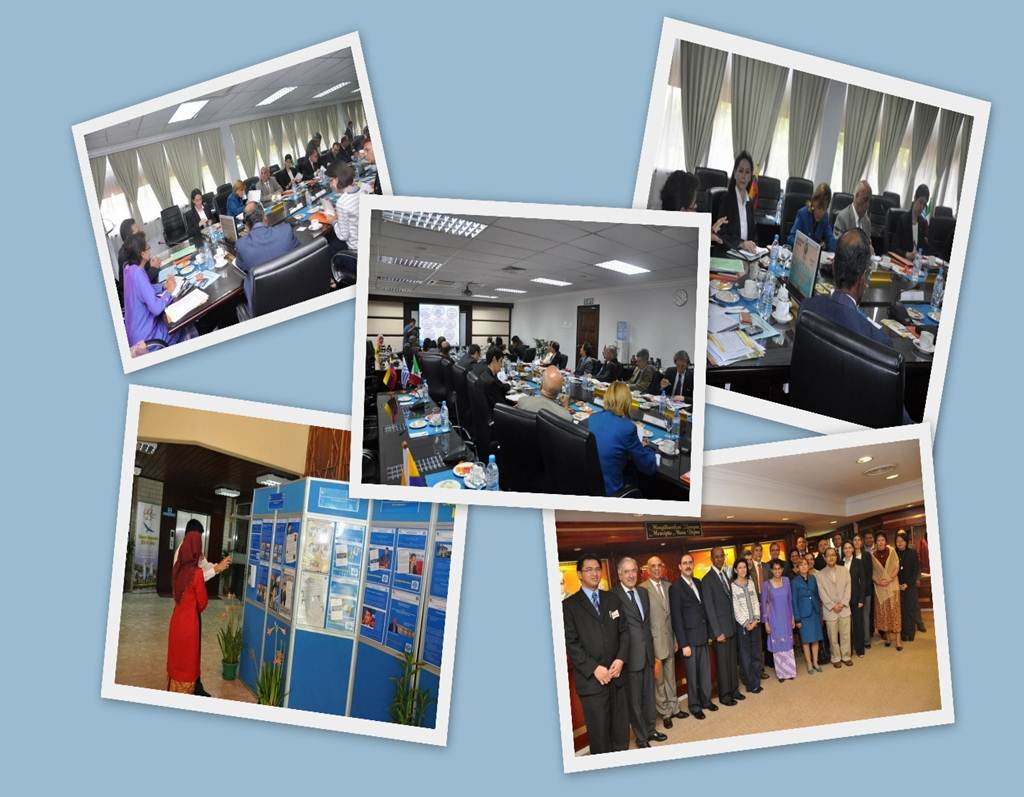
LASA 3
2012 (UKM) IKON moved into the second phase of its engagement with the Latin America especially with the research community.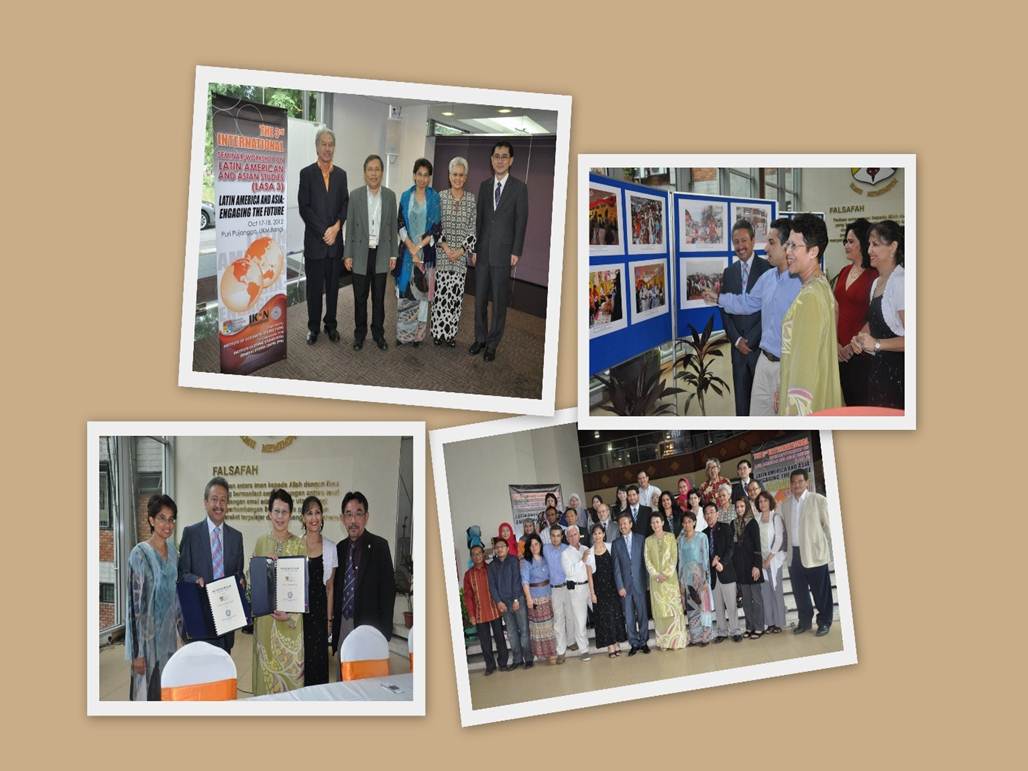
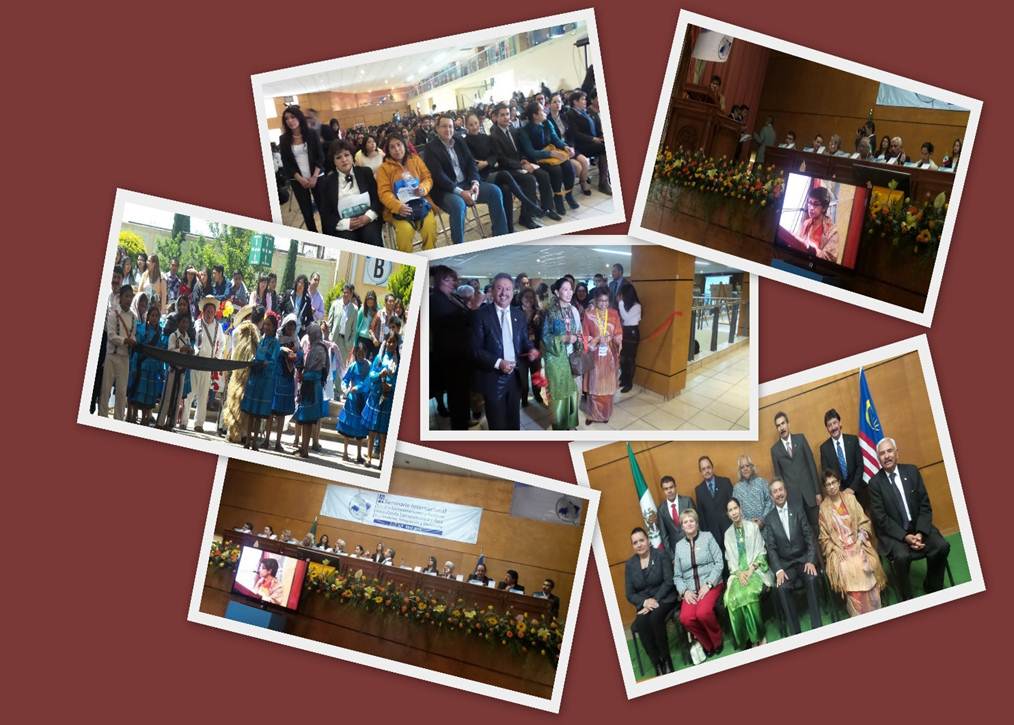
LASA 4
2014 (Mexico – CUI Itxhlahuaca) is a step forward in solidifying the path of scholarship between the regions. The theme of LASA 4 was connecting Latin America and Asia: Regionalism, Integration and Development. A continuation of deepening ties with partners in Latin American.
Sub- themes: LASA 4
- Centering Community Development : Local and regional Development
- Rethinking political and economic stratagem
- Exploring Sustainable Development and Biodiversity
- Revisiting Historical Narratives, Cultures and Literary Traditions
BACKGROUND AND RATIONALE
In order to start the engagement, LASA1 was held in December 2008. The seminar brought together Latin American scholars from Mexico and around South East Asia where IKON signed 3 Letters of Intent (LOI) with partners. In November 2010, LASA 2 brought scholars and policy makers from Mexico, Argentina and Venezuela with the support from Grupo Latino Americana y Carribeano (GRULAC).
In 2011 and 2012, IKON persisted to develop and deepen with institutions from a number of countries specifically Costa Rica, Argentina, Venezuela, Ecuador and Brazil. Book translations projects, joint seminars, student mobility programs, film festivals, and public lectures were added to the repertoire of engagement. The reciprocity from the Latin American community in Malaysia and in Latin America continued to grow in a positive manner. In convening the 3rd International Seminar/WORKSHOP on Latin American and Asian Studies (LASA 3), IKON moved into the second phase of its engagement with the Latin America especially with the research community. Continuity and growth can only take place with the formation of research groups transcending Asia and Latin America, and a systematic capacity building of future scholars from both regions.
LASA 4 was a step forward to solidify the path of relationship between the regions. The theme of LASA 4 was Understanding Regionalism, Integration and Development. LASA 4 saw the continuation of deepening ties with partners in Latin America.
First, it has been documented that Latin America and Asia are two regions with historical ties since the 15th century. The shipping route between Mexico and the Philippines represented the movements of peoples and goods between the regions. Both regions experienced colonization and its impact. Most states in the regions became independent states in the late 19th to the mid-20th century. In the late 20th century and early 21st century, we observed formation of regional organizations such as OSA and MERCOSUR in Latin America, and ASEAN in Southeast Asia. While both regions are integrating at the state level, there are also other forms of integration that are taking place within the regions. There are movements of regional civil society groups focusing on many issues such as the environment, indigenous community development, literary and musical networks and religious grouping of different denominations. The movement of goods and services also brought about integration among the private sectors. Integration in the different areas within each region provides rich data for exploration and analysis.
Second, integration is the process that that can lead towards regionalism. There are similarities and differences in the integration process. Here, regionalism is understood as a very broad concept with structural, cultural and humanistic dimensions. On the one hand, regionalism is seen to be the answer to increase competitiveness against other regions, and easier flows of goods and peoples within a region, and between regions. On the other hand, the discourse on regionalism is linked to issues such as reclaiming identity and strengthening nationalism. What are the pull and push factors influencing the integration process in each region?
Third, integration implicates many stakeholders. These stakeholders include political elites, business groups, indigenous communities, and social movements. All stakeholders are impacted by many factors (variables) influencing similar or different integration process in the two regions. The factors can be seen as convergence and divergence factors. Understanding the process will provide opportunities for future research and cooperation.
Fourth, integral to the regionalism and integration is the question of development. Both Latin America and Asia have gone through different phases of development. Most states experienced colonization and dependent development. In both regions, different forms of governance have impacted societal development in many ways. In the case of Malaysia, the Malaysian society has been transformed from a rural agricultural society to a modern predominantly urban society, with the middle classes being most visible today, and is projected to be more urbanised by 2020 and beyond. As a multi-ethnic society, it has veered from segmentation on one hand, and mixing and cross-ethnic solidarities on the other. While the society will soon be facing an “aging society”, there is the predominance of the young, who form the overwhelming majority of the population, most of whom are IT-savvy. Women’s participation has increased tremendously, but gender equality is still problematic. Cross-border migration has resulted in almost 10 percent of the population consisting of migrants. The questions of education, meritocracy, housing, health care, crimes and safety, human rights, human trafficking, rising cost of living, consumption and quality of life, rural depopulation and neglect, inclusion and exclusion, national unity and integration, and other attendant issues of human security are all part and parcel of the debate on building a “mature, liberal, moral, democratic, and caring society” as promised by Vision 2020. Are similar issues being discussed in Latin America?
In the 21 century, especially in the context of creating new development framework in the post MDG era, the seminar will provide a venue for discourses and strategies on development for both regions.
OBJECTIVES
- to identify emerging issues related to regionalism, integration and development
- to share experiences on development issues in light of the Post 2015 Development Framework
- to strengthen existing ties, and develop new partnership focusing on research between the two regions
SUB- THEMES
- Centering Community Development : Local and regional Development (SAB)
- Rethinking political and economic stratagem (RR)
- Exploring Sustainable Development Growth and Biodiversity (OZ)
- Revisiting Historical Narratives, Cultures and Literary Traditions (ZY)