

Persistent Infections of Staphylococcus Aureus: The Small Colony Variant (SCV) and Its Virulence in the Caenorhabditis Elegans Infection Model
By: Hui-min Neoh
 One of the strategies used by the gram positive bacteria Staphylococcus aureus to resist antibiotics is by the formation of small colony variants (SCV). SCVs has been linked to persistent and recurrent infections, and its slow growing trait compared to its normal-sized colony (NC) counterpart presents challenges in diagnosis and treatment.
We attempted to determine laboratory conditions (antibiotic exposure, pH and oxidative stress) that contribute towards the phenomenon of SCVs in S. aureus strains A (predominantly SCVs) and B (predominantly NCs). We also investigated whether the tested strains will cause persistent infection in a Caenorhabditis elegans infection model.
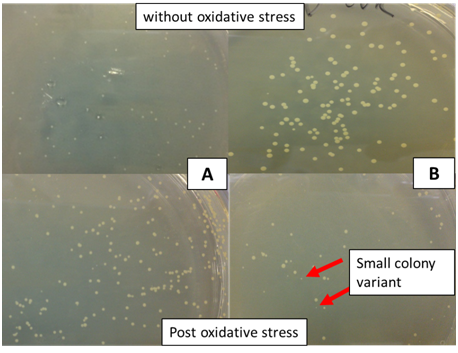 Interestingly, we observed that glycopeptide induction seem to cause the SCV phenotype of tested strains to change into NCs. Acid and alkaline induction did not cause colony phenotype changes. Oxidative stress caused some NCs to change into SCVs in all strains. Strain A (predominantly SCVs) demonstrated persistent infection in the C. elegans infection model; strain B which are predominantly NCs killed the worms in just a short duration of the assay (2 days). It remains to be determined if these in vitro results will be similar in an in vivo setting.