

Familial Hypercholesterolemia Awareness Day 2025
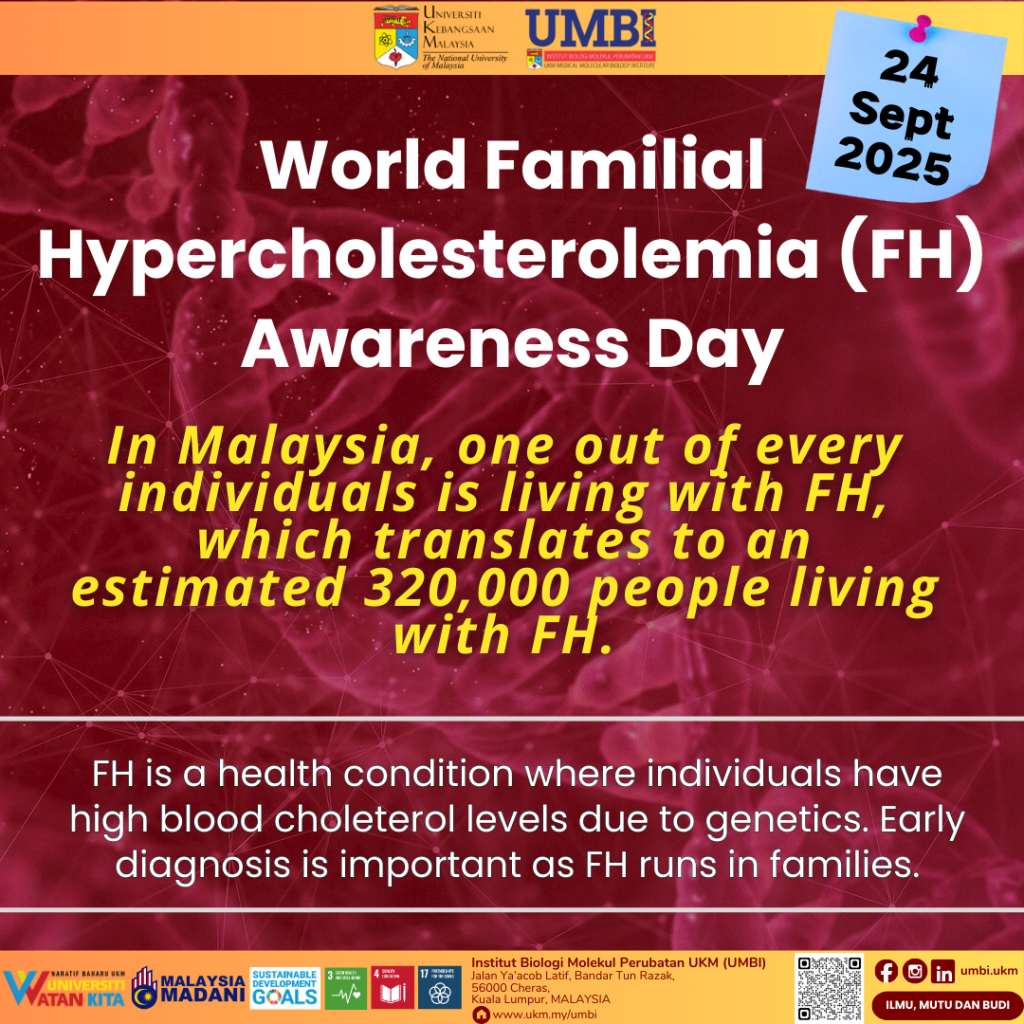
Familial Hypercholesterolemia Awareness Day | September 24, 2025
 Do you know?
- Familial Hypercholesterolemia (FH) is more common than you think. In Malaysia, one out of every 100 individuals is living with FH, which translates to an estimated 320,000 people living with FH.
- FH is a health condition characterised by individuals having high blood cholesterol levels due to genetic factors. Genetic mutation affects the way cholesterol is cleared from the blood, therefore causing a very high level of low-density lipoprotein (LDL).
- Untreated high LDL cholesterol can lead to the buildup of cholesterol in the walls of the arteries, resulting in clogged vessels, which could further lead to Cardiovascular Diseases (CVD) or a heart attack. These conditions eventually increase the risk of heart attack and stroke. Early diagnosis is essential as FH runs in families but is undiagnosed in most individuals.
 Research Highlights from UMBI
At UMBI, we are committed to performing research in FH, enabling us to contribute to meaningful and impactful changes in the community.
Here are some of the things we are doing:
 Understanding the key genes and pathways underpinning hypercholesterolemia-induced atherosclerosis (https://link.springer.com/
Screening of FH genetic mutations in a Malay family affected with FH (https://link.springer.com/
Identification of a novel OSBPL7 (oxysterol-
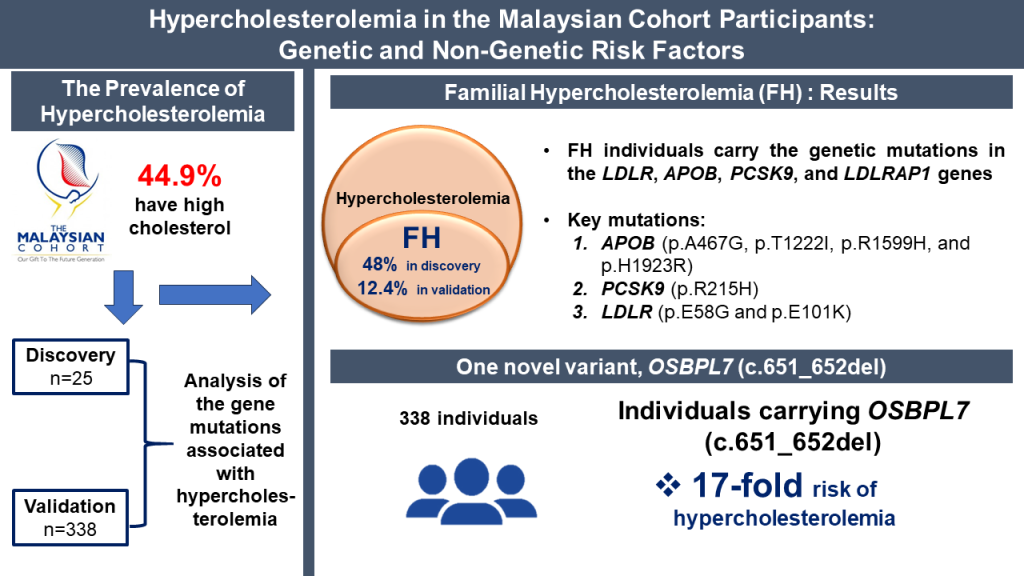
Collaboration with Institute for Research in Molecular Medicine (INFORMM, USM), Institute of Microengineering and Nanoelectronics (IMEN, UKM), and Institute of Nano Electronic Engineering (INEE, UMP) to produce a pilot lateral flow assay to detect the FH mutations for a point-of-care testing tool development (https://pmc.ncbi.nlm.nih.gov/
 We extend our heartfelt gratitude to our grant funders, collaborators, patients, their families, and our dedicated team and staff for their unwavering commitment.
Know your risk and act now! Book our health screening package: https://www.ukm.my/
—
SDG 3 | SDG 4 | SDG 17
Keywords: Diseases, Health, Wellbeing, Education, Global Parnership, Knowledge sharing