

UMBI Research Spotlight No.1/2026
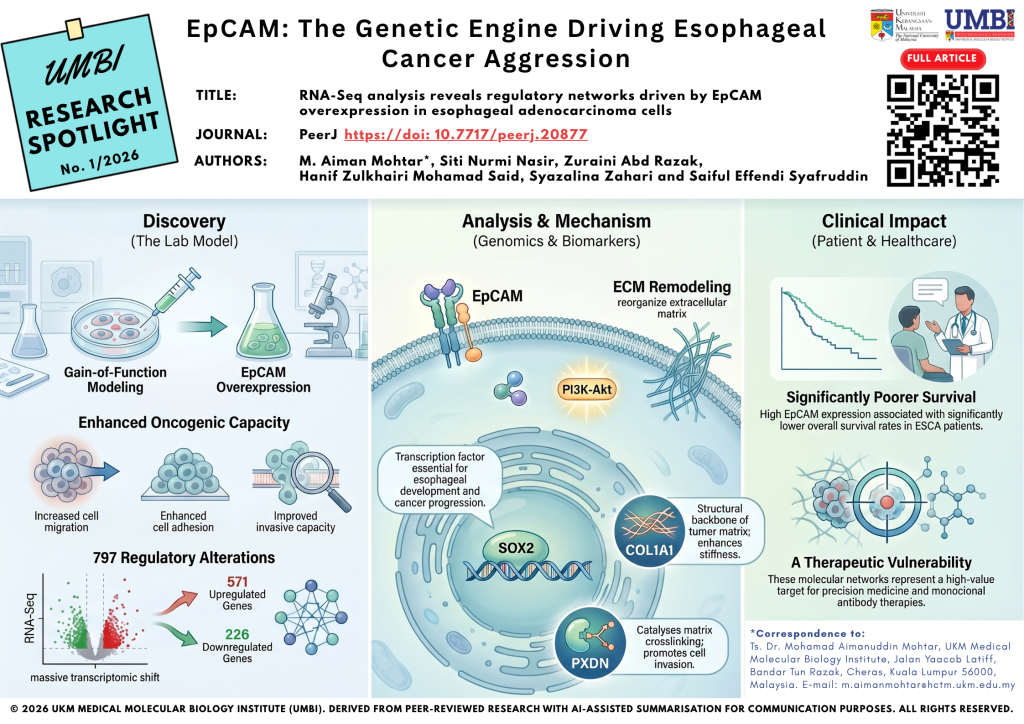
?????: ??? ??????? ?????? ??????? ?????????? ?????? ?????????
UMBI is pleased to share a peer-reviewed publication led by Ts. Dr. Mohamad Aimanuddin Mohtar in PeerJ. The team explored the potential role of EpCAM in the development and progression of esophageal adenocarcinoma (ESCA).
Key highlights from the study include:
- ????? ?????
Researchers investigated the role of the Epithelial cell adhesion molecule (EpCAM) in esophageal adenocarcinoma by using a unique EpCAM-null cell line (FLO-1) to observe the direct effects of the protein without background interference.
- ???????? ??????????????
The reintroduction of EpCAM into these cells significantly increased their pro-tumorigenic behaviors, including enhanced cell migration, adhesion, invasive capacity, and overall survival.
- ?????????????? ?????????????
RNA sequencing revealed that EpCAM acts as a major genetic regulator, significantly altering the expression of 797 genes primarily linked to cell motility, adhesion, and transmembrane activity.
- ???????????????? ??????????
The study identified specific “hub genes,” notably COL1A1 and PXDN, which are upregulated by EpCAM to remodel the extracellular matrix (ECM), effectively creating a supportive environment for the cancer to spread.
- ???????? ????????????
By mapping this EpCAM signaling axis, the research positions EpCAM and its downstream ECM-remodeling effectors as critical therapeutic vulnerabilities and promising biomarkers for future targeted ESCA treatments.
At UMBI, we continue to support research efforts that contribute to a deeper understanding of cancer biology and its translation into meaningful clinical insights.
We invite colleagues and collaborators to explore the full study:
Mohtar MA et al., PeerJ (2026) https://doi.org/10.7717/peerj.20877
We hope this work contributes to ongoing efforts in understanding esophageal cancer and supports future studies aimed at improving patient outcomes.
#Research #CancerBiology #CancerGenomics #TranslationalResearch #PrecisionMedicine #UMBI #UKM #BiomedicalScience
—–
SDG 3 | SDG 4 – Health/Wellbeing, Education, Quality of life