By UKM Communications
Photos by Izwan Azman
KUALA LUMPUR, 28 October 2025 – The Ministry of Communications is drafting new legal frameworks and ethical guidelines to address the challenges of misinformation, disinformation, and unethical digital content.
Among the initiatives in progress are the enforcement of a more comprehensive Anti-Fake News Act, ethical guidelines for social media influencers, and aframework to ensure the responsible and ethical use of artificial intelligence (AI)in media.
Communications Ministry Secretary-General Dato’ Seri Mohamad Fauzi Md Isa said that the ministry has outlined five key focus areas to strengthen Malaysia’s media and communication ecosystem.
“First, media and digital literacy must become part of formal and informal education curricula.
“Intercultural communication in the context of plural Malaysia requires a sensitive and inclusive approach. Our media should be a bridge that connects, not a wall that divides.
“Health communication needs to be strengthened, especially in addressing mental health issues that are increasingly concerning among Malaysians, particularly the youth.
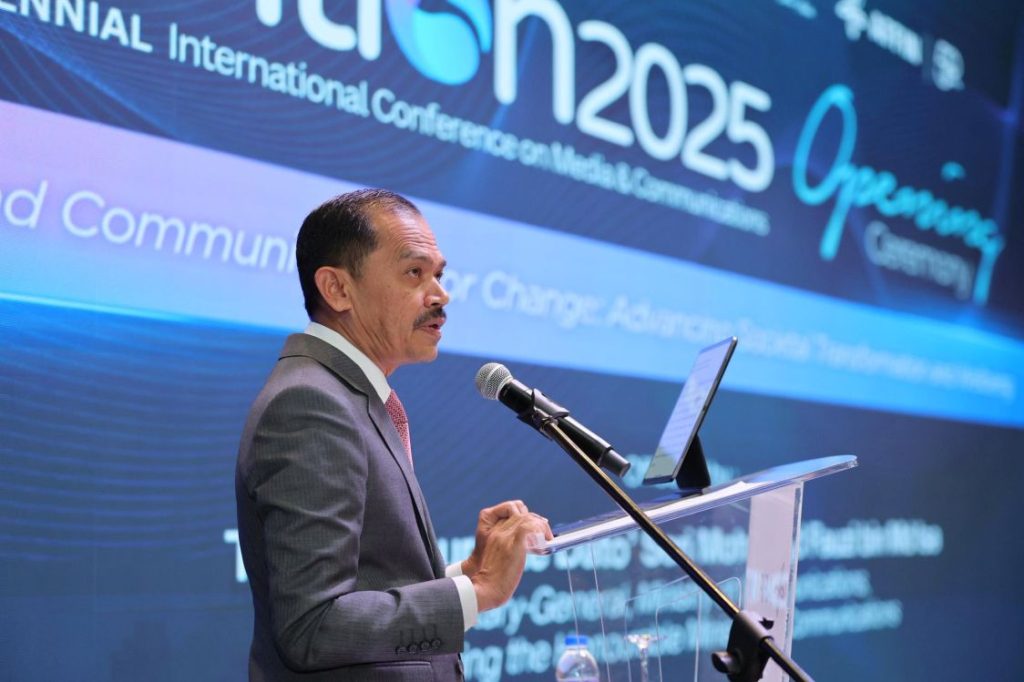
“The role of youth in advocacy and social change cannot be underestimated. They are ‘digital natives’ who understand digital platform dynamics better,” he said during the officiation of the Biennial International Conference on Media and Communications 2025 (MENTION2025).
He also added that cooperation between the government, academia, the media industry, and civil society is essential in developing holistic and effective communication policies.
The conference was organised by Universiti Kebangsaan Malaysia (UKM) Faculty of Social Sciences and Humanities, The Centre for Research in Media and Communication.
Dato’ Seri Mohamad Fauzi praised UKM’s Centre for Research in Media and Communication for its 50 years of contribution to media education and its role in producing communication professionals with technical skills and social responsibility.
“The Ministry of Communications acknowledges the significant contribution of institutions like UKM in providing quality trained workforce for the nation’s media and communication industry.
“I hope the Centre for Research in Media and Communication will continue to be a primary reference in media education and research in this region, in line with technological developments and ever-changing industry needs,” he said.