

End hunger, achieve food security and improved nutrition and promote sustainable agriculture
SDG 2 Indicator
2.5 – National hunger
2.5.2 – Events for local farmers and food producers
In alignment with Sustainable Development Goal 2 (Zero Hunger), UKM has demonstrated a strong commitment to supporting local farmers and food producers through various community-oriented initiatives. UKM consistently provides platforms for knowledge exchange, skill enhancement and networking that strengthen local food systems and sustainable agricultural practices. In 2025, several impactful programs were organized, including the Santuni MADANI Programme, SULAM Community Agriculture Project, Essential Oil–Based Product Processing Technology Program and Micro-Entrepreneurship for Local Empowerment of Asnaf These events conducted collaboratively with industry partners, government agencies and local communities, enabled participants to acquire practical knowledge, innovative techniques and entrepreneurial skills essential for sustainable food production and community resilience.
Summary of the programs
| No | List of programs |
|---|---|
| 1. | Santuni MADANI Programme: Empowering Local Communities Through Hydroponic Farming and Sustainable Food Production |
| 2. | UniMADANI Programme: Empowering Local Communities Through Hydroponic Farming Knowledge and Sustainable Agricultural Technology |
| 3. | SULAM Community Agriculture Project: Promoting Sustainable Farming and Knowledge Transfer |
| 4. | Essential Oil–Based Product Processing Technology Program |
| 5. | Micro-Entrepreneurship for Local Empowerment of Asnaf |
1. Santuni MADANI Programme: Empowering Local Communities Through Hydroponic Farming and Sustainable Food Production
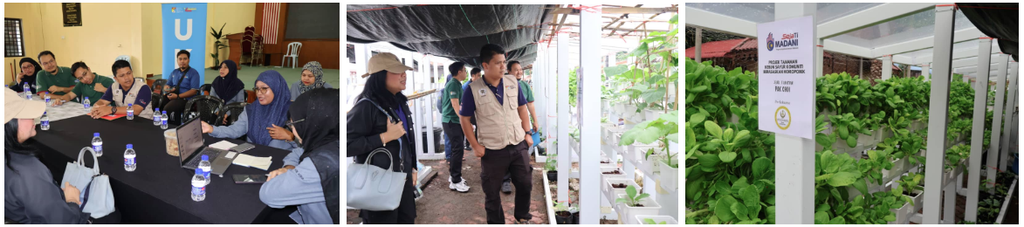
In 2025, UKM through the Santuni MADANI Programme (One Leader, One Village), selected Kampung Telok Kechil, Pulau Pangkor, Perak, to implement the Hydroponic Vegetable Cultivation Project for Food Security. The initiative aims to address challenges associated with limited agricultural land and inconsistent vegetable supplies in island communities by promoting innovative, space-efficient and sustainable farming techniques.
The programme provides opportunities for community engagement, agricultural knowledge sharing and collaboration between UKM and local stakeholders. By introducing hydroponic cultivation, the project seeks to equip local residents and aspiring food producers with practical knowledge of modern vegetable production, efficient resource management and sustainable agricultural practices. It also encourages connections between university experts, community leaders and local growers to strengthen agricultural capabilities and support local food production.
Through this initiative, UKM demonstrates its commitment to facilitating agricultural knowledge transfer, empowering community food producers and promoting sustainable food security solutions.
Source: https://www.ukm.my/i-kom/santuni-madani/
2. UniMADANI Programme: Empowering Local Communities Through Hydroponic Farming Knowledge and Sustainable Agricultural Technology
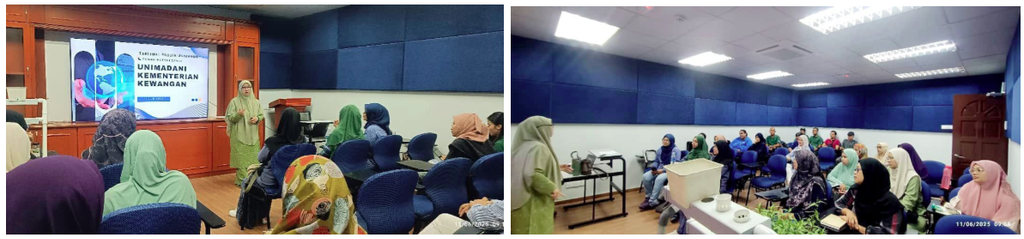
On 11 June 2025, UKM through Bangi Botanical Garden, organised the UniMADANI Programme for Single Mothers and Housewives at the Plant House Complex, Bangi Botanical Garden, UKM. The programme aimed to empower local communities by providing access to agricultural knowledge, modern farming techniques and sustainable cultivation practices, particularly hydroponic farming, as an alternative approach to food production and income generation.
Through interactive learning sessions, participants were introduced to the fundamentals of hydroponic cultivation, including modern agricultural systems and the potential application of sustainable farming products such as Mr Molec. By utilising UKM’s botanical garden facilities as a platform for agricultural education, the programme facilitated knowledge transfer and exposure to sustainable agricultural technologies, enabling participants to explore opportunities in urban farming and small-scale food production. This initiative demonstrates UKM’s commitment to improving community access to agricultural knowledge, skills and technology, particularly among aspiring local food producers.
3. SULAM Community Agriculture Project: Promoting Sustainable Farming and Knowledge Transfer
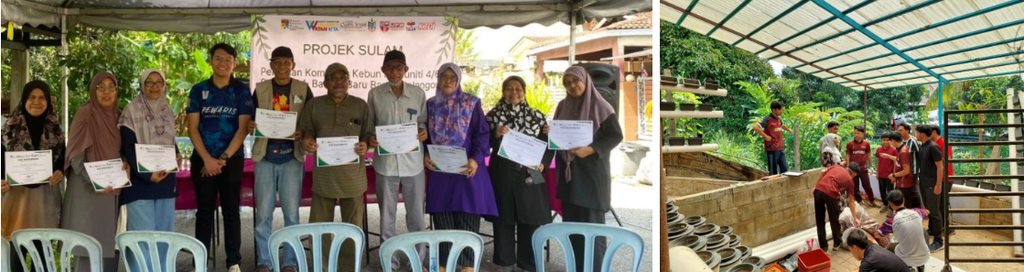
On 20 February 2025, UKM in collaboration with UPM and the local Residents’ Association, organised the SULAM Community Agriculture Project at Community Garden 4/6, Bandar Baru Bangi. The programme brought together 15 participants from UKM and UPM, alongside local residents, to revitalise a community garden that had been abandoned since the COVID-19 pandemic in 2020.
The initiative served as a platform for agricultural knowledge transfer, community engagement and sustainable farming practices. Participants engaged in hands-on activities, including soil preparation, vegetable cultivation, organic fertiliser management and effective crop maintenance techniques. A knowledge-sharing session conducted by Dr. Normala Ismail from UPM’s Faculty of Education provided practical insights into sustainable agricultural methods, enabling local participants to enhance their farming knowledge and skills.
Through this collaborative initiative, UKM facilitated direct interaction between academic institutions and the local farming community, encouraging the exchange of agricultural expertise and practical experience. The programme also promoted urban agriculture, strengthened community participation in local food production and supported long-term food security. This initiative demonstrates UKM’s commitment to organising community-based agricultural activities that connect local food growers with academic experts and facilitate knowledge transfer, contributing to SDG 2 (Zero Hunger) and SDG 17 (Partnerships for the Goals).
Source: https://www.ukm.my/beritaukm/projek-pertanian-komuniti-bangunkan-kebun-terbengkalai/
4. Essential Oil–Based Product Processing Technology Program
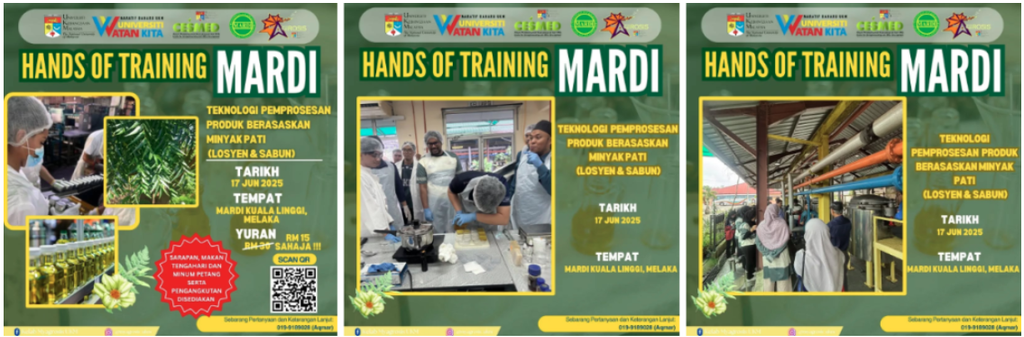
On 17 June 2025, UKM through MyAgrosis Club UKM, in collaboration with the Malaysian Agricultural Research and Development Institute (MARDI) Kuala Linggi and the Centre for Entrepreneurship and SMEs Development (CESMED UKM), organised the Essential Oil–Based Product Processing Technology Programme at MARDI Kuala Linggi. The programme served as a platform for agricultural knowledge transfer, industry engagement and networking, connecting aspiring agropreneurs with agricultural researchers and industry experts to explore sustainable agro-based product development and entrepreneurship opportunities.
Through interactive lectures, practical technology demonstrations, group activities and an aromatic plant site visit, participants gained theoretical and hands-on knowledge of essential oil extraction, processing technologies and value-added agricultural product development. The programme facilitated direct knowledge exchange between MARDI experts and participants, enhancing their understanding of agricultural innovation, product diversification and the commercial potential of locally sourced aromatic plants. It also strengthened essential entrepreneurial competencies, including teamwork, creativity, critical thinking and problem-solving.
By facilitating collaboration between academia, agricultural research institutions and aspiring agropreneurs, UKM provided opportunities for knowledge sharing, technical skills development and professional networking within the agricultural sector. The initiative supported the development of local agro-based enterprises, encouraged the application of innovative processing technologies and contributed to strengthening sustainable agricultural value chains.
Source: https://www.facebook.com/share/p/1DqEFcQi1C
5. Micro-Entrepreneurship for Local Empowerment of Asnaf
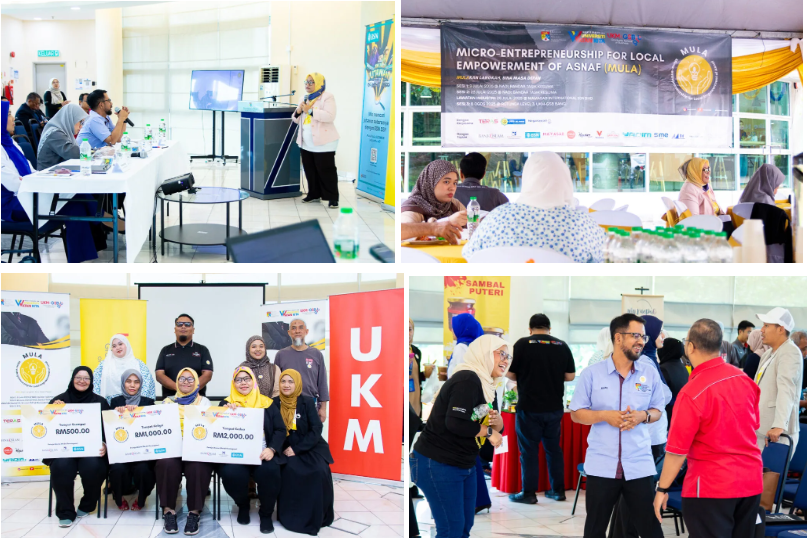
From 9 July to 6 August 2025, UKM, through its Graduate School of Business (UKM-GSB), organised the Micro-Entrepreneurship for Local Empowerment of Asnaf (MULA) programme in collaboration with the Selangor Zakat Board, Asnaf Economic Steering (TERAS), Negarawati Tanahair and Bank Islam Malaysia Berhad. The programme brought together academic experts, financial institutions and five underserved asnaf micro-entrepreneurs involved in food-based businesses, providing a collaborative platform for knowledge transfer, business networking and capacity building among local food producers.
Through structured training, mentorship and practical knowledge-sharing sessions, participants gained essential skills in business management, financial planning, digital entrepreneurship and sustainable business development. The programme successfully mobilised over RM88,000 in sponsorships, with 78% allocated directly to supporting participants through business capital, digital devices and financial management applications. These resources enabled local food entrepreneurs to improve their operational efficiency, strengthen financial literacy, expand market opportunities and develop more sustainable business models.
By connecting local food-based micro-entrepreneurs with university expertise, industry partners and financial institutions, UKM facilitated meaningful knowledge exchange and professional networking opportunities within the local food production sector. The initiative strengthened entrepreneurial capabilities, improved access to business resources and supported the long-term economic resilience of small-scale food producers.
Collectively, UKM’s producer-focused events create practical platforms for knowledge exchange and collaboration beyond the university. By bringing community growers and food-based entrepreneurs together with academic and professional expertise, UKM supports learning in cultivation, food-enterprise management and production-related innovation. These connections strengthen access to relevant knowledge and support networks for local food producers, contributing to more sustainable community food systems.