

End hunger, achieve food security and improved nutrition and promote sustainable agriculture
SDG 2 Indicator
2.5 – National hunger
2.5.3 – University access to local farmers and food producers
Universiti Kebangsaan Malaysia (UKM) supports local farmers and food producers through access to agricultural resources, cultivation facilities and specialist laboratory services. Bangi Botanical Garden provides a platform for engagement with greenhouse cultivation, planting materials and agricultural technologies, while UKM–UNIPEQ offers analytical services supporting food safety and quality management. Community initiatives involving fertigation and hydroponics complement these resources by connecting university expertise with local production needs. Together, these provisions support the application of research and technical knowledge to more sustainable farming and food-production practices, contributing to SDG 2: Zero Hunger.
Summary of the universities facilities
| No | List of universities facilities |
|---|---|
| 1. | Bangi Botanical Garden: A Hub for Sustainable Farming Practices i. Access to Facilities and Resources ii. Greenhouse Farming: Enhancing Year-Round Crop Production iii. Plant House Complex: Supporting Sustainable Agriculture Iv. UKM Bangi Botanical Garden: Supporting Local Food Production Through Access to Agricultural Resources |
| 2. | UKM UNIPEQ: Ensuring Food Safety and Quality for Local Producers i. Food Safety Testing and Compliance ii. Identifying and Mitigating Hazards iii. Food Labelling Analysis for Transparency |
| 3. | MPOB–UKM Research Collaboration: Providing Agricultural Research Facilities, Technology and Scientific Expertise for Sustainable Farming i) MPOB-UKM@Kampung Community Program with the Serian Smallholder Farmer Community, Sarawak ii) Mini Estate Model Development Programme: Promoting Sustainable Agricultural Practices in Temerloh, Pahang iii) One-Day Oil Palm Course with Smallholders: Advancing Sustainable Farming Through Agricultural Mechanisation Research |
| 4. | Santuni MADANI Programme: Empowering Local Communities Through Hydroponic Farming and Sustainable Food Production |
1. Bangi Botanical Garden: A Hub for Sustainable Farming Practices
i. Access to Facilities and Resources
Bangi Botanical Garden, under the Faculty of Science and Technology (FST) at UKM, plays a crucial role in supporting local farmers and food producers, researchers, and citizen scientists by providing access to state-of-the-art facilities. These freely accessible facilities, including laboratories, greenhouses, machinery, plant stocks and plant kits, are invaluable resources open to all. They are essential for advancing sustainable farming practices, providing a hands-on environment for learning, innovation and research. By offering unrestricted access, UKM is committed to empowering the community and supporting a sustainable agricultural future.

ii. Greenhouse Farming: Enhancing Year-Round Crop Production
The greenhouses at Taman Botani Bangi are designed to offer users, especially local farmers the ability to grow crops throughout the year, regardless of external weather conditions. This continuous production capability not only improves yields but also provides a controlled environment for experimenting with new agricultural techniques. Greenhouse farming has become an educational tool at UKM, introducing researchers and farmers to the fundamentals and advantages of this method. Additionally, the facility supports users in bringing their greenhouse products to market, as well as in developing comprehensive business plans to ensure their ventures’ success.


iii. Plant House Complex: Supporting Sustainable Agriculture
Plant House Complex within Bangi Botanical Garden provides essential resources such as fertigation kits, compost fertilizer and soil for planting processes. These resources are crucial for both farmers and researchers who aim to implement sustainable farming practices in their work. The nursery at Bangi Botanical Garden supplies plant stocks and seedlings, which are vital for research conducted in the greenhouses. Furthermore, all products, including fertigation kits and seedlings, are available for sale to the public, farmers and researchers, promoting the widespread adoption of sustainable agricultural methods.


iv. UKM Bangi Botanical Garden: Supporting Local Food Production Through Access to Agricultural Resources
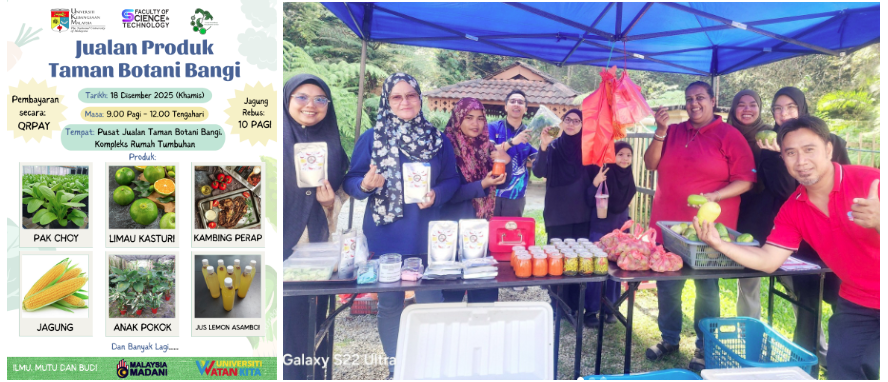
On 16 October 2025, UKM through its Faculty of Science and Technology and Bangi Botanical Garden, organised a local agricultural product sales event at the Bangi Botanical Garden, UKM. The programme showcased locally produced agricultural products, including fresh vegetables, fruits, sweet corn, beverages and plant seedlings. By providing access to its botanical garden facilities and plant nursery, UKM created opportunities for community engagement, agricultural product promotion and access to planting materials. This initiative reflects UKM’s efforts to support local food production, encourage sustainable cultivation and promote the use of university agricultural resources. It contributes to SDG 2 (Zero Hunger) by fostering awareness of sustainable agriculture and strengthening connections between the university and the local community.
Source: https://www.instagram.com/p/DFT6uQ0SQYZ/?img_index=1
2. UKM UNIPEQ: Ensuring Food Safety and Quality for Local Producers
UKM UNIPEQ is a Capability Development Centre at UKM dedicated to advancing the food, agriculture and related industries. It focuses on quality assurance, research, training and consultancy services to support industry growth and innovation, aiming to be a nationally recognized and reputable institution in these sectors. UKM UNIPEQ’s functions include;
i. Food Safety Testing and Compliance
UKM UNIPEQ, the commercial arm of UKM focused on food quality and safety, provides laboratory services that are indispensable for the food industry. These services are designed to ensure that food products meet the highest standards of safety and quality, which are essential for regulatory compliance and consumer trust.
ii. Identifying and Mitigating Hazards
UKM UNIPEQ’s food safety testing services identify and mitigate potential hazards in food products, such as microbial contamination, chemical residues, and allergens. By conducting rigorous testing, UNIPEQ helps local food producers ensure that their products meet stringent safety criteria, which is crucial for protecting public health and maintaining consumer confidence.
iii. Food Labelling Analysis for Transparency
In addition to safety testing, UKM UNIPEQ offers food labelling analysis services, ensuring that product labels accurately reflect the contents and nutritional information. This service is vital for transparency, allowing consumers to make informed choices based on clear and reliable information. By ensuring that food labels comply with regulatory standards and provide accurate details, UKM UNIPEQ helps local producers maintain high levels of consumer trust and meet market demands.

3. MPOB-UKM Endowment Chair
UKM through the MPOB–UKM Endowment Chair, collaborates with the Malaysian Palm Oil Board (MPOB) to advance sustainable agricultural research, technological innovation and knowledge transfer within Malaysia’s oil palm industry. The partnership supports research and development, industry collaboration and capacity building, particularly in addressing sustainability challenges faced by local oil palm smallholders and agricultural communities. UKM’s research capabilities, including scientific laboratories, biotechnology expertise, plant research and environmental sustainability research, are relevant to improving agricultural practices.
i. MPOB-UKM@Kampung Community Program with the Serian Smallholder Farmer Community, Sarawak
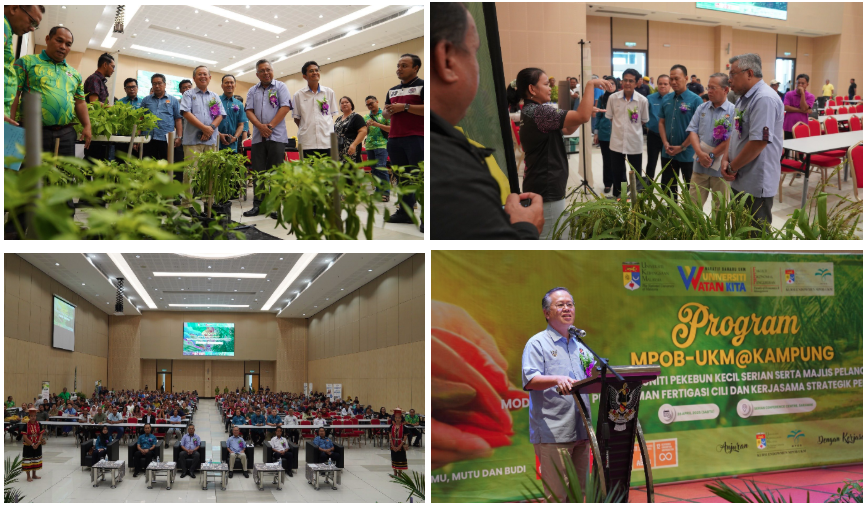
UKM through the MPOB–UKM Endowment Chair, organised the MPOB–UKM@Kampung Programme at the Serian Conference Centre, Sarawak, benefiting over 350 oil palm smallholders and local youth. The programme aimed to connect university research with rural communities by providing access to modern agricultural knowledge, technology and sustainable farming practices.
A key highlight was the launch of the Chilli Fertigation Cultivation Project Module, incorporating Good Agricultural Practices (GAP) to improve farming efficiency, productivity and sustainability. Through strategic collaborations with industry partners, including Yarra and Fertigasi Donn, participants gained exposure to fertigation technology, agricultural inputs, quality standards and commercialisation opportunities. The initiative also promoted fair pricing, improved packaging and continuous capacity building. By facilitating access to research-based agricultural technologies and technical expertise, UKM empowers local farmers to adopt sustainable cultivation methods, diversify agricultural production and strengthen food security.
Source: https://www.facebook.com/share/p/14rgXp4pqVN/
ii. Mini Estate Model Development Programme: Promoting Sustainable Agricultural Practices in Temerloh, Pahang
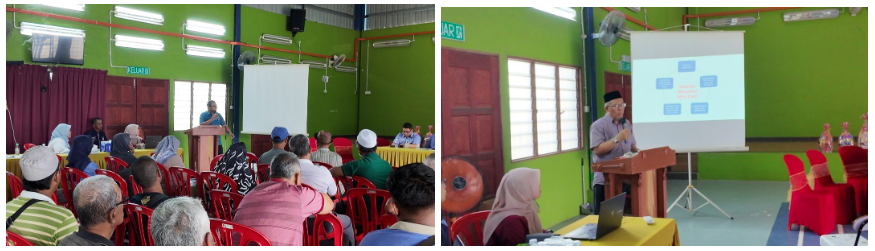
On 7 November 2025, the Mini Estate Model Development Programme was held in Temerloh, Pahang, as an initiative associated with sustainable agricultural development and the empowerment of local farming communities. The programme provides a relevant platform for connecting agricultural research, technical expertise and modern farming approaches with the practical needs of smallholders and local producers. The mini estate model offers opportunities to introduce more systematic farm management, efficient resource utilisation and sustainable cultivation practices. Through university–community collaboration, such initiatives can facilitate knowledge transfer and encourage farmers to explore research-based agricultural technologies that improve productivity and long-term sustainability. This programme is relevant to UKM’s commitment to strengthening sustainable agriculture through technical knowledge and community engagement.
Source: https://www.ukm.my/kursimpobukm/news/program-pembangunan-model-mini-estet-di-temerloh-pahang/
iii. One-Day Oil Palm Course with Smallholders: Advancing Sustainable Farming Through Agricultural Mechanisation Research
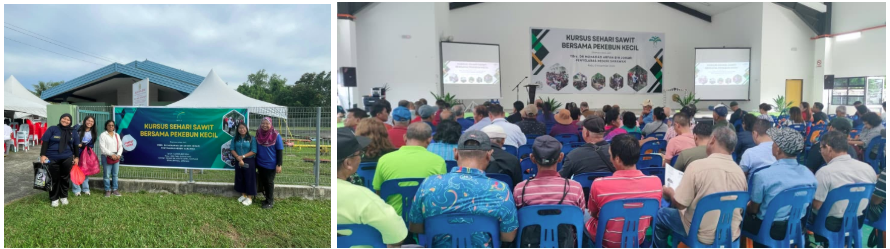
On 5 November 2025, UKM through the MPOB–UKM Endowment Chair, conducted the One-Day Oil Palm Course with Smallholders in Bintulu, Sarawak. The programme provided an opportunity for engagement between university researchers and local oil palm smallholders, supporting knowledge exchange and research on sustainable agricultural practices.
Led by Dr. Cheah Wai Yan, the initiative involved data collection for the research project titled “Feasibility Assessment of Mechanisation Adoption among Stakeholders in the Malaysian Oil Palm Industry.” Through interactive sessions, participating smallholders contributed practical insights into agricultural mechanisation, operational challenges and technology adoption within the oil palm sector. The programme demonstrates UKM’s efforts to connect university research expertise with local farmers, supporting the development of practical mechanisation solutions that could improve farming efficiency, productivity and sustainability.
Source: https://www.facebook.com/share/p/1GaxFHrC7v/
4. Santuni MADANI Programme: Empowering Local Communities Through Hydroponic Farming and Sustainable Food Production
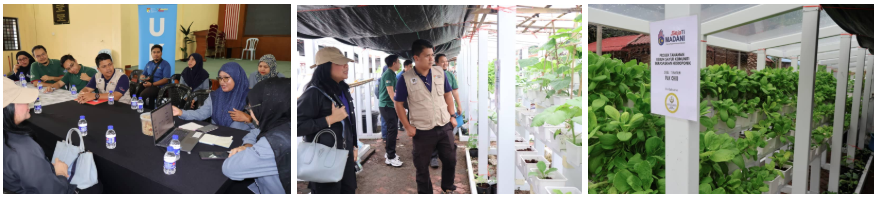
In 2025, UKM through the Santuni MADANI Programme (One Leader, One Village), selected Kampung Telok Kechil, Pulau Pangkor, Perak, to implement the Hydroponic Vegetable Cultivation Project for Food Security. The initiative aims to address limited agricultural land and inconsistent vegetable supplies in island communities by introducing innovative, space-efficient and sustainable farming technologies.
Through this initiative, UKM seeks to provide local food growers with access to university agricultural expertise, hydroponic technology and practical cultivation resources. The project is designed to enable community participants to gain hands-on experience using hydroponic equipment and cultivation systems, while developing practical skills in vegetable production, water-efficient farming and sustainable resource management. By connecting local growers with university experts and agricultural technologies, the programme supports the adoption of modern farming techniques and strengthens community capacity for independent food production.
This initiative demonstrates UKM’s commitment to improving local food producers’ access to agricultural technology and technical resources, promoting sustainable farming practices and strengthening long-term community food security.
Source: https://www.ukm.my/i-kom/santuni-madani/
Collectively, UKM’s agricultural facilities, planting resources and analytical services provide practical links between university capabilities and local food production. Access to these resources can support cultivation trials, informed production decisions and food-quality management. By connecting farmers and producers with relevant technical resources, UKM strengthens its contribution to sustainable agriculture and community food systems.