
Ensure inclusive and equitable quality education and promote lifelong learning opportunities for all
SDG 4 Indicator
4.3 – Lifelong learning measures
4.3.4 – Education Outreach activities beyond campus
Universiti Kebangsaan Malaysia (UKM) demonstrates its commitment to advancing SDG 4: Quality Education through 15 educational outreach initiatives conducted beyond campus in 2025. These initiatives include tailored lectures, interactive demonstrations, hands-on workshops and student-led volunteer programmes delivered to local schools and communities. Covering STEM education, digital literacy, language proficiency, financial literacy and renewable energy, programmes such as Tech Explorer: With Orphans (TEWO), METASkool, Bateq Children’s Literacy Camp and Celik Solar provide inclusive learning opportunities for diverse groups, particularly underserved communities. Through these efforts, UKM promotes lifelong learning, strengthens community engagement and expands equitable access to quality education, empowering individuals with essential knowledge and practical skills.
Summary of the outreach activities beyond campus
| No | List of outreach activities beyond campus |
|---|---|
| 1 | Ad-Hoc Basis i. Tech Explorer: With Orphans (TEWO) ii. Creative Recycling Programme: Empowering Young Innovators for Community Impact iii. Creative Recycling Programme: Empowering Young Innovators for Community Impact at Buku Jalanan Chow Kit iv. STEM-Socioeconomic & Basic Medical Health Screening Programme v. Cyber Awareness Program vi. METASkool Project vii. English Language Camp viii. Learn Machine Learning without the Code ix. AI Literacy Empowerment Workshop x. Smart Fact Clinic (KLICK) xi. Financial Literacy for Disabled Students xii. Future You Programme : Vision Board & Smart Goals xiii. STEM Carnival SMK Jalan 3, Bandar Baru Bangi |
| 2 | On Programmed Basis i. Bateq Children’s Literacy Camp (Kem Literasi Anak Bateq) ii. Celik Solar Programme |
1. AD-HOC BASIS
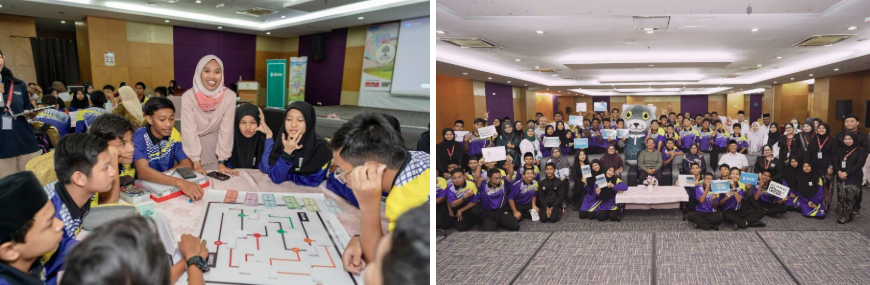
i. Tech Explorer: With Orphans (TEWO)
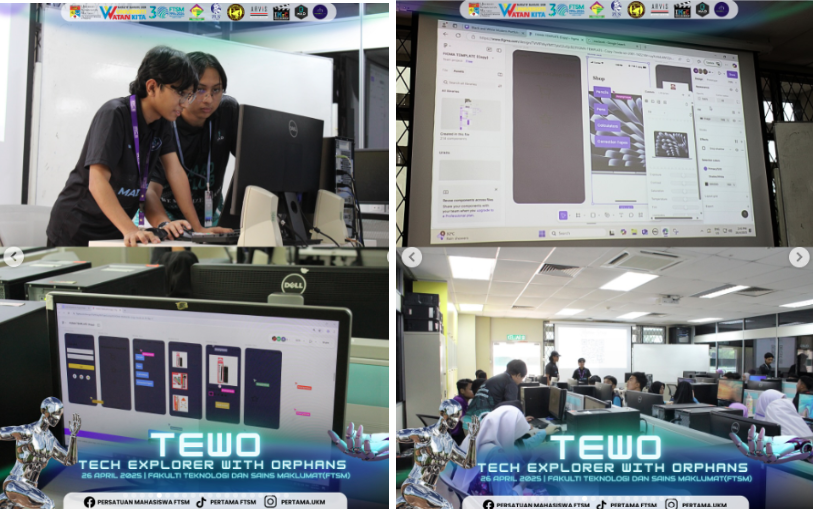
On 26 April 2025, UKM, through the Faculty of Information Science and Technology (FTSM) student society PERTAMA, conducted Tech Explorer: With Orphans (TEWO), a free, student-led educational outreach programme in collaboration with SMK Jalan 3, Bandar Baru Bangi. The full-day initiative involved 32 UKM students and 60 school pupils, providing the participating school children with practical exposure to digital technologies and computing skills beyond their regular classroom learning.
The programme was delivered by UKM students from four FTSM Special Interest Groups: Autonomous Robot & Vision Systems (ARVIS), Programming Club (PC), Interactive Multimedia Club (IMEC), and Mobile Application Development Club (MAD CLUB). Through tailored demonstrations and hands-on learning activities, participants received practical training in fundamental Java programming, infographic poster design, Arduino MBOT robot assembly, and basic mobile application development.
By bringing UKM students’ technological knowledge and skills directly to school pupils, TEWO demonstrates a clear example of student-led educational outreach beyond the university campus. The initiative expanded access to practical digital and STEM education for underprivileged children, including orphans, while encouraging UKM students to apply their academic knowledge through community service. The programme simultaneously supported the development of digital literacy and technical skills among school pupils and strengthened leadership, social responsibility, communication, and community engagement among UKM students.
Source : https://www.instagram.com/p/DJGc5WmBFG0/?img_index=2&stkn=OG4zY2cwazEyemty
ii. Creative Recycling Programme: Empowering Young Innovators for Community Impact
On 24 May 2025, Universiti Kebangsaan Malaysia (UKM), through the Faculty of Engineering and Built Environment, conducted the free “Creative Recycling Programme: Empowering Young Innovators for Community Impact for Schools in the Hulu Langat District”, a targeted STEM educational outreach initiative involving 100 secondary school students from B40 backgrounds. The programme engaged students from four local schools—SMK Jalan Bukit Kajang, SMK Jalan Reko Kajang, SMK Convent Kajang, and SMK Bandar Baru Bangi—and was implemented in collaboration with the Selangor State Education Department, HRD Corp, IEEE UKM Student Branch, and participating schools.
Supported by the IEEE TryEngineering STEM Grant 2025, the programme mobilised 121 university volunteers to provide practical and interactive STEM learning through 17 hands-on learning stations. Using low-cost STEAM kits constructed from recycled materials, participants explored scientific and engineering concepts including electrical circuits, energy conversion, and simple mechanics. The activities applied an iterative engineering-design approach in which students were encouraged to ideate, build, test, evaluate, and improve their solutions, transforming abstract STEM concepts into accessible practical learning experiences.
The programme demonstrated measurable educational outcomes, with participants’ mean STEM concept-understanding scores increasing from 5.7 before the intervention to 8.7 after the programme. The activities were particularly beneficial in supporting lower-performing students, while also strengthening participants’ teamwork, creativity, problem-solving, and practical STEM skills.
The initiative also represents a strong example of university student participation in educational outreach, with 121 volunteers supporting the delivery and facilitation of learning activities. Volunteer reflections indicated improvements in facilitation skills, empathy, and civic motivation through their direct engagement with school students.
Through this initiative, UKM extended its academic expertise beyond the university community by providing tailored, hands-on STEM education to B40 students from local secondary schools. The programme demonstrates UKM’s commitment to widening access to quality education through school outreach, practical demonstrations, project-based learning, and university student-supported community engagement.
Source:https://www.ukm.my/beritaukm/pelajar-ukm-bawa-pengalaman-stem-kepada-pelajar-sekolah-di-hulu-langat/
iii. Creative Recycling Programme: Empowering Young Innovators for Community Impact at Buku Jalanan Chow Kit
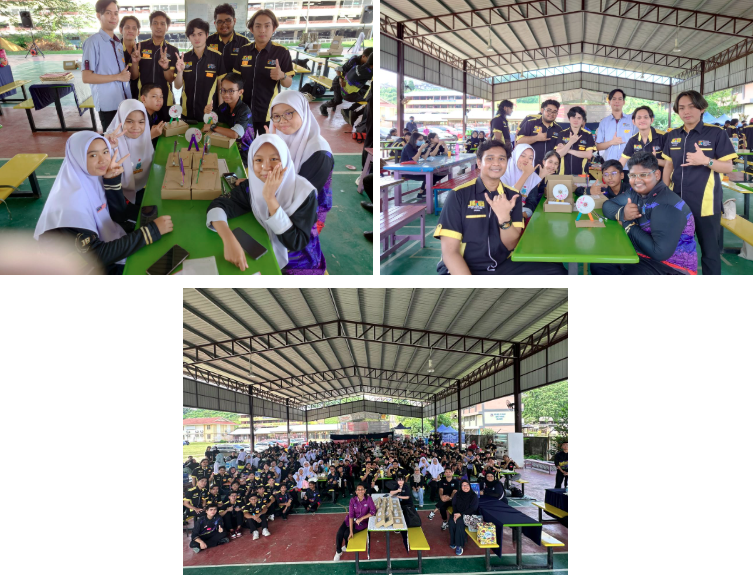
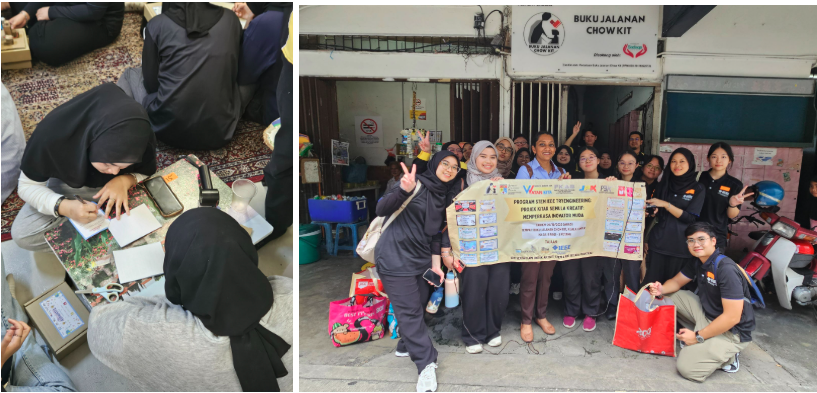
On 26 October 2025, Universiti Kebangsaan Malaysia (UKM), through the Faculty of Engineering and Built Environment, conducted the free “Creative Recycling Programme: Empowering Young Innovators for Community Impact at Buku Jalanan Chow Kit”, an inclusive educational outreach initiative delivered directly within the community. Organised in collaboration with the non-governmental organisation Buku Jalanan Chow Kit (BJCK) and the IEEE UKM Student Branch, with support from the IEEE TryEngineering STEM Grant 2025, the programme provided accessible STEM education to 30 marginalised, undocumented and stateless children aged 6–17.
Guided by 15 university volunteers, participants engaged in tailored, hands-on STEM activities focusing on renewable and non-renewable energy. Using low-cost STEAM kits and locally available recycled materials, including plastic bottle caps, cardboard and old newspapers, participants applied an iterative engineering-design process of ideating, building, testing and improving to construct wind-turbine projects. This approach transformed scientific and engineering concepts into practical demonstrations and experiential learning activities that were accessible to children of different ages and educational backgrounds.
To ensure inclusive participation among children with varying literacy levels, the educational materials were specifically adapted using pictorial and bilingual instructions, complemented by direct, hands-on guidance from university volunteers. This tailored approach enabled participants who might otherwise face barriers to conventional STEM education to actively engage with scientific concepts and practical problem-solving.
The programme demonstrated positive educational and social outcomes, with participants showing improvements in short concept assessments, engagement, confidence and practical problem-solving skills. In addition, reusable educational resources were provided to BJCK to support continued STEM learning within the community after the programme.
Through this initiative, UKM brought university expertise and practical STEM education directly to a marginalised community beyond the university campus. The programme demonstrates UKM’s commitment to inclusive educational outreach through tailored demonstrations, hands-on learning and university student-supported community engagement, while simultaneously developing volunteers’ facilitation skills, empathy and civic responsibility.
Source: https://www.ukm.my/beritaukm/pelajar-ukm-bawa-pengalaman-stem-kepada-kanak-kanak-terpinggir-tidak-berdokumen-dan-tanpa-kerakyatan/
iv. STEM-Socioeconomic & Basic Medical Health Screening Programme
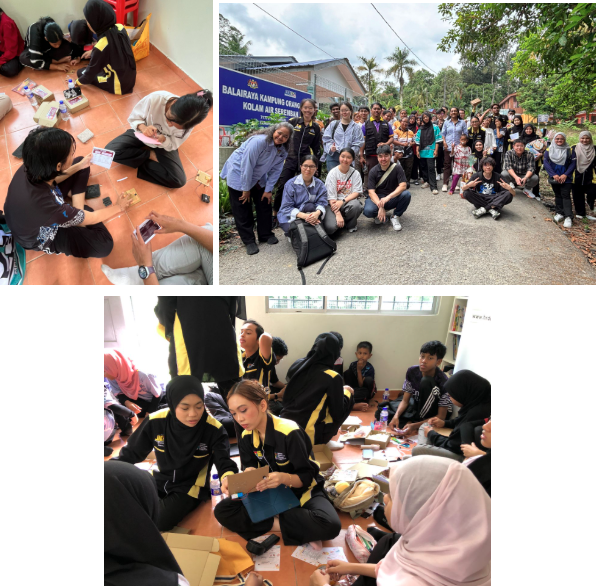
On 18 May 2025, Universiti Kebangsaan Malaysia (UKM) conducted the STEM-Socioeconomic and Basic Medical Health Screening Programme at Kampung Orang Asli Kolam Air, Lenggeng, Negeri Sembilan, providing free educational outreach directly to an underserved community beyond the university campus. The initiative was jointly organised by UKM’s Faculty of Engineering and Built Environment and Faculty of Economics and Management, in collaboration with the Lenggeng State Legislative Assembly Office (Pejabat DUN Lenggeng), Department of Orang Asli Development (JAKOA), HRD Corp, Malaysian Red Crescent Society, and Soqqle Pvt. Ltd.
The programme engaged 37 children and 60 adults and provided contextualised, hands-on STEM learning designed to make science and technology more accessible to the local community. Children participated in interactive STEM modules using recycled-material learning kits and explored virtual reality (VR) technologies, enabling them to learn scientific concepts through practical demonstrations and experiential activities rather than conventional classroom instruction.
The educational activities produced measurable learning outcomes. Participants from Kampung Orang Asli Kolam Air recorded an increase in STEM understanding scores from 4.1 to 6.2, while participating students from SMK Jalan Bukit improved from 5.7 to 8.7 following the programme. These results demonstrate the programme’s contribution to improving participants’ understanding of STEM concepts and expanding access to practical science education.
Alongside the educational activities, the programme provided basic health services, including blood pressure and Body Mass Index (BMI) screenings, further extending UKM’s community engagement to address local wellbeing needs. Through this initiative, UKM brought university expertise, practical STEM education and student-supported learning directly into an underserved Orang Asli community. The programme demonstrates UKM’s commitment to educational outreach beyond campus through tailored demonstrations, experiential learning and community-based activities, while providing participating UKM student volunteers with opportunities to strengthen their teaching, communication, empathy and civic engagement through direct community service.
Source: https://www.ukm.my/beritaukm/pelajar-ukm-bawa-pengalaman-stem-ke-kampung-orang-asli/
v. Cyber Awareness Program
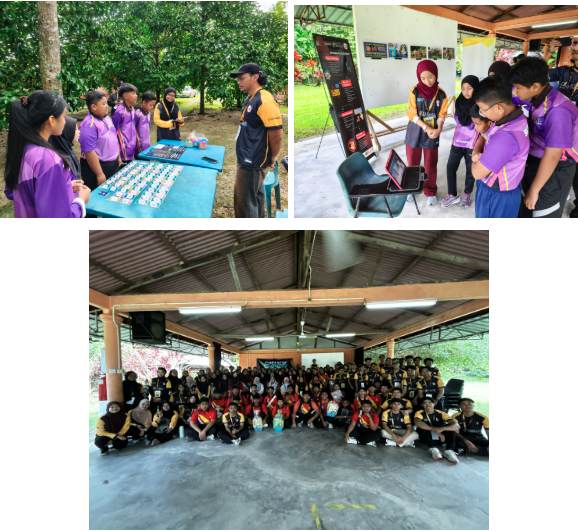
On 15–16 December 2025, UKM, through the Faculty of Information Science and Technology (FTSM) Special Interest Group Cyberhacks & Ethics, conducted the Cyber Awareness Program (Program Prihatin Siber), a free, student-led educational outreach initiative at Kem Seri Juluk, Kuala Nerang, Kedah. Organised in collaboration with Yayasan EZ Prihatin, the programme reached 120 rural underprivileged (asnaf) students aged 10–16 from SK Naka and SMK Naka, with educational activities facilitated by 40 UKM student volunteers.
Through specially designed educational modules, interactive demonstrations, and activities such as the “Ethical Quest” Cyber Explorace, UKM students provided participants with practical learning on digital literacy, cyber ethics, responsible internet use, cyberbullying, online scams, and digital safety. The activities were tailored to the participants’ age group, making important cybersecurity concepts accessible and engaging for school students.
By bringing digital and cybersecurity education directly to schoolchildren in a rural community beyond the UKM campus, the programme demonstrates UKM’s commitment to educational outreach and inclusive access to knowledge. It is also a strong example of a voluntary student-run outreach scheme, in which UKM students applied their academic knowledge to educate and empower an underserved community while developing their own leadership, communication, and social responsibility skills.
Source: https://ftsm.ukm.my/v6/sustainability
vi. METASkool Project
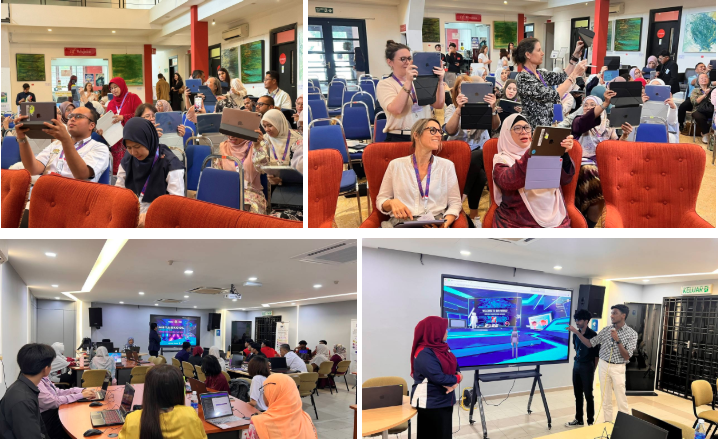
From May to November 2025, UKM implemented the METASkool Project, a free, seven-month educational outreach initiative that brought innovative digital learning directly to approximately 500 students and nine educators across nine pilot schools in Malaysia. Developed by UKM in collaboration with the Malaysia Digital Economy Corporation (MDEC), Ministry of Digital, and Ministry of Education, the project extended university expertise beyond campus by introducing school communities to immersive, metaverse-based teaching and learning.
Through the project, UKM supported participating teachers and students in integrating Web 2.0 and Web 3.0 technologies using the Spatial.io platform. More than 18 specialised virtual “Metaverse Worlds” were developed to support interactive learning across multiple subjects, including STEM and languages. The initiative provided participating educators with practical exposure and guidance in designing 3D and immersive pedagogical environments, while students experienced technology-enhanced learning designed to strengthen engagement, digital literacy, creativity, and knowledge retention.
By engaging directly with schools and providing tailored digital education experiences for both teachers and students, METASkool demonstrates UKM’s educational outreach beyond the university campus and its contribution to strengthening digital teaching and learning within Malaysian school communities. The initiative also supported wider national efforts to enhance digital education and prepare educators and students with skills relevant to an increasingly technology-driven learning environment.
educational accessibility.
Source: Link : https://www.ukm.my/metaskool/
vii. English Language Camp
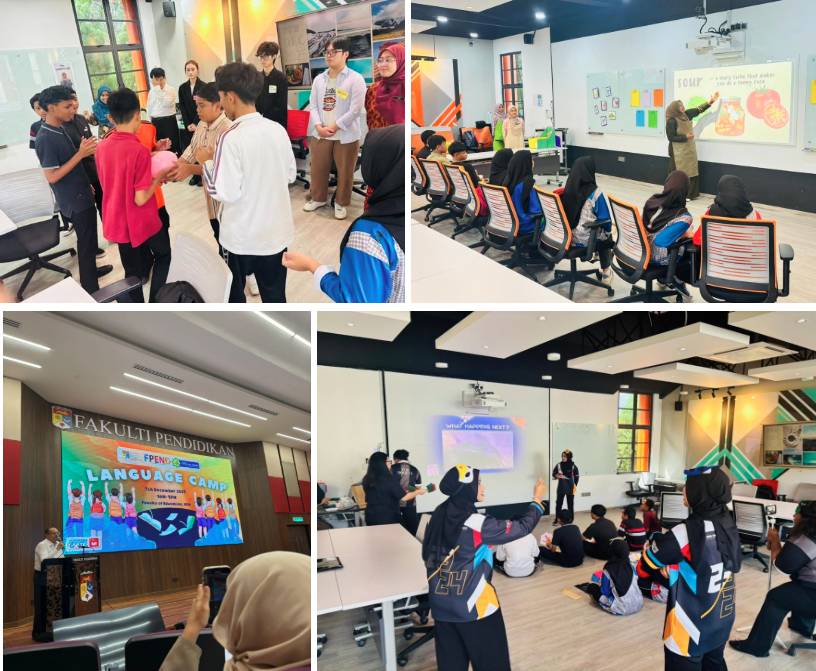
On 6–7 December 2025, UKM, through its Faculty of Education, conducted the English Language Camp (Program Perkemahan Bahasa Inggeris / Penguasaan Murid Baitul Hasanah) as a free, fully sponsored educational outreach initiative for 84 underprivileged students and four guidance teachers from Baitul Hasanah. Organised in collaboration with the Selangor Zakat Board (Lembaga Zakat Selangor – LZS) and Baitul Hasanah, the two-day programme extended UKM’s educational expertise beyond the university community by providing structured and engaging English-language learning activities.
Using a Service Learning approach, the programme mobilised 9 UKM lecturers and 334 undergraduate Teaching of English as a Second Language (TESL) students to deliver tailored, face-to-face English-language activities and practical learning sessions. The activities were designed to strengthen participants’ English communication skills, language proficiency, and confidence, while providing personalised guidance and an interactive learning environment.
The programme also served as a student-led community engagement platform, enabling UKM TESL students to apply pedagogical knowledge and teaching methods in a real-world community setting under the guidance of academic staff. Through this initiative, UKM demonstrated its commitment to educational outreach beyond campus by bringing university expertise and student-led learning activities directly to an underserved community, expanding access to quality educational opportunities while simultaneously strengthening the professional teaching competencies of its students.
Source: https://www.facebook.com/fpend.ukm/posts/pfbid025crQgC8x1BYACE7xfEde3wwM29D2WDWUQd4e7C34zNS2KKmRa5ihnD76AnNnHkdXl?rdid=JQI3XaKjB9xt4FEq#
viii. Learn Machine Learning without the Code
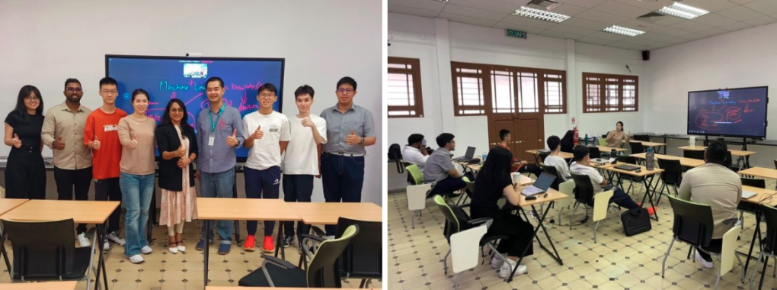
On 21 January 2025, Universiti Kebangsaan Malaysia (UKM), through the Institute for Environment and Development (LESTARI), extended its academic expertise beyond campus through the interactive workshop “Learn Machine Learning without the Code” at Wawasan Open University (WOU), Penang. The workshop was delivered by Ts. Dr. Lim Chen Kim of UKM and hosted by WOU’s School of Digital Technology (DiGiT).
Designed to make Artificial Intelligence (AI) and Machine Learning (ML) accessible without requiring traditional programming skills, the session combined tailored instruction, practical demonstrations, and hands-on exercises. Participants were introduced to fundamental ML concepts, including problem-solving processes, model selection, and performance evaluation using real-world data. They also gained practical experience in developing predictive models through no-code platforms, demonstrating how algorithms and data interact in real-world applications.
This off-campus educational outreach activity demonstrates UKM’s contribution to extending university knowledge and expertise to external learners, strengthening digital literacy and practical AI competencies beyond the UKM campus.
ix. AI Literacy Empowerment Workshop (AIYOH)
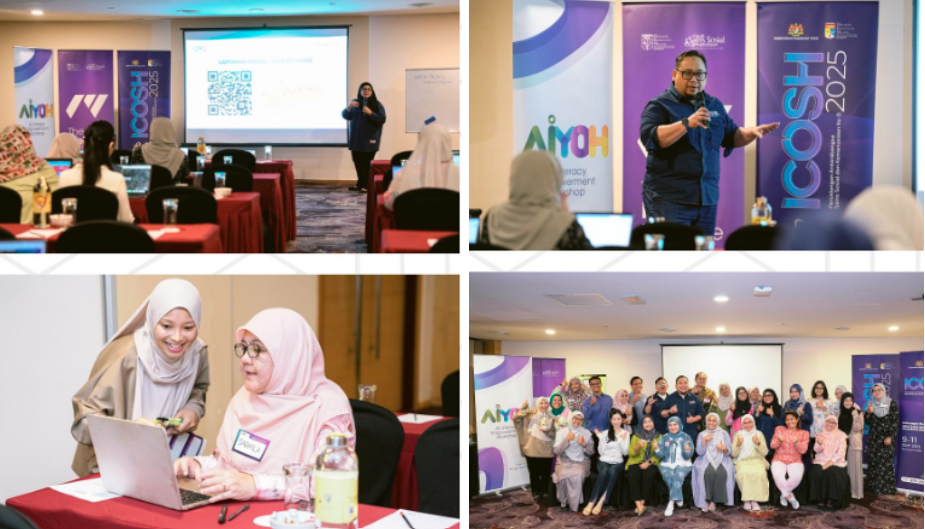
Running from August 6 to December 22, 2025, the free AI Literacy Empowerment Workshop (AIYOH) was spearheaded by The Media Initiative at the UKM Faculty of Social Sciences and Humanities in strategic partnership with Google Asia Pacific and 17 other Malaysian higher education institutions. This five-month capacity-building program engaged 223 journalism students and media educators across 11 nationwide workshops to address the ethical and effective use of Artificial Intelligence in the modern media landscape. By developing a dedicated AI Literacy module and establishing a network of 15 Master Trainers, the initiative ensured sustainable institutional capacity building and long-term educational growth. The program delivered a profound impact on students and staff by actively fostering critical thinking regarding AI ethics and bias, effectively empowering future media professionals to navigate AI-powered newsrooms with high accountability, integrity, and practical technological competence.
x. Smart Fact Clinic (KLICK)
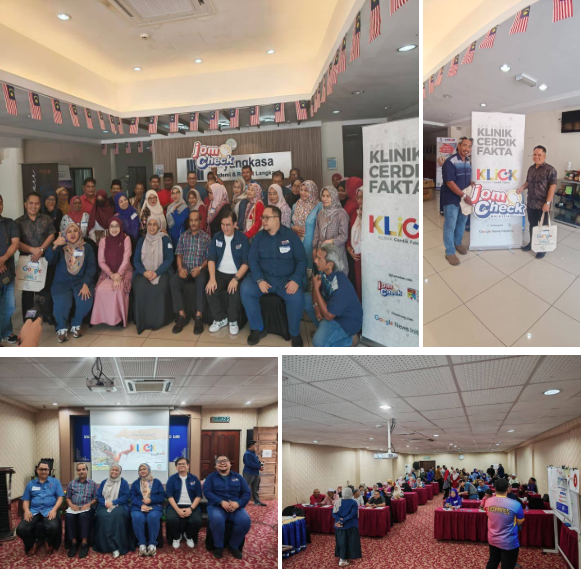
Conducted throughout the year from January 1 to December 22, 2025, the free Smart Fact Clinic (KLICK) was an expansive educational outreach program organized by The Media Initiative to combat digital misinformation. Through a five-part national series targeting teachers, students, and local households, UKM through Faculty of Social Sciences and Humanities (FSSK) collaborated closely with the Ministry of Education Malaysia, the Village Development and Security Committee (JPKKP) of Kampung Tepa in Langkawi, INTI International University & Colleges, and Universiti Malaysia Sabah. Engaging over 188 participants across various demographics, the tailored workshops and interactive exhibitions provided hands-on training in media and information literacy. This initiative created a highly measurable social impact by significantly increasing participants’ self-efficacy and confidence in fact-checking and identifying credible sources. Ultimately, the program built robust community resilience against disinformation and fostered sustainable knowledge transfer by establishing a dedicated network of informed citizens equipped to propagate responsible media consumption practices.
xi. Financial Literacy For Disabled Students
On 17 March 2025, MBA students from the UKM Graduate School of Business (UKM-GSB) conducted the Financial Literacy Programme for Students with Disabilities at Hotel Seri Malaysia, Kepala Batas, Penang. The outreach initiative engaged 60 students with disabilities from SMK Pendidikan Khas Bumbong Lima and was supported by Bank Simpanan Nasional (BSN), the RHB-UKM Endowment Fund, Alkhair Malaysia, ALF Agency Sdn Bhd and Koperasi Tunas Muda Sungai Ara Berhad.
The programme delivered accessible and interactive financial education through financial simulation games, practical learning activities and guidance from banking and financial-planning professionals. Key learning areas included income management, financial planning, saving, investment, risk management and the use of digital financial instruments. By bringing practical financial education to students with disabilities beyond the university campus, the initiative demonstrates UKM’s educational outreach to underserved communities, providing tailored learning opportunities that strengthen financial knowledge, independent decision-making and future financial well-being.
Source: https://www.utusan.com.my/berita/2025/03/program-literasi-kewangan-bantu-pelajar-oku-urus-kewangan-dengan-lebih-baik/
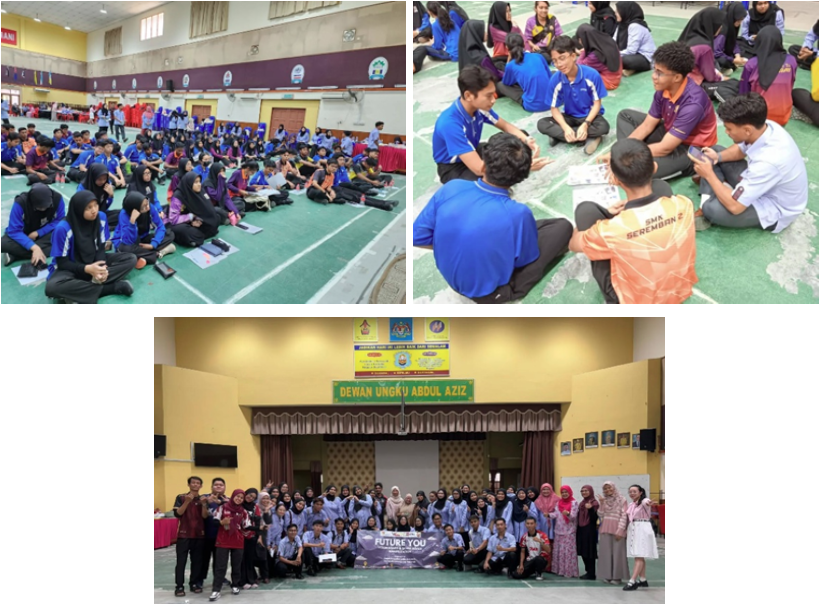
xii. Future You Programme: Vision Board & Smart Goals
On 21 June 2025, the School of Liberal Studies (CITRA), Universiti Kebangsaan Malaysia (UKM) conducted the “Future You: Vision Board & Smart Goals” programme at SMK Seremban 2, involving 40 UKM undergraduate students enrolled in the LMCR1102 Volunteer Community Service course and 100 Form 5 secondary school students.
As an off-campus, student-led educational outreach initiative, UKM students served as programme facilitators and directly engaged secondary school students through interactive educational activities focusing on self-empowerment, goal manifestation and personal development. The programme also incorporated activities aimed at strengthening English language proficiency and essential soft skills among both the school participants and UKM student facilitators.
Through this voluntary student-led initiative, UKM extended educational engagement beyond the university campus by transferring knowledge and skills directly to secondary school students in the wider community. The programme demonstrates UKM’s commitment to community-based educational outreach, while simultaneously developing leadership, communication, facilitation and community-engagement skills among its student volunteers.
Source : https://www.ukm.my/citra/aktiviti/
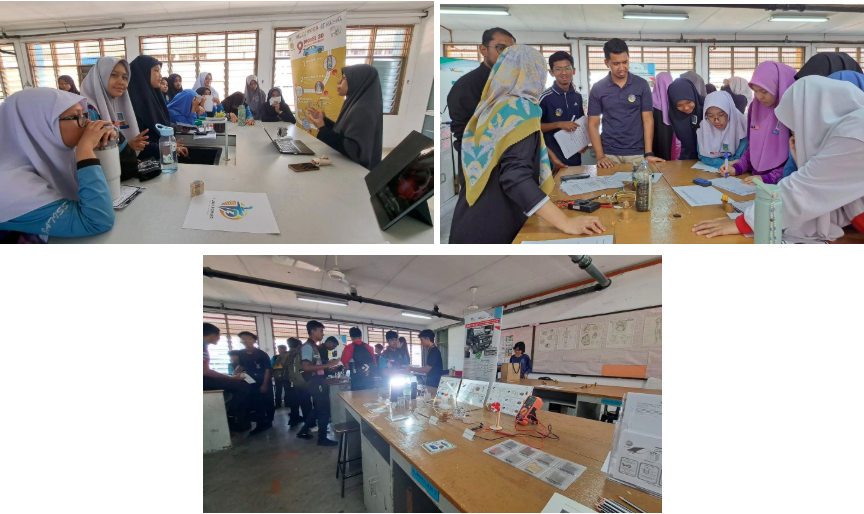
xiii. STEM Carnival SMK Jalan 3, Bandar Baru Bangi
On 30 April 2025, Universiti Kebangsaan Malaysia (UKM), through the Department of Food Sciences, Faculty of Science and Technology, participated in the “Great Mind, Dazzling STEM” STEM Carnival at SMK Jalan Tiga, Bandar Baru Bangi.
As an off-campus educational outreach initiative, UKM’s Food Microbiology and Biotechnology Group directly shared scientific knowledge with secondary school students, particularly on food safety and beneficial and harmful microorganisms in everyday life. The activities provided students with accessible exposure to scientific concepts outside the conventional classroom setting, with the aim of expanding their knowledge and stimulating greater interest in science and technology.
By bringing university expertise directly into a local secondary school, the initiative demonstrates UKM’s commitment to educational outreach beyond campus, facilitating knowledge transfer between university academics and school students while strengthening engagement between higher education and the local school community.
Source: https://www.ukm.my/jsmn/news/penyertaan-jabatan-di-karnival-stem-smk-jalan-tiga/
2. ON PROGRAMMED BASIS
i. Bateq Children’s Literacy Camp (Kem Literasi Anak Bateq)
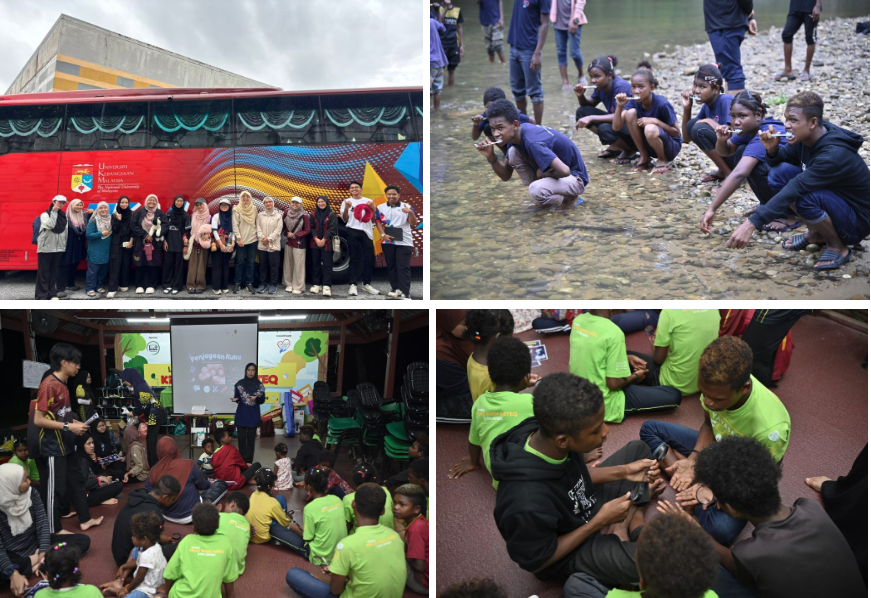
On 3rd to 5th October 2025, a group of 10 students from the Chemistry Cluster, accompanied by five staff members from the Faculty of Science and Technology (FST), Universiti Kebangsaan Malaysia (UKM), travelled to Pos Changkung, Sungai Keniam, Taman Negara to conduct the Bateq Children’s Literacy Camp.
The programme was a community service initiative aimed at supporting the Bateq community through sustained educational and community well-being activities. A second group of students was scheduled to continue the programme the following week, ensuring continuity of the planned activities.
Building on previous outreach initiatives, the camp focused on developing basic literacy and numeracy skills among Bateq children, particularly in Malay Language, English Language, and Mathematics. Learning activities were delivered through a relaxed, interactive, and activity-based approach, creating an engaging, accessible, and effective learning environment for the children.
In addition to its educational component, the programme incorporated health and personal hygiene awareness through simple activities adapted to the needs and context of the local community. UKM students also gained valuable experiential learning beyond the classroom, strengthening their empathy, intercultural communication skills, and understanding of the realities faced by Indigenous communities.
The programme reflects FST UKM’s continuing commitment to supporting the sustainable development agenda, particularly in advancing quality education and reducing inequalities within underserved communities. It also served as an important platform for cultivating volunteerism and social responsibility among UKM students.
Source: https://www.facebook.com/share/p/18UrQkuzPU/
ii. Celik Solar Program
The Celik Solar program is an initiative by Assoc. Prof. Dr. Suhaila Sepeai from the Solar Energy Research Institute (SERI) to translate the field of solar energy to the community. Dr. Suhaila developed the Celik Solar program which targets students aged 9-12 to gain knowledge about solar energy. Celik Solar participants are exposed to renewable energy, the benefits of the sun, solar energy technology, solar car manufacturing, solar power systems at home, ways to save electricity and career opportunities in the field of solar energy. This program can be expanded to other community centers in Malaysia.
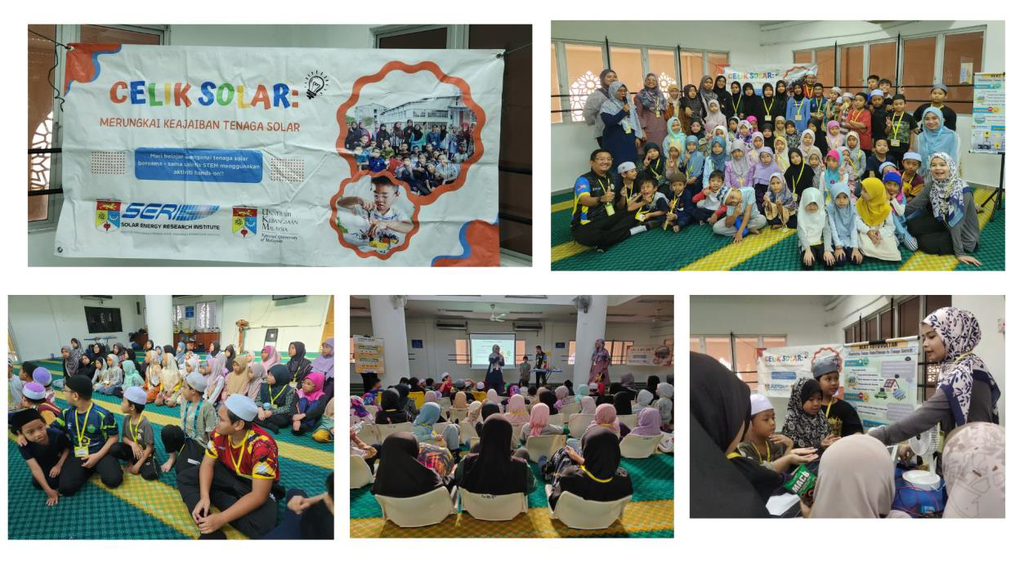
In 2025, UKM conducted the Celik Solar (Solar Literacy) educational outreach programme at two community/school settings, providing age-appropriate education on renewable energy, solar technology, energy efficiency, and STEM. On 22 January 2025, the Celik Solar programme at Madrasah Tahfiz Deeniyat Lil Ummah (MADLA) targeted children aged 9–12 years in Bangi Perdana, with an estimated 80 participants. The programme used a learning-through-play approach to introduce solar energy, the importance of the sun as a renewable energy source, solar panels and their operation, household electricity savings, and career opportunities in the solar sector. The programme was specifically intended to increase children’s awareness of sustainable energy while stimulating their interest in STEM.
Rather than relying solely on lectures, the programme incorporated interactive demonstrations and hands-on learning, including energy-related videos, solar-themed learning stations, displays of solar products and prototypes, exploration of solar cells and household solar systems, solar-panel angle activities, and the construction and racing of solar-powered cars. The programme’s intended learning outcomes included understanding renewable solar energy, applying solar technologies in everyday life, understanding how solar power systems operate, and identifying practical electricity-saving behaviours.
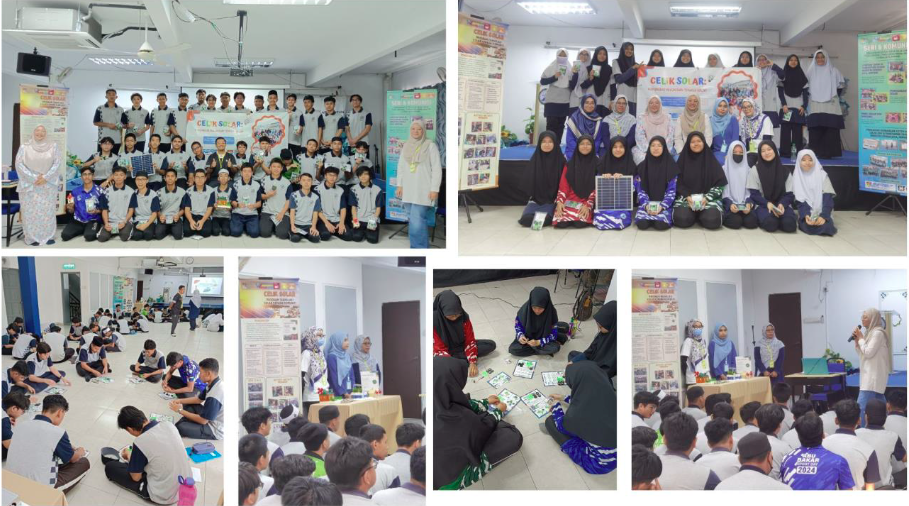
UKM extended this outreach to Sri Ayesha Islamic School on 12 June 2025, where the programme was specifically adapted for students aged 16–17 years. At this level, Celik Solar connected solar technology with science concepts already taught in school—including energy, electricity, light intensity, current-voltage relationships, and electrons—and applied these concepts to solar-cell technology. Students were also introduced to residential solar systems, electricity savings, and careers in the solar-energy sector.
The secondary-school programme provided particularly strong evidence of tailored lectures, demonstrations and practical learning. Participants learned the physics and operating mechanisms of solar cells and constructed solar-powered cars, followed by a solar-car competition. They also participated in a treasure-hunt learning activity involving solar power systems, solar-panel angle exploration, and a solar power system demonstration.
Together, these Celik Solar programmes demonstrate UKM’s educational outreach to the wider community by transferring university-level expertise in renewable energy and solar technology into age-appropriate, interactive and hands-on learning experiences for children and secondary-school students. The initiatives extend STEM and sustainability education beyond conventional university teaching while promoting renewable-energy awareness, practical energy-saving behaviour and interest in future STEM careers.
Source: https://www.facebook.com/share/1DX1ScNNVg/?mibextid=wwXIfr