

Ensure access to affordable, reliable, sustainable and modern energy for all
SDG 7 Indicator
7.4 – Energy and the community
7.4.2 – 100% Renewable Energy Pledge
Universiti Kebangsaan Malaysia (UKM) promotes the renewable-energy transition beyond campus by connecting its sustainability commitments with public engagement, research exchange and collaboration with external stakeholders. The UKM Sustainability Policy 2030 and Sustainability Strategic Plan 2030 provide the institutional context for renewable-energy adoption and energy efficiency. Platforms such as the Smart Technology and Sustainability International Conference and the 6th Sustainability Challenge 2025 extend this engagement to universities, industry and public-sector participants. Through these activities, UKM encourages discussion of clean-energy solutions and collective action towards a lower-carbon future, providing opportunities to communicate and build support for a public commitment to 100% renewable energy.
Summary of the program promote a public pledge toward 100% renewable energy
| No | 100% renewable energy promotion programs |
| 1 | UKM Sustainability Policy 2030 |
| 2 | UKM Sustainability Strategic Plan 2030 |
| 3 | Smart Technology and Sustainability International Conference (STSTIC 2025) |
| 4 | 6th Sustainability Challenge 2025 |
1. UKM Sustainability Policy 2030
Universiti Kebangsaan Malaysia (UKM) is committed to achieving a 100% Renewable Energy Pledge by 2040 as part of its UKM Sustainability Policy 2030. This ambitious goal is rooted in transitioning campus operations entirely to renewable energy sources, minimizing reliance on fossil fuels, and advancing environmental stewardship within higher education.
The 100% Renewable Energy Pledge at UKM:
- Renewable Energy Transition: UKM is focusing on increasing renewable energy sources, such as solar power, biomass, and other clean energy technologies, across its campus facilities. This includes ongoing solar installations on rooftops and other renewable projects.
- Energy Efficiency Initiatives: To reduce energy demand, UKM is upgrading infrastructure to be more energy-efficient, including LED lighting, HVAC improvements, and a robust Building Management System (BMS) to optimize energy use in real-time.
- Research and Innovation: UKM is investing in research on future renewable energy technologies, such as hydrogen energy, and building partnerships with industry leaders to foster innovation in sustainable energy solutions.
- Educational Integration: The pledge also emphasizes educating the university community on sustainable practices and the importance of renewable energy. This includes embedding sustainability principles into the curriculum and conducting workshops and programs focused on renewable energy and conservation.
- Carbon Reduction Goals: This 100% Renewable Energy Pledge aligns with UKM’s Zero Carbon Campus 2040 target, aiming to drastically reduce greenhouse gas emissions, contributing to a cleaner, more sustainable future for the university and beyond.
Through this pledge, UKM demonstrates a leadership role in sustainable development and sets a powerful example for institutions globally by committing to a renewable, eco-friendly future that aligns with the United Nations’ Sustainable Development Goals (SDGs).
https://drive.google.com/file/d/1vgtfjC2HMoGnDElREWC_BiAD5jTTTZhg/view?pli=1
2. UKM Sustainability Strategic Plan 2030
i. Developing a policy on saving and affordable energy
As part of its commitment to the 100% Renewable Energy Pledge, UKM is enhancing building energy efficiency with a comprehensive policy on energy savings and affordability. This policy provides clear guidelines for implementing energy-efficient practices across campus, including using sustainable materials, advanced energy-saving technologies, and renewable energy sources in building upgrades. Prioritizing cost-effective measures such as LED lighting, optimized HVAC systems, and automated energy management, this policy ensures long-term savings and environmental benefits. It also supports continuous monitoring and evaluation of energy usage, enabling UKM to track progress and make data-driven adjustments in real time. By formalizing its commitment to energy savings and affordability, UKM is creating a sustainable, cost-effective campus that aligns with its renewable energy goals and sets a benchmark for carbon footprint reduction in higher education (page 38).
ii.Upgrading facilities based on energy saving equipment
In line with its 100% Renewable Energy Pledge, UKM is upgrading its facilities with advanced energy-saving equipment to boost energy efficiency and reduce environmental impact. This initiative includes replacing outdated systems with high-efficiency alternatives, such as LED lighting, low-energy HVAC systems, and automated building controls that adjust energy use based on real-time needs. By installing solar panels and other renewable energy sources on rooftops, UKM is reducing reliance on external power and increasing its renewable energy capacity. The university’s investment in smart energy management systems ensures optimized operation, minimizes waste, and reduces operational costs, contributing to UKM renewable energy goals. These upgrades showcase UKM’s dedication to a sustainable campus and leadership in energy-efficient practices, setting a high standard for institutions in Malaysia and beyond (page 38).
iii. Upgrading energy management
As part of its 100% Renewable Energy Pledge, UKM is significantly enhancing energy efficiency through comprehensive upgrades in energy management across campus. The implementation of a Centralized Energy Management System (CEMS) allows UKM real-time control and monitoring of energy consumption in all buildings. This system enables precise adjustments in heating, cooling, and lighting based on occupancy and environmental conditions, ensuring optimal energy use and reducing unnecessary consumption. Incorporating predictive analytics, these energy management upgrades forecast demand, allowing for proactive maintenance and efficiency improvements. Smart meters integrated into the system provide detailed data on energy usage, identifying areas for further optimization and quickly addressing energy leaks. Through these advancements, UKM achieves substantial energy and cost savings, aligning with its renewable energy pledge, fostering a culture of sustainability, and reinforcing its leadership in building a low-carbon, sustainable campus (page 39).

Source: www.ukm.my/kelestarian/data/publications/UKM-SUSTAINABILITY-STRATEGIC-PLAN-2030.pdf
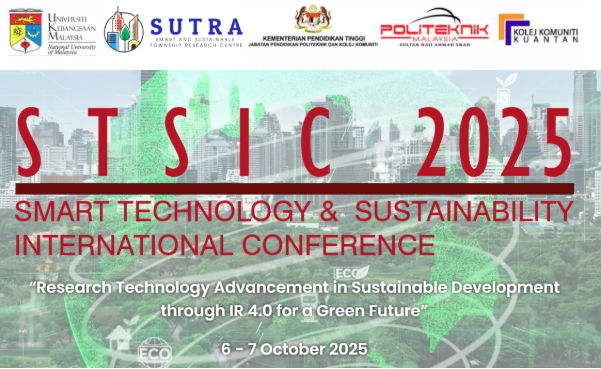
3. Smart Technology and Sustainability International Conference (STSTIC 2025)
On 6-7 October 2025, the Smart Technology and Sustainability International Conference (STSTIC 2025) is a conference co-hosted by Universiti Kebangsaan Malaysia, Politeknik Sultan Haji Ahmad Shah and Kolej Komuniti Kuantan, Pahang that brought together a diverse range of participants from academia, industry, and government to foster collaboration and knowledge sharing in the field of sustainable energy and smart technology. This international platform was supported by counterparts Universitas PGRI Madiun (Indonesia), Guangxi Polytechnic Of Construction (China), Politeknik Negeri Jakarta (Indonesia) and Institute Of Brunei Technical Education (Brunei) on board as our strategic partners. Additionally, this programme is also proudly supported by the Malaysia Board of Technologists (MBOT), reflecting strong governmental commitment to advancing renewable energy and energy efficiency initiatives. The program was aimed to raise awareness in the field of smart technology and sustainability and facilitate the sharing of experiences and knowledge among professionals, academics, and researchers from various countries.Participants will present their research findings and case studies in smart technology and sustainability, and these presentations will be published in international journals.
Source:https://emc.ukm.my/stsic-2025/
4. 6th Sustainability Challenge 2025
UKM promotes public engagement and collective action towards decarbonisation and the transition to a sustainable, low-carbon future beyond the university through sustainability-focused events, discussions, knowledge exchange and collaboration with external stakeholders.
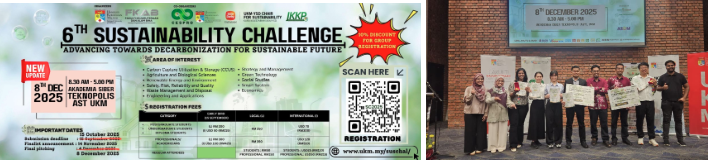
The 6th Sustainability Challenge 2025, held on 8 December 2025 and themed “Advancing towards Decarbonization for Sustainable Future,” aimed to raise awareness, encourage innovation and foster collaboration among universities, industries and other stakeholders in addressing climate change and accelerating decarbonisation. The programme brought together 150 participants from 54 groups, representing local and international universities, industries and external organisations. It also featured exhibition booths showcasing sustainability-related innovations, products and services.
The event provided a public platform for discussions, knowledge sharing and stakeholder engagement on decarbonisation, sustainable technologies and pathways towards a low-carbon future, extending UKM’s sustainability advocacy beyond the university community. Through these engagements, UKM encourages external stakeholders to support and participate in the transition towards renewable energy and net-zero emissions, contributing to broader societal awareness and collective action for sustainable development.
Source: https://www.ukm.my/suschal/ ,
https://www.ukm.my/sms/6th-sustainability-challenge-2025/ , https://www.facebook.com/share/p/1BnegcaTFa/
UKM’s sustainability frameworks and external engagement provide a foundation for promoting wider participation in the renewable-energy transition. By bringing research, innovation and stakeholder dialogue together, the university supports understanding of clean-energy pathways beyond its campus. An explicit, publicly accessible pledge towards 100% renewable energy, communicated through these platforms and supported by a defined scope and target year, would strengthen the connection between UKM’s institutional commitments and its contribution to SDG 7: Affordable and Clean Energy.