

Reduce inequality within and among countries
SDG 10 Indicator
10.6 – Measures against discrimination
10.6.3 – Access to University Underrepresented Groups Recruit
UKM implements planned institutional initiatives to recruit students, administrative staff and academic faculty from under-represented groups through targeted outreach, inclusive admission pathways, transparent recruitment and diversity monitoring.
For student recruitment, UKM participated in nationwide education fairs, particularly Karnival Jom Masuk U 2025, hosting the Central Zone II event at its Bangi campus on 10–11 May 2025, which attracted over 50,000 visitors. UKM also participated in community-level outreach, including Mini Karnival Pendidikan DUN Dusun Tua, to engage prospective students from rural, low-income and underserved communities. Additionally, UKM provides alternative admission pathways through APEL.A and APEL.Q for working adults and non-traditional learners.
For workforce recruitment, UKM advertises management, professional and support staff vacancies through Kerjaya@UKM, while academic positions are promoted through KerjayaAkademik@UKM. These platforms facilitate transparent, structured and merit-based recruitment, providing equal employment opportunities to qualified candidates from diverse backgrounds, including ethnic minorities, Indigenous Peoples and persons with disabilities (PWDs). UKM also upholds the national public-sector target of 1% employment representation for PWDs.
In 2025, UKM employed 8,258 staff, including 66 from ethnic minority communities, two Orang Asli and 53 PWDs. These institutional diversity records provide a basis for identifying representation gaps and informing future recruitment strategies.
UKM’s Planned Initiatives to Promote Inclusive Recruitment of Students, Staff and Faculty from Under-Represented Groups (2025)
| No | Key Initiatives | Implementation and Achievements in 2025 | Target Groups |
| 1 | Proactive Student Recruitment through Education Fairs and Outreach Programmes | UKM participated in nationwide education fairs, including Karnival Jom Masuk U 2025, and hosted the Central Zone II event on 10–11 May 2025. . | Students from rural areas, low-income households, underserved communities and other under-represented groups |
| 2 | Alternative Admission Pathways through Accreditation of Prior Experiential Learning (APEL) | UKM implemented APEL.A and APEL.Q to widen access to higher education for non-traditional learners. | Working adults, non-traditional learners and individuals without conventional academic qualifications. |
| 3 | Inclusive Recruitment of Management and Support Staff | UKM implemented transparent and structured recruitment through the Kerjaya@UKM online platform, providing employment opportunities to qualified candidates from diverse backgrounds. | Persons with disabilities, ethnic minorities, indigenous communities and other under-represented groups |
| 4 | Inclusive and Transparent Academic and Faculty Recruitment | UKM advertised academic vacancies through the KerjayaAkademik@UKM platform across various faculties. | Qualified academic candidates from diverse backgrounds, including ethnic minorities, indigenous communities and persons with disabilities. |
| 5 | Institutional Diversity Monitoring and Disability Inclusion | UKM maintained institutional diversity records to identify representation gaps and inform recruitment planning. | Ethnic minorities, Orang Asli, persons with disabilities and other under-represented communities. |
1. Proactive Student Recruitment Through Education Fairs and Outreach
UKM actively promotes inclusive access to higher education through its participation in education fairs, university exhibitions and nationwide student recruitment programmes. These initiatives aim to reach prospective students from diverse socioeconomic, ethnic and geographical backgrounds, particularly those from rural areas, low-income households and other under-represented communities.
One of the major initiatives was Karnival Jom Masuk U 2025, organised by the Ministry of Higher Education (MOHE). The nationwide carnival covered various locations across Peninsular Malaysia, Sabah and Sarawak, providing opportunities for students from rural, remote and underserved communities to explore higher education pathways. On 10–11 May 2025, UKM hosted Karnival Jom Masuk U (Central Zone II) at its Bangi campus, attracting more than 50,000 visitors. The event provided prospective students with information on academic programmes, admission requirements, financial assistance and alternative pathways to higher education.
Beyond national-level education fairs, UKM also participated in Mini Karnival Pendidikan DUN Dusun Tua 2025, held at SMK Abdul Jalil, Hulu Langat, Selangor, on 9 October 2025. This community-level education carnival provided an additional platform for UKM to engage with prospective students at the local level, extending educational outreach beyond the university campus. Such participation supports efforts to increase awareness of higher education opportunities among school students, including those who may face geographical, socioeconomic or informational barriers to university admission.
Through its participation in national and community-level education fairs, UKM demonstrates a proactive approach to student recruitment by expanding access to university information, encouraging applications from diverse backgrounds and promoting equitable opportunities to pursue higher education.
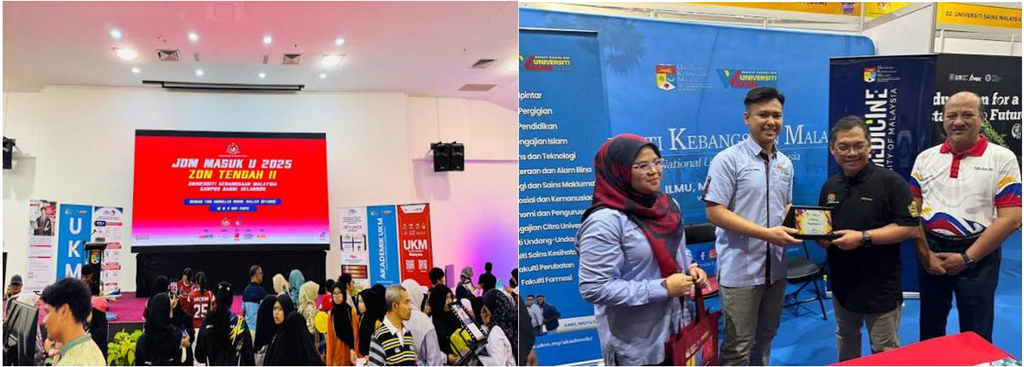
on 10–11 May 2025, and other education outreach activities demonstrates its commitment to expanding access to higher education. These initiatives provide opportunities for prospective
students from diverse backgrounds, including rural, low-income and under-represented
communities, to explore academic programmes and admission pathways
2. Alternative Admission Pathways for Non-Traditional Students
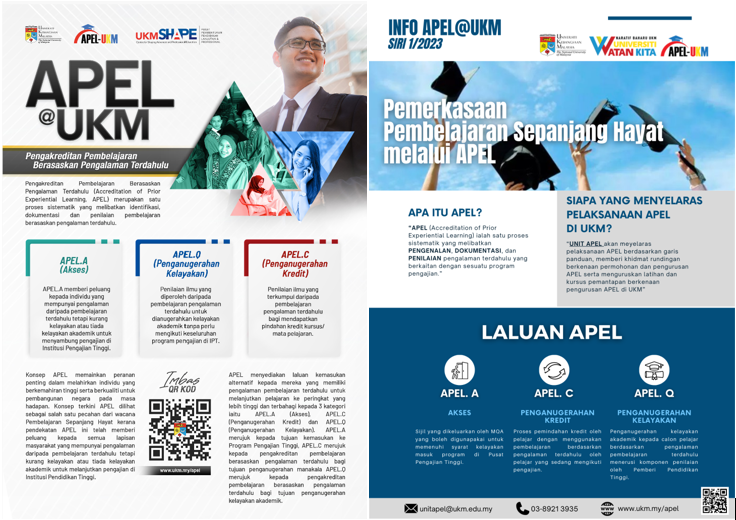
UKM implements the Accreditation of Prior Experiential Learning (APEL) framework to expand opportunities for working adults and individuals without conventional academic qualifications. Through APEL.A, applicants may gain access to higher education based on recognised experiential learning, while APEL.Q provides a pathway towards academic qualifications through assessment of prior learning and professional competencies.
In 2025, UKM recorded 197 APEL.A applications with 121 successful offers, alongside 253 APEL.Q applications with 29 successful qualification outcomes. These initiatives demonstrate structured efforts to broaden educational participation among non-traditional learners.
3. Inclusive Recruitment of Management and Support Staff
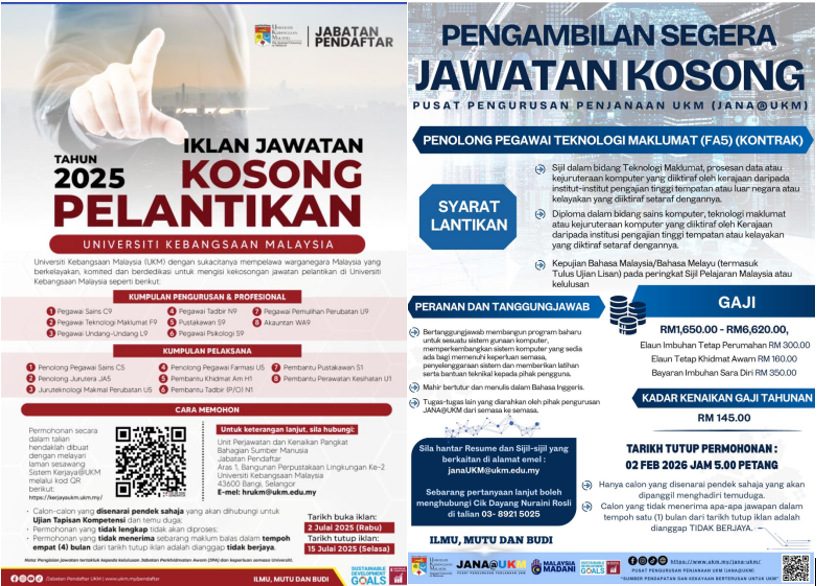
UKM conducts formal recruitment for Management and Professional as well as Support Staff positions through publicly advertised vacancies and its online recruitment system, Kerjaya@UKM. In 2025, recruitment advertisements invited qualified Malaysian citizens to apply for available positions, with applications assessed against specified eligibility requirements and selection procedures.
UKM is also committed to upholding the Malaysian Government’s 1% Employment Policy for Persons with Disabilities (PWDs) in the Public Sector through inclusive recruitment practices that promote equal employment opportunities and greater participation of persons with disabilities in the university workforce.
This structured recruitment approach provides opportunities for qualified candidates from diverse backgrounds, including ethnic minorities, indigenous communities and persons with disabilities, to compete for university employment.
4. Academic and Faculty Recruitment
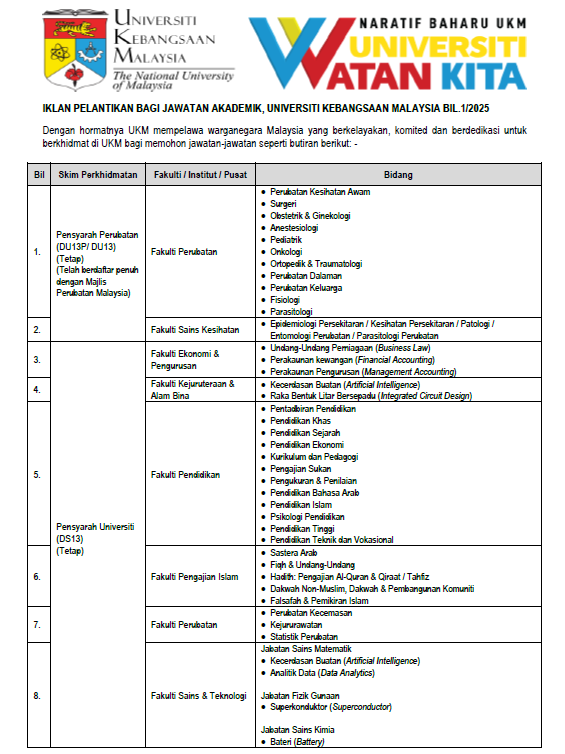
UKM implements inclusive and transparent academic recruitment practices through publicly advertised lecturer and academic appointments, ensuring equitable employment opportunities for qualified candidates from diverse backgrounds, including under-represented groups such as ethnic minorities, indigenous communities and persons with disabilities (PWDs).
In 2025, UKM advertised academic positions across various faculties, including Medicine, Education, Science and Technology, Engineering and other academic disciplines. Applications are managed through the KerjayaAkademik@UKM platform, providing a structured, accessible and merit-based recruitment process that promotes equal opportunities, workforce diversity and inclusive participation in academic careers. These initiatives reinforce UKM’s institutional commitment to reducing employment barriers and strengthening the representation of under-represented groups within its academic workforce.
5. Institutional Commitment to Diversity and Disability Inclusion
UKM’s recruitment and inclusion commitments are supported by institutional workforce monitoring. In 2025, UKM employed 8,258 staff members, including 66 employees from ethnic minority communities, two Orang Asli employees and 53 employees with disabilities. The university also recorded 1,709 ethnic minority students and 37 Orang Asli students.
These records provide an evidence base for identifying representation gaps and informing future recruitment planning. UKM also recognises the national higher education inclusion target of 1% employment representation for persons with disabilities.
Collectively, UKM demonstrates a systematic and proactive institutional approach to recruiting students, administrative staff and academic faculty from under-represented groups through coordinated outreach programmes, inclusive admission pathways, structured employment recruitment and evidence-based diversity monitoring. Initiatives such as Karnival Jom Masuk U 2025, APEL and dedicated academic and non-academic recruitment platforms reflect UKM’s sustained efforts to expand opportunities for disadvantaged and diverse communities. Supported by institutional workforce diversity data and the national 1% employment target for persons with disabilities, these measures provide a foundation for identifying representation gaps and strengthening future recruitment strategies. By embedding inclusive recruitment practices into institutional planning, UKM advances equal opportunities, social mobility and meaningful participation in higher education and employment, reinforcing its commitment to SDG 10: Reduced Inequalities.