
Protect, restore and promote sustainable use of terrestrial ecosystems, sustainably manage forests, combat desertification, and halt and reverse land degradation and halt biodiversity loss
SDG 15 Indicator
15.2 – Supporting Land Ecosystems Through Education
15.2.5 – Sustainable Management of Land for Agriculture and Tourism (Educational Outreach)
Universiti Kebangsaan Malaysia (UKM) promotes sustainable agricultural land management through educational outreach that connects research expertise with practical training for smallholders, agricultural officers and local communities. Guided by the UKM Sustainability Strategic Plan 2030, these initiatives integrate sustainability education with community engagement to strengthen knowledge and skills for responsible land use and local food production.
In 2025, UKM’s programmes included Good Agricultural Practices-based fertigation learning for 350 smallholders in Serian, knowledge transfer on smart agriculture and flood-risk management for 53 KADA officers, rehabilitation of an abandoned community garden in Bandar Baru Bangi, and urban farming instruction for 22 local women. Through collaboration with agricultural agencies, university partners and residents’ organisations, participants gained exposure to crop diversification, soil preparation, organic fertiliser management and cultivation in limited spaces. Together, these programmes translate university knowledge into locally relevant learning opportunities that support sustainable agricultural practices, climate resilience and SDG 15: Life on Land.
UKM Education Sustainable Management of Land for Agriculture and Tourism Programs
| No | UKM Education Sustainable Management of Land for Agriculture and Tourism Programs |
| 1 | MPOB–UKM@Kampung: Sustainable Farming Outreach for Serian Smallholders |
| 2 | LESTARI–KADA Knowledge Transfer on Sustainable Rice Farming in Kelantan |
| 3 | UniMadani Urban Farming Workshop: Community Education on Sustainable Use of Agricultural Space |
| 4 | Project SULAM: Community Farming and Sustainable Agricultural Land Management |
1. MPOB–UKM@Kampung: Sustainable Farming Outreach for Serian Smallholders
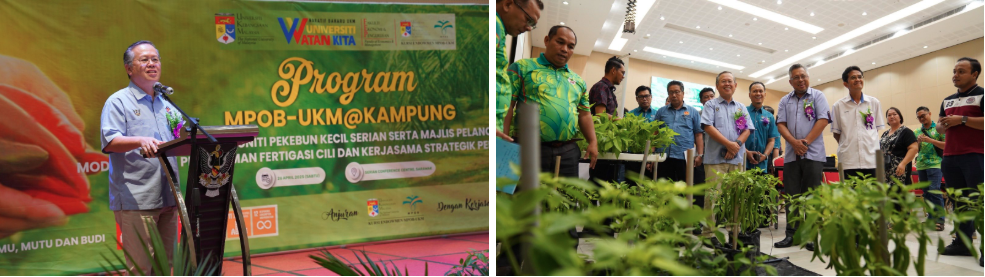
On 26 April 2025, Universiti Kebangsaan Malaysia (UKM) researchers collaborated with the Malaysian Palm Oil Board (MPOB), its Serian TUNAS officers, the Serian Fertigation Association and the local smallholder community to organise the MPOB–UKM@Kampung Community Programme in Serian, Sarawak. The free outreach initiative engaged 350 oil palm smallholders and launched a chili fertigation planting project. It aimed to connect academic research with rural communities, introduce modern farming methods and strengthen smallholders’ economic opportunities.
The programme introduced a chili fertigation module based on Good Agricultural Practices (GAP), giving participants a practical approach to diversifying the use of agricultural land alongside oil palm cultivation. It also covered produce quality and packaging standards to meet market requirements, fair pricing mechanisms and continued capacity development. Discussions on supply arrangements with companies such as Yarra and Fertigasi Donn connected the farming activities with potential markets, while exposure to safety and protection matters in the palm oil industry broadened participants’ understanding of responsible agricultural practice.
By combining hands-on agricultural learning with support for production and market access, the programme demonstrates UKM’s educational outreach to a rural farming community on the sustainable management of land for agriculture.
Source: https://www.facebook.com/share/p/1HzPXRibsF/
2. LESTARI–KADA Knowledge Transfer on Sustainable Rice Farming in Kelantan
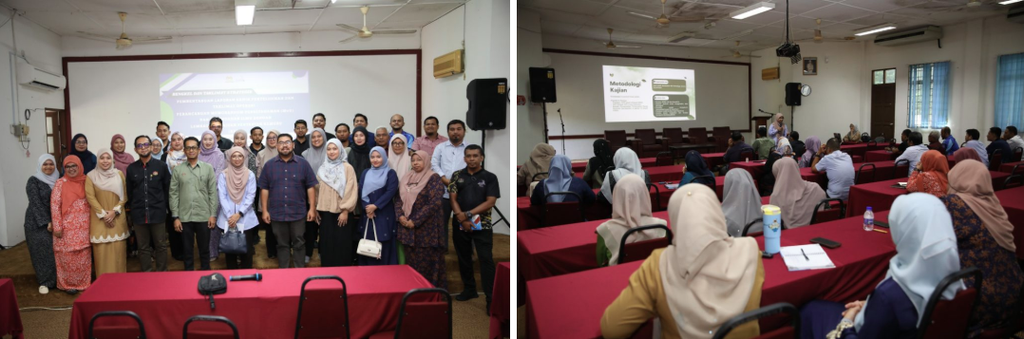
Universiti Kebangsaan Malaysia (UKM), through its Institute for Environment and Development (LESTARI), provided free educational outreach on sustainable agricultural land management in collaboration with the Kemubu Agricultural Development Authority (KADA). At the Melor Agricultural Training Centre in Kelantan, the partners held a strategic briefing workshop on 29 December 2025 and a knowledge transfer course on 30 December 2025. Fifty-three KADA officers from various divisions participated, gaining research-based knowledge to support their technical and operational work in Kelantan’s rice-growing areas.
The programme focused on smart agriculture, flood risk management and the development of evidence-based training modules. It connected UKM’s field research with the work of an agricultural agency that supports farmers, with the aim of improving farming practices, climate resilience and food security. UKM and KADA also presented the final research report and discussed plans for a Memorandum of Understanding to guide further collaboration.
Source: https://www.ukm.my/lestari/news/sinergi-lestari-kada-memacu-transformasi-pertanian-pintar-lestari/
3. UniMadani Urban Farming Workshop: Community Education on Sustainable Use of Agricultural Space
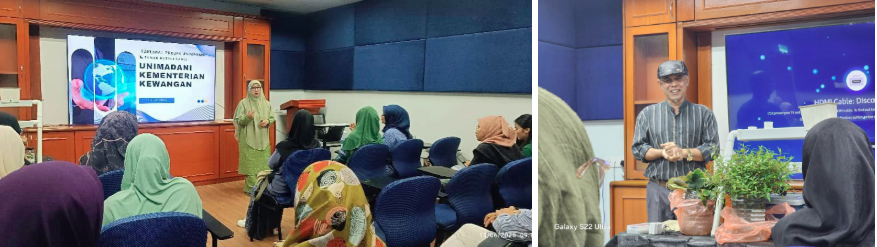
On 11 June 2025, Universiti Kebangsaan Malaysia (UKM) held the UniMadani Programme with Single Mothers and Housewives in the Bangi Area at the Plant House Complex of the Bangi Botanical Garden. The free outreach programme brought together 22 local participants for an introductory workshop on hydroponic systems and agricultural products, including Mr Molec.
Through practical instruction, participants learned how hydroponics can be used to grow food in limited urban spaces. The programme gave single mothers and housewives an opportunity to explore methods of local food production that could support household food needs and potentially provide supplementary income. By sharing urban farming knowledge directly with the Bangi community, UKM demonstrated its educational outreach on sustainable approaches to agricultural land and space use.
Through its wide-ranging educational and outreach programs, UKM has established itself as a national catalyst for sustainable agriculture and responsible land utilization. By engaging youth, local communities and industry stakeholders, the university has empowered participants to adopt modern, water-efficient farming systems, develop eco-friendly agricultural products and apply innovative solutions for sustainable palm oil production and waste reduction.
4. Project SULAM: Community Farming and Sustainable Agricultural Land Management
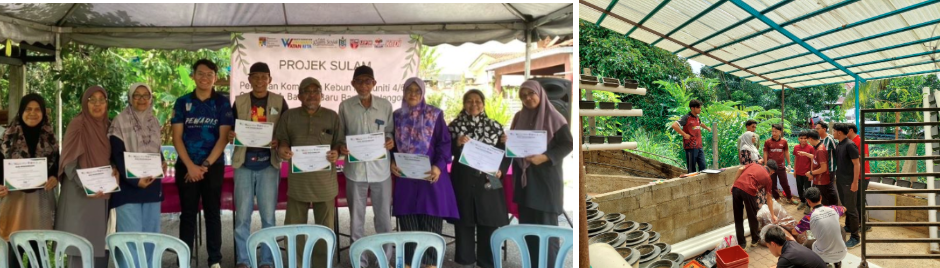
Universiti Kebangsaan Malaysia (UKM) delivered free educational outreach to the local community through Project SULAM: Community Farming at Community Garden 4/6 in Bandar Baru Bangi on 20 February 2025. The project brought together 15 participants from UKM and Universiti Putra Malaysia (UPM), alongside local residents, to restore a community garden that had been left unused since the COVID-19 pandemic in 2020. It was carried out through collaboration among students of UKM’s SKAA 3153 Rural Sociology course, UPM’s Environmental Sustainability and Food Security Secretariat at Kolej Tun Dr. Ismail, and the local residents’ association.
The project combined practical learning with the rehabilitation of the garden. Participants prepared the soil, planted vegetables and learned about organic fertiliser management and effective plant care. Dr Normala Ismail of UPM’s Faculty of Education also delivered a talk on sustainable farming practices to participants and residents. By sharing agricultural knowledge while putting the garden back into use, UKM and its partners helped the community build skills in managing land for urban food production. The project demonstrates UKM’s outreach on sustainable agricultural land management and strengthens cooperation between the university and the local community.
Source: https://www.ukm.my/beritaukm/projek-pertanian-komuniti-bangunkan-kebun-terbengkalai/
Together, these programmes demonstrate UKM’s contribution to sustainable agricultural land management through practical education and knowledge exchange beyond campus. Smallholder training, agricultural-agency capacity building, community garden rehabilitation and urban farming instruction address different needs across rural and urban settings. By translating research into locally relevant learning, UKM helps participants develop the knowledge and skills to manage cultivation spaces responsibly, consider climate-related risks and support local food production. This approach connects university expertise with community participation in sustainable land stewardship.