
Protect, restore and promote sustainable use of terrestrial ecosystems, sustainably manage forests, combat desertification, and halt and reverse land degradation and halt biodiversity loss
SDG 15 Indicator
15.3 – Supporting Land Ecosystems Through Action
15.3.5 – Collaboration for Shared Land Ecosystems
Universiti Kebangsaan Malaysia (UKM) works with community stakeholders, environmental organisations and public agencies to care for shared landscapes and strengthen participation in ecosystem stewardship. In 2025, practical initiatives included the KUDAH clean-up programme at Taman Tasik Cempaka, Bandar Baru Bangi and the planting of 50 forest saplings around Jeriau Waterfall, Bukit Fraser. Complementary engagement at Tasik Chini connected UKM researchers and students with local communities, including Orang Asli representatives, through environmental learning and knowledge exchange. These activities bring university expertise and volunteer participation into collaboration with external partners, supporting the maintenance of shared environments and public appreciation of their ecological value.
Table: UKM Collaboration for Maintain Shared Land Ecosystems Programs
| No | UKM Collaboration for Maintain Shared Land Ecosystems Programs |
| 1 | Collecting Waste While Recreation (KUDAH) |
| 2 | Jeriau Waterfall Conservation Efforts to Bolster the SKEBOT 2025 Sustainability Agenda |
| 3 | Sulam Asli-Pimpin 2025 Program– Jalinan Mesra Watan @ Chini |
| 4 | Zoo Care 2.0 TVK |
| 5 | Edutourism Activities at Tasik Chini (Malaysia’s sole UNESCO Biosphere Reserve) |
Detail of the programs can be found below:
1. Collecting Waste While Recreation (KUDAH)
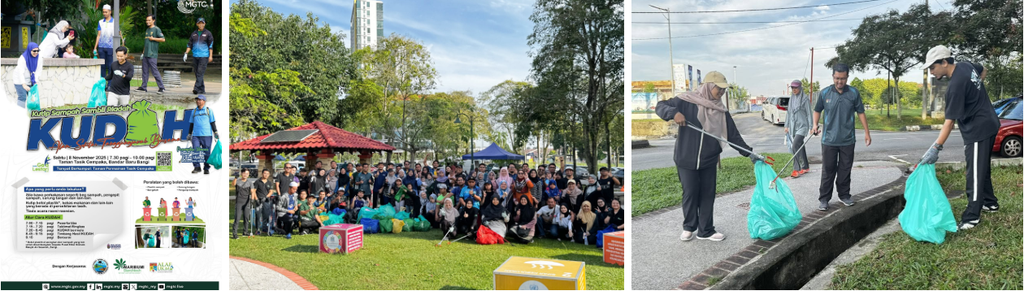
Universiti Kebangsaan Malaysia (UKM), through ALAF-UKM, collaborated with the Ministry of Natural Resources and Environmental Sustainability (NRES), Malaysia Green Technology and Climate Change Corporation (MGTC), MyFundAction, Politeknik Port Dickson, Friends of River Malaysia (FORM) and Maribumi Starchetch to organise the KUDAH (Cleanup While Exercising) Programme on 8 November 2025 at Taman Tasik Cempaka, Bandar Baru Bangi.
Combining environmental clean-up activities, physical exercise and public education, the programme brought university and community stakeholders together to care for the lake and its surrounding recreational landscape. Participants contributed directly to maintaining the shared environment while learning about responsible waste disposal and ecosystem protection.
This collaboration demonstrates UKM’s practical support for community participation in maintaining shared land and aquatic ecosystems. By connecting volunteer action with environmental learning and cross-agency cooperation, KUDAH encourages shared responsibility for public green spaces and supports SDG 15: Life on Land.
Source: https://www.facebook.com/share/p/199vVGqTpN/ ,
https://www.facebook.com/share/p/1DHXz9HmFF/
2. Jeriau Waterfall Conservation Efforts to Bolster the SKEBOT 2025 Sustainability Agenda
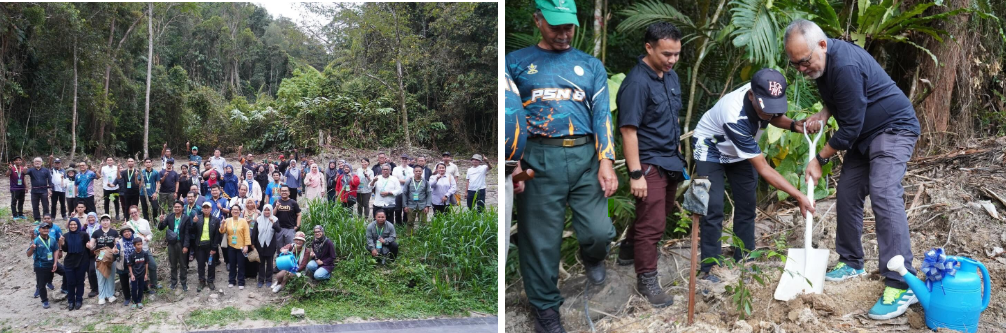
Universiti Kebangsaan Malaysia (UKM) strengthened collaboration for the conservation of Malaysia’s highland ecosystems through the National Symposium on Biodiversity and Highland Environment 2025 (SKEBOT) on 6 November 2025. The programme brought together local communities, university representatives, government agencies and environmental NGOs for a conservation activity at Jeriau Waterfall, Bukit Fraser, supported by the Pahang State Forestry Department (JPNP). This collaborative effort connected academic engagement with community action, promoting shared responsibility for protecting highland biodiversity and the environment.
As part of this collaborative effort, 50 forest saplings were planted around the Jeriau Waterfall recreation area to support the conservation and restoration of the highland ecosystem. The initiative also contributed to the 100 Million Tree-Planting Campaign led by the Forestry Department of Peninsular Malaysia. Beyond increasing vegetation cover, the tree-planting activity helps reduce soil erosion, maintain microclimatic stability and strengthen habitats for local flora and fauna. This initiative demonstrates UKM’s active collaboration with local communities and environmental stakeholders in maintaining and restoring shared land ecosystems.
Source: https://www.facebook.com/share/p/1Ed1NYswqT/
3. Sulam Asli-Pimpin 2025 Program– Jalinan Mesra Watan @ Chini
Universiti Kebangsaan Malaysia (UKM), through the Tasik Chini Research Centre (PPTC), the UKM-TR2024-047 Research Group and the Centre for Citra University, collaborated with local communities and strategic partners through the Sulam Asli-Pimpin 2025 Program– Jalinan Mesra Watan @ Chini programme, held from 13–15 June 2025 at PPTC, Tasik Chini. The programme was supported by the Centre for Youth Empowerment (PERKASA) UKM, HRD Corp and the Pahang State Parks Corporation (PTPT), as part of National Training Week 2025.
The initiative adopted a community-based and sustainability-focused approach to strengthen awareness and appreciation of the Tasik Chini ecosystem. Activities included educational visits to the Tasik Chini area, guided exploration of the surrounding environment, kayaking and outdoor activities, as well as cultural engagement with the Orang Asli community through traditional art demonstrations and knowledge-sharing sessions with local community leaders and researchers.
The programme also engaged students and the local community through educational, health and community activities at SK Tasik Chini, including robotics classes, motivation sessions, sign language activities and free health and eye screenings. Through these partnerships, UKM contributed to environmental awareness, knowledge exchange and community empowerment while strengthening collective efforts to protect and sustainably manage the shared ecosystem and cultural heritage of Tasik Chini.
Source: https://www.facebook.com/share/p/192GpVFZy7/
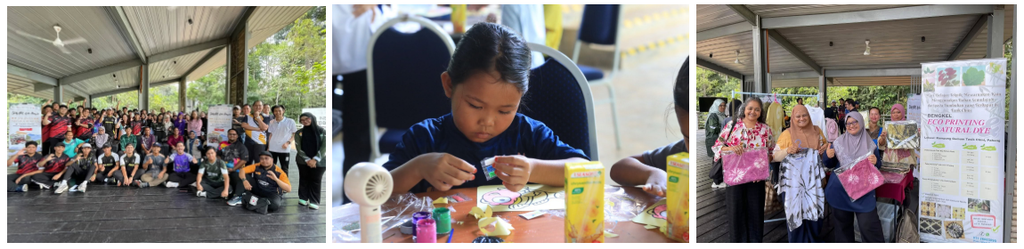
4. Zoo Care 2.0 TVK
On 15 June 2025, Universiti Kebangsaan Malaysia (UKM), through Kelab Team Volunteer Kolej Burhanuddin Helmi, collaborated with Zoo Negara to carry out Zoo Care 2.0 TVK, a volunteer outreach programme involving 24 UKM students. Working alongside Zoo Negara personnel, the students helped clean animal enclosures, prepare food for the animals and support environmental awareness activities. These practical tasks contributed to the day-to-day care of wildlife and gave students direct experience of the responsibilities involved in maintaining a setting that supports terrestrial species.
The collaboration also connected UKM students with a local organisation engaged in wildlife care and conservation. By participating in activities at Zoo Negara, students developed a clearer understanding of biodiversity, the needs of different species and the role of sustained care in protecting land ecosystems. Zoo Care 2.0 TVK therefore demonstrates UKM’s community collaboration in support of terrestrial wildlife and SDG 15: Life on Land.
Source: https://www.ukm.my/kbh/news/program-tvk-zoocare-2-0/
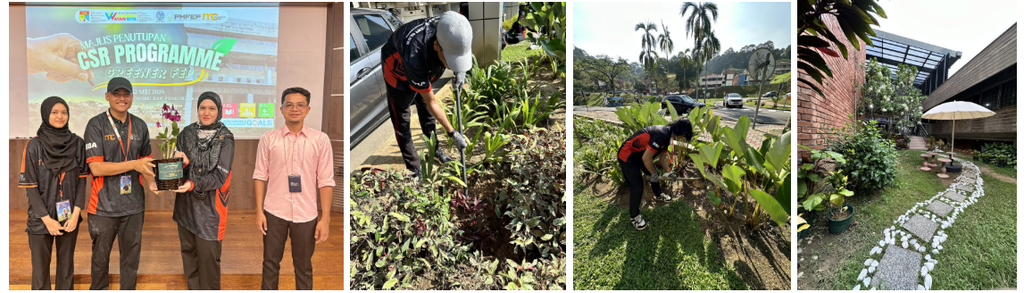
5. Edutourism Activities at Tasik Chini (Malaysia’s sole UNESCO Biosphere Reserve)
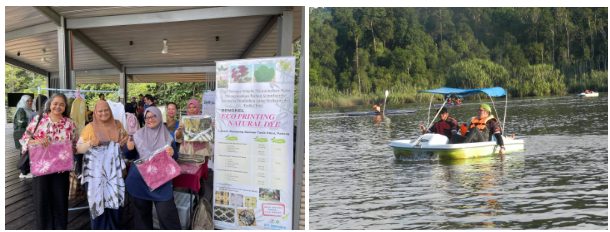
This program emphasizes the ecological and cultural importance of Tasik Chini, Malaysia’s sole UNESCO Biosphere Reserve, as a model for sustainable land management in tourism. Participants gain a deep understanding of this unique freshwater ecosystem, learning about the biodiversity it supports and the traditional practices of local communities that coexist with it. Through interactive sessions, they explore efforts to balance tourism with conservation, understanding how responsible tourism practices can protect such fragile environments. This free educational outreach initiative by UKM fosters awareness of sustainable land management principles, highlighting the necessity of preserving Tasik Chini’s ecosystem while respecting the cultural heritage and livelihoods of its local communities. This program exemplifies UKM commitment to sustainable tourism education, inspiring participants to advocate for responsible practices that benefit both nature and society. This program is offered to the local community at an affordable rate, with special student discounts, making sustainable tourism education accessible and inclusive for all.
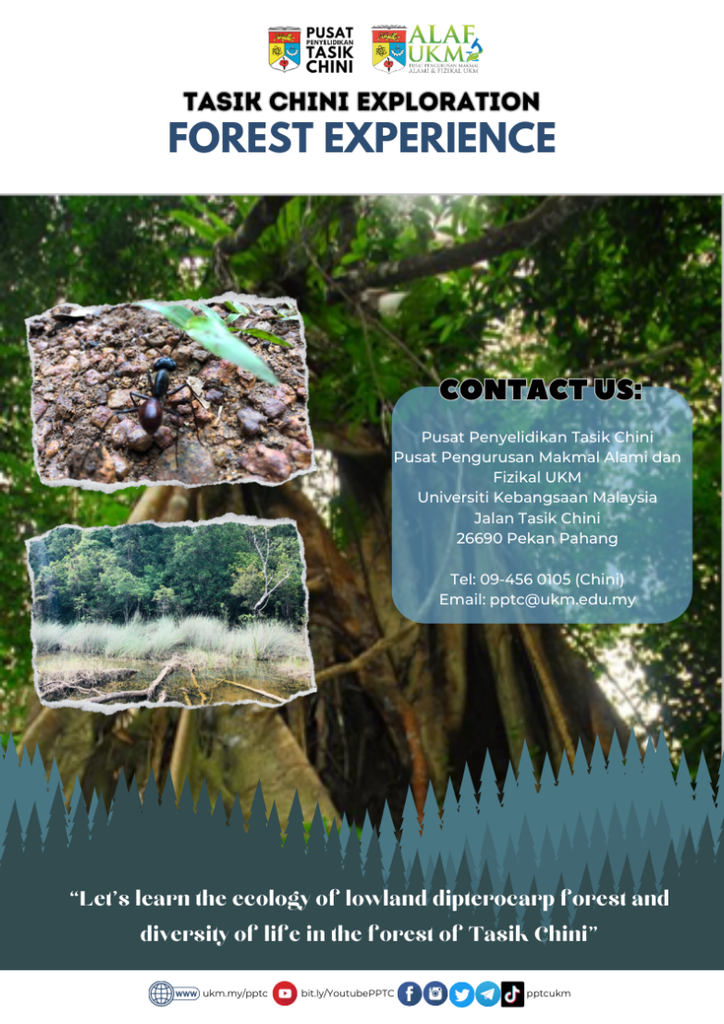
Participants engaged in educational activities at the UNESCO Biosphere Reserve, Tasik Chini
Source: https://www.ukm.my/pptc/edutourism-package/
Example of activities:
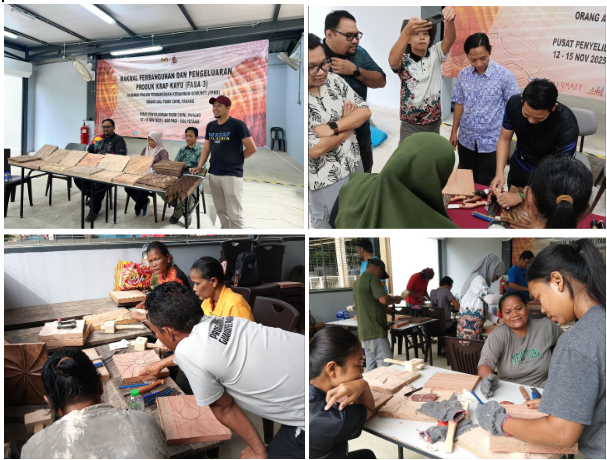
i) Empowering the Orang Asli Community through Traditional Woodcraft Skills Development at Tasik Chini
Universiti Kebangsaan Malaysia (UKM), through ALAF-UKM and the Tasik Chini Research Centre (PPTC), organised the Woodcraft Product Development and Production Laboratory Programme (Phase 3) from 12–15 November 2025 as part of the Tasik Chini Orang Asli Community Skills Development Project (PPKK). This free programme involved 13 Orang Asli participants and was conducted in collaboration with the Malaysian Handicraft Development Corporation (Pahang Branch). Through hands-on training in woodcarving techniques, material selection, product design and craftsmanship, participants enhanced their practical skills and capacity to produce traditional wooden handicrafts. This initiative contributes to preserving indigenous craftsmanship, strengthening community livelihoods and creating opportunities for locally produced handicrafts to support cultural tourism. By empowering indigenous communities through skills development.
Source: https://www.facebook.com/share/p/1JAWMCd2tZ/
ii) SULAM ASLI – Pimpin Jalinan Mesra Watan @ Chini 2025: Promoting Sustainable Land Management, Environmental Education and Community-Based Tourism
Universiti Kebangsaan Malaysia (UKM), through the UKM-TR2024-047 Research Group and the Centre for Citra University Studies, organised the SULAM ASLI – Pimpin Jalinan Mesra Watan @ Chini 2025 programme from 13–15 June 2025 at the Tasik Chini Research Centre (PPTC), ALAF-UKM. Supported by strategic partners including PERKASA UKM, HRD Corp and the Pahang State Parks Corporation (PTNP), this free programme integrated environmental education, indigenous cultural heritage preservation and community engagement. Key activities included educational visits to Tasik Chini, demonstrations of Orang Asli traditional arts, knowledge-sharing sessions, nature trail exploration and kayaking, providing participants with practical exposure to natural ecosystems and local cultural heritage. The programme also engaged the Orang Asli community and SK Tasik Chini students through educational and community development activities.
Source: https://www.facebook.com/share/p/1EoEVjfpK1/
Together, these collaborations demonstrate UKM’s contribution to shared ecosystem stewardship through practical maintenance, planting and community engagement. Clean-up activities address waste in public recreational environments, while forest planting supports habitat-restoration efforts. Engagement with local communities creates opportunities to connect scientific knowledge with local perspectives and conservation priorities. Sustaining these partnerships through follow-up care and monitoring can strengthen their contribution to ecosystem protection and SDG 15: Life on Land.