
Take urgent action to combat climate change and its impacts
SDG 13 Indicator
13.3 – Environmental Education Measures
13.3.3 – Co-operative Planning for Climate Change Disasters
Universiti Kebangsaan Malaysia (UKM) demonstrates its strong commitment to regional and global cooperation in climate change adaptation, disaster risk reduction and resilience planning. Through strategic partnerships with government agencies, international organisations and research institutions, UKM actively contributes to cooperative climate disaster planning through the CCRS-V3/CORDEX-SEA Downscaling Products and Applications Roadshow; collaboration with PLANMalaysia to integrate climate resilience and disaster risk reduction into national and local development plans; participation in the Department of Environment Malaysia’s review of environmental and climate-related risks associated with the Kedah Aerotropolis project; and collaboration with the Malaysian Government on national greenhouse gas (GHG) inventory development and Nationally Determined Contributions (NDC) tracking. In 2025, Assoc. Prof. Sr. Ts. Gs. Dr. Khairul Nizam Abdul Maulud contributed to regional climate cooperation through his invitation as a distinguished speaker at the ASEAN Workshop on Sea Level Rise (11–12 June 2025), organised in collaboration with the Ministry of Natural Resources and Environmental Sustainability (NRES) and regional research institutions to address rising sea levels, coastal vulnerability and climate adaptation strategies. UKM further strengthens international climate governance through Professor Dr. Joy Jacqueline Pereira’s role as Co-Chair of Working Group III of the Intergovernmental Panel on Climate Change (IPCC) and Associate Professor Dr. Liew Juneng’s involvement in the World Climate Research Programme’s CORDEX-Southeast Asia technical team. Collectively, these engagements strengthen evidence-based climate projections, resilient spatial planning, environmental safeguards and government decision-making, supporting disaster preparedness, protecting vulnerable communities and addressing climate-related risks that may contribute to population displacement within and across national borders, in alignment with SDG 13: Climate Action.
Participant in cooperative planning for climate change disasters
| No | Cooperative Planning for Climate Change Disasters |
|---|---|
| 1 | UKM’s Participation in Cooperative Planning for Climate Change and Disaster Risk Management |
| 2 | CCRS-V3/CORDEX-SEA Downscaling Products and Applications Roadshow |
| 3 | UKM Collaborates in PLANMalaysia to Integrate Climate Resilience and Disaster-Risk Reduction into National and Local Development Planning |
| 4 | UKM Collaborates with Malaysia’s Department of Environment to Assess Climate-Related Risks and Strengthen the Environmental Resilience of the Kedah Aerotropolis Project |
| 5 | UKM Collaborates with the Malaysian Government to Strengthen National Climate-Risk Planning through GHG Inventory and NDC Tracking |
| 6 | Assoc. Prof. Dr. Liew Juneng as a Technical Team Member of the World Climate Research Program (WCRP) Coordinated Regional Climate Downscaling Experiment – Southeast Asia Domain (CORDEXSEA) |
| 7 | UKM’s Participation in ASEAN Regional Cooperation on Sea Level Rise, Climate Adaptation and Disaster Risk Reduction |
1. UKM’s Participation in Cooperative Planning for Climate Change and Disaster Risk Management
Universiti Kebangsaan Malaysia (UKM) actively contributes to national and international cooperation on climate change mitigation, disaster risk management, and evidence-based climate policy development through its scientific expertise and engagement with government agencies and international organisations. This commitment is demonstrated through the appointment of two distinguished UKM academics to key leadership positions in the Seventh Assessment Report (AR7) cycle of the Intergovernmental Panel on Climate Change (IPCC). Professor Dr. Joy Jacqueline Pereira was elected as Co-Chair of IPCC Working Group III on Mitigation, while Professor Dr. Mohd. Talib Latif was appointed as a Member of the IPCC Bureau Task Force. These appointments, which commenced in 2023 and are expected to continue throughout the IPCC AR7 assessment cycle until 2030, were formally acknowledged by Malaysia’s Ministry of Natural Resources, Environment and Climate Change (NRECC) in an official letter dated 6 September 2023, recognising UKM’s contribution to international scientific cooperation and climate governance.
Through these appointments, UKM strengthens long-term collaboration between academia, the Malaysian Government, and international stakeholders in addressing climate change challenges. The continued participation of UKM experts in the IPCC AR7 cycle through 2030 supports the development of scientific assessments that inform climate mitigation strategies, national policy planning, and international climate action, while ensuring that the perspectives and vulnerabilities of developing countries, particularly Malaysia, are represented in global climate discussions. This sustained engagement provides an important scientific foundation for cooperative planning to address climate-related disasters and their potential socioeconomic consequences, including population displacement and community vulnerability, supporting the broader objectives of SDG 13 (Climate Action) and SDG 17 (Partnerships for the Goals).
2. CCRS-V3/CORDEX-SEA Downscaling Products and Applications Roadshow
UKM supports co-operative planning for climate-related disasters through the CCRS-V3/CORDEX-SEA Downscaling Products and Applications Roadshow, jointly organised by UKM, the Centre for Climate Research Singapore and CORDEX-Southeast Asia on 27–28 October 2025. The regional programme brought together climate scientists, government meteorological representatives and other stakeholders to share and examine high-resolution climate projections for Malaysia and Southeast Asia. Discussions covered extreme rainfall and flooding, extreme temperatures and heat, dry spells, dengue suitability and food security under climate change. By strengthening access to and application of downscaled climate information, the collaboration supports evidence-based climate-risk assessment, adaptation planning, disaster preparedness and regional climate resilience.
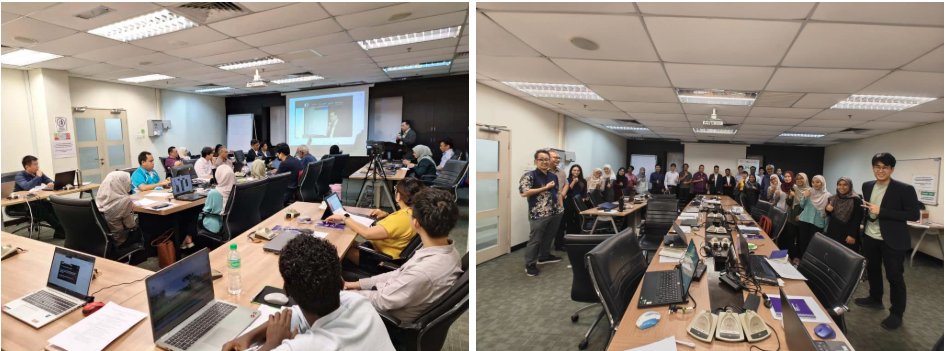
3. UKM Collaborates in PLANMalaysia to Integrate Climate Resilience and Disaster-Risk Reduction into National and Local Development Planning
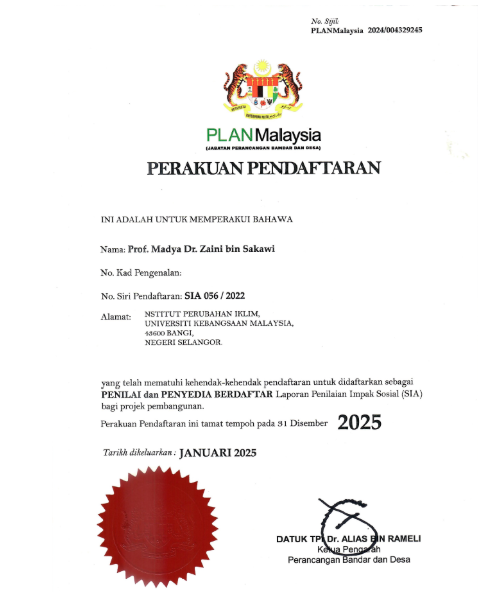
From 1 January to 31 December 2025, Universiti Kebangsaan Malaysia (UKM), through Associate Professor Dr Zaini Sakawi from Institute of Climate Change UKM, collaborated with PLANMalaysia the Town and Country Planning Department under the Ministry of Housing and Local Government as part of its Review Panel for national and local planning documents. In this role, he provided expert review and strategic advice to support the integration of environmental sustainability, climate-change mitigation, climate adaptation and resilience principles into development plans. His expert input supported the incorporation of climate-related disaster risks, including flooding, extreme rainfall, landslides, coastal hazards and extreme heat, into land-use strategies, development controls, adaptation measures and resilient infrastructure planning. The collaboration helped strengthen climate-responsive spatial planning and ensure that development strategies considered exposure and vulnerability to climate-related hazards, thereby supporting disaster-risk reduction and more resilient communities.
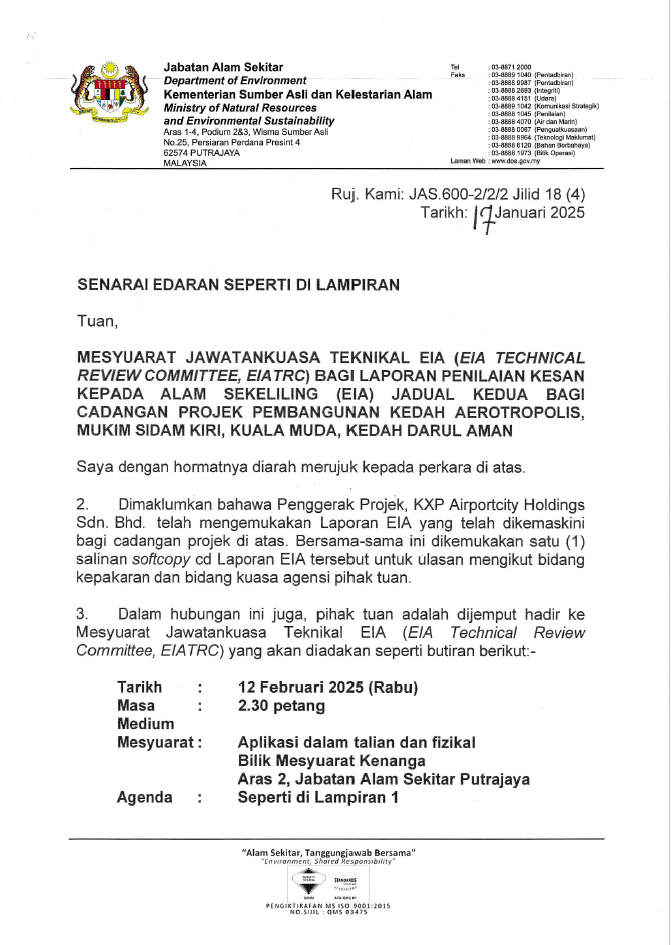
4. UKM Collaborates with Malaysia’s Department of Environment to Assess Climate-Related Risks and Strengthen the Environmental Resilience of the Kedah Aerotropolis Project
On 12 February 2025, Universiti Kebangsaan Malaysia (UKM), through Professor Dr Zaini Sakawi, participated in co-operative planning with the Department of Environment Malaysia as a member of the Environmental Impact Assessment (EIA) Report Review Panel for the proposed Kedah Aerotropolis project. His role involved evaluating potential environmental degradation, climate-related risks and social impacts, including the potential displacement of affected communities. Through this government-led review process, UKM provided expert advice to strengthen environmental safeguards and ensure that appropriate mitigation, climate-adaptation and resilience measures were incorporated into the planning of this major infrastructure project. This collaboration demonstrates UKM’s contribution to government planning aimed at reducing climate-related disaster risks, protecting vulnerable communities and minimising the project’s long-term environmental and climate impacts.
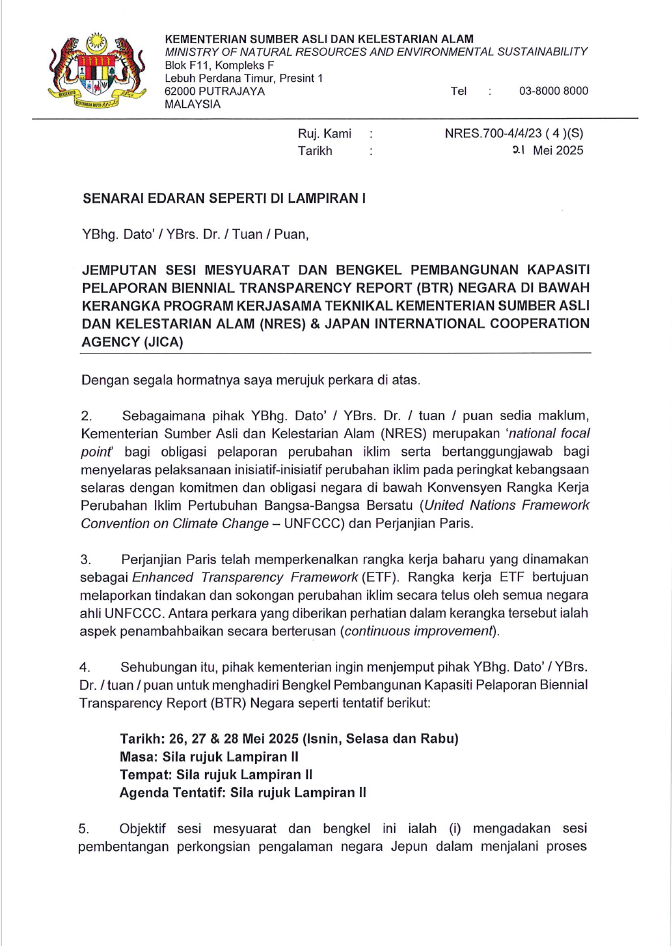
5. UKM Collaborates with the Malaysian Government to Strengthen National Climate-Risk Planning through GHG Inventory and NDC Tracking
From 26 to 28 May 2025, Universiti Kebangsaan Malaysia (UKM), through Professor Dr Zaini Sakawi, participated in a government-led Capacity Development Workshop organised with the Ministry of Natural Resources and Environmental Sustainability. As a Panel Member, he contributed expertise to the development of Malaysia’s national Greenhouse Gas Inventory for the Waste Sector and the tracking of Nationally Determined Contributions. This collaboration strengthened the government’s capacity to identify emission sources, monitor mitigation progress and develop evidence-based climate strategies. By supporting Malaysia’s commitments under the Paris Agreement, UKM contributes to national efforts to limit climate change and reduce the long-term severity of climate-related hazards that may threaten communities and contribute to displacement. While the workshop did not specifically address population displacement, it supports the broader government framework for climate-risk reduction and resilience planning.
6. Assoc. Prof. Dr. Liew Juneng as a Technical Team Member of the World Climate Research Program (WCRP) Coordinated Regional Climate Downscaling Experiment – Southeast Asia Domain (CORDEXSEA)
Dr Liew Ju Neng is currently an Associate Professor at the Department of Earth Science and Environment, Universiti Kebangsaan Malaysia. His research interests encompass various aspects of regional climate dynamics over the Southeast Asia region with a specific focus on interannual and long-term climate change time scales. Assoc. Prof. Dr. Liew Juneng serves as a Technical Team Member of the World Climate Research Programme (WCRP) under the Coordinated Regional Climate Downscaling Experiment – Southeast Asia Domain (CORDEX-SEA). In this role, Dr. Liew contributes his expertise in climate modeling, atmospheric sciences, and regional climate projection, supporting efforts to improve the accuracy and resolution of climate data for Southeast Asia. His participation enhances the understanding of regional climate variability and extreme weather patterns, providing critical insights for climate adaptation and mitigation planning.

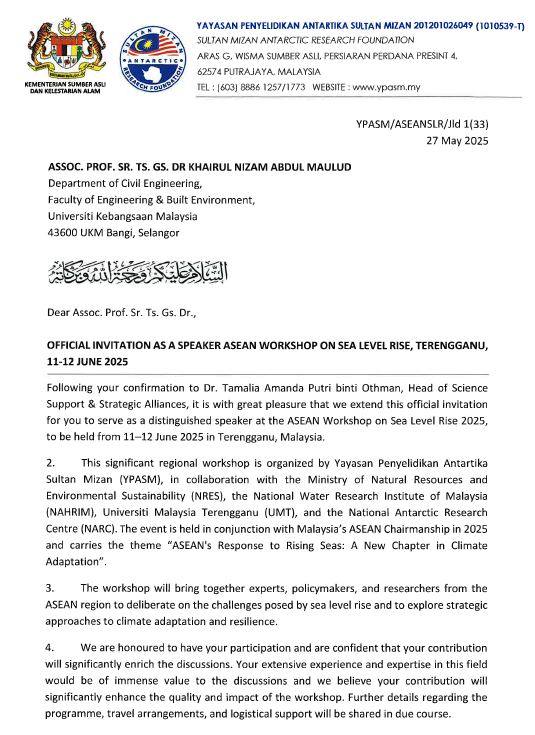
7. UKM’s Participation in ASEAN Regional Cooperation on Sea Level Rise, Climate Adaptation and Disaster Risk Reduction
Universiti Kebangsaan Malaysia (UKM) demonstrates its commitment to collaborative climate change adaptation and disaster risk reduction through its involvement in regional initiatives with government agencies and research institutions. In 2025, Assoc. Prof. Sr. Ts. Gs. Dr. Khairul Nizam Abdul Maulud, from UKM’s Department of Civil Engineering, Faculty of Engineering and Built Environment, was invited as a distinguished speaker at the ASEAN Workshop on Sea Level Rise, held on 11–12 June 2025 in Terengganu, Malaysia. Organised by Yayasan Penyelidikan Antartika Sultan Mizan (YPASM) in collaboration with the Ministry of Natural Resources and Environmental Sustainability (NRES), NAHRIM, Universiti Malaysia Terengganu (UMT) and the National Antarctic Research Centre (NARC), the workshop brought together policymakers, researchers and experts to explore strategic responses to rising sea levels. This regional cooperation supports climate adaptation planning, coastal resilience and disaster risk management, including addressing potential population displacement caused by rising sea levels. UKM’s involvement reinforces its contribution to evidence-based climate planning and regional cooperation, supporting SDG 13: Climate Action.
Through its diverse engagements at the local, national and international levels, UKM continues to position itself as a regional leader in cooperative climate action and disaster risk reduction. The university’s experts ranging from policy advisors to global scientific contributors, translate cutting-edge research into actionable frameworks that support Malaysia’s and ASEAN’s climate resilience strategies. By integrating science, governance and education, UKM not only builds institutional capacity but also drives collective resilience in the face of escalating climate crises. These efforts underscore UKM’s enduring mission to advance sustainable development through knowledge, collaboration and global stewardship for a safer and more climate-resilient future.