
Take urgent action to combat climate change and its impacts
SDG 13 Indicator
13.3 – Environmental education measures
13.3.5 – Environmental Education Collaborate with NGO
Universiti Kebangsaan Malaysia (UKM) advances environmental education and climate adaptation through collaboration with foundations, NGO representatives, professional bodies and research partners. Its Environmental Sustainability Literacy Programme, organised through the UKM–Yayasan Sime Darby Sustainability Chair on 4 July 2025, engaged more than 120 participants in practical learning on energy efficiency, water conservation, waste upcycling, food security and coastal ecosystem protection. Complementary stakeholder engagement on urban heat and collaborative research on extreme-weather vulnerability, carbon management and the water–energy–food nexus connect scientific expertise with community and policy needs. These initiatives provide pathways for translating research into accessible knowledge, responsible practices and locally relevant responses to climate challenges.
Through programs such as involvement Professor Marlia Mohd Hanafiah of UKM is listed as a research working group member , the Dr. Nurul Akidah Baharuddin’s appointment as Vice Chair of WG9 – Green ICT, Environment & Climate Change under MTSFB (2023–2025); Multi-Collaboration on Carbon Management and Accounting and Extreme Weather Vulnerability Assessment in Sabah; and Stakeholder Workshop and APN Regional Meeting on Urban Heat Islands in Southeast Asian Megacities; These initiatives strengthen climate resilience, environmental awareness, and collaborative climate action, play key roles in shaping national sustainability standards through collaborations with technical and civil society platforms. These initiatives reflect UKM’s leadership in building collaborative ecosystems that drive climate literacy and sustainable development in alignment with SDG 13 (Climate Action).
Collaborate with NGO on Environmental Education
| No | Cooperative Planning for Climate Change Disasters |
| 1 | Environmental Sustainability Literacy Program: Transforming Lifestyles through Sustainable Practices |
| 2 | Stakeholder Workshop and APN Regional Meeting under the project:“Assessing Urban Heat Island in Southeast Asia Megacities: An Integrated Study of Land Use, Climate Change, and Heatwave Occurrences.” |
| 3 | Multi-Collaboration on Carbon Management and Accounting: Transition to a Low-Carbon Economy and Climate Resilience in Sabah; and Assessment of Extreme Weather Vulnerability in Sabah: Impacts of ENSO, IOD, MJO, and Monsoon Patterns under a Changing Climate |
| 4 | Dr. Nurul Akidah Baharuddin as Vice Chair of the Working Group 9 (WG9) – Green ICT, Environment & Climate Change under the Malaysian Technical Standards Forum Berhad (MTSFB) ( 1 July 2023 to 31 December 2025) |
| 5 | UKM’s International Research Collaboration on Climate Adaptation through the Water–Energy–Food Nexus Project (2024–2025) |
1. Environmental Sustainability Literacy Program: Transforming Lifestyles through Sustainable Practices
UKM collaborates with the Yayasan Sime Darby (YSD) Sustainability Chair on the Environmental Sustainability Literacy Program, which aims to strengthen community resilience and promote sustainable practices in response to climate change. On 4 July 2025, the UKM-YSD Sustainability Chair organised the Environmental Sustainability Literacy Program, engaging more than 120 participants from local communities, government agencies and higher education institutions. The collaboration involves practical education and awareness activities on energy efficiency, water conservation, plastic waste upcycling, food security and coastal ecosystem preservation, helping local communities strengthen their resilience to climate-related risks such as water scarcity, resource insecurity and coastal ecosystem degradation.
Source: https://www.ukm.my/beritaukm/program-celik-kelestarian-alam-sekitar-transformasi-gaya-hidup-amalan-lestari/
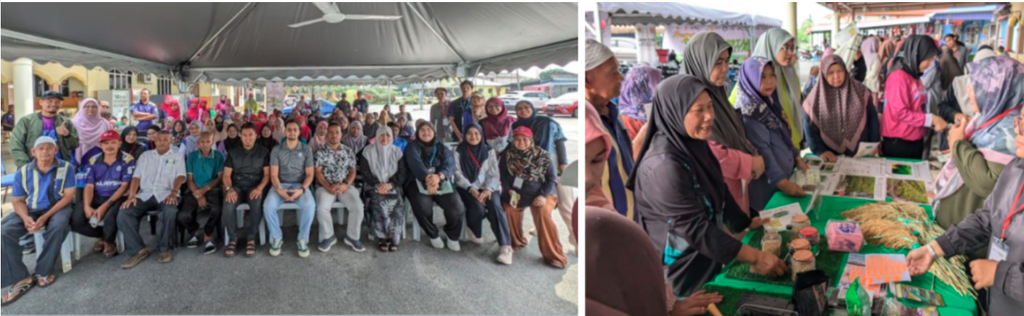
2. Stakeholder Workshop and APN Regional Meeting under the project:
“Assessing Urban Heat Island in Southeast Asia Megacities: An Integrated Study of Land Use, Climate Change, and Heatwave Occurrences.”
Universiti Kebangsaan Malaysia (UKM) collaborates with NGOs, government agencies and other external stakeholders on climate adaptation and urban resilience. The Earth Observation Centre (EOC), Institute of Climate Change (IPI), UKM, hosted a Stakeholder Workshop and Asia-Pacific Network for Global Change Research (APN) Regional Meeting under the project “Assessing Urban Heat Island in Southeast Asia Megacities: An Integrated Study of Land Use, Climate Change, and Heatwave Occurrences.” Led by Ts. Gs. Dr. Wan Shafrina Wan Mohd Jaafar and supported by the APN, the initiative brought together representatives from NGOs, research institutions, regional partners and government agencies, including the Malaysian Meteorological Department (METMalaysia). The event was officiated by Mr. Ambun Dindang, Deputy Director General (Operations), METMalaysia, demonstrating collaboration between UKM and the national meteorological authority on climate-related risk assessment and resilience.
The collaboration focuses on understanding and addressing the increasing risks of urban heat and heatwaves associated with climate change and rapid urbanisation. UKM, METMalaysia, NGOs and other stakeholders contributed expertise, research findings and local knowledge to strengthen assessment of Urban Heat Island (UHI) risks and identify appropriate climate adaptation measures. Discussions included urban greening, sustainable land-use planning, heat-risk management, public awareness and community engagement. Through this multi-stakeholder collaboration, UKM supports knowledge exchange, climate-risk assessment and joint action to strengthen urban resilience and help communities adapt to increasing heat-related risks.
Source: https://www.facebook.com/share/p/19KWCJq4MY/
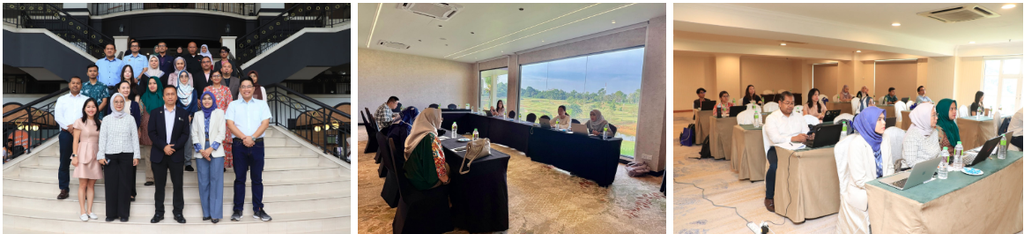
3. Multi-Collaboration on Carbon Management and Accounting: Transition to a Low-Carbon Economy and Climate Resilience in Sabah; and Assessment of Extreme Weather Vulnerability in Sabah: Impacts of ENSO, IOD, MJO, and Monsoon Patterns under a Changing Climate
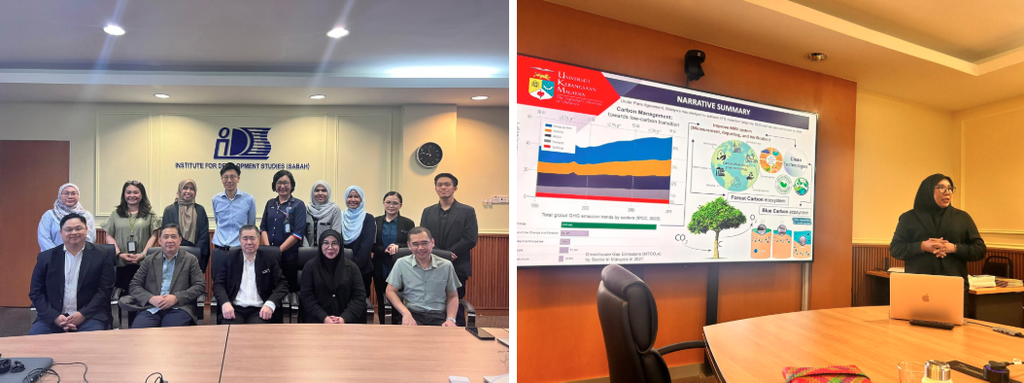
UKM collaborates with the Institute for Development Studies (Sabah) (IDS) on climate adaptation and resilience projects aimed at strengthening Sabah’s capacity to understand, manage and respond to climate-related risks. The collaboration involves the project “Assessment of Extreme Weather Vulnerability in Sabah: Impacts of ENSO, IOD, MJO, and Monsoon Patterns under a Changing Climate,” which assesses the vulnerability of Sabah to extreme weather events and changing climate patterns. It also includes the “Carbon Management and Accounting: Transition to a Low-Carbon Economy and Climate Resilience in Sabah” project, which supports the development of strategies for low-carbon development and climate resilience. Through joint research, expert consultation, progress assessments and knowledge exchange, UKM and IDS contribute scientific evidence to support climate-risk assessment, adaptation planning and sustainable development in Sabah, helping government and local stakeholders strengthen resilience to extreme weather and other climate-related impacts.
Source: https://www.facebook.com/share/p/1BprhNBRg4/
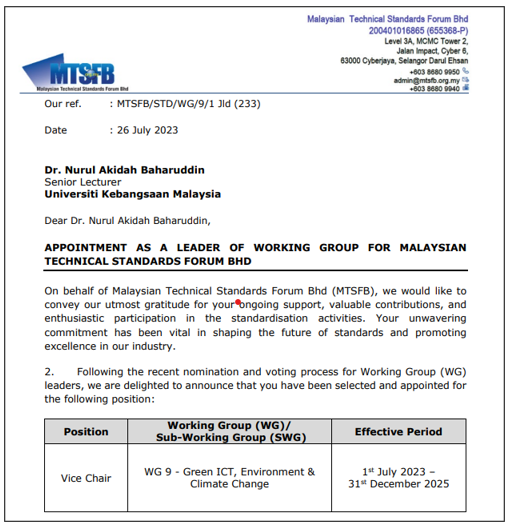
4. Dr. Nurul Akidah Baharuddin as Vice Chair of the Working Group 9 (WG9) – Green ICT, Environment & Climate Change under the Malaysian Technical Standards Forum Berhad (MTSFB) ( 1 July 2023 to 31 December 2025)
Universiti Kebangsaan Malaysia (UKM) actively collaborates with non-governmental organizations (NGOs) and professional bodies to strengthen national efforts in climate adaptation and environmental sustainability. One notable example is the appointment of Dr. Nurul Akidah Baharuddin, Senior Lecturer at UKM, as the Vice Chair of the Working Group 9 (WG9) – Green ICT, Environment & Climate Change under the Malaysian Technical Standards Forum Berhad (MTSFB) from 1 July 2023 to 31 December 2025.Through this collaboration, UKM contributes to the development of green technology standards, climate adaptation frameworks, and environmental best practices in partnership with NGOs, industry players, and government agencies.
5. UKM’s International Research Collaboration on Climate Adaptation through the Water–Energy–Food Nexus Project (2024–2025)
Universiti Kebangsaan Malaysia (UKM) demonstrates its commitment to addressing climate change through participation in international research collaborations that promote climate resilience, sustainable resource management and environmental sustainability. One significant initiative is the Analysis of the Water–Energy–Food Nexus for Sustainable Biomass Utilisation for Fuel, Fibre, and Food in Selected East Asia Summit Countries – Phase II (2024–2025), coordinated by the Economic Research Institute for ASEAN and East Asia (ERIA) and published in September 2025.
The research involved experts from six countries, including Professor Dr. Marlia Mohd Hanafiah of UKM, who contributed as a member of the international research working group. The study examined the interconnections between water, energy, food, land use and climate change, focusing on sustainable biomass utilisation, resource efficiency, agricultural resilience and environmental impacts.
Through this collaboration, UKM contributed to knowledge development and policy recommendations supporting climate-resilient agricultural systems, improved water security, sustainable land management and adaptation to climate-related environmental challenges.
Together, these collaborations connect UKM’s research and educational expertise with the organisations and communities addressing environmental challenges beyond campus. Practical sustainability education, stakeholder dialogue and joint climate research support informed choices on resource use, ecosystem protection and adaptation. By combining academic knowledge with partner expertise and community perspectives, UKM strengthens opportunities for shared learning and coordinated climate action, contributing to SDG 13: Climate Action.