
Conserve and sustainably use the oceans, seas and marine resources for sustainable development
SDG 14 Indicator
14.5 – Maintaining a Local Ecosystem
14.5.3 – Programs Towards Good Aquatic Stewardship Practices
Universiti Kebangsaan Malaysia (UKM) develops and supports programmes that encourage and maintain good aquatic stewardship through practical conservation, marine education and research capacity building. The Coral Monitoring and Care Project: RHB Ocean Harmoni Marine Literacy Programme promotes active participation by students, staff, industry partners and local communities in caring for marine environments through education and conservation activities. Meanwhile, UKM’s collaboration in ECOMARINE established a Marine Monitoring Laboratory at Tanjung Resang, Mersing, strengthening facilities and expertise for marine research and ecosystem monitoring. Together, these initiatives provide institutional support, learning opportunities and resources that encourage responsible aquatic stewardship and sustain efforts to protect marine biodiversity in line with SDG 14: Life Below Water.
Programmes towards good aquatic stewardship practices
| No | Programmes towards good aquatic stewardship practices |
| 1 | Tioman Island Conservation and Preservation Programme 2025 |
| 2 | ECOMARINE: Comprehensive Mechanism for Preserving Marine Ecosystems and Life |
| 3 | Rescue Our Sea Turtle 2025: Promoting Marine Conservation and Responsible Aquatic Stewardship |
| 4 | Coastal Sustainability Programme in Collaboration with Islamic Relief Malaysia |
| 5 | Coral Monitoring and Care Project |
1. Tioman Island Conservation and Preservation Programme 2025
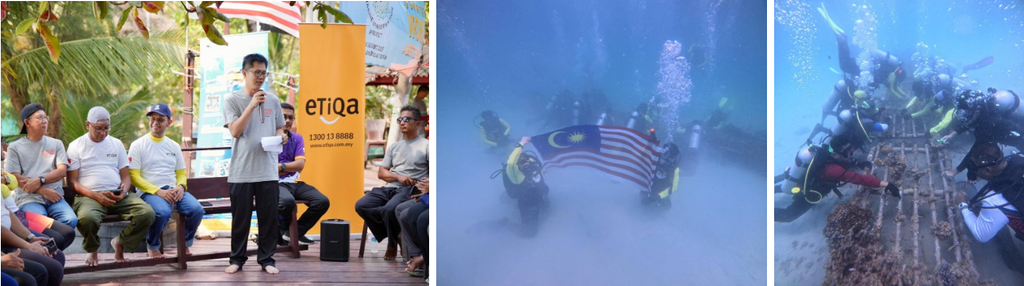
Universiti Kebangsaan Malaysia (UKM), through the Faculty of Science and Technology (FST) and the Strategy Centre, organised the Tioman Island Conservation and Preservation Programme 2025 from 22–24 August 2025 at Kampung Salang, Tioman Island, in collaboration with LegeS Divers (NGO), Etiqa General Takaful Berhad, and the Department of Fisheries Malaysia. This initiative represents a four-year continuous partnership since 2022, demonstrating UKM’s sustained commitment to promoting responsible aquatic stewardship, marine biodiversity conservation, and community engagement.
The programme brought together 84 participants from universities, government agencies, private organisations, NGOs, and local communities. Key activities included coral reef restoration through coral frame cleaning and transplantation, village infrastructure improvements, an educational visit to the Turtle Conservation Centre in Kampung Juara, and marine conservation awareness programmes for children, children with special needs, and local residents. Notably, 100 coral colonies were successfully transplanted, contributing directly to marine ecosystem restoration and biodiversity protection.
Through this initiative, UKM actively develops and supports programmes that encourage sustainable aquatic stewardship practices by integrating hands-on marine conservation, environmental education, and multi-stakeholder collaboration.
Source: https://www.facebook.com/share/p/1HTgUq37uw/
2. ECOMARINE: Comprehensive Mechanism for Preserving Marine Ecosystems and Life
ECOMARINE is an international project supported by the European Union’s Erasmus+ programme to strengthen marine ecosystem conservation in Malaysia and India. It addresses threats including climate change, marine plastic debris, overexploitation of fish stocks and habitat destruction through marine monitoring laboratories, training and knowledge exchange between Asian and European partner institutions. This partnership not only enhances the university’s ability to monitor and protect marine ecosystems but also empowers students and researchers with advanced training in ecosystem management. Through these initiatives, UKM leads in promoting sustainable aquatic practices and strengthens its role in global marine conservation efforts.
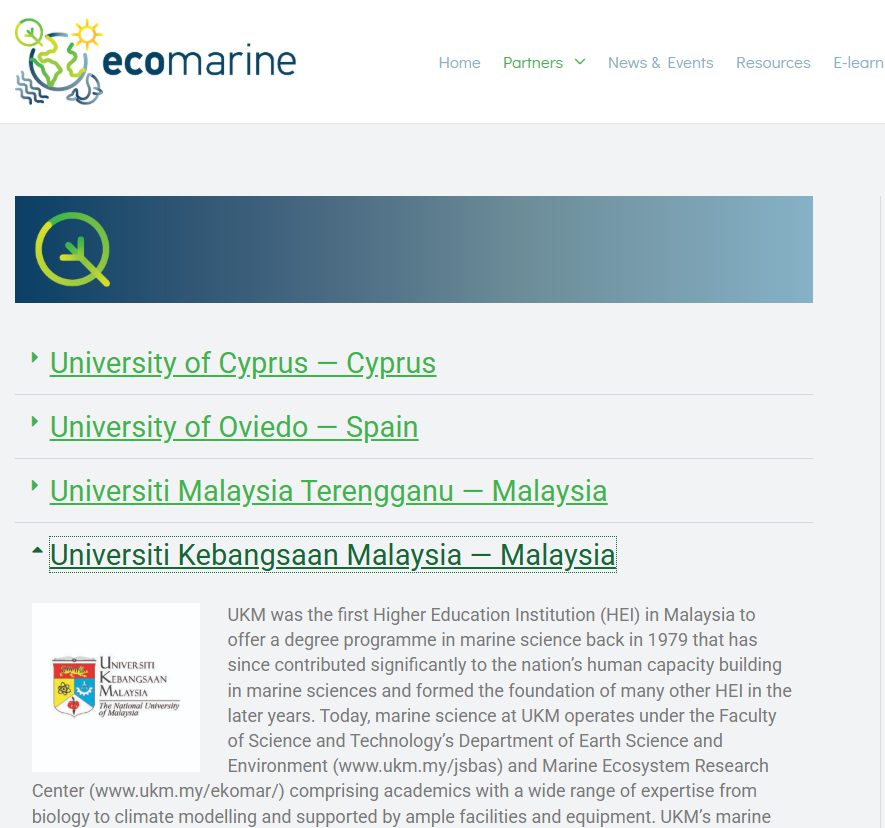
Universiti Kebangsaan Malaysia (UKM) participated as a consortium partner, contributing its expertise in marine ecology, biodiversity, plastic pollution and climate modelling. The collaboration established a Marine Monitoring Laboratory at UKM’s facility in Tanjung Resang, Mersing, strengthening infrastructure for marine research and monitoring. Together with the project’s capacity-building activities, this partnership supports informed conservation decisions and good aquatic stewardship practices in line with SDG 14: Life Below Water.
Key Components of Ecomarine at UKM:
- Establishment of Marine Monitoring Labs:
- ECOMARINE has set up state-of-the-art Marine Monitoring Labs in both Malaysia and India, providing UKM with advanced facilities to monitor and analyze the health of marine ecosystems. These labs track critical indicators such as water quality, biodiversity, pollution levels, and climate change impacts, enabling real-time data collection and targeted conservation actions.
- Capacity Building and Knowledge Exchange:
- The project includes extensive training programs for scientists, faculty, students, and other stakeholders, enhancing skills in marine conservation practices. This capacity-building initiative equips participants with the knowledge needed to monitor and manage aquatic ecosystems sustainably, improving the quality of marine research at UKM.
- Pollution and Biodiversity Monitoring:
- ECOMARINE labs focus on monitoring pollution levels, particularly from plastic and heavy metals, while also assessing biodiversity changes in marine environments. This helps UKM understand the effects of various pollutants on marine species and habitats, contributing to conservation planning.
- Community and Stakeholder Engagement:
- The project emphasizes collaboration with local communities, policymakers, and environmental organizations, fostering a shared responsibility for marine conservation. ECOMARINE promotes awareness of issues like pollution prevention and sustainable fishing practices, extending its impact beyond academic research to influence real-world conservation efforts.
- Climate Change Research:
- ECOMARINE also addresses climate-related impacts, studying how rising sea temperatures, acidification, and other factors affect marine biodiversity. UKM researchers use this data to develop adaptation strategies that help protect vulnerable marine ecosystems from climate change.
Goals and Impact of Ecomarine at UKM:
The Ecomarine project aims to improve the management and operation of marine conservation efforts, aligning with SDG 14: Life Below Water. By establishing monitoring labs, building research capacity, and engaging in pollution and biodiversity studies, UKM reinforces its commitment to sustainable marine stewardship. This project not only advances academic research but also promotes a proactive approach to protecting marine environments, empowering UKM to lead in aquatic ecosystem preservation.
Collaboration of Ecomarine Project:
The Ecomarine project involves collaboration between UKM and several international partners, primarily funded by the ERASMUS+ Programme of the European Union. This partnership includes:
- International Universities: UKM collaborates with higher education institutions in India and other countries, focusing on improving marine conservation practices and developing marine monitoring labs. These international partnerships foster knowledge exchange, enhancing the capacity of universities in both Malaysia and India to manage and monitor marine ecosystems effectively.
- European Institutions: Through ERASMUS+ funding, Ecomarine includes European universities and research institutions, which bring expertise in marine science, conservation technology, and ecosystem management. These institutions provide technical support and training, helping build capacity for advanced marine conservation practices.
- Local Environmental Agencies and Stakeholders: Ecomarine also involves collaboration with local environmental agencies and community stakeholders. This cooperation ensures that research efforts are aligned with national conservation priorities and that community engagement is part of the conservation effort.
Through these collaborations, Ecomarine supports UKM’s initiatives toward good aquatic stewardship by building a comprehensive, international framework for marine ecosystem monitoring, conservation, and sustainable management practices.
Source: https://ecomarine-project.eu/partners
3. Rescue Our Sea Turtle 2025: Promoting Marine Conservation and Responsible Aquatic Stewardship
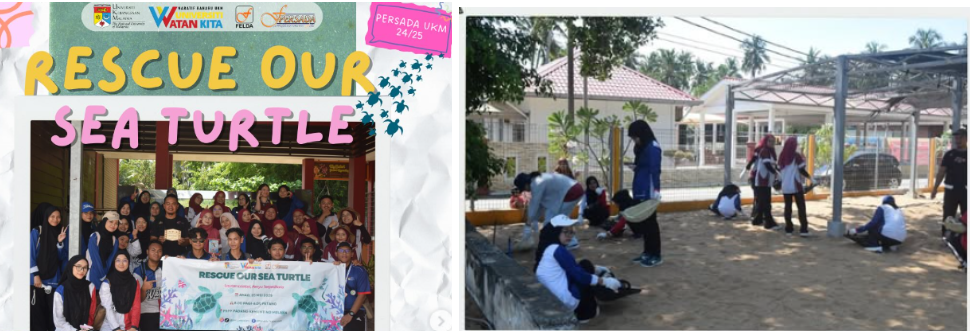
On 25 May 2025, Universiti Kebangsaan Malaysia (UKM), through the Welfare and Volunteerism Executive Committee of PERSADA UKM, organised the Rescue Our Sea Turtle 2025 programme to promote marine conservation, environmental awareness and responsible aquatic stewardship. The initiative reflects UKM’s commitment to encouraging student participation in protecting marine biodiversity, particularly endangered sea turtles and their natural habitats.
The programme aimed to raise awareness of the importance of sea turtle conservation, threats to marine ecosystems and the need for sustainable practices to protect aquatic wildlife. By encouraging environmental responsibility and volunteerism, the initiative sought to strengthen participants’ understanding of marine biodiversity conservation and the role of individuals and communities in preserving healthy marine ecosystems.
Through this initiative, UKM demonstrates its support for programmes that encourage responsible aquatic stewardship, environmental education and active participation in marine conservation.
Source: https://www.instagram.com/p/DKKcR9QS-6X/
4. Coastal Sustainability Programme in Collaboration with Islamic Relief Malaysia
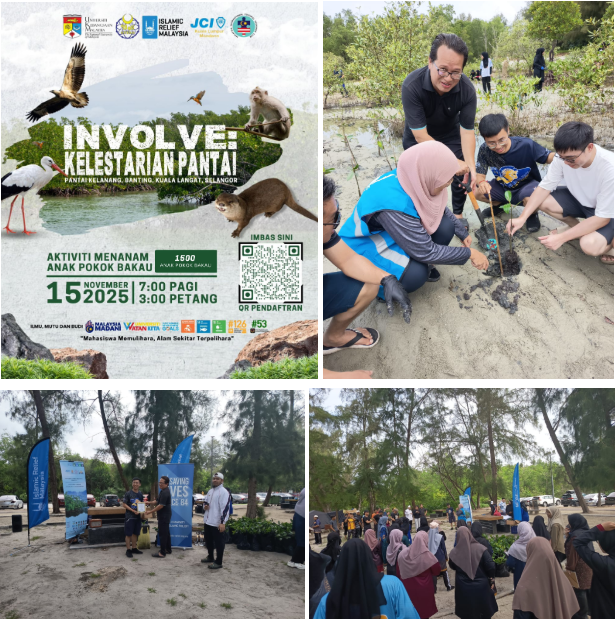
On 15 November 2025, Universiti Kebangsaan Malaysia (UKM), through its Faculty of Islamic Studies, participated in the Involve: Kelestarian Pantai (Coastal Sustainability Programme) at Pantai Kelanang, Banting, Kuala Langat, Selangor. Organised in connection with the PPPH4743 (Islam and the Environment) course, the programme involved collaboration with Islamic Relief Malaysia and JCI Kuala Lumpur Mandarin to promote responsible aquatic stewardship, coastal ecosystem conservation and community participation in environmental protection.
The programme focused on mangrove restoration, with a planned target of 1,500 mangrove saplings to support the rehabilitation of coastal habitats and the protection of aquatic ecosystems. Through hands-on mangrove planting and environmental volunteering, participants gained practical experience in coastal conservation while developing awareness of the ecological importance of mangrove forests in preventing coastal erosion, providing habitats for aquatic species and maintaining marine biodiversity. By integrating field-based conservation activities into academic learning, UKM encouraged students to practise responsible environmental stewardship guided by the Islamic principles of stewardship and responsibility.
Through this collaborative initiative, UKM supported a community-based conservation programme that encourages good aquatic stewardship practices, particularly through mangrove habitat restoration, environmental education and partnerships with non-governmental organisations.
Source : https://www.instagram.com/p/DRKdP8VE4SM/
5. Coral Monitoring and Care Project
Universiti Kebangsaan Malaysia (UKM) develops and supports programmes that encourage and maintain good aquatic stewardship through recurring conservation activities, marine education and partnerships with industry, government agencies and NGOs. On 22–24 August 2025, FST and Pusat Strategi UKM jointly organised the Pulau Tioman Conservation and Preservation Programme with LegeS Divers, Etiqa and the Department of Fisheries Malaysia. Continuing a collaboration established in 2022, the programme involved 84 participants in coral restoration and marine awareness activities, with 100 coral fragments successfully replanted.
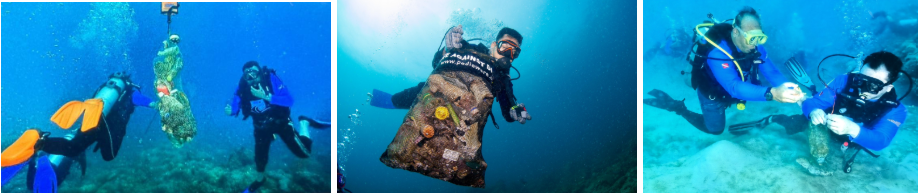
UKM also organised the Coral Monitoring and Care Project: RHB Ocean Harmoni Marine Literacy Programme in October 2025 through HEP-UKM, FST and Pusat Zakat UKM, in collaboration with RHB Islamic. The programme engaged staff, students, industry representatives and local residents in practical stewardship activities, including beach and underwater clean-ups that removed approximately 30 kg of waste and a ghost fishing net. Together, these programmes encourage responsible behaviour, provide opportunities for active participation and sustain collaborative efforts to protect aquatic ecosystems.
Link: https://www.facebook.com/share/p/14a6kkgpUQP/
Collectively, these programmes demonstrate UKM’s institutional support for aquatic stewardship through learning, volunteering and practical conservation opportunities. Reef maintenance, marine debris removal, coastal planting and wildlife awareness connect participants with the environmental pressures facing aquatic habitats and the actions they can take to help. Collaboration with industry, government agencies and conservation organisations extends the expertise and participation supporting this work. By combining recurring partnerships with education and research capacity, UKM provides a foundation for sustained engagement in the responsible care of aquatic ecosystems.