
Conserve and sustainably use the oceans, seas and marine resources for sustainable development
SDG 14 Indicator
14.2 – Supporting Aquatic Ecosystems Through Education
14.2.3 – Overfishing (Community Outreach)
Universiti Kebangsaan Malaysia (UKM) plays an active role in supporting aquatic ecosystem sustainability through educational programs and community outreach initiatives that address the critical issue of overfishing. In line with SDG 14: Life Below Water, UKM integrates research, education and community participation to promote the sustainable management of fisheries and marine biodiversity. Through a combination of academic research, awareness campaigns and hands-on conservation activities, the university works to reduce the ecological impacts of overfishing and to protect the long-term health of marine ecosystems. Key initiatives include the Marine Science Education and Research Training: UKM–UNAIR Internship Programme; the Etika Marine Conservation Project in Pulau Tioman, which focuses on coral reef restoration and marine awareness; and the STAL3083 Marine Biotechnology course, which provides foundational knowledge on sustainable aquaculture, biodiversity and the prevention of destructive fishing practices. Collectively, these programs demonstrate UKM’s dedication to advancing scientific knowledge, regional cooperation and community-based action in protecting aquatic ecosystems.
UKM Overfishing Awareness Programs
| No | UKM Overfishing Awareness Programs |
| 1 | Free: Marine Science Education and Research Training: UKM–UNAIR Internship Programme |
| 2 | Free: Coral Monitoring and Care Project. |
| 3 | Free: Bachelor of Science with Honours (Marine Science) (STAL3073: Fisheries Science and Technology) |
| 4 | Free: UKM Provide Free Online Courses On Sustainable Fisheries (STAL3083 MARINE BIOTECHNOLOGY) |
1. Marine Science Education and Research Training: UKM–UNAIR Internship Programme
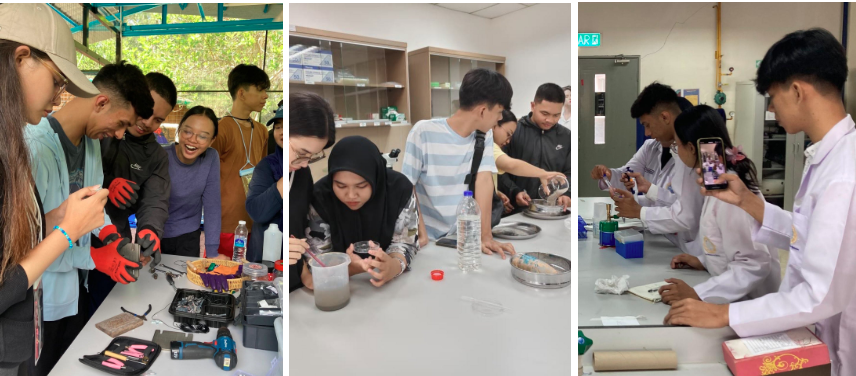
In September 2025, Universiti Kebangsaan Malaysia (UKM), through the Marine Science Programme, Department of Earth Sciences and Environment, Faculty of Science and Technology, hosted students from Universitas Airlangga (UNAIR), Indonesia, for a two-week internship focused on marine science. Participants gained practical experience through research activities, laboratory training and fieldwork alongside UKM researchers and students. The programme strengthened participants’ marine research skills and fostered academic collaboration between the two regional universities, contributing to capacity building in marine science.
Link: https://www.facebook.com/share/p/19jRG1hWMQ/
2. Free: Coral Monitoring and Care Project
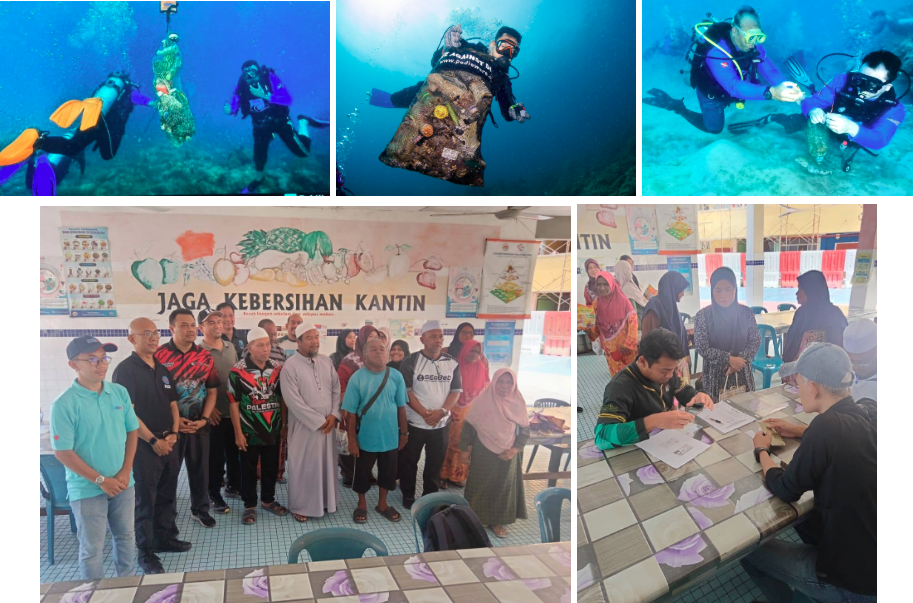
On 3-5 October 2025, A total of 25 scuba divers, comprising members of UKM’s top management, Heads of Departments, UKM staff, representatives from RHB Group, and students, participated in the coral reef clean-up activity and carried out a three-day coral conservation mission. Organised collaboratively by RHB Islamic and UKM (FST-UKM, HEP-UKM, and Pusat Zakat UKM), the programme serves as a strategic partnership initiative aimed at promoting environmental awareness and education while supporting the conservation and preservation of marine ecosystems.
More than 30 kg of waste was successfully collected from the seabed at a depth of approximately 7 metres. Meanwhile, beach clean-up activities were carried out by students from the Marine Science Programme together with FST staff at Pulau Senggereh and Pulau Rawa. The effort included monitoring coral health, conducting educational workshops, and extending Amal Jariah donations to the Pulau Tioman community. This initiative focuses on coral reef restoration as a proactive measure to protect and rehabilitate vital marine ecosystems. Through coral transplantation activities, the program provides a practical solution to mitigate the impacts of global warming and climate change on fragile reef habitats. Beyond restoration efforts, the mission also serves as an awareness platform, educating participants and the wider community on the importance of coral reef conservation, marine biodiversity, and collective responsibility in preserving ocean health for future generations.
The programme also incorporated educational outreach for local communities to raise awareness of overfishing, illegal, unreported and unregulated (IUU) fishing and destructive fishing practices. These activities highlighted how unsustainable fishing threatens coral reefs, depletes fish stocks and undermines coastal livelihoods. Participants were encouraged to adopt responsible fishing practices, comply with fisheries regulations and report suspected illegal activities to the relevant authorities, strengthening community participation in protecting marine ecosystems.
Link: https://www.facebook.com/share/p/14a6kkgpUQP/
3. Free: Bachelor of Science with Honours (Marine Science) (STAL3073: Fisheries Science and Technology)
Universiti Kebangsaan Malaysia (UKM) offers a Bachelor of Science with Honours in Marine Science programme, which includes STAL3073 (Fisheries Science and Technology). This course covers fish stock management, fishing technologies and fisheries biology, providing students with knowledge of sustainable fisheries management and the impacts of fishing activities on marine ecosystems. The academic content can support educational outreach initiatives to raise awareness among local and national communities about overfishing, illegal, unreported and unregulated (IUU) fishing, and destructive fishing practices.
4. Free: UKM Provide Free Online Courses On Sustainable Fisheries (STAL3083: Marine Biotechnology)
UKM offers an educational program through a course on Marine Biotechnology that indirectly addresses issues related to overfishing and destructive fishing practices. The course includes Biodiversity, Aquaculture, and Fisheries that provide a foundation for understanding sustainable fisheries practices. Detection of Toxins, Poisons, and Pollutants on monitoring and protecting marine ecosystems impacted by overfishing and pollution. Besides, it highlights the importance of marine resources and the risks of over-exploitation. While the course primarily focuses on biotechnology applications, it raises awareness of marine ecosystem preservation and sustainable management practices, which are essential for mitigating the impacts of overfishing and related destructive activities. This program contributes to UKM’s outreach in promoting sustainable fisheries and ecosystem conservation.
Biotechnology approaches are increasingly being used to address specific issues in the marine environment. Likewise, marine organisms are increasingly used in biotechnology research. This course begins with an explanation of the concept of biotechnology by giving specific examples. This was followed by a discussion of the fields of marine science that use a biotechnology approach, for example in taxonomy, biodiversity, aquaculture and fisheries, detection of toxins and poisons, bioremediation, and detection of pollutants. Further, aspects of the exploitation of marine organisms as a source of material for various biotechnology applications will be discussed. Practice will focus on DNA extraction methods, PCR process, gene sequencing, data analysis, algae toxin detection, and detection of bioactive substances from marine organisms.
Through its multi-dimensional approach combining academic research, education and community engagement, UKM has established itself as a national leader in marine sustainability and overfishing awareness. Each initiative, from academic publications to coral restoration and biotechnology-based learning, contributes to a deeper understanding of the delicate balance between human activity and marine biodiversity. These efforts not only empower communities and students with the knowledge and tools to promote responsible fisheries management, but also reinforce UKM’s commitment to regional and global action against overfishing. Guided by the UKM Sustainability Strategic Plan 2030, the university continues to nurture informed, responsible and proactive stewards of the ocean. Through education and collaboration, UKM is helping to ensure that marine resources are preserved for future generations, securing the health, resilience and sustainability of aquatic ecosystems in Malaysia and beyond.