

Conserve and sustainably use the oceans, seas and marine resources for sustainable development
SDG 14 Indicator
14.5 – Maintaining a Local Ecosystem
14.5.2 – Monitoring The Health of Aquatic Ecosystems
Universiti Kebangsaan Malaysia (UKM) demonstrates its unwavering commitment to monitoring and preserving the health of aquatic ecosystems through scientific research, international collaboration, and advanced technological applications. In line with SDG 14: Life Below Water, UKM actively monitors water quality, biodiversity and pollution levels to safeguard marine and freshwater environments. Through initiatives such as the Ecomarine Project, the university applies data-driven methods to assess environmental changes, track contaminants, and develop sustainable management strategies that ensure the resilience of aquatic ecosystems.
A key achievement under this initiative is the establishment of Marine Monitoring Laboratories (MMLs) in Malaysia, including UKM’s state-of-the-art facility in Tanjung Resang, Mersing, developed under the ERASMUS+ Programme of the European Union. These laboratories serve as essential hubs for long-term ecosystem surveillance, contributing to marine conservation and coastal sustainability.
Monitoring the health of aquatic ecosystems
| No | Monitoring the health of aquatic ecosystems |
| 1 | Ecomarine Initiative i. UKM has established Marine Monitoring Laboratories (MMLs) in Malaysia. |
| 2 | Water Quality and Ecohydrology Research, Tasik Chini Research Centre (PPTC) |
| 3 | Coral Monitoring and Care Project. |
1. Ecomarine Initiative
Monitoring the health of aquatic ecosystems at Universiti Kebangsaan Malaysia (UKM) continues a significant step forward through the Ecomarine initiative, which targets the protection of marine life from various human and environmental threats, including climate change, plastic marine debris, overfishing, and habitat degradation. This initiative includes the establishment of four cutting-edge Marine Monitoring Labs across Malaysia and India, co-funded by the ERASMUS+ Programme of the European Union.
i. UKM has established Marine Monitoring Laboratories (MMLs) in Malaysia
Universiti Kebangsaan Malaysia (UKM) demonstrates its firm commitment to monitoring and safeguarding aquatic ecosystems through its designation as one of the two Marine Monitoring Laboratories (MMLs) established in Malaysia, strategically located in Tanjung Resang, Mersing, on the east coast. This facility serves as a vital hub for marine ecosystem research and continuous environmental assessment, focusing on water quality, biodiversity health, and coastal sustainability. Through this initiative, UKM reinforces its role as a key national institution dedicated to the long-term monitoring, protection, and sustainable management of marine environments, in alignment with SDG 14: Life Below Water.

2. Water Quality and Ecohydrology Research, Tasik Chini Research Centre (PPTC)
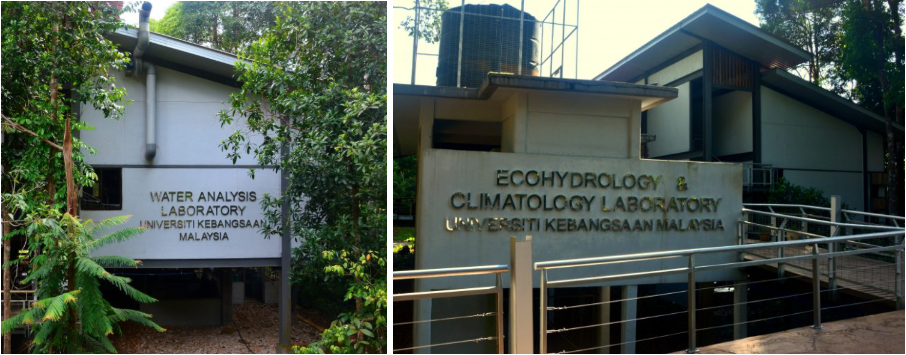
For freshwater ecosystems, UKM’s Tasik Chini Research Centre (PPTC) conducts water quality and ecohydrology research using monitoring stations within Tasik Chini, its feeder rivers and Sungai Chini. Field sampling and laboratory analyses integrate hydrological, chemical, biological and sediment measurements to detect environmental changes and assess pollution impacts. These activities provide scientific evidence to inform aquatic ecosystem conservation and sustainable management.
Source: https://www.ukm.my/pptc/water-quality-eco-hydrology/
3. Coral Monitoring and Care Project
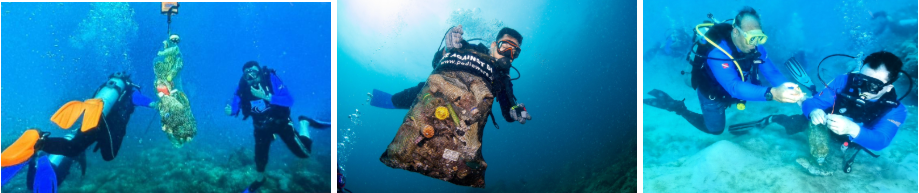
Universiti Kebangsaan Malaysia (UKM) monitored coral reef health during a three-day marine conservation mission held from 3 to 5 October 2025, in collaboration with RHB Islamic. Jointly organised by FST-UKM, HEP-UKM and Pusat Zakat UKM, the programme involved 25 scuba divers comprising UKM’s senior management, Heads of Departments, staff, RHB Group representatives and students. Underwater activities included monitoring coral health, removing debris from reef habitats and undertaking coral transplantation to support ecosystem restoration.
More than 30 kg of waste was collected from the seabed at approximately seven metres depth. Marine Science students and FST staff also conducted beach clean-ups at Pulau Senggereh and Pulau Rawa. Combined with educational workshops, these activities linked coral health monitoring with practical measures to reduce pollution and support the protection and recovery of aquatic ecosystems.
Link: https://www.facebook.com/share/p/14a6kkgpUQP/
Collectively, these initiatives demonstrate UKM’s contribution to assessing aquatic environmental conditions and identifying pressures on freshwater and marine habitats. Water-quality and ecohydrological research provide evidence of ecosystem condition, while marine monitoring facilities and reef-based activities support further observation and assessment. Connecting these findings with conservation priorities can help guide pollution prevention, habitat protection and future monitoring. Through this combination of research capability and field engagement, UKM provides a scientific foundation for informed stewardship of aquatic ecosystems.