
Promote peaceful and inclusive societies for sustainable development, provide access to justice for all and build effective, accountable and inclusive institutions at all levels
SDG 16 Indicator
16.3 – Working with government
16.3.3 – Participation in government research
Yes, UKM is committed to advancing evidence-based policymaking through policy-focused research conducted in collaboration with government ministries, departments, and public agencies. By leveraging its multidisciplinary research expertise, UKM actively contributes to the formulation, implementation, and evaluation of public policies that address national priorities and emerging societal challenges, including public health, environmental sustainability, climate change, disaster risk management, and social development. These strategic collaborations facilitate knowledge exchange, joint research initiatives, and the development of research-informed policy recommendations that support effective government decision-making. Through its research institutes, faculties, and centres of excellence, UKM serves as a strategic knowledge partner to government institutions, translating scientific findings and academic expertise into practical policy solutions. These efforts reinforce UKM’s institutional commitment to strengthening public governance, promoting inclusive and sustainable development, and supporting the achievement of Sustainable Development Goal 16: Peace, Justice and Strong Institutions.
Table showing participation in policy focused research in collaboration with governments department
| No | Policy Focused Research | Government Department |
|---|---|---|
| 1. | The Malaysian Cohort Biobank | Ministry of Science, Technology and Innovation (MOSTI) |
| 2. | Sustainable TVET Financing and Public–Private Partnerships | Department of Skills Development |
| 3. | Implementation of the National Disaster Risk Reduction Policy 2030 | National Disaster Management Agency (NADMA) |
| 4. | Spatial Social Vulnerability Model for Landslide Disasters in Malaysia | Ministry of Higher Education Malaysia (MOHE) |
| 5. | National Identity Strengthening Model (M-PIN) Based on the Malaysia MADANI Framework | Ministry of National Unity |
| 6. | UKM–ERIA Research Collaboration on ASEAN Economic Policy and Regional Development | Economic Research Institute for ASEAN and East Asia (ERIA) |
1. The Malaysian Cohort Biobank
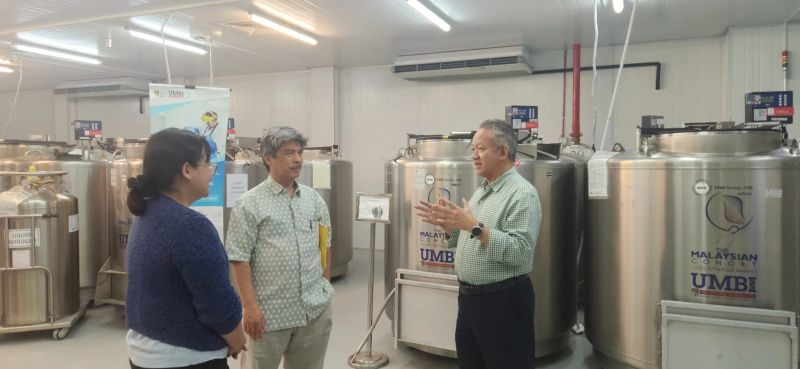
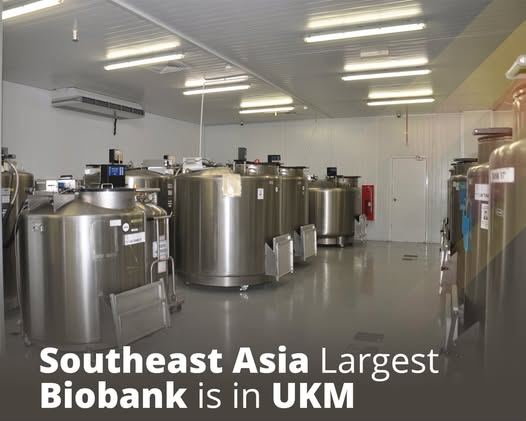
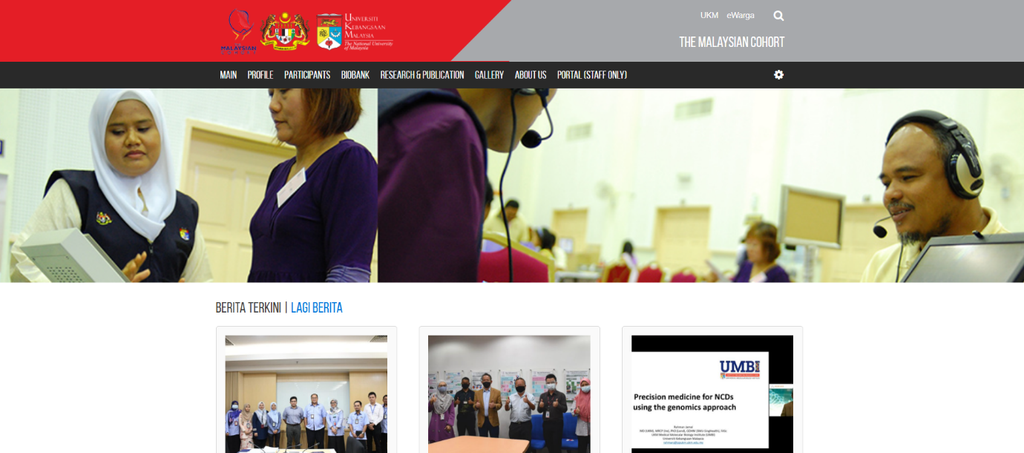
UKM, through The Malaysian Cohort (TMC) research initiative, contributes to evidence-based public health policymaking by generating comprehensive scientific data on the health status, lifestyle patterns, and risk factors affecting Malaysia’s population. Established as a large-scale, long-term population health research initiative with support from the Ministry of Science, Technology and Innovation (MOSTI), TMC involves more than 100,000 participants and provides an important national research resource for understanding the development and progression of non-communicable diseases (NCDs).
The research, led by Professor Datuk A. Rahman bin A. Jamal from the UKM Faculty of Medicine, focuses on investigating the complex relationships between genetic, environmental, lifestyle, and socio-demographic factors that influence the prevalence and progression of major chronic diseases, including diabetes, cardiovascular diseases, and cancer. Through longitudinal data collection, health assessments, and epidemiological analysis, TMC generates scientific evidence that can contribute to identifying population health trends, evaluating disease risk factors, and understanding health inequalities among Malaysia’s diverse communities.
From a public policy perspective, TMC provides a valuable scientific foundation for the formulation and refinement of national health strategies, particularly those related to non-communicable disease prevention, early detection, health promotion, and preventive healthcare. Its research findings have the potential to inform government priorities concerning disease surveillance, public health interventions, and long-term healthcare planning. The availability of population-based evidence also supports more informed decisions regarding healthcare resource allocation and the development of targeted prevention strategies for vulnerable and at-risk communities.
Through this initiative, UKM demonstrates its institutional capacity to conduct large-scale, policy-relevant research that addresses national public health challenges. The research creates opportunities for knowledge exchange and collaboration with government institutions, particularly in translating epidemiological findings into practical recommendations for public health planning and disease prevention.
The Malaysian Cohort reflects UKM’s commitment to strengthening the scientific evidence base for public health policy and supporting research-informed decision-making. By generating longitudinal population health evidence relevant to national development priorities, the initiative contributes to more responsive and inclusive public health governance, supporting the broader objectives of Sustainable Development Goal 16: Peace, Justice and Strong Institutions.
Source : TMC UPDATE
2. Policy-Focused Research on Sustainable TVET Financing and Public–Private Partnerships
Malaysia’s TVET institutions
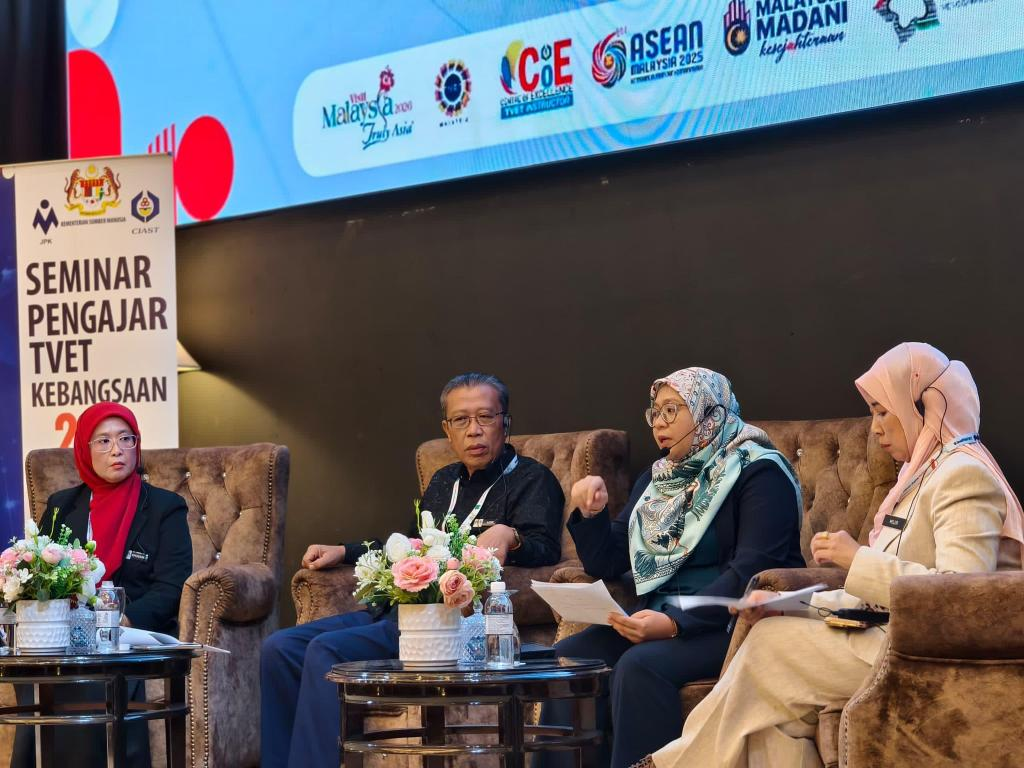
UKM, through its TVET Dynamics Research Group under the IDEA Centre, contributes to national policy-focused research aimed at strengthening Malaysia’s Technical and Vocational Education and Training (TVET) ecosystem. Led by Associate Professor Ts. Dr. Haryanti Mohd Affandi, the research group focuses on sustainable institutional financing, public–private partnerships, and evidence-based strategies to enhance the effectiveness and long-term sustainability of TVET institutions.
In 2025, Dr. Haryanti and her research team produced several policy-oriented research outputs, including the Performance-Based Financing Study for TVET Institutions in Malaysia, Public–Private TVET Synergy (STAS) for Sustainable Financing of TVET Institutions in Malaysia, and an action plan and implementation guidelines for the Public–Private Synergy Model for Malaysian TVET Institutions. These research outputs address institutional funding challenges and explore alternative financing approaches, performance-based resource allocation, and strategic collaboration between public and private stakeholders.
UKM also strengthened its institutional engagement with the Department of Skills Development (Jabatan Pembangunan Kemahiran, JPK) through a Memorandum of Understanding in 2025, supporting joint research, policy development, and the advancement of Malaysia’s national TVET ecosystem. This collaboration provides an institutional platform for connecting academic expertise with government priorities in technical and vocational education.
Through these initiatives, UKM contributes research-based knowledge, policy recommendations, and implementation-oriented frameworks that can support government decision-making in TVET financing, institutional governance, and workforce development. The research demonstrates UKM’s commitment to strengthening evidence-informed policymaking and promoting effective, sustainable, and responsive educational institutions, in alignment with Sustainable Development Goal 16: Peace, Justice and Strong Institutions.
3. Implementation of the National Disaster Risk Reduction Policy 2030
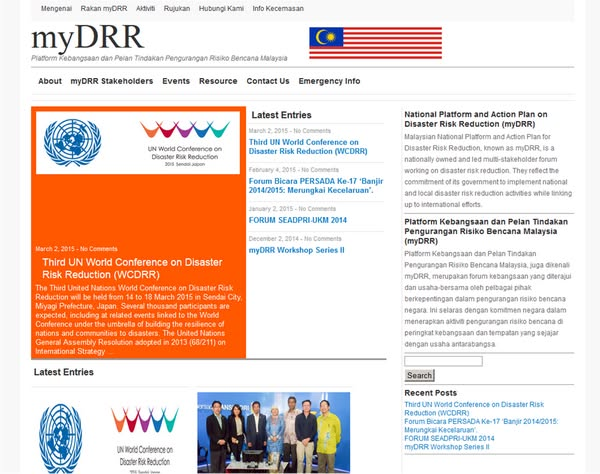
UKM, through the Southeast Asia Disaster Prevention Research Initiative (SEADPRI) under the Institute for Environment and Development (LESTARI), collaborated with the National Disaster Management Agency (NADMA) on the implementation of Malaysia’s National Disaster Risk Reduction Policy 2030. The research project, led by Professor Dr. Joy Jacqueline Pereira, was conducted during 2024–2025 and focused on strengthening evidence-informed disaster risk governance and national policy implementation. In 2025, SEADPRI-UKM continued supporting the Malaysia National Platform for Disaster Risk Reduction (MyDRR), including its role in facilitating stakeholder coordination, knowledge sharing, and reporting of disaster risk reduction initiatives. This collaboration demonstrates UKM’s direct contribution to government policy implementation through applied research, scientific expertise, and institutional partnerships.
4. Spatial Social Vulnerability Model for Landslide Disasters in Malaysia
UKM, through the Institute for Environment and Development (LESTARI), undertakes policy-relevant research through a project entitled “Spatial Social Vulnerability Model for Landslide Disasters in Malaysia”. Led by Gs. Dr. Nuriah Abd Majid, the research project is supported by the Ministry of Higher Education Malaysia (MOHE) and is implemented during the 2024–2027 period.
The research focuses on developing a spatial model to assess social vulnerability associated with landslide disasters in Malaysia. By integrating geospatial analysis with socio-economic and demographic considerations, the study seeks to improve understanding of how different communities may be exposed and vulnerable to landslide hazards. This approach is particularly relevant to Malaysia, where landslide risks pose significant challenges to community safety, infrastructure resilience, land-use planning, and sustainable development.
The development of a spatial social vulnerability model has important implications for evidence-based disaster risk reduction and public policy planning. The research has the potential to provide scientific insights that can assist government authorities in identifying vulnerable communities, prioritising disaster preparedness measures, and strengthening risk-sensitive land-use planning. Its findings could also support the refinement of disaster management strategies, slope development guidelines, and community resilience initiatives, particularly in areas susceptible to landslides.
Through this research, UKM contributes its expertise in environmental science, geospatial analysis, and disaster risk management to addressing national challenges. The project provides opportunities for research findings to inform government planning and policy discussions involving relevant authorities, including disaster management agencies and local planning institutions. Such research supports the integration of scientific evidence into public-sector decision-making and promotes more inclusive and effective disaster risk governance.
This initiative demonstrates UKM’s commitment to producing policy-relevant research that can support government decision-making, particularly in disaster risk reduction, environmental management, and community resilience. It contributes to the objectives of Sustainable Development Goal 16: Peace, Justice and Strong Institutions, by promoting evidence-informed governance and strengthening the scientific foundation for responsive public policies.
Source : https://www.ukm.my/lestari/projek-penyelidikan/
5. National Identity Strengthening Model (M-PIN) Based on the Malaysia MADANI Framework
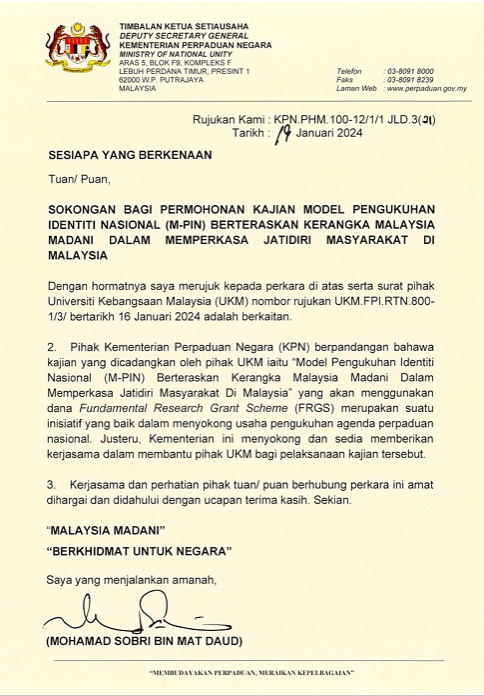
UKM, through a research team led by Assoc. Prof. Dr. Ermy Azziaty binti Rozali from the Faculty of Islamic Studies, undertakes policy-relevant research with the support and cooperation of the Ministry of National Unity ( KPN) through the project entitled “Model Pengukuhan Identiti Nasional (M-PIN) Berteraskan Kerangka Malaysia MADANI dalam Memperkasa Jati Diri Masyarakat di Malaysia” (National Identity Strengthening Model Based on the Malaysia MADANI Framework to Empower Societal Identity in Malaysia).
The research project, implemented from 1 August 2024 to 31 July 2026, is funded under the Fundamental Research Grant Scheme (FRGS). The research team also includes Assoc. Prof. Dr. Roziah Sidik @ Mat Sidek, Assoc. Prof. Dr. Azlizan Mat Enh, Dr. Muhamad Nadzri Mohamed Noor and Dr. Nur Ainul Basyirah Alias.
The project focuses on developing a research-based model for strengthening national identity and societal values within Malaysia’s multicultural society, guided by the principles of the Malaysia MADANI framework. By examining issues related to national identity and social cohesion, the research seeks to contribute knowledge that can inform approaches to strengthening unity, civic awareness and a shared sense of national belonging.
This formal endorsement establishes a documented connection between UKM’s academic research and the Ministry’s national policy priorities. Through the proposed cooperation, UKM’s research has the potential to generate evidence and analytical insights relevant to national identity development, social integration and the formulation of future unity-related policies and programmes.
In 2025, the project remained within its approved implementation period, demonstrating UKM’s continuing engagement in policy-relevant research supported by a national government ministry. The collaboration provides a foundation for connecting academic research with government priorities while supporting the development of evidence-informed approaches to national unity.
This initiative contributes to Sustainable Development Goal 16 (Peace, Justice and Strong Institutions) by supporting research relevant to peaceful and inclusive societies, social cohesion and responsive governance. It also provides supporting evidence for SDG 16.3.3, demonstrating UKM’s involvement in policy-focused research with formal government support and a stated commitment to cooperation.
Source: SPMP – Assoc. Prof. Dr. Ermy
6. UKM–ERIA Research Collaboration on ASEAN Economic Policy and Regional Development
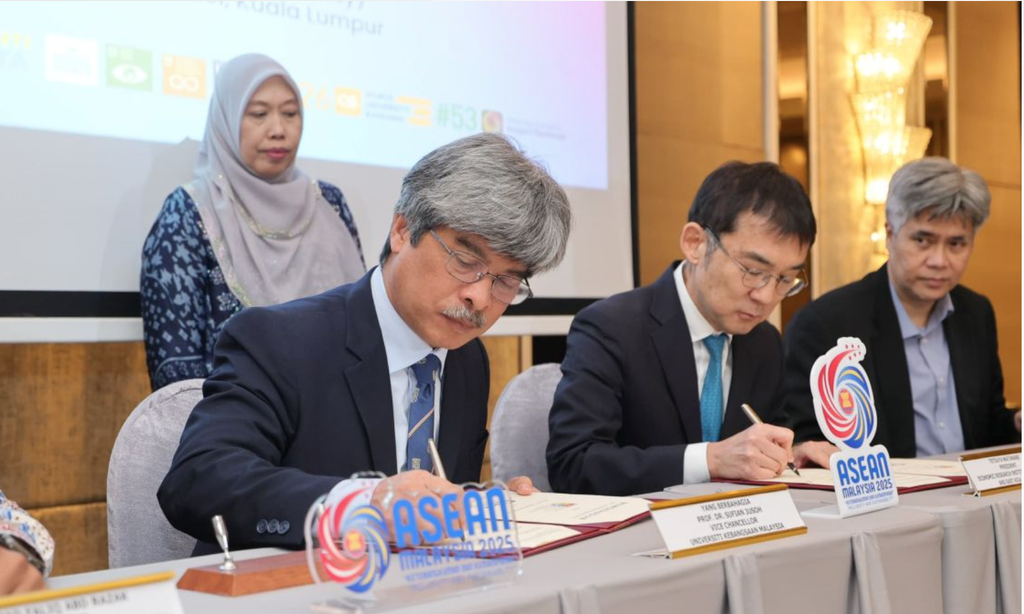
UKM strengthened its engagement in policy-oriented research through a strategic collaboration with the Economic Research Institute for ASEAN and East Asia (ERIA), as highlighted in an official UKM announcement dated 27 October 2025. The collaboration reflects UKM’s commitment to supporting evidence-based policymaking, regional economic integration, and sustainable development by connecting academic research with ASEAN’s strategic policy priorities.
The collaboration focuses on advancing research and policy discussions in key areas of regional economic development, particularly the ASEAN Framework for an Integrated Semiconductor Supply Chain and the ASEAN Electric Vehicle (EV) Battery Passport initiative. These areas are closely aligned with Malaysia’s industrial transformation, technological innovation, supply chain resilience, and sustainability priorities. Research in these fields can contribute to identifying regulatory challenges, evaluating economic opportunities, and developing policy recommendations that support regional industrial competitiveness and sustainable economic growth.
Through this engagement, UKM contributes its multidisciplinary academic expertise to regional policy research and knowledge exchange, while ERIA provides a platform for connecting research findings with policy discussions involving ASEAN and East Asian stakeholders. The collaboration creates opportunities for joint research, policy analysis, and the development of evidence-based recommendations to inform government strategies concerning industrial development, emerging technologies, regional economic cooperation, and environmental sustainability.
This initiative highlights UKM’s role as a strategic research and knowledge partner in supporting policy development at national and regional levels. By strengthening the relationship between academic research and policy institutions, UKM contributes to the broader objectives of Sustainable Development Goal 16, particularly the promotion of effective, accountable, and responsive institutions through research-informed governance and decision-making.
Source: https://www.ukm.my/beritaukm/ukm-jalin-kerjasama-dengan-eria-dalam-penyelidikan-dan-dasar/
UKM’s policy-focused research creates opportunities for government institutions to draw on multidisciplinary expertise when addressing complex public challenges. Research on disaster governance and TVET financing illustrates the connection between policy needs, university analysis and practical recommendations. Documenting government participation throughout the research process, alongside completed reports, models and policy outputs, demonstrates the substance of these collaborations. This approach strengthens the evidence base available to public institutions and contributes to SDG 16: Peace, Justice and Strong Institutions.