
Promote peaceful and inclusive societies for sustainable development, provide access to justice for all and build effective, accountable and inclusive institutions at all levels
SDG 16 Indicator
16.2 – University governance measures
16.2.2 – Students’ union
1. Kesatuan Mahasiswa UKM (KMUKM)
Universiti Kebangsaan Malaysia (UKM) has an officially recognised students’ union known as the Kesatuan Mahasiswa Universiti Kebangsaan Malaysia (KMUKM).
The Kesatuan Mahasiswa Universiti Kebangsaan Malaysia (KMUKM) serves as the University’s official student representative body, providing a structured platform for students to express their views, advocate for their rights and welfare, and participate in matters affecting the student community. KMUKM plays an important role in strengthening communication between students and university management, ensuring that student interests and concerns are represented through formal institutional channels.
KMUKM operates through a democratic student representation system, whereby its leadership is elected through the University’s Campus Election (Pilihan Raya Kampus, PRK). This process enables students to exercise their voting rights and elect representatives responsible for advocating their interests. In 2025, the transition from the KMUKM 2024/2025 leadership to the 2025/2026 session demonstrated the continuity of student representation through the campus electoral and appointment processes.

Through its established governance structure, democratic leadership selection and continuous engagement with university stakeholders, KMUKM demonstrates UKM’s commitment to providing students with an independent representative platform within the university’s institutional framework. Its existence and active operation support inclusive student participation, representative governance and institutional accountability, contributing to SDG 16: Peace, Justice and Strong Institutions.
In 2025, KMUKM’s leadership line led by Muhammad Haikal bin Hamidi as President, was given the mandate after winning the Campus Election held in the same year.
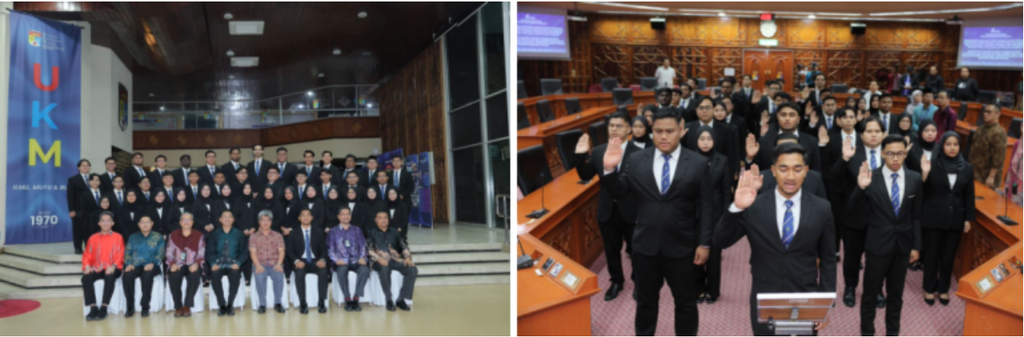
Link: Majlis Penyampaian Watikah KMUKM
Beyond its representative function, KMUKM actively engages with university leadership and participates in institutional discussions concerning student affairs. The President of KMUKM is included among the invited participants in UKM Senate meetings, providing a formal avenue for student perspectives to be communicated within the University’s governance structure. KMUKM also maintains engagement with faculties and university management to discuss student concerns, proposed initiatives and matters relating to student welfare.

2. UKM Student Parliament 2025: Strengthening Student Union Participation in University Governance
Universiti Kebangsaan Malaysia (UKM) recognises the important role of Kesatuan Mahasiswa UKM (KMUKM) in representing student interests and providing meaningful input into university governance. Through the UKM Student Parliament (Parlimen Mahasiswa UKM), KMUKM provides a structured platform for student representatives to voice concerns, deliberate on institutional matters and propose recommendations to university management, promoting inclusive and participatory decision-making.
The 9th UKM Student Parliament Session, held on 12–13 April 2025 at the UKM Senate Room, demonstrated the Student Union’s active involvement in university governance. The parliamentary session enabled student representatives to discuss issues concerning student welfare, academic affairs, campus facilities and university policies, providing opportunities for student perspectives to be communicated to university leadership. Through parliamentary debates, motions and resolutions, the platform facilitates constructive dialogue between student representatives and university management.
This initiative highlights KMUKM’s role in providing governance input to UKM, ensuring that student voices are represented in institutional discussions and decision-making processes. By supporting the UKM Student Parliament, the university reinforces its commitment to democratic student representation, transparency, accountability and inclusive governance.
www.instagram.com/parlimenmahasiswa_ukm
3. Governance Input
i. Courtesy Visit to the Faculty of Law and Four-Way Courtesy Visit
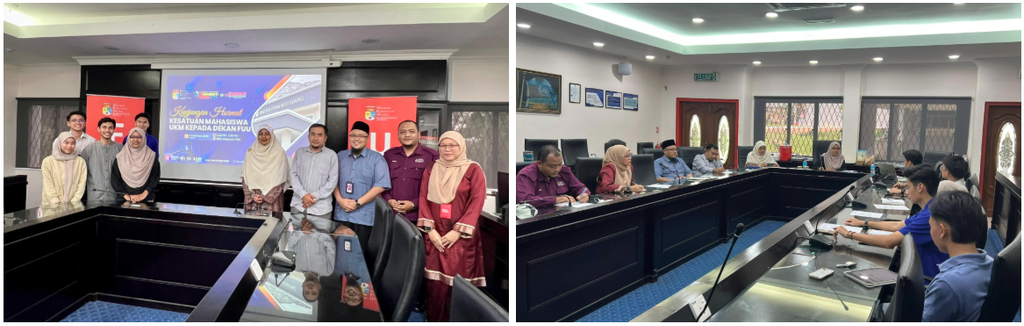
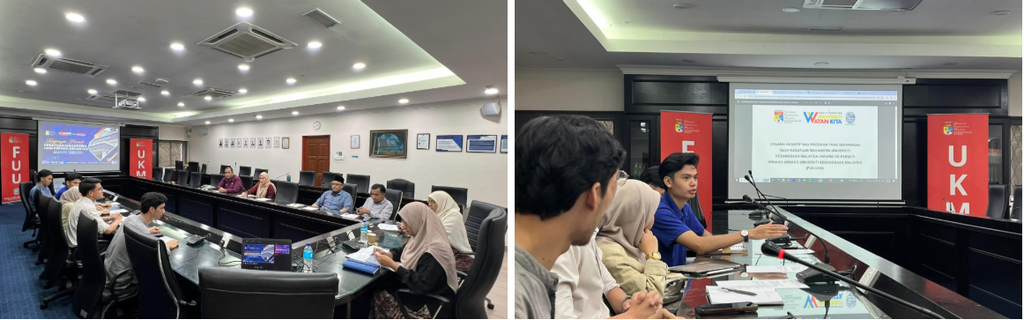
Throughout 2025, KMUKM demonstrated its active role through various engagements, including the Courtesy Visit to the Dean of the Faculty of Law on 17 February 2025 and the Four-Way Courtesy Visit involving student representative councils from UPSI, UniSZA and UMT on 20 April 2025. These engagements provided opportunities for consultation, the exchange of student governance practices and discussions concerning student welfare, further demonstrating KMUKM’s role as an active representative organisation.
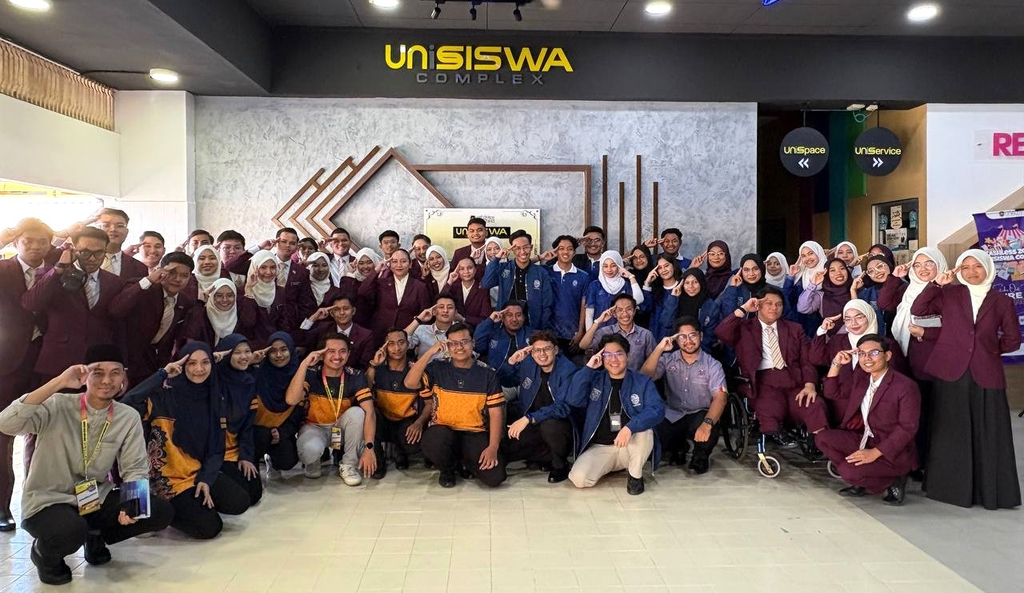
Source: https://epena.com.my/index.php/2025/05/06/kunjungan-hormat-4-penjuru-mpp-upsi-unisza-umt-dan-kmukm-medan-perbincangan-isu-kebajikan-pelajar/
ii. KMUKM Financial Town Hall 2025: Promoting Transparency and Accountability in Student Union Governance
Student Union Governance
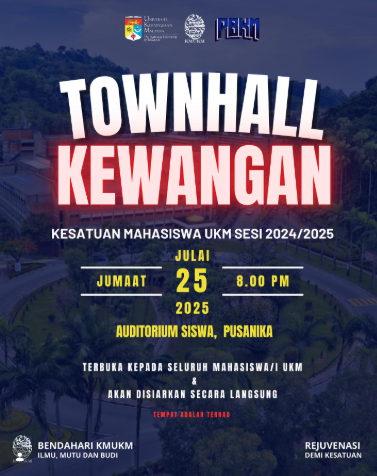
Universiti Kebangsaan Malaysia (UKM), through its students’ union, the Kesatuan Mahasiswa Universiti Kebangsaan Malaysia (KMUKM), demonstrates its commitment to transparent and accountable student governance through the organisation of the KMUKM Financial Town Hall 2025, scheduled for 25 July 2025 at Auditorium Siswa, Pusanika. Organised under the Treasurer’s Office of KMUKM Session 2024/2025, the initiative provided a platform intended to encourage engagement between student representatives and the wider student community on matters relating to financial governance.
The town hall was announced as open to all UKM students, with arrangements for live-streaming to broaden accessibility and participation. By establishing an open forum focused on financial matters, KMUKM demonstrated its intention to promote transparency, student engagement and responsible financial governance within the students’ union. The initiative also reflects KMUKM’s organisational capacity to facilitate communication between its leadership and the students it represents.
For SDG 16.2.2, this initiative provides supporting evidence that KMUKM functions as an organised students’ union with a dedicated financial administration and mechanisms for engaging its members. It complements the University’s formal student representation structure by demonstrating how KMUKM promotes participatory governance, accountability and communication within the student community.
Source : https://www.instagram.com/p/DMb6WXuSRfc
4. Supporting Activities
i. Youth Economic and Sustainable Goals Forum (YESGo UKM 2025)
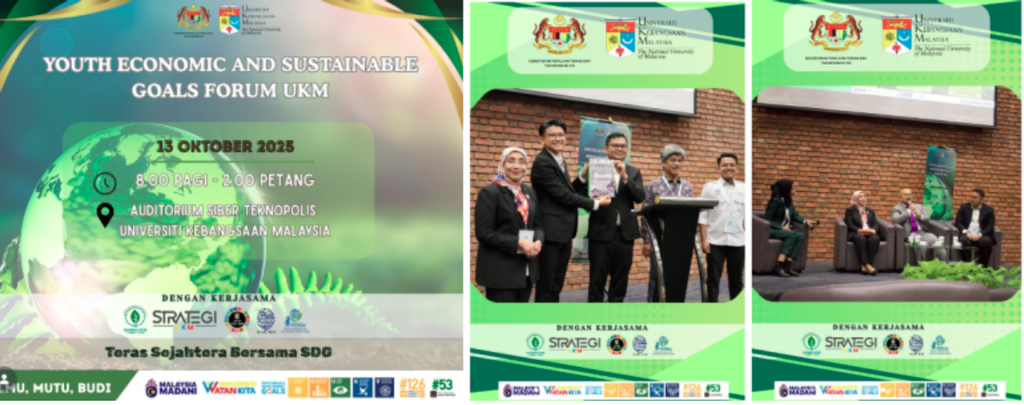
Universiti Kebangsaan Malaysia (UKM), through its students’ union, the Kesatuan Mahasiswa Universiti Kebangsaan Malaysia (KMUKM), actively supports platforms that encourage student participation in discussions on national development and sustainability. This role was demonstrated through the Youth Economic and Sustainable Goals Forum (YESGo UKM 2025), held on 13 October 2025. The programme was organised by the Environmental and Green Energy Management Association UKM (EniGMA-UKM) in collaboration with KMUKM, the UKM Strategy Centre and UKM Institute for Sustainable Development (ISN-SDG).
YESGo UKM 2025 provided a platform for young people to engage in discussions concerning the green economy, environmental sustainability, employment and the role of youth in advancing sustainable development. By participating as a collaborating student body, KMUKM helped facilitate opportunities for students to engage with broader sustainability and socio-economic issues that extend beyond routine campus activities. This demonstrates the students’ union’s role in supporting meaningful student participation in dialogue on issues affecting young people and society.
The forum is particularly relevant to SDG 16.2.2 because it illustrates that KMUKM functions as an active students’ union that facilitates student voice, participation and stakeholder engagement. Its involvement in YESGo UKM complements KMUKM’s representative role within university governance by creating additional spaces where students can exchange perspectives and engage with stakeholders from different sectors. Such platforms strengthen the ability of students to participate constructively in discussions concerning policies, development priorities and sustainability challenges.
Through KMUKM’s involvement, YESGo UKM 2025 also demonstrates UKM’s broader commitment to inclusive and participatory institutional engagement. Providing students with opportunities to contribute to structured dialogue helps develop informed student leadership while ensuring that youth perspectives are represented in discussions concerning sustainable and inclusive development.
Source: www.instagram.com/p/DRCeTu5ksKD
ii. Foster Family Programme in Marudi, Sarawak – KMUKM X PEMASRA
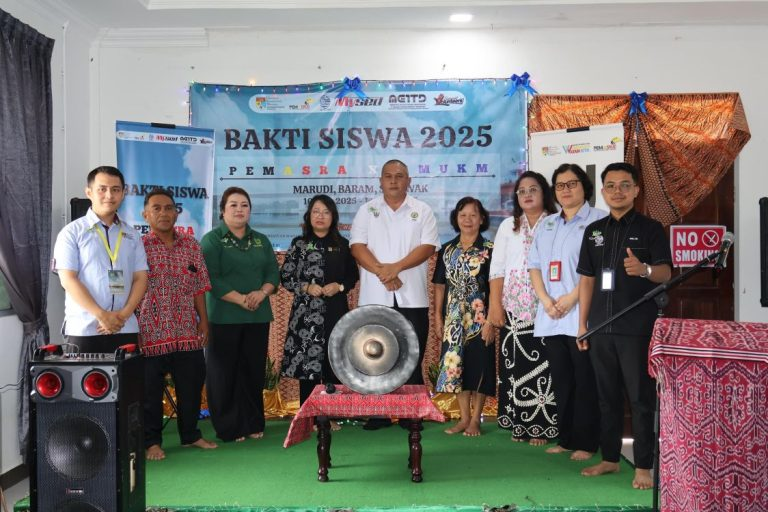
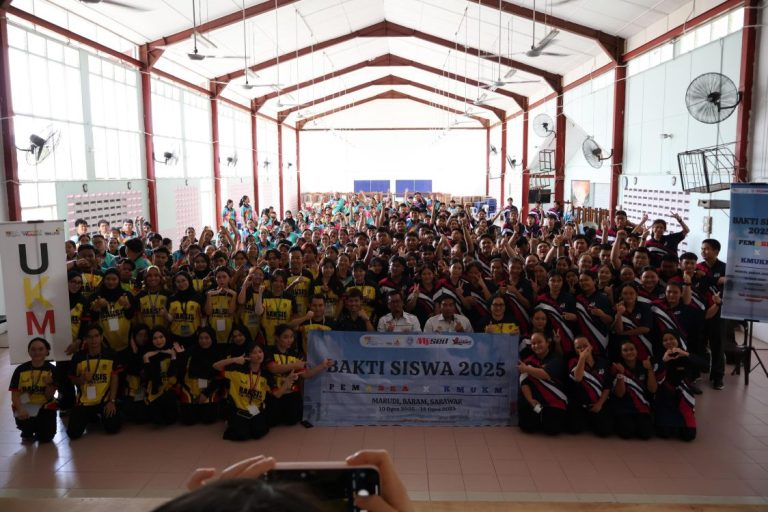
Kesatuan Mahasiswa Universiti Kebangsaan Malaysia (KMUKM), extends student participation beyond campus governance by actively supporting community engagement and social inclusion initiatives. In 2025, KMUKM collaboratedKesatuan Mahasiswa Universiti Kebangsaan Malaysia (KMUKM), extends student participation beyond campus governance by actively supporting community engagement and social inclusion initiatives. In 2025, KMUKM collaborated with the Persatuan Mahasiswa Sarawak (PEMASRA) in implementing a Foster Family Programme in Marudi, Sarawak, involving activities at SMK Marudi and Rumah Panjang Logan Entasan. The programme was also conducted in collaboration with the Sarawak Ministry of Youth, Sports and Entrepreneur Development, demonstrating cooperation between student organisations, educational institutions, local communities and government stakeholders.
The programme involved 42 UKM students from Peninsular Malaysia, Sabah and Sarawak, providing an inclusive platform that brought together students from different geographical and cultural backgrounds. Participants engaged directly with local communities through educational and social activities, including community clean-up activities (gotong-royong), traditional games, arts and crafts, student motivational activities and cultural programmes. Through these activities, students were able to interact closely with local residents while developing greater understanding of community life, cultural diversity and social needs.
This programme provides evidence that KMUKM operates as an active and socially engaged students’ union, rather than existing solely as an administrative or representative structure. While its primary role is to represent the interests and welfare of UKM students, KMUKM also provides opportunities for students to participate collectively in programmes that strengthen community engagement, social cohesion, inclusiveness and constructive interaction across diverse groups. The collaboration with PEMASRA further demonstrates KMUKM’s capacity to work alongside other student organisations while facilitating wider student participation.
The involvement of a Sarawak state government ministry further illustrates the students’ union’s ability to establish connections between the university community, government stakeholders and local communities. Such engagement provides students with practical exposure to civic responsibility and collaborative community development, while strengthening relationships between young people and communities from different social and cultural backgrounds.
For UKM, this demonstrates that the existence of KMUKM as a students’ union translates into tangible opportunities for student participation, leadership and community engagement. It complements KMUKM’s governance-related activities—such as representation, consultation and advocacy—by demonstrating the wider social role of an organised student body in promoting inclusive participation and responsible citizenship.
The PEMASRA × KMUKM Foster Family Programme strengthened social cohesion and inclusive student participation by bringing together 42 UKM students from Peninsular Malaysia, Sabah and Sarawak to engage directly with local communities in Marudi. Through collaboration with student organisations, government stakeholders and local communities, KMUKM helped foster cross-cultural understanding, civic responsibility and community-university relationships, supporting the broader principles of inclusive and participatory institutions under SDG 16.
Source: www.ukm.my/beritaukm/pemasra-dan-kmukm-adakah-program-anak-angkat-di-marudi-sarawak/
iii. Bicara Kita 2025: Strengthening Student Mental Health Awareness through KMUKM–UKM Collaboration
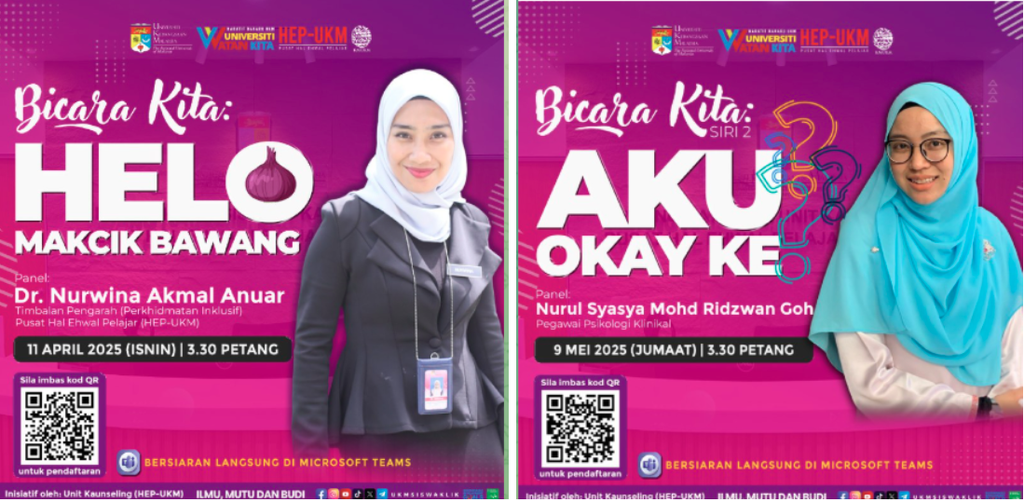
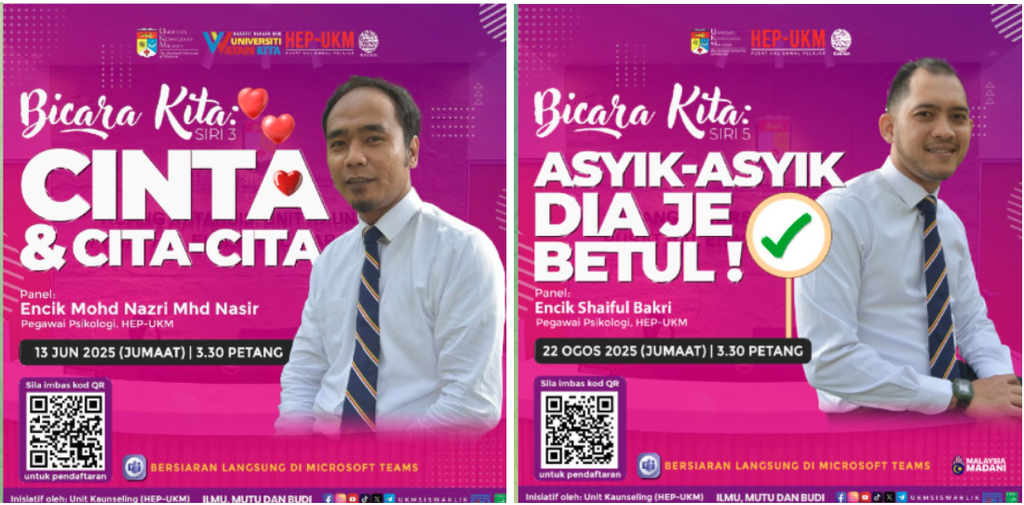
In 2025, the Kesatuan Mahasiswa Universiti Kebangsaan Malaysia (KMUKM), in collaboration with the Counselling Unit of the Student Affairs Centre (HEP-UKM), supported student well-being through Bicara Kita, a monthly online knowledge-sharing series designed to promote mental health awareness, emotional resilience and psychosocial well-being among UKM students.
The initiative provided an accessible platform for students to gain professional insights into psychological well-being and everyday challenges affecting university life. Through interactive discussions led by qualified psychology and counselling professionals, the programme addressed important issues such as mental health misconceptions, interpersonal relationships, emotional manipulation and maintaining a healthy balance between personal and academic responsibilities.
Among the sessions organised in 2025 were Bicara Kita Series 2: Aku Okey Ke? on 9 May 2025, featuring clinical psychologist Puan Nurul Syasya Mohd Ridzwan Goh, which focused on the risks of self-diagnosis and the importance of understanding mental health conditions through professional assessment. This was followed by Series 3: Cinta dan Cita-Cita on 13 June 2025, featuring a psychology officer from HEP-UKM, which explored relationship management, interpersonal conflict and balancing academic commitments.
Another session, Series 5: Asyik-Asyik Dia Je Betul!, was scheduled for 22 August 2025 and featured Encik Shaiful Bakri Mohammad, Psychology Officer at HEP-UKM. The session focused on recognising emotional manipulation, gaslighting and unhealthy communication patterns. These sessions were offered through Microsoft Teams, allowing students to participate remotely.
The collaboration demonstrates KMUKM’s active role in supporting student welfare beyond academic and financial concerns. By working with the university’s professional counselling services, KMUKM helped promote awareness of mental well-being and facilitate access to reliable psychological information.
Through this initiative, UKM strengthened cooperation between student representatives and university support services, reinforcing a student-centred institutional environment that values well-being, inclusion and responsive student engagement. The programme supports SDG 16 (Peace, Justice and Strong Institutions) through active student union participation and institutional collaboration, while also contributing to SDG 3 (Good Health and Well-being).
Source: www.utusan.com.my/nasional/2025/08/inisiatif-ukm-tangani-mahasiswa-stres
UKM’s recognition of KMUKM enables students to organise collectively, advocate for their interests and contribute to discussions affecting university life. Elected leadership, parliamentary deliberation and engagement with management provide practical channels for representative participation, complemented by student-welfare initiatives and internal accountability. Clear documentation of the union’s authority over its leadership, priorities and internal affairs would further substantiate its independence and strengthen the evidence of inclusive governance under SDG 16: Peace, Justice and Strong Institutions.