
Promote peaceful and inclusive societies for sustainable development, provide access to justice for all and build effective, accountable and inclusive institutions at all levels
SDG 16 Indicator
16.3 – Working with government
16.3.2 – Policy- and lawmakers outreach and education
In 2025, Universiti Kebangsaan Malaysia (UKM) strengthened public-sector capacity through targeted education, professional training and strategic partnerships with government agencies. Its initiatives encompassed leadership development, anti-corruption, law enforcement, climate governance, cybersecurity, environmental sustainability and heritage management. Through collaborations with the Royal Malaysia Police (PDRM), Malaysian Anti-Corruption Commission (MACC), Malaysian Armed Forces and other public institutions, UKM translated academic expertise into practical competencies for public-sector professionals. Notably, its specialised police leadership programmes trained 48 senior officers in 2025, while environmental sustainability outreach engaged more than 120 participants, including government representatives. These initiatives demonstrate UKM’s commitment to equipping public institutions with the knowledge, skills and leadership capabilities needed for informed decision-making, effective governance and sustainable development.
Table of outreach, general education, upskilling and capacity-building to policy- and law-makers
| No. | Programmes |
| 1. | Professional Certificate in Royal Malaysia Police Leadership Programme |
| 2. | Master of Climate Change Programme – Strengthening Climate Policy Knowledge and Capacity Building |
| 3. | Strengthening Public-Sector Governance, Policy and Law Enforcement through Specialised Postgraduate Education i. Master of Social Science (Corruption Studies) – UKM–MACC ii. Master of Social Science (Policing Studies) – UKM–PDRM iii. Master of Social Science (Defence Studies) – UKM–MPAT iv. Master of Social Science (Transport Policy, Logistics and Enforcement Studies) – UKM–JPJ |
| 4. | Environmental Sustainability Literacy Programme – Strengthening Environmental Awareness and Capacity Building |
| 5. | Professional Certificate in Leadership and Integrity (Sijil Profesional Kepimpinan dan Integriti – SPKI) |
| 6. | Professional Certificate in Cybersecurity |
| 7. | Professional Capacity-Building in Museum Management and Exhibition Development for Royal Malaysian Air Force (RMAF) Officers |
1. Professional Certificate in Royal Malaysia Police Leadership Programme
UKM, through its Centre for Professional and Leadership Development (Professional-UKM), continued strengthening the leadership capabilities and professional competencies of senior law enforcement officers through its strategic collaboration with the Royal Malaysia Police (PDRM). Building upon the Memorandum of Understanding signed in August 2024, UKM conducted specialised professional certification programmes in 2025, focusing on strategic police leadership, operational management and leadership competency development.
Among these initiatives was the Professional Certificate in Strategic Police Leadership, conducted from 28 July to 1 August 2025, involving 21 senior police officers holding the ranks of Acting Senior Assistant Commissioner and Assistant Commissioner. The programme comprised five modules delivered by UKM academics, providing structured professional education to strengthen leadership competencies and institutional management.
UKM also organised the Professional Certificate in Operational Police Leadership from 11 to 15 August 2025, involving 27 senior officers holding the ranks of Acting Assistant Commissioner and Superintendent. The programme provided further opportunities for professional upskilling and leadership development within Malaysia’s national law enforcement institution.
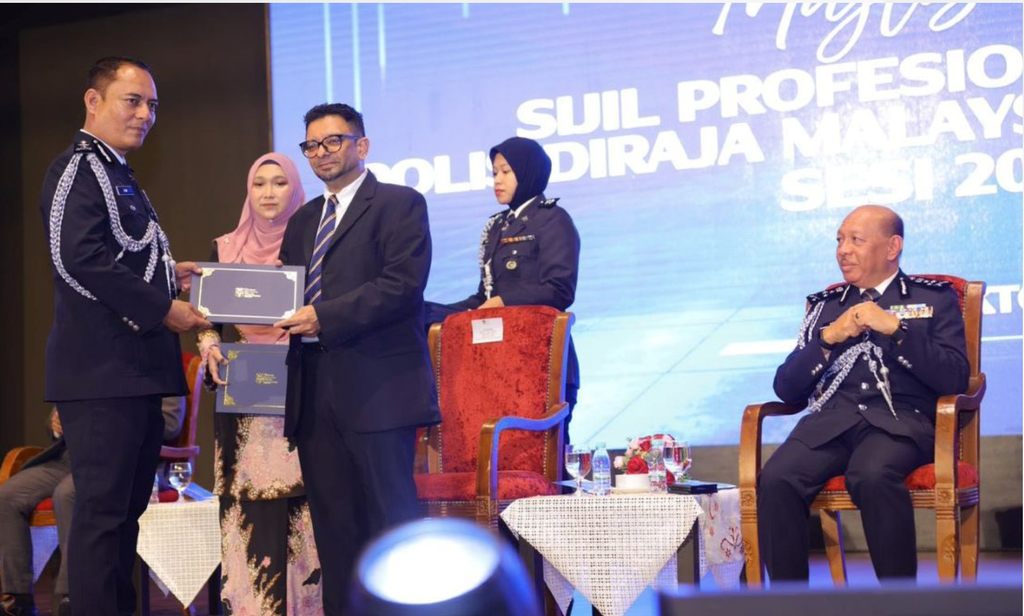
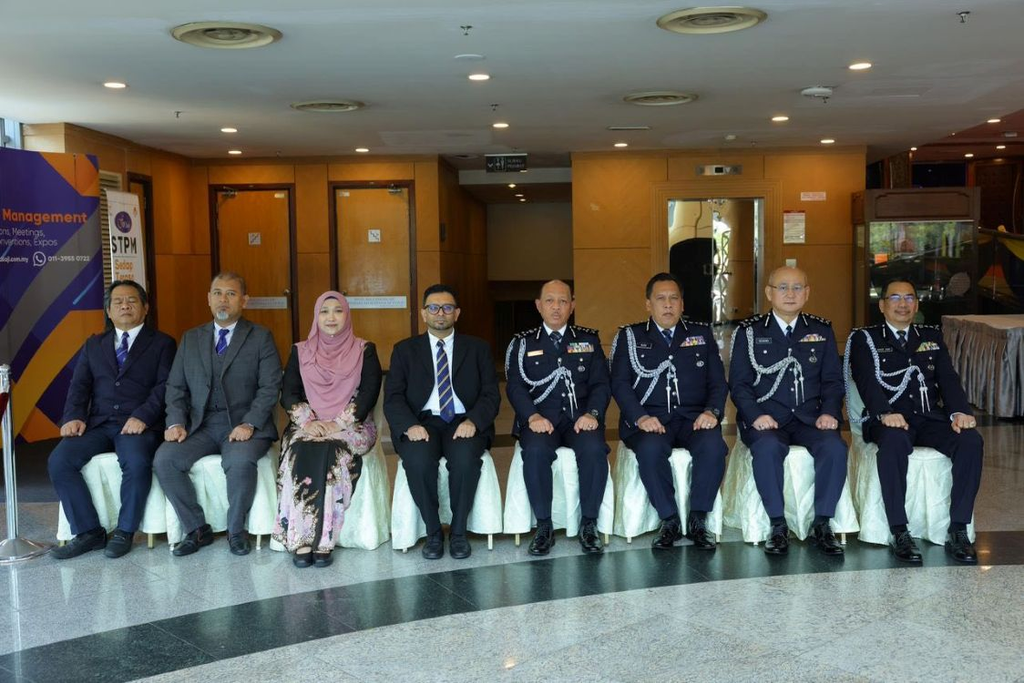
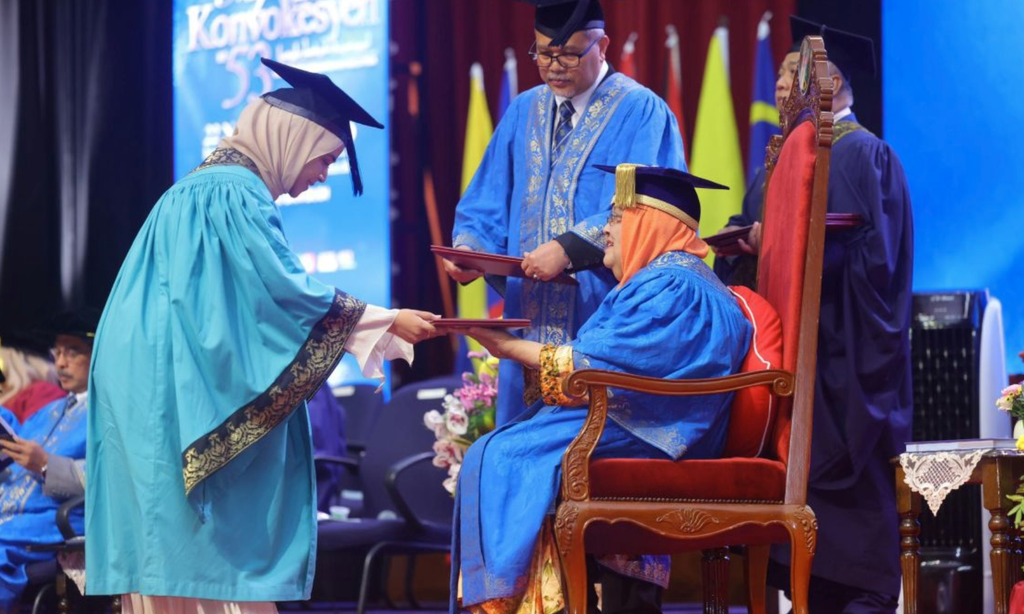
On 16 October 2025, a total of 171 senior PDRM officers from the 2024 and 2025 cohorts received their professional certificates at a graduation ceremony in Kuala Lumpur. This achievement reflects the sustained collaboration between UKM and PDRM in supporting professional development aligned with the PDRM Strategic Plan 2021–2025.
Through these programmes, UKM contributes directly to the capacity-building of senior government officers responsible for institutional leadership, operational decisions and the implementation of public security policies. The initiatives strengthen professional competencies and support effective, accountable and resilient public institutions, contributing to SDG 16: Peace, Justice and Strong Institutions.
Link: https://www.ukm.my/beritaukm/171-pegawai-kanan-pdrm-terima-sijil-profesional-ukm/
2. Master of Climate Change Programme – Strengthening Climate Policy Knowledge and Capacity Building
In 2025, UKM, through its Institute of Climate Change (IPI), continued to strengthen climate change education and professional capacity-building through its Master of Climate Change programme. The programme integrates interdisciplinary knowledge in climate science, technology, economics and policy, equipping professionals with the expertise needed to understand complex climate challenges and support evidence-based decision-making. Its curriculum provides a foundation for developing competencies relevant to climate governance, climate adaptation and mitigation strategies, and sustainable development planning. In November 2025, UKM celebrated the graduation of the programme’s first cohort, demonstrating its commitment to developing skilled professionals capable of contributing to climate-related planning and policy implementation. Designed to accommodate professionals from various sectors, including government agencies, the programme offers opportunities to strengthen the technical and analytical capabilities of individuals involved in climate-related decision-making. Through this initiative, UKM supports the development of institutional expertise and contributes to SDG 16.3.2 by promoting climate literacy, professional upskilling and capacity-building relevant to effective, informed and sustainable governance.
3. Strengthening Public-Sector Governance, Policy and Law Enforcement through Specialised Postgraduate Education
In 2025, Faculty of Social Sciences and Humanities (FSSK), UKM provides specialised postgraduate education and professional capacity-building for government and enforcement agency personnel through strategic collaborations with key Malaysian public-sector institutions. These initiatives encompass four Master of Social Science programmes developed in partnership with the Malaysian Anti-Corruption Commission (MACC), Royal Malaysia Police (PDRM), Malaysian Armed Forces Defence College (MPAT) and Road Transport Department (JPJ). The programmes strengthen advanced knowledge and professional competencies in public policy, law enforcement, institutional governance, national security and strategic decision-making.
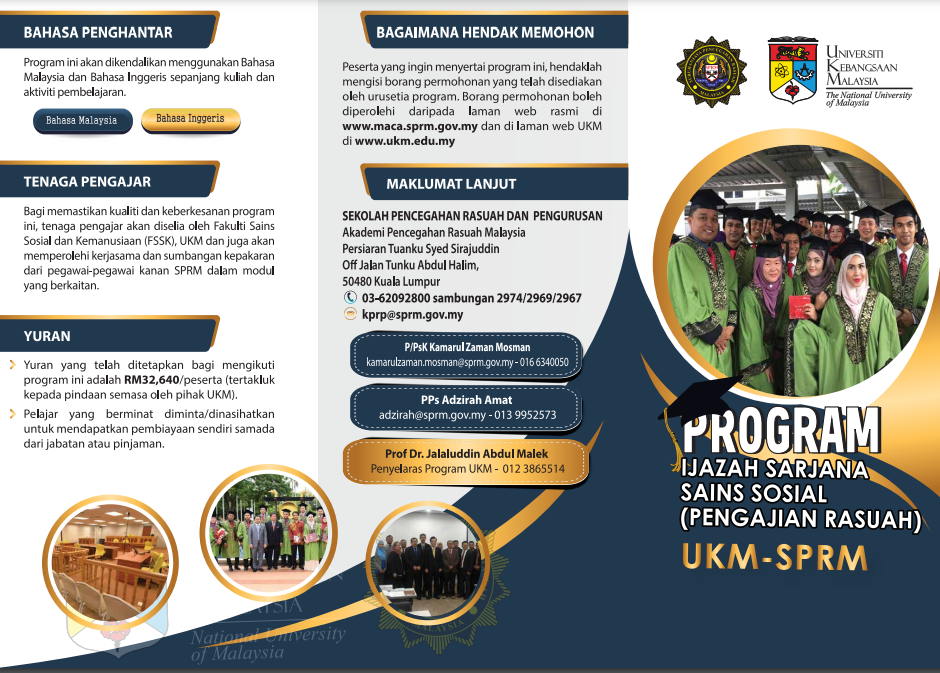
a) Master of Social Science (Corruption Studies) – UKM–MACC
In collaboration with the Malaysian Anti-Corruption Academy of the Malaysian Anti-Corruption Commission (MACC), UKM offers the Master of Social Science (Corruption Studies) to enhance the professional competencies of MACC officers and personnel from local and international enforcement agencies. The programme provides advanced academic training in corruption prevention, investigation, governance and law enforcement, preparing participants for leadership and decision-making responsibilities within anti-corruption and enforcement institutions.
Its curriculum encompasses Sociology of Corruption, Criminology, Law and Corruption Crimes, Corruption Investigation and Management, Ethics, Governance and Corruption, and Corruption Crimes and Social Control. An International Benchmarking Project further exposes participants to international approaches and practices in combating corruption. Through this programme, UKM strengthens the analytical, investigative and governance-related competencies of enforcement personnel, supporting institutional integrity, accountability and evidence-informed anti-corruption strategies.
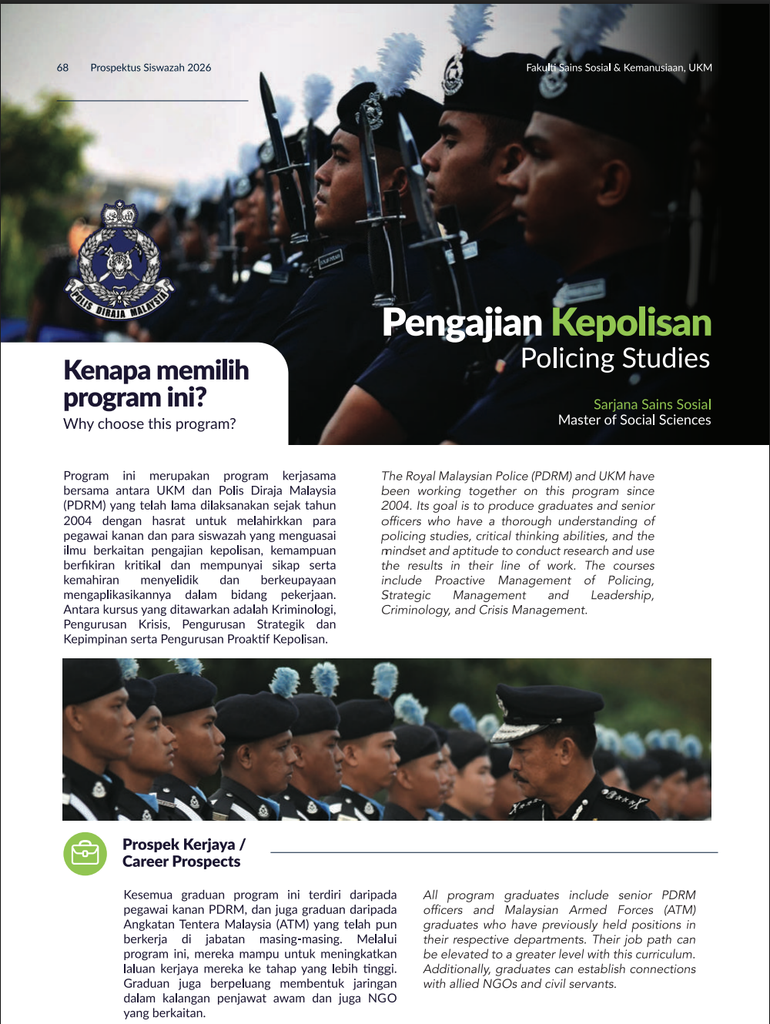
b) Master of Social Science (Policing Studies) – UKM–PDRM
Offered in collaboration with the Royal Malaysia Police (PDRM), the Master of Social Science (Policing Studies) supports advanced professional education for senior police officers and security personnel. The programme integrates academic knowledge with practical policing experience, covering policy analysis, strategic management, crisis management, legal issues and contemporary policing challenges.
By strengthening participants’ analytical, leadership and decision-making competencies, the programme contributes to more effective policing administration, public safety governance and the implementation of law enforcement policies. It also supports the professional development of officers who may assume strategic leadership and policy-related responsibilities within public security institutions.
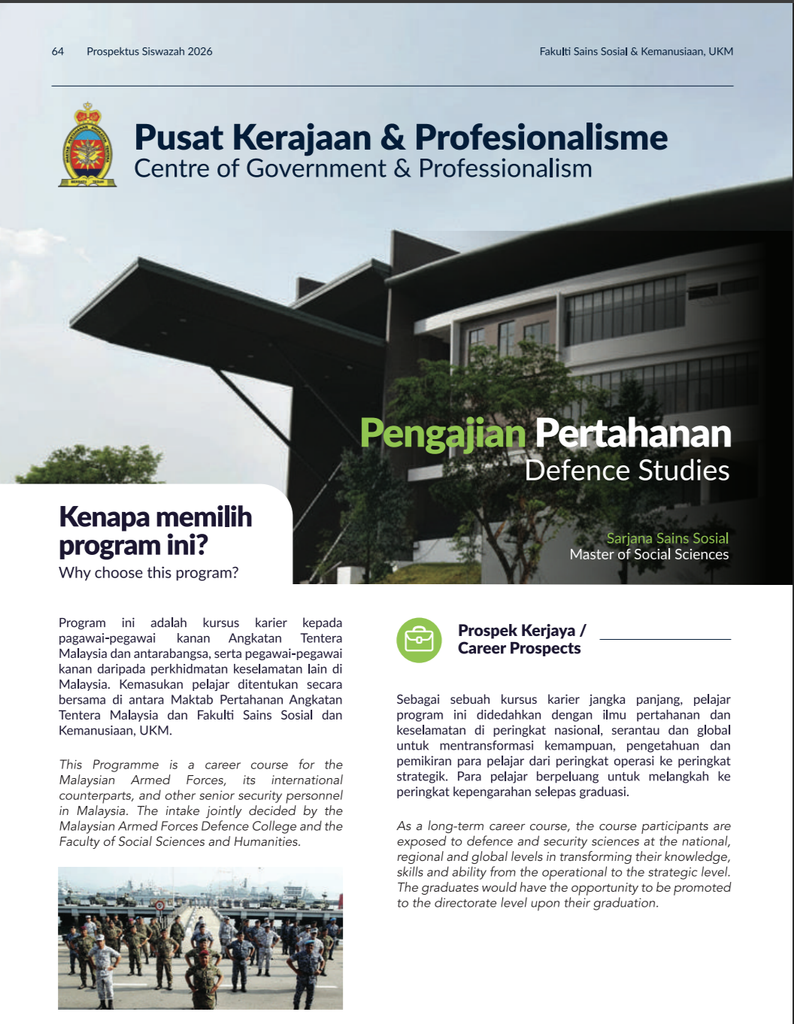
c) Master of Social Science (Defence Studies) – UKM–MPAT
The Master of Social Science (Defence Studies), offered through collaboration with the Malaysian Armed Forces Defence College (MPAT), provides advanced education relevant to defence management, national security and strategic planning. The programme supports the professional development of defence personnel by strengthening their understanding of security challenges, institutional leadership and strategic decision-making.
Through this academic collaboration, UKM contributes to the development of professional competencies relevant to defence administration, institutional planning and national security governance, supporting the capacity of defence personnel to undertake higher-level management and policy-related responsibilities.
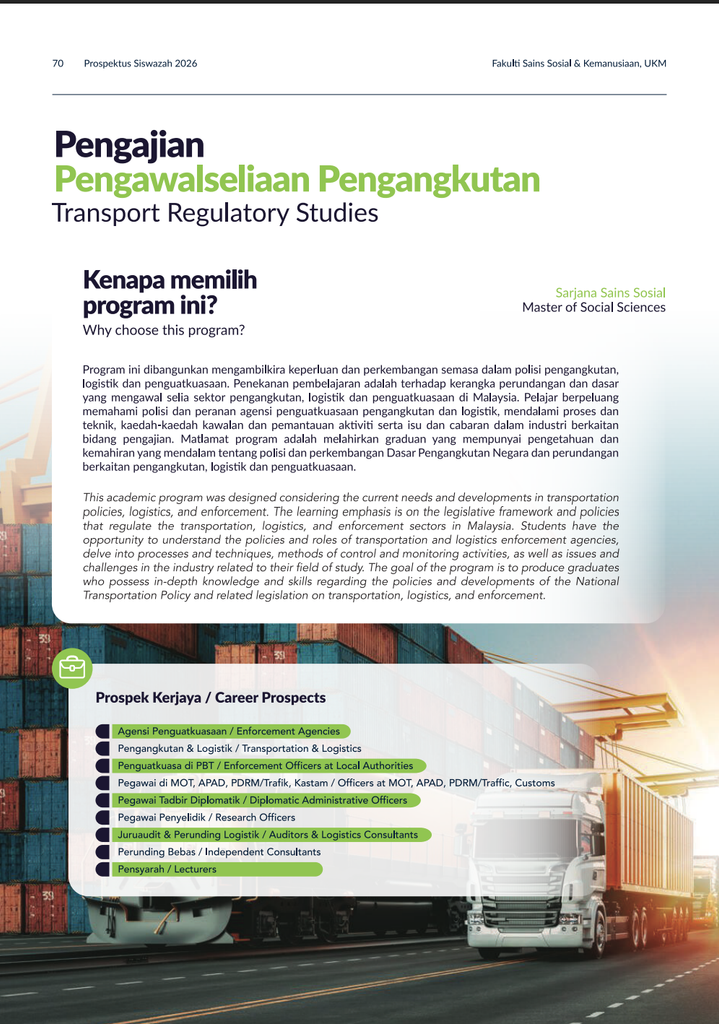
d) Master of Social Science (Transport Policy, Logistics and Enforcement Studies) – UKM–JPJ
In collaboration with the Road Transport Department (JPJ), UKM offers the Master of Social Science (Transport Policy, Logistics and Enforcement Studies), providing specialised postgraduate education in transport policy, logistics management and regulatory enforcement. The programme is relevant to government officers and professionals involved in transport administration, policy implementation, regulatory compliance and enforcement activities.
By integrating academic expertise with public-sector professional practice, the programme supports the development of analytical and management competencies relevant to transport governance, regulatory decision-making and effective enforcement of transport-related legislation.
Overall Institutional Impact
Collectively, these four postgraduate programmes demonstrate UKM’s commitment to extending advanced education and professional capacity-building beyond conventional academic audiences through structured partnerships with government and enforcement institutions. By providing specialised knowledge in anti-corruption, policing, defence and transport regulation, UKM supports the professional development of public-sector personnel whose responsibilities are relevant to policy implementation, institutional management and law enforcement.
Source:
https://www.ukm.my/fssk/v2/?page_id=35104%E2%86%97
https://www.ukm.my/fssk/v2/wp-content/uploads/2026/01/Prospektus_Siswazah_2026.pdf
4. Environmental Sustainability Literacy Programme – Strengthening Environmental Awareness and Capacity Building
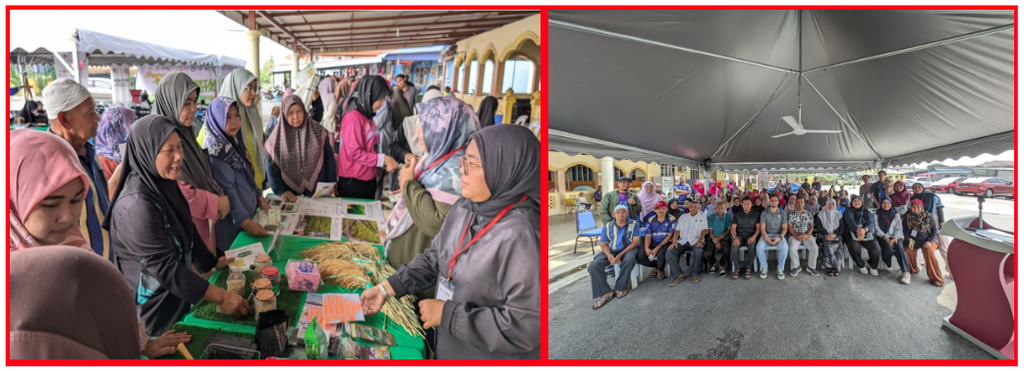
On 4 July 2025, Universiti Kebangsaan Malaysia (UKM), through the UKM–Yayasan Sime Darby (YSD) Chair for Sustainability, organised the Environmental Sustainability Literacy Programme in Kuala Kedah, Kedah. The programme brought together more than 120 participants, including representatives from government agencies, local communities and higher education institutions, providing a platform for environmental education, knowledge sharing and capacity-building. The programme addressed key sustainability challenges through educational activities covering energy efficiency, water footprint management, waste management, food security and climate change. By integrating scientific knowledge with practical sustainability approaches, the initiative aimed to enhance participants’ understanding of environmental challenges and encourage the adoption of sustainable practices within their respective organisations and communities. The participation of government agency representatives also provided opportunities for knowledge exchange between academia and the public sector, particularly on environmental management and sustainable development. Through this initiative, UKM contributed to strengthening environmental literacy and technical awareness among stakeholders, supporting informed decision-making and the integration of sustainability considerations into organisational and community-level practices. The programme demonstrates UKM’s commitment to outreach, environmental education and capacity-building, with potential relevance to SDG 16.3.2 through its engagement with government representatives on sustainability-related issues.
5. Professional Certificate in Leadership and Integrity (Sijil Profesional Kepimpinan dan Integriti – SPKI)
UKM, through its Faculty of Economics and Management (FEP), offers the Professional Certificate in Leadership and Integrity (Sijil Profesional Kepimpinan dan Integriti – SPKI) as part of its commitment to professional education, leadership development and institutional capacity-building. The programme provides a platform for strengthening knowledge and competencies in ethical leadership, integrity, accountability and good governance, which are essential to effective organisational management and public administration.
The programme is relevant to policymakers, public administrators and institutional decision-makers by supporting the development of leadership competencies and ethical decision-making skills. Through this professional education initiative, UKM contributes to capacity-building in governance and institutional integrity, supporting SDG 16 by promoting accountable, transparent and effective institutions.
Source: https://www.ukm.my/fep2/sijil-profesional/
6. Professional Certificate in Cybersecurity
In 2025, UKM demonstrated its commitment to professional education and capacity-building through the Professional Certificate in Cybersecurity. The programme provides an opportunity for professionals and institutional decision-makers to enhance their knowledge and competencies in cybersecurity, digital risk management and information security.
The programme is particularly relevant to policymakers, public administrators and regulatory authorities responsible for digital governance, data protection and cybersecurity-related policies. By strengthening cybersecurity knowledge and awareness, the initiative can support informed decision-making, effective risk management and the development of more secure and resilient digital institutions.
Through this professional education initiative, UKM supports SDG 16 by contributing to institutional capacity-building in technology and digital governance, promoting effective, accountable and resilient institutions in an increasingly digital environment.
Source: Senarai Sijil Profesional UKM
7. Professional Capacity-Building in Museum Management and Exhibition Development for Royal Malaysian Air Force (RMAF) Officers
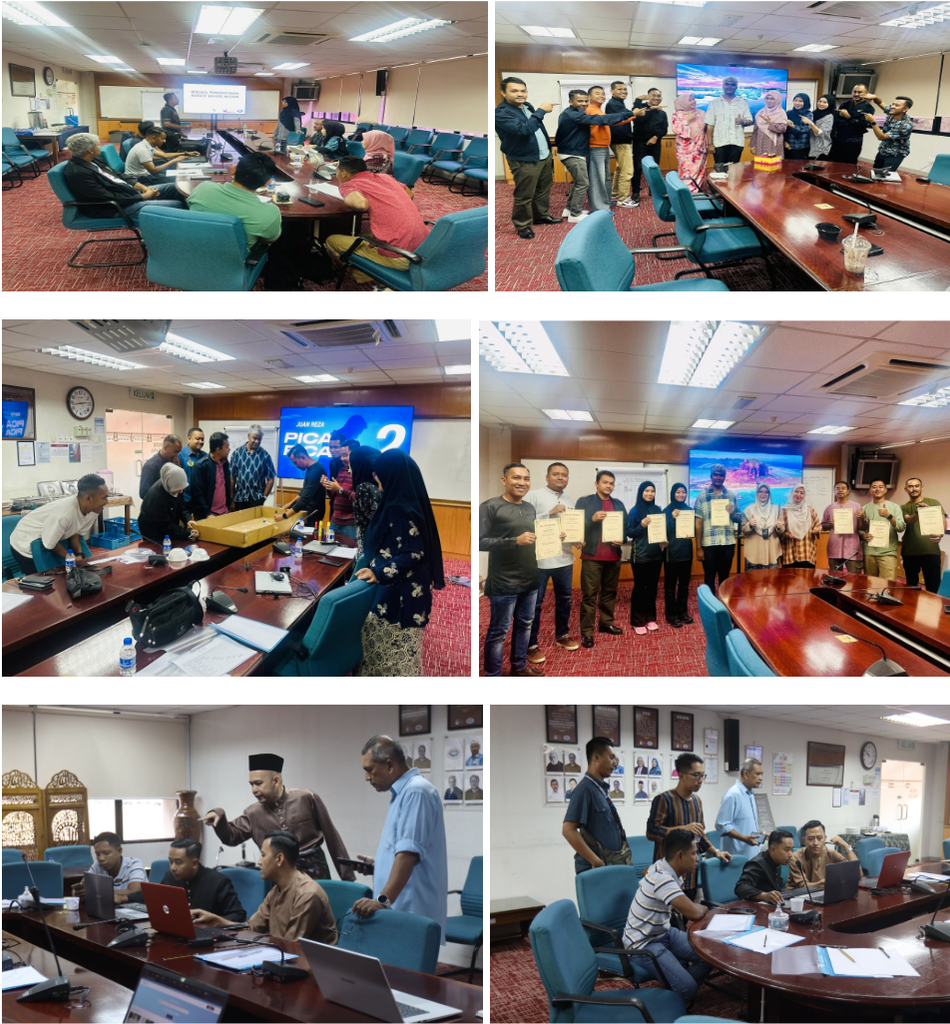
In 2025, UKM, through the Institute of the Malay World and Civilization (ATMA), conducted a series of specialised professional training programmes for 10 officers from the Royal Malaysian Air Force (RMAF) Museum, Sendayan, Negeri Sembilan. This initiative demonstrates UKM’s contribution to capacity-building among government personnel by strengthening their professional competencies in museum management, heritage preservation, exhibition development and institutional knowledge management.
The training commenced with the Exhibition Technology Course on 12–13 June 2025 at ATMA, delivered by Gs. Dr. Muhamad Solehin Fitry Rosley. The course focused on integrating technology into exhibition practices, equipping RMAF Museum officers with relevant knowledge and practical skills to enhance museum operations and public engagement.
Subsequently, from 30 September to 3 October 2025, ATMA organised two specialised courses: New Museum Narrative Development: Physical and Research Perspectives (30 September–1 October 2025) and Exhibition Preparation (2–3 October 2025). Facilitated by Assoc. Prof. Dr. Nor Zalina Harun and Ts. Dr. Ros Mahwati Ahmad Zakaria, the training strengthened participants’ competencies in developing evidence-based museum narratives, managing heritage collections and preparing informative exhibitions. Educational visits to the National Museum of Malaysia and the Islamic Arts Museum Malaysia further provided practical exposure to established museum management and exhibition practices.
Through these initiatives, UKM transferred academic expertise and professional knowledge to officers serving within a Malaysian government institution, supporting institutional capacity-building and more effective management of public heritage resources. The programmes contribute to SDG 16 by enhancing the professional capabilities of public-sector personnel and strengthening institutional practices in heritage management, knowledge dissemination and public education.
UKM’s contribution combines sustained educational partnerships with targeted training for public-sector professionals. By linking academic knowledge with practical responsibilities in leadership, enforcement, regulation and sustainability, the university supports the development of analytical skills and professional competencies relevant to government decision-making. Documenting participants’ policy responsibilities, programme completion and application of learning strengthens the evidence of this contribution to effective, accountable institutions and SDG 16: Peace, Justice and Strong Institutions.