
Promote peaceful and inclusive societies for sustainable development, provide access to justice for all and build effective, accountable and inclusive institutions at all levels
SDG 16 Indicator
16.3 – Working with government
16.3.4 – Neutral platform to discuss issues
UKM provides academic platforms where political figures, public institutions, civil society and researchers can discuss sensitive governance and public-policy challenges. In 2025, these included the Political Party Transparency Index Roundtable, the Criminal Law Reform Committee Townhall and the Symposium on Alternatives to Detention for Unaccompanied and Separated Refugee Children. Through roundtable discussions, panels and stakeholder consultation, UKM created opportunities for participants with differing perspectives and responsibilities to exchange views on political accountability, justice reform and humanitarian protection. Complementary seminar and public-dialogue series extended discussion of national and international political challenges.
UKM serves as a neutral platform and ‘safe’ space where various political stakeholders can engage in open dialogue and deliberation on pressing issues. This role is integral to UKM’s mission as an institution committed to fostering national unity, knowledge exchange, and addressing societal challenges. Here’s a deeper look into how it functions in this capacity:
1. Neutral Ground for Discussion
- Non-partisan Environment: Persada Canselori is designed to be an apolitical, inclusive venue where different political actors, from across the ideological spectrum, can engage without the pressures of partisanship. This neutrality fosters honest and candid discussions, as participants are assured that their perspectives will be heard without bias.
- Facilitating Constructive Dialogue: By ensuring impartiality, UKM can host discussions on sensitive or controversial topics, such as political reform, governance challenges, or social policies, in a way that promotes understanding and collaboration, rather than confrontation.
2. Safe Space for Frank Conversations
- Confidentiality and Respect: Persada Canselori offers an environment where political figures can openly discuss challenges facing the nation without fear of backlash, media scrutiny, or political repercussions. This encourages transparency and promotes the sharing of candid insights and critiques.
- Bridging Differences: The ‘safe space’ aspect is vital in fostering dialogue between opposing political factions, NGOs, and civil society. The platform is known for bringing together diverse perspectives, facilitating the bridging of differences, and encouraging joint solutions to national issues.
3. Focus on Policy Solutions
- Emphasis on Practical Outcomes: Discussions at Persada Canselori often center around finding practical solutions to complex policy challenges. Rather than merely debating ideological differences, the platform encourages stakeholders to move toward consensus-building and cooperative policy-making.
- Academic Backing: As part of UKM, the Persada Canselori benefits from the university’s intellectual and academic resources, which help ground political discussions in research, data, and evidence-based approaches.
4. Historical Role in National Dialogue
- Prominent Meetings: Over the years, UKM has hosted key discussions on important national issues at Persada Canselori, including those relating to social justice, national unity, and political reform. These meetings have involved not only politicians but also academics, civil society leaders, and students, ensuring a broad representation of voices.
- Crisis Mediation: In times of political tension or national crises, Persada Canselori has served as a venue where different parties can come together to de-escalate tensions and work towards peaceful resolutions.
Program organized utilizing neutral platform and “safe” space for different political stakeholders
Throughout 2025, Universiti Kebangsaan Malaysia (UKM) strengthened its role as a neutral academic platform and safe space for constructive dialogue among diverse political stakeholders, facilitating open discussions on sensitive political, legal and governance issues. Key initiatives included the Political Party Transparency Index (PPTI) 2025 Roundtable, which brought together political representatives, academics and civil society to discuss transparency and accountability; the Criminal Law Reform Committee (CLRC) Townhall, which encouraged multi-stakeholder consultation on criminal justice reform; and the Symposium on Alternatives to Detention for Refugee Children, which facilitated dialogue among government agencies, international organisations, NGOs and affected communities. Additionally, the IKMAS Seminar Series 3/2025 provided opportunities to examine political reform and institutional challenges, while Bicara Persada 2025 encouraged informed discussions on geopolitical developments and national policy implications. Collectively, these initiatives demonstrate UKM’s commitment to providing an inclusive, respectful and evidence-based environment where stakeholders with differing political perspectives, institutional responsibilities and policy priorities can exchange views openly. By fostering constructive engagement across political and societal boundaries, UKM promotes mutual understanding, strengthens public discourse and supports participatory governance, contributing to SDG 16: Peace, Justice and Strong Institutions through academic independence, inclusive consultation and meaningful stakeholder engagement.
1. Political Party Transparency Index (PPTI) 2025 Roundtable
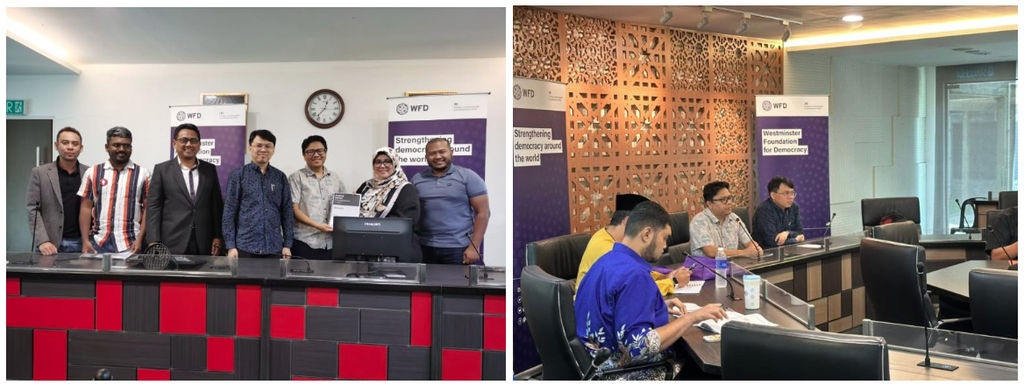
UKM, through its Institute of Malaysian and International Studies (IKMAS), provided an academic platform for open political dialogue by organising the Political Party Transparency Index (PPTI) 2025 Roundtable on 22 December 2025 in collaboration with the Westminster Foundation for Democracy (WFD). The roundtable convened more than 20 participants, including political figures, academics, researchers and civil society representatives, to critically examine political party transparency, democratic accountability and public trust. The underlying research examined five political parties from both government and opposition backgrounds, demonstrating an approach that considered different political perspectives within a common analytical framework. Through this initiative, UKM facilitated constructive, evidence-based discussion on sensitive political and governance challenges, supporting informed public discourse and democratic institutional development.
2. Criminal Law Reform Committee (CLRC) Townhall
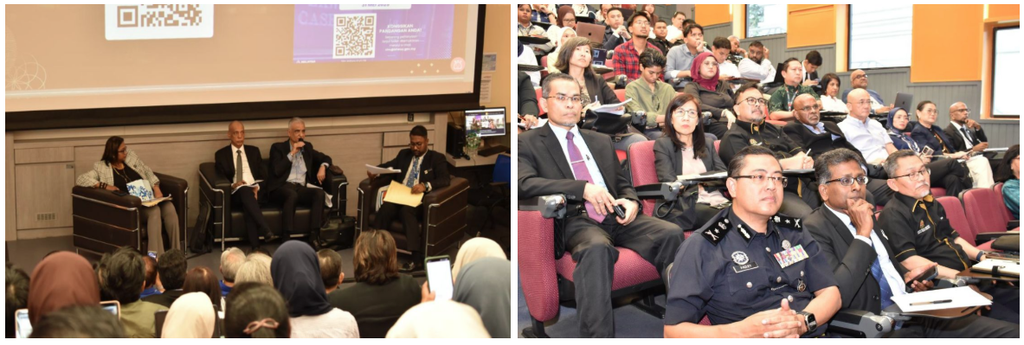
UKM strengthened its role as an inclusive platform for national policy dialogue through the Criminal Law Reform Committee (CLRC) Townhall, held on 26 May 2025 and jointly organised by the Faculty of Law and the Legal Affairs Division of the Prime Minister’s Department. The programme brought together more than 150 stakeholders from government ministries, law enforcement agencies, non-governmental organisations, civil society, academia and the student community. Chaired by former Federal Court Judge Tan Sri Harmindar Singh Dhaliwal, the townhall enabled participants to share perspectives on criminal law reform and the future direction of Malaysia’s justice system. By facilitating dialogue across institutional and community interests, UKM supported inclusive consultation and evidence-informed policy development, contributing to participatory governance and SDG 16: Peace, Justice and Strong Institutions.
3. Symposium on Alternatives to Detention for Unaccompanied and Separated Refugee Children
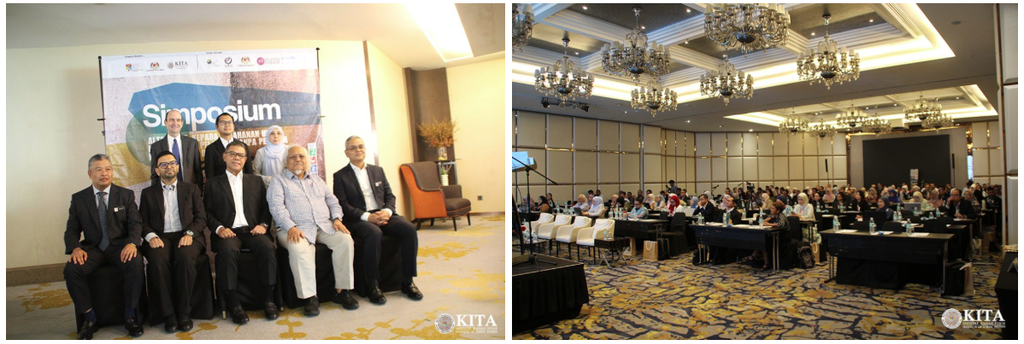
UKM, through its Institute of Ethnic Studies (KITA), facilitated inclusive policy dialogue by organising the Symposium on Alternatives to Detention for Unaccompanied and Separated Refugee Children in Malaysia on 20–21 August 2025. Conducted in collaboration with the Ministry of Home Affairs and supported by UNICEF and civil society organisations, the symposium convened 250 participants from government agencies, international organisations, academia, NGOs and refugee communities. Through panel discussions and roundtable sessions, participants examined sensitive policy challenges involving immigration governance, national security, humanitarian protection and children’s rights. The programme created opportunities for stakeholders with different institutional responsibilities and perspectives to exchange views and develop strategic recommendations for policy consideration, demonstrating UKM’s contribution to constructive and inclusive national dialogue.
4. IKMAS Seminar Series 3/2025 – Beyond Regime Change
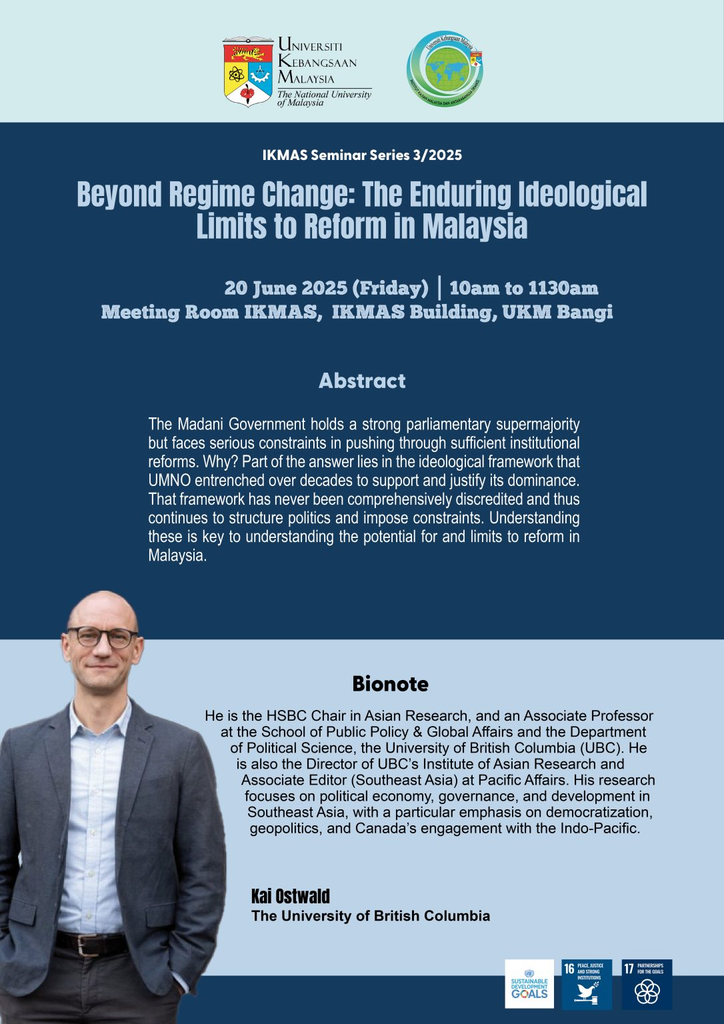
UKM further supported open academic discussion on political governance through IKMAS Seminar Series 3/2025, entitled “Beyond Regime Change: The Enduring Ideological Limits to Reform in Malaysia”, held on 20 June 2025. Conducted in a hybrid format, the seminar provided an academic setting for examining Malaysia’s political development, institutional reform challenges and the influence of longstanding ideological frameworks on governance. By hosting critical discussion of politically sensitive subjects, UKM contributed to informed debate and the exchange of perspectives on national political and institutional challenges.
Source : https://www.ukm.my/ikmas/news/ikmas-seminar-series-3-2025/
5. Bicara Persada 2025: Providing an Open Academic Platform for Political and Policy Dialogue
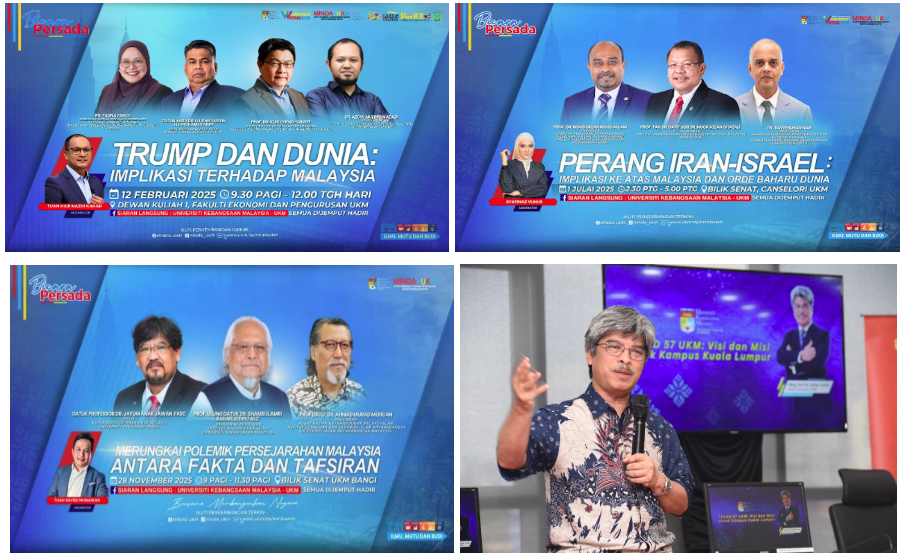
UKM, through the Institute for Malaysia and International Development (MINDA-UKM), provides an academic platform for open dialogue and critical discussion on political, geopolitical and public policy challenges through its Bicara Persada series.
In 2025, UKM organised several discussions addressing sensitive national and international issues. These included “Trump dan Dunia: Implikasi Terhadap Malaysia”, held on 12 February 2025 in collaboration with the Institute of Malaysian and International Studies (IKMAS) and the Faculty of Economics and Management. The programme examined the implications of United States policies for Malaysia, including economic challenges, potential risks and national policy responses. The discussion was also broadcast through UKM’s official Facebook platform, extending public access beyond the university.
Another significant programme, “Perang Iran-Israel: Implikasi ke atas Malaysia dan Orde Baharu Dunia”, was held on 1 July 2025 at the UKM Senate Room. The session featured academic and professional experts who discussed the implications of geopolitical conflict for Malaysia and the evolving international order.
Through these initiatives, UKM provided an institutional setting for critical, evidence-informed discussions on politically sensitive issues. The programmes demonstrate the university’s contribution to public discourse by encouraging academic engagement, the exchange of expert perspectives and informed consideration of national and international challenges.
These initiatives complement UKM’s broader multi-stakeholder dialogue activities and demonstrate its continuing commitment to facilitating constructive discussions on governance and public policy.
Source:
https://www.ukm.my/strategi-ukm/aktiviti/bicara-persada-trump-dan-dunia-implikasi-terhadap-malaysia/
https://www.ukm.my/strategi-ukm/aktiviti/forum-persada-kampus-kuala-lumpur-2025/
https://www.ukm.my/mindaukm
These initiatives demonstrate UKM’s contribution to dialogue across political, institutional and societal perspectives. By convening discussions on contested policy questions and connecting stakeholder experience with academic evidence, the university supports informed debate and constructive engagement. Clear moderation, opportunities to express differing views and transparent handling of recommendations strengthen the credibility of these platforms as spaces for frank discussion, contributing to SDG 16: Peace, Justice and Strong Institutions.