
Strengthen the means of implementation and revitalize the Global Partnership for Sustainable Development
SDG 17 Indicator
17.2 – Relationships to support the goals
17.2.4 – Collaboration for SDG best practice
Universiti Kebangsaan Malaysia (UKM), through international collaboration and research, actively reviews comparative approaches and contributes to the development, exchange and application of international best practices for addressing the Sustainable Development Goals (SDGs). The University participates in international scientific bodies, regional higher-education networks, cross-border research initiatives and international knowledge-sharing platforms that enable UKM experts to work with counterparts from different countries and institutional contexts.
These collaborations go beyond the exchange of information. They provide mechanisms for participating institutions and experts to compare methodologies, policies, technologies and institutional practices; identify common challenges and effective approaches; develop shared frameworks and technical guidance; and disseminate transferable solutions that can be adapted across countries and organisations.
UKM’s international engagements cover areas including climate-change mitigation and greenhouse-gas management, sustainable higher education, climate resilience, sustainable technologies, health and sustainable development. Through these partnerships, UKM both contributes Malaysian expertise to international processes and draws upon international experience to strengthen its own sustainability practices, demonstrating a systematic approach to international benchmarking, comparative learning and the development of best practices for achieving the SDGs.
Summary of the collaborations
| No | List of the collaboration | SDG |
|---|---|---|
| 1 | Initial Framework for Electric Vehicle Battery Passport in ASEAN (2025): International Benchmarking for Sustainable Mobility and Circular Economy | SDG 7, 9, 11, 12, 13, 17 |
| 2 | UKM–ERIA International Research Collaboration: Developing Best Practices for Sustainable Biomass Utilisation through the Water–Energy–Food Nexus | SDG 2, 6, 7, 12, 13, 17 |
| 3 | ASEAN Framework for Integrated Semiconductor Supply Chain (AFISS) (2025): Comparative Research and Regional Best Practices for Sustainable Industrial Development | SDG 8, 9, 17 |
| 4 | UKM Advances Global Climate Action through Professor Dr. Mohd Talib Latif’s Election to the IPCC Task Force Bureau | SDG 13, 17 |
| 5 | UKM’s International Collaboration in Advancing Climate Change Mitigation Best Practices through the Intergovernmental Panel on Climate Change (IPCC) | SDG 13, 17 |
| 6 | ASEAN University Network-Quality Assurance (AUN-QA) and Best-Practice Development | SDG 4, 17 |
| 7 | GEMPITA Istana Puteri Bongsu 2025: Advancing International Best Practices in Cultural Heritage Preservation through UKM–British Council Collaboration | SDG 4, 9, 11, 17 |
| 8 | UKM’s International Collaboration in Advancing Health Communication and Sustainable Public Health Best Practices through HealthComm | SDG 3, 17 |
| 9 | UKM’s International Collaboration through the ASEAN University Network–Health Promotion Network (AUN-HPN): Advancing International Best Practices in Health Promotion and Well-being | SDG 3, 17 |
| 10 | International Sustainable Campus Network (ISCN) — Exchange and Adoption of Global Campus Best Practices | SDG 11, 13, 17 |
| 11 | UKM Advances International Collaboration on Biodiversity Conservation and Sustainable Agriculture through the Science Panel for Borneo at COP30 | SDG 2, 13, 15, 17 |
| 12 | UKM’s Participation in the 2025 UI GreenMetric World University Rankings International Forum | SDG 17 |
| 13 | SEAMEO RETRAC International Conference 2025 — Internationalisation and Best Practices | SDG 4, 17 |
| 14 | UKM Promotes International Knowledge Exchange on Climate Investment and Sustainable Development at COP30 Thailand Pavilion | SDG 13, 14, 15, 17 |
| 15 | UKM’s International Scientific Engagement through the SCARFISH Outreach Action Group | SDG 14, 17 |
UKM’s International Research Collaboration in Developing Comparative Approaches and Best Practices for Sustainable Development
Universiti Kebangsaan Malaysia (UKM) actively contributes to the development of international best practices for achieving the United Nations Sustainable Development Goals (SDGs) through collaborative research, comparative policy analysis and knowledge exchange with regional and international institutions.
In 2025, UKM researchers participated in international policy research initiatives involving the Economic Research Institute for ASEAN and East Asia (ERIA), ASEAN Member States and international research contributors. These initiatives examined approaches adopted by different countries, assessed regional development challenges and developed evidence-based recommendations to strengthen sustainability, technological innovation and economic resilience.
Two notable examples are the Initial Framework for Electric Vehicle Battery Passport in ASEAN and the ASEAN Framework for Integrated Semiconductor Supply Chain (AFISS). Both demonstrate UKM’s contribution to transforming international research findings and comparative policy experience into proposed regional best practices that can support the achievement of the SDGs.
1. Initial Framework for Electric Vehicle Battery Passport in ASEAN (2025): International Benchmarking for Sustainable Mobility and Circular Economy
Publication: August 2025
International research institution: Economic Research Institute for ASEAN and East Asia (ERIA)
Regional stakeholders: ASEAN Member States
UKM researchers: Dr. Muhammad Faliq Abd Razak, Prof. Dr. Tamat Sarmidi, Prof. Dr. Norasikin Ahmad Ludin and Prof. Dr. Sufian Jusoh
UKM research institutes: Institute of Malaysian and International Studies (IKMAS), Centre for Sustainable and Inclusive Development Studies (SID) and Solar Energy Research Institute (SERI)
UKM contributed to the development of the Initial Framework for Electric Vehicle Battery Passport in ASEAN, an international research initiative examining how ASEAN can adopt effective and sustainable approaches to electric vehicle (EV) battery management.
Published by ERIA in August 2025, the study involved researchers and country experts from different countries and undertook a comprehensive comparative review of international EV battery passport systems, particularly those developed in the European Union, China, Japan and South Korea.
The research examined differences in regulatory frameworks, battery lifecycle traceability, environmental reporting, digital information systems, recycling requirements and institutional governance. By evaluating these approaches, the research identified practices that could be adapted to ASEAN’s economic, technological and regulatory circumstances.
In addition to international benchmarking, the study assessed the readiness of ASEAN Member States to implement EV battery passport systems. The methodology incorporated literature and regulatory reviews, national-level assessments, stakeholder consultations, regional surveys and gap analyses.
The findings informed the development of an initial regional framework proposing common battery information parameters, improved traceability, data interoperability, circular economy practices and coordinated governance mechanisms.
The study also proposed a phased implementation roadmap to help ASEAN Member States progressively strengthen battery safety, material traceability, carbon footprint reporting and responsible end-of-life management.
Contribution to international best practices
Through this collaboration, UKM participated in identifying and adapting international approaches to sustainable EV battery governance. Rather than recommending the direct replication of any single country’s system, the framework considers differences in ASEAN Member States’ institutional capacity, industrial development and technological readiness.
This research provides a basis for developing regionally appropriate practices in sustainable battery management, supporting environmental accountability, resource efficiency and the transition towards low-carbon mobility.
Relevant SDGs: SDG 7 – Affordable and Clean Energy; SDG 9 – Industry, Innovation and Infrastructure; SDG 11 – Sustainable Cities and Communities; SDG 12 – Responsible Consumption and Production; SDG 13 – Climate Action; and SDG 17 – Partnerships for the Goals.
Source:
APPOINTMENT LETTER
LEAD CONSULTANT
2. UKM–ERIA International Research Collaboration: Developing Best Practices for Sustainable Biomass Utilisation through the Water–Energy–Food Nexus
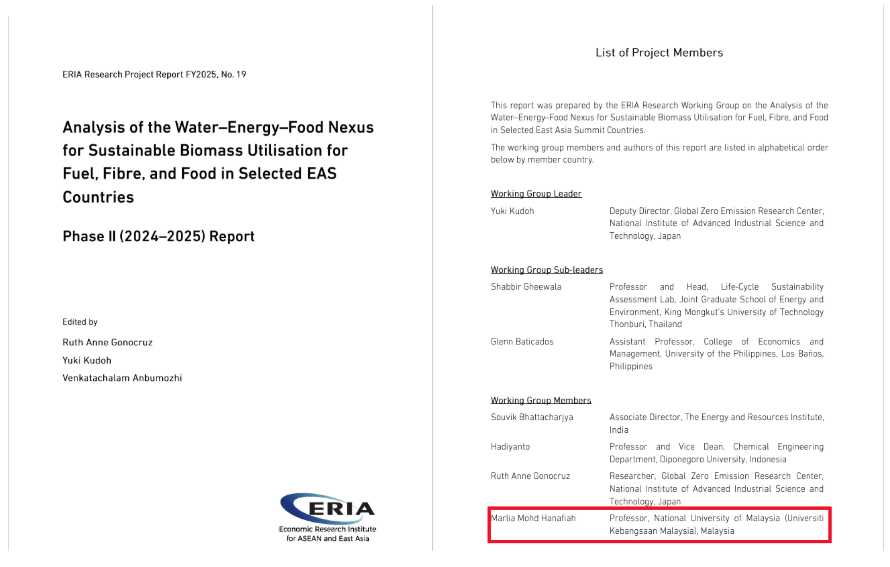
UKM, through Prof. Dr. Marlia Mohd Hanafiah, actively contributes to international research collaboration with the Economic Research Institute for ASEAN and East Asia (ERIA) and the National Institute of Advanced Industrial Science and Technology (AIST), Japan, to review comparative sustainability approaches and develop evidence-based recommendations addressing the Sustainable Development Goals (SDGs).
The collaboration is demonstrated through the international research project entitled “Analysis of the Water–Energy–Food Nexus for Sustainable Biomass Utilisation for Fuel, Fibre, and Food in Selected EAS Countries.” The Phase II (2024–2025) report, published by ERIA in September 2025, identifies Prof. Dr. Marlia Mohd Hanafiah as a member of its international research working group, alongside researchers from Japan, Thailand, India, Indonesia, the Philippines and Viet Nam.
The research applies an integrated Water–Energy–Food–Land–Climate (WEFLC) Nexus framework to comparatively assess sustainable biomass utilisation across six East Asia Summit countries: Thailand, India, Indonesia, the Philippines, Malaysia and Viet Nam. It examines resource efficiency, agricultural productivity, greenhouse gas emissions, land-use pressures and the interdependencies between food security, renewable energy development and climate resilience.
Through cross-country comparative analysis, the research identifies sustainability challenges, evaluates trade-offs and synergies between different resource-management approaches, and highlights opportunities for adopting more sustainable biomass production practices. The findings support the development of international best practices in integrated resource management, circular bioeconomy development, climate-smart agriculture and low-carbon energy transitions.
Importantly, the research provides policy recommendations aimed at strengthening cross-sectoral governance, improving resource efficiency, promoting sustainable agricultural technologies and supporting evidence-based decision-making. These recommendations offer a foundation for policymakers and stakeholders across ASEAN and East Asia to adapt successful approaches to their respective national circumstances.
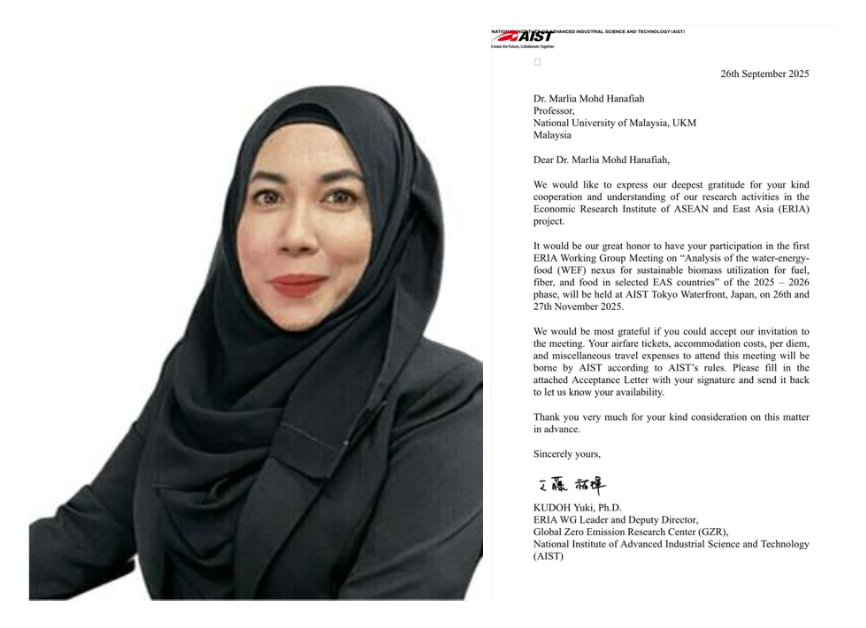
UKM’s continued participation is further demonstrated by the official invitation dated 26 September 2025, inviting Prof. Dr. Marlia to the first ERIA Working Group Meeting for the project’s 2025–2026 phase, scheduled for 26–27 November 2025 at AIST Tokyo Waterfront, Japan. The meeting was intended to facilitate continued international research discussions and collaboration on sustainable biomass utilisation.
Through this international research partnership, UKM contributes to the comparative review of sustainability approaches, the exchange of scientific expertise and the development of research-informed international best practices. The initiative directly supports SDG 2 (Zero Hunger), SDG 6 (Clean Water and Sanitation), SDG 7 (Affordable and Clean Energy), SDG 12 (Responsible Consumption and Production), SDG 13 (Climate Action) and SDG 17 (Partnerships for the Goals), reinforcing UKM’s commitment to advancing sustainable development through international collaboration and research.
3. ASEAN Framework for Integrated Semiconductor Supply Chain (AFISS) (2025): Comparative Research and Regional Best Practices for Sustainable Industrial Development
Year: 2025
Publisher recorded by UKM: Economic Research Institute for ASEAN and East Asia (ERIA)
Regional stakeholder: Association of Southeast Asian Nations (ASEAN)
UKM researchers: Dr. Azrul Azlan Hamzah, Prof. Dr. Sufian Jusoh and Dr. Mohd Hariszuan Jaharudin
UKM research institutes: Institute of Microengineering and Nanoelectronics (IMEN) and Institute of Malaysian and International Studies (IKMAS)
UKM researchers also contributed to the development of the ASEAN Framework for Integrated Semiconductor Supply Chain (AFISS), a regional policy framework designed to strengthen semiconductor supply chain resilience, technological innovation and sustainable industrial development.
The framework was developed through comparative mapping of the industrial capabilities, infrastructure, resources and technological strengths of ASEAN Member States. Its preparation involved consultations with stakeholders from government, industry, academia and other institutions.
AFISS also examines international industrial development approaches and identifies relevant practices from technologically advanced economies, including Japan, South Korea, the United States, the United Kingdom and Switzerland.
These comparisons provide reference points for strengthening regional research and development, technology transfer, intellectual property management, industrial infrastructure and workforce development.
The framework identifies three interconnected focus areas: supply chain development, technology and infrastructure, and talent development. These are translated into six strategic thrusts covering infrastructure resilience, technological innovation, regional industrial clusters, industrial and trade policies, market connectivity, and workforce mobility.
Among the proposed practices are shared semiconductor research and testing facilities, cross-border research partnerships, regional technology transfer mechanisms, collaborative intellectual property arrangements and coordinated workforce development.
The framework also encourages greater resource efficiency, sustainable industrial investment and improved access to advanced technological infrastructure, particularly for smaller enterprises.
Contribution to international best practices
UKM’s participation in AFISS demonstrates how international comparative research can support the development of regional industrial practices adapted to the differing capacities of ASEAN Member States.
By examining established international models and ASEAN’s comparative advantages, the framework proposes mechanisms for improving regional cooperation, reducing technological disparities and promoting more resilient industrial development.
These recommendations provide a foundation for international knowledge exchange and the development of shared approaches to sustainable semiconductor innovation.
Relevant SDGs: SDG 8 – Decent Work and Economic Growth; SDG 9 – Industry, Innovation and Infrastructure; SDG 11 – Sustainable Cities and Communities; and SDG 17 – Partnerships for the Goals.
Source:
APPOINTMENT OF LETTER – AFISS
APPOINTMENT LETTER
4. UKM Advances Global Climate Action through Professor Dr. Mohd Talib Latif’s Election to the IPCC Task Force Bureau
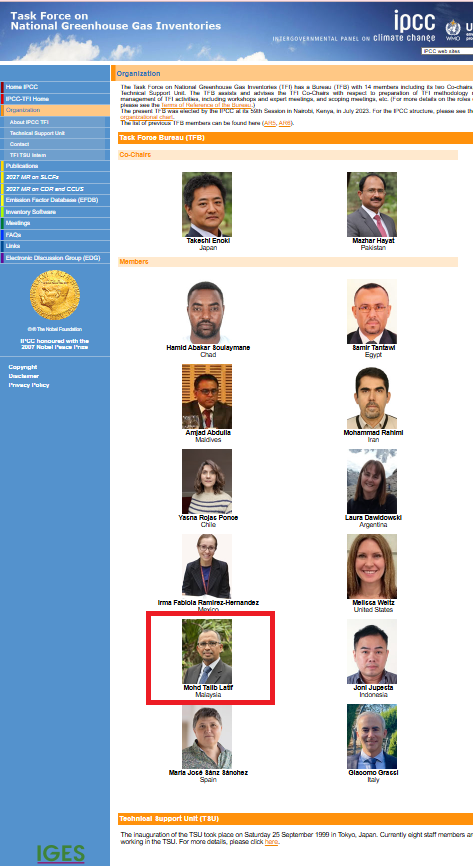
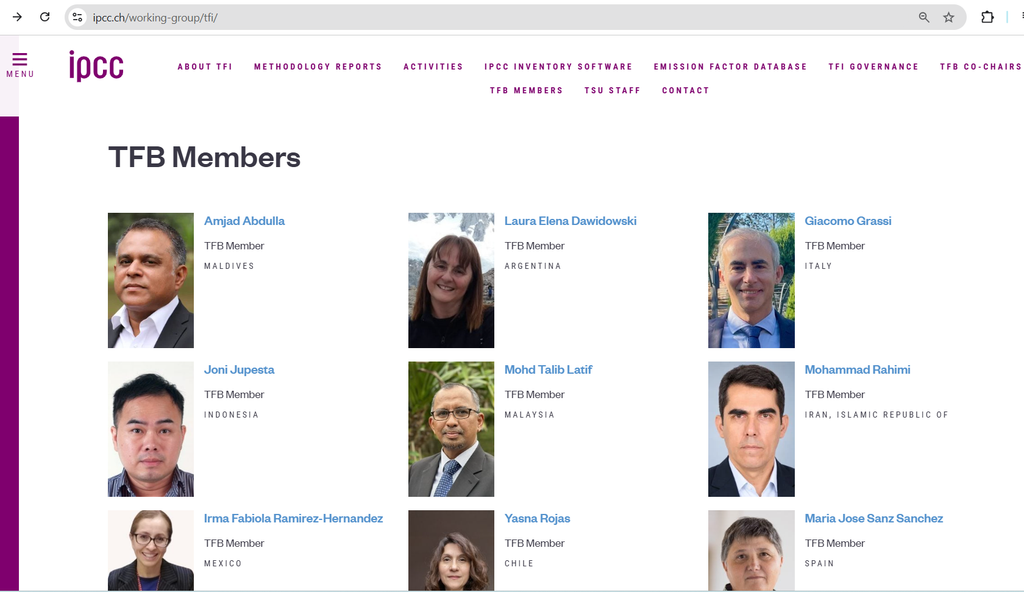
UKM strengthens its contribution to global climate action through Professor Dr. Mohd Talib Latif’s membership in the Bureau of the IPCC Task Force on National Greenhouse Gas Inventories. Representing Malaysia within a bureau comprising 14 members, including two Co-Chairs, his participation connects UKM’s expertise with an international scientific mechanism that supports the preparation, review and refinement of greenhouse gas inventory methodologies.
The Bureau advises on methodology reports and supports international workshops and expert meetings, providing platforms for exchanging scientific knowledge, comparing national experiences and developing common technical approaches. Through this engagement, UKM contributes expertise to international cooperation supporting harmonised methodologies, technical guidance and good practices for greenhouse gas accounting.
These methodologies provide governments with a common scientific foundation for improving the accuracy, consistency, comparability and transparency of emissions reporting. Their application supports the assessment of emissions trends, identification of mitigation priorities and development of evidence-based climate policies. UKM’s involvement therefore links academic expertise with internationally applicable approaches that countries can adapt to their national circumstances.
This engagement demonstrates UKM’s contribution to international collaboration, knowledge exchange and the development of shared practices for sustainable development, advancing SDG 13: Climate Action and SDG 17: Partnerships for the Goals.
Source:
https://www.ipcc.ch/working-group/tfi
https://www.ipcc-nggip.iges.or.jp/org/overview.html
5. UKM’s International Collaboration in Advancing Climate Change Mitigation Best Practices through the Intergovernmental Panel on Climate Change (IPCC)
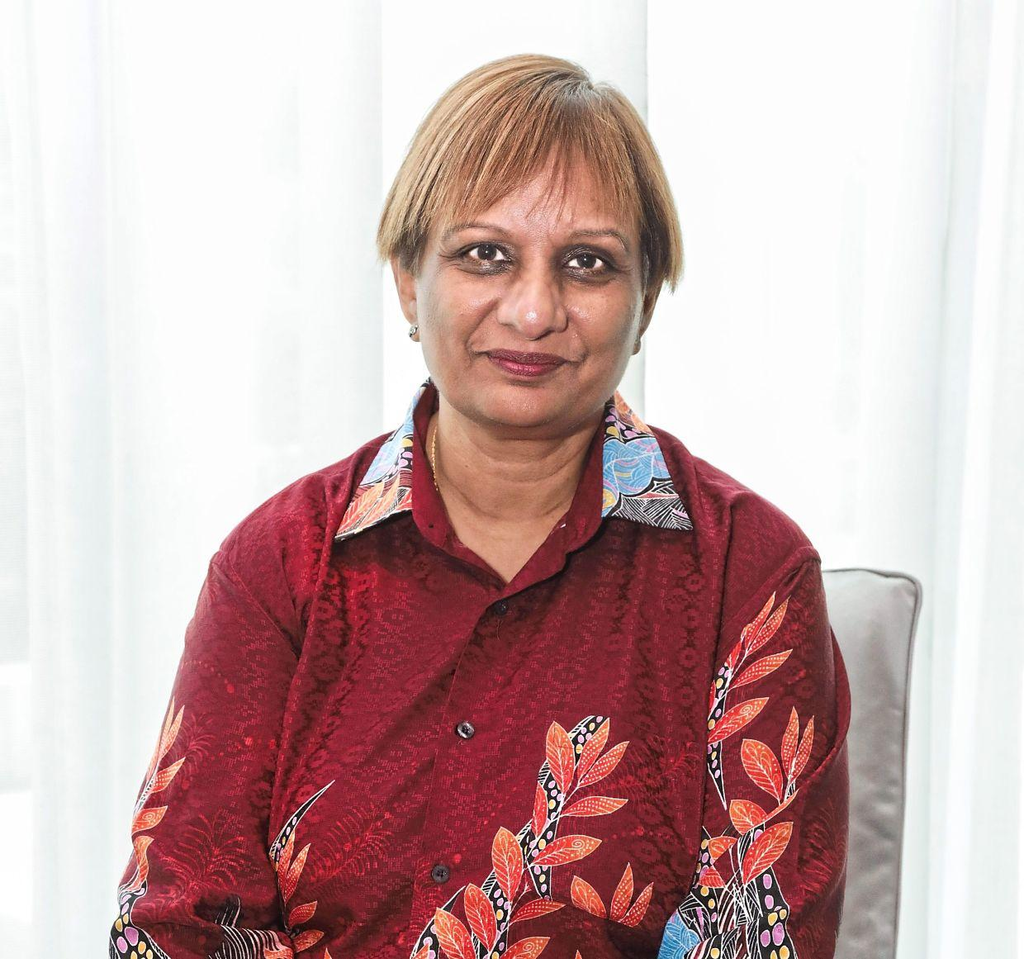
UKM demonstrates its commitment to international collaboration in advancing sustainable development practices through the leadership of Professor Dr. Joy Jacqueline Pereira, Principal Research Fellow at the Southeast Asia Disaster Prevention Research Initiative (SEADPRI-UKM), who serves as Co-Chair of Working Group III (Mitigation of Climate Change) of the Intergovernmental Panel on Climate Change (IPCC) for its Seventh Assessment Cycle (AR7), covering 2023–2029. Working alongside Dr. Katherine Calvin of the United States, Professor Pereira contributes to coordinating an international scientific assessment process that brings together experts from different countries to evaluate climate change mitigation strategies, scientific evidence and approaches relevant to sustainable development.
As Co-Chair of Working Group III, Professor Pereira plays a leadership role in facilitating international scientific cooperation and the systematic assessment of climate change mitigation knowledge. Working Group III examines approaches to reducing greenhouse gas emissions, including developments in energy systems, transport, industry, agriculture, land use, governance and climate-related policy instruments. Through the IPCC’s internationally established assessment procedures, participating scientists review and synthesise research from diverse geographical and socioeconomic contexts, enabling the identification of effective approaches, emerging practices, implementation challenges and lessons relevant to climate mitigation. This process supports the international exchange of scientific knowledge and the development of a shared evidence base that can inform sustainable development strategies.
In 2025, international collaboration under the IPCC’s Seventh Assessment Cycle advanced through several significant milestones. The outlines of the Working Group assessment reports were agreed upon during the IPCC’s 62nd Plenary Session in Hangzhou, China, in February 2025, followed by the selection of international scientific author teams. Subsequently, the First Joint Lead Author Meeting, held in Paris, France, from 1–5 December 2025, brought together more than 600 experts from over 100 countries to begin developing the Seventh Assessment Report. As a Co-Chair of Working Group III, Professor Pereira contributes to the scientific leadership and coordination framework supporting this international assessment process, which enables experts to compare research findings, examine mitigation approaches and strengthen the consistency and quality of global climate assessments.
Through Professor Pereira’s leadership within the IPCC, UKM contributes academic expertise to a major international scientific partnership that supports the assessment and dissemination of climate change mitigation knowledge. This involvement strengthens the connection between Malaysian research expertise and the global scientific community, promotes internationally recognised scientific assessment practices, and supports the development of evidence-based approaches to climate action.
UKM’s participation in the IPCC through Professor Pereira provides evidence of international collaboration to review, assess and share scientific knowledge relevant to climate change mitigation. By contributing to a globally coordinated assessment process, UKM supports the identification, comparison and dissemination of evidence-based mitigation approaches across countries and regions. This international scientific engagement contributes to SDG 13 (Climate Action) and SDG 17 (Partnerships for the Goals).
Source: https://www.ipcc.ch/people/joy-jacqueline-pereira
6. ASEAN University Network-Quality Assurance (AUN-QA) and Best-Practice Development
UKM contributes to the review of comparative approaches and the development and dissemination of regional best practices in higher education through its active involvement in the ASEAN University Network-Quality Assurance (AUN-QA) network. AUN-QA is an international higher-education quality-assurance network established to harmonise educational standards and promote the continuous improvement of academic quality among universities across the ASEAN region.
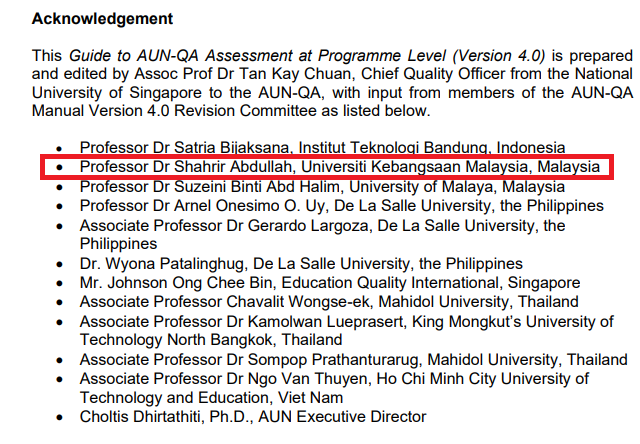
UKM contributes expertise to this regional mechanism through several officially recognised AUN-QA experts. Prof. Ir. Dr. Shahrir Abdullah serves as Special Advisor to the AUN Executive Director and Lead Assessor, while Prof. Dr. Mohd Nizam Ab Rahman serves as a Lead Assessor. Assoc. Prof. Dr. Malina Jasamai is also listed by AUN-QA as a new recruit from UKM. Their participation places UKM expertise within an international network of assessors and higher-education specialists from universities across Southeast Asia.
AUN-QA provides an important mechanism for comparative international learning because participating higher-education institutions are assessed against a common regional quality-assurance framework. Through programme and institutional assessments, universities’ approaches to educational quality, governance, teaching and learning, stakeholder engagement, outcomes and continuous improvement can be systematically examined. The international composition of the assessor network enables experience and practices from different universities and national higher-education systems to be considered within a common framework.
Importantly, AUN-QA extends beyond institutional assessment. The network promotes an evidence-based approach in which quality-assurance practices are shared, tested, evaluated and continuously improved. It supports this process through regional assessments, assessor calibration, capacity building, training, international conferences, policy meetings and the development of common assessment guidelines and quality-assurance frameworks.
UKM has also contributed directly to the development of these regional approaches. Prof. Ir. Dr. Shahrir Abdullah was a member of the international revision committee for the AUN-QA Guide to Assessment at Programme Level Version 4.0 (Guide to Assessment at Programme Level Version 4.0), working alongside quality-assurance experts from other ASEAN universities to improve the regional assessment methodology and align it with developments in higher education.
Through these roles, UKM contributes not only to the application of an international quality-assurance framework but also to the broader process of reviewing institutional approaches, identifying opportunities for improvement, harmonising quality standards and developing transferable good practices across ASEAN higher education. This international engagement contributes particularly to SDG 4: Quality Education and SDG 17: Partnerships for the Goals, demonstrating UKM’s role in strengthening internationally informed approaches to sustainable and high-quality higher education.
7. GEMPITA Istana Puteri Bongsu 2025: Advancing International Best Practices in Cultural Heritage Preservation through UKM–British Council Collaboration
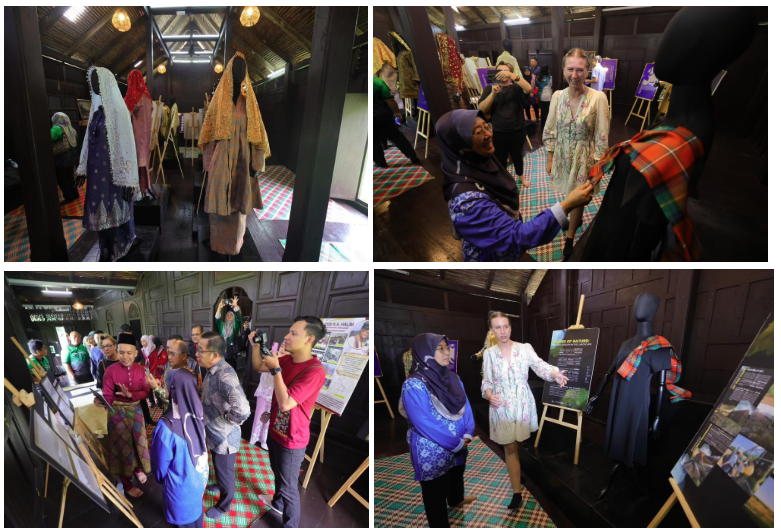
In 2025, UKM, through the Institute of the Malay World and Civilization (ATMA), strengthened international collaboration in sustainable cultural heritage preservation through the “Heritage Reimagined: Interactive Database and Augmented Reality for Malay Kelingkan and Scottish Tapestry” project. Led by Gs. Dr. Muhamad Solehin Fitry Rosley, the project received a £10,000 (approximately RM56,000) grant from the British Council under its Connections Through Culture programme. This Malaysia–United Kingdom collaboration brought together international researchers and cultural heritage practitioners to exchange knowledge, research methodologies and innovative approaches to preserving traditional textile heritage.
The project focused on Malay Kelingkan embroidery and Scottish tapestry, exploring their cultural significance and traditional craftsmanship through comparative research. By integrating Artificial Intelligence (AI), Augmented Reality (AR) and interactive digital databases, the collaboration promoted innovative practices in heritage documentation, conservation and public accessibility. International research exchanges, museum collaborations and online knowledge-sharing sessions further facilitated the sharing of cultural preservation approaches between Malaysia and Scotland.
A key milestone was GEMPITA Istana Puteri Bongsu 2025, held from 18–20 September 2025, featuring interactive heritage exhibitions, educational activities and international knowledge exchange. Researchers, including Dr. Francesca Boyd and Dr. Mingyu Jiang, engaged with UKM academics, students and cultural heritage stakeholders to share expertise in digital heritage interpretation and conservation. The programme also involved the British Council, UNESCO, the Department of Museums Malaysia and other strategic partners, strengthening interdisciplinary collaboration and community engagement.
Through the British Council-funded Heritage Reimagined project and GEMPITA 2025, UKM demonstrated international collaboration in reviewing, comparing and sharing best practices in sustainable cultural heritage preservation. The exchange of research expertise, digital conservation techniques and innovative heritage interpretation methods supports the development of transferable approaches to safeguarding cultural heritage. This initiative contributes to SDG 11 (Sustainable Cities and Communities), particularly Target 11.4, and SDG 17 (Partnerships for the Goals), while supporting SDG 4 (Quality Education) and SDG 9 (Industry, Innovation and Infrastructure).
8. UKM’s International Collaboration in Advancing Health Communication and Sustainable Public Health Best Practices through HealthComm
UKM, through its Centre for Health Communication (HealthComm) at the Faculty of Social Sciences and Humanities (FSSK), contributes to advancing Sustainable Development Goal (SDG) best practices through international scientific collaboration, evidence-based health communication and cross-sectoral knowledge exchange. HealthComm’s collaboration with the World Health Organization (WHO), the Ministry of Health Malaysia (MOH) and its wider network of health and development partners demonstrates UKM’s commitment to integrating international expertise into national public health strategies, particularly in strengthening health literacy, promoting positive health behaviours and supporting sustainable healthcare systems.
A significant example is HealthComm’s collaboration with WHO and MOH in developing Malaysia’s National Health Literacy Policy (DLKK), officially launched on 8 September 2024. Supported by WHO research funding, HealthComm contributed to reviewing existing health literacy policies and programmes, developing an evidence-informed national policy framework and proposing strategic approaches to improve health literacy across Malaysian society.
Building on this international collaboration, HealthComm continued supporting the implementation of DLKK throughout 2025. In partnership with MOH, HealthComm conducted two series of stakeholder engagement sessions involving 40 participants from relevant ministries and agencies. The first series focused on the Education Cluster, examining opportunities to integrate health literacy initiatives within the education system. The second series involved the Social, Health and Finance Cluster, focusing on inter-agency coordination and the development of practical approaches to improving health literacy across different sectors.
These engagements supported the translation of the internationally informed policy framework into national implementation planning. By encouraging a Whole of Government and Whole of Society approach, the initiative provides an example of how international scientific collaboration can inform context-specific public health strategies and strengthen cooperation towards SDG 3 (Good Health and Well-being) and SDG 17 (Partnerships for the Goals).
Source : https://www.ukm.my/healthcomm/
9. UKM’s International Collaboration through the ASEAN University Network–Health Promotion Network (AUN-HPN): Advancing International Best Practices in Health Promotion and Well-being
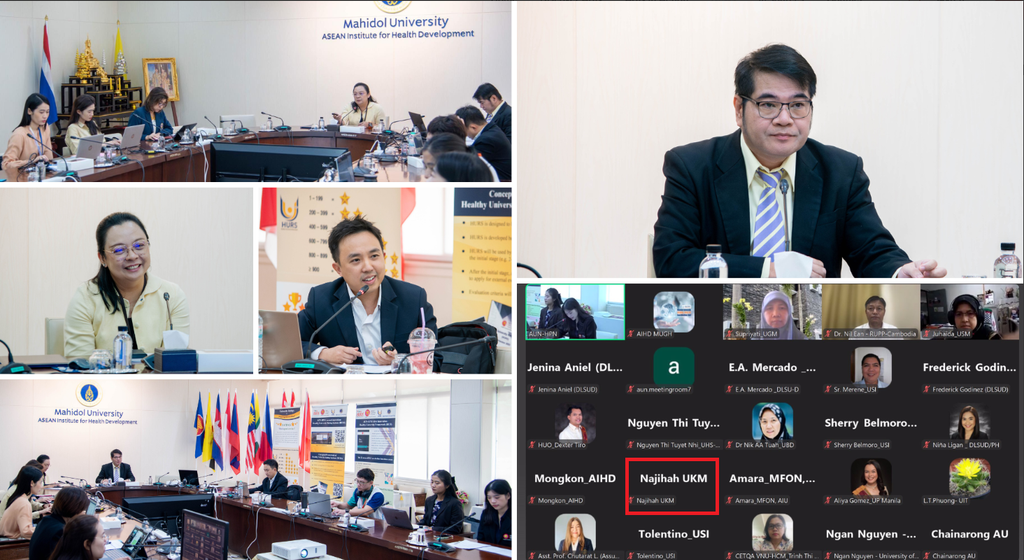
In 2025, UKM continued to strengthen its international engagement in health promotion and sustainable well-being through its participation in the Healthy University Rating System (HURS), an initiative of the ASEAN University Network–Health Promotion Network (AUN-HPN). This international framework brings together universities across ASEAN and beyond to assess institutional health promotion practices, facilitate comparative benchmarking and encourage the exchange of effective approaches to creating healthier and more sustainable university environments.
A significant achievement was UKM’s continued recognition at the 5 Stars Plus level under HURS 2024, officially announced on 4 April 2025. This recognition demonstrates UKM’s commitment to integrating health promotion and well-being into institutional governance, campus environments, health services, education, research and community engagement. Through HURS, UKM participates in an internationally recognised assessment framework that enables universities to evaluate their health promotion initiatives against common indicators, identify areas for improvement and learn from approaches implemented by other participating institutions.
In 2025, AUN-HPN also organised the HURS International Workshop, reported on 17 July 2025, to strengthen international cooperation in healthy university development. The workshop provided a platform for participating institutions to review the HURS assessment framework, discuss institutional experiences, enhance data collection and evaluation practices, and exchange strategies for improving health promotion initiatives. This regional collaborative mechanism supports the identification and dissemination of effective institutional practices that can be adapted across different university settings.
Through its continued engagement with HURS, UKM contributes institutional experience and assessment evidence to a broader international benchmarking initiative. The framework facilitates the comparative review of health promotion approaches and supports the development and adoption of evidence-based practices addressing physical health, mental well-being, healthy lifestyles and sustainable campus environments.
Overall, UKM’s involvement in HURS during 2025 demonstrates its commitment to international collaboration, comparative institutional assessment and the advancement of best practices in university health promotion. This initiative supports SDG 3 (Good Health and Well-being) and SDG 17 (Partnerships for the Goals).
Source: https://www.aunsec.org/news/aun-hpn-hosted-hurs-international-workshop-2025
10. International Sustainable Campus Network (ISCN) — Exchange and Adoption of Global Campus Best Practices
UKM strengthens its international benchmarking and adoption of sustainability best practices through participation in the International Sustainable Campus Network (ISCN), a global network of higher-education institutions committed to advancing sustainability in campus operations, research, teaching and institutional management.
The network provides a platform through which universities operating in different national and institutional contexts can exchange experiences, compare sustainability approaches and share effective practices. Its international structure allows member universities to learn from different models of sustainable campus management while contributing their own institutional experiences to the wider higher-education sustainability community.
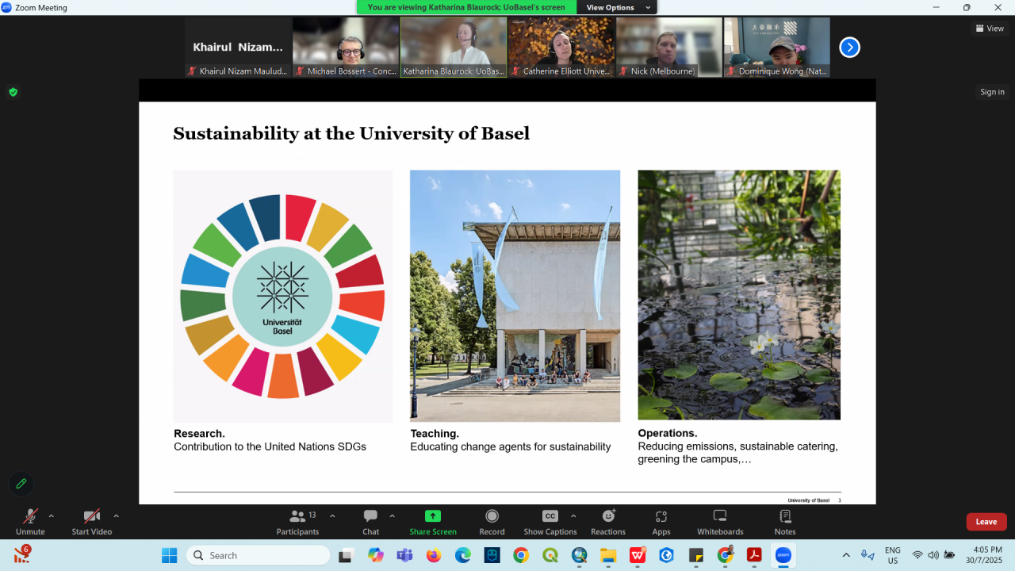
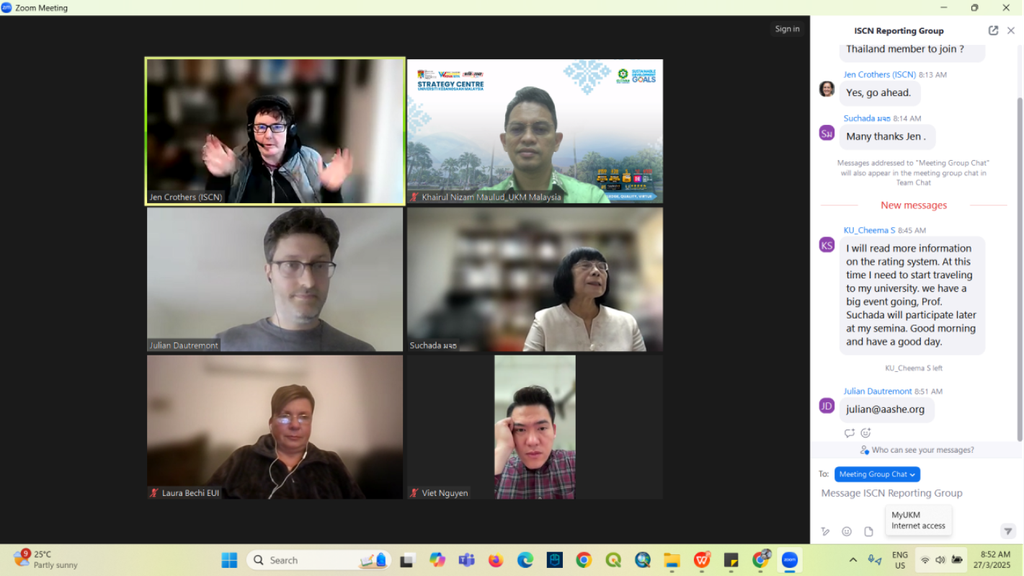
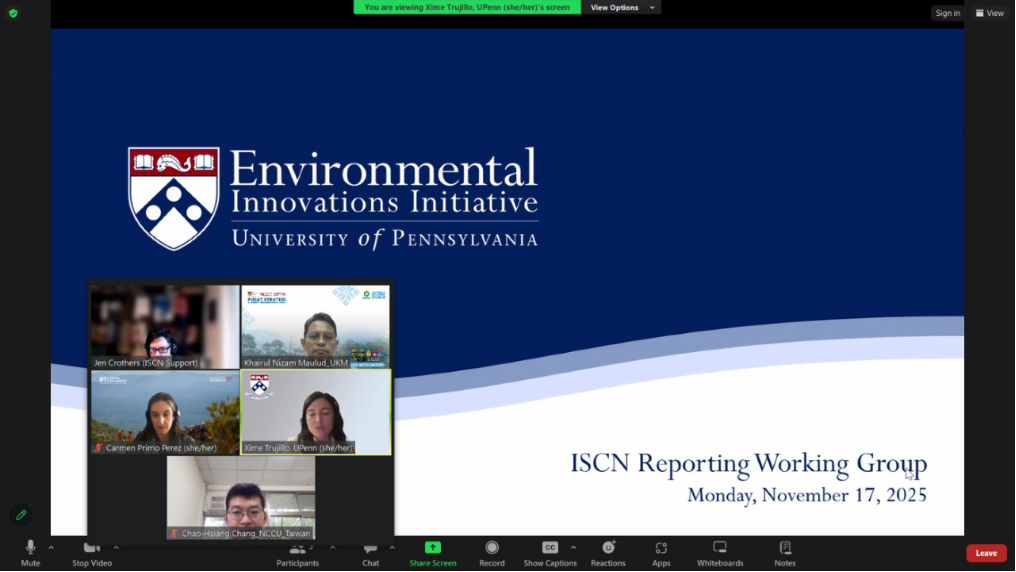
In 2025, UKM’s participation enables the University to engage in international discussions on sustainability practices and learn from established approaches implemented by other universities. This includes international knowledge exchange such as virtual sessions involving ISCN members and the sharing of sustainability practices from institutions including the University of Basel and University of Pennsylvania.
The ISCN Charter provides a common sustainability framework aligned with international sustainability commitments, including the United Nations Sustainable Development Goals and the Paris Agreement. Through engagement with this framework and other member institutions, UKM can benchmark its approaches against international experience, identify practices that may be adapted to the Malaysian higher-education context, and contribute its own sustainability initiatives to international knowledge exchange.
UKM’s participation in ISCN therefore demonstrates an institutional mechanism for international comparative learning, benchmarking and exchange of sustainability best practices. This strengthens the University’s capacity to translate international experience into improved campus sustainability approaches while contributing to the collective development of sustainable higher-education practices in support of SDG 11, SDG 13 and SDG 17.
11. UKM Advances International Collaboration on Biodiversity Conservation and Sustainable Agriculture through the Science Panel for Borneo at COP30
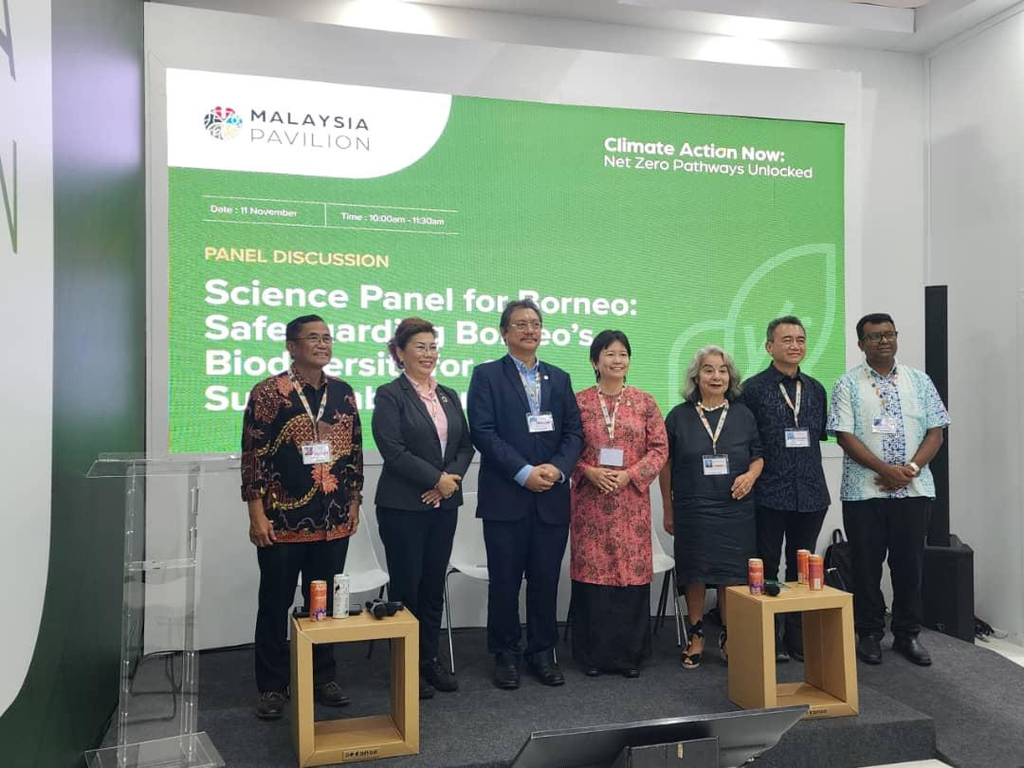
In 2025, UKM strengthened its international engagement in sustainability through its involvement in the Science Panel for Borneo (SPB), a collaborative scientific platform dedicated to advancing biodiversity conservation, sustainable land management and evidence-based approaches to environmental sustainability across Borneo.
Representing UKM, Dr. Minhaz Farid Ahmed, alongside Professor Dr. Mazlin Mokhtar, contributed to the coordination of the session Science Panel for Borneo: Safeguarding Borneo’s Biodiversity for a Sustainable Future at the Malaysia Pavilion during the 30th United Nations Climate Change Conference (COP30) in Belém, Brazil. Both were formally selected as Session Owners for the proposed programme, demonstrating UKM’s involvement in facilitating international scientific dialogue and knowledge exchange.
The session, scheduled for 11 November 2025, brought together two complementary initiatives: the Science Panel for Borneo and the Borneo Sustainable Agriculture Assessment. Its programme was structured around the sharing of scientific knowledge, including lessons from the Amazon and Congo regions, and discussions on sustainable agriculture in Borneo. This approach provided an opportunity to exchange international experiences and explore scientific perspectives relevant to biodiversity conservation, ecosystem protection and sustainable land-use practices.
Through this engagement, UKM supported international collaboration among academic experts, sustainability organisations and environmental stakeholders by facilitating discussions on shared environmental challenges and approaches to sustainable development. The initiative reflects UKM’s commitment to advancing cross-border scientific cooperation, promoting the exchange of sustainability knowledge and contributing to the development of internationally relevant environmental practices.
This collaboration supports SDG 17 (Partnerships for the Goals), through international engagement in the exchange of knowledge and practices related to SDG implementation. It also contributes to SDG 13 (Climate Action), SDG 15 (Life on Land) and SDG 2 (Zero Hunger).
Source : https://lnkd.in/p/gRfSrqgF
12. UKM’s Participation in the 2025 UI GreenMetric World University Rankings International Forum
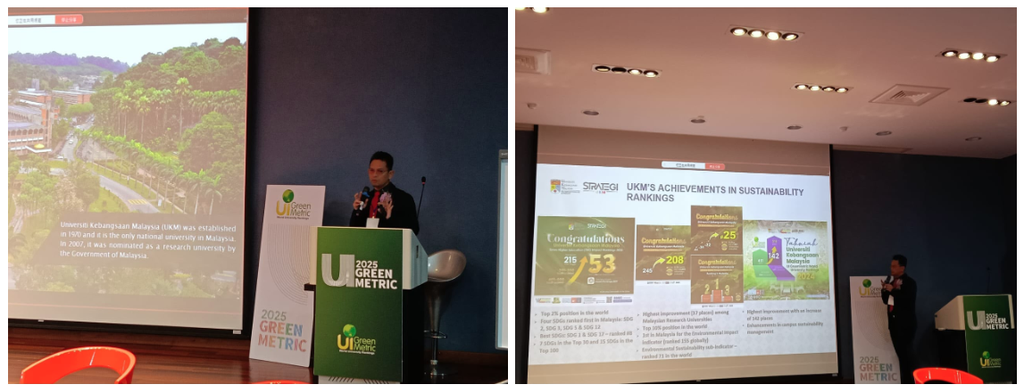
UKM actively contributes to international knowledge exchange and comparative sustainability benchmarking through its participation in the UI GreenMetric World University Rankings, a global initiative that evaluates universities’ environmental sustainability performance and promotes the exchange of best practices among higher education institutions worldwide.
In 2025, Prof. Dr. Khairul Nizam Abdul Maulud, representing UKM, delivered a presentation at an international UI GreenMetric gathering, highlighting the university’s achievements, institutional sustainability strategies and progress in international sustainability rankings. His presentation demonstrated UKM’s commitment to integrating sustainable development principles into university governance, campus operations, research and community engagement.
Through this international platform, UKM contributes to the review of comparative approaches to sustainability by examining institutional performance against internationally recognised indicators covering infrastructure, energy and climate change, waste management, water conservation, transportation, and education and research. The UI GreenMetric framework enables participating universities to identify performance gaps, evaluate sustainability initiatives and learn from approaches adopted by other universities internationally.
The presentation also highlighted UKM’s improvements in global sustainability rankings, reflecting the university’s continuous efforts to strengthen sustainability governance and institutional performance. By sharing its experiences and engaging with an international network of universities, UKM supports the dissemination of effective sustainability strategies and the development of internationally informed best practices for advancing the Sustainable Development Goals (SDGs).
This engagement demonstrates UKM’s contribution to SDG by providing a platform for international collaboration, comparative institutional assessment, knowledge sharing and the identification of best practices that can inform sustainability policies and implementation strategies across higher education institutions.
Source: https://uigreenmetric.com/programs/annual-ranking
13. SEAMEO RETRAC International Conference 2025 — Internationalisation and Best Practices
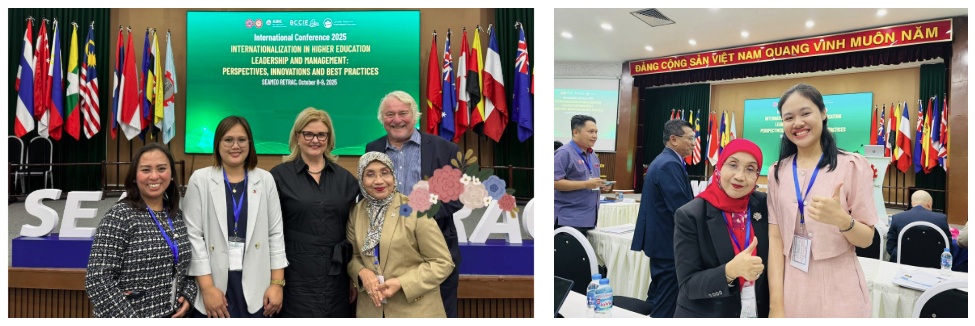
In 2025, UKM contributed to international comparative dialogue on sustainable higher-education practices through participation in the SEAMEO RETRAC International Conference 2025 on Internationalization in Higher Education Leadership and Management: Perspectives, Innovations and Best Practices.
UKM was represented by Prof. Dato’ Ts. Dr. Norazah Mohd Nordin, Director of the Centre for International Strategic Negotiation and Sustainable Development Goals (UKM ISN-SDG), who moderated a high-level session at the international conference.
The conference brought together speakers, educators, policymakers, researchers and higher-education leaders from across the region to examine different perspectives and innovative approaches to internationalisation, leadership and management in higher education. The international setting provided a platform for participants to exchange institutional experiences and discuss approaches that can strengthen sustainability, international collaboration and higher-education development.
Of particular relevance to the SDGs, the session moderated by UKM explored transformative pathways in sustainability, leadership and international collaboration in higher education. Bringing together perspectives from different countries and institutional contexts enabled participants to examine alternative approaches, identify transferable practices and strengthen shared commitments towards sustainable education and the empowerment of future generations.
UKM’s active role in this international platform demonstrates its participation in the review and exchange of comparative international approaches and best practices in higher education and sustainability. The engagement supports international knowledge transfer and institutional learning while contributing particularly to SDG 4: Quality Education and SDG 17: Partnerships for the Goals.
14. UKM Promotes International Knowledge Exchange on Climate Investment and Sustainable Development at COP30 Thailand Pavilion
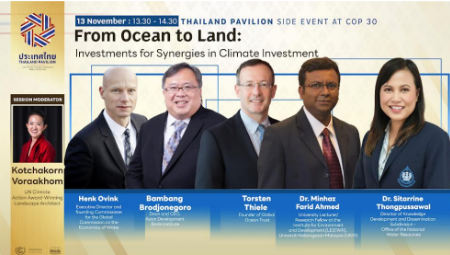
In 2025, UKM contributed to international discussions on climate action and sustainable development through its participation in “From Ocean to Land: Investments for Synergies in Climate Investment”, a session organised at the Thailand Pavilion during the 30th United Nations Climate Change Conference (COP30) in Belém, Brazil, on 13 November 2025.
Dr. Minhaz Farid Ahmed of UKM was invited as a speaker alongside international representatives from organisations involved in climate action, environmental sustainability and development investment. The session provided a platform for exchanging perspectives on strengthening synergies between ocean-based and land-based climate initiatives, with particular emphasis on the role of investment and cross-sectoral cooperation in supporting sustainable development.
The international dialogue highlighted the importance of connecting scientific knowledge, climate investment strategies and collaborative approaches to addressing environmental challenges. Through its participation, UKM contributed an academic perspective to discussions involving international experts and development stakeholders, supporting knowledge exchange on integrated climate action and opportunities for cooperation across sectors and geographical boundaries.
This engagement demonstrates UKM’s commitment to participating in international sustainability platforms that facilitate the sharing of experiences, approaches and knowledge relevant to the implementation of the Sustainable Development Goals. By engaging with international stakeholders at COP30, UKM strengthened its contribution to global discussions on climate resilience, environmental sustainability and collaborative climate solutions.
The initiative supports SDG 17 (Partnerships for the Goals), by demonstrating UKM’s involvement in international knowledge exchange on sustainability practices and collaborative approaches to SDG implementation. It also supports SDG 13 (Climate Action) and SDG 14 (Life Below Water), alongside SDG 15 (Life on Land).
Source : https://lnkd.in/p/g_v8ExU3
15. UKM’s International Scientific Engagement through the SCARFISH Outreach Action Group
In 2025, UKM strengthened its international scientific engagement through the participation of Ts. Dr. Noorashikin Md Noor in the SCARFISH Outreach Action Group under the Scientific Committee on Antarctic Research (SCAR), an international scientific organisation affiliated with the International Science Council (ISC).
Her membership, officially acknowledged on 8 April 2025, establishes a connection between UKM’s academic expertise and an international scientific network dedicated to Antarctic research. The SCARFISH Outreach initiative provides a platform for international scientific communication, knowledge dissemination and engagement with researchers and wider audiences.
This participation offers opportunities for UKM to contribute to international exchanges of scientific knowledge and approaches relevant to marine ecosystem sustainability, particularly SDG 14 (Life Below Water) and SDG 17 (Partnerships for the Goals).
Source : TS. DR. NORASHIKIN – SCARFISH
Collectively, these collaborations demonstrate UKM’s contribution to reviewing international approaches and developing shared frameworks, methodologies and recommendations relevant to the SDGs. Comparative research identifies differences in national conditions, evaluates options and supports the adaptation of practices to regional circumstances. Participation in international scientific and higher-education mechanisms complements this work through assessment, methodological exchange and institutional learning. By connecting Malaysian expertise with international partners, UKM helps translate comparative knowledge into practical reference points for policy, resource management, sustainable industry and education, advancing SDG 17: Partnerships for the Goals.