
Strengthen the means of implementation and revitalize the Global Partnership for Sustainable Development
SDG 17 Indicator
17.2 – Relationships to support the goals
17.2.2 – Cross sectoral dialogue about SDGs
Universiti Kebangsaan Malaysia (UKM) actively initiates, facilitates and participates in cross-sectoral dialogue on the Sustainable Development Goals (SDGs) as part of its institutional commitment to advancing sustainable development through collaboration and knowledge exchange. The University serves as a platform that brings together diverse stakeholders, including government ministries and agencies, policymakers, non-governmental organisations (NGOs), industry representatives, civil society, international and regional organisations, academics, researchers, professionals and communities, to discuss shared sustainability challenges and potential solutions.
Throughout 2025, UKM organised, co-organised and participated in conferences, forums, sustainability dialogues and policy-oriented discussions addressing issues such as green economic development, climate action, biodiversity conservation, poverty and socioeconomic resilience, decent work, inclusivity and sustainable regional development. Through these cross-sectoral platforms, UKM facilitates the exchange of knowledge and expertise, strengthens the connection between research, policy and practice, and encourages collaborative approaches to achieving the SDGs. These initiatives demonstrate UKM’s contribution to SDG 17: Partnerships for the Goals, while simultaneously supporting progress across other interconnected SDGs.
Summary of the cross-sectoral dialogues
| No | List of the cross-sectoral dialogue | SDG | Government/NGO |
|---|---|---|---|
| 1. | Youth Economic and Sustainable Goals Forum (YESGo UKM 2025) | SDG7 SDG8, SDG13 SDG17 | Ministry of Energy Transition and Water Transformation |
| 2. | “Is the Minimum Wage Enough?” – Building Resilience among Vulnerable Groups | SDG1 SDG8 SDG10 SDG17 | UNESCO-UKM, MyPoverty |
| 3. | Wacana Kelestarian 2/2025 – Translating Science into Biodiversity Conservation Action | SDG15 SDG17 | Ministry of Natural Resources and Environmental Sustainability |
| 4. | 7th ASEAN Economic Integration Forum (AEIF) 2025 | SDG8 SDG10 SDG16 SDG17 | Ministry of Investment, Trade and Industry Malaysia (MITI) |
| 5. | ASEAN Community Conference 2.0 (ASCON 2.0) – Inclusivity and Sustainability | SDG10 SDG11 SDG16 SDG17 | ASEAN ERIA Ministry of Higher Education |
| 6. | Wacana Kelestarian 1/2025 – SDG-Aligned Solutions to Key Malaysian Problems | SDG17 | UNSDSN – Asia |
| 7. | Forum on Talent Development and Future Technologies Towards 2045: Strengthening ASEAN Cross-Sectoral Dialogue on Education, Innovation and Sustainable Development | SDG4 SDG8 SDG9 SDG17 | Ministry of Higher Education |
| 8 | ASEAN Islamic Thought Forum (AITF) 2025: Advancing Cross-Sectoral Dialogue on Social Harmony, Inclusive Development and Regional Cooperation | SDG4 SDG10 SDG16 SDG17 | Association of Southeast Asian Nations (ASEAN) |
| 9 | Global Sustainable Development Congress 2025 | SDG4 SDG17 | Times Higher Education |
| 10 | UKM’s Institutional Membership and International Engagement in SDG Dialogue through ISDRS 2025 | SDG16 SDG17 | International Sustainable Development Research Society |
1. Youth Economic and Sustainable Goals Forum (YESGo UKM 2025)
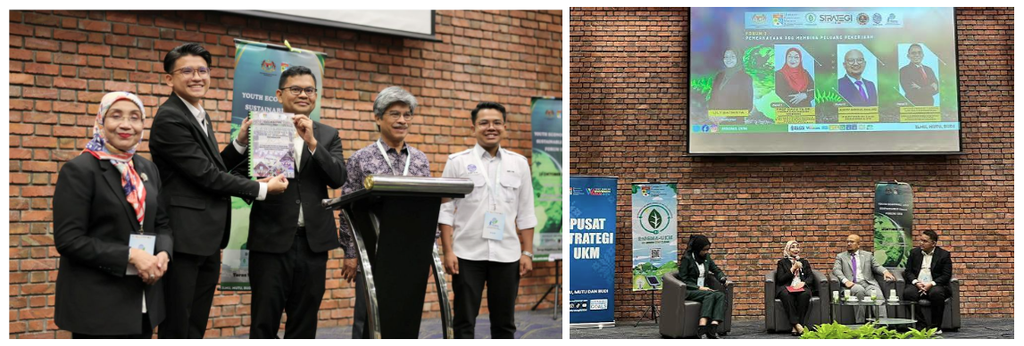
On 13 October 2025, UKM, through the Environment and Green Energy of Malaysia Association (EniGMA-UKM), organised the Youth Economic and Sustainable Goals Forum (YESGo UKM 2025) at the Cyber Technopolis Auditorium, UKM. The forum was organised in collaboration with the UKM Strategy Centre, the UKM Centre for International Strategic Negotiation and Sustainable Development Goals (UKM ISN-SDG), and the UKM Students’ Union (KMUKM), demonstrating the University’s active role in initiating and facilitating dialogue on sustainable development and the Sustainable Development Goals (SDGs).
Carrying the theme “Shared Prosperity Through the SDGs,” YESGo UKM 2025 served as a cross-sectoral dialogue platform that brought together students, government policymakers and national leaders, non-governmental organisations (NGOs), industry representatives, professionals and academics. Rather than limiting sustainability discussions to the academic community, the forum enabled stakeholders from different sectors to exchange perspectives, experiences and potential solutions to interconnected sustainability challenges. Key areas of discussion included green economic development, environmental sustainability, climate change, employment opportunities, youth participation and Malaysia’s transition towards a sustainable and resilient economy.
Government participation was demonstrated through the involvement of Akmal Nasrullah Mohd Nasir, Deputy Minister of Energy Transition and Water Transformation, who officiated the forum. His participation strengthened the interface between the university community and government in discussing Malaysia’s energy transition and wider sustainability agenda. The forum also provided opportunities for NGOs, industry professionals, policymakers and academics to contribute their respective perspectives, creating a multi-stakeholder environment for discussing how Malaysia can advance sustainable development through collective action.
UKM also contributed directly to the substantive SDG dialogue through Prof. Dato’ Ts. Dr. Norazah Mohd Nordin, Director of UKM ISN-SDG, who participated as a forum panellist. Her session, “Empowering the SDGs: Creating Employment Opportunities,” explored the relationship between sustainability, youth empowerment, inclusive strategies and the future of employment. The discussion highlighted how SDG implementation can simultaneously support economic opportunities, social inclusion and a more sustainable future.
Through YESGo UKM 2025, UKM therefore went beyond simply participating in sustainability-related activities by initiating, hosting and contributing expertise to a structured cross-sectoral dialogue on the SDGs. By convening government representatives, policymakers, NGOs, industry, professionals, academia and youth within a common platform, the initiative facilitated knowledge exchange, encouraged multi-stakeholder perspectives and strengthened collaboration towards shared sustainability priorities. The programme provides clear evidence of UKM’s contribution to SDG 17: Partnerships for the Goals, while also advancing SDG 8 (Decent Work and Economic Growth), SDG 13 (Climate Action) and other interconnected SDGs.
Relevant SDGs: SDG 17
Source:
https://www.ukm.my/kelestarian/activities/yesgo-ukm-2025/
https://www.ukm.my/beritaukm/program-yesgo-ukm-platform-anak-muda-bicara-isu-kelestarian/
2. “Is the Minimum Wage Enough?” – Building Resilience among Vulnerable Groups
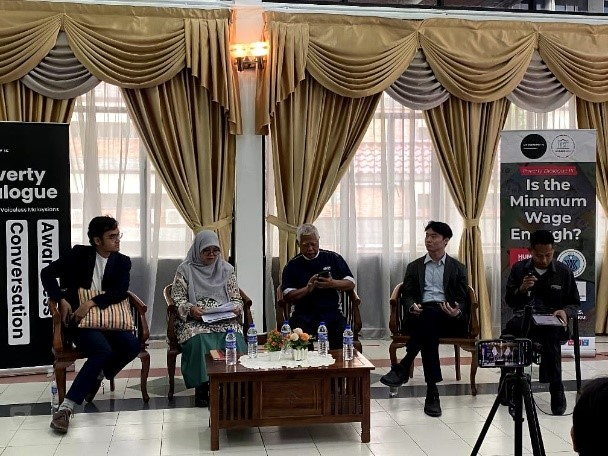
On 23 October 2025, UNESCO-UKM, in collaboration with MyPoverty, organised the forum Is the Minimum Wage Enough? – Building Resilience among Vulnerable Groups. The forum addressed the adequacy of Malaysia’s minimum wage and the broader socioeconomic challenges affecting vulnerable groups.
The programme provides particularly clear evidence of cross-sectoral dialogue. UKM records that the minimum-wage issue attracted perspectives from government policymakers, academics, industry, workers and civil society. Expert panellists represented several sectors: Datuk Hj. Shamsuddin Bardan, Executive Director of the Malaysian Employers Federation (MEF); Umari Aiman from the NGO Hunger Hurts; Hanson Chong, an economic policy researcher from the Institute of Strategic and International Studies Malaysia (ISIS Malaysia); and Dr. Rospidah Ghazali from LESTARI-UKM. The discussion was moderated by an academic from UKM’s Faculty of Economics.
The dialogue examined the ability of the minimum wage to support an adequate standard of living, particularly among vulnerable and B40 households facing low income, dependence on a single income source, rising living costs and indebtedness. It also considered the need for policies, programmes and interventions capable of strengthening household resilience to economic, social and environmental pressures.
The forum therefore demonstrates UKM’s role in convening academia, employers/industry, NGOs, policy researchers and civil society to discuss a major sustainable-development challenge and consider responses affecting poverty reduction, decent work, inequality and socioeconomic resilience.
Source: LESTARI UKM – Cukupkah Gaji Minimum?
3. Wacana Kelestarian 2/2025 – Translating Science into Biodiversity Conservation Action
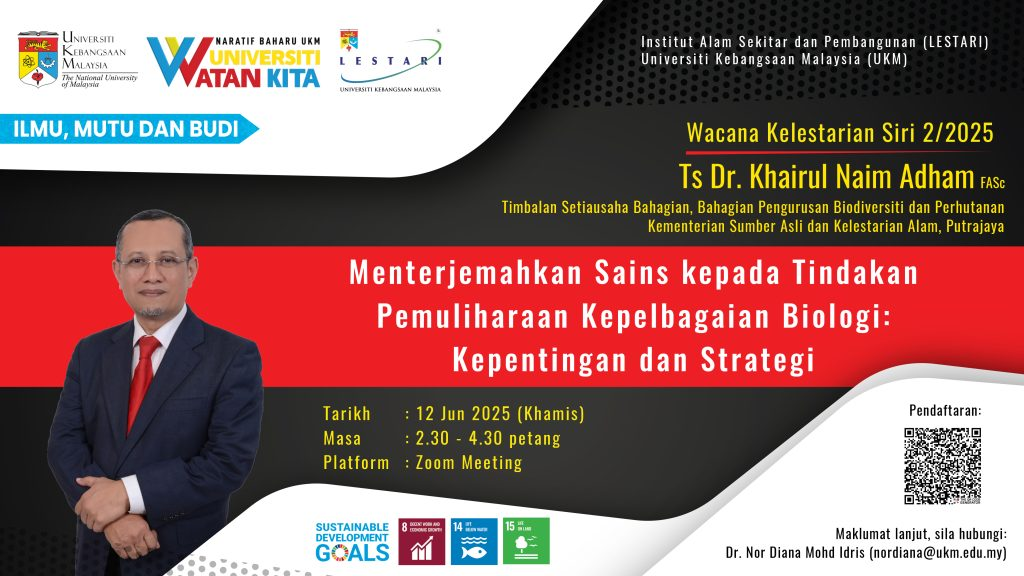
On 12 June 2025, LESTARI-UKM organised Wacana Kelestarian Bil. 2/2025, entitled “Translating Science into Biodiversity Conservation Action: Importance and Strategies” (Menterjemahkan Sains kepada Tindakan Pemuliharaan Kepelbagaian Biologi: Kepentingan dan Strategi). The session was delivered by Ts. Dr. Khairul Naim Adham, Deputy Secretary of the Biodiversity and Forestry Management Division, Ministry of Natural Resources and Environmental Sustainability (NRES). Approximately 65 participants from UKM, other universities and relevant agencies took part.
The programme created a direct university–government–stakeholder dialogue on biodiversity conservation. Central to the discussion was the Science–Policy Interface (SPI), which connects scientific evidence and expertise with policymaking and implementation. The dialogue examined how scientific knowledge can be translated into practical conservation action and how scientists, government agencies and other stakeholders can work together to address the biodiversity crisis.
This programme is particularly relevant to 17.2.2 because UKM facilitated dialogue between academia and a national government ministry, alongside universities and other interested agencies, on converting research evidence into policies and practical sustainability interventions. It demonstrates UKM’s role as a knowledge broker connecting science, policy and implementation rather than limiting sustainability research to the academic sector.
Source: LESTARI UKM – Wacana Kelestarian Bil. 2/2025
4. 7th ASEAN Economic Integration Forum (AEIF) 2025
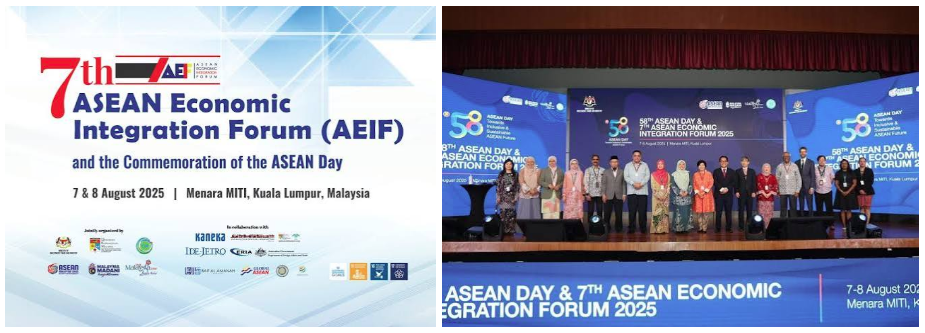
On 7–8 August 2025, the Institute of Malaysian and International Studies (IKMAS), UKM, together with the Ministry of Investment, Trade and Industry Malaysia (MITI) and other consortium partners, jointly organised the 7th ASEAN Economic Integration Forum (AEIF) 2025 at MITI Tower, Kuala Lumpur. The joint organisation itself demonstrates direct university-government collaboration in creating a regional policy-dialogue platform.
The AEIF provides an established forum for dialogue on ASEAN economic integration and the broader challenges associated with developing an equitable, inclusive and sustainable regional economy. UKM’s work in this area emphasises dialogue and consultation with government agencies, ASEAN bodies, academic institutions, businesses and other entities concerned with regional economic governance, business responsibility, human rights and sustainable growth.
Government participation in the 2025 forum is independently evidenced by MITI, including the participation of Deputy Minister of Investment, Trade and Industry Liew Chin Tong, who delivered a keynote address in conjunction with the 58th ASEAN Day and 7th ASEAN Economic Integration Forum on 8 August 2025.
For THE reporting, this programme is best presented as evidence of UKM’s participation in cross-sectoral regional policy dialogue supporting sustainable and inclusive economic development, rather than claiming that AEIF itself was explicitly branded as an SDG conference. Its relevance lies particularly in the partnership mechanism: UKM and a national government ministry jointly convened stakeholders to discuss regional economic integration and ASEAN development.
Source: IKMAS UKM – 7th ASEAN Economic Integration Forum 2025 | MITI – Deputy Minister’s AEIF 2025 Keynote Record
5. ASEAN Community Conference 2.0 (ASCON 2.0) – Inclusivity and Sustainability
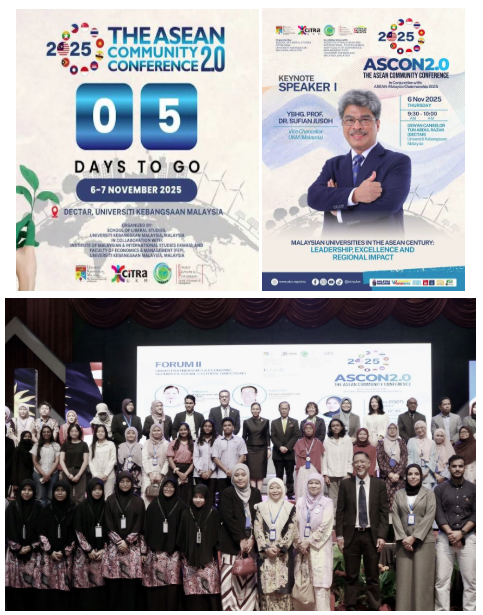
On 6-7 November 2025, UKM organised the ASEAN Community Conference 2.0 (ASCON 2.0) under the theme “Inclusivity and Sustainability,” in conjunction with Malaysia’s ASEAN Chairmanship 2025. The conference was organised by UKM’s School of Liberal Studies/CITRA with collaboration across UKM entities, including the Institute of Malaysian and International Studies (IKMAS) and Faculty of Economics and Management.
ASCON 2.0 was designed as an interdisciplinary dialogue on ASEAN development, sustainability and regional collaboration, bringing together scholars, researchers, professionals, policymakers and regional stakeholders. Its substantive themes included resilience and innovation, environmental sustainability, socioeconomic inequalities, sustainable development and growth, people-centred development, regional integration and environmental well-being.
The cross-sectoral and international nature of the dialogue was reinforced by participation from policymakers, communities and diplomatic representatives. UKM’s programme record identifies the presence of the Ambassador of Timor-Leste to Malaysia, while the conference programme also identified diplomatic representation from ASEAN countries including Vietnam, Thailand and Indonesia.
ASCON 2.0 therefore extended UKM’s sustainability dialogue beyond the national level, providing a platform where academia, policymakers, professionals, diplomatic representatives and regional communities could exchange perspectives on inclusive and sustainable ASEAN development.
Relevant SDGs: SDG 8, SDG 10, SDG 11, SDG 16 and particularly SDG 17 through regional partnerships and multi-stakeholder cooperation.
Source :
UKM – ASEAN Community Conference 2.0 Official Conference Page
https://kualalumpur.thaiembassy.org/en/content/ambassador-participated-as-a-panelist-at-the-asean?cate=5f069ee272a783584326eb11
6. Wacana Kelestarian 1/2025 – SDG-Aligned Solutions to Key Malaysian Problems
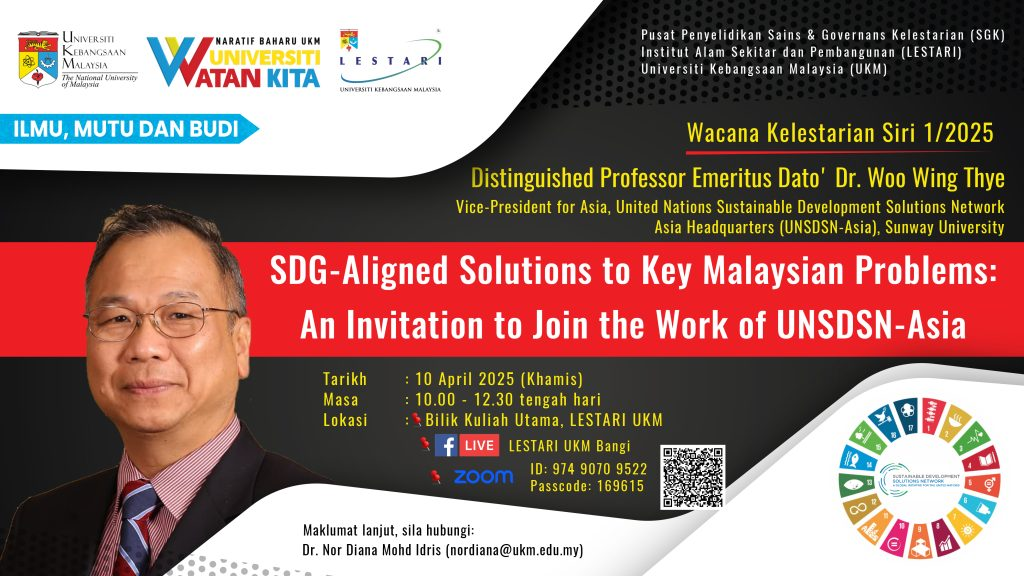
On 10 April 2025, UKM’s Institute for Environment and Development (LESTARI) organised Wacana Kelestarian Bil. 1/2025, entitled “SDG-Aligned Solutions to Key Malaysian Problems: An Invitation to Join the Work of SDSN-Asia.” The hybrid dialogue was delivered by Distinguished Professor Emeritus Dato’ Dr. Woo Wing Thye, Vice-President for Asia of the United Nations Sustainable Development Solutions Network (SDSN) Asia Headquarters, and attracted approximately 65 participants from UKM, external universities and relevant agencies.
The dialogue explicitly examined how Malaysia’s major development challenges could be addressed through solutions aligned with the United Nations Sustainable Development Goals. It highlighted the role of SDSN-Asia in bringing together researchers, policymakers and practitioners to formulate actionable sustainable-development strategies. Key areas included climate resilience, education, health equity, urban sustainability and inclusive economic growth.
Importantly for cross-sectoral engagement, the dialogue promoted the integration of scientific research, data-driven decision-making and cross-sector partnerships, encouraging Malaysian institutions and stakeholders to collaborate on national sustainability challenges. UKM therefore provided an interface through which academia, sustainability networks, agencies, researchers, practitioners and policymakers could exchange knowledge and identify SDG-aligned approaches to national problems.
Relevant SDGs: SDG 7, SDG 8, SDG 13, SDG 17
Source: LESTARI UKM – Wacana Kelestarian 1/2025
7. Forum on Talent Development and Future Technologies Towards 2045: Strengthening ASEAN Cross-Sectoral Dialogue on Education, Innovation and Sustainable Development
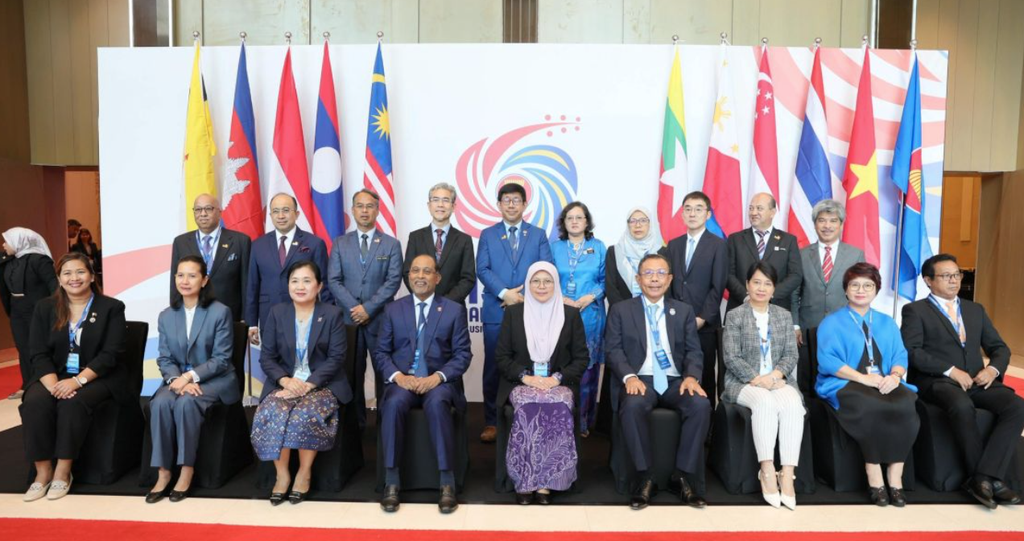
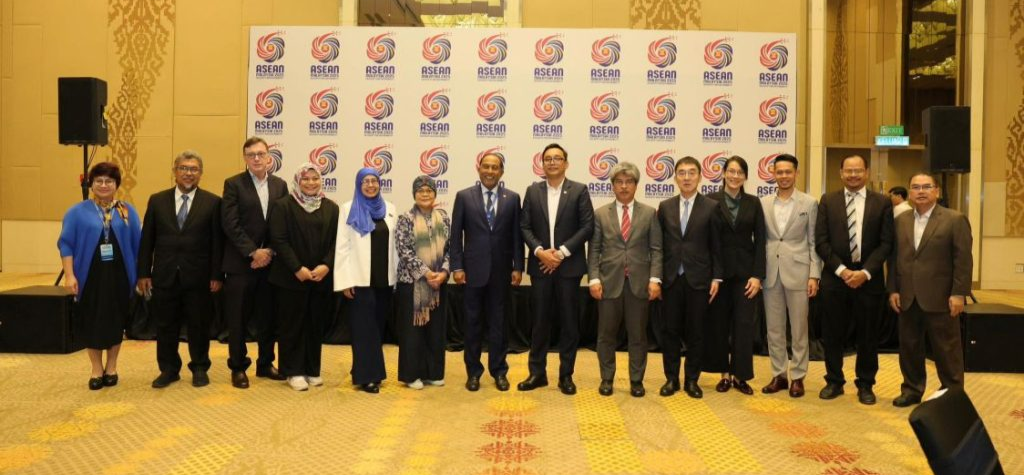
UKM, through its Institute of Malaysian and International Studies (IKMAS), contributed to regional cross-sectoral dialogue through its participation in the Forum on Talent Development and Future Technologies Towards 2045, held on 18 June 2025 in Langkawi, Malaysia. The forum was organised as a side event of the ASEAN Education and Higher Education Ministers’ Roundtable 2025, bringing together government representatives, policymakers, academics and industry stakeholders to discuss the future of talent development, technological advancement and regional cooperation in ASEAN.
The forum provided a strategic platform for exchanging perspectives on how ASEAN countries can strengthen education systems, develop future-ready human capital and respond to emerging technologies in preparation for ASEAN’s long-term development towards 2045. Discussions highlighted the importance of collaboration between higher education institutions, governments and industry in addressing regional skills gaps, promoting innovation and supporting inclusive economic growth.
Professor Dato’ Dr. Sufian bin Jusoh of IKMAS, UKM, contributed to the regional engagement, demonstrating the university’s role in connecting academic expertise with ASEAN-level policy discussions. A significant outcome associated with the event was the launch of GlobalASEAN.org, a knowledge-sharing platform developed by IKMAS researchers to facilitate access to ASEAN policy documents, best practices and educational resources. This initiative supports evidence-informed policymaking, regional knowledge exchange and continued collaboration among ASEAN stakeholders.
Through its involvement, UKM demonstrated its commitment to facilitating cross-sectoral dialogue on sustainable development challenges, particularly those related to SDG 4 (Quality Education), SDG 8 (Decent Work and Economic Growth), SDG 9 (Industry, Innovation and Infrastructure) and SDG 17 (Partnerships for the Goals). The forum exemplifies how UKM contributes academic knowledge and regional research expertise to discussions involving governments, educational institutions and industry, strengthening partnerships towards a more inclusive, innovative and sustainable ASEAN community.
The forum was the official launch of GlobalASEAN.org by Malaysia’s Minister of Higher Education, Dato’ Seri DiRaja Dr. Zambry Abd Kadir. Developed by researchers from IKMAS UKM, with support from Talent Corporation Malaysia (TalentCorp) and the Economic Research Institute for ASEAN and East Asia (ERIA), the platform serves as a regional knowledge hub providing access to policy documents, best practices, online training, micro-credentials and professional upskilling resources.
The forum was attended by ASEAN ministers and representatives involved in public policy and higher education, business leaders and experts from various fields. Other notable attendees included Prof. Tetsuya Watanabe, President of ERIA, senior UKM management representatives and Mohd Khuzzan Abu Bakar, Deputy Chairman of TalentCorp. Their participation illustrates the cross-sectoral nature of the engagement and the opportunities it created for collaboration between governments, universities, regional research organisations and industry.
The development of GlobalASEAN.org also extends the forum’s potential impact beyond a single event by providing a platform for continued knowledge sharing, capacity building and collaborative responses to future challenges. This supports ASEAN’s vision for 2045 by strengthening connections between economic development, education and socio-cultural cooperation.
8. ASEAN Islamic Thought Forum (AITF) 2025: Advancing Cross-Sectoral Dialogue on Social Harmony, Inclusive Development and Regional Cooperation
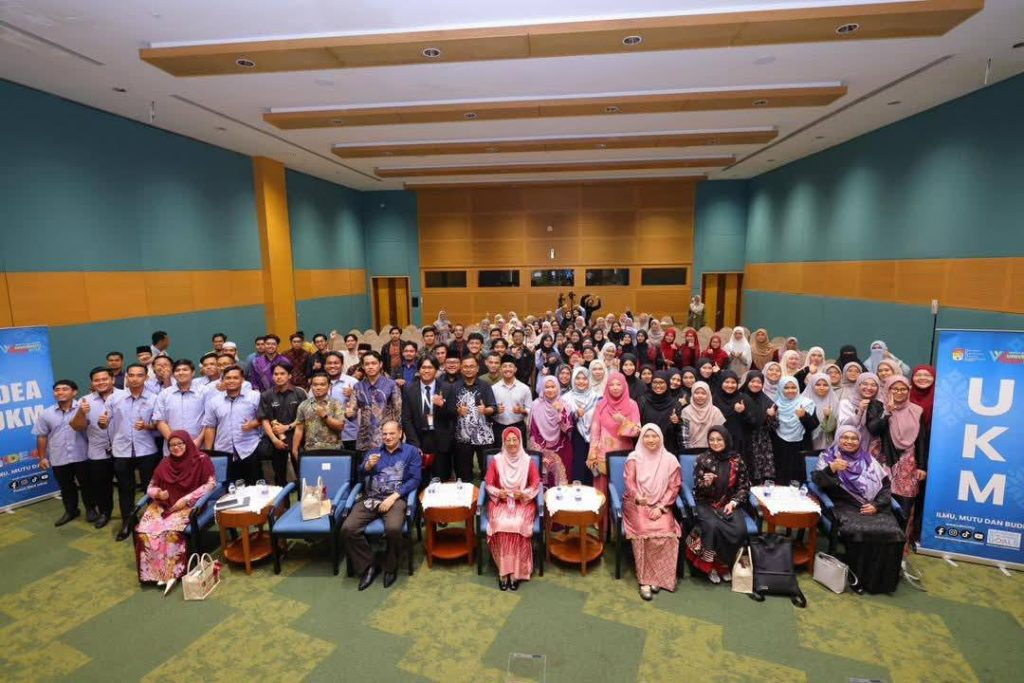
UKM demonstrated its commitment to advancing regional cross-sectoral dialogue through the organisation of the ASEAN Islamic Thought Forum (AITF) 2025, held on 6 November 2025 at the Putrajaya International Convention Centre (PICC), in conjunction with the Putrajaya Festival of Ideas 2025. The forum was jointly organised by UKM’s Pusat IDEA, Institute of Malaysian and International Studies (IKMAS), and Faculty of Islamic Studies, providing a regional platform for engagement among academics, government representatives, religious authorities and policymakers from across ASEAN.
Under the theme Revitalising ASEAN Islamic Thought: Islamic Thought and Civilisational Renewal through ASEAN Higher Education, the forum facilitated discussions on the role of Islamic intellectual traditions in addressing contemporary regional challenges, particularly social harmony, inclusive development, interreligious understanding and societal well-being. The dialogue highlighted the importance of higher education, ethical leadership and regional intellectual cooperation in promoting peaceful, inclusive and resilient communities.
The forum featured distinguished regional scholars and representatives of government religious institutions, including Dr. Wan Fariza Alyati Wan Zakaria from UKM’s Faculty of Islamic Studies, Dato’ Dr. Haji Badli Shah bin Alauddin, Deputy Mufti of Pahang, Prof. Dr. Wardah Nuroniyah from Universitas Islam Negeri Syarif Hidayatullah Jakarta, Indonesia, and Prof. Dr. Imtiyaz Yusuf from Mahidol University, Thailand. The official UKM report also highlighted the contribution of Ahmad Fauwaz Fadzil, Mufti of the Federal Territories, to the forum’s intellectual discourse. Their involvement enabled exchanges between academia, religious authorities and regional stakeholders on the contribution of Islamic thought to sustainable societal development and global peace.
The forum was further attended by senior UKM leadership, including Prof. Dr. Jamia Azdina Jamal, Director of Pusat IDEA and Acting Deputy Vice-Chancellor (Research and Innovation); Prof. Dato’ Dr. Mohd Izhar Ariff Mohd Kashim, Dean of the Faculty of Islamic Studies; and Dr. Wan Haslan Khairuddin, Director of the UKM Islamic Centre. Their participation reinforced UKM’s institutional commitment to facilitating international intellectual exchange and strengthening partnerships between higher education institutions and public-sector stakeholders.
Through this initiative, UKM actively initiated and facilitated cross-sectoral dialogue at the ASEAN regional level, bringing together academic expertise and government perspectives to discuss shared social challenges and explore approaches to strengthening regional cooperation. The forum contributed to the broader objectives of SDG 4 (Quality Education), SDG 10 (Reduced Inequalities), SDG 16 (Peace, Justice and Strong Institutions), and SDG 17 (Partnerships for the Goals), particularly by encouraging inclusive dialogue, peaceful societies, knowledge exchange and institutional collaboration across national boundaries.
Source: https://www.ukm.my/ideaukm/en/asean-islamic-thought-forum-aitf-2025-2/
9. Global Sustainable Development Congress 2025: Strengthening UKM’s Participation in International Cross-Sectoral Dialogue on the SDGs
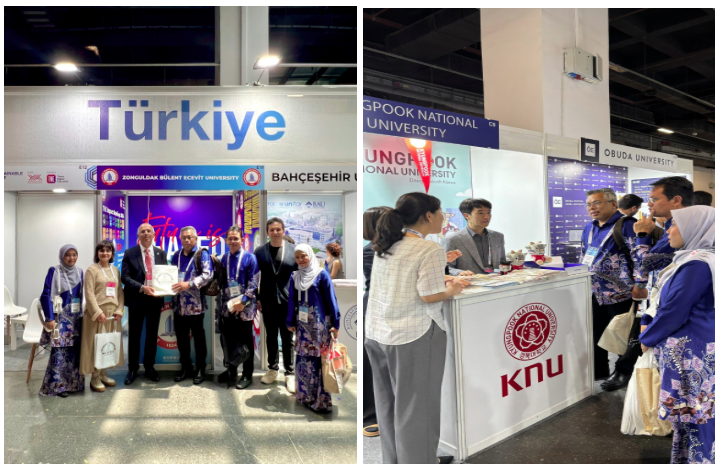
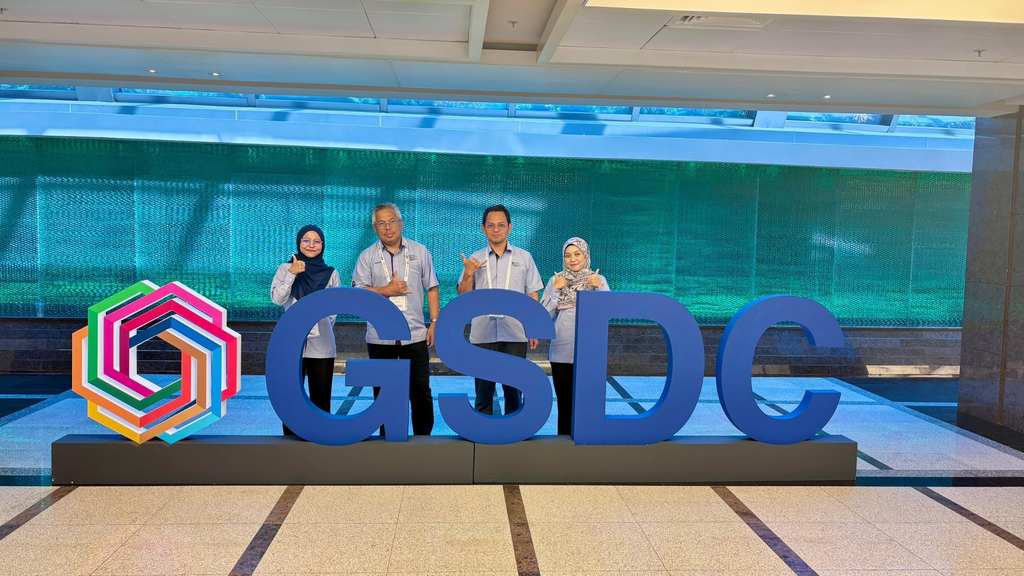
UKM demonstrated its commitment to advancing the United Nations Sustainable Development Goals (SDGs) through its participation in the Global Sustainable Development Congress 2025, held from 16 to 19 June 2025 in Istanbul, Türkiye. The international congress served as a global platform bringing together the sustainability and higher education communities to exchange knowledge, discuss sustainability challenges and explore collaborative approaches towards achieving the 2030 Agenda for Sustainable Development.
UKM was represented by Prof. Dato’ Dr. Roslee Rajikan, Prof. Dr. Khairul Nizam Abdul Maulud, Ms. Nur Hannan Lokman and Ms. Nur Maisarah binti Hashim. Their participation reflected UKM’s institutional engagement in international sustainability discussions and its commitment to strengthening partnerships beyond academia.
The congress provided an opportunity for universities and sustainability stakeholders to exchange perspectives on integrating the SDGs into institutional strategies, research, education and community engagement. Such international engagements support knowledge sharing, the identification of common sustainability challenges and the exploration of collaborative solutions across sectors.
Through its participation, UKM strengthened its international engagement in sustainable development and demonstrated its commitment to SDG 17 (Partnerships for the Goals), particularly through dialogue, knowledge exchange and opportunities for cooperation with stakeholders beyond the university sector.
The congress was convened by Times Higher Education (THE) and co-hosted by Türkiye’s Council of Higher Education (CoHE). It brought together more than 5,000 representatives from approximately 110 countries, including policymakers, government agencies, universities, industry representatives, international organisations and NGOs. The programme featured cross-sectoral discussions across six major sustainability themes: cities and communities; digital innovation; education, gender and inequality; energy and industry; food, land, water and oceans; and global health and well-being.
The congress therefore represents a relevant example of UKM’s participation in international cross-sectoral dialogue, as it connected university representatives with stakeholders from government, civil society and industry to discuss practical solutions for advancing the SDGs.
10. UKM’s Institutional Membership and International Engagement in SDG Dialogue through ISDRS 2025
UKM is a member of the International Sustainable Development Research Society (ISDRS), an international network dedicated to advancing sustainable development through interdisciplinary research, knowledge exchange and collaboration among academics, policymakers and sustainability practitioners. Through its membership, UKM strengthens its international engagement and contributes academic expertise to global discussions addressing the United Nations Sustainable Development Goals (SDGs).
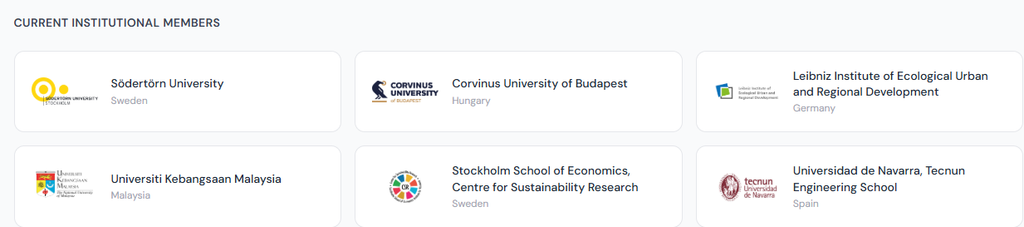
In 2025, UKM demonstrated its active involvement in ISDRS through the participation of four academic experts as Track Chairs at the 31st Annual ISDRS Conference, held from 8 to 12 July 2025 at Corvinus University of Budapest, Hungary.
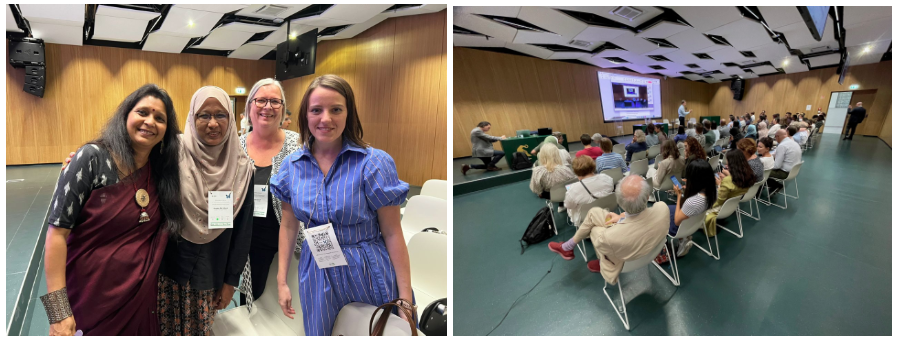
Prof. Dr. Rasyikah Md Khalid, Dean of UKM’s Faculty of Law, served as a Track Chair for Legal Aspects of Sustainable Development (Track 9d). This international academic track examined legal frameworks, institutional governance, environmental regulation, climate justice, human rights and the implementation of the SDGs. The track involved academic collaborators from Malaysia, Brazil, the Netherlands, Taiwan and Poland, facilitating international dialogue on legal and institutional approaches to sustainable development.
Additionally, Prof. Dato’ Dr. Fariza Md. Sham, Assoc. Prof. Ir. Dr. Nazrul Anuar Nayan and Ts. Dr. Farah Ayuni Mohd Hatta were listed as Track Chairs for Religious Philosophies and Sustainable Development (Track 10b). This track explored the contribution of religious values, ethical principles, social responsibility and community engagement to environmental sustainability, social justice and inclusive development. The international organising team included academic representation from Malaysia and Iraq, supporting interdisciplinary and cross-cultural perspectives on sustainable development.
The conference also resulted in the adoption of the Budapest Declaration on 11 July 2025, which emphasised the importance of international scientific cooperation, interdisciplinary research and collective action in advancing sustainable development. The declaration provides broader context for the international collaboration promoted through the ISDRS network.
Through its institutional membership in ISDRS and the active participation of its academic experts in the 2025 conference, UKM demonstrates its commitment to fostering international partnerships, promoting interdisciplinary knowledge exchange and contributing to dialogue on sustainable development challenges.
Source: https://isdrs.org/gallery
Collectively, these engagements demonstrate UKM’s role as a convenor and contributor to cross-sectoral dialogue on sustainable development. By bringing university expertise into discussion with public agencies, employers, NGOs, policy specialists and communities, UKM supports consideration of sustainability challenges from multiple perspectives. Its programmes connect scientific evidence and lived experience with discussions of policy and implementation, while regional and international participation broadens opportunities for shared learning. Together, these platforms support informed discussion, relationship building and collaborative responses to the SDGs.