


Take urgent action to combat climate change and its impacts
SDG 13 Indicator
13.2 – Low-carbon energy use
13.2.1 – Low-Carbon Energy Tracking
Universiti Kebangsaan Malaysia (UKM) has established robust systems to measure and maximize low-carbon energy use across campus, integrating energy-efficient appliances and equipment in buildings, streets, laboratories, and beyond. Through meticulous tracking of low-carbon energy consumption university-wide, we are committed to achieving impactful reductions in carbon emissions and leading by example in sustainable energy management.
UKM demonstrates strong institutional commitment toward achieving a low-carbon and energy-efficient campus through systematic tracking, monitoring and optimization of its energy use. As part of the university’s sustainability governance, UKM has established comprehensive mechanisms to measure the amount of low-carbon energy utilized across all facilities, including academic buildings, residential colleges, laboratories and public spaces. This commitment reflects UKM’s alignment with the UKM Sustainability Strategic Plan 2030 and the UKM Net Zero Campus 2050 vision.
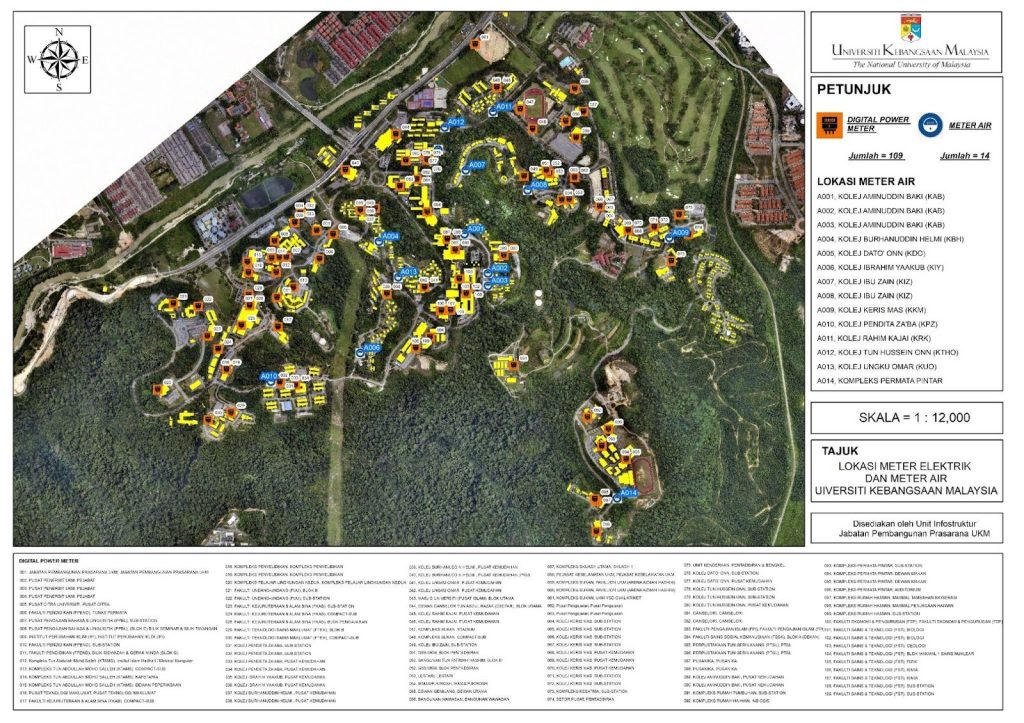
UKM has developed advanced digital dashboard systems to enhance data-driven decision-making in its journey toward becoming a low-carbon and sustainable campus. The University Integrated Spatial and Asset Information System (SEPADU), equipped with the Digital Power Meter (DPM), serves as a centralized platform for real-time monitoring of energy consumption across campus buildings. This system integrates spatial data and digital infrastructure information, enabling efficient tracking of electricity usage, maintenance management and visualization of energy performance. The SEPADU & DPM dashboard provides detailed analytics such as monthly energy usage (kWh) and cost breakdowns, empowering facilities managers to identify energy-saving opportunities and optimize low-carbon energy utilization.
In addition, the UKM Air Quality Monitoring Station, powered by the Derialah System, supports environmental sustainability through real-time monitoring of air quality and climate parameters. By capturing data on particulate matter, temperature, humidity and CO₂ levels, this system complements the energy monitoring dashboard in assessing the overall environmental impact of campus operations. Together, these digital platforms form UKM’s integrated approach to smart campus management, enabling precise measurement, reporting, and verification (MRV) of energy efficiency and sustainability indicators. Through these initiatives, UKM strengthens its commitment to low-carbon campus transformation, aligning with the Sustainability Strategic Plan 2030 and national goals for carbon neutrality by 2050.
UKM’s Digital Dashboard System for Real-Time Monitoring of Low-Carbon Energy and Environmental Performance.
1. University Integrated Spatial and Asset Information System (SEPADU): DIGITAL POWER METER (DPM)
Function: The SEPADU system was developed as an integrated asset information system based on spatial data, established a university infrastructure information system for efficient maintenance and data recording, and created a GIS UKM portal as a platform for facility management data sharing.
Link: www.gis.ukm.my


2. UKM Air Quality Monitoring Station: Real-time Environmental Data
Function: Derialah EA System is the real-time monitoring platform that reflects UKM’s commitment to environmental sustainability and public health. By tracking air quality, weather, and health indicators across campus, the system empowers data-driven actions towards a cleaner, healthier, and more sustainable UKM.
Link: derialah.com/board

In 2024, UKM achieved a 75.53% rate of energy-efficient appliance usage across its campus, a major milestone reflecting tangible progress in reducing electricity consumption and carbon emissions. Through large-scale implementation of LED lighting systems, inverter air conditioners, ENERGY STAR-certified computers and 5-star DC motor fans, the university ensures that energy demand is met through sustainable and efficient technologies. Complementing these upgrades, UKM’s 114-unit energy meter reader system enables real-time monitoring of building energy performance, while advanced infrastructure such as the District Cooling System (DCS) further enhances operational efficiency by optimizing chilled water production during off-peak hours.
Energy efficient appliances used in UKM
1. LEDs: campus outdoor lamp
UKM has replaced conventional lighting with high-efficiency LEDs in campus streets and building interiors, significantly reducing energy consumption while improving visibility and safety.
- Total energy-efficient appliances: 1,910
- Total conventional appliances: 1,025
- Total energy-efficient and conventional ones: 2,935
- Percentage of energy-efficient appliances to the total appliances (%): 65.08%


The UKM Stadium LED Floodlight Upgrade Project is a significant energy efficiency initiative aimed at reducing power consumption and operational costs while improving sports infrastructure.

2. Use of high efficiency LEDs in the campus building
- Total energy-efficient appliances: 129,858
- Total conventional appliances: 42,612
- Total energy-efficient and conventional ones: 172,470
- Percentage of energy-efficient appliances to the total appliances (%): 75.29%

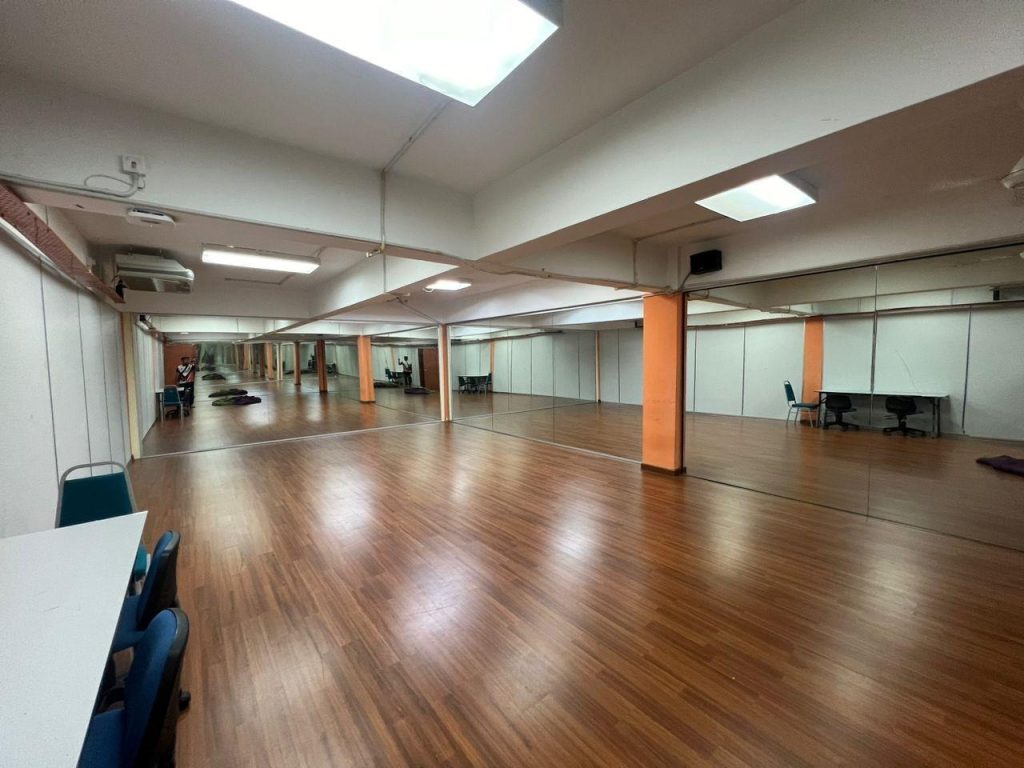
3. Use of eco-friendly air conditioner / energy-efficient appliances are A/C with inverter technology
The campus has installed inverter technology air conditioners that optimize energy use by adjusting power based on cooling needs, ensuring efficient operation and reducing energy waste.
- Total energy-efficient appliances: 1,765
- Total conventional appliances: 1,586
- Total energy-efficient and conventional ones: 3,351
- Percentage of energy-efficient appliances to the total appliances (%): 52.67%

4. Use of energy-saving computer / Star-certified computers
UKM prioritizes ENERGY STAR-certified computers and encourages the use of notebooks over personal computers as notebooks are more energy-efficient, aligning with the university’s commitment to reduce overall power usage. The inventory of the computer and laptop can be excess by the link https://docs.google.com/spreadsheets/d/1_4yfPfGLLs5zwfU3m17_-zHmTYg3gXqt/edit?gid=811058871#gid=811058871
- Total energy-efficient appliances: 9,672
- Total conventional appliances: 2,284
- Total energy-efficient and conventional ones: 11,956
- Percentage of energy-efficient appliances to the total appliances (%): 80.90%

5. 5 Star energy consumption fans at residential
In an effort to lower energy consumption, UKM has converted all fans, particularly in student residences, from AC to DC motor fans. These fans have a 5-star energy rating, consuming between 5-8 kWh, thereby contributing to substantial energy savings.
- Total energy-efficient appliances: 3,349
- Total conventional appliances: 0
- Total energy-efficient and conventional ones: 3,349
- Percentage of energy-efficient appliances to the total appliances (%): 100%

6. Energy meter reader
There are a total of 114 unit energy meter readers installed in each of the UKM buildings to measure the energy efficiency of each building and control electrical leakage. The electric meter readings will start to record/monitor the electricity used at the beginning of each month until the end of the month. The energy usage report must be submitted to Suruhanjaya Tenaga (ST) every six months.
- Total energy-efficient appliances: 114
- Total conventional appliances: 0
- Total energy-efficient and conventional ones: 114
- Percentage of energy-efficient appliances to the total appliances (%): 100%

TOTAL
- Total energy-efficient appliances: 146,668
- Total conventional appliances: 47,507
- Total energy-efficient and conventional ones: 194,175
- Percentage of energy-efficient appliances to the total appliances (%): 75.53%
Other energy-efficient appliances used in UKM
7. Solar Light Installation
Total of the 6 solar lamp had been install at Stadium UKM and 3 solar lamp at Arena Sukan Azman Hashim


8. Air Quality sensor in UKM Building
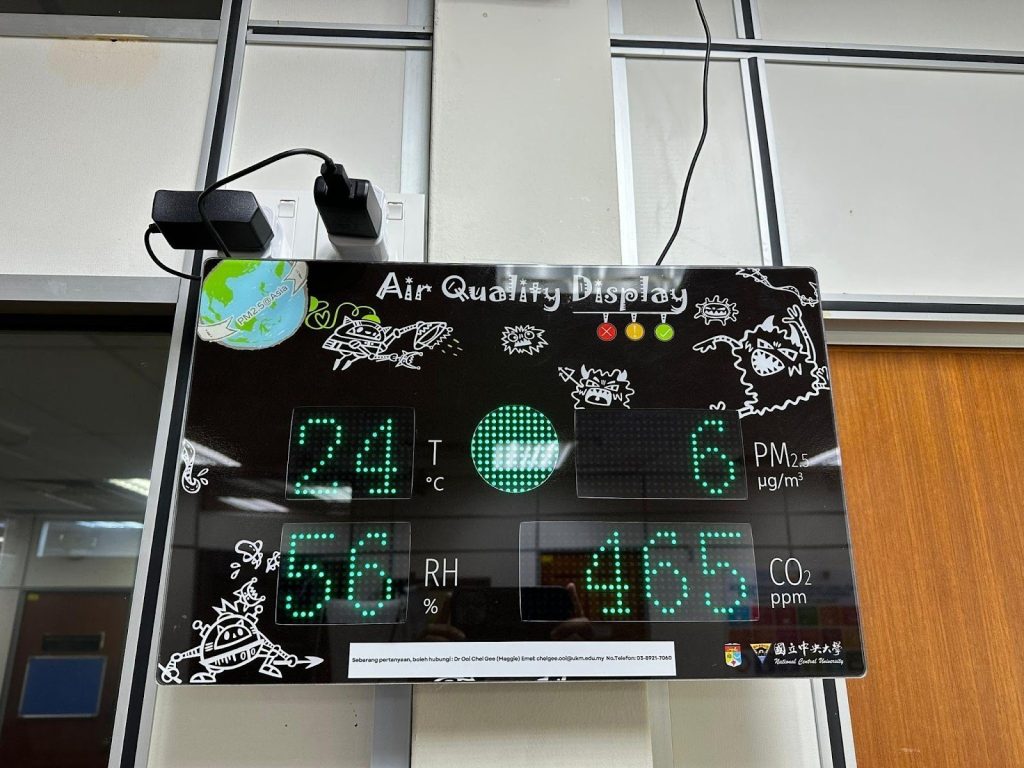
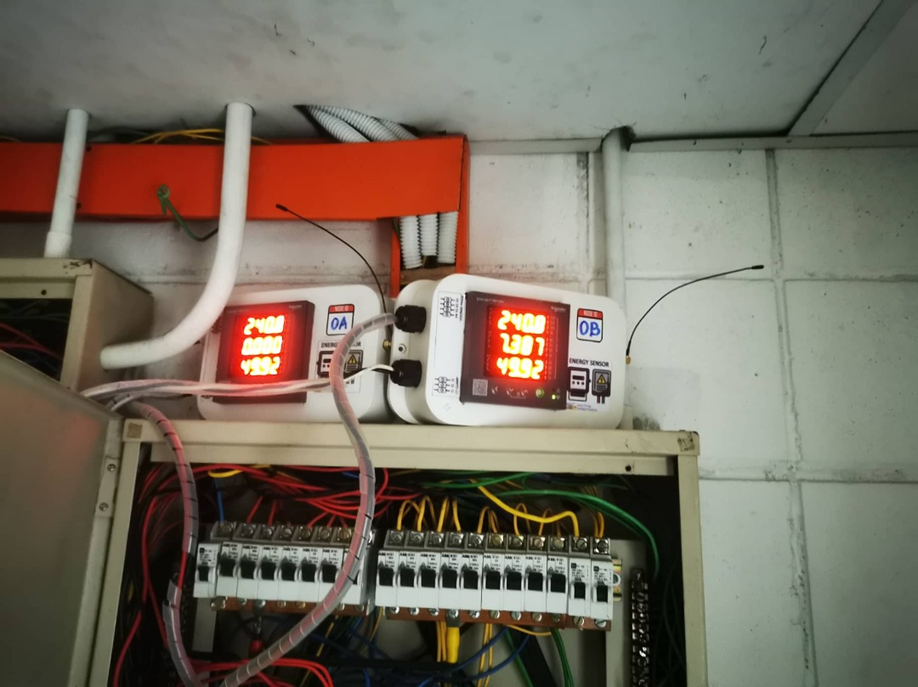
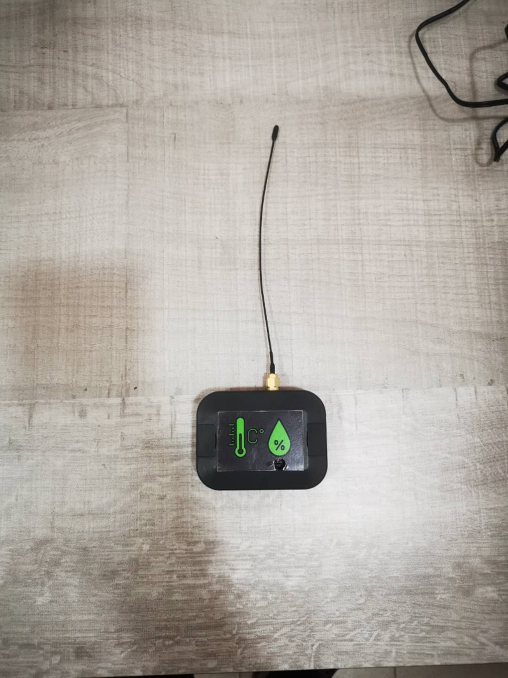
The air quality monitoring system at UKM is designed to track environmental conditions within facility buildings using a network of IoT-enabled sensors. These sensors include power meters, temperature and humidity sensors, deployed to monitor real-time conditions in one of the laboratories.
The image shows an air quality display panel mounted on the wall, which provides live data on various environmental parameters, including:
- Temperature (T): 24°C
- Relative Humidity (RH): 56%
- Particulate Matter (PM2.5): 6 µg/m³
- Carbon Dioxide (CO₂): 465 ppm
9. Energy Efficiency Brand photocopy
UKM has used Ricon photocopy in the administration office. Ricon is one of the brands that implement sustainability in their product (LINK). Ricon products also have the certificate under MyHIJAU (LINK).

MyHIJAU Mark is Malaysia’s official green recognition endorsed by the Government of Malaysia, bringing together certified green products and services that meet local and international environmental standards under one single mark.

10. District Cooling System (DCS)

A district cooling system (DCS) is a cooling system in which chilled water is produced by a plant and distributed to tenant buildings with insulating pipes. In UKM, there are two DCS in Loop 1 and Loop 2, which provides cooling systems for buildings in UKM, and has saved substantial electricity cost and space.
Almost all the main equipment in the plant uses a 415-Volt electricity supply with a total load of around 3.0 MVA. For energy-saving purposes, all motors are equipped with frequency inverters, and the control devices are placed in an air-conditioned room to maintain a controlled ambient operating temperature, ensuring optimal energy savings and the best possible lifespan. For fire safety, this room is also equipped with an environmentally friendly and user-friendly FM200 gas fire suppression system.
The DCS-TES plant system is fully controlled via computer. The control system, known as the “Thermal Energy Storage Control System” or TESCS, can operate either manually or automatically. When the system is set to “auto mode,” it will operate automatically according to the data programmed into it. It functions based on the load schedule or cooling load profile that has been pre-programmed in this control system.
The operating method of this cooling system plant can be carried out in several ways. When there is no cooling load requirement from the buildings, or when it is stopped at night, the chiller will be set to operate in order to produce chilled water for storage in the TES tank at a temperature of 4°C. The plant’s operating period during this time is referred to as “off-peak charging.” At night, the electricity tariff charged by Tenaga Nasional Berhad is lower, which helps reduce Universiti Kebangsaan Malaysia’s electricity consumption costs.
The system is also designed to allow a small amount of chilled water, supplied to the TES tank for storage, to be diverted to the reticulation piping for the building cooling systems that require it. However, the capacity that can be used directly in this way is limited.
The system also allows the chiller to send chilled water directly to the reticulation piping for the cooling system without passing through the TES tank. This can be done when the TES tank is not ready to receive chilled water for storage or when it is under maintenance. In this case, the supply temperature is 5.6°C.
A combination of supply from the chiller and the TES tank is common, especially during peak hours. The chiller will operate at a constant load, and any additional load required will be supplied by the TES tank. This operating mode benefits the chiller, as it allows it to function at maximum efficiency. When the cooling demand is low, the TES tank can supply the stored cooling energy using pumps without operating the chiller.
Through systematic low-carbon energy tracking and the adoption of energy-efficient technologies, UKM continues to lead by example in campus sustainability and climate action. The university’s transition toward smart energy management, including IoT-based monitoring, renewable installations such as solar lighting and district cooling innovations, directly supports Malaysia’s Low Carbon Nation Aspiration 2040 and the global Sustainable Development Goals (SDG 7: Affordable and Clean Energy; SDG 13: Climate Action). UKM’s proactive efforts have not only reduced operational carbon footprints but also fostered a culture of energy responsibility among its students and staff. By integrating science-driven strategies and sustainable technologies, UKM strengthens its position as a national leader in low-carbon transformation, paving the way for a resilient, energy-efficient and carbon-neutral university of the future.

