

Strengthen the means of implementation and revitalize the Global Partnership for Sustainable Development
SDG 17 Indicator
17.2 – Relationships to support the goals
17.2.5 – Collaboration with NGOs for SDGs
Universiti Kebangsaan Malaysia (UKM) demonstrates a strong institutional commitment to advancing the Sustainable Development Goals (SDGs) through meaningful collaborations with non-governmental organizations (NGOs) that encompass student volunteering programmes, research initiatives, and the development of educational resources. These partnerships highlight UKM’s active role in translating academic expertise into societal impact. In 2024, several impactful collaborations were undertaken as shown below.
Summary of the collaborations
| No | List of the collaboration |
|---|---|
| 1 | Student volunteering programmes i. Etika, FoRM & UKM – 100 Trees Planting Program ii. Larian Denai Sungai Langat 2024 iii. Student Service Program with the Malaysian Association for The Blind (MAB) iv. Collaboration with Yayasan Food Bank Malaysia (YFBM) |
| 2 | Research programmes i. From Hut to Palace: AR Exploration ii. Oil Palm Plantation Landscape as Wildlife Refugee: A way forward for wildlife friendly plantations iii. Study on the Strengths, Issues, Challenges and Opportunities of Women in Pahang: Towards the Development of the Pahang Women’s Action Plan |
| 3 | Development of educational resources i. SALAM Hub – Towards Holistic Child Development and Empowered, Thriving Communities ii. International Linguistics Conference (PLA) VI 2024 iii. From Hut to Palace – AR Technology |
1. Student volunteering programmes
i. Etika, FoRM & UKM – 100 Trees Planting Program
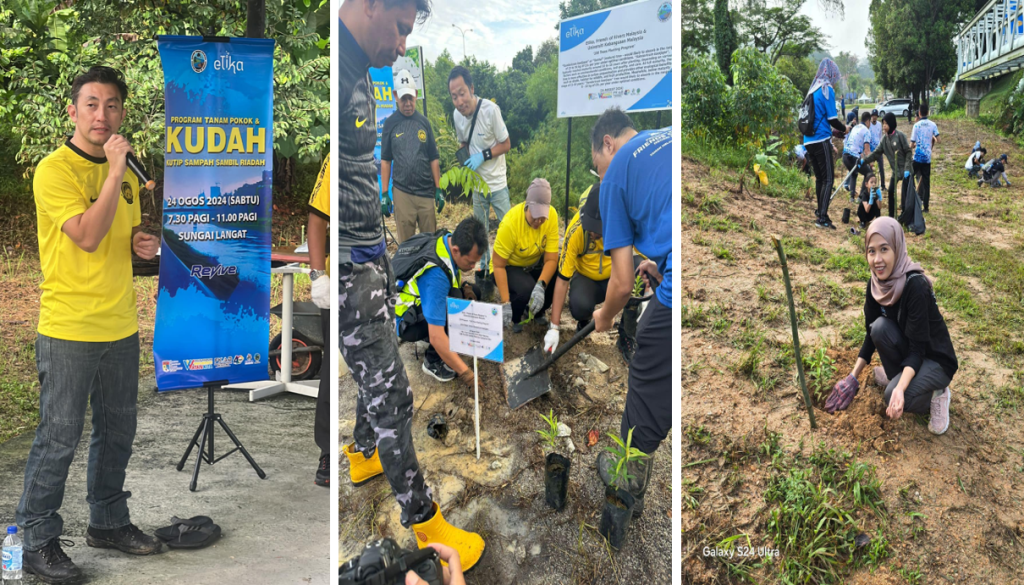
On 24th August 2024, in conjunction with incoming National Day 2024 Theme – Jiwa Madani, Jiwa Merdeka, Etika Sdn Bhd, Friends of Rivers Malaysia (FoRM) & UKM initiated 100 Trees Planting Program is a collaboration aimed at contributing to environmental sustainability efforts in Malaysia. The initiative involves planting 100 trees to align with the national “Greening Malaysia Campaign – Planting 100 Million Trees”. The objective of this program is to support the government’s Greener Malaysia Campaign, raise awareness about the importance of forests in tackling climate change, and preserve local ecosystems, particularly near riverbanks. Planting trees near to river banks fostering our sustainability effort to also preserve the rivers banks ecosystem.
Link: www.facebook.com/share/v/1Bv2DuvVGM
ii. Larian Denai Sungai Langat 2024
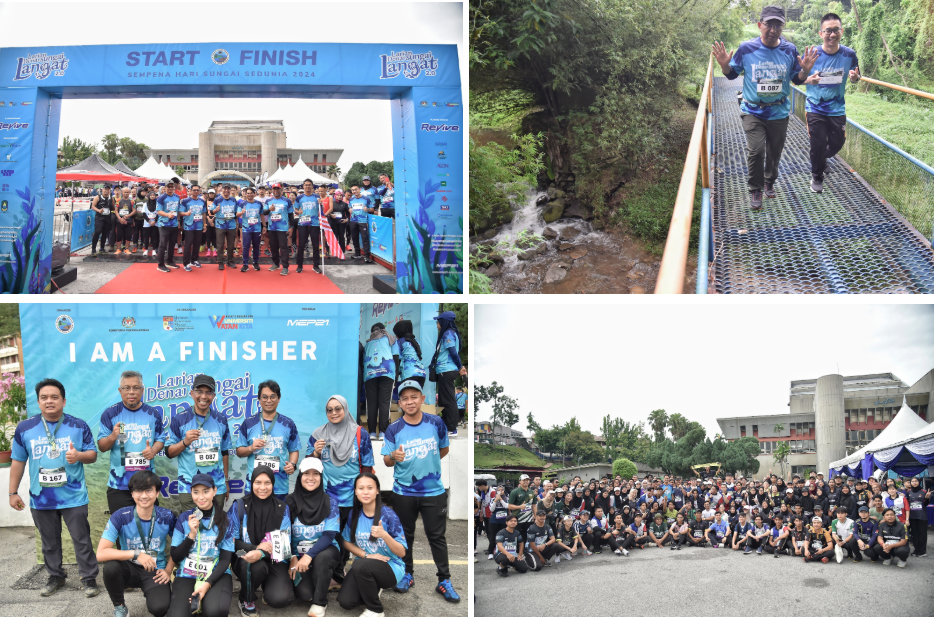
Universiti Kebangsaan Malaysia (UKM), through its student volunteer networks, partnered with the environmental NGO Friends of River Malaysia (Sahabat Sungai) to support the community-based event Larian Denai Sungai Langat 2024 held on 21 September 2024 at UKM Bangi, which drew approximately 1 600 participants and centred on the footprint of the Sungai Langat trail. Through this joint initiative, UKM students assisted in logistics, river-conservation awareness, and community outreach activities — thereby reinforcing the University’s broader commitment to sustainable water resource stewardship and multi-stakeholder engagement in pursuit of SDG 17 (Partnerships for the Goals).
iii. Student Service Program with the Malaysian Association for The Blind (MAB)
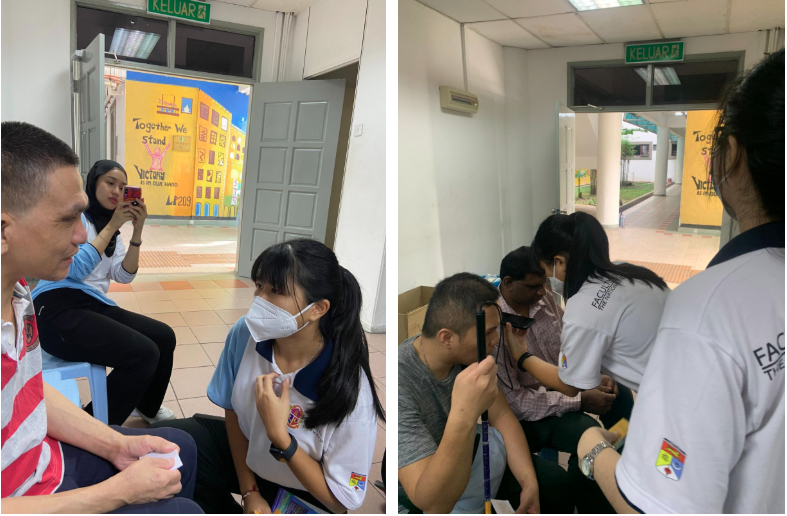
The Student Volunteering Program with the Malaysian Association for the Blind (MAB), organized by the Faculty of Pharmacy in collaboration with the Diagnostic Imaging and Radiotherapy Program, Faculty of Health Sciences, was conducted on 14 January 2024 at the MAB Complex, Brickfields, Kuala Lumpur, as a free community outreach initiative. Aimed at supporting the blind community, the program focused on health education and awareness, featuring exhibitions on the identification of registered and counterfeit medicines, along with personalized counseling on the proper use of medicines and health supplements.
Through the active participation of around 100 individuals, this student-led volunteering effort created a significant social impact by empowering visually impaired participants with essential health knowledge to make informed decisions about their personal well-being. At the same time, it provided pharmacy and health sciences students with valuable hands-on learning experiences in serving marginalized communities. This initiative exemplifies UKM’s commitment to SDG 3 (Good Health and Well-being) and SDG 17 (Partnerships for the Goals) by promoting inclusive healthcare education, community engagement, and student volunteerism for sustainable social development.
Source: www.ukm.my/farmasi/ffar-community-programme
iv. Collaboration with Yayasan Food Bank Malaysia (YFBM)
The Faculty of Science and Technology (FST), in collaboration with the Yayasan Food Bank Malaysia (YFBM) and with strong support from the Centre for Student Affairs (HEP-UKM) and the Faculty of Science Students’ Association (PMFST), implemented the Bateq Jungle Classroom Community Education and Development Programme at Pos Changkung, Sungai Keniam, Taman Negara Pahang. Conducted in eight series beginning in January 2024, the programme integrated education, health, and welfare initiatives for the Bateq Orang Asli community, involving 12 student volunteers and representatives from YFBM.
Through various learning activities such as Bahasa Melayu, English, and Mathematics lessons, as well as hygiene education and microbiology exposure sessions, the student volunteers played an active role in expanding access to education and improving health awareness among the Bateq community. In addition to direct teaching, the programme also developed educational resources, including customized teaching materials and learning modules tailored to the literacy level and cultural context of the Bateq children. These resources serve as long-term tools that can be reused for continuous learning within the community and replicated in future outreach efforts.The programme also included the distribution of essential food supplies, enhancing the community’s well-being and resilience. This long-term volunteering initiative not only empowered the Bateq community through education and knowledge sharing but also provided UKM students with valuable real-world experience in community engagement and social responsibility. The collaboration exemplifies UKM’s commitment to the SDGs, particularly SDG 4 (Quality Education) and SDG 3 (Good Health and Well-being), by fostering inclusive education and promoting health awareness among marginalized rural communities.
2. Research Programmes
i. From Hut to Palace: AR Exploration
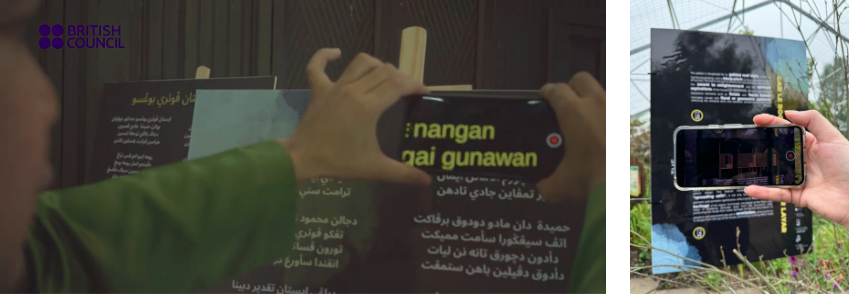
The “From Hut to Palace: AR Exploration” project, held from 4 to 7 August 2024 at Galeria KALAM, Universiti Teknologi Malaysia (UTM), represents a collaborative research effort between Universiti Kebangsaan Malaysia (UKM) through Institute of the Malay World and Civilization (ATMA) and the Selangor Local Community Host Association, a non-government organization (NGO) . Funded by the British Council, this research aimed to explore how Augmented Reality (AR) can be used as an educational and research tool to preserve and communicate cultural heritage while promoting sustainable practices in heritage conservation. This collaboration merged traditional knowledge with modern digital technology, enabling researchers to study and visualize cultural adaptation and resilience in the context of climate change.
The project served as a research platform to investigate how digital technologies can enhance community engagement and awareness in environmental and cultural preservation. Through interactive AR exhibits featuring Istana Puteri Bongsu and the Scottish Bothy, participants were able to virtually experience historical architecture and understand sustainable design principles derived from local wisdom. The collaboration with the Selangor Local Community Host Association enriched the project by incorporating community-based insights, ensuring that local cultural values were represented in the research outcomes.
Source: www.youtube.com/watch?v=FxdLyGjOtBM
ii. Oil Palm Plantation Landscape as Wildlife Refuge: A way forward for wildlife friendly plantations
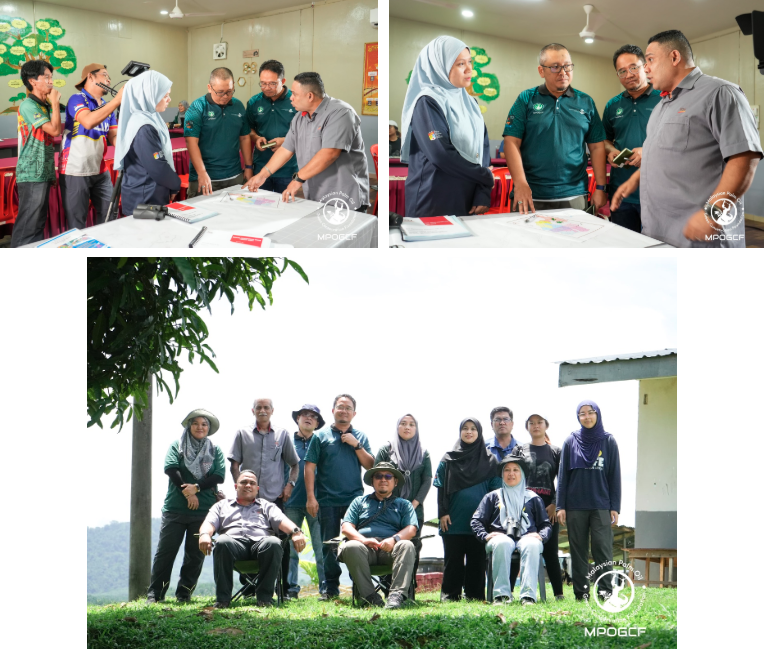
Universiti Kebangsaan Malaysia (UKM) and The Malaysian Palm Oil Green Conservation Foundation (MPOGCF) have collaborated on research project titled “Oil Palm Plantation Landscape as Wildlife Refuge: A Way Forward for Wildlife-Friendly Plantations” represents a strategic effort to balance biodiversity conservation with sustainable agricultural development.
Through this three-year study, funded with over RM600,000 by MPOGCF, UKM researchers such as Assoc. Prof. Dr Farah Shafawati from the Faculty of Science and Technology is conducting scientific assessments to identify and document biodiversity within selected oil palm plantation landscapes. The project contributes to developing practical and data-driven solutions to reduce human-wildlife conflict, enhance ecological sustainability, and promote wildlife-friendly plantation management. A total of four FGV oil palm plantations have been selected as research sites: FGV Lepar (Pahang), FGV Setiu (Terengganu), FGV Aring Gua Musang (Kelantan), and FGV Tenggaroh (Johor).
On 9 June 2024, UKM with the MPOGCF team conducted a monitoring visit for the filming of a documentary titled “Oil Palm Plantation Landscape as Wildlife Refuge: A Way Forward for Wildlife-Friendly Plantations,”. Focused at FGV Aring, Gua Musang, Kelantan, the filming featured research activities involving the inventory and documentation of various wildlife and plant species within oil palm plantation areas. The study employed several scientific methods, including cage trapping, mist-netting, drift-fenced pitfall traps, light traps, camera traps, and direct observations using binoculars and cameras. The filming was conducted at three distinct locations—forest patches within plantations, monoculture oil palm plots, and plantations bordering forested areas—to capture the diversity of habitats and species interactions within the plantation landscape.
By integrating conservation science with sustainable industry practices, the research supports Malaysia’s transition toward more responsible land-use management. This collaboration directly aligns with SDG 15 (Life on Land) by promoting biodiversity protection, SDG 12 (Responsible Consumption and Production) through sustainable palm oil practices, and SDG 17 (Partnerships for the Goals) by fostering multi-stakeholder cooperation between academia, industry, and NGOs. It demonstrates UKM’s commitment to advancing sustainability through research collaboration, using science-based approaches to address real-world environmental and socio-economic challenges.
Source: www.facebook.com/share/v/19zy18a4qp
iii. UKM Collaboration with the Pahang Women’s Development Council: Study on the Strengths, Issues, Challenges and Opportunities of Women in Pahang (2021–2024)
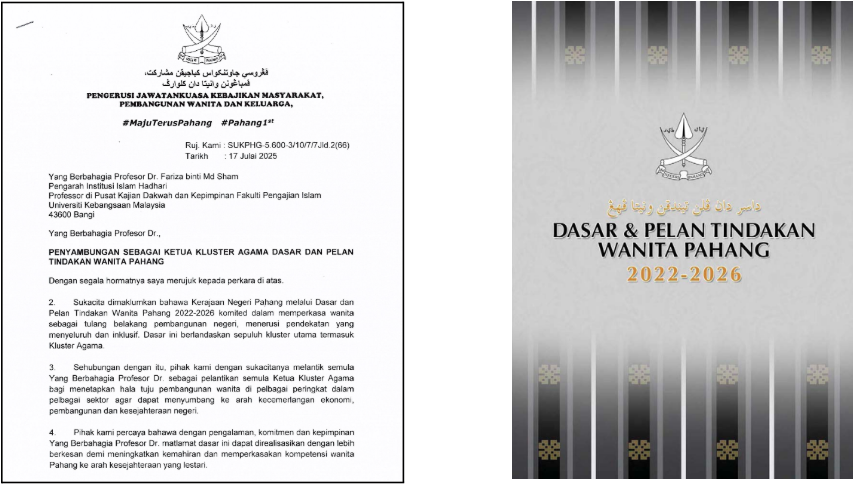
Universiti Kebangsaan Malaysia (UKM), in collaboration with the Pahang Women’s Development Council Organization (PWDC), has undertaken a comprehensive study entitled “Study on the Strengths, Issues, Challenges and Opportunities of Women in Pahang: Towards the Development of the Pahang Women’s Action Plan” from 2021 to 2024. This strategic initiative aimed to conduct an in-depth assessment of the current status of women in Pahang, identifying their strengths, issues, challenges, and opportunities across multiple sectors including education, economy, health, leadership, social participation, and entrepreneurship.
The findings of this study became the foundation for the Pahang Women’s Action Plan (DPTWP) 2022–2026, a policy and strategic framework designed to empower women in Pahang holistically and inclusively. The Action Plan outlines the roadmap and direction for women’s development in the state for the period of 2022 to 2026, taking into account the current socio-economic landscape and emerging challenges. It is aligned with the National Women’s Policy, while incorporating updates and enhancements relevant to the context of women in Pahang.
The DPTWP refines existing policies and strategies with renewed emphasis on creating a comprehensive action plan that serves as a key reference for the formulation and implementation of women-related policies and programs across all relevant agencies and organizations in Pahang. It focuses on ten main priority areas:
- Education
- Employment
- Religion
- Family
- Heritage and Culture
- Entrepreneurship
- Leadership
- Law
- Technology
- Health
The plan encompasses 24 strategic objectives, 37 key strategies, and 61 strategic initiatives across these ten clusters. Women’s empowerment remains a key agenda for the Pahang State Government, requiring strong commitment and collaboration from all stakeholders. The formulation of the Pahang Women’s Policy and the Action Plan represents a concrete step toward achieving these goals. The implementation discussions focus on strategy development, execution timelines, responsible agencies, and required capacity-building programs to ensure effective realization of women’s empowerment initiatives in the state. Through a data-driven and multi-stakeholder approach, this project reinforces the State Government’s dedication to strengthening women’s development policies, enhancing their participation in mainstream socio-economic progress, and ensuring gender equality and well-being in line with the National Women’s Policy and United Nations Sustainable Development Goal 5 (Gender Equality).
3. Development of Educational Resources
i. SALAM Hub – Towards Holistic Child Development and Empowered, Thriving Communities
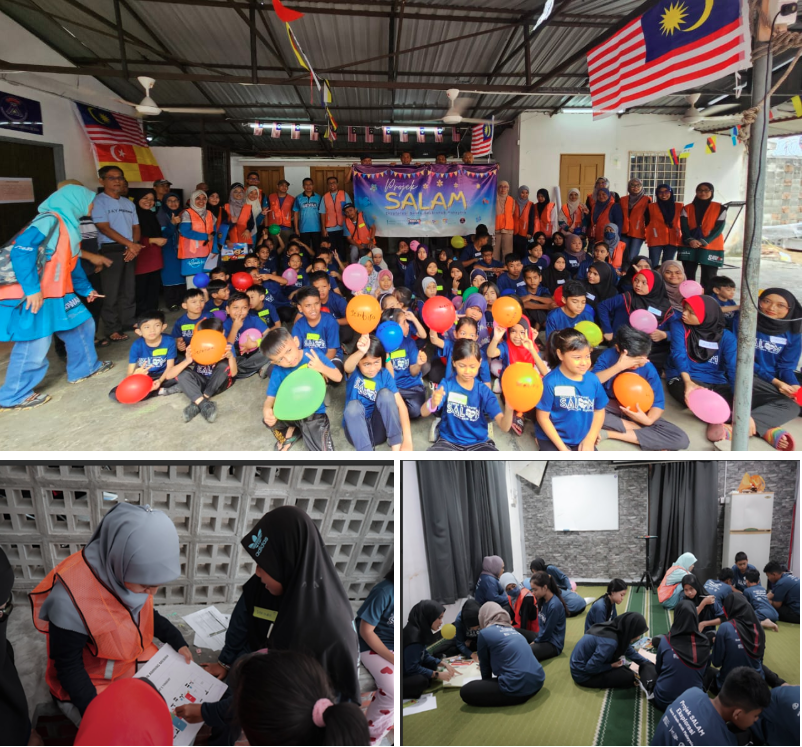
This project was carried out through a collaboration between UKM and the Wanita Ikram Malaysia (NGO), and implemented at Flat Taman Ampang Mewah, Selangor. From July to September 2024, it started with identifying the social, physical, and psychosocial needs of children living in high-density low-cost housing before designing the appropriate intervention which could be used as a safe space for children’s learn and play.
The SALAMHub project aims to advance holistic child development and empower resilient, liveable communities. This initiative focuses on co-designing safe and inclusive play and learning spaces for children living in high-density low-cost housing. Through activities such as field surveys, child-voice workshops, community focus groups, and participatory design sessions, the project generates evidence-based educational resources that empower children, parents, and community leaders. Key outputs include mapped learning spaces, children’s creative design narratives, technical drawings, and community-driven play space prototypes. By integrating child-centred research with community engagement, the project strengthens urban social infrastructure, enhances community ownership, and supports the development of sustainable child-friendly environments. This collaboration directly advances SDG 3 (Good Health and Well-Being), SDG 11 (Sustainable Cities and Communities), and SDG 17 (Partnerships for the Goals), by building knowledge, co-creating educational tools, and fostering shared responsibility for children’s development and community well-being.
Link: wanita.ikram.org.my/2024/10/03/projek-salam-eksplorasi-suara-anak-anak-malaysia
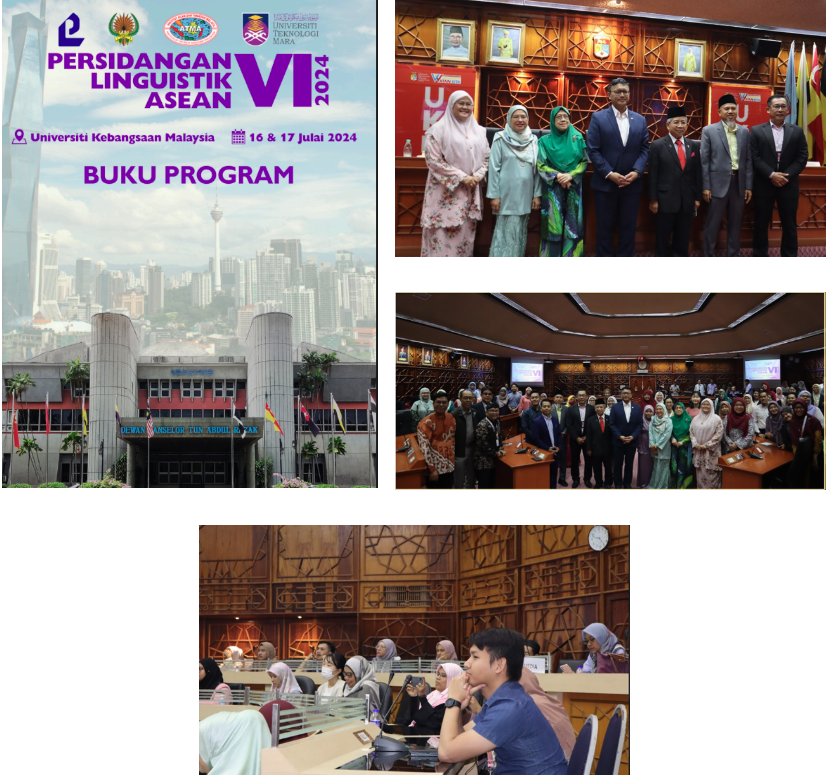
ii. 6th International Linguistics Conference (PLA) VI 2024
In 2024, Universiti Kebangsaan Malaysia (UKM), through the Institute of the Malay World and Civilization (ATMA), collaborated with the Linguistic Society of Malaysia (Persatuan Linguistik Malaysia, PLM) to successfully organize the 6th International Linguistics Conference (PLA VI) from 16–18 July 2024 at UKM. Themed “Language and Power,” the conference brought together academics, linguists, and researchers from across ASEAN to exchange insights and research findings on contemporary linguistic issues such as digital language evolution, minority languages, and language in media and politics. The collaboration between ATMA and PLM, with the support of Dewan Bahasa dan Pustaka (DBP) and the Academy of Malay Studies (UiTM), demonstrated a strong partnership between academia and professional language organizations in advancing linguistic scholarship.
The conference not only strengthened regional academic cooperation but also contributed to the development of educational resources in linguistics. The research papers, discussions, and proceedings from the conference were compiled and used as valuable reference materials for teaching, policy development, and further linguistic research. This initiative highlights UKM’s role in promoting SDG 4 (Quality Education) by fostering the creation and dissemination of knowledge resources that enhance linguistic education and scholarly collaboration within and beyond Malaysia.
iii. From Hut to Palace Exhibition
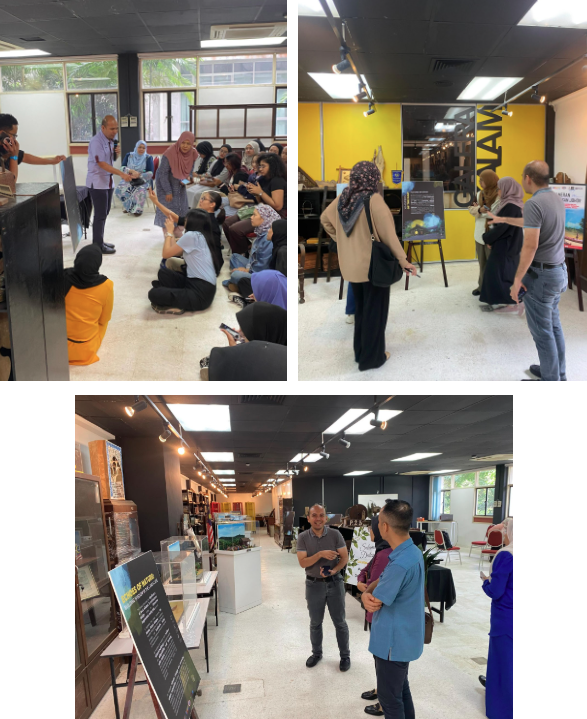
UKM, through the Institute of the Malay World and Civilization (ATMA), successfully organized the From Hut to Palace Exhibition at Galeria KALAM Universiti Teknologi Malaysia on 4-7 August 2024 at the Galeria KALAM Universiti Teknologi Malaysia. This programme represented a significant collaboration between UKM and the Selangor Local Community Host Association (NGO), with funding support from the British Council. The initiative utilized Augmented Reality (AR) technology to develop innovative educational resources that merge cultural heritage with modern digital learning. The exhibition showcased the architectural and environmental uniqueness of the Istana Puteri Bongsu and the Scottish Bothy, illustrating how traditional wisdom can inform sustainable practices and climate adaptation strategies.
Through this collaboration, UKM and its partners co-developed interactive AR-based educational materials designed to enhance public understanding of cultural preservation, sustainability, and environmental stewardship. The use of immersive digital tools allowed visitors—ranging from students to community members—to experience and engage with heritage education in an innovative and accessible way. These AR resources serve as valuable educational assets that can be reused for future learning programmes and cross-cultural research.
This initiative exemplifies UKM’s commitment to advancing the Sustainable Development Goals (SDGs), particularly SDG 4 (Quality Education), SDG 11 (Sustainable Cities and Communities), and SDG 17 (Partnerships for the Goals). By collaborating with NGOs and international partners, UKM has demonstrated how cutting-edge technology such as AR can be leveraged to create impactful educational resources, promote community engagement, and strengthen global partnerships for sustainable cultural education.
Through these diverse collaborations, UKM has proven its dedication to fostering inclusive, research-driven, and community-oriented solutions aligned with the SDGs. These initiatives have not only enhanced learning experiences for students but also empowered marginalized communities through accessible education, health awareness, and digital innovation. The development of AR-based educational materials, community learning modules, and academic resources demonstrates how UKM effectively bridges research and practice in advancing sustainable education. Collectively, these partnerships contribute directly to SDG 3 (Good Health and Well-being), SDG 4 (Quality Education), SDG 10 (Reduced Inequalities), SDG 11 (Sustainable Cities and Communities), and SDG 17 (Partnerships for the Goals)—positioning UKM as a leading institution in mobilizing knowledge, technology, and collaboration to achieve sustainable and equitable development for all.