


Achieve gender equality and empower all women and girls
SDG 5 Indicator
5.6 – Women’s progress measures
5.6.4 – Childcare Facilities for Students
Universiti Kebangsaan Malaysia (UKM) has accessible childcare facilities for students, allowing recent mothers to attend university courses. Tunas UKM provides vital support to students enabling women to focus on their education without the pressure of managing childcare. UKM’s Tunas Kindergarten, known as Tunas UKM, offers early education for children aged 4 to 6, based on the National Preschool Standard Curriculum (KSPK) and guidelines from the Ministry of Education (KPM).
Furthermore, graduate rooms in every faculty at UKM are designated for postgraduate students to carry out research or work. These rooms are also conducive for mothers who may bring their children while they work, further supporting women in balancing academic and family responsibilities.
1. Tunas UKM
Tadika Tunas UKM was registered under the Ministry of Education Malaysia (Education Act 1961 – Kindergarten and Nursery School Regulations) on 13 December 2018. The kindergarten offers early childhood education programs for children aged 4, 5, and 6 years, based on the National Preschool Standard Curriculum (KSPK) and in accordance with the guidelines issued by the Ministry of Education Malaysia (MOE). This pre-school is placed under the administration of the Faculty of Education.
Tunas UKM is a vital facility designed to ease the childcare responsibilities of both staff and students at UKM. By offering convenient and reliable care, Tunas allows parents, especially mothers, to focus on their work or studies with peace of mind, knowing their children are in a safe and supportive environment. This facility is part of UKM’s broader initiative to foster a family-friendly campus, encouraging a balanced lifestyle for all members of the university community.

2. Taska Hospital Canselor Tuanku Muhriz
The Taska Hospital Canselor Tuanku Muhriz, UKM, is categorised as a workplace childcare centre, where Taska HCTM accepts more than 10 children and is an exempted registered childcare centre under the Department of Social Welfare (JKM). This childcare centre caters exclusively to children aged 3 months to 4 years old.
The childcare services are classified according to the following age groups
| Permata Class | Age | Number of Children |
|---|---|---|
| Permata 1 | 3 months -1 year 3 months | 12 children |
| Permata 2 | 1 year 3 months – 2 years | 17 children |
| Permata 3 | 3 years | 21 children |
| Permata 3 | 4 years | 24 children |


3. Lactation Room
The lactation room facility, located at Hospital Canselor Tuanku Muhriz, provides a comfortable and private space for nursing mothers. This dedicated area is designed to ensure that all staff feel comfortable while balancing their work and nursing responsibilities.

4. Nursery at Hospital Tuanku Ampuan Besar Tuanku Aishah Rohani (UKM Specialist Children’s Hospital)
To support staff at the Hospital Tuanku Ampuan Besar Tuanku Aishah Rohani (UKM Specialist Children’s Hospital) , a childcare centre has been established for hospital employees. It aims to provide assistance by ensuring that their children are cared for in a safe and secure environment during their working hours.
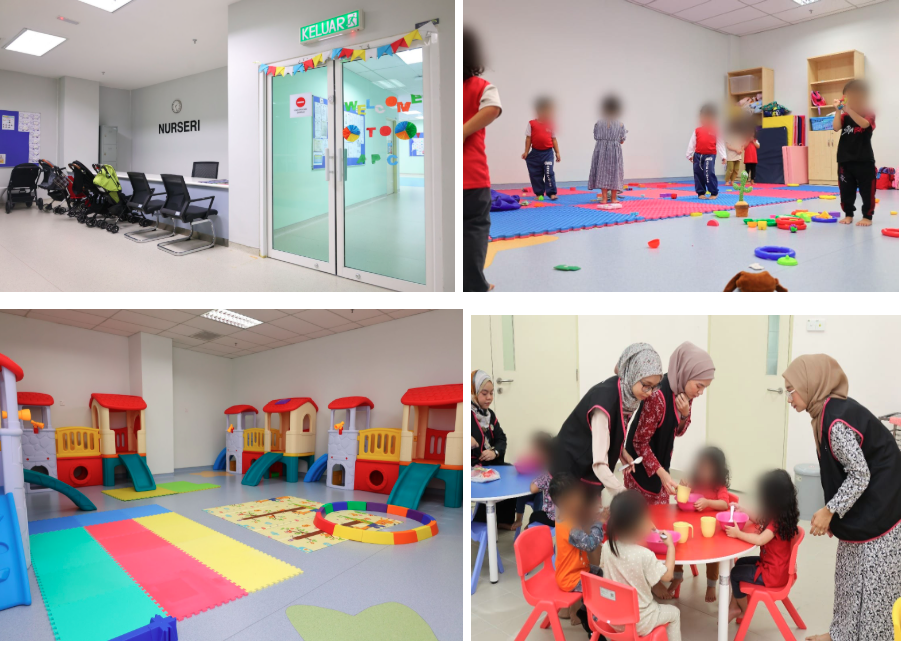
UKM’s childcare facilities, including Tunas UKM, Taska Hospital Canselor Tuanku Muhriz (HCTM), the lactation room, and the nursery at the UKM Specialist Children’s Hospital, provide essential support for student parents and staff, especially women. These facilities enable mothers to pursue their studies or work without the added burden of childcare, fostering a family-friendly and inclusive campus environment. By ensuring safe, reliable and high-quality early education and childcare services, UKM promotes gender equality, work–life balance and educational continuity, aligning with SDG 5 (Gender Equality) while strengthening its commitment to the well-being of its academic community.