

Ensure availability and sustainable management of water and sanitation for all
SDG 6 Indicator
6.2 – Water consumption per person
6.2.1 – Measure the total volume of water used in the university that is taken from mains supply,
desalinated, or extracted from rivers, lakes, or aquifers?
Universiti Kebangsaan Malaysia (UKM) actively measures the total volume of water consumed across the university. This includes water sourced from mains supply, desalinated water, and water extracted from natural resources such as rivers, lakes and aquifers. UKM has implemented monitoring systems that track water usage across various facilities on campus, allowing for detailed assessments of consumption patterns. This data is crucial for managing water resources effectively, identifying areas for improvement in conservation efforts and ensuring compliance with sustainability goals.
Summary of the Water Consumption at UKM
| No | Water Consumption at UKM |
|---|---|
| 1 | Water Consumption Tracking at UKM |
| 2 | Water Consumption of Treated Water at UKM |
| 3 | Water Conservation at UKM |
1. Water Consumption Tracking at UKM
The table below provides detailed information on the various water sources available at UKM. These sources, which include lakes, wells and tube wells, play a vital role in supporting the university’s sustainable water management efforts and ensuring a reliable supply for campus operations.
Summary of Water Consumption Tracking at UKM for year 2024
| Sources of Water | Volume (m3) | Description |
|---|---|---|
| Treated Water Uses | 1,841,678 m3 | UKM obtains a source of treated water for its students and staff from Air Selangor. The main source of treated water for UKM is supplied from the Water Treatment Plant at Sungai Semenyih, Selangor, which provides water to the university’s central water tank. This treated water is distributed throughout the campus to ensure safe and sustainable access to clean water. |
| Main water reservoirs at UKM | 12491.85 m3 | The main source of treated water for UKM is supplied from the Water Treatment Plant at Sungai Semenyih, Selangor, which provides water to the university’s central water tank. |
| Extract Water (Rainwater harvesting system + Tube wells + Retention pond) | 156,633.68 m3 | UKM is committed to sustainable water management through the use of rainwater harvesting systems, tube wells, and retention ponds. These initiatives ensure a reliable water supply for campus needs while conserving natural resources and reducing environmental impact. |
| TOTAL AVAILABLE AT UKM | 2,010,804 m3 | |
The Water Tracking Measurement at UKM, with 2022 as the baseline year, records data on water sources from 2022 to 2024, with a projection for 2030 under the Low Carbon Campus initiative. In 2024, UKM recorded a total water consumption of 1,841,678 m³, including nearly 26 faculties and institutes and 13 residential colleges. Despite the vast and diverse campus operations, this figure demonstrates UKM’s efficient water management practices and strong awareness of responsible consumption. Continuous initiatives such as the installation of water-efficient fixtures, monitoring systems and awareness programs reflect UKM’s ongoing efforts to optimize resource use, reduce wastage and move toward sustainable water stewardship, aligning with SDG 6 (Clean Water and Sanitation).
2. Water Consumption of Treated Water at UKM
UKM is committed to ensuring a reliable and safe supply of treated water for its students, staff, and facilities through a strategic partnership with Air Selangor, the leading water supplier for Selangor, Putrajaya, and Kuala Lumpur. This collaboration empowers UKM to access high-quality treated water, as Air Selangor expertly manages the treatment of raw water to meet the university’s daily requirements. The effective water management system established between UKM and Air Selangor underscores the university’s dedication to responsible water consumption and sustainable resource utilization, reflecting a proactive stance towards environmental stewardship. By consistently relying on treated water, UKM not only safeguards the health and well-being of its campus community but also plays an integral role in advancing sustainable development goals. This initiative aligns seamlessly with the university’s broader sustainability efforts, reinforcing its position as a leader in promoting eco-friendly practices and fostering a culture of conservation that will benefit future generations. Through this commitment to sustainable water management, UKM demonstrates that responsible resource use is essential for achieving a more sustainable and resilient community.
i. Main water reservoirs at UKM
The primary source of treated water for UKM is the Water Treatment Plant located at Sungai Semenyih, Selangor, a facility renowned for its commitment to producing high-quality drinking water. This plant plays a crucial role in supplying water to UKM central water tank, which serves as the backbone of the university’s water distribution system. As illustrated in the accompanying figure, the treated water is meticulously distributed across the campus, ensuring that every student, staff member, and facility has safe and sustainable access to clean water. This strategic supply chain not only reinforces UKM dedication to public health and safety but also supports the university’s broader sustainability initiatives. By ensuring a reliable flow of treated water, UKM can effectively cater to the needs of its vibrant community, fostering an environment where education and research can thrive without the hindrance of water scarcity. This commitment to maintaining a robust and efficient water management system is a testament to UKM leadership in environmental stewardship and its proactive approach to safeguarding essential resources for future generations.


Source: www.airselangor.com
UKM has strategically established two main water reservoir systems, Loop 1 and Loop 2, to guarantee a dependable water supply across the campus, reflecting its unwavering commitment to efficient water management and sustainability. Loop 1 comprises two substantial water tanks, each with a capacity of 1 million gallons, while Loop 2 features two additional tanks with capacities of 800,000 gallons and 500,000 gallons, respectively. These reservoirs are pivotal in managing the university’s water resources, ensuring a continuous supply for both daily operations and essential activities. By effectively harnessing these significant storage capacities, UKM not only meets the immediate water needs of its campus community but also reinforces its dedication to sustainability goals. The implementation of these systems demonstrates UKM’s proactive approach to addressing water scarcity issues and emphasizes the importance of reliable water management in supporting educational, research, and community initiatives. Through these efforts, UKM sets a powerful example of how educational institutions can lead in resource stewardship, fostering a culture of environmental responsibility among students and staff alike.


Treated water from Air Selangor Sdn Bhd is essential for UKM, providing 1,841,678 m³ of the total water used on campus. This supply ensures safe drinking water for students, faculty, and staff, while also supporting sanitation and irrigation services. UKM reliance on high-quality treated water reflects its commitment to responsible water management and sustainability. This partnership sets a positive example for other institutions and encourages efficient water use, demonstrating UKM dedication to fostering a sustainable future through responsible water practices.
3. Water Conservation at UKM
At UKM, water consumption tracking is a vital component of the university’s sustainability strategy, focusing on efficient water usage and conservation. Three critical systems have been implemented to support this effort: rainwater harvesting, tube wells and retention pond. These systems play a significant role in reducing reliance on the main water supply while promoting efficient water usage across the campus. Details of the water conservation at UKM are listed below.
i. Rainwater harvesting and tube well
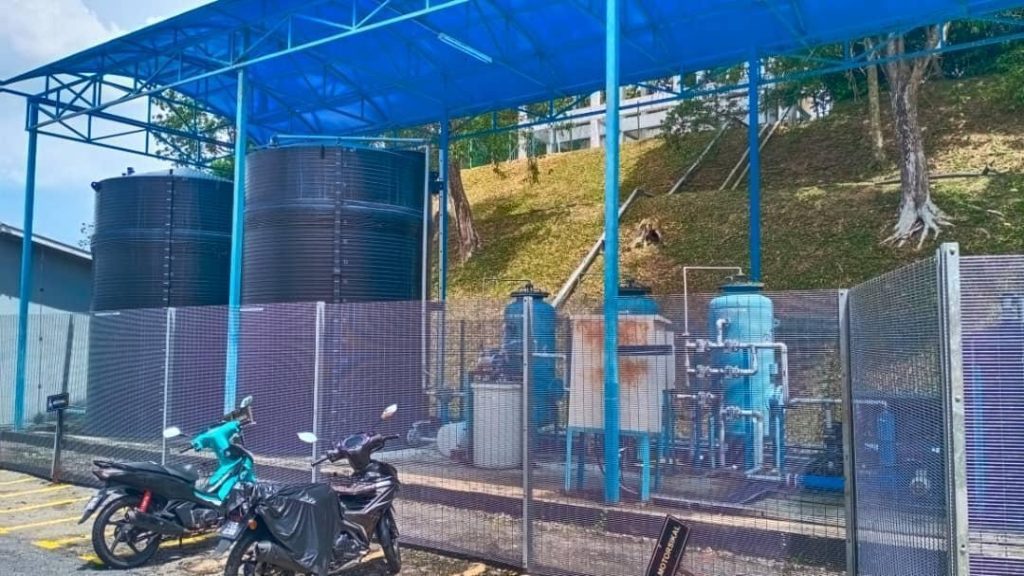
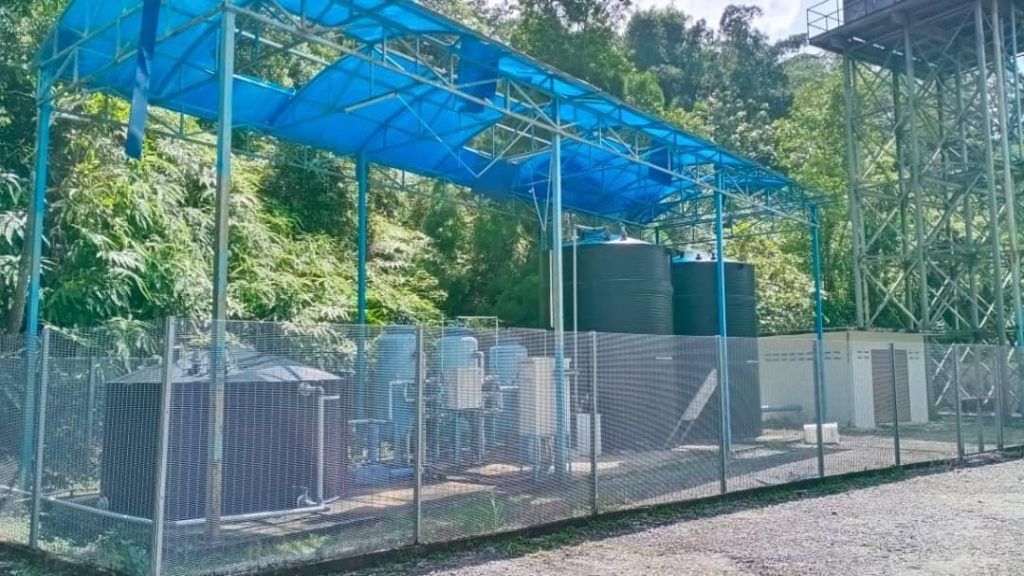
Rainwater harvesting systems have been installed at four strategic locations, with a total capacity of 7,586 gallons. The harvested rainwater is primarily used for landscaping, outdoor cleaning, and toilet flushing, significantly decreasing potable water consumption. For instance, a building on campus utilizes rainwater for various functions, such as watering plants, cleaning floors, and other external uses, showcasing UKM commitment to sustainable resource management. In addition to rainwater harvesting, UKM employs tube wells as a supplementary water source during periods of water shortages. Tube wells are installed at three residential colleges: Ungku Omar College, Aminuddin Baki College, and Burhanuddin Helmi College, with a combined capacity of 39,625.80 gallons.
This ensures that the campus remains resilient in times of water scarcity and helps further reduce dependence on external water supplies. Overall, UKM total water conservation capacity, combining rainwater harvesting and tube wells, is 47,211.70 gallons. The table below shows a list of the water conservation system and consumption in UKM Bangi.
Water conservation systems include rainwater harvesting and tube wells.
Rainwater Harvesting
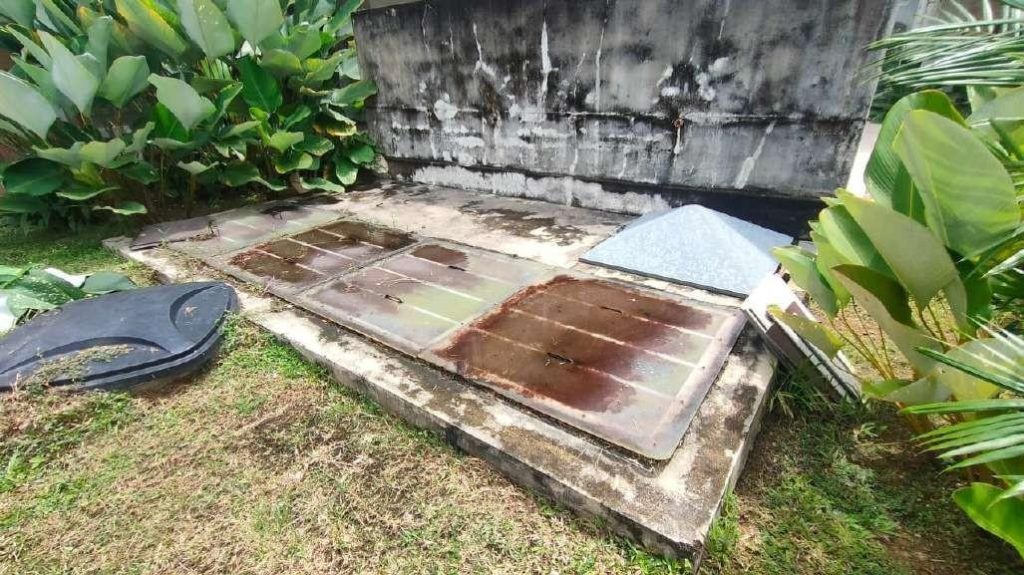
Location: Faculty of Science and Technology
Capacity (gallon): 2,641.7
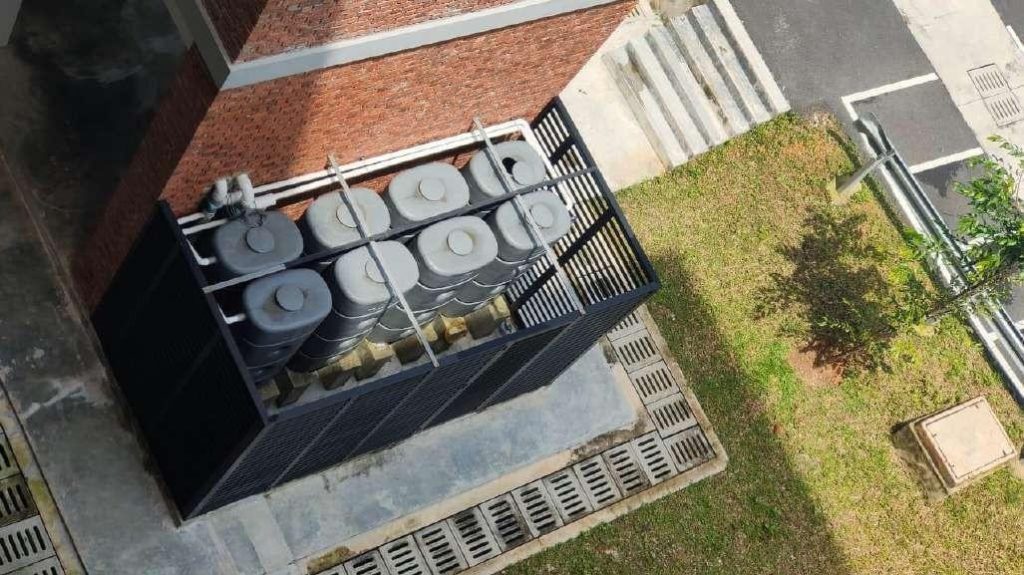
Location: Academic Cyber Technopolis (AST)
Capacity (gallon): 1,585.0

Location: UKM Research Complex
Capacity (gallon): 3,000.0

Location: Institute of Environment and Development (LESTARI)
Capacity (gallon): 359.2
Total – 7,586.0
Tube Well
The location map and database of groundwater and tube wells at Universiti Kebangsaan Malaysia (UKM) was developed in collaboration with the Department of Mineral and Geoscience Malaysia (Jabatan Mineral dan Geosains Malaysia, JMG) to support research, resource management and sustainable water utilization within the campus.
This map provides detailed spatial information on the distribution and coordinates of existing groundwater and tube well points across the UKM Bangi campus. It is a crucial reference for monitoring groundwater availability, quality and usage, as well as for evaluating the campus’s potential to implement alternative water supply systems, especially during dry seasons or in water conservation efforts.
By integrating this dataset into the SEPADU GIS system, UKM is able to visualize and analyze groundwater resources in real time, enabling better planning for water management, infrastructure maintenance, and environmental protection. The collaboration between UKM and JMG demonstrates a strong commitment to scientific data sharing and sustainable campus operations, ensuring that groundwater extraction and usage are managed responsibly and in alignment with national environmental guidelines.

(Department of Mineral and Geoscience Malaysia, Location Map of Groundwater/ Tube Wells at UKM)
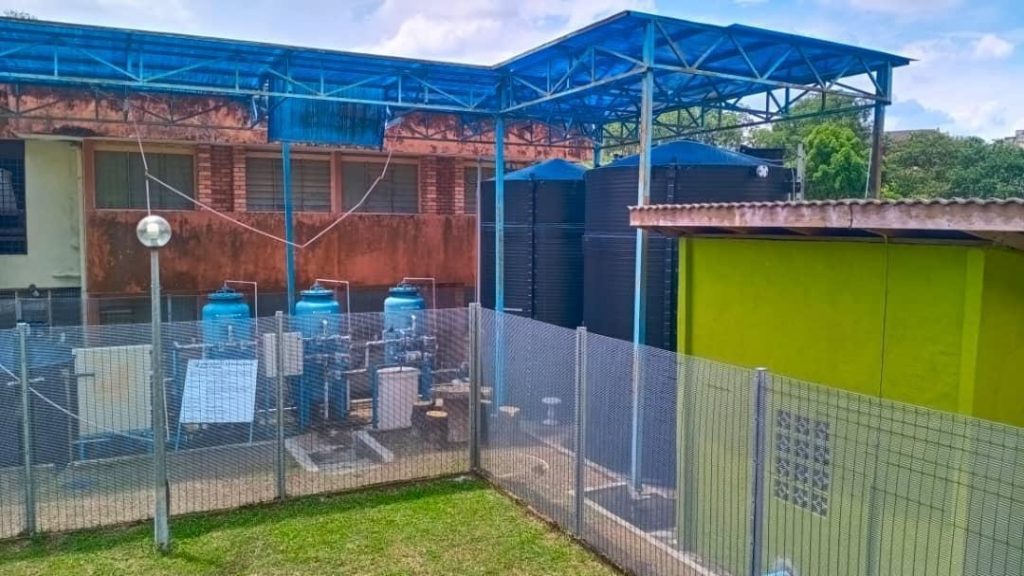
Location: Ungku Omar Residential College
Capacity (gallon): 13,208.6
Location: Aminuddin Baki Residential College
Capacity (gallon): 13,208.6
Location: Burhanuddin Helmi Residential College
Capacity (gallon): 13,208.6
Total – 39,625.8
Total (Rainwater Harvesting + Tube Well) – 47,211.70
ii. Retention Pond
UKM Lake serves as a critical component of the university’s water conservation efforts, functioning as a retention pond as for Ghazali Lake with a storage capacity of 2,551,822.77 gallons. Besides, UKM Bangi also has another lake at the Faculty of Engineering and Built Environment with storage capacity 8,016,934.90 gallons, Kesatria Lake UKM (2,039,133.77 gallons), Danau Lake UKM (25,090,398.96 gallons) and Faculty of Information Science and Technology Lake UKM (3,679,948.91 gallons).
The retention pond alone contributes to the total water storage capacity at UKM, which includes other systems such as rainwater harvesting and tube wells. Combined, these systems have a total capacity of 41,378,239.31 gallons, significantly supporting UKM’s sustainable water management by supplementing the primary water supply.
Retention pond in UKM and its capacity

Location: Ghazali Lake
Capacity (gallon): 2,551,822.77

Location: Faculty of Engineering and Built Environment Lake
Capacity (gallon): 8,016,934.90

Location: Kesatria Lake UKM
Capacity (gallon): 2,039,133.77

Location: Danau Lake UKM
Capacity (gallon): 25,090,398.96

Location: Faculty of Information Science and Technology Lake UKM
Capacity (gallon): 3,679,948.91
Total – 41,378,239.31
Alternative water sources, including rainwater harvesting systems, tube wells and retention ponds, significantly support UKM by contributing 156,633.68 m³ to the total water supply. Rainwater harvesting and retention pond allows the university to collect and store rainwater for landscaping and non-potable uses, while tube wells provide a reliable water source, especially during dry periods. By utilizing these alternative sources, UKM reduces its reliance on treated water, demonstrating a strong commitment to sustainable water management and encouraging responsible water usage within the campus community.